Hunting a BLM Wash After a Rain
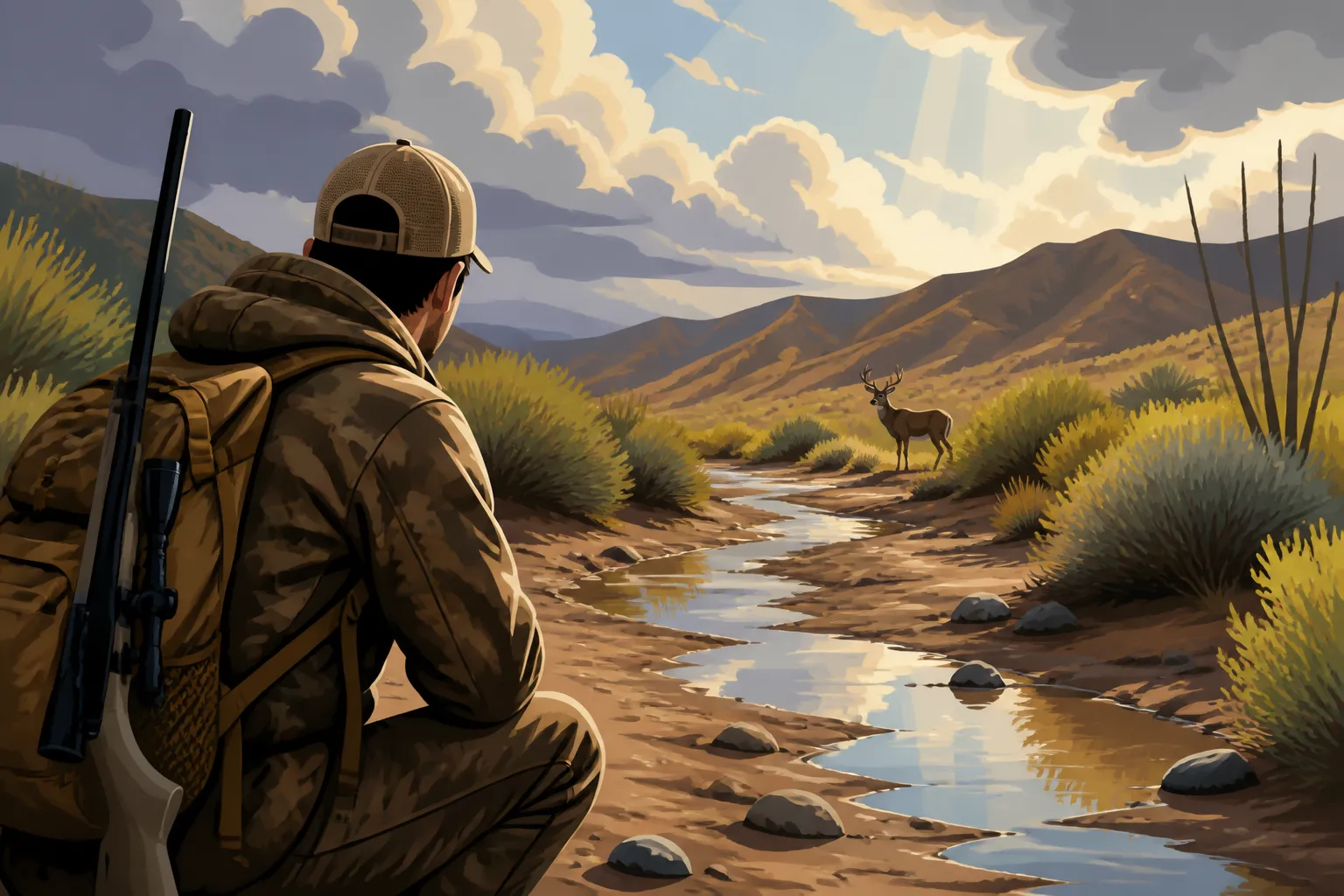
Oh, the desert wash after a good rain in California! It's one of those times that can feel like magic, or sometimes, a muddy mess. Hunters often struggle with knowing how the desert landscape, and the animals in it, transform after the skies open up. This guide is all about navigating those post-rain conditions in California's vast Bureau of Land Management (BLM) country, helping you understand how deer and other game react, where to find them, and how to use the wet conditions to your advantage for a successful hunt.
The Desert's Transformation: How Rain Changes the Game
When a rainstorm sweeps through California's desert BLM lands, it's not just a momentary change; it's a profound transformation of the entire ecosystem. For hunters, understanding this shift is key to finding game. Dry washes, often dusty and barren, become temporary life-giving arteries, drawing wildlife like a magnet. This isn't just about water; it's about the entire food chain springing to life.
Water Sources and Animal Congregation
Think about the desert before the rain – parched, animals relying on sparse, often brackish, permanent water holes or getting moisture from vegetation. After a substantial rain, especially in areas like the Mojave Desert fringe country or the expansive Carrizo Plain, everything changes. Water collects in natural depressions, forming temporary pools, and for a short window, the desert becomes a veritable oasis. Deer, wild pigs, quail, and even predators like coyotes will converge on these newfound water sources. It's an instinctive drive; they know these opportunities are fleeting. Instead of scattering widely to find meager sips, animals will concentrate their activity near these refreshed water points, offering hunters a more defined area to focus their efforts. This concentration can be a huge advantage, as you're no longer searching for a needle in a haystack; you're looking for game in areas where they are almost certainly drawn.
Vegetation Burst and New Forage Opportunities
It's truly remarkable how quickly the desert responds to moisture. Within days, sometimes even hours, of a significant rain, latent seeds can sprout, and dormant plants can green up, offering a sudden abundance of fresh forage. These aren't always lush fields, but even small pockets of tender new growth, like annual grasses or wildflowers, are a gourmet meal for desert mule deer and other herbivores. The washes themselves, with their slightly richer soil and ability to hold moisture longer, often see the most immediate and significant green-up. Animals will instinctively move towards these areas to capitalize on the fresh browse, moving away from the tougher, dryer vegetation they'd been relying on. This creates new feeding patterns that you can exploit. Consider how Late-Season Food Sources for California Deer might shift dramatically in the desert with unexpected rain, providing a temporary boom that reshapes their daily routines.
Eroding Landscape and New Travel Corridors
Rain, especially heavy downpours, sculpts the desert landscape. While this can sometimes mean temporary washouts or impassable roads, it also means that the washes become even more defined travel corridors. Animals naturally use these features for easy movement, offering shelter from the wind, cover from predators, and access to new food and water. After a rain, the fresh erosion can sometimes reveal new game trails or deepen existing ones, making them more obvious. Furthermore, the washes can act as thermal sinks, staying cooler in the early morning and evening, which can be particularly attractive to game when the days are still warm. This is why hunting a wash isn't just about the water; it's about recognizing it as a superhighway for wildlife, especially after it's been cleaned and revitalized by a rain shower.
Mastering Tracking in Wet Desert Washes
One of the absolute biggest benefits of hunting a BLM wash after a rain in California is the incredible opportunity it presents for tracking. Dry, dusty desert ground is notoriously difficult for discerning fresh sign, but a damp or muddy wash changes everything. The freshly wetted sand and silt become a perfect canvas for capturing every detail of an animal's movement.
Identifying Fresh Tracks and Movement Patterns
When the desert floor is wet, tracks left by deer, pigs, or even coyotes are crisp, distinct, and incredibly easy to age. Look for tracks where the edges are sharp, the sand or mud hasn't had time to dry and crumble, and perhaps even some moisture is still visible within the print itself. Pay attention to the clarity of the dew claws – if they're clearly defined, the track is likely very fresh. The direction of travel is also much easier to determine; you'll see where sand or mud was pushed forward or backward. You can often tell the difference between a deer sauntering along, browsing, or one that was spooked and bounding away. Reading California Mud for Fresh Deer Movement becomes an art form in these conditions. When you cut a fresh track, don't just follow blindly. Stop, observe the animal's pace, look ahead for where it might be heading, and try to understand its purpose. Was it heading to water? Grazing on new growth? Or simply traveling between bedding and feeding areas?
Distinguishing Species and Size
The wet ground also makes distinguishing between different game animals, and even estimating their size, far simpler. A desert mule deer's cloven hooves will leave a distinct, generally heart-shaped print, while a wild pig's hooves are typically rounder and often accompanied by clearly visible dew claws that splay out more, especially from a heavier hog. The size of the print is a direct indicator of the animal's size. A large, mature mule deer buck will leave a significantly larger and deeper print than a doe or a fawn. For a wild boar, look not just at the size of the hoof print, but the overall disturbance – large, heavy boars will often root deeply or leave broader, more defined drag marks from their bellies or legs in wet earth. This is crucial intel; knowing if you're on the track of a trophy buck or a smaller doe can dictate your approach.
Utilizing Technology for Better Tracking
Even with perfect tracks in wet sand, knowing where you are and where you want to go is paramount. This is where modern hunting apps truly shine. Tools like onX Hunt become invaluable. You can use it to pinpoint your exact location in a vast BLM area, mark the tracks you've found, and plan your tracking route. The app's detailed satellite imagery and topographic maps help you anticipate where the wash might pinch down, where benches or thicker cover might be found adjacent to the wash, or even where a game trail might lead up out of the wash and onto higher ground. This technology helps you maintain your bearings, understand the terrain, and make more informed decisions about how to pursue your game. When you're deep in a winding wash, knowing the land ownership boundaries with onX Hunt is also critical, especially in areas where BLM might meet private land. This way, you're always sure you're hunting legally and ethically.
| Feature | Dry Wash Conditions | Post-Rain Wash Conditions |
|---|---|---|
| Track Visibility | Poor, dusty, easily wind-blown, obscure | Excellent, crisp, detailed, long-lasting |
| Water Availability | Scarce, limited to permanent sources | Abundant temporary pools, flowing seeps |
| Forage Quality | Dry, tough, sparse, less palatable | Fresh sprouts, tender growth, palatable |
| Animal Movement | Scattered, often nocturnal, near sparse water | Concentrated near water and new forage, more diurnal |
| Cover | Primarily topography, shadows | Topography, shadows, denser temporary vegetation |
| Tracking Effort | High, often requires extensive glassing | Lower, following clear tracks |
Strategic Hunting Approaches for Wet Desert Washes
Hunting a wet desert wash demands a different strategy than hunting during dry conditions. The rejuvenated landscape provides both opportunities and challenges, and adapting your approach will significantly increase your odds of success.
Still-Hunting and Ambush Tactics
With fresh tracks so apparent, still-hunting a wash after a rain can be incredibly productive. Move slowly, deliberately, scanning ahead for any movement or form that doesn't belong. The wet ground often dampens your footsteps, allowing for a quieter approach. As you follow tracks, constantly be aware of the wind. Even a slight breeze can carry your scent. Wind and Thermals in Steep Sierra Country principles apply even in rolling desert washes, as air currents will still follow terrain features. Look for areas where the wash narrows, where it bends sharply, or where dense vegetation offers natural pinch points. These are prime ambush locations. A savvy hunter might find a promising set of tracks, follow them a short distance, and then set up a silent ambush downwind, anticipating the animal's movement toward a water source or a new patch of green-up. This is particularly effective in the early morning or late evening when animals are most active.
Utilizing Ground Blinds and Natural Cover
Sometimes, the best approach isn't to chase tracks, but to let the game come to you. After a rain, animals are drawn to the washes. Setting up a ground blind along a well-used travel corridor within a wash, especially near a temporary water source or a newly greened patch of vegetation, can be deadly effective. The soft, damp ground makes brushing in a blind much easier, as you can often use natural debris that has been washed down or loosened by the rain. When considering Using a Ground Blind on BLM Land, think about its placement relative to prevailing winds and the sun's angle. Animals will use the cover of the wash itself, so position your blind to intercept them as they move along. Ensure you have clear shooting lanes but remain well-hidden. This method requires patience but can pay off handsomely, especially if you've done your scouting and identified key convergence points.
Scouting for Post-Rain Hotspots
Even if you can't hunt immediately after a rain, the conditions provide an excellent opportunity for scouting. Fresh tracks reveal exactly where animals were moving, feeding, and watering. Take detailed notes, or better yet, use your mapping app like onX Hunt to mark these hotspots. You can identify specific entry and exit points animals are using in and out of the wash, newly discovered water seeps, or areas where fresh vegetation is particularly dense. These patterns can persist for days after the rain, as animals continue to exploit the temporary abundance. Knowing Finding Sign in a Coastal Oak Woodland is one thing, but finding clear, undeniable sign in a wet desert wash is an entirely different level of intel. This reconnaissance can be invaluable for subsequent hunts, even if the ground dries out, as it shows you where the game prefers to be when conditions are favorable. Don't underestimate the power of scouting; it's often more important than the hunt itself.
Gear and Safety for Hunting Wet Desert Washes
Hunting in California's desert washes after a rain presents unique gear and safety considerations. The conditions can shift rapidly, and being unprepared can turn a promising hunt into a dangerous situation.
Essential Gear for Wet Conditions
First and foremost, your footwear is critical. Desert washes, even after a moderate rain, can become muddy and slick, and you might encounter standing water. Invest in a good pair of waterproof hunting boots that offer excellent ankle support. Not only will this keep your feet dry and comfortable, but it will also provide the stability needed to navigate uneven, potentially slippery terrain. Consider boots designed for rugged, wet conditions, not just dry desert. Beyond boots, think about your clothing layers. Even after a rain, desert temperatures can swing dramatically. Layers that can be easily added or removed are key. A good waterproof and windproof outer shell is non-negotiable, not just for rain, but for protection from cold winds or unexpected drizzles. Don't forget a quality headlamp with fresh batteries for pre-dawn starts or navigating back to your vehicle after dark, especially since dark, wet washes can become disorienting. For specific recommendations, check out a guide on Best Boots for Steep Wet-Season Sierra Trails as many of the principles for wet mountain terrain can apply to soggy washes.
Navigation and Communication in Remote Areas
California's BLM desert lands are vast and often remote, with little to no cell service. Relying solely on your phone for navigation is a huge risk. Always carry a physical map and compass, and know how to use them. For digital navigation, make sure your hunting app, such as onX Hunt, has offline maps downloaded for the specific area you'll be hunting. This ensures you can still navigate even without a signal. A GPS device is also a wise investment. Furthermore, consider carrying a satellite communicator. Devices from companies like Garmin inReach or Zoleo allow you to send emergency messages, communicate with loved ones, and access weather forecasts even when you're far from civilization. This peace of mind is invaluable, especially if you're hunting alone or in unfamiliar territory.
Staying Safe: Flash Floods, Stuck Vehicles, and Hydration
Hunting washes after a rain carries inherent risks. Flash floods are a real and present danger in desert environments. Even if it's not raining directly where you are, heavy rains upstream can send a wall of water rushing down a wash with little to no warning. Always be aware of weather conditions in the broader region, and if you hear a roar or see water rapidly rising, seek higher ground immediately. Never camp in a wash. Getting your vehicle stuck in muddy or sandy washes is another common hazard. Consider carrying recovery gear like traction boards, a shovel, and a tow strap, and ensure your vehicle is capable of handling the terrain. If you're hunting solo, let someone know your exact plans and expected return time. Finally, even after rain, the desert can be dehydrating. Always carry more water than you think you'll need. Physical exertion, even in cooler temperatures, can quickly lead to dehydration.
Disclaimer
This article is for general informational purposes only and does not constitute professional advice. Laws, prices and regulations vary by location and change over time. Consult a qualified professional for guidance on your specific situation.