Hunting Southern California’s Chaparral Foothills
Southern California's chaparral foothills can be an intimidating, unforgiving landscape for hunters. The sheer density of the vegetation, coupled with the often scorching temperatures and challenging terrain, leaves many feeling overwhelmed about where to even begin. This guide is here to unravel the complexities of hunting this unique environment, providing you with actionable strategies to successfully pursue game in Southern California's wild, brushy expanses.
Understanding the Southern California Chaparral Environment
Hunting the chaparral isn't like hunting open timber or vast plains; it's a world unto itself. Before you even think about loading your rifle or nocking an arrow, you need to grasp the fundamental nature of this unique ecosystem. It dictates everything from where game will be to how you can effectively move through the landscape.
The Unique Ecology of Chaparral
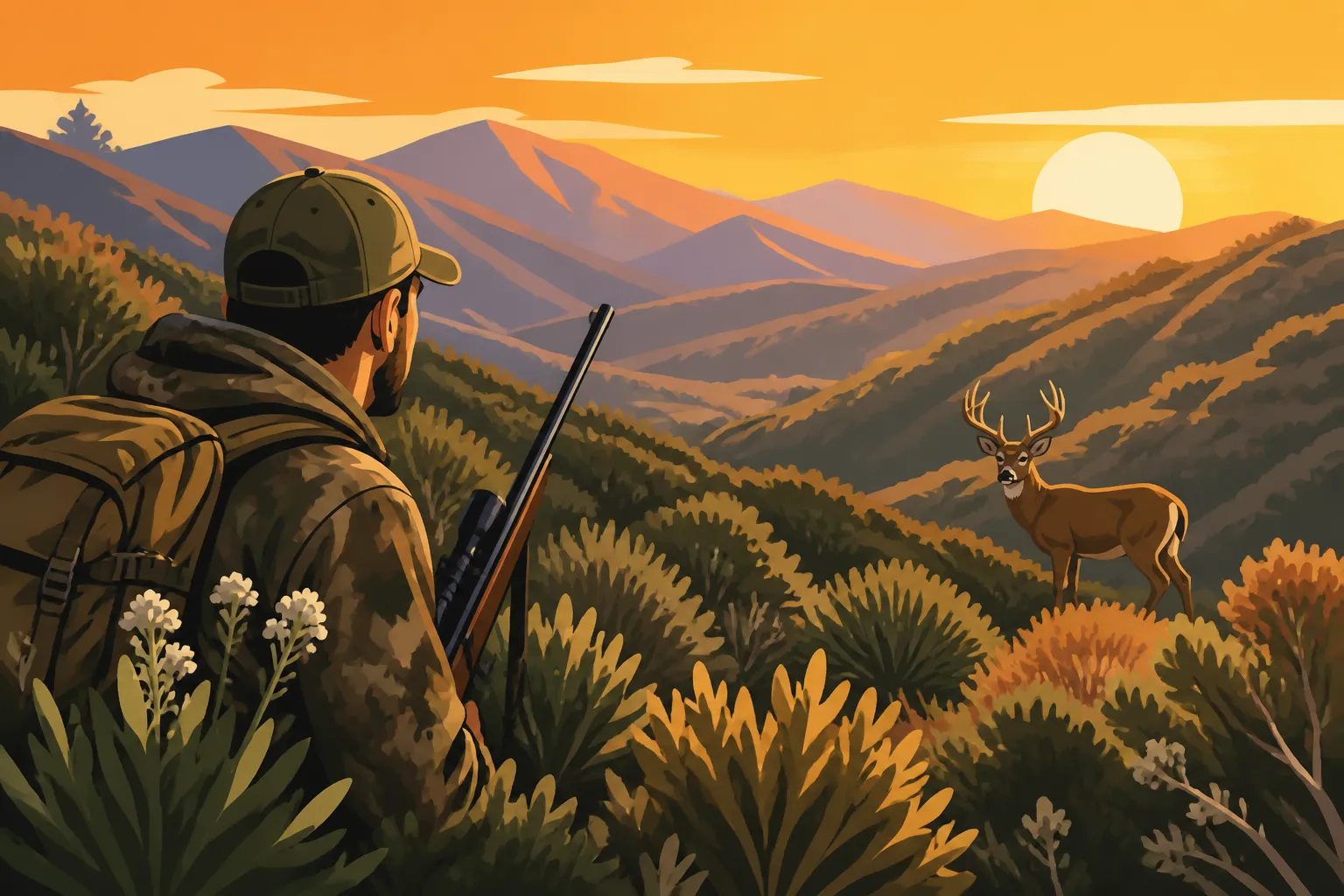
Chaparral is a dense, scrubby shrubland characterized by drought-resistant plants, and it covers vast swathes of Southern California's foothills and mountain ranges. Think of it as an endless sea of green, often impenetrable, thorny bushes. Plants like chamise, manzanita, ceanothus, and various scrub oaks form a formidable, interwoven canopy that can be agonizingly difficult to traverse. This isn't just a minor inconvenience; it fundamentally shapes the behavior of the animals that call it home.
Deer, pigs, and other wildlife use this dense cover for absolute concealment from predators and hunters alike. They can literally disappear into a patch of brush just yards from you. This means that direct line-of-sight hunting, where you see an animal from a distance and stalk it, is often incredibly challenging. Instead, you're looking for subtle movements, flickers of an ear, or the slight shift of a branch. The plants also provide critical browse, especially during the green-up after winter rains, offering vital nutrients when other areas are dry. Water sources, often seasonal creeks or seeps, become magnetic drawing points for animals in this arid environment, creating natural ambush opportunities that savvy hunters exploit. Understanding these plant communities helps you predict game movement and identify key feeding and bedding areas.
Climate Challenges and Seasonal Variations
The climate in Southern California's chaparral is, to put it mildly, intense. Summers are long, hot, and dry, with temperatures regularly soaring into the 90s and beyond, sometimes even pushing past 100 degrees Fahrenheit. This extreme heat has a profound impact on both the hunter and the hunted. Animals become largely nocturnal, moving in the cooler hours of dawn, dusk, and throughout the night, conserving energy during the midday inferno. Water sources, already scarce, become even more critical, often drying up completely by late summer or early fall.
Early archery seasons, which often kick off in August, are particularly brutal. You're not just hunting deer; you're battling dehydration and heat exhaustion. Moving through dense brush in 95-degree weather with a pack on your back is an exercise in mental and physical fortitude. As the seasons progress into late fall and early winter, conditions can become more favorable with cooler temperatures and the potential for rain, which can green up forage and create more comfortable hunting conditions. However, the terrain remains rugged, and the vegetation just as dense. The rapid temperature shifts, from freezing mornings to warm afternoons, mean layering your clothing effectively is not just a preference, but a necessity to stay comfortable and safe throughout the day. These environmental factors heavily influence when and where you should focus your efforts.
Key Game Species and Their Habits in Chaparral
While the chaparral might seem uniform and impenetrable, it hosts a variety of game species that have adapted perfectly to its challenges. Knowing what you're hunting, and how they behave in this specific habitat, is paramount to success.
Southern California Mule Deer and Blacktail Hybrids
When you're talking about deer in the Southern California chaparral, you're often referring to a fascinating mix. These aren't your massive Rocky Mountain mule deer, nor are they always pure coastal blacktails. In many areas, especially the foothills, you'll find intergrades or hybrids between Columbia Blacktail and Mule Deer, showcasing characteristics of both. They tend to be smaller-bodied than their northern or eastern cousins, a physical adaptation to the tougher browse and drier climate. These deer are incredibly elusive, masters of using the dense cover to their advantage. They don't just hide in the brush; they often move through it, utilizing tunnels and natural openings invisible to the untrained eye.
Their diet consists primarily of the browse provided by the chaparral plants – the tender new growth of chamise, ceanothus, and scrub oak are vital food sources. They become experts at finding small pockets of greener vegetation or succulent plants that retain moisture. Their bedding areas are typically deep within the thickest, nastiest tangles of brush on north-facing slopes, providing both shade and an excellent vantage point downwind. To hunt them effectively, you need to think like them: avoid ridge tops where they expect danger, stick to shaded canyons, and always be aware of the wind. They are often less tolerant of direct human pressure than deer in more open country, which means you need to be exceptionally quiet and patient. For a deeper dive into the broader deer populations, check out Columbia Blacktail and Mule Deer in California.
Wild Pigs and Other Opportunistic Game
Southern California's chaparral, particularly where it borders oak woodlands and agricultural lands, is prime habitat for Wild Pigs. These resilient animals thrive in the dense cover, which offers perfect hiding spots, and they benefit from the acorns dropped by oak trees, especially during good mast years. Their rooting habits are unmistakable – you'll see torn-up soil where they've dug for roots, tubers, and invertebrates. Unlike deer, pigs are often more active during the day if temperatures are mild or if they're near a consistent water source. However, in hot chaparral country, they become almost entirely nocturnal, seeking refuge in deep canyons and dense shade during daylight hours.
Hunting pigs in the chaparral often involves targeting water holes, wallows, or areas where they've recently rooted for food. They often travel in sounders, groups of sows and piglets, while large boars tend to be more solitary. Understanding their habits, such as their preference for specific types of cover or their travel corridors between feeding and bedding, is key. You can learn more about these fascinating animals in Wild Pigs Across California. Beyond deer and pigs, the chaparral also supports a surprising variety of small game. California Valley Quail are abundant, often found in coveys exploding from dense brush, especially near water. Rabbits are also common, providing additional hunting opportunities. If you're interested in pursuing these smaller game animals, California Valley Quail offers some great insights.
Navigating Public Lands and Access in SoCal Chaparral
One of the biggest hurdles for hunters in Southern California is simply finding huntable public land, let alone accessing it. Unlike vast tracts of wilderness in other states, public lands here can be fragmented, heavily used, and often challenging to navigate.
Identifying Huntable Public Land Parcels
Southern California does have public land, but it requires careful research to identify where hunting is permitted. The primary public land entities are National Forests (like the Angeles, Cleveland, and San Bernardino National Forests) and Bureau of Land Management (BLM) lands. However, not all areas within these designations are open to hunting, and some have specific restrictions, such as seasonal closures due to fire danger or designated recreational areas where firearm discharge is prohibited. This fragmentation means you can't just assume a large green blob on a map is all open game.
This is where advanced mapping applications become absolutely invaluable. Tools like onX Hunt or GoHunt are essential for overlaying public land boundaries, private parcels, and specific hunting regulations onto detailed topographical maps. You can clearly see land ownership, identify legal access points, and plan your routes without inadvertently trespassing. Many experienced hunters use these apps to find those overlooked fingers of public land, or isolated BLM parcels that are surrounded by private property but still legally accessible via easements or obscure routes. For a general overview of the available areas, refer to Public Hunting Land in California.
Overcoming Access Challenges and Hunter Pressure
Once you've identified a huntable piece of public land, the next challenge is actually getting into it and finding ground that hasn't been heavily pressured. Southern California's population density means that public lands often see a lot of recreational use, and hunters flock to accessible areas. This leads to deer becoming even warier, pushing them into the deepest, thickest, and most remote chaparral.
The terrain itself presents a significant barrier. Chaparral foothills are characterized by steep, rugged slopes, deep canyons, and razor-sharp ridges. Roads are often few and far between, and many are gated or closed seasonally. This means you'll likely be hiking significant distances, often straight uphill, just to get away from the crowds. Don't be afraid to put in the miles; the further you go, the less competition you'll face. Look for less obvious access points, such as unsigned pull-offs or faint game trails that might lead into promising canyons. Be prepared for a physically demanding hunt, and always let someone know your plans and expected return time. Understanding local regulations for vehicle access and wilderness area restrictions is also critical. For insights into specific desert hunting, which shares some access challenges, consider Hunting California's BLM Desert Land.
| Public Land Type | Key Characteristics | Access Challenges | Recommended Tools |
|---|---|---|---|
| National Forests | Large, mountainous tracts, varying terrain, designated wilderness | Gated roads, seasonal closures, high recreational use, steep grades | onX Hunt, topo maps |
| BLM Lands | Often remote, arid, fragmented parcels, diverse terrain | Poor road conditions, remote locations, private landlocked sections | onX Hunt, GPS |
| State Wildlife Areas | Managed habitats, specific entry rules, limited hunting periods | Permit requirements, reservations, intense competition | CDFW website, GoHunt |
Effective Hunting Strategies for Dense Chaparral
Hunting in dense chaparral requires a different mindset and a specialized set of tactics compared to hunting in open country or timber. You're less likely to glass a deer from a mile away and more likely to stumble upon one at close range.
Spot-and-Stalk and Still-Hunting Techniques
While the term "spot-and-stalk" might conjure images of vast, open landscapes, it does have a place in chaparral hunting, albeit with a unique twist. Instead of spotting a deer from miles away, you're looking for subtle signs in the thick stuff. This means finding high vantage points – ridge lines or peaks – and patiently glassing shaded pockets, canyon bottoms, and the edges of dense cover where deer might move or bed. A high-quality spotting scope is crucial here, but you're often looking for parts of a deer: an ear twitch, a horizontal line in a vertical world, or a patch of hide through a tiny opening. This patient approach can often reveal deer that others walk past. For tips on effective glassing, see Glassing a Canyon for a Bedded Buck.
Once you spot something or identify a promising area, the "stalk" becomes a slow, deliberate still-hunt. This is about moving with the wind, taking one slow step at a time, pausing for long periods (often 5-10 minutes or more), and scanning every inch of the brush. You're listening for the rustle of leaves, the snap of a twig, or the subtle movement of branches. Utilize game trails whenever possible, as they offer the easiest path through the thick vegetation. Pay close attention to thermals in the morning and evening, which can carry your scent down into canyons or up to ridge tops. This method requires immense patience and discipline, but it's often the most effective way to surprise a deer in its sanctuary. While focused on timber, the principles in Still-Hunting California's Sierra Nevada Timber can be adapted to the slower, more deliberate movement needed in chaparral.
Stand Hunting, Water Holes, and Ambush Points
Traditional tree stands, common in many parts of the country, are often impractical or even impossible in the low, dense chaparral. However, the concept of stand hunting – setting up an ambush point – is incredibly effective. Instead of a tree stand, think about using natural ground blinds. This could be a cluster of large boulders, a natural depression, or simply positioning yourself strategically behind a thick clump of brush that breaks up your outline. The key is to find locations that deer must pass through or visit.
Water holes are absolute magnets in the arid chaparral, especially during hot, dry periods. Identifying reliable water sources, whether a small spring, a seep, or a lingering puddle in a canyon bottom, can provide consistent ambush opportunities. Deer, pigs, and other animals will often visit these sources in the cooler morning and evening hours. Set up well downwind, arrive early, and be prepared to sit for extended periods. Beyond water, look for natural funnels like saddles between two ridges, narrow canyon bottoms, or pinch points where thick brush forces animals to traverse a specific route. These are ideal locations for an ambush. Scout these areas beforehand to identify fresh tracks, droppings, and rubbed branches, confirming active use. Sitting a Water Hole in Late Season offers excellent advice that applies directly to these arid Southern California hunts.
Essential Gear and Preparation for Southern California Chaparral
Hunting the chaparral demands gear that can withstand abuse, keep you comfortable in harsh conditions, and help you navigate challenging terrain. Skimping on quality here can literally ruin a hunt or, worse, put your safety at risk.
Clothing, Footwear, and Hydration
Your clothing needs to be tough as nails. The chaparral will tear at anything flimsy, leaving you with shredded garments and scratched skin. Opt for durable, ripstop fabrics that can withstand thorns and abrasive brush. Layers are crucial. Even on hot days, mornings can be cool, and you'll want to shed layers as the sun climbs. Choose breathable, moisture-wicking materials to manage sweat during strenuous climbs. Blaze orange or pink is often required or highly recommended for safety, so ensure your outer layer meets regulations and stands out in the dense green.
Footwear is arguably the most critical piece of gear. You need sturdy, comfortable boots with excellent ankle support and a stiff sole to navigate rocky, uneven terrain and prevent rolled ankles. Look for waterproof features, but prioritize breathability for hot weather. The chaparral floor is unforgiving, filled with loose rock and sharp sticks, so durable outsoles are non-negotiable. For more in-depth advice on appropriate attire and footwear for varied California environments, consult Boots and Clothing for California's Varied Terrain.
Hydration cannot be overstated. In Southern California's heat, dehydration is a serious risk. Carry far more water than you think you'll need, especially if you plan to be active. Electrolyte packets are a smart addition to your pack. Consider a hydration bladder for easy access to water while on the move, and always have a backup bottle. It's not just about comfort; it's about survival.
Optics, Weapons, and Navigation Tools
Quality optics are essential, even in dense cover. A good pair of 10x binoculars will be your best friend for picking apart small pockets of brush, scanning ridgelines, and confirming details when you spot movement. You might think you don't need a spotting scope in thick country, but for those times you reach a commanding vantage point, it's invaluable for discerning details at longer distances or across canyons. Look for lightweight, durable options that won't weigh you down during long hikes. For general optics guidance, check out Optics for California's Open-Country Deer Hunting.
When it comes to weapons, a reliable rifle chambered in a common, effective caliber is your best bet for deer and pigs. Ensure it's sighted in precisely with non-lead ammunition, as California has a statewide ban on lead for hunting. Copper bullets are the standard, offering excellent penetration and weight retention. Practice shooting from various positions, as quick, off-hand shots are common in the brush. For comprehensive information on compliant ammunition, see Choosing Non-Lead Rifle Ammunition in California.
Navigation tools are non-negotiable. While knowing the general area is a start, detailed maps and a reliable GPS device or app are critical. Modern apps like onX Hunt and GoHunt provide satellite imagery, topo maps, and crucially, property boundaries, allowing you to confidently know where you stand (literally). Download offline maps before heading out, as cell service is often nonexistent in remote chaparral canyons. A compass and paper map are also excellent backups in case your electronics fail. These tools allow you to explore new areas, mark waypoints for game sign or water, and navigate safely back to your vehicle, even in the dark.
Post-Harvest Considerations and Ethical Hunting
Congratulations, you've successfully navigated the chaparral, outsmarted a wary animal, and made a clean shot! But the work isn't over. Recovering your game and ensuring proper meat care, especially in Southern California's often warm climate, is just as critical as the hunt itself.
Field Dressing and Meat Care in Warm Climates
The moment an animal is down, the clock starts ticking, especially in the warm chaparral. Heat is the enemy of wild game meat. Immediate and thorough field dressing is absolutely crucial to cool the carcass as quickly as possible. Get the entrails out, wipe away any blood, and allow air to circulate. In hot conditions, many hunters choose to quarter the animal immediately, rather than dragging it whole, to get the hide off and separate the large muscle groups, allowing for maximum cooling. This also makes the pack-out significantly easier in steep, rugged terrain.
Once quartered, place the meat in breathable game bags, never plastic bags, which trap heat. Find the coolest, shadiest spot available – often a deep, north-facing canyon or under a dense canopy of trees – and hang the game bags to maximize airflow. If you have a long pack-out ahead, consider having coolers with ice waiting at your vehicle. The goal is to drop the meat's internal temperature as fast as possible to prevent spoilage and ensure delicious venison for your table. For detailed instructions on this vital step, refer to Field Dressing a Deer in Hot Weather.
Respecting the Land and Regulations
Being an ethical hunter goes beyond just a clean kill; it's about respecting the land, the wildlife, and the non-hunting public. Adherence to all regulations, including California's non-lead ammunition requirement, is paramount. This law is in place to protect wildlife, particularly California condors, from lead poisoning, and it's a responsibility every hunter in the state must uphold. You can find more information about this critical regulation in California's Non-Lead Ammunition Requirement.
Always practice "Leave No Trace" principles. Pack out everything you pack in, and if you can, pack out a little extra trash that others might have left behind. Be mindful of noise, especially in areas near campgrounds or residential properties. Report your harvest accurately and promptly, as this data is crucial for wildlife management and future hunting opportunities. California typically requires online reporting of deer, bear, and pig harvests through the Automated License Data System (ALDS) or the CDFW mobile app. Checking out Reporting a Deer Through California's App can guide you through that process. Your actions reflect on all hunters, so always strive to be a responsible and respectful ambassador for the sport.
Disclaimer
This article is for general informational purposes only and does not constitute professional advice. Laws, prices and regulations vary by location and change over time. Consult a qualified professional for guidance on your specific situation.