Hunting Northern California’s Redwood Coast
Hunting California's Redwood Coast presents a truly unique challenge, a world away from the golden foothills or high desert landscapes most hunters picture. The dense, towering redwood and Douglas fir forests, often shrouded in coastal fog and frequently drenched by rain, can be intimidating. This guide is here to walk you through what it really takes to pursue game in this rugged, verdant corner of California, from understanding its distinct ecosystems to finding public access and gearing up for its notoriously thick cover and wet conditions.
Understanding the Unique Redwood Coast Habitat
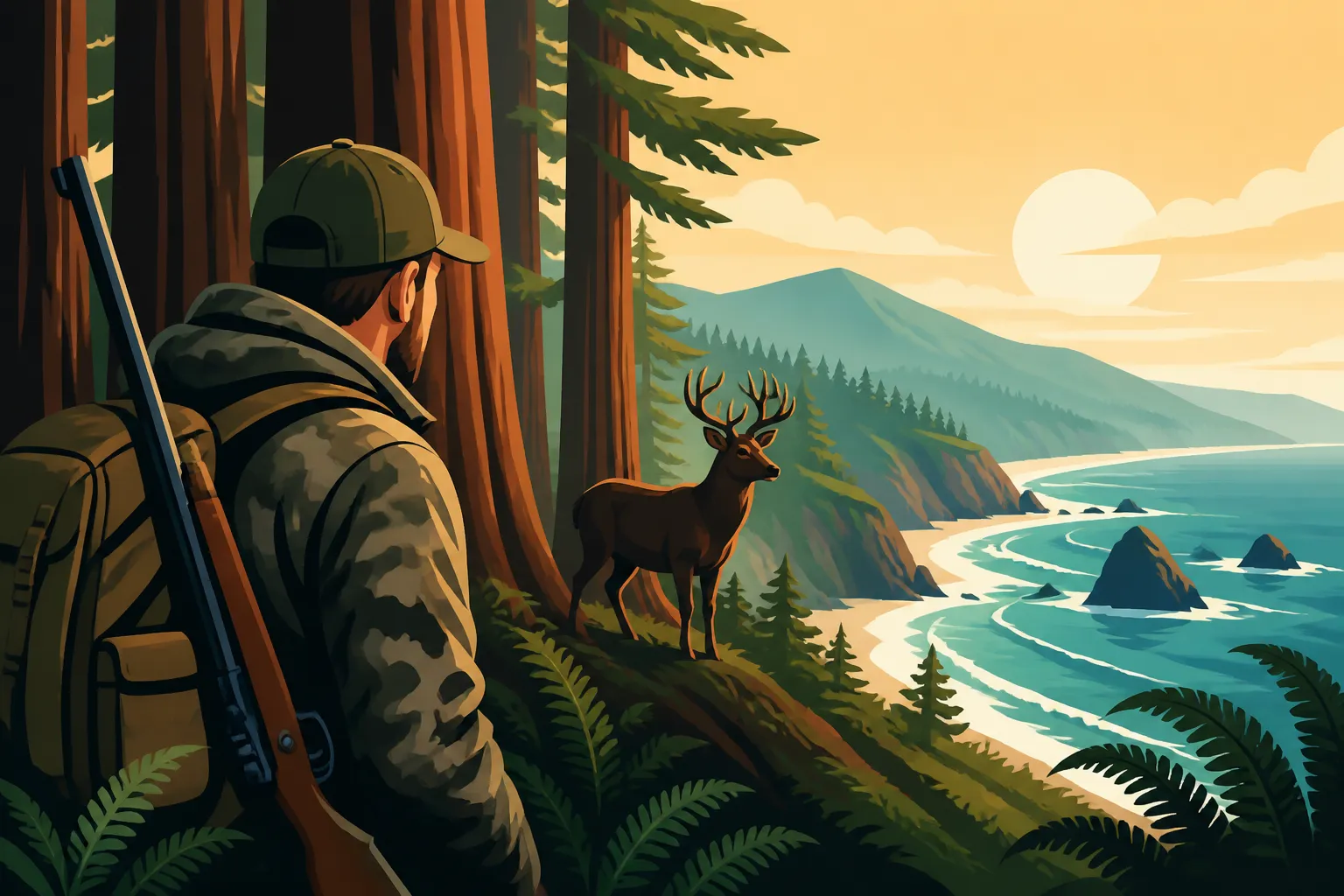
The Redwood Coast isn't just about big trees; it's a dynamic, often unforgiving environment that demands a specific approach from hunters. This region, stretching from just north of San Francisco Bay up to the Oregon border, is characterized by its towering ancient forests, steep canyons, and a relentless maritime climate. It's a place where the landscape itself can be your biggest challenge and your greatest reward.
Dense Canopy and Undergrowth
When you step into a redwood or Douglas fir forest on the coast, you’re not just walking through trees; you're entering a realm of deep shade, thick undergrowth, and a perpetual dampness that can make visibility and movement incredibly difficult. The canopy here is so dense that it often blocks out sunlight, leading to a shadowy forest floor where ferns, huckleberry, and salal grow in profusion. This makes for fantastic cover for game, but it also means hunters are often limited to short-range visibility. Spot-and-stalk hunting as you might know it in more open country is largely out the window here. Instead, you'll find yourself still-hunting, moving deliberately and slowly, listening for the crunch of leaves or the rustle of a hidden animal. The sheer volume of vegetation means every step needs to be planned, and sound discipline is paramount. You're trying to sneak through a natural fortress, which can be exhausting but also incredibly rewarding when you finally get a glimpse of a blacktail buck through the gloom.
Riverine Corridors and Coastal Bluffs
Beyond the deep timber, the Redwood Coast is carved by countless rivers and streams that snake their way to the Pacific, creating vital riparian corridors. These areas, with their slightly more open canopies and a mix of deciduous trees, offer crucial food sources and travel routes for deer, bear, and pigs. Hunting along these waterways can be productive, especially during dry spells when game might be seeking water. However, these areas are often incredibly steep, muddy, and prone to flooding. You'll encounter slick banks, slippery rocks, and treacherous crossings. Further west, where the land meets the ocean, you’ll find dramatic coastal bluffs and more open, brushy terrain in some areas. While less common for big game hunting due to development and more restricted access, these fringes can offer unique perspectives and, occasionally, less pressured pockets. Understanding how game moves between the dense timber, riparian zones, and these coastal edges is key to success.
Key Game Species and Seasons
The Redwood Coast might be renowned for its trees, but it’s also home to a robust population of game that thrives in its unique environment. Hunting here focuses on species adapted to the dense cover and often challenging conditions, primarily blacktail deer, wild pigs, and black bears. Knowing their habits and the specific seasons is crucial for planning a successful hunt.
Blacktail Deer Hunting
The Columbia blacktail deer is the undisputed king of the Redwood Coast for hunters. These deer are perfectly adapted to the dense, brushy terrain and thrive in the mix of timber and clearings. Unlike their mule deer cousins found further inland, blacktails often have smaller antlers and typically a darker, more compact body, ideal for slipping through thickets. The general deer seasons in this region typically fall under California’s Zone B or certain D-zones, with archery seasons often opening in July and general rifle seasons following in August or September. It's important to confirm the exact zone boundaries and dates, as they can vary even within this broader region. For instance, some of the coastal D-zones might have slightly different openers than the B zones further north. These deer are masters of remaining unseen, using the abundant cover to their advantage. You'll rarely get a long-range shot here; instead, be prepared for close encounters, often under 50 yards, as you still-hunt through the tangled brush. Understanding their patterns and Where California Blacktail Bucks Bed in such dense country will greatly improve your odds.
Wild Pig Opportunities
California is famous for its wild pigs, and the Redwood Coast is no exception. While perhaps not as prevalent as in the oak-studded hills of the Central Coast, wild pigs can be found throughout the redwood region, especially in areas with a mix of forest and open meadows or agricultural fringes. Pigs thrive where there's rooting material and water, which the river drainages and damp forest floors provide in abundance. Wild Pig Hunting California Year-Round means you don't have to wait for a specific season, though success often peaks when acorns or other food sources are abundant. Hunters often pursue pigs by spotting them in more open areas at dawn or dusk, or by still-hunting through creek bottoms and oak pockets within the redwood forests. Access can be a challenge, as pigs often gravitate to private timberlands or ranch properties. However, patient scouting on public lands can reveal productive areas. You'll need to be ready for a quick, decisive shot, as a wild pig can disappear into the thick cover in an instant.
Black Bear and Small Game
The Redwood Coast supports a healthy population of black bears, which find ample food and cover in the region's forests. Black Bear Hunting California's Spot-and-Stalk Season is a popular pursuit here, with hunters focusing on areas rich in berries (like huckleberry and salal), acorns, or where bears might be feeding on salmon in rivers. While the season generally opens in late August or early September, hunters must be vigilant about the statewide quota. California has California's 1,700-Bear Statewide Quota, and the season can close early if that number is met. This means constantly checking the California Department of Fish and Wildlife (CDFW) website for closure updates is vital. Hunting bears in this dense environment means careful tracking and being ready for a close-quarters shot.
Beyond big game, the Redwood Coast also offers opportunities for small game hunting. Various squirrel species, rabbits, and upland birds like grouse can be found in different habitats within the region. While perhaps not the primary draw for most hunters heading to the redwoods, these species provide additional options and can make for a rewarding day afield when big game proves elusive.
Public Land Opportunities and Access Challenges
Finding accessible hunting ground along the Redwood Coast can feel like cracking a secret code. Unlike vast tracts of easily traversed BLM land in the desert, much of this region is characterized by dense forests, steep topography, and a complex mosaic of public and private ownership. However, with diligent research and persistence, significant opportunities exist.
National Forests and State Parks
The crown jewel of public hunting access in this region is undoubtedly the Six Rivers National Forest Hunting. Spanning over a million acres across Del Norte, Humboldt, Siskiyou, and Trinity counties, it offers immense opportunities for blacktail deer, bear, and pigs. Within Six Rivers, you'll find everything from accessible logging roads to vast wilderness areas like the Trinity Alps. However, "accessible" is a relative term here. Roads can be rough, signage scarce, and some areas may require significant hiking or even packing in. Remember that all of California is now subject to California's Non-Lead Ammunition Requirement, so ensure your rifle is sighted in with approved bullets for hunting these areas. For mapping out your route and identifying potential hunting spots, apps like onX Hunt are invaluable. Their parcel data layers can help you distinguish public land from private timber holdings, which are often interspersed, and their topo maps are critical for navigating the steep terrain.
While California State Parks generally restrict hunting, some State Recreation Areas (SRAs) or State Forests might have specific hunting programs or designated zones. It's crucial to check the regulations for any specific state-managed property, as the rules are often very localized and strict. Don't assume anything; always verify directly with the park or forest office.
BLM and Timber Company Lands
Beyond the National Forests, Bureau of Land Management (BLM) lands also offer hunting opportunities, though often in smaller, more fragmented parcels along the Redwood Coast compared to eastern California. These lands can be excellent for scouting and hunting, particularly where they abut private timberland or agricultural zones, creating transition areas game frequent. Again, using mapping tools like onX Hunt is non-negotiable for identifying these parcels and understanding access points. Pay close attention to easements or public rights-of-way that might cross private property to access landlocked public parcels.
Many large private timber companies own significant acreage in Northern California. While historically some have offered public access programs, this varies greatly by company and region, and policies can change without much notice. Some companies may offer permits for a fee, while others may restrict access entirely. It's always worth researching individual company policies or checking with local ranger stations for current information. Often, these lands are heavily logged, which can create fantastic deer browse and new clearings that attract game, but also make for incredibly dense and noisy walking.
Overcoming Access Barriers
The biggest frustration for hunters on the Redwood Coast is often simply getting to the game. Road closures, locked gates on private timber company lands, and the sheer density of vegetation can make access daunting. Getting Private Land Permission in California can unlock vast tracts of prime habitat, but it requires diligent legwork, respectful communication, and building trust with landowners. Many hunters spend years cultivating relationships with local ranchers or timber managers.
For public land, accept that you will likely be doing a lot of hiking. Many prime areas are miles from the nearest paved road. Be prepared for logging roads that are deeply rutted, washed out, or overgrown. Vehicles with good ground clearance and 4×4 capability are often a necessity for getting close to trailheads. Always carry a physical map and compass in addition to your GPS device, as cell service is spotty at best in many remote areas. Scouting California Public Land Before Season is even more critical here than in other zones, as roads and access can change rapidly due to weather or logging operations.
| Public Land Type | Primary Game Species | Typical Habitat Characteristics | Access Challenges | Scouting Tools Recommended |
|---|---|---|---|---|
| National Forest (e.g., Six Rivers) | Blacktail Deer, Bear, Pig | Dense timber, river drainages, steep canyons, some old clear-cuts | Remote roads, dense brush, steep terrain | onX Hunt, paper maps |
| BLM Land | Blacktail Deer, Pig | Fragmented parcels, often mixed with private, brushy hillsides | Landlocked parcels, unclear boundaries, limited roads | onX Hunt |
| Private Timber (Permit Only) | Blacktail Deer, Bear, Pig | Actively managed forests, clear-cuts, young regrowth | Permit requirements, locked gates, changing policies | Direct contact, local knowledge |
Navigating Terrain and Weather
Hunting Northern California's Redwood Coast isn't just about finding game; it's about mastering the environment itself. The combination of steep terrain, dense vegetation, and unpredictable coastal weather creates a physically demanding and mentally challenging hunt.
Steep, Wet, and Thick
Imagine traversing a landscape that constantly pushes back. That's the Redwood Coast. The terrain is relentlessly steep, with deep canyons carved by swift-flowing rivers and ridges that drop precipitously. This means every climb and descent is a workout, often exacerbated by slick, muddy trails and a thick layer of wet organic matter on the forest floor. You'll be climbing over downed logs, pushing through dense tangles of huckleberry and salmonberry, and constantly watching your footing. It's not uncommon to spend an hour covering less than a mile in truly dense sections. Your boots will sink into mud, your pants will get soaked, and you'll be constantly aware of the dampness. This kind of environment wears you down quickly, making physical conditioning a top priority before your hunt. It also demands a slower, more deliberate hunting style, focusing on quiet movement and hyper-awareness of your immediate surroundings rather than glassing vast distances.
Coastal Fog and Rain
The maritime climate along the Redwood Coast means you should always expect moisture. Dense coastal fog can roll in suddenly, reducing visibility to mere yards and making navigation tricky, even in familiar areas. This fog often persists for hours, sometimes days, creating a perpetually damp atmosphere that can chill you to the bone. Beyond the fog, rain is a frequent companion, especially outside of the peak summer months. It can range from a persistent drizzle to heavy downpours, turning trails into muddy rivers and making creek crossings dangerous. Waterproof gear is not optional here; it's absolutely essential. The good news is that rain can also benefit hunters by dampening leaves, making it easier to move quietly through the forest. However, it also makes tracking more challenging and can obscure scents. Always have a plan for staying dry and warm, and know your limits, especially when crossing swollen streams.
Seasonal Changes and Their Impact
While the Redwood Coast generally remains damp, the seasons do bring noticeable shifts that impact hunting. Early archery seasons, typically in July and August, can still see hot, dry spells, especially further inland from the immediate coast. During these times, deer and bear will be more active near water sources. As fall progresses, the rains become more frequent and heavier, and temperatures drop. This shift brings a flush of new growth and, importantly, the ripening of acorns and berries, which are crucial food sources for deer, pigs, and bears. Bear activity, in particular, often increases dramatically as they forage to put on weight before winter. The late fall and early winter can offer excellent hunting, but also present the most challenging weather conditions, including potential snow at higher elevations. Understanding these seasonal food patterns and weather shifts is vital for choosing the right time to hunt and knowing where game will be concentrating.
Essential Gear and Tactics for the Redwood Coast
Hunting the Redwood Coast isn't like hunting anywhere else in California. The dense cover, challenging terrain, and often wet weather demand a specific selection of gear and a honed set of tactics to be successful. Forget the long-range desert setup; here, it's about close-quarters efficiency and rugged reliability.
Non-Lead Ammunition and Firearms
As with all hunting in California, California's Non-Lead Ammunition Requirement is in full effect along the Redwood Coast. This means choosing appropriate non-lead bullets is not just a preference, but a legal necessity. For blacktail deer and wild pigs, reliable copper bullets in common calibers like .270, .308, or 30-06 are excellent choices. Look for bullets designed for good expansion at closer ranges, as many shots in the redwoods will be under 100 yards, often significantly closer. The heavy brush can sometimes deflect bullets, so selecting a robust, well-constructed non-lead projectile is wise. A short, maneuverable rifle is often preferred over a long-barreled magnum, simply because it’s easier to handle in thick timber without getting snagged on every branch. Lever actions or compact bolt actions shine in this environment. Shotguns with non-lead slugs are also a viable option for deer and pigs in the densest areas where visibility is minimal.
For archery hunters, choosing a durable broadhead that can punch through bone and hide is critical for blacktail deer and especially for stout-shouldered wild pigs. Fixed-blade broadheads are often favored for their reliability in heavy cover, minimizing the risk of deployment issues that can sometimes occur with mechanical broadheads if they nick brush. Ensure your arrows are well-tuned for consistent flight.
Navigating with GPS and Maps
Getting lost in the dense, monotonous redwood forest is a real concern. The towering trees can make it difficult to orient yourself, and trails often disappear under fallen timber or thick undergrowth. A reliable GPS device or a robust smartphone app like onX Hunt is absolutely indispensable. I can't stress this enough: download offline maps before you lose service. The GPS function still works without cell signal, showing your precise location on a detailed topographic map, which is crucial for staying on track, marking game sign, and safely returning to your vehicle. The ability to mark your truck, game trails, and potential bedding areas makes onX Hunt particularly valuable.
However, never rely solely on electronics. Always carry a traditional compass and a physical, waterproof map of the area. Batteries die, devices get wet, and screens crack. Learning to use a compass and map is a fundamental skill that could literally save your hide. Knowing how to Reading Aerial Photos for Sierra Deer can translate directly to the Redwood Coast by helping you identify clear-cuts, old logging roads, and changes in forest density that might create deer habitat.
Clothing and Footwear for Wet Conditions
Your clothing and footwear choices can make or break a hunt on the Redwood Coast. Boots and Clothing for California's Varied Terrain needs to be tailored for cold, wet, and rugged conditions. Forget cotton; it absorbs moisture and stays wet, leading to hypothermia even in moderate temperatures. Opt for synthetic layers or wool that retain insulating properties when damp. A good base layer, a warm mid-layer (like fleece), and a robust, fully waterproof outer shell (jacket and pants) are essential. Look for gear that is durable and quiet, as you'll be brushing against a lot of vegetation.
For footwear, sturdy, waterproof hunting boots with excellent ankle support and aggressive traction are non-negotiable. The trails are steep, slick, and often muddy, and you'll be traversing uneven ground constantly. Gore-Tex or similar waterproof membranes are a must. Consider wearing gaiters to keep debris and water out of your boots, especially when pushing through wet brush. Always pack an extra pair of socks, preferably wool, to change into if your feet get wet, which they invariably will. Being comfortable and dry significantly extends your endurance and improves your hunting experience in this challenging environment.
Conservation and Ethical Hunting Practices
Hunting the Redwood Coast isn't just about the pursuit of game; it's about respecting a unique ecosystem and upholding the highest standards of ethical conduct. As stewards of this incredible natural resource, hunters play a vital role in its long-term health.
Minimizing Impact on Sensitive Ecosystems
The redwood forests are ancient and incredibly sensitive. When you're hunting here, every step, every action, should be guided by a principle of minimal impact. Stick to established trails and old logging roads whenever possible to avoid trampling delicate undergrowth or disturbing sensitive riparian areas. Be mindful of erosion, especially on steep slopes and near waterways. Pack out everything you pack in, and then some. Leave no trace of your presence. This includes spent casings, food wrappers, and anything else that doesn't belong.
The majestic redwood trees themselves are protected, and their ecosystems support a diverse array of plant and animal life, some of which are endangered or threatened. Understanding the specific regulations for the area you're hunting, especially concerning restricted access zones or critical habitat, is paramount. For example, some areas might have specific rules about campfires or vehicle use due to fire risk or sensitive species protection. Always check with the local land management agency (e.g., National Forest, BLM) for any specific closures or seasonal restrictions before heading out.
Respect for Wildlife and Fair Chase
Ethical hunting in the redwoods, as elsewhere, hinges on respect for the animals we pursue and the principles of fair chase. This means taking clean, ethical shots that ensure a quick and humane harvest. In the dense cover of the redwoods, this often means limiting shot distances and only taking a shot when you have a clear, unobstructed path to the vital organs. Rushing a shot in thick brush often leads to wounded game and prolonged tracking efforts in already challenging terrain.
Another critical aspect of fair chase is understanding the limitations of hunting aids. While technology like GPS mapping apps (such as onX Hunt or GoHunt for general planning) are incredibly helpful for navigation and scouting, they should never replace fundamental hunting skills like tracking, still-hunting, and reading sign. It's about pitting your skills against the animal's senses, not relying solely on technological advantages. If you wound an animal, dedicating all your effort to Blood Trailing After Dark in California or during the day is an absolute ethical imperative. The thick cover and often wet ground make trailing difficult, so patience and meticulous attention to detail are key to recovery.
Collaboration with Land Managers and Local Communities
Being a responsible hunter on the Redwood Coast also involves fostering positive relationships with land managers, private landowners, and local communities. Many private timberlands are open to hunters by permit or permission, and maintaining a good reputation is essential for ensuring future access. Always ask for permission if there's any doubt about land ownership, and respect all private property boundaries, whether marked or not.
Engaging with local communities, sharing information (where appropriate), and even supporting local businesses can help bridge the gap between hunters and non-hunters. Report poaching or unethical behavior you witness to the CDFW. Your actions reflect on all hunters, and by upholding high ethical standards, we ensure that hunting remains a valued and respected tradition on California's stunning Redwood Coast for generations to come.
Disclaimer
This article is for general informational purposes only and does not constitute professional advice. Laws, prices and regulations vary by location and change over time. Consult a qualified professional for guidance on your specific situation.