Hunting California’s Modoc Plateau
Hunting the vast and rugged Modoc Plateau can feel like stepping into a different California entirely. Many hunters, accustomed to the more crowded coastal ranges or even the familiar Sierra foothills, find the sheer scale and unique challenges of this northeastern region truly daunting. It's easy to get lost in the sea of juniper, pine, and high desert sage, wondering where the game even is in such expansive country. This comprehensive guide is designed to cut through that initial overwhelm, providing you with the insights and strategies needed to successfully navigate and hunt California's distinctive Modoc Plateau, from its mule deer to its diverse public lands.
The Unique Landscape of the Modoc Plateau
The Modoc Plateau, often overlooked by those focused on other parts of California, is a truly special and rugged region. It's a high-elevation expanse that shares more characteristics with the Great Basin states like Nevada and Oregon than with the golden hills of central California. This unique geography directly influences the hunting experience, presenting both challenges and incredible opportunities for those willing to learn its rhythms.
Geography and Key Features
Imagine an ancient land shaped by volcanic activity, where vast lava flows have sculpted the terrain, leaving behind a mosaic of flat sagebrush steppes, towering rimrock, and dense stands of juniper and ponderosa pine. This isn't the steep, timbered country you might find in other national forests; rather, it's often more open, with rolling hills and wide-open basins. Key features include the Warner Mountains to the east, offering some of the highest elevations and steepest climbs, contrasting with the more gentle slopes and broad valleys that characterize much of the plateau. There are also numerous wetlands and intermittent lakes, crucial for waterfowl and other wildlife. The ground itself can be rocky and unforgiving, a constant reminder of its volcanic past. Understanding these geographical nuances is crucial for any hunter hoping to find success here.
The vegetation tells its own story. While you'll find classic ponderosa and mixed conifer forests, especially at higher elevations, the true character of the Modoc often lies in its juniper and sagebrush ecosystems. These hardy plants thrive in the drier, harsher conditions, providing cover and forage for a variety of game. Learning to read these subtle shifts in vegetation—from dense juniper thickets offering bedding cover to open sagebrush flats for feeding—will be key to your scouting and hunting success. The sheer scale of these landscapes means that traditional still-hunting tactics often need to be adapted, giving way to more glassing-intensive approaches, especially for mule deer.
Climate and Weather Considerations
One of the biggest eye-openers for hunters new to the Modoc Plateau is its often extreme climate. Unlike the milder conditions found in much of California, the Modoc experiences genuine four-season weather, and sometimes all four seasons in a single day. Summers are typically hot and dry, with daytime temperatures easily soaring into the 90s or even 100s, while nights can drop significantly, especially at higher elevations. This heat can be a major factor for early-season deer hunts, making hydration and game care paramount. Water sources, often few and far between, become critical focal points for game.
As autumn progresses, the weather can become notoriously unpredictable. Indian summer days can quickly give way to sudden cold fronts, high winds, and early snowfalls, particularly in the higher reaches of the Warner Mountains. These conditions can make travel difficult, especially on unimproved Forest Service roads, and demand that hunters pack for every eventuality. It’s not uncommon to start a day in mild conditions and finish it battling a blizzard. Preparing for these rapid shifts in temperature and precipitation is not just a comfort issue; it's a safety imperative. Always have extra layers, a reliable shelter plan, and enough food and water for unexpected delays, especially if you venture deep into the backcountry.
Prime Game Species and Their Habitat
The Modoc Plateau offers a diverse array of hunting opportunities, but it's undoubtedly best known for its mule deer. Beyond these majestic animals, hunters can also pursue black bear, wild pigs, and a variety of upland birds and waterfowl. Each species thrives in specific habitats that are characteristic of this unique northeastern California region. Understanding where to look and what conditions favor each animal is the first step toward a successful hunt.
Mule Deer: The Modoc's Signature Big Game
When you mention hunting the Modoc Plateau, most seasoned California hunters immediately think of mule deer. The region is home to some fantastic herds, and while trophy-class bucks aren't handed out, the potential for a quality animal is definitely there for persistent hunters. Mule deer here adapt to the vast, open spaces, utilizing the mix of juniper flats, rimrock canyons, and ponderosa pine forests for cover, feeding, and bedding. They are often found higher up in the pine country during the early archery and general seasons, moving down into the juniper and sagebrush draws as hunting pressure increases or colder weather pushes them to lower elevations. California's Multi-Zone Deer Season System includes these zones, and understanding specific zone boundaries and regulations is key.
The sheer scale of the Modoc can be intimidating for mule deer hunters. These animals don't often concentrate in easily accessible pockets. Instead, they are spread out, covering vast distances. This means that successful hunting often involves extensive glassing from high vantage points, systematically picking apart distant slopes and draws for the tell-tale flicker of an ear or the solid shape of a bedded buck. You'll need quality optics, a steady tripod, and a lot of patience. Food sources like bitterbrush, serviceberry, and various grasses are vital, and locating areas with good browse, especially near water, can significantly increase your odds. Remember, these deer are masters of using broken terrain and sparse cover to their advantage, often disappearing into seemingly nothing right before your eyes. This is particularly true for Glassing Mule Deer in Open California Country.
Other Big Game Opportunities: Bear and Pig
While deer often steal the spotlight, the Modoc Plateau also offers opportunities for black bear and, to a lesser extent, wild pigs. Black bears here are often found in the denser timber pockets of the Modoc National Forest, especially where there are good berry crops, acorns, or other food sources. They can be elusive, and success often comes to hunters who are willing to cover a lot of ground, paying close attention to tracks, scat, and other sign. The bear season is quota-controlled, so staying informed about the current harvest numbers is important. Black Bear Hunting California's Spot-and-Stalk Season tactics are very applicable here.
Wild pigs, though less prevalent across the entire Modoc compared to regions like the Central Coast, can still be found in pockets, typically along the fringes of the plateau where oak woodlands and riparian zones provide suitable habitat and food. These are often transient animals, moving through specific drainages or private lands bordering public access. Unlike deer or bear, wild pigs in California don't have a closed season, but a valid pig tag is required for each animal harvested. Finding them often involves scouting river bottoms, areas with recent rooting activity, or around agricultural fields that might provide supplemental feed. Access can be a challenge, as many of these prime pig areas are on private property.
Upland Birds and Waterfowl Potential
The Modoc Plateau isn't just for big game; it's a hidden gem for bird hunters too. The expansive sagebrush and juniper flats, broken by draws and rimrock, provide excellent habitat for California valley quail and mountain quail. These birds can be found in coveys, often near water sources or dense cover where they can escape predators. Hunting them can be fast-paced and requires quick reflexes, especially when a covey explodes from underfoot. Accessing these areas is typically straightforward on public lands, but covering ground is key to locating active coveys.
For waterfowl enthusiasts, the Modoc offers surprising opportunities, especially during migration. The plateau is dotted with seasonal wetlands, large natural lakes like Tule Lake and Goose Lake (shared with Oregon), and numerous smaller ponds that attract ducks and geese. These areas can hold significant numbers of birds, particularly if local agricultural fields offer forage. While not as famous as the Central Valley refuges, the Modoc provides a more remote, often less pressured waterfowl hunting experience. Scouting active roosts and feeding areas, combined with strategic decoy placement and effective calling, can lead to memorable hunts. California Waterfowl on the Pacific Flyway extends its influence all the way to this northeastern corner.
Public Land Access and Navigation
Hunting the Modoc Plateau is largely a public land affair, which is fantastic news for hunters seeking expansive, unpressured areas. However, the sheer size and diverse ownership patterns can also be incredibly confusing if you're not prepared. Knowing how to identify land status, navigate effectively, and understand the specific rules for different public agencies is paramount to a successful and legal hunt.
National Forests and BLM Lands: Your Primary Access
The vast majority of public hunting opportunities on the Modoc Plateau fall within the Modoc National Forest and the extensive Bureau of Land Management (BLM) holdings. These lands cover hundreds of thousands of acres, offering a true backcountry experience. The Modoc National Forest is characterized by its ponderosa pine and juniper forests, interspersed with sagebrush flats and volcanic formations. Roads, often unpaved and primitive, crisscross these areas, providing access to many spots, but don't be fooled—the real hunting often starts a good walk from the truck. Always be aware of vehicle restrictions and road closures, especially during wet weather or fire season.
BLM lands in the Modoc region tend to be even more open, dominated by sagebrush steppe, juniper, and lava rock. These areas are prime for glassing mule deer and for pursuing upland birds. The beauty of these vast tracts is the feeling of solitude; it’s possible to spend days hunting and not see another soul. However, this also means self-sufficiency is critical. Water sources are scarce, and help is often a long way off. It's imperative to carry plenty of water, a reliable map, and a way to communicate in an emergency. California's Eighteen National Forests offer diverse opportunities, and the Modoc is unique among them.
Understanding Land Ownership with Mapping Tools
Navigating the Modoc's public and private land mosaic without modern mapping tools is asking for trouble. Private parcels, ranch lands, and even small inholdings can be interspersed within larger public blocks, creating a checkerboard pattern that's nearly impossible to discern on the ground. This is where tools like onX Hunt truly shine. Using a mapping app allows you to see property boundaries in real-time, displaying public lands (National Forest, BLM, State) in one color and private lands in another. This prevents inadvertent trespass, a common frustration for hunters new to patchwork ownership.
Beyond just identifying public land, these mapping platforms can help you find access points, delineate wilderness areas (which may have specific regulations), and even show recent burn scars that can be productive deer habitat Hunting a National Forest Burn Scar. Planning your routes, identifying potential glassing knobs, and marking water sources or game trails becomes infinitely easier. Before heading into the field, especially in remote areas without cell service, ensure you've downloaded offline maps. This crucial step will save you countless headaches and potential legal issues. Another valuable resource for researching draw odds and hunt unit data, which can inform your scouting and tag applications, is GoHunt. These services provide insights into past success rates and bonus point accumulation, critical for planning Hunting California's High-Country X-Zones.
Wildlife Areas and Special Regulations
In addition to the extensive National Forest and BLM lands, the Modoc Plateau is home to several California Department of Fish and Wildlife (CDFW) managed Wildlife Areas and Ecological Reserves. These areas are often crucial habitat for waterfowl and migratory birds, but some also offer upland bird and big game hunting opportunities. Examples might include the Ash Creek Wildlife Area or the Modoc National Wildlife Refuge. These areas typically have specific regulations, seasons, and often require a daily use permit or a reservation, especially for waterfowl hunts. It's never safe to assume the rules are the same as general public land.
Before planning a hunt on a specific Wildlife Area or Refuge, it's essential to check the CDFW regulations for that particular unit. These regulations can cover everything from legal shooting hours, specific hunting zones, weapon restrictions, and requirements for non-lead ammunition to bag limits and check-in/check-out procedures. Failure to understand and adhere to these site-specific rules can lead to fines or loss of hunting privileges. While they may require a bit more homework, these managed areas often provide excellent, concentrated hunting opportunities that are well worth the extra planning.
Planning Your Modoc Plateau Hunt
A successful hunt on the Modoc Plateau isn't just about showing up with a rifle and a tag; it requires meticulous planning, from understanding the various season dates and tag requirements to preparing the right gear for this challenging environment. The more thought you put into your preparation, the better your chances of connecting with game and having a safe, enjoyable experience.
Season Dates and Tag Considerations
California's deer season system can feel like a labyrinth, and the Modoc Plateau falls into several general and premium X-zones, each with distinct season dates and tag allocations. Most hunters will focus on the general seasons for rifle hunting, which typically open in late September or early October, depending on the zone. Archery seasons usually precede the general seasons, offering a different set of challenges and opportunities. For highly sought-after X-zones in the Modoc, drawing a tag often requires accumulating preference points over several years. It's crucial to consult the current CDFW regulations booklet or online portal for the exact dates and zone boundaries, as these can change annually. Resources like GoHunt can be invaluable here, offering detailed draw odds analysis and historical data to help you make informed decisions about which tags to apply for and how many points you might need.
Beyond deer, if you plan to hunt bear, be mindful that California has a statewide quota, and the season can close early if that quota is met. Always check the CDFW website or phone hotline before heading out to ensure the season is still open. Wild pigs, as mentioned, have a year-round season, but you still need a valid tag for each animal. Don't forget your basic California Hunting Licenses and What They Cost, including any necessary endorsements like the Upland Game Bird Stamp or California Duck Validation, if you plan on pursuing birds. Proper tag acquisition and understanding the reporting requirements after a successful harvest are non-negotiable legal responsibilities.
Essential Gear and Preparation
The Modoc Plateau's varied and often extreme conditions demand a well-thought-out gear list. First and foremost, due to California's statewide California's Non-Lead Ammunition Requirement, you must equip yourself with non-lead rifle ammunition. This isn't just a suggestion; it's the law, and there are specific requirements for what constitutes legal non-lead projectiles. Be sure to test your chosen non-lead loads with your rifle well in advance to ensure accuracy and consistent performance. Choosing Non-Lead Rifle Ammunition in California is a detailed subject that can make or break your hunt.
For the open country and long sightlines, quality optics are not just a luxury but a necessity. A good pair of 10x binoculars, mounted on a tripod for steady glassing, will be your best friend when picking apart distant slopes for mule deer. A spotting scope is also highly recommended for evaluating bucks at extreme ranges, saving you countless miles of walking on false hopes. Optics for California's Open-Country Deer Hunting are often the difference-maker. Footwear is another critical consideration; the rocky, uneven terrain, combined with potentially long walks, means sturdy, comfortable, and well-broken-in hiking boots are essential. Layered clothing, appropriate for swinging temperatures, will keep you comfortable from chilly mornings to warm afternoons. Think durable, breathable fabrics that can withstand brush and rock. Don't forget a sturdy backpack capable of carrying all your day's essentials and, hopefully, packing out meat. Boots and Clothing for California's Varied Terrain are essential for a comfortable and safe hunt.
Effective Hunting Strategies for the Modoc
Once you've got your tags and gear sorted, the real work begins: learning how to effectively hunt the unique terrain and game of the Modoc Plateau. This region demands a blend of patience, physical endurance, and a keen understanding of animal behavior in a high desert environment. There’s no single magic bullet, but combining proven techniques will significantly increase your odds.
Glassing and Spot-and-Stalk Techniques
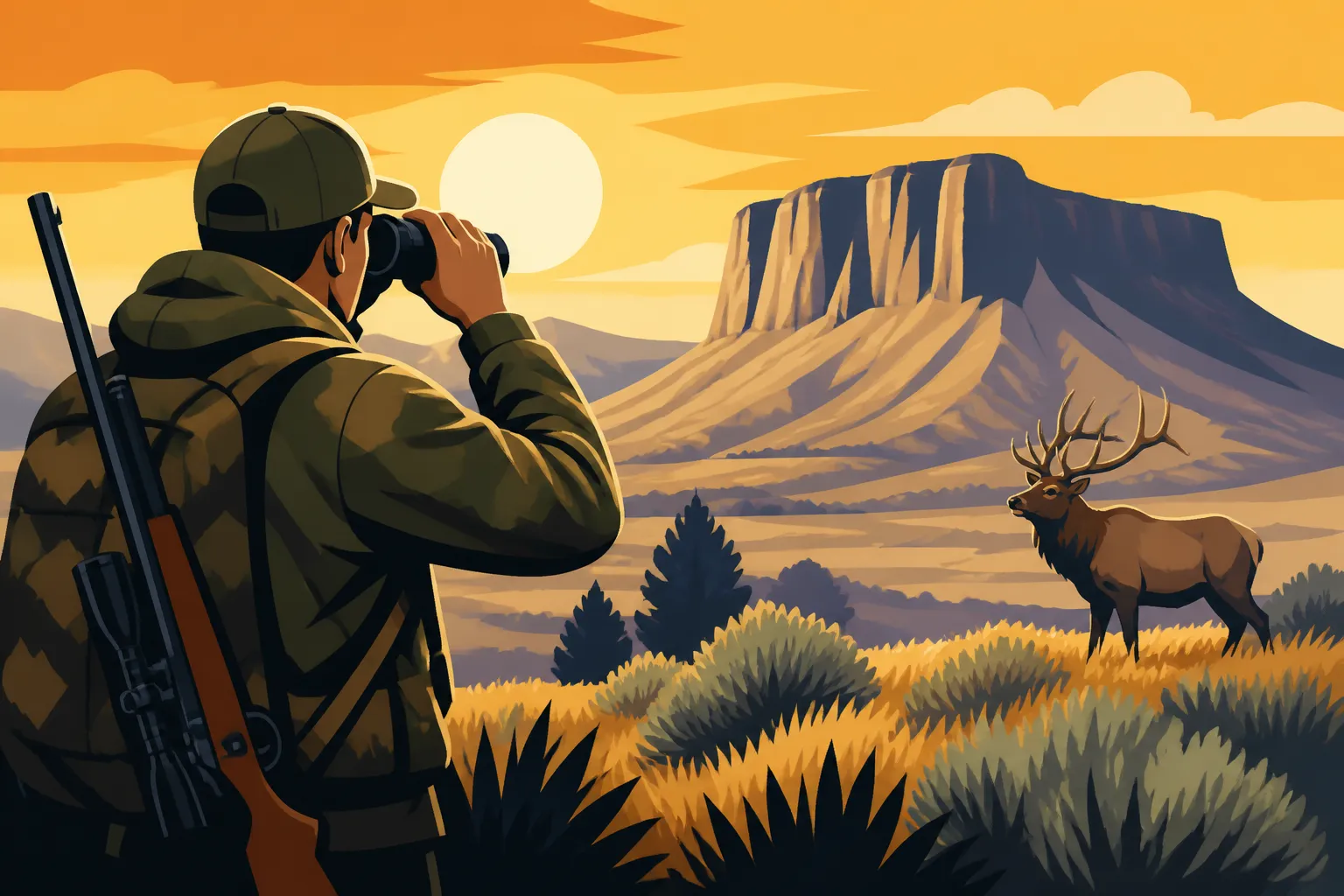
The Modoc Plateau is truly a glasser's paradise, or perhaps, a glasser's proving ground. With its expansive, open country, juniper flats, and rimrock canyons, the ability to sit patiently with quality optics and systematically pick apart distant terrain is paramount, especially for mule deer. Instead of walking aimlessly, find a high vantage point at first light or late in the afternoon that offers a sweeping view of basins, draws, and slopes where deer might be feeding or bedding. Use your binoculars on a tripod to methodically scan every inch of ground, looking for movement, an antler tip, the horizontal line of a deer's back, or the tell-tale shade variation of a bedded animal. Patience is key; often, a buck will materialize in an area you've already scanned multiple times, only becoming visible when it shifts or stands up. Glassing Mule Deer in Open California Country applies perfectly here.
Once a target animal is spotted, the next phase is the spot-and-stalk. This involves carefully planning your approach, utilizing terrain features, drainages, and vegetation for cover to get within shooting range. Wind direction is critical and can make or break a stalk. The Modoc's dry, brittle vegetation can be noisy underfoot, so slow, deliberate movement is essential. Pay attention to the sun's position to avoid casting long shadows or silhouetting yourself. A successful stalk can take hours, sometimes covering miles, only to have the deer move before you're in position. It’s a game of chess against an animal with superior senses, but the reward of closing the distance on a Modoc mule deer is incredibly satisfying.
Still-Hunting the Timber and Junipers
While glassing dominates the open country, the denser stands of ponderosa pine and juniper demand a different approach: still-hunting. This involves moving incredibly slowly and deliberately through the timber, pausing frequently—sometimes for several minutes at a time—to scan the woods ahead, listen for subtle sounds, and allow your eyes to adjust to the nuances of the forest. Mule deer, particularly the bigger bucks, will often seek refuge in these thicker areas during the middle of the day or when pressured. Look for fresh tracks, rubs, and droppings as indicators of recent activity. The key is to move at a snail's pace, often taking only a few steps every minute, allowing you to observe before you're observed.
The juniper stands, with their dense, often tangled branches, can be particularly challenging. Deer will seemingly vanish into these thickets. When still-hunting junipers, focus on reading the contours of the land, identifying natural funnels, and paying close attention to any breaks in the cover where deer might move. Often, a slight change in elevation or an opening in the trees can provide a brief window to spot a deer before it slips away. Wind direction is still important, as swirling winds in timber can carry your scent in unpredictable ways. This slow, patient method, though physically demanding, can be incredibly effective for surprising deer in their bedding cover.
Water Sources and Food Plots: Key to Success
In a high desert environment like the Modoc Plateau, water is life, and consequently, a major drawing point for all game species. Identifying natural springs, seeps, stock ponds, and even temporary puddles can provide hot spots for hunting. During the warmer early seasons, deer, bear, and pigs will frequent these water sources, often at dawn and dusk. Scouting these areas for tracks and fresh sign can reveal prime ambush locations or provide clues to travel patterns. Consider setting up a ground blind or finding natural cover downwind of a reliable water source, especially if hunting during a hot spell.
While not as common as in some other hunting regions, private landowners on the fringes of public land or within some agricultural areas may plant small food plots. These cultivated patches, offering succulent forage, can be magnets for deer and pigs, especially later in the season when natural food sources dwindle. On public lands, focus on natural forage areas such as bitterbrush thickets, serviceberry patches, or areas with good grass growth, particularly those recovering from a Hunting a National Forest Burn Scar. These areas can provide crucial nutrition and draw game from surrounding country. Utilizing mapping tools like onX Hunt to identify water sources and potential forage areas, combined with rigorous Scouting California Public Land Before Season, will give you a significant advantage on the Modoc Plateau.
| Game Species | Primary Modoc Habitat | Hunting Season Focus | Key Challenge |
|---|---|---|---|
| Mule Deer | Juniper flats, ponderosa pine, rimrock | General season (rifle), Archery season | Vastness, elusive nature, pressure on public land |
| Black Bear | Dense timber, berry patches | Spot-and-stalk season, Archery window | Quota management, finding food sources |
| Wild Pig | Oak woodlands (fringes), riparian | Year-round (specific tags required) | Limited prime habitat on Modoc, access |
| Wild Turkey | Oak-pine transition, riparian | Spring gobbler, Fall archery | Locating roosts, calling birds in open country |
| Valley Quail | Juniper-sagebrush, brushy draws | Fall/Winter | Fast-flying birds, thick cover |
| Waterfowl | Seasonal wetlands, stock ponds | Fall/Winter (Pacific Flyway) | Access to water, decoy setup, identification |
Disclaimer
This article is for general informational purposes only and does not constitute professional advice. Laws, prices and regulations vary by location and change over time. Consult a qualified professional for guidance on your specific situation.