California’s Non-Lead Ammunition Requirement
If you've hunted in California anytime in the last few years, you've undoubtedly grappled with the significant shift to non-lead ammunition. It's not just a minor inconvenience; it can be a real headache trying to understand the rules, find the right ammo, and ensure your trusted firearm performs as expected. This comprehensive guide is designed to cut through the confusion, offering practical, in-depth advice on navigating California's non-lead ammunition requirement so you can hunt confidently and legally.
The Mandate: Understanding California's Non-Lead Law
The transition to non-lead ammunition in California wasn't an overnight decision; it was a gradual rollout culminating in a statewide ban. For many hunters, this change has felt like an extra hurdle, another thing to worry about before heading into the field. But understanding the history and the science behind the mandate can help demystify it and ensure you're fully compliant with the regulations.
A Brief History: How We Got Here
The story of California's non-lead ammunition requirement really began with the California condor. These magnificent, critically endangered birds, reintroduced into the wild, were found to be suffering from lead poisoning. Researchers discovered that condors, being scavengers, were ingesting lead fragments from gut piles and unrecovered game left by hunters who used traditional lead-based ammunition. The initial response was localized bans in areas where condors were present, particularly in the range of the Los Padres National Forest. This started as far back as 2008 in parts of Southern and Central California.
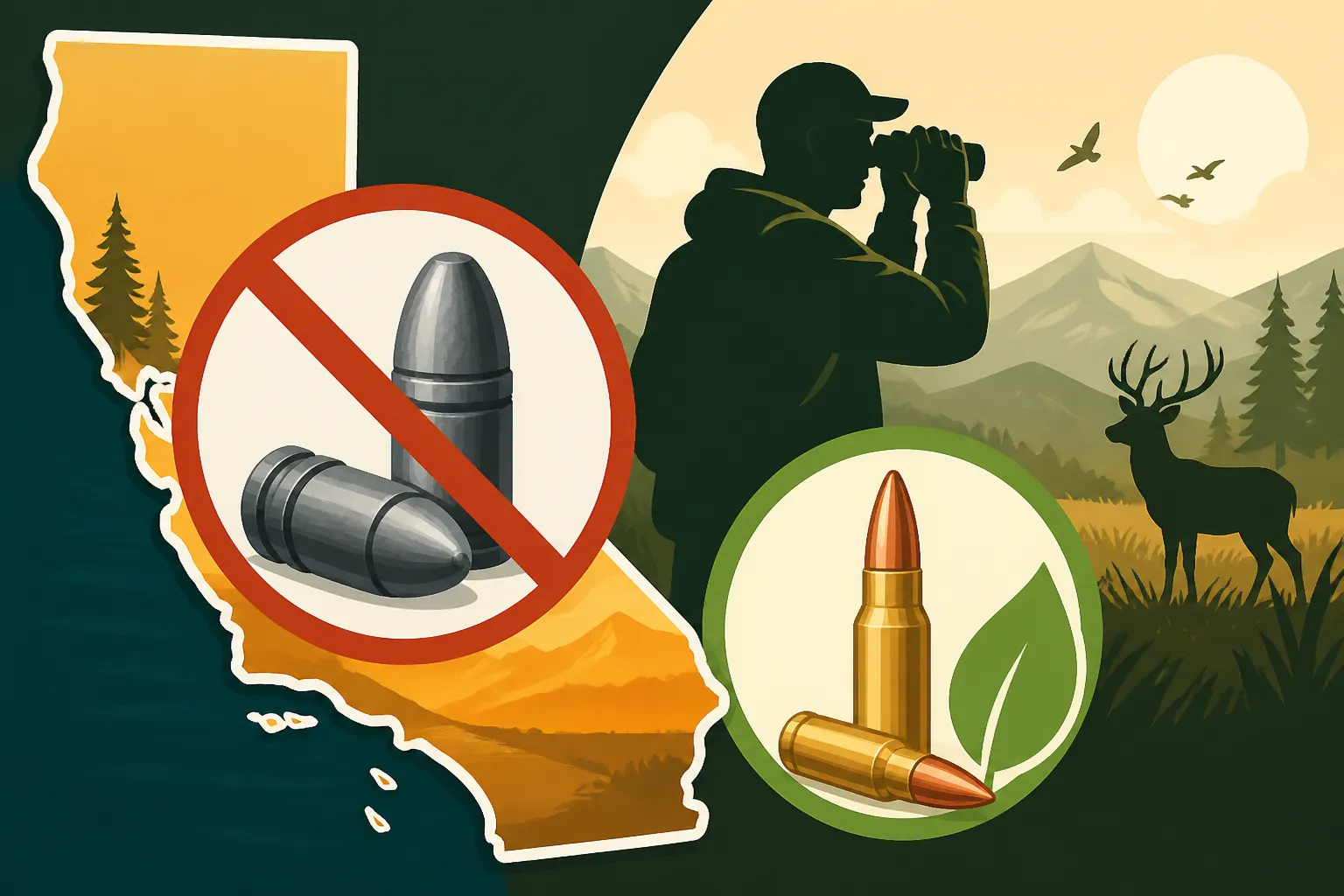
As the scientific evidence mounted regarding the pervasive nature of lead fragments in the environment and its impact not just on condors, but on other wildlife species like eagles and even domestic animals, the push for a broader solution grew. The localized bans proved effective in reducing lead exposure in those specific areas, demonstrating that a non-lead approach was viable. This paved the way for Assembly Bill 711, passed in 2013, which mandated a complete, statewide phase-out of lead ammunition for all hunting by July 1, 2019. It was a monumental shift, creating a ripple effect across the hunting community and the ammunition industry alike.
The Scope: What the Law Covers
When we talk about California's non-lead ammunition requirement, it's crucial to understand that it applies to all hunting within the state. This isn't just for big game like deer and elk; it extends to small game, upland birds, and even varmints if you're hunting them with a firearm. Whether you're chasing squirrels in the oak woodlands or decoying ducks in the Central Valley, your projectiles must be non-lead. This means shot for shotguns, bullets for rifles and handguns, and even sabots for muzzleloaders must all be made of materials other than lead. There are very few, if any, exemptions for specific areas or methods once you're actively hunting.
This sweeping coverage sometimes catches hunters off guard, especially those who primarily pursue small game or who might occasionally head out for an opportunistic predator hunt. It’s not enough to simply swap out your deer rifle ammo; you need to assess your entire hunting arsenal. Even if you're just carrying a .22 for plinking while in a hunting area, any ammunition you possess for the purpose of hunting any species must be non-lead. This strict interpretation means checking every box of ammo you bring afield. For more specific details on what projectiles count as certified, you might want to read our guide on Which Non-Lead Bullets California Approves.
The "Why": Conservation and Wildlife
At its core, the non-lead mandate is a wildlife conservation measure. The primary driver, as mentioned, was the California condor, but the benefits extend far beyond this single iconic species. Scientific studies consistently show that lead fragments from bullets can spread extensively within an animal carcass, often imperceptibly, turning gut piles and unrecovered game into silent killers for scavengers. Even a small piece of lead, ingested by a scavenger, can cause severe neurological damage, illness, or death. Raptors like golden eagles and bald eagles, which are also protected species, are particularly vulnerable.
Beyond direct ingestion, there are concerns about lead accumulating in the ecosystem, impacting soil, water, and eventually other animals. The state’s move to non-lead ammunition aims to mitigate these risks by removing a significant source of environmental lead. While hunters are often the first to embrace conservation, this particular regulation has certainly sparked debate. However, the intent is clear: to protect California's diverse wildlife populations for future generations. Understanding this underlying rationale, even if you disagree with the method, helps to contextualize the challenges hunters now face.
Navigating Approved Ammunition Choices
The biggest hurdle for many hunters since the statewide non-lead requirement took effect has been simply figuring out what ammunition they can actually use. It’s not just about "non-lead"; there's a whole world of new materials, designs, and performance characteristics to understand. This section will help you cut through the noise and make informed decisions.
Copper vs. Other Non-Lead Alternatives
When most people think of non-lead rifle ammunition, their minds immediately go to copper. And for good reason! Solid copper bullets, like Barnes TSX, Hornady GMX, Federal Trophy Copper, and Winchester Copper Impact, have become the gold standard for big game hunting in California. These projectiles are known for retaining nearly 100% of their weight upon impact, providing excellent penetration and creating devastating wound channels through hydraulic shock. Unlike traditional lead-core bullets that can fragment extensively, copper bullets typically mushroom predictably, minimizing the risk of lead fragments spreading through the carcass or into the environment.
However, copper isn't the only non-lead material out there. For shotgunners, you'll encounter steel shot, bismuth, and tungsten-alloy shot. Steel is the most common and affordable, but it's lighter than lead, meaning less energy and faster velocity decay, requiring adjustments in choke and shot size. Bismuth is denser than steel and softer, making it safer for older shotguns and providing better performance, though at a higher cost. Tungsten alloys are the densest and offer lead-like performance, but they are significantly more expensive. For muzzleloaders, you'll find bullets made from various copper alloys or other non-lead composites. Each material has its own unique characteristics in terms of density, hardness, and ballistic performance, and understanding these differences is key to making the right choice for your specific hunting scenario.
Identifying Certified Non-Lead Projectiles
This is where it can get a little tricky, and it's essential for legal compliance. In California, it's not enough for a bullet to say "non-lead" on the box. While most manufacturers now clearly label their products, the California Department of Fish and Wildlife (CDFW) maintains an official list of certified non-lead ammunition. This list is your ultimate authority. If a particular brand and specific load isn't on that list, even if it claims to be non-lead, it may not be legal for hunting in California. This is where a resource like GoHunt can be incredibly helpful, as they often compile and update information relevant to state-specific hunting regulations.
The list is regularly updated, so it's a good idea to check it periodically, especially before buying a new batch of ammunition or trying a new load. Generally, you'll be looking for solid copper bullets from major manufacturers for rifle and handgun hunting. For shotguns, common non-lead options like steel, bismuth, or tungsten shot are widely accepted. The key is to avoid any projectile with a lead core or any significant lead component. Always double-check the packaging and, when in doubt, consult the CDFW's official list. Ignorance of the law is not an excuse, and a violation could mean significant fines or even loss of hunting privileges.
Availability and Cost Considerations
Let's be real: one of the biggest frustrations for California hunters has been the availability and cost of non-lead ammunition. When the statewide ban first went into effect, it wasn't uncommon to see shelves empty of popular non-lead loads, or prices significantly higher than their lead counterparts. While the market has largely caught up, and non-lead options are much more prevalent now, it's still a factor you need to consider. Demand for specific calibers and bullet weights can fluctuate, especially right before popular hunting seasons like deer or elk.
It's always a good practice to start looking for your non-lead ammunition well in advance of your hunting season. Don't wait until the week before opening day to try and find that specific 168-grain copper bullet for your .308. Many hunters find themselves ordering online from larger retailers to ensure they get the exact load they need, often buying in bulk to offset shipping costs and ensure a supply. The cost can still be a bit higher per box, but with increased production, the gap has narrowed considerably for many common calibers. It pays to shop around and be proactive. For more details on where to find your ammo, check out our guide on Finding Non-Lead Ammo in Stock Before Season.
Practicalities for Rifle Hunters
For many big game hunters, the rifle is their primary tool, and the shift to non-lead has presented unique challenges. It’s not just about buying a different box of ammo; it’s about understanding how these new projectiles behave and ensuring your rifle is still performing accurately and reliably in the field.
Zeroing Your Rifle with Non-Lead Loads
This is perhaps the single most critical step for any rifle hunter transitioning to non-lead ammunition. You absolutely cannot assume that your rifle, previously sighted in perfectly with lead-core bullets, will shoot the same point of impact with non-lead loads. Copper and other non-lead projectiles are often lighter for their length due to the material's lower density compared to lead. This difference in weight, length, and construction can drastically change a bullet's ballistic characteristics, including muzzle velocity, bullet drop, and wind drift.
Even if you stick to the same caliber and bullet weight, a 150-grain copper bullet will almost certainly perform differently than a 150-grain lead-core bullet. You might see a different point of impact at 100 yards, a tighter or looser group, or simply a completely different trajectory. This means a mandatory trip to the shooting range is in order. You need to re-zero your rifle specifically with the non-lead ammunition you intend to hunt with. Fire enough rounds to confirm your zero, understand your rifle's grouping capabilities with the new load, and if possible, shoot at various distances to build a new ballistic table for your setup. This is non-negotiable for ethical and effective hunting. For a detailed walkthrough, see our guide on Zeroing a Rifle for Non-Lead Loads.
Ballistics and Performance Differences
As mentioned, non-lead bullets, particularly solid copper ones, have distinct ballistic profiles compared to traditional lead-core bullets. Generally, copper bullets tend to be longer for a given weight, which can affect barrel harmonics and stabilization in some rifles, though modern bullets are designed to mitigate this. They often have slightly different muzzle velocities, and their ballistic coefficients might vary. This means that a shot you confidently made with your old lead ammunition might require a different hold or dial adjustment with your new non-lead load.
Beyond external ballistics, the terminal performance is also different. Non-lead bullets, especially solid copper expanding designs, are engineered for high weight retention and controlled expansion. This is fantastic for penetration and preventing fragmentation, which is the whole point of the law. However, some hunters initially found that while these bullets penetrate well, they might create a smaller initial wound channel than a rapidly expanding, fragmenting lead bullet. This means shot placement becomes even more critical. While a heart or lung shot with a quality copper bullet is devastating, a marginal hit might be less forgiving, making thorough blood trailing and recovery skills even more important. Understanding these characteristics helps you adjust your shooting strategy in the field.
Caliber-Specific Recommendations for Deer and Elk
Choosing the right non-lead bullet isn't a one-size-fits-all situation; it heavily depends on the game you're pursuing and the caliber you're shooting. For deer hunting in California, particularly the often-smaller Columbia Blacktail, lighter, fast-opening copper bullets tend to perform exceptionally well. For common deer calibers like .270 Winchester, .308 Winchester, or 6.5 Creedmoor, bullets in the 130-150 grain range are popular and effective. Brands like Barnes TTSX, Hornady CX, or Federal Terminal Ascent are excellent choices. They provide reliable expansion on deer-sized game without over-penetrating too much. You can delve deeper into this with our article on the Best Non-Lead Bullets for California Deer-Sized Game.
When you step up to elk hunting, whether it's Tule, Roosevelt, or Rocky Mountain elk, you need a bullet designed for heavier bones and muscle. Here, you'll want to lean towards the heavier end of your caliber's bullet weight spectrum. For calibers like .30-06 Springfield, .300 Win Mag, or 7mm Rem Mag, bullets in the 165-180 grain range (or even heavier for magnums) made of solid copper are ideal. These bullets offer the necessary sectional density and weight retention to punch through an elk's shoulder and reach the vitals. Again, manufacturers like Barnes, Hornady, and Nosler (with their E-Tip) offer proven options. For more specialized advice on larger game, consult our guide on the Best Non-Lead Bullets for Elk-Sized Game. It’s always best to test several brands in your rifle to see which one provides the best accuracy.
Non-Lead for Shotguns, Muzzleloaders, and Handguns
While rifle hunters often get the most attention when discussing non-lead ammunition, it’s critical to remember that the mandate applies to all hunting methods. Shotgun, muzzleloader, and handgun hunters also have specific non-lead requirements they need to meet.
Steel, Bismuth, and Tungsten Shot Options
For shotgun hunters, especially those pursuing waterfowl or upland birds like California Valley Quail, the non-lead requirement has been in effect for migratory birds for many years at a federal level, so the transition wasn't as jarring as it was for rifle hunters. However, the statewide ban now means all shotgun hunting, including upland game like pheasant, dove, and quail, must use non-lead shot.
Steel Shot: This is the most common and often the most affordable non-lead option. Steel is lighter than lead, so you'll typically need to go up a shot size or two to maintain similar pellet energy. For instance, if you used to shoot 6s for quail, you might consider 4s or 5s in steel. Steel shot patterns can also be tighter, so you might need to adjust your choke selection, often opting for a more open choke than you would with lead. It's excellent for ducks and geese, and increasingly effective for upland birds with modern loads.
Bismuth Shot: Bismuth is denser and softer than steel, making it perform closer to lead. It's also safe for older shotguns that can't handle steel shot. Bismuth carries more energy downrange than steel of the same size, and its softer nature means less concern about barrel wear. It's a fantastic option for upland birds and waterfowl, though it comes at a higher price point than steel.
Tungsten-Alloy Shot: This is the premium non-lead option. Tungsten alloys are significantly denser than lead, providing superior energy, range, and knockdown power. They are often used in very small shot sizes for maximum pellet count or in larger sizes for extreme range. The trade-off is the cost, which can be quite high. It's often favored by serious goose hunters or those who want the absolute best performance for tough birds. When considering your options, remember to check out our deep dive into Non-Lead Shotgun Loads for Upland Birds.
Muzzleloader Projectiles Beyond Lead Round Balls
Muzzleloader hunting in California, while less common than rifle or archery, is still a viable option, particularly in some specialized hunts or during archery-only seasons where specific muzzleloader rules apply. Just like with modern firearms, lead projectiles are now out. This means those traditional patched lead round balls are a no-go for hunting.
Fortunately, ammunition manufacturers have developed excellent non-lead options for muzzleloaders. You'll find saboted bullets made from solid copper or copper alloys, designed to perform much like their modern rifle counterparts. Brands like Hornady (with their FPB – Flex Tip Muzzleloader Bullet) and Barnes (Spit-Fire T-EZ or MZ-Expander) offer robust copper projectiles specifically for muzzleloaders. These typically come in plastic sabots that allow them to be loaded in larger bore muzzleloaders (like .50 caliber) while still fitting a smaller diameter bullet (like a .45 or .40 caliber) that can achieve excellent velocities and terminal performance. When selecting, pay attention to the manufacturer's recommendations for twist rates and ensure you practice thoroughly to confirm accuracy and reliable ignition.
Handgun Ammunition for Wild Pigs and Upland Game
Yes, even if you’re planning to hunt with a handgun, the non-lead rule applies. While handgun hunting for big game like deer is less common, it’s a popular method for pursuing wild pigs, especially when stalking through dense cover. Many hunters also carry a .22 handgun for small game or dispatching trapped animals where legal. In all these scenarios, your ammunition must be non-lead.
For wild pigs, hunters often favor powerful magnum cartridges like .44 Magnum, .357 Magnum, or .45 Colt. For these calibers, you'll want solid copper hollow points or expanding projectiles from manufacturers like Barnes (XPB), Hornady (Monoflex Handgun), or Federal (Fusion MSR). These bullets are designed for reliable expansion and deep penetration, which is crucial for the tough hide and bone structure of a wild pig. For small game like rabbits or squirrels, non-lead .22LR options are available, typically using copper-plated lead-free bullets or all-copper designs. While historically harder to find, non-lead .22LR has become more common. Remember, whatever you choose, test it thoroughly in your handgun to ensure accuracy and reliable cycling. For a deeper dive into available options, check out our guide on Non-Lead Handgun Ammunition Options.
Challenges and Solutions on the Ground
The non-lead mandate has undeniably introduced new challenges for California hunters, from simply finding the right ammo to ensuring their existing gear still performs. It's easy to get frustrated, but there are practical solutions and strategies to overcome these hurdles.
Finding Non-Lead Ammo in Remote Areas
One of the most persistent frustrations for hunters, especially those who live or hunt in more remote parts of California, is the availability of non-lead ammunition. While major sporting goods retailers in urban centers usually have a decent stock, smaller local shops in rural areas might have a more limited selection, particularly for less common calibers or specific bullet weights. This can lead to panicked searches right before the season, or worse, settling for a load that isn't ideal for your rifle.
The best solution here is proactive planning. Don't assume your local mom-and-pop shop will have what you need. Start your search months in advance. Many hunters now rely heavily on online retailers. Websites like MidwayUSA, Brownells, or even directly from manufacturers like Barnes or Hornady, often have the widest selection of non-lead ammunition. You can have it shipped directly to your door (though always check local FFL requirements for certain types of ammunition). It also helps to network with other hunters in your area. Sometimes, a local hunting club or even forums on platforms like GoHunt can provide tips on which local stores are stocking specific loads or where bulk orders are being placed. Remember, if you're traveling to hunt in a zone like the high-country X-Zones, don't assume you'll pick up ammo on the way. Plan ahead.
Dealing with Varying Performance in Older Firearms
Many California hunters cherish their older, well-loved firearms – perhaps a grandpa's .30-06 or a classic .270. These rifles were often designed around lead-core ammunition, and sometimes, they don't "like" non-lead bullets as much. You might encounter issues like decreased accuracy, inconsistent groups, or simply a rifle that just doesn't perform as well with copper as it did with lead. This isn't universally true, but it's a known issue for some firearms.
The first step is always thorough testing. Try several different brands and bullet weights of non-lead ammunition to see if your rifle shows a preference. Sometimes, a slight change in bullet length or construction from one manufacturer to another can make a big difference in accuracy. If accuracy remains an issue, consider consulting a reputable gunsmith. They might be able to offer advice on barrel cleaning techniques (copper fouling can be different), or in rare cases, discuss options like barrel lapping or even rebarreling, although these are extreme and costly measures. Often, patience and experimentation with different non-lead loads will yield a suitable option. Precision reloading, if you're into it, can also offer more control over bullet seating depth and powder charges to optimize accuracy with non-lead projectiles.
Hunter Responsibilities and Compliance Checks
Ultimately, the responsibility for compliance with California's non-lead ammunition requirement rests squarely on the hunter. Game wardens are diligently enforcing this law, and ignorance is not a valid defense. During a check, a warden can request to inspect your ammunition to ensure it is non-lead. This could involve examining the box, or even inspecting a loaded round.
To avoid any issues, always carry your ammunition in its original box, if possible, as it will clearly state "non-lead" or specify the material (e.g., "copper"). If you've loose rounds in your magazine or cartridge carrier, make sure you can confidently identify them as non-lead. If a warden has any doubt, they might ask you to break open a round for inspection, which is within their authority. Beyond the ammunition itself, be prepared to articulate your understanding of the law. This guide is a great start, but also familiarize yourself with the CDFW regulations. Fines for non-compliance can be substantial, and repeated offenses could lead to revocation of hunting privileges. Stay informed, stay prepared, and always err on the side of caution.
Planning Your Hunt Around the Non-Lead Rule
Successfully adapting to California's non-lead ammunition requirement isn't just about what you buy; it's about how you integrate it into your entire hunting process, from pre-season preparations to your actions in the field. A little foresight goes a long way.
Pre-Season Prep: What to Do Before You Go
The weeks and months leading up to your hunting season are crucial for ensuring you’re fully compliant and confident with your non-lead setup. Don't wait until the last minute! First and foremost, purchase your ammunition early. As we discussed, availability can fluctuate, and you need ample time to test it. Once you have your non-lead loads, head to the range. This isn't just a casual session; it's a serious testing and re-zeroing mission. You need to confirm your rifle's accuracy with the new ammunition at various distances you expect to shoot in the field.
Beyond just shooting, practice ethical shot placement. Non-lead bullets, while highly effective, often require precise shot placement for quick, ethical kills, especially on tough game like deer or elk. Practice shooting from various field positions – prone, kneeling, standing – to simulate real hunting scenarios. Also, ensure your optics are properly dialed in for the new trajectory. If you use a ballistic app or rangefinder with custom profiles, update them with the actual ballistic data from your non-lead ammunition. Finally, make sure all your hunting licenses and tags are in order; remember, understanding California Hunting Licenses and What They Cost is just as important as your ammo.
Field Considerations: Shot Placement and Tracking
Out in the field, your approach to taking a shot and recovering game needs to account for the characteristics of non-lead projectiles. While non-lead bullets are incredibly effective, their typically lower fragmentation means that a slightly off-center hit might not create as much secondary damage as a lead bullet might have. This emphasizes the already critical importance of precise shot placement. Aim for the vital organs – the heart and lungs – and be absolutely confident in your shot before squeezing the trigger. If you have any doubt, hold off.
Furthermore, your tracking skills need to be sharp. Even with a perfect shot, a deer might run a short distance. With less fragmentation, blood trails might be different, sometimes less profuse or harder to follow. Pay close attention to the animal's reaction to the shot, the direction it traveled, and any visible sign of impact. If you're hunting in dense cover, like the coastal range oak woodlands, taking mental notes of landmarks where the animal was last seen is vital. Always give the animal enough time before initiating a track, especially if the shot wasn't immediately fatal. Investing in a good tracking dog (where legal) or simply honing your own tracking abilities will pay dividends when using non-lead ammunition.
Educating Fellow Hunters and Staying Informed
As an informed hunter in California, you have a role to play in educating others and helping to normalize the use of non-lead ammunition. There's still a lot of misinformation and frustration surrounding the mandate, and sharing your positive experiences, tips, and knowledge can help new or less experienced hunters adapt. If you're hunting with friends or family, make sure everyone in your party understands the non-lead requirement and has the appropriate ammunition. It helps to check in with them before heading out.
Staying informed yourself is also key. Regulations can change, new ammunition technologies emerge, and CDFW might update their certified ammunition lists. Regularly check the CDFW website for the latest regulations, and keep an eye on reputable hunting publications and online forums for discussions on new non-lead products or best practices. Websites like GoHunt are excellent resources for staying up-to-date on all California hunting regulations and news. Your engagement contributes to a community of responsible, compliant, and conservation-minded hunters.
Beyond Ammunition: Related Conservation Efforts
The non-lead ammunition requirement, while a significant change, is just one piece of the larger conservation puzzle in California. Understanding the broader context of wildlife management and other regulations helps underscore the state's commitment to preserving its natural heritage.
The California Condor and Habitat Protection
The plight of the California condor was the catalyst for the non-lead ammunition ban, and their recovery remains a central focus of conservation efforts. These majestic birds, with wingspans up to ten feet, were once on the brink of extinction, with only 22 individuals left in the 1980s. Thanks to aggressive captive breeding and reintroduction programs, their numbers have slowly grown. Today, they still face threats, including lead poisoning, habitat loss, and collisions with power lines.
The non-lead ammunition law directly addresses the lead poisoning threat by removing a major source of lead from their foraging areas. However, conservation efforts extend far beyond just ammunition. Protecting their vast foraging ranges, ensuring safe nesting sites in remote cliffs, and monitoring their health are ongoing priorities. This includes managing human activity in critical condor habitats, minimizing disturbance, and continuing research into condor biology and ecology. The law, therefore, isn't just about bullets; it's about the survival of an iconic species and the health of the entire ecosystem they inhabit. This truly highlights what led to California's Condor-Driven Ammunition Law.
CWD Testing Zones and Wildlife Health
While separate from the non-lead ammunition mandate, California's efforts to monitor and manage wildlife diseases like Chronic Wasting Disease (CWD) are another critical component of conservation. CWD is a fatal neurological disease affecting deer, elk, and moose. While California has thankfully remained largely CWD-free, recent detections in neighboring states and two confirmed cases in California mean constant vigilance is paramount. This has led to the establishment of California's Two CWD Testing Zones.
CDFW has implemented mandatory CWD testing zones for hunter-harvested deer and elk in specific areas, primarily along the state's borders. Hunters harvesting animals in these zones are required to submit samples for testing. This monitoring is vital for early detection, which is the best defense against the spread of the disease. While there's no direct link between CWD and lead ammunition, both are serious wildlife health issues that require hunter cooperation and responsible practices. Adhering to CWD testing requirements and understanding carcass movement restrictions are just as important as using non-lead ammunition for the overall health of California's deer and elk herds.
The Broader Picture: Sustainable Hunting in California
The non-lead ammunition requirement fits into a broader framework of sustainable hunting practices in California. The state manages its diverse wildlife populations through a combination of science-based regulations, habitat conservation, and public education. From setting hunting seasons and bag limits to managing public lands and funding conservation projects, the goal is to ensure healthy wildlife populations and accessible hunting opportunities for generations to come.
This commitment extends to other areas, such as robust hunter education programs, stringent licensing requirements, and efforts to combat poaching. Whether you're exploring the vast public lands in the Sierra Nevada backcountry or hunting a specific D-zone that opens in August, every hunter's adherence to these regulations contributes to the overall health of California's ecosystems. The non-lead mandate is a reflection of this ongoing commitment, asking hunters to adapt for the collective good of wildlife and the environment. It underscores the responsibility that comes with the privilege of hunting, ensuring that our impact on the wild places we cherish is as minimal and positive as possible.
| Non-Lead Ammunition Type | Primary Use Case | Pros | Cons | Common Brands/Materials |
|---|---|---|---|---|
| Solid Copper Bullet | Rifles (Deer, Elk) | High weight retention, deep penetration, minimal fragmentation | Higher cost, can be less forgiving on marginal hits, may require re-zeroing | Barnes TSX/TTSX, Hornady CX/GMX, Federal Trophy Copper, Nosler E-Tip |
| Steel Shot | Shotguns (Waterfowl, Upland) | Affordable, widely available | Lighter than lead, less energy, potential pattern issues (adjust choke) | Federal Speed-Shok, Winchester Blind Side, Kent Fasteel |
| Bismuth Shot | Shotguns (Waterfowl, Upland) | Denser than steel, softer (safe for older guns), better energy | Higher cost than steel | Kent Bismuth, Boss Shotshells, Rio Bismuth |
| Tungsten-Alloy Shot | Shotguns (Waterfowl, Extreme Range) | Very dense, superior energy & range, lead-like performance | Very high cost | Federal Heavyweight, Apex Ammunition |
| Copper Handgun Bullet | Handguns (Wild Pig, Defense) | Reliable expansion, good penetration | Higher cost, may require re-zeroing | Barnes XPB, Hornady Monoflex Handgun, Federal Punch |
| Non-Lead Muzzleloader | Muzzleloaders (Deer, Elk) | Good terminal performance, modern designs | Fewer options than modern rifle bullets, may require specific sabots | Barnes Spit-Fire T-EZ, Hornady FPB |
Disclaimer
The information provided in this article is for general guidance only and is not a substitute for reviewing the official regulations published by the California Department of Fish and Wildlife (CDFW). Hunting laws and regulations can change, and it is the responsibility of each hunter to understand and comply with all current federal, state, and local laws. Always consult the latest CDFW Hunting Regulations prior to any hunting activity.