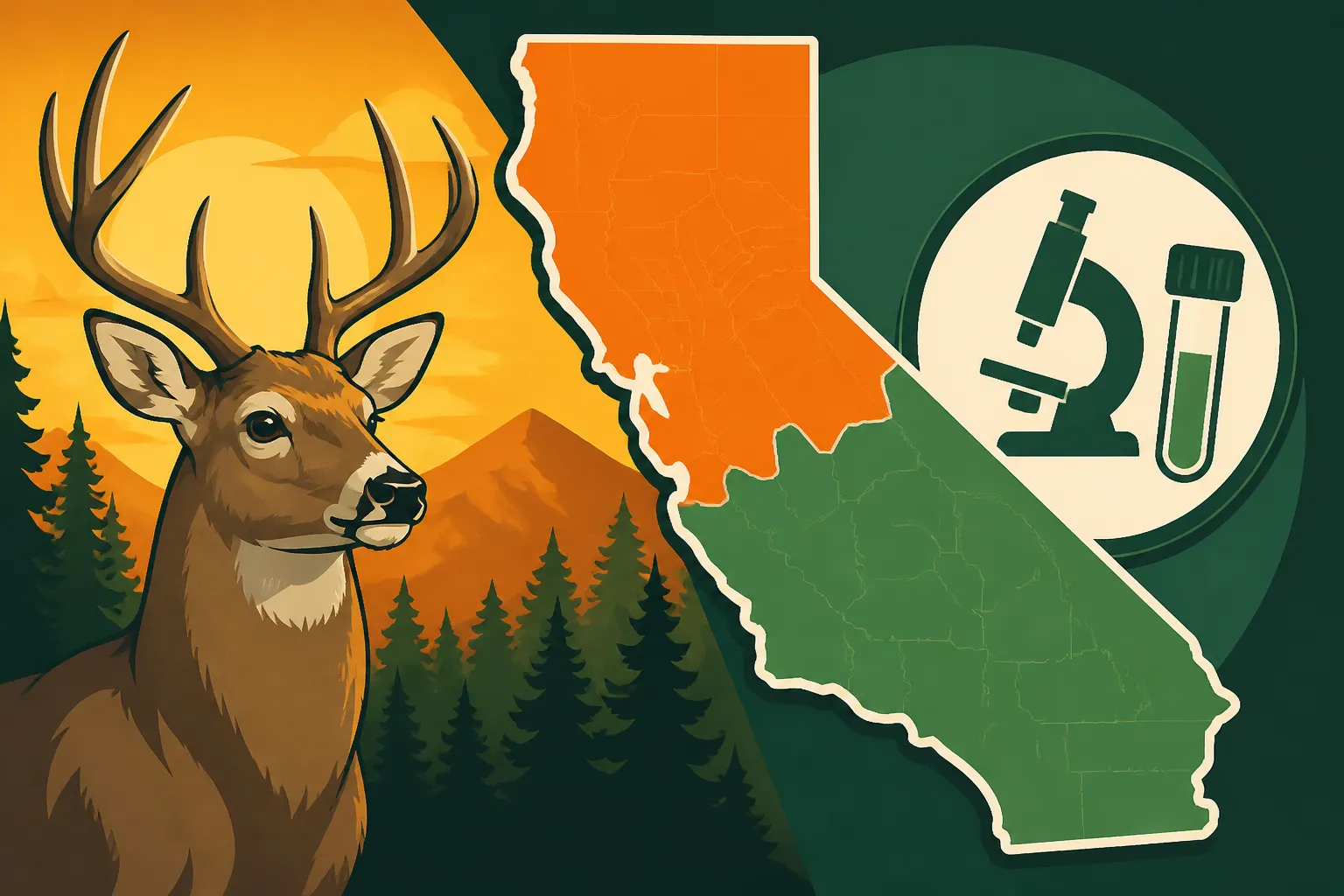
California’s Two CWD Testing Zones
The news about Chronic Wasting Disease (CWD) can feel pretty unsettling, especially when you're gearing up for a hunting season in California. Nobody wants to hear about a serious disease affecting our deer and elk, and it can be confusing trying to figure out what the rules are, where they apply, and what it all means for your hunt. This guide is here to cut through that confusion, explaining California's CWD testing zones, what hunters need to know, and how we can all work together to protect our wild herds.
Understanding Chronic Wasting Disease CWD in California
CWD has been a hot topic in wildlife management across the country for years, and now it's hit closer to home here in California. It’s natural to feel a mix of concern and confusion, wondering what this means for our beloved hunting traditions and the health of our magnificent game animals. Let's get into what CWD actually is and why California wildlife officials are taking it so seriously.
What Exactly is CWD
Chronic Wasting Disease is a serious, fatal neurological disease that affects cervids – that's deer, elk, moose, and reindeer. It's classified as a transmissible spongiform encephalopathy, or TSE, which puts it in the same family as "mad cow disease" (BSE) in cattle and scrapie in sheep. The "spongiform" part refers to the sponge-like holes it creates in the brain tissue of infected animals as the disease progresses, literally wasting them away.
The culprit behind CWD isn't a bacteria or a virus; it's an abnormal protein called a prion. These misfolded prions accumulate in the brain and other tissues, causing the brain to degenerate over time. What makes CWD particularly insidious is its long incubation period, often taking years before an animal shows any visible symptoms. During this time, an apparently healthy animal can be shedding infectious prions through saliva, urine, and feces, contaminating the environment for years to come. Eventually, affected animals exhibit a range of symptoms, including drastic weight loss (hence "wasting"), stumbling, listlessness, blank facial expressions, excessive salivation, and behavioral changes like a lack of fear of humans. The disease is always fatal, and there is currently no vaccine or cure.
Why California is So Concerned
California is home to diverse and iconic cervid populations, primarily our Columbia blacktail and mule deer, along with various elk species like the Tule, Roosevelt, and Rocky Mountain elk. These animals are not just part of our natural heritage; they are also central to the state's vibrant hunting culture and vital to the ecosystem. The potential for CWD to spread through these populations is a grave concern, not just for hunters, but for all wildlife enthusiasts and conservationists.
The "if it's here, it could spread" mentality is very real. California has spent decades building robust wildlife management programs, including careful monitoring of California Deer Population Estimate and health. The introduction of CWD could rapidly undo years of conservation work, leading to declines in herd numbers, altered age structures, and a significant impact on hunting opportunities. Imagine fewer healthy deer roaming the Sierra Nevada or the Coastal Range – it's a future we all want to avoid. The state's proactive approach to monitoring and prevention is a direct reflection of this concern. Wildlife officials understand that early detection and stringent management are the best lines of defense against a disease that, once established, is incredibly difficult to eradicate.
Identifying California's Designated CWD Testing Zones
The news that CWD had been detected in California was a wake-up call for many of us. Understanding where these detections occurred and what specific areas are now under enhanced surveillance is critical for any hunter heading into the field. This isn't just about complying with regulations; it's about being a responsible steward of our wildlife.
The Initial Discovery and Response
CWD was officially detected in California in two deer in August 2023. These were not isolated incidents across the state, but rather specific detections in eastern Madera County and western Inyo County. Specifically, a mule deer buck harvested in Deer Zone X9C, near the eastern border of Madera County, and another mule deer buck from Zone X10, in western Inyo County, tested positive for the disease. These detections immediately triggered a robust response from the California Department of Fish and Wildlife (CDFW).
Following these discoveries, the CDFW acted swiftly to establish surveillance zones around the affected areas. These zones are defined by specific geographical boundaries, often following county lines, major roads, or topographic features, to delineate where intensified monitoring and mandatory testing will occur. For instance, the Madera County detection falls within a larger area that CDFW has now identified for enhanced surveillance, encompassing not just the specific harvest location but also surrounding areas where deer movement might occur. The rationale behind these specific zones is to create a focused effort to understand the prevalence and distribution of the disease, allowing for targeted management actions rather than a scattershot approach. These areas are chosen because they represent the immediate vicinity of the positive cases and are considered high-risk for potential further spread due to deer movement patterns.
Mandatory Testing Requirements within the Zones
If you plan to hunt deer or elk in one of California's designated CWD testing zones, you need to be fully aware of the mandatory testing requirements. These aren't suggestions; they are crucial components of the state's disease management strategy, and compliance is non-negotiable. For any deer or elk harvested within the boundaries of the CWD testing zones in eastern Madera County and western Inyo County, hunters are required to submit specific tissue samples for testing.
The primary samples requested are typically lymph nodes, specifically the retropharyngeal lymph nodes located in the throat region, and in some cases, a portion of the brain stem. These tissues are where CWD prions accumulate most reliably and can be detected during the early stages of the disease. The CDFW provides detailed instructions, often through online resources or at check stations, on how to properly collect these samples. It's important to familiarize yourself with these procedures before you head out, so you're not scrambling in the field after a successful harvest. You might be asked to present your animal at a designated check station, or provided with a kit and instructions for self-sampling. Regardless of the method, the goal is to obtain a clean, usable sample that can be accurately tested. This mandatory submission of samples is paramount for the CDFW to gather accurate data on disease prevalence, track its potential spread, and make informed decisions about future management strategies for California's Deer and Elk Disease Monitoring efforts.
Practical Steps for Hunters in a CWD Testing Zone
Hunting in a CWD testing zone adds a layer of responsibility, but it doesn't have to be overwhelming. With a little preparation and attention to detail, you can easily comply with all regulations and contribute positively to wildlife health. It’s all about understanding what’s expected before, during, and after your hunt.
Pre-Hunt Preparation and Awareness
Before you even think about packing your gear, your first step needs to be thorough research of the current CWD regulations. The boundaries of testing zones can sometimes shift based on new detections or data, so relying on outdated information is a big no-no. Start by checking the official California Department of Fish and Wildlife (CDFW) website for the latest CWD updates and surveillance zone maps. They are the definitive source.
Beyond the official CDFW site, using reliable hunting apps and mapping tools can be a game-changer. I personally swear by platforms like GoHunt which often integrate public land boundaries, game unit lines, and, crucially, specific regulation overlays that can help you visualize whether your planned hunting spot falls within a CWD zone. Imagine you're planning a mule deer hunt in Zone X9C; with a mapping app, you can confirm if your intended area, perhaps near Mammoth Lakes, is indeed within the current CWD surveillance boundaries. It’s also wise to check for any special public land designations. Some national forests or BLM lands within CWD zones might have additional restrictions. This diligent pre-hunt check ensures you're fully aware of any mandatory testing, carcass transport limitations, or other rules specific to your hunting area, preventing any surprises when you're out in the field.
Field Dressing and Carcass Management
Once you've successfully harvested an animal in a CWD testing zone, how you field dress and manage the carcass becomes critically important. The goal is to minimize the potential spread of prions and facilitate proper sampling, especially since certain tissues contain higher concentrations of CWD prions.
When field dressing, it's best practice to leave as much of the high-risk material at the kill site as possible. This typically includes the brain, spinal cord, spleen, and lymph nodes. For areas where full carcass removal is restricted, boning out the meat in the field is often the preferred method. For example, if you're Hunting California's High-Country X-Zones and get a buck in one of the new CWD zones, you'll want to de-bone all the meat from the carcass, leaving the skull, backbone, and internal organs behind. If you plan to take the head for a trophy, you'll need to remove all brain matter and excess tissue before transport. Always use disposable gloves during field dressing, and properly bag and dispose of any high-risk parts if you must remove them from the kill site. The CDFW will have specific guidance on Moving a Deer Carcass Out of a Testing Zone, so be sure to follow those instructions precisely. For instance, some zones might allow you to transport the whole carcass directly to a CDFW check station or approved meat processor within the CWD zone, but not outside of it until testing is complete.
Submitting Your Sample for Testing
The final, and arguably most important, step after a successful harvest in a CWD zone is submitting your sample for testing. This is where your individual contribution plays a direct role in the state's CWD monitoring program. The CDFW will specify exactly what tissue is required, but typically they'll be looking for the retropharyngeal lymph nodes. These are located in the throat area, just behind the jaw, and while retrieving them might sound intimidating, with a little instruction, it's quite manageable.
You'll usually have a few options for sample submission. The most common is taking your harvested animal to a designated CDFW check station, often set up during peak hunting seasons in the CWD zones. Here, trained personnel will collect the necessary samples, handle the paperwork, and ensure everything is properly submitted to the lab. If check stations aren't available or convenient, the CDFW might offer drop-off points or even provide sampling kits for hunters to collect the lymph nodes themselves, which can then be mailed in. Always label your samples clearly with your tag number and harvest information. The CDFW aims for a California's Ten-Day CWD Testing Window for results, but this can vary depending on lab capacity and sample volume. You'll typically be notified of your results via mail or email, and it's essential to hold onto your harvested meat until you receive a negative test result. If you have any doubts, calling your local CDFW office for guidance is always the best course of action.
Understanding Carcass Transport and Restrictions
Navigating carcass transport rules in CWD zones can feel like a maze, but these restrictions are put in place for a very good reason. It's not about making things difficult for hunters; it's about safeguarding our wildlife from a disease that could have catastrophic long-term effects.
Why Restrictions Are Necessary
The science behind CWD carcass transport restrictions is straightforward and sobering. CWD prions, those infectious proteins, are not evenly distributed throughout an infected animal's body. They concentrate in specific "high-risk" tissues, including the brain, spinal cord, eyes, spleen, and lymph nodes. These are the parts that are most likely to transmit the disease.
If an infected animal's carcass, particularly these high-risk parts, is transported out of a CWD zone and improperly disposed of, it creates a significant risk of environmental contamination. For example, if a hunter were to gut an infected deer outside of the CWD zone and leave the internal organs in a new area, those prions could bind to soil particles and persist in the environment for years, even decades. This creates a "prion reservoir" that could then infect healthy deer and elk that graze or feed in that contaminated area. The goal of carcass transport restrictions is precisely to prevent this secondary spread, containing the disease to known areas and preventing its introduction into new, currently CWD-free zones. It's a critical preventative measure, especially in a state like California with diverse and geographically distinct cervid populations, such as those you'd find when Still-Hunting California's Sierra Nevada Timber or in the coastal ranges.
Legal Carcass Transport Options
Understanding what parts of your harvested animal you can legally transport out of a CWD testing zone is key. The general rule of thumb is to remove all high-risk tissues before leaving the designated area. This means you need to be prepared to do some serious field butchering.
Here's what is typically allowed for transport out of a CWD zone:
- Deboned Meat: All meat that has been completely deboned and separated from the bone, spinal column, and nervous tissue. This is the safest and most widely accepted form of transport. Think about it like this: if you can package it like you would from a butcher, it's generally good to go.
- Clean Skull Plate (Antlers): If you want to keep the antlers, they must be attached to a skull plate that has been thoroughly cleaned of all brain and nervous tissue. No brain matter can remain. Often, boiling or pressure washing the skull plate is recommended to ensure it's completely clean.
- Antlers (detached): If the antlers are completely separated from the skull, with no skull fragments or tissue attached, they are typically fine to transport.
- Hides/Capes: Hides and capes are generally allowed, provided no brain tissue is attached. Many hunters will skin their animal in the field or at a designated processing station within the zone before leaving.
- Finished Taxidermy Mounts: Once an animal has been processed by a licensed taxidermist and any high-risk tissues have been properly removed and disposed of, the finished mount is usually allowed for transport.
It’s crucial to remember that transporting a full carcass, or even a skull with brain matter intact, out of a CWD zone is usually prohibited. Imagine a hunter successfully harvesting a mule deer buck in eastern Inyo County, a CWD zone. Instead of taking the entire carcass home to Los Angeles, they would need to de-bone the animal completely, leaving the skeletal remains and organs behind, or take it to a processing facility within the Inyo CWD zone. Only the deboned meat, a cleaned skull plate for antlers, or the hide would be permissible to transport out of the designated area. Always double-check the latest CDFW regulations for the exact zone you're hunting in, as specific rules can vary slightly.
What Happens After a Positive CWD Test?
The moment every hunter in a CWD zone dreads is receiving a call with a positive test result. While it's a difficult situation, understanding the protocols that follow can help manage expectations and ensure you're contributing to the overall health of California's wildlife. It's not just about that one animal; it's about the bigger picture.
Notification and Further Action
If your submitted sample tests positive for CWD, the California Department of Fish and Wildlife will notify you directly. This notification typically comes from a CDFW representative or a designated wildlife health official. It's important to understand that this call is not a judgment, but rather a crucial step in disease management. They will likely review the specifics of your harvest, including the exact location, to help pinpoint areas of concern.
Following a positive test, the CDFW will intensify its surveillance efforts in the immediate vicinity of the harvest site. This often involves increased sampling of harvested animals from that specific deer zone or subunit, and potentially deploying additional monitoring techniques like trail cameras or ground surveys to observe herd health. They might also expand the boundaries of the CWD testing zone if they believe the disease could be more widespread than initially thought. While immediate changes to hunting seasons or tag allocations might not occur, a pattern of positive tests could lead to more stringent regulations in the future. For instance, areas with increasing CWD prevalence in other states have seen changes like increased antlerless tag opportunities to reduce deer density, or even temporary hunting closures to assess the situation. The CDFW's goal is to protect the long-term health of the herd, which could mean difficult decisions down the road for specific areas, such as when Hunting the Draw-Only Premium Zones if those were to become affected.
Safely Disposing of an Infected Carcass
Receiving a positive CWD test means you have a critical responsibility to properly dispose of the infected carcass to prevent further environmental contamination. This is paramount for preventing the spread of those persistent prions. Leaving an infected carcass in the field, even in its original harvest location, is a high-risk activity as scavengers could move tissues, or prions could leach into the soil.
The CDFW will provide specific instructions for disposal, but generally, the safest methods involve incineration or burial in an approved landfill or on private property with deep burial. You should never dispose of a CWD-positive carcass in a way that allows scavengers access or contaminates natural water sources. If you've butchered the animal and have meat that tested positive, it should also be disposed of in the same manner, as CWD is not recommended for human consumption. Furthermore, any tools or equipment that came into contact with the infected animal – knives, saws, gloves, game bags, even the bed of your truck – should be thoroughly disinfected. Bleach solution is often recommended, as prions are notoriously resistant to standard cleaning agents. Imagine you've been Butchering a Deer at Camp and then get a positive test. Every surface that touched that animal would need rigorous cleaning. This careful disposal and decontamination are vital steps in protecting uninfected wildlife and preventing CWD from taking further root in California.
The Broader Impact of CWD on California Hunting
Beyond the immediate regulations and individual animal tests, CWD presents a long-term challenge that could reshape California hunting for generations. Understanding these broader implications helps us appreciate the importance of our collective efforts now.
Effects on Deer and Elk Populations
The long-term impact of CWD on deer and elk populations can be severe, and we can look to other states for a glimpse of what could happen here. In areas with high CWD prevalence, the disease can lead to significant declines in herd density. Because CWD has a long incubation period and is always fatal, it disproportionately affects older, mature animals, which are crucial for herd reproduction and maintaining a healthy age structure. This can result in a younger, less robust herd over time, making trophy-quality animals increasingly rare.
For instance, states like Wisconsin and Colorado, which have battled CWD for decades, have seen localized deer population declines and shifts in age class distribution. This can, in turn, affect hunting opportunities, leading to reduced tag allocations or changes in season structures to try and manage the disease. Imagine if our magnificent Columbia Blacktail and Mule Deer in California started showing widespread CWD symptoms – it could fundamentally alter the experience of hunting in our state, from fewer animals to different hunting strategies. While California's CWD situation is still in its early stages, the potential for such impacts is why the CDFW is so vigilant in its California's Deer and Elk Disease Monitoring efforts.
Long-Term Management and Hunter Involvement
Effectively managing CWD in California will be a marathon, not a sprint. The CDFW's long-term strategy involves continuous surveillance, robust research into CWD transmission and mitigation, and extensive public education. Hunters are an absolutely indispensable part of this strategy. We are the "eyes and ears" on the ground, often the first to notice changes in animal behavior or health, and our participation in mandatory testing programs provides the critical data needed to track the disease.
Beyond submitting samples, hunters can get involved by reporting any deer or elk they observe exhibiting CWD-like symptoms, such as emaciation, abnormal behavior, or neurological issues. Supporting wildlife health initiatives, whether through advocating for funding or participating in volunteer programs, is another vital contribution. The future of California's Multi-Zone Deer Season System and our ability to hunt diverse game animals like Wild Pigs Across California or Black Bears in California depends on a healthy ecosystem, and CWD poses a direct threat to that health. Our active involvement ensures that future generations can continue to experience the rich hunting traditions we cherish.
Staying Informed and Responsible
Being a responsible hunter in California today means staying perpetually informed and taking proactive steps to protect our wildlife. The landscape of wildlife management, especially concerning diseases like CWD, is dynamic, and our vigilance is our strongest defense.
Resources for Hunters
In this age of rapid information, knowing where to find accurate and up-to-date resources is paramount. The California Department of Fish and Wildlife (CDFW) website should be your primary and most trusted source for all CWD-related information. They regularly post news releases, updated zone maps, and detailed regulations. Make it a habit to check their CWD section before every hunting season and even periodically during the season, as regulations can sometimes be adjusted based on new developments.
Beyond the website, consider subscribing to CDFW newsletters or following their official social media channels for timely alerts. Many online mapping applications, like the one offered by GoHunt, also integrate CDFW data, providing visual overlays for CWD zones directly on your hunting maps. This can be incredibly helpful when you're planning a trip to a specific area, whether it's Hunting California's Los Padres National Forest or a remote corner of BLM land. If you have specific questions about a particular hunting unit or a nuanced regulation, don't hesitate to contact your local CDFW office or the wildlife area manager for the zone you intend to hunt. Their expertise can clear up any confusion and ensure you're fully compliant and prepared.
Advocating for Wildlife Health
Our role as hunters extends beyond the harvest; we are frontline conservationists and advocates for wildlife health. Supporting initiatives that fund CWD research and monitoring is a direct way to contribute. Many conservation organizations work closely with state agencies to combat wildlife diseases, and your membership or donations can make a real difference.
Beyond financial support, it's about embracing the ethical responsibility we have to our game populations. Understanding and meticulously following CWD protocols isn't just about avoiding a fine; it's about protecting the herds we love to pursue. By adhering to carcass transport rules, submitting samples, and reporting sick animals, we ensure that CWD doesn't get a foothold that could undermine the future of California Hunting Licenses and What They Cost and the very existence of healthy game. Our actions today, from the pre-hunt planning to the post-harvest processing, directly impact the health of California's deer and elk for generations to come.
California's Current CWD Testing Zones Summary
Here's a quick overview of California's primary CWD testing zones and key requirements:
| Zone Name / County | Primary Deer Zones Affected | Detection Date (Initial) | Mandatory Testing Requirements | Carcass Transport Rules | Key Considerations |
|---|---|---|---|---|---|
| Madera County | X9C (eastern portion) | August 2023 | Mandatory for all deer/elk harvested | Deboned meat, cleaned skull plates, detached antlers, hides allowed out of zone. | Check CDFW for precise boundary maps. Field dress carefully. |
| Inyo County | X10 (western portion) | August 2023 | Mandatory for all deer/elk harvested | Deboned meat, cleaned skull plates, detached antlers, hides allowed out of zone. | Be prepared for self-sampling or designated check stations. |
Please note: These zones and requirements are subject to change. Always refer to the latest official CDFW regulations before your hunt.
Disclaimer
The information provided in this article is for general guidance and educational purposes only. Hunting regulations, including those related to Chronic Wasting Disease, are subject to change by the California Department of Fish and Wildlife (CDFW). It is the hunter's sole responsibility to consult the most current CDFW regulations, notices, and legal advisories before engaging in any hunting activities. Always prioritize safety and legal compliance.