Hunting the Draw-Only Premium Zones
Drawing a premium hunting tag in California can feel like winning the lottery, and for many hunters, the frustration of years applying without success is a familiar ache. These coveted tags unlock access to some of the state's most pristine and game-rich areas, offering a truly unique hunting experience. This comprehensive guide will walk you through understanding these draw-only zones, strategizing your application, and preparing for the hunt of a lifetime, helping you navigate the complexities of California's most sought-after big game opportunities.
Understanding California's Premium Zones and the Drawing System
California's hunting landscape is incredibly diverse, but its "premium" zones stand apart. These aren't just any areas; they are specifically designated zones, often with extremely limited tags, designed to provide a high-quality hunting experience and manage game populations effectively. Getting one of these tags requires successfully navigating the complex California Big Game Drawing, a system that balances opportunity with wildlife management goals.
What Defines a "Premium" Zone?
When we talk about "premium" zones in California, we're typically referring to areas with significantly lower tag quotas compared to general-season zones, often resulting in higher success rates for those lucky enough to draw. The most prominent examples are the X-zones for deer, often located in California's high-country X-zones or specific, limited entry areas that produce larger, more mature bucks. Beyond deer, this also includes all elk and bighorn sheep hunts in California, which are inherently draw-only due to their rare status and highly managed populations. For instance, Tule Elk in California's Central Valley or Roosevelt Elk in Northwest California tags are incredibly scarce, sometimes fewer than a dozen for an entire species statewide. These areas are managed to prevent overharvesting, maintain older age class animals, and ensure a quality experience for the few hunters who secure a tag. The remoteness and challenge of some of these areas also contribute to their premium status, demanding more from the hunter in terms of physical conditioning and scouting.
The Preference Point System and Bonus Points
California employs a preference point system designed to give consistent applicants a better chance over time. For deer and elk, every year you apply for a tag and are unsuccessful, you accrue one preference point. These points are species-specific, meaning deer points only help with deer draws, and elk points only help with elk draws. When you apply, your points are added to your application, essentially increasing your "drawing weight." For example, if you have 5 points, your application effectively enters the draw 6 times (your current application plus 5 preference points). This system rewards persistence, even if it feels agonizingly slow when you're watching others draw year after year. Understanding how these points accumulate and how they're used is crucial for any long-term strategy for applying for the California Big Game Drawing Explained.
Beyond preference points, California also uses a "bonus point" system for bighorn sheep. Instead of preference points, you gain a bonus point for each unsuccessful application. When you draw for bighorn, all your accumulated bonus points are squared. So, if you have 5 bonus points, your name would enter the draw 25 times (5 squared), significantly increasing your odds compared to someone with fewer points. However, once you draw a bighorn tag, your bonus points reset to zero. This distinction between preference and bonus points is vital when planning your application strategy across different big game species.
The Application Process Explained
Navigating the application process itself can feel like a maze, especially for newcomers. It all starts with purchasing your California hunting licenses and what they cost, including a base hunting license, which is required before you can apply for any big game tags. Applications for deer, elk, and bighorn sheep are typically submitted through the California Department of Fish and Wildlife (CDFW) online license sales system during a specific application window, usually starting in mid-April and closing in early June. You'll specify your first, second, and often third choice zones or hunts. For deer, this means selecting your preferred X-zone, D-zone, or A-zone. For elk, you'll choose between specific Tule, Roosevelt, or Rocky Mountain elk hunts.
It's critical to be absolutely precise with your choices, as a single mistake can invalidate your application or put you in a hunt you didn't intend. You also have the option to apply as a party, which can be a double-edged sword: if one person in the party draws, everyone draws, but the party's collective preference points are averaged. This can reduce the overall drawing power compared to individual applications with high points, but it ensures that if you go, your buddies go too. Make sure to double-check all regulations for the current year, as application windows and rules can sometimes shift slightly.
Strategies for Drawing a Premium Tag
Given the low odds for many premium California tags, having a well-thought-out strategy is paramount. It’s not just about applying; it’s about applying smart, leveraging the system to your advantage, and being realistic about your chances.
Maximizing Your Draw Odds
The most straightforward way to maximize your draw odds is to consistently apply every year to accumulate preference points. Patience is truly a virtue here. For highly coveted tags like certain X-zones or elk hunts, it can take 10, 15, or even 20+ years to draw as an individual, especially for residents. Non-residents face even steeper odds, as only a minuscule percentage of tags are allocated to them—for instance, only one elk tag statewide goes to non-residents each year. If you're targeting a specific premium deer zone that typically takes many points, stick with it. Don't jump around to different first choices every year, as this can dilute your strategy.
Another strategy, particularly popular for deer, involves using your second and third choices for less popular but still good hunting areas that might offer a better chance of drawing with fewer points, or even as a bypass tag. This allows you to maintain your point accumulation for your primary objective while still potentially drawing a huntable tag in the interim. However, understand that if you draw your second or third choice, your preference points will still be used and reset, just as if you drew your first choice. Consider party applications carefully; while fun for hunting with friends, if your goal is to draw a high-point tag yourself, it might be better to apply individually.
Researching Draw Odds and Success Rates
Before you commit your hard-earned preference points, thorough research is non-negotiable. The CDFW publishes draw statistics and hunt success rates annually, which are invaluable resources. These reports will tell you how many tags were issued for each hunt, how many applicants there were, and the range of preference points held by successful applicants. For example, some X-zones might show that the lowest successful applicant had 10 points, while others might have drawn with just a few. This data is your compass.
Third-party platforms like GoHunt provide even more in-depth analysis and tools that can make this research much easier. They aggregate CDFW data, present it in user-friendly formats, and offer calculators that can help you project your draw odds based on your current preference points. They can show you not only the California Elk Tag Draw Odds by Species but also trends in applicant numbers and success rates over several years. This kind of detailed information is crucial for making informed decisions about where to apply, especially when many California D-zone season dates open much earlier and have different drawing dynamics. Look for patterns: are certain zones seeing increased popularity? Are success rates dropping, or are the average points to draw increasing? This research will help you develop a smart, long-term application strategy.
Considering Different Species
While deer hunts, particularly those in the X-zones, are often what people think of when they hear "premium," don't overlook elk and bighorn sheep. These hunts are truly once-in-a-lifetime for most, with even lower tag numbers and astronomically higher preference/bonus point requirements. The California Elk Application Deadline is typically the same as deer, so you can apply for both, but remember your points are separate. Tule elk, unique to California, have seen incredible conservation success, and drawing a Tule elk tag in the Central Valley is a dream for many. Roosevelt elk in the dense redwood country of the Northwest offer a completely different experience.
The commitment to drawing an elk or bighorn tag is substantial, often spanning decades. However, the quality of the hunt, the potential for a truly magnificent animal, and the bragging rights are unparalleled. Use tools like GoHunt to track not only deer draw odds but also the incredibly competitive California Elk Tag Draw Odds by Species and bighorn opportunities. Many hunters will apply for deer annually while simultaneously building points for an elk or bighorn tag, knowing that one day, their number might just come up for a truly special opportunity.
| Hunt Type / Zone | Average Points to Draw (Resident) | Success Rate (Recent) | Tag Quota (Approx.) | Unique Features |
|---|---|---|---|---|
| X9A Deer | 15-20 | 60-70% | ~100 | High Sierra, Big Bucks |
| X5B Deer | 10-15 | 50-60% | ~150 | Northeastern, Mule Deer |
| G3 (Roosevelt Elk) | 20+ | 80-90% | ~5 | Coastal Redwood, Remote |
| C4 (Tule Elk) | 20+ | 70-85% | ~10 | Central Valley, Iconic |
| Bighorn Sheep | 20+ (Bonus Points) | 80-100% | 1-3 | Desert, Extreme Challenge |
Note: These are approximations and can vary greatly year to year. Always consult current CDFW regulations and draw statistics for the most up-to-date information.
Scouting and Preparation for Your Hunt
Once you've beaten the odds and drawn that coveted premium tag, the real work—and excitement—begins. These hunts are often in challenging, remote terrain, and success hinges as much on pre-season preparation as it does on your actual hunting skills.
Pre-Season Scouting and e-Scouting
Even if you've never stepped foot in your drawn unit, modern technology makes thorough e-scouting not just possible but essential. Start with detailed topographic maps and satellite imagery (like those found on GoHunt or other mapping apps) to identify potential bedding areas, feeding zones, water sources, and travel corridors. Look for features like north-facing slopes with dense cover, saddles between ridges, old burn scars, or water seeps in otherwise dry areas. Pay close attention to elevation changes, road networks (or lack thereof), and potential access points. For example, if you drew an X-zone tag, you'll want to focus on identifying key areas for Hunting California's High-Country X-Zones.
Identify potential camping spots, emergency egress routes, and areas that might hold animals based on historical data or general species behavior for that habitat type. For elk, understanding how they use different elevations at various times of the year is crucial. For deer, look for areas with good forage and escape cover. Remember that conditions can change rapidly from year to year (e.g., drought, heavy snowpack), so always check current conditions closer to season. Consider areas where you might need to recover an animal from a steep canyon, factoring in the difficulty of extraction.
Physical Scouting Challenges and Rewards
While e-scouting gets you started, there's absolutely no substitute for boots on the ground. Physically scouting your unit, if feasible, allows you to verify what you saw on maps, find fresh sign, and learn the terrain firsthand. This is particularly important for premium zones, which often encompass vast, rugged landscapes, sometimes within California's eighteen National Forests or even designated wilderness. Hike into potential spots, looking for rubs, scrapes, tracks, and droppings. Determine prevailing wind patterns in specific drainages and assess cover. Are there water sources still present? Is the browse fresh?
Physical scouting also helps you gauge the difficulty of the terrain and prepare your body for the hunt. If you're going into the Sierra Nevada backcountry for a high-country deer or elk hunt, understanding the elevation gains and distances involved will help you tailor your physical conditioning. It also allows you to identify quiet, less-pressured areas that other hunters might overlook. Even in premium zones with limited tags, there can still be areas that see more traffic, especially near easily accessible trailheads. Finding those hidden pockets of game is often the key to success.
Gear Considerations for Rugged, Remote Areas
Hunting premium zones often means venturing into wild, remote country, far from roads and services. Your gear needs to be robust, reliable, and appropriate for the conditions. For optics, think high-quality binoculars and a spotting scope for long-range glassing mule deer in open California country or pinpointing a buck on a distant ridge. A good rangefinder is non-negotiable for accurate shots in varied terrain.
Your pack is perhaps your most critical piece of equipment. For a multi-day hunt, you'll need a large, comfortable pack capable of carrying all your essentials—food, water, shelter, emergency supplies—and stout enough to haul out meat once you've harvested an animal. Consider a pack with an external frame or a strong internal frame designed for heavy loads. Proper layering is essential, as temperatures can swing wildly from cold mornings to hot afternoons, especially in August during Zone A archery season. Quality boots that are broken in and provide excellent ankle support are a must for navigating steep, uneven terrain. Don't forget a reliable GPS device or a robust mapping app on your phone (with offline maps downloaded) to navigate safely. Always have a comprehensive first aid kit, a headlamp, and a way to purify water. For truly remote hunts, a satellite communicator is a wise investment for emergencies.
Hunting Techniques for Success in Premium Zones
Having a premium tag puts you in an excellent position, but it doesn't guarantee success. Applying sound hunting techniques, adapting to the specific environment, and being prepared for the unexpected are crucial.
Spot-and-Stalk in Expansive Terrain
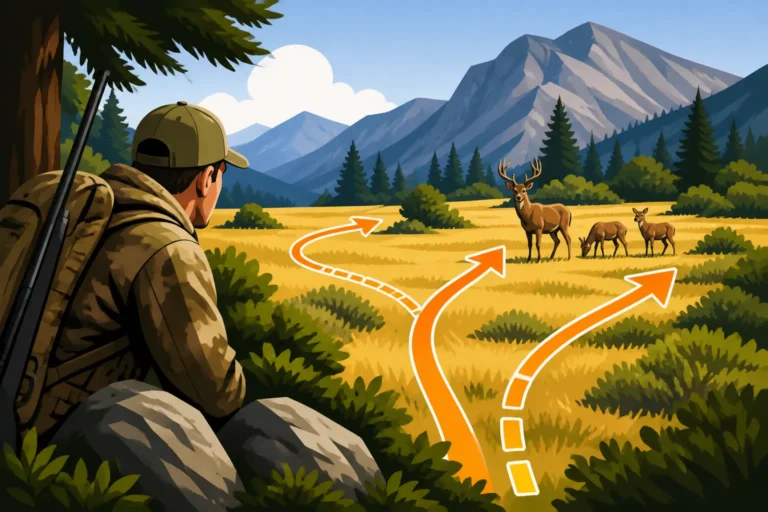
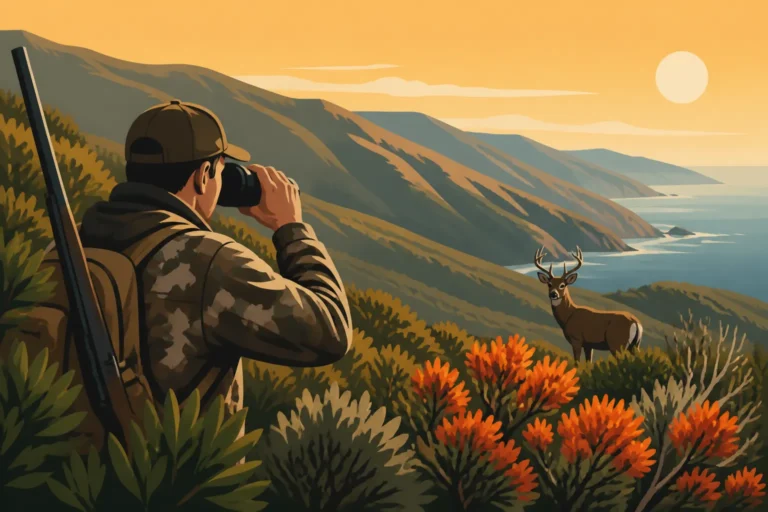
Many of California's premium deer and elk zones feature expansive, open country, particularly in the Eastern Sierra or parts of the North Coast. This terrain lends itself perfectly to spot-and-stalk hunting. This method involves patiently glassing vast areas from a vantage point, using your binoculars and spotting scope to locate animals, then carefully planning and executing a stalk to get within shooting range. This is especially effective for glassing Mule Deer in Open California Country or finding a bedded blacktail.
Success in spot-and-stalk relies heavily on patience, keen eyesight, and an understanding of animal behavior. Spend hours behind your glass, systematically dissecting every piece of cover. Once an animal is spotted, the stalk itself requires careful attention to wind direction, terrain features for concealment, and the animal's movements. You'll need to know how to use wind and thermals in steep Sierra country to your advantage, ensuring your scent doesn't give you away. This method often involves long hikes, multiple stalks, and a lot of grit, but it's incredibly rewarding when you finally close the distance on a mature animal.
Adapting to Pressure and Animal Behavior
Even in "premium" zones, there can be some level of hunting pressure, especially on public lands or near easily accessible areas. Animals in these zones, particularly older, wiser bucks and bulls, quickly learn to avoid humans. They may move into thicker cover, become more nocturnal, or use less obvious travel routes. Your ability to adapt to this pressure and understand localized animal behavior is key.
If you notice other hunters in a particular basin, consider venturing further into the backcountry, away from the crowds. This is where your physical conditioning and quality gear, like those designed for a backcountry elk hunt, truly pay off. Look for areas that require more effort to reach, as these often hold unpressured game. Pay attention to how deer and elk react to changing weather patterns or the presence of other predators. For instance, after a cold front, animals might move to sunnier slopes. Understanding these nuances, whether it's hunting a funnel between two oak ridges or knowing where California Blacktail Bucks Bed, can help you anticipate their movements and set yourself up for success.
Field Care and Recovery in Remote Locations
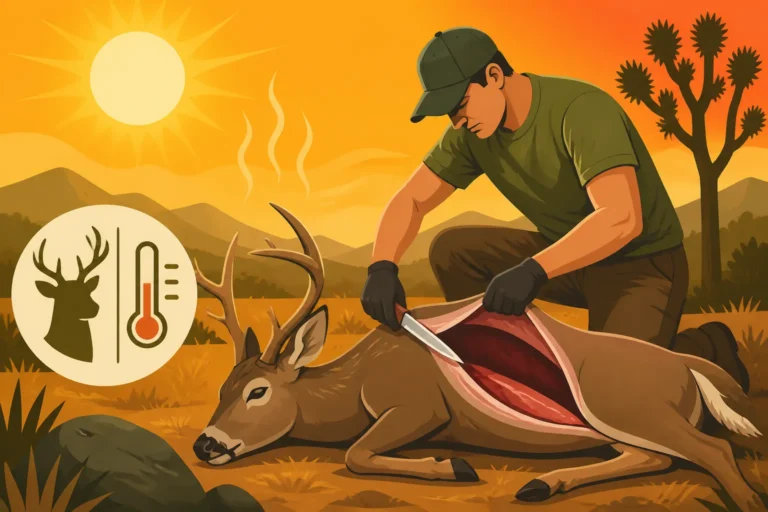
Harvesting an animal in a remote premium zone is only half the battle. The challenge of field care and recovery in these demanding environments cannot be overstated. With limited tags and often larger, older animals, you may find yourself with a heavy load far from the nearest trail. Immediately after the shot, focus on securing the animal and beginning the field dressing process. Knowing how to field dress a deer in hot weather quickly is critical to preserving the meat, especially if you're hunting early seasons.
For larger animals like elk or heavy deer, quartering the animal is often necessary. This means breaking it down into manageable pieces that can be packed out on your back. Always carry game bags to protect the meat from dirt and insects. If you've recovered a deer from a steep canyon, having a plan for dragging a deer out of a steep canyon or using a game cart designed for rugged terrain is essential. Consider the distance to your vehicle and the terrain. It might take multiple trips, so being prepared with extra water, food, and even an overnight bivy setup is wise if you anticipate a lengthy pack-out. Proper field care ensures that the meat you worked so hard for makes it to your table in excellent condition.
Disclaimer
Hunting is an inherently risky activity. This guide provides general information and strategies, but conditions, regulations, and personal abilities vary. Always prioritize safety, adhere to all California Department of Fish and Wildlife regulations, and be prepared for potential hazards in the field. Local conditions can change rapidly, and hunters are responsible for their own safety and for confirming all current rules and requirements before heading out.