Judging a Blacktail’s Fork Versus a Forked Horn
One of the most common headaches for new California deer hunters, especially when pursuing blacktails, is figuring out what counts as a legal buck. The regulations often talk about "forked horn" deer, but what does that really look like in the field? This guide will dive deep into how to confidently differentiate a blacktail's legal fork from a smaller, often confusing, forked horn buck, helping you avoid a costly mistake and hunt with peace of mind.
Understanding Blacktail Antler Growth
Getting a grip on how blacktail deer antlers develop is the first step to becoming a confident field judge. It's not just about what you see, but understanding the life cycle behind it.
The Basics of Antler Development
Deer antlers aren't permanent structures like horns; they're bone that grows and sheds annually. A young buck, often called a "button buck," will usually only have small, furry nubs in his first year. As he matures, those nubs will develop into spikes, then typically branch into forks, and eventually, if he's healthy and gets enough good nutrition, he can grow into a larger multi-tined rack. This process is heavily influenced by age, genetics, and the quality of forage available in his habitat. You might see a mature buck with impressive tines, while a younger buck might only sport short spikes or small forks.
For blacktail deer, specifically, it’s not uncommon to see a healthy two-and-a-half-year-old buck that still only carries a forked horn on each side, or even just one fork and a spike. They aren't the large-racked animals you often think of when picturing a mule deer. Their growth patterns are just different, often more compact and less expansive, which is part of their charm but also what makes field judging them tricky. Understanding the specific characteristics of Columbia Blacktail and Mule Deer in California is crucial for any hunter.
Why Blacktails Are Different
Blacktail deer, found predominantly in California's coastal and Sierra Nevada foothills, often have more compact antler configurations compared to their larger mule deer cousins. While mule deer are known for their deep forks and often symmetrical, wide racks, blacktails frequently exhibit more modest growth. A "forked horn" on a blacktail might not be as pronounced as on a mule deer, leading to confusion.
Many blacktail bucks, even older ones, might only sport a main beam with a single fork near the end, or a brow tines and a single fork. The environment plays a huge role; a blacktail in prime coastal oak woodlands with abundant feed might develop a more robust rack than one struggling in a drier, high-pressure area. This variation means you can't always judge a blacktail's age or maturity purely by antler size in the same way you might with other deer species. This makes the exact definition of a "forked horn" critical for legality.
The Nuances of "Forked Horn" in California Regulations
California's deer hunting regulations can feel like a labyrinth at times, and the definition of a legal "forked horn" is one area where clarity is paramount. Misinterpreting this can lead to an illegal harvest, which nobody wants.
Defining "Forked Horn"
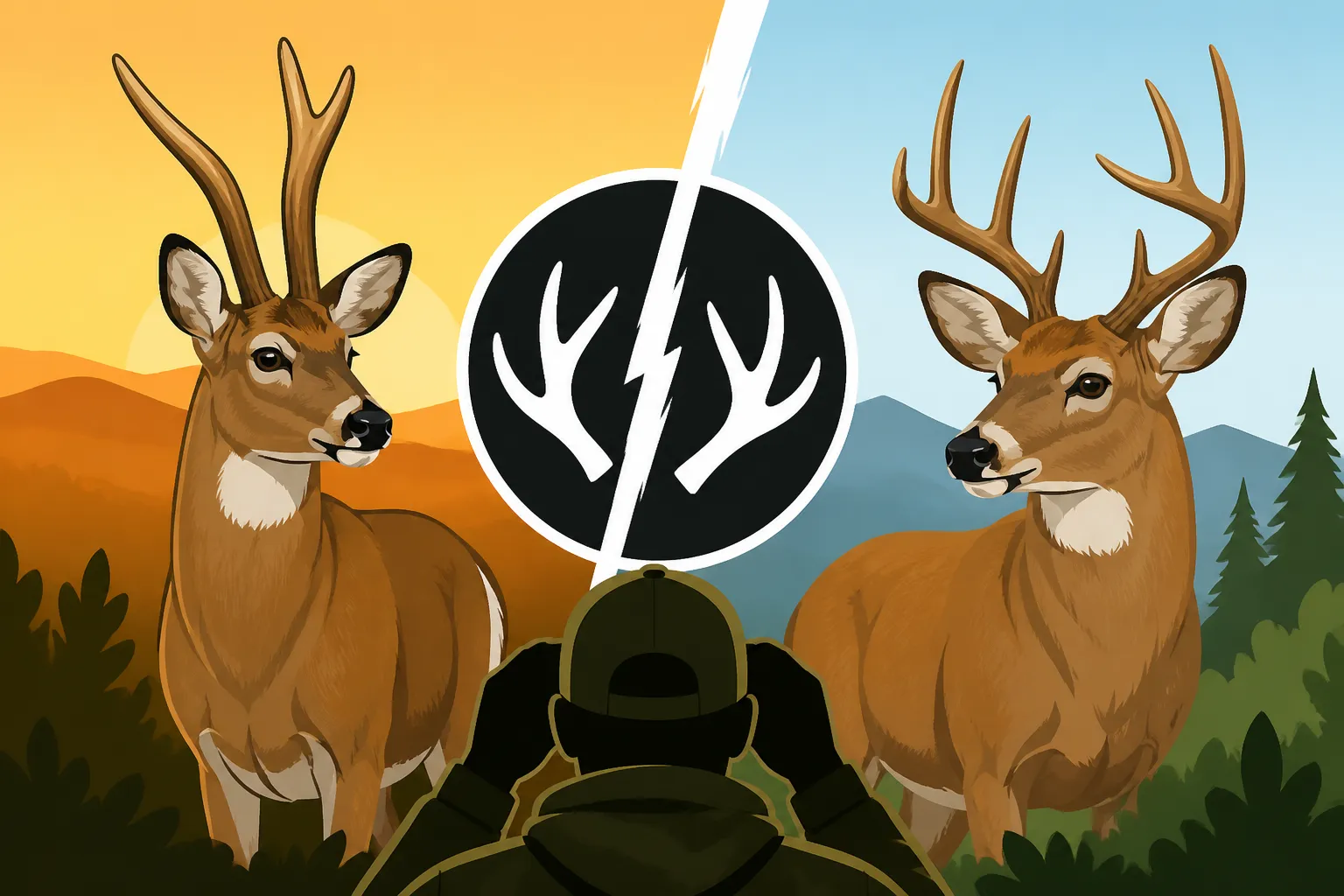
In California, for most general season zones, a "legal buck" is typically defined as a "forked horn or better." So, what exactly does "forked horn" mean in the eyes of the California Department of Fish and Wildlife (CDFW)? It means that one antler must have at least two points. That’s right, just one side needs to meet the criteria. If a buck has one antler with two points and the other is a spike, it's still a legal forked horn.
The crucial part of this definition lies in what constitutes a "point." It's not just any bump or knob. A point must be at least one inch long and project from the main beam or another point. It must be distinct enough to hang a ring on it, at least colloquially speaking. So, a tiny nub or a broken-off tip doesn't count. This regulation is designed to protect younger bucks and allow them to grow, while still providing hunters with opportunities. Before heading out, ensure you've reviewed California's Multi-Zone Deer Season System and your specific zone's regulations.
The Critical "Point" Definition
This one-inch rule for a "point" is where a lot of hunters get tripped up, especially when they're excited and trying to make a quick decision in the field. Imagine a small, young blacktail buck standing just inside the brush, barely visible. You see what looks like a fork, but is that secondary projection truly one inch long? Or is it just a half-inch nub?
The intent behind this rule is to differentiate true branching antlers from minor irregularities. A main beam with a small, barely visible projection off it might seem like a fork at a distance, but upon closer inspection with good optics, you might realize it doesn't meet the minimum length. This is where patience and magnification come into play. A slight bend or curve in the main beam itself, without a distinct projection, also doesn't constitute a point. It has to be a clear, separate protrusion.
The "Legal Buck" Standard
Most of California's general hunting zones follow the "forked horn or better" rule, meaning any buck with at least one antler having two points (each at least one inch long) is fair game. This contrasts with some other states or even California's own premium X-zones, which often have more restrictive antler point restrictions, like "3 points on one side" or even "4 points on one side" for trophy management.
The standard "forked horn or better" is designed to be accessible while still offering some protection to yearling deer. It means that if you see a buck with a spike on one side and a beautiful 3-point on the other, he's absolutely legal. The goal is simply to ensure the buck has started to branch out beyond a simple spike. This protection helps to maintain a healthy age structure within the deer population, allowing more bucks to reach maturity. However, it requires careful judgment, as a mistake can be costly, both legally and ethically. Remember to check the California Buck Bag Limit for your specific zone.
What Constitutes a Legal "Fork" on a Blacktail
Now that we've covered the basics, let's get into the nitty-gritty of identifying a legal fork on a blacktail, especially when they’re not as symmetrical or grand as other deer species.
The "One Inch" Rule in Practice
Visualizing one inch in the field can be surprisingly difficult when your adrenaline is pumping. Think about the diameter of a quarter or the length of the top joint of your pinky finger. That's roughly an inch. When you're glassing a buck, you need to confidently see a projection that clearly extends at least that far from the main beam.
A common scenario: you spot a blacktail moving through dense chaparral. You catch glimpses of his antlers, and one side looks like a spike, but the other has a small, secondary branch. You zoom in with your binoculars. Does that secondary branch clearly project a full inch? Or is it just a slight bump or a worn-down tip? If it’s unclear, or looks shorter than an inch, it’s not a legal fork. It really pays to be conservative here. If you can't definitively say it's an inch, it's safer to assume it's not. This is particularly true when hunting in areas like Hunting Coastal Range Oak Woodlands where dense cover can obscure a clear view.
Common Misinterpretations and Field Examples
Let's talk about some real-life situations that throw hunters for a loop.
- Brow Tines: Many bucks will have a brow tine, a point that projects forward or slightly upward from the base of the main beam, above the eye. While a brow tine is a point if it meets the one-inch rule, it's often counted as part of the total points on that side. The "forked horn" definition is about the main beam branching, typically towards the top. A buck with a single spike and a brow tine is generally considered a "spike with a brow tine," not a "forked horn" if there are no other points or forks off the main beam. However, a brow tine can be the critical second point if the main beam also has a separate, legal point. The regulations often state "two points on one antler," and a brow tine counts towards that if it's over an inch. This nuance means you need to look at the entire antler, not just the upper fork.
- Broken Antlers: Imagine a buck that clearly had a fork, but one of the points is now broken off. Maybe it fought another buck or ran into a tree. If the remaining piece of the broken point is still at least one inch long, it counts. But if it's snapped off flush or is just a small stub less than an inch, that antler might revert to being a legal "spike" if it has no other legal points. Always assess what's actually there at the time you're observing the animal.
- Deformed Antlers: Sometimes, due to injury or genetics, a buck will have a non-typical or deformed antler. It might be club-like, or have several small, irregular projections. In these cases, you still have to apply the one-inch rule to each individual projection. If you can clearly count two distinct projections, each at least one inch long, on one antler, then it's legal. This can be one of the toughest judgment calls in the field, so taking your time is crucial.
- For example, you might see a buck with a main beam and then a G2 that branches off. If that G2 then has a tiny, half-inch kicker coming off it, that kicker doesn't make it a "three-point" if it doesn't meet the length requirement. It would still be considered a two-point antler.
The best way to prepare for these scenarios is to practice field judging. Use photos and videos of blacktail deer to sharpen your eye. Resources like GoHunt's extensive photo and video galleries can be excellent for this, showing a wide range of antler configurations.
Brow Tines Versus True Forks
Let's clarify the brow tine distinction further, as this is a frequent point of confusion. A brow tine is typically the first point that grows off the main beam, usually close to the base, near the deer's forehead. A "true fork," in the traditional sense, refers to the main beam splitting into two distinct points higher up, often towards the end of the beam.
While a brow tine is a point if it measures an inch, many hunters intuitively think of "forked horn" as a split in the upper antler. The regulation, however, is simply "two points on one antler." So, if a buck has a distinct brow tine that's an inch or more, and then a spike main beam without any other points, that brow tine can make it a legal two-point (forked horn). The key is the separation and length of the projections. If you have a main beam and one distinct projection coming off it (brow tine or otherwise), and both the main beam tip and that projection are over one inch, you've got your two points. This might lead to a buck being legal even if it doesn't have that classic Y-shaped fork you often picture.
Practical Field Judging Tips for Blacktail Deer
Confidently judging a blacktail buck in the field takes practice, patience, and the right tools. It's about minimizing doubt before you make a decision.
Using Optics for Clarity
Good quality optics are not just a luxury; they're an absolute necessity for ethical and legal deer hunting in California, especially with blacktails. Blacktails often live in dense cover, and their antlers, as we've discussed, can be subtle. Trying to judge a buck with the naked eye or cheap binoculars from a distance is a recipe for disaster.
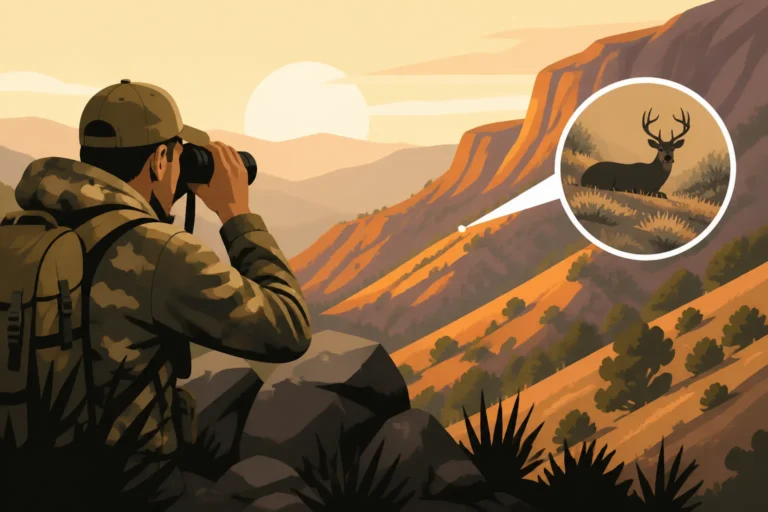
Invest in a pair of high-quality binoculars (8x or 10x magnification are great all-around choices) and, if your hunting grounds allow for long-range glassing, a spotting scope. Brands like Vortex, Leupold, and Maven offer excellent clarity that can help you distinguish that critical one-inch point. When you spot a deer, immediately get your binoculars on him and start systematically scanning his antlers. Don't just glance; scrutinize each projection. For more detailed advice, consider Optics for California's Open-Country Deer Hunting. A good rangefinder can also help you understand the distance, which impacts how clear your view will be. Using mapping apps like the ones supported by GoHunt can also help you identify areas where long-range glassing might be effective due to open terrain.
Taking Your Time and Multiple Angles
Hunting blacktails often means hunting in brushy, broken terrain. Deer might pop out, offer a brief glimpse, and disappear. This is where the temptation to rush a shot is highest. Resist it. If you can't get a clear, unobstructed view of both antlers, from multiple angles if possible, you need to wait.
If the buck is moving, follow him with your optics, looking for openings where he might pause. Try to get a look from the side, then perhaps as he turns his head. Sometimes, a brow tine or a small fork is obscured from one angle but becomes obvious from another. Patience is truly a virtue here. If you jump the gun and take a shot at a buck you haven't definitively identified as legal, you risk breaking the law and, more importantly, making a mistake you can't undo. Many hunters find Reading Aerial Photos for Sierra Deer helpful for identifying potential buck bedding areas where patience might pay off. For a deeper dive into scouting techniques, check out Glassing a Canyon for a Bedded Buck.
When in Doubt, Pass
This is arguably the most important rule in field judging any game animal, and it's especially true for California blacktails and their tricky antler configurations. If you have any hesitation, any nagging doubt in your mind that the buck isn't legal, then do not take the shot. It’s that simple. There will always be another deer, another season. The consequences of taking an illegal animal—fines, license revocation, and the ethical burden—are simply not worth it.
It's better to regret not taking a shot than to regret taking the wrong one. Walk away knowing you made the right decision, preserving your hunting privileges and upholding the ethical standards of the sport. Knowing Where California Blacktail Bucks Bed might give you another chance at a clear view later in the hunt.
Practice and Experience
There's no substitute for time in the field. The more you observe blacktail deer, the better your eye will become at judging their antlers. Spend time scouting before the season, even if you're not hunting. Observe bucks, note their antler growth, and pay attention to how they carry themselves. Use your binoculars to really study them.
Consider carrying a small tape measure to compare against photos of bucks you encounter (without disturbing them, of course). Look at images online of various blacktail racks. The more mental reps you get, the quicker and more accurate your judgments will be when it counts. Joining hunting forums or groups focused on California hunting can also provide opportunities to learn from experienced blacktail hunters and share knowledge. Always ensure you've completed your California Hunter Education Requirements for a strong foundation in ethical hunting practices.
Antler Judging at a Glance
Here's a quick comparison to help solidify the definitions:
| Antler Type | Description | Legality in "Forked Horn or Better" Zones | Common Misconceptions |
|---|---|---|---|
| Spike Buck | Each antler is a single, unbranched beam. | Not Legal | Often mistaken for a "fork" if a small nub is visible. |
| Forked Horn Buck | At least one antler has two distinct points, each 1 inch or longer. | Legal | Tiny nubs, broken points under 1 inch, or just a brow tine and main beam (if brow tine is the only other point) can be confusing. |
| 3-Point Buck | At least one antler has three distinct points, each 1 inch or longer. | Legal | Miscounting non-legal nubs as points. |
| Brow Tine | A point projecting near the base of the main beam, above the eye. | Counts as a point if 1 inch or longer. | Many hunters don't immediately recognize it as a "point" for legality if it's the only other projection. |
| Broken Antler | Antler tip or point has snapped off. | Legal if remaining portion of point is 1 inch or longer. | Assuming any break invalidates the point. |
Remember, the emphasis is on at least one antler having the required points. So, a buck with a spike on one side and a two-point (forked horn) on the other is still a legal forked horn buck.
Disclaimer
The information provided in this article is for general guidance only and is not a substitute for official regulations. Hunting laws and regulations in California are subject to change. Always consult the most current California Department of Fish and Wildlife (CDFW) hunting regulations booklet or website before heading into the field to ensure compliance. It is the hunter's responsibility to know and abide by all applicable laws.