Entry Routes Through a Sierra Foothill Meadow
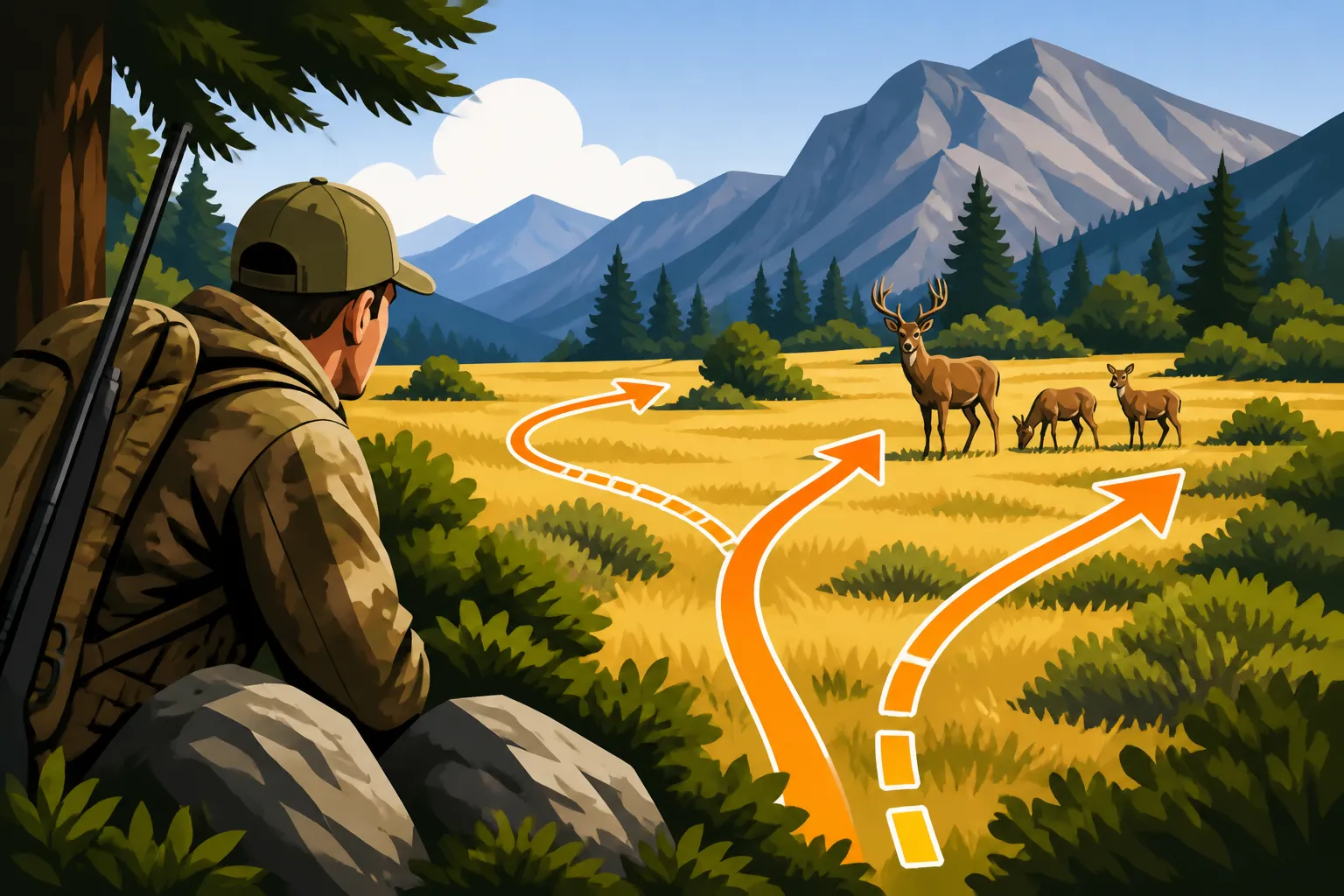
Ah, the Sierra foothill meadow. It’s a beautiful, inviting sight, isn't it? A lush, open expanse often bordered by dense timber or brush, promising a picture-perfect setting for deer to feed or transition. But if you’ve spent any time hunting these areas in California, you know they can be a real headache. That open nature, which makes them so attractive to deer, also makes them incredibly challenging for hunters to approach without being spotted. You finally find that perfect meadow, only to spook every buck in a mile radius trying to get into position. This guide is all about helping you master those entry routes, so you can slip in undetected and turn those frustrating near misses into successful harvests.
Understanding the Sierra Foothill Meadow Dynamics
Hunting meadows in the Sierra foothills isn't just about walking in quietly. It's a strategic dance with the environment, where every step, every gust of wind, and every shaft of light plays a role. These open spaces, whether they're patches of green tucked into a canyon or wider, more exposed flats, are inherently designed to betray your presence if you're not careful.
The Meadow as a Deer Magnet and Hazard
Meadows are like giant, natural dinner plates for deer. They offer succulent grasses, forbs, and often water, making them prime feeding and staging areas, especially during the early morning and late evening hours. Deer love to graze in these spots, but they're also keenly aware of their vulnerability in the open. They’ll often approach a meadow cautiously, using the surrounding timber or brush as cover, checking for threats before stepping out. This hyper-awareness is what makes them such a hazard for an approaching hunter. One wrong move, one flash of movement, or one misplaced scent cone, and they'll vanish into the thicker cover faster than you can blink. You might feel like you're playing chess against a master, where the deer anticipate your moves before you even make them. But understanding why they use these areas and how they perceive danger is your first step to outsmarting them.
Reading the Wind and Thermals in Foothill Terrain
If there's one thing that will spoil your approach faster than anything else, it's the wind. And in the Sierra foothills, with their complex topography of ridges, canyons, and draws, wind is rarely consistent. It swirls, it drops, it rises, and it shifts, often making a mockery of your best-laid plans. Add to that the effect of thermals – those rising currents of warm air in the morning and sinking currents of cool air in the evening – and you've got a constantly changing atmospheric puzzle. As the sun rises, warm air from the canyon bottoms starts to lift, carrying your scent up the hill. In the evening, as the air cools, it sinks, pulling your scent down into the low spots.
You absolutely must understand these dynamics. Before you even leave your truck, you should be checking the forecast for prevailing winds, but more importantly, you need to be aware of the localized thermals. A great tool for this is a Kestrel meter or simply a small bottle of powder or milkweed seeds. Take frequent readings. If you're trying to sneak into a meadow at first light, you need to approach from a direction where your scent will be carried up and away from the meadow as the thermals start to rise. Conversely, an evening hunt often calls for an approach from above, letting the sinking air carry your scent down past the deer. Ignore this, and you're effectively announcing your arrival with a giant, invisible banner. For more on navigating these tricky conditions, check out our guide on Wind and Thermals in Steep Sierra Country.
Pre-Hunt Scouting and Digital Planning for Entry
The best entry route isn't something you figure out on the fly. It's something you painstakingly plan and verify long before opening day. This isn't just about finding where the deer are, but figuring out how to get to them without them ever knowing you were there.
Leveraging Topo Maps and Satellite Imagery
Before you even set foot on the ground, your most powerful scouting tools are often sitting right in front of your computer screen or on your phone. Modern mapping applications, like those found with a GoHunt subscription, are invaluable for dissecting potential meadow access. Start by looking at detailed topographic maps. Identify ridges, saddles, and draws that offer natural concealment. Are there any small fingers of timber that extend into the meadow, providing a hidden approach? Are there deep ditches or creek beds that run alongside the meadow, offering a natural "trench" to walk through?
Then, switch to satellite imagery. This is where you can confirm what the topo maps suggest and spot finer details. Look for denser pockets of trees, brush lines, or even large rocks that could break up your silhouette. Pay close attention to the edges of the meadow – do they offer a hard, defined line of cover, or is it a gradual thinning that leaves you exposed? Using an app like GoHunt, you can drop pins on potential entry points, mark likely deer trails coming into the meadow, and even draw out your planned approach route. This digital reconnaissance saves you countless hours and minimizes your footprint on the ground before the season. It’s also incredibly helpful for identifying potential bedding areas near the meadow, which can inform your entry and exit strategies. For detailed tips on this, our article on Reading Aerial Photos for Sierra Deer can provide further insights.
Identifying Natural Cover and Concealment
Once you've done your digital homework, it's time for boots on the ground, but not during hunting hours or even close to them. Your scouting missions should be done well in advance of the season, and ideally, not directly disturbing the meadow itself. Your goal is to identify every possible piece of natural cover that could shield your approach. This includes:
- Tree Lines and Brush: The most obvious cover. Can you stay just inside the timber line, using the trees to break up your outline, while still being able to peek into the meadow? Look for thicker sections of brush, like manzanita or chaparral, that create a visual barrier.
- Terrain Features: Even subtle dips, rises, or undulations in the ground can provide crucial cover. A small knoll could hide your final 50 yards of approach. A deep ravine or wash might offer a completely hidden corridor right to the edge of the feeding area.
- Large Rocks or Boulders: While less common in flatter meadows, large rock formations can be excellent for concealment, especially if they’re on the high ground overlooking the meadow.
- Changes in Vegetation: Sometimes, even taller grasses or thicker patches of wildflowers can offer enough visual obstruction to get those last few crucial yards.
Walk these routes. Imagine you are a deer looking back towards where you'd be approaching. If you can see yourself, a deer definitely can. Note where you feel exposed and where you can blend in. The best entry routes are often those that follow the path of least resistance visually, even if it means taking a slightly longer, winding path. When you’re trying to understand Where California Blacktail Bucks Bed, knowing the surrounding cover is critical for predicting their movement towards and from these meadows.
Executing Your Entry Strategy on Hunt Day
All the scouting and planning in the world means nothing if you can't execute it flawlessly when it counts. Hunt day brings new pressures, new light, and the very real possibility of bumping deer.
Timing Your Approach for Maximum Secrecy
Timing is everything when approaching a meadow. For a morning hunt, you need to be at your vantage point or the edge of the meadow before first light. This means walking in the dark, using a red-light headlamp (which deer are less sensitive to) and moving at a snail's pace. The goal is to be settled and ready as the light begins to break, allowing you to observe the meadow as deer move into it for their morning graze. You don't want to be caught scrambling for cover just as deer are making their appearance. Similarly, for an evening hunt, plan to arrive well before deer typically enter the meadow, allowing yourself time to settle, observe, and let the woods quiet down after your presence.
A common mistake is rushing. You think, "Just a few more minutes, I can still make it." That's when you get sloppy, snap a twig, or skyline yourself against a ridge. Slow down. Be patient. The extra time spent moving stealthily in the dark or waiting for the right moment will pay dividends. Consider a strategy of still-hunting the timber edges around the meadow, which allows you to move deliberately and observe without committing to a full crossing. Our article on Still-Hunting California's Sierra Nevada Timber delves into this in detail.
Utilizing Terrain Features for Undetected Movement
Remember all those features you identified during your scouting? This is where they come into play. Your entry route should meticulously follow the lowest points, the densest cover, and the most shadowed areas.
- Stick to the Shadows: As the sun begins to rise or set, use the shadows cast by hills, ridges, or tall trees to your advantage. Shadows naturally obscure your movement and break up your silhouette, making you much harder for a deer to spot.
- Walk in Ditches and Washes: If there's a dry creek bed or a drainage ditch running parallel to the meadow, use it. These natural depressions offer incredible concealment, often allowing you to get much closer to the meadow edge than you ever could on open ground.
- Crawl the Last Few Yards: For those final, crucial yards where you need to get into a shooting position, be prepared to crawl. This keeps your profile as low as possible and often utilizes small folds in the terrain that would be useless if you were walking upright.
- Move Against the Grain: If you absolutely must cross an exposed area, try to do it when deer are looking elsewhere, or when a strong gust of wind creates a natural sound buffer. Move slowly, deliberately, and always be ready to freeze at a moment's notice.
Remember, the deer's eyes are their primary defense in open country. Anything you can do to minimize your visual impact is crucial. This is where high-quality gear, like specialized boots for silent movement or effective camouflage patterns suited for California's diverse landscapes, can also make a real difference.
| Entry Strategy Element | Morning Approach | Evening Approach | Key Considerations |
|---|---|---|---|
| Wind & Thermals | Approach from below (scent rises) | Approach from above (scent sinks) | Always check real-time conditions with a wind checker. |
| Light Conditions | Arrive before first light, use red-light headlamp | Arrive well before dusk, let woods settle | Maximize use of shadows, avoid silhouetting. |
| Terrain Use | Utilize creek beds, ditches, folds in ground | Utilize creek beds, ditches, folds in ground | Stay low, break up your silhouette against backdrop. |
| Cover Type | Dense timber, tall brush lines | Dense timber, tall brush lines | Keep cover between you and the meadow. |
| Movement Speed | Extremely slow, deliberate, quiet | Extremely slow, deliberate, quiet | Pause frequently, listen, scan for deer. |
| Vantage Point | Get into position and settled before legal light | Get into position and settled before deer movement | Choose a spot with clear view but good concealment. |
Adapting to Meadow Conditions and Deer Behavior
Even with the best plan, the Sierra foothills will throw you curveballs. Conditions change, and deer don't always read the script. Being able to adapt is a hallmark of a successful hunter.
The Impact of Moisture and Noise
California's weather, particularly in the foothills, can change rapidly, and moisture levels can drastically impact how you move. A heavy dew in the morning, recent rain, or even just high humidity can make everything loud. Dry leaves and twigs that were silent yesterday might crunch underfoot today. This is a common frustration, especially if you're trying to make a silent approach through dense brush to a meadow.
If conditions are wet, your advantage is that your footfalls might be quieter on the forest floor, but every branch you brush against, every wet leaf you touch, can make noise. If it's bone dry and crunchy, you'll need to move even slower, picking up your feet more deliberately and placing them down heel-first to test for sound. Sometimes, a light rain can be your best friend, masking your noise and scent. Use these conditions to your advantage, or be extra cautious if they work against you. Pay attention to the sound your clothing makes too – noisy fabrics can be as bad as crunchy leaves. For general safety and visibility, understanding How Much Blaze Orange California Requires is also critical, especially if hunting with others or in areas where it's recommended.
What to Do When Deer are Already Present
Perhaps the most frustrating scenario is when you arrive at your planned entry point, only to spot deer already feeding in the meadow. Your heart sinks, right? All that planning feels wasted. But it's not over. This is where patience and adaptability truly shine.
First, freeze. If they haven't seen you yet, don't move. Assess the situation. Where are the deer positioned? What direction are they moving? What's the wind doing? Can you use the existing cover or terrain to make a new approach, perhaps a crawl, or a detour around them? This is where your detailed knowledge of the area, possibly even from using a GoHunt app to quickly find alternative routes, becomes invaluable.
Sometimes, the best move is no move at all. If the wind is wrong, or there's simply no viable way to approach without being busted, it's often better to back out slowly and quietly. You live to hunt another day, and you haven't educated those deer to your presence in that particular spot. If you can only see a small portion of the meadow, you might decide to wait it out, hoping the deer move into a position that offers a shot, or move out of the meadow entirely, allowing you to slip into your original position. It takes incredible discipline to watch deer walk away, but sometimes it’s the smartest play. Being able to Glassing a Canyon for a Bedded Buck from a distance is a key skill that helps prevent these close encounters of the frustrating kind. Remember, even if you draw a California deer tag, success often hinges on not just finding deer, but approaching them effectively. For general tag information, our article on California Hunting Licenses and What They Cost is a great resource.
Hunting Sierra foothill meadows is a constant learning experience. Each meadow is unique, and each day brings different conditions. But by combining meticulous pre-hunt planning with careful, stealthy execution and the ability to adapt, you can dramatically increase your chances of filling your tag. Good luck out there, and happy hunting!
Disclaimer
Always consult the latest California Department of Fish and Wildlife (CDFW) regulations before engaging in any hunting activities. Hunting regulations, seasons, and tag requirements are subject to change. This guide is for informational purposes only and does not supersede official CDFW guidelines.