Reporting a Poacher in California
It's incredibly frustrating, isn't it? You spend hours, days even, in the field, diligently following every rule and regulation, only to hear stories or worse, witness someone blatantly disregard the law, disrespecting our wildlife and the hunting tradition. That gut feeling of wanting to do something, but not quite knowing the right steps, is something many California hunters can relate to. This guide is here to empower you with the knowledge and confidence to effectively report poaching in California, helping to protect the resources we all cherish.
Understanding the Gravity of Poaching in California
Poaching isn't just about someone taking an extra deer or shooting a duck out of season; it's a serious crime that undermines wildlife conservation efforts, impacts legal hunters, and can decimate local animal populations. In California, with its incredibly diverse ecosystems and sought-after game, the stakes are particularly high. We're talking about everything from the illegal take of Columbia Blacktail and Mule Deer in California to the unlawful hunting of Wild Pigs Across California or even protected species.
The True Cost of Wildlife Crime
When someone poaches, they're not just stealing from the state; they're stealing from every law-abiding hunter and citizen who values wildlife. Poaching can have devastating effects, especially on species with limited populations or those managed through complex tag allocation systems like California's Multi-Zone Deer Season System or California's 1,700-Bear Statewide Quota. Imagine the impact when a trophy buck is illegally harvested before the season even opens, or a bear is taken over the quota limit. These actions can throw off population models, reduce future hunting opportunities, and diminish the genetic quality of a herd. It also creates an unfair playing field, making honest hunters feel like their efforts to follow the rules are futile when others cheat. Wildlife officials work tirelessly, often with limited resources, to manage and protect these animals, and every poaching incident sets those efforts back.
Common Forms of Poaching Activity
Poaching takes many forms, and it's not always the dramatic, Hollywood-style image of someone shooting from a helicopter. More often, it's subtle, but just as damaging. This could include:
- Taking game out of season: This is a classic violation, whether it's an early-season deer or a late-season turkey. Every hunting season has specific dates for a reason, often tied to breeding cycles or population management.
- Exceeding bag limits: Taking more ducks than allowed, or multiple deer tags filled by one person when only one is permitted, directly impacts population numbers.
- Illegal hunting methods: This covers a wide range, from using artificial lights at night, baiting deer (which is illegal in California), using fully automatic weapons, or even hunting from a vehicle. Knowing California Legal Firearms for Deer Hunting is crucial for legal hunters.
- Hunting without a license or tag: A fundamental violation that shows a complete disregard for the regulatory system that funds conservation.
- Hunting in closed areas: This might be a wildlife refuge, a private property without permission, or even a city park. Understanding rules for Public Hunting Land in California versus private land is key.
- Wasting game: Leaving edible meat in the field is not only unethical but illegal under certain circumstances in California.
Recognizing these common infractions helps you identify suspicious behavior when you see it. It's about being observant and trusting your instincts if something feels off.
The Critical Steps to Reporting a Poacher
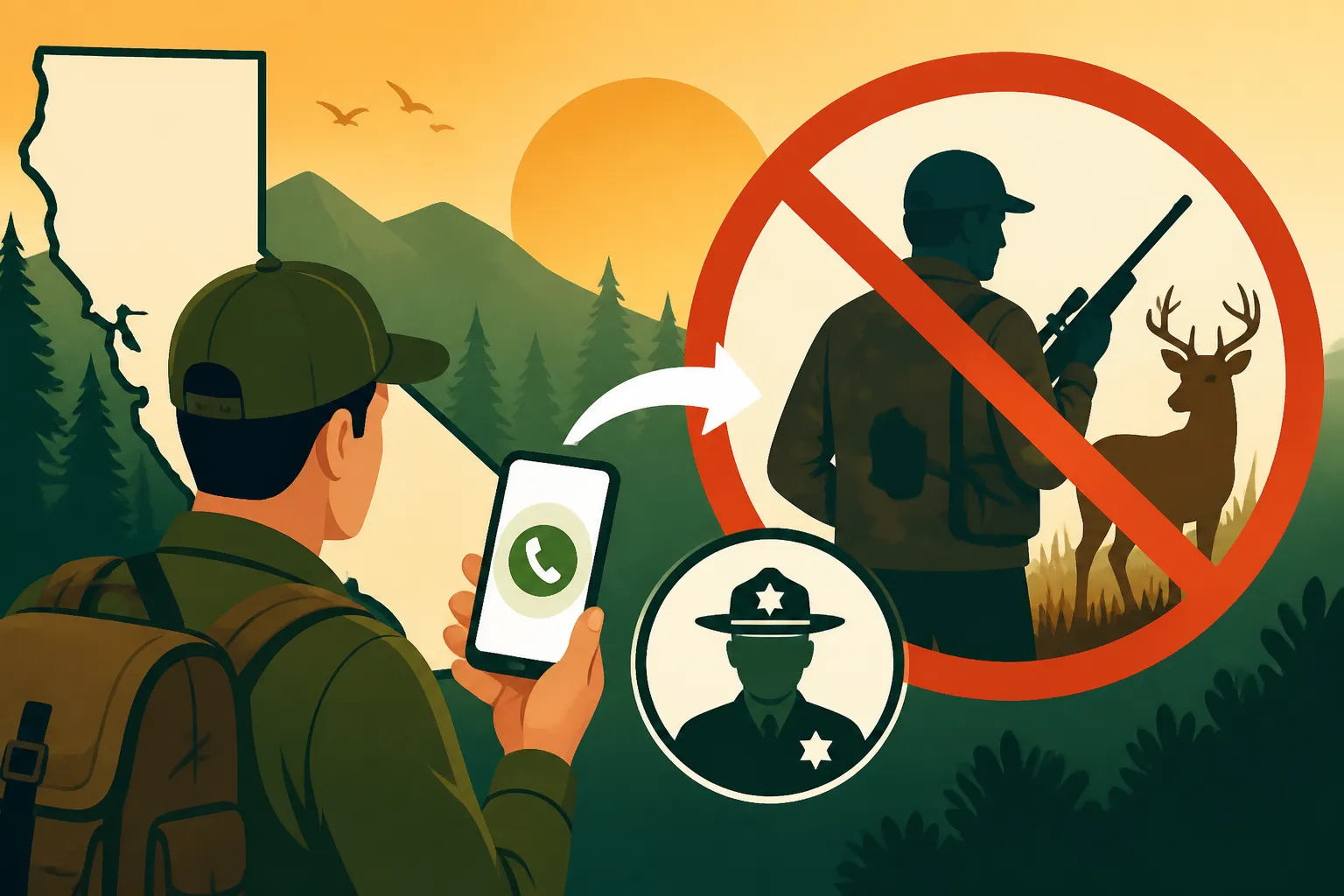
When you encounter suspected poaching activity, your first thought might be to intervene or confront the individual. Do not do this. Your safety is paramount, and these situations can be unpredictable and dangerous. The most effective and safest course of action is to report it immediately to the proper authorities. California has a dedicated system for this: CALTIP.
Calling CALTIP: California's Poaching Hotline
The California Department of Fish and Wildlife (CDFW) operates the CalTIP (Californians Turn In Poachers and Polluters) program. This is your primary point of contact for reporting any poaching or pollution violations. It’s designed to be quick, confidential, and effective.
- The Number: The statewide toll-free number for CalTIP is 1-888-334-CALTIP (1-888-334-2258). Program this number into your phone now before you need it.
- When to Call: Call CalTIP immediately if you witness a violation in progress. Time is often of the essence in these situations. The sooner wildlife officers can respond, the higher the chance of catching the perpetrators.
- What to Expect: When you call, a dispatcher will ask for details about the incident. They are trained to extract the most crucial information quickly. Be prepared to provide location, description of individuals, vehicles, and the nature of the violation.
It’s important to understand that CalTIP is generally staffed during regular business hours, but calls outside those hours are routed to law enforcement dispatch centers for immediate handling. This means there's always someone available to take your call, day or night. Don't hesitate because you think it's too late or too early.
Online and App Reporting Alternatives
While a phone call is best for in-progress incidents, there are other ways to report if the situation isn't immediate, or if you prefer a different method.
- Online Reporting Form: The CDFW website has an online reporting form. This is a good option for incidents that have already occurred, or for providing more detailed information and potentially uploading photos or videos (though always exercise caution when collecting evidence). This form allows you to systematically input all the necessary information, ensuring you don't miss any critical details.
- CDFW App: The CDFW also offers a mobile application that includes a reporting feature. This can be convenient for reporting on the go, especially if you're in an area with data service but prefer not to make a call. Just like the online form, it guides you through the information gathering process.
Remember, while these digital options are useful, for any active or unfolding poaching incident, the phone call to CalTIP remains the most direct and fastest way to get law enforcement involved.
What Information to Gather for an Effective Report
The effectiveness of your report hinges on the quality and quantity of information you can provide. Think of yourself as a detective, gathering clues that will help wildlife officers piece together what happened and apprehend the suspects.
Key Details for Your Report
When you call or fill out a report, wildlife officers will be looking for specific information. The more you can provide, the better. Try to remember these categories:
- Who:
- Number of individuals: How many people were involved?
- Descriptions: What did they look like? (Hair color, height, build, clothing, distinguishing features like tattoos or scars). Be as specific as possible.
- Names/Aliases: If you happen to know them.
- What:
- The specific violation: What exactly did you see? (e.g., "They shot a deer in a closed area," "They had too many ducks in their possession," "They were hunting with a spotlight at night.")
- Species and quantity: What kind of animal was it, and how many?
- Weapons: What type of weapon was used? (Rifle, shotgun, bow, specific caliber if you can tell). This might be a good time to remember rules about Legal Weapons During California Archery Season.
- Vehicles: Make, model, color, license plate number (absolutely critical!). Any distinguishing features like dents, stickers, or custom modifications.
- Where:
- Precise location: This is paramount. Use landmarks, street names, mile markers, GPS coordinates if you have them, or even cross streets. The more exact, the better. Consider using a mapping app like GoHunt which can pinpoint your exact location with GPS coordinates even offline, making it much easier to describe where the incident took place in remote areas. Knowing Siskiyou County Public Hunting Ground or Inyo County Public Hunting Access can help give wardens a starting point.
- Direction of travel: If the individuals left, which way did they go?
- When:
- Date and time: When did you witness the incident?
- Duration: How long did it last?
Gathering Evidence Safely
While your safety is paramount, if you can safely gather additional evidence without being detected or putting yourself at risk, it can be incredibly helpful.
- Photographs and Videos: If you have a camera on your phone and can discreetly take a photo or video, it can be invaluable. Get shots of individuals, vehicles (especially license plates), and the poached game. However, never compromise your safety for a picture.
- Written Notes: Immediately after witnessing an incident, write down everything you remember. Details can fade quickly. Jot down descriptions, times, and locations while they are fresh in your mind. This is where a small field notebook comes in handy.
- Avoid Contamination: If you find evidence like bullet casings or footprints, try not to disturb them if you're waiting for officers to arrive. Your presence might be enough to call in the report, and the professionals can handle the rest.
Remember, the goal is to provide as much specific, verifiable information as possible. Even seemingly minor details can sometimes break a case wide open for a wildlife officer. Using mapping tools, such as the detailed topographic maps and public/private land layers offered by platforms like GoHunt, can be incredibly useful not just for planning your hunt, but for accurately pinpointing the exact location of suspicious activity should you need to report it.
Beyond the Report: What to Expect and How to Stay Safe
Once you've made your report, it's natural to wonder what happens next. The process might not always be visible to you, but rest assured, wildlife officers take these reports very seriously. Your safety also remains a top priority.
The Investigation Process
After you file a report, here's a general idea of what transpires:
- Initial Assessment: The CalTIP dispatcher or wildlife officer will assess the urgency and nature of the report. For in-progress violations, immediate dispatch of an officer is the priority.
- Officer Response: A California Department of Fish and Wildlife (CDFW) warden will respond to the location. Depending on their proximity and other calls, this could be immediate or take some time, especially in remote areas.
- Follow-up and Surveillance: If the perpetrators are not caught in the act, wardens will use the information you provided to conduct further investigation, which might include surveillance, interviewing potential witnesses, or checking license plate databases. They might also check specific zones known for violations, like during California Zone A General Season Dates or Hunting a D-Zone That Opens in August.
- Apprehension and Charges: If enough evidence is gathered, the suspects will be apprehended and charged. Penalties for poaching in California can range from significant fines and forfeiture of equipment to jail time and revocation of hunting privileges.
- Confidentiality: Your identity as the reporter is kept confidential. Wildlife officers understand the importance of protecting those who come forward.
It's important to manage expectations. Not every report leads to an immediate arrest. Investigations can be complex and lengthy. However, every piece of information contributes to the overall enforcement effort and helps wardens build cases.
Staying Safe in the Field
Encountering suspicious or illegal activity in the field can be unsettling. Your personal safety is the most important consideration.
- Maintain Distance: If you witness a violation, create as much distance between yourself and the individuals as safely possible. Do not approach them or make your presence known.
- Do Not Engage: Never confront a suspected poacher. You don't know their state of mind, whether they are armed, or how they might react. Intervening could escalate the situation and put you in danger.
- Observe and Retreat: Your role is to be an observant witness, not a law enforcement officer. Gather as much information as you can from a safe distance, then discreetly leave the area and make your report.
- Trust Your Gut: If a situation feels unsafe, it probably is. Prioritize your escape from the area before making a call, if necessary. Once you are in a secure location, you can then make your report to CalTIP.
- Emergency Contact: In situations where you feel physically threatened or believe there's an immediate danger to life, call 911 first, and then follow up with CalTIP.
By prioritizing your safety, you ensure you can continue to enjoy California's wild places and remain a valuable asset in the fight against poaching. Tools like the GoHunt app not only help you navigate public lands safely, but can also be used to mark your position if you need to quickly relay your location to authorities, adding another layer of security for hunters exploring remote areas like Hunting California's Sierra Nevada Backcountry.
The Community's Role in Wildlife Protection
Reporting a poacher isn't just a duty; it's an act of stewardship that strengthens the entire hunting community and supports wildlife conservation. It shows that we, as ethical hunters, will not tolerate those who tarnish our reputation and deplete our resources.
Hunter Ethics and Responsibility
Being an ethical hunter goes far beyond simply following the letter of the law. It means understanding the spirit of conservation, respecting wildlife, and upholding fair chase principles. When we talk about California Hunter Education Requirements, we're instilling these values from the start. Reporting poachers is a direct extension of these ethics. It's a commitment to protecting the resource for future generations, ensuring that opportunities for Rifle Hunting California's General Deer Season and Spring Turkey Hunting in California remain abundant. It's about being part of the solution, not silently allowing the problem to persist.
Utilizing Technology and Community Forums
In today's interconnected world, technology can play a role in both identifying and reporting potential violations. While direct reporting to CalTIP is always the official channel, information can sometimes surface in other ways:
- Online Forums and Social Media: Sometimes, individuals boast about illegal activities on public forums or social media. If you encounter such content, gather screenshots or links and report them to CalTIP. Never engage directly with the individual online.
- Mapping Apps: As mentioned before, tools like GoHunt provide detailed land ownership maps, showing public and private boundaries. If you see someone hunting on private land without permission, or in a restricted public area, these apps can help you verify the land status and provide precise location details for your report. Knowing Finding California Property Lines is crucial.
- Community Watch: Being observant when you're scouting, shed hunting, or just enjoying the outdoors can lead to valuable discoveries. Noticing fresh tire tracks where they shouldn't be, unusual activity near a known game crossing, or even finding discarded animal carcasses can be clues.
Being part of the hunting community means more than just sharing stories around a campfire; it means actively participating in the health and integrity of our hunting traditions and the wildlife we pursue. Reporting poaching is a fundamental part of that responsibility.
| Information Category | Key Details to Gather | Importance |
|---|---|---|
| WHO | Number of individuals, physical descriptions, names (if known) | Helps identify suspects |
| WHAT | Specific violation, species, quantity, weapon type, vehicle details | Crucial for understanding the crime and locating evidence |
| WHERE | Precise location (GPS, landmarks, street names, cross streets) | Most critical for officer response |
| WHEN | Date and exact time of the incident, duration | Establishes timeline, helps verify alibis |
| ADDITIONAL | Photos/videos, written notes, any distinguishing features | Provides corroborating evidence, strengthens the case |
Disclaimer
The information provided in this guide is for general informational purposes only and does not constitute legal advice. Hunting regulations and laws can change, and it is the responsibility of each individual to consult the most current California Department of Fish and Wildlife regulations and local laws before engaging in any hunting activities. Always prioritize your safety and consult with legal professionals for specific legal concerns.