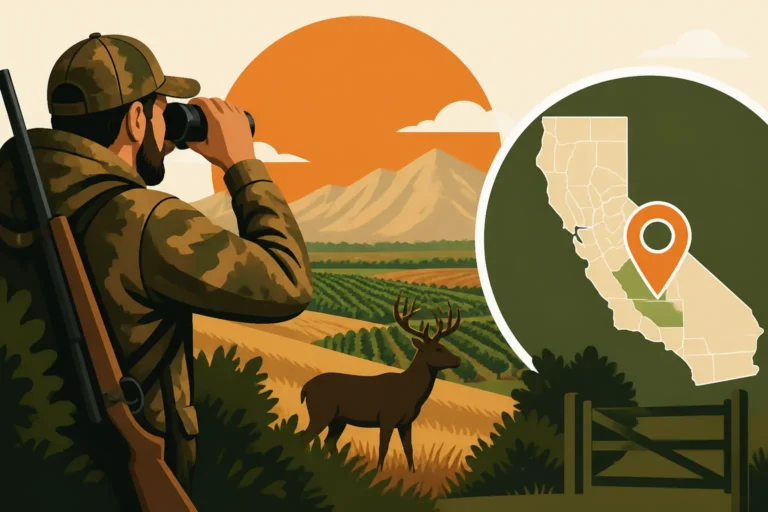
Public Hunting Land in California
One of the biggest hurdles many hunters face in California isn't just drawing a coveted tag or finding the right gear; it's simply figuring out where you're even allowed to hunt. Unlike some other states with vast, uniform public access, California's public lands can feel like a complicated patchwork quilt, with different agencies, varying rules, and sometimes confusing boundaries. It can be incredibly frustrating to spend hours scouting, only to realize you've been on private property or an area closed to hunting. This guide is here to demystify California's public hunting lands, helping you understand where to go, how to navigate the regulations, and most importantly, how to find those hidden gems where you can pursue your passion.
The Lay of the Land: Understanding California's Public Estate
California is a massive state, and while a significant portion of it is public land, it's not all open for hunting, nor is it all managed under the same set of rules. Understanding the different agencies that administer these lands is the first crucial step in becoming a successful public land hunter here. Each has its own flavor, its own opportunities, and its own unique set of regulations you'll need to know.
National Forests: Your High-Country Havens
When most people think of public hunting land, especially for big game, their minds often go straight to the National Forests. And for good reason! California boasts California's Eighteen National Forests, covering millions of acres across the state, from the rugged Klamath Mountains down to the peaks of Southern California. These are often your best bet for high-country deer, bear, and sometimes even elk, depending on the specific forest and hunt zone.
These vast areas are generally open to hunting wherever it's not explicitly prohibited. This means you have an incredible amount of country to explore, much of it roadless and requiring significant physical effort to access. Think towering pines, granite peaks, dense chaparral, and aspen groves turning gold in the fall. The sheer scale can be daunting, but it also means there's always new country to discover. Game animals here often follow seasonal migration patterns, moving from high summer ranges to lower, more sheltered areas as winter approaches. Hunting in these areas often involves still-hunting through timber, glassing vast canyons, or covering miles of steep terrain. You'll need to be prepared for varied weather conditions and self-sufficient for multiple days, especially if you plan to get deep into the backcountry. Always check the specific forest's regulations for any unique closures, fire restrictions, or camping rules before you head out.
Bureau of Land Management (BLM): Deserts, Foothills, and Hidden Gems
The Bureau of Land Management (BLM) manages another enormous chunk of California's public estate. These lands tend to be quite different from the National Forests, often characterized by more arid, open country, rolling foothills, and vast desert expanses. While some BLM parcels are accessible and well-known, many others are isolated, fragmented, and can feel like truly wild, forgotten places. This is where you'll find opportunities for desert mule deer, wild pigs in certain foothill regions, small game, and predators.
Hunting on BLM land can be a unique experience. Unlike the often contiguous blocks of National Forests, BLM land can sometimes be a confusing mosaic, intermingled with private property or state land. This "checkerboard" pattern requires meticulous navigation to ensure you stay legal. However, this fragmented nature can also create overlooked hunting opportunities if you're willing to do your homework and scout thoroughly. Imagine hunting a remote desert wash for a mule deer buck, or stalking a sounder of pigs through a lonely expanse of oak and brush. The challenges on BLM land often include extreme temperatures, scarce water, and challenging off-road vehicle access (where allowed). Due to the often open nature of the terrain, long-range glassing and patient spot-and-stalk tactics are frequently employed. It's a place where solitude is often found, but you must come prepared to be entirely self-reliant.
California Department of Fish and Wildlife (CDFW) Lands: Wildlife Areas & Ecological Reserves
The California Department of Fish and Wildlife (CDFW) also manages a significant number of properties specifically for wildlife habitat and public recreation, including hunting. These are typically known as Wildlife Areas (WAs) and Ecological Reserves (ERs). These lands are often smaller than National Forests or BLM holdings but are strategically located to protect critical habitat for specific species, such as waterfowl, upland birds, or deer.
Hunting on CDFW lands comes with a distinct set of rules that often differ from federal lands. Many Wildlife Areas, particularly those in the Central Valley, are managed intensively for waterfowl, meaning they might operate on a reservation or lottery system during duck and goose seasons. Others might be open for upland game, small game, or even deer, but often with specific shooting hours, special area permits, or more restrictive weapon rules. Ecological Reserves, while protecting critical habitat, are sometimes closed to hunting entirely or have very limited access. It's imperative to check the specific regulations for each individual CDFW property you intend to hunt, as they are not uniform across the state. The Scouting With the CDFW Hunting App can be an invaluable tool for understanding these nuances. While these areas can experience high hunting pressure, especially on opening weekends, they also offer some of the most consistent hunting opportunities for certain species due to dedicated habitat management.
Navigating the Complexities: Tools and Techniques for Public Access
Once you understand the different types of public land, the next challenge is actually finding them and knowing where you stand. California's public/private land interface can be notoriously complicated, and without the right tools, you can easily find yourself inadvertently trespassing or missing out on prime hunting ground.
Mapping Apps: Your Digital Compass in the Wild
In today's hunting world, mapping apps are no longer a luxury; they are an absolute necessity, especially when navigating California's public lands. Tools like onX Hunt have revolutionized how hunters interact with the landscape. These apps utilize GPS technology and detailed land ownership layers to show you exactly where you are in relation to public and private boundaries. No more guessing if that fence line truly marks the edge of the National Forest or if that distant hillside is actually part of a private ranch.
Imagine you're walking along a ridge in the Sierra foothills, pursuing a blacktail buck. With onX Hunt open on your phone, you can see the precise boundary of the public land, knowing when to turn back or if you have enough public ground to keep pushing. These apps often include other crucial layers, like wilderness areas (where motorized vehicles are prohibited), forest service roads, topographic contours, and even historical burn data. This allows you to plan your approach, identify potential access points, and scout new areas from the comfort of your home. You can mark waypoints for promising sign, parking spots, or even downed game. The ability to download maps for offline use is also vital, as cell service is often nonexistent in remote hunting areas. It takes the guesswork out of tricky boundaries and allows you to hunt with confidence, focusing on the pursuit rather than worrying about land ownership.
CDFW Resources: Unlocking State-Specific Information
Beyond mapping apps, the California Department of Fish and Wildlife (CDFW) provides a wealth of information that is absolutely essential for public land hunters. Their website is a treasure trove of regulatory documents, hunt zone maps, and specific details about the lands they manage. It's not always the easiest to navigate, but it's worth the effort to dig in.
The annual Big Game Hunting Regulations and Waterfowl Hunting Regulations booklets are your bibles. These documents detail season dates, bag limits, special area regulations, and often include maps of deer hunt zones or waterfowl areas. While the full printed booklets are comprehensive, the online versions are frequently updated with emergency closures or quota announcements, particularly important for bear hunting. The CDFW also provides specific information sheets for many of their Wildlife Areas and Ecological Reserves, outlining unique rules regarding vehicle access, specific hunting days, and required permits. Using these resources in conjunction with a mapping app like GoHunt, which often integrates some of this information, allows you to cross-reference data and ensure you're fully compliant with all state and local regulations. Ignoring these resources is a surefire way to run into problems, or worse, miss out on a legal hunting opportunity.
Over-the-Counter Tags vs. Draw Zones: Knowing What's Open
Understanding the difference between over-the-counter (OTC) tags and draw-only zones is fundamental to planning a public land hunt in California, especially for deer. This distinction dictates where and when you can legally pursue game, and it profoundly impacts hunting pressure. California's deer season system is complex, but generally falls into distinct categories.
Many of California's D-zones (often found in the lower-elevation National Forests and BLM lands) offer over-the-counter tags, meaning you can purchase them without going through the lottery system, assuming they haven't sold out. These zones are typically more accessible and, as a result, see significantly more hunting pressure, especially on opening weekends. If you're hunting an OTC D-zone, your strategy for finding solitude on public land becomes even more critical. You'll need to walk farther, hunt weekdays, or focus on areas that are harder to access.
In contrast, California's X-zones, typically found in the high country, are draw-only. These tags are much harder to acquire, requiring you to accumulate preference points over several years. While the draw odds can be frustrating, the reward is often a hunt in areas with significantly lower hunting pressure and potentially larger, older bucks. These X-zones are almost exclusively found on vast tracts of public land, often in remote National Forests or wilderness areas. Understanding California's Multi-Zone Deer Season System and whether your target zone is OTC or draw-only will directly impact your planning, expectations, and the tactics you employ to successfully hunt public land.
| Land Type | Managing Agency | Typical Terrain | Common Game | General Access & Rules |
|---|---|---|---|---|
| National Forests | US Forest Service | Mountains, timber, high country, steep canyons | Deer, Bear, Elk, Small Game, Upland Birds | Generally open unless marked otherwise; often requires significant hiking; seasonal fire restrictions, camping rules. |
| BLM Land | Bureau of Land Mgmt | Deserts, foothills, open grasslands, arid washes | Mule Deer, Wild Pigs, Small Game, Coyotes | Often fragmented, checkerboard ownership; varied vehicle access; extreme weather; check local field offices. |
| CDFW Wildlife Areas | CA Dept. Fish/Wild. | Wetlands, agricultural fields, riparian areas | Waterfowl, Pheasant, Quail, Small Game, some Deer | Specific area permits, lottery systems, restricted hours, weapon types; check individual area rules carefully. |
| CDFW Ecological Reserves | CA Dept. Fish/Wild. | Sensitive habitats, varied ecosystems | Limited to no hunting; often research-focused | Highly restricted; often closed to hunting entirely or specific seasons/methods only. Always verify. |
Strategies for Success: Hunting Pressure and Finding Solitude
Hunting public land in California, especially for popular species, often means dealing with significant hunting pressure. It's a reality that can dampen spirits, but it doesn't have to ruin your hunt. Smart strategies can help you find pockets of solitude and increase your chances of success.
The "Walk-In" Advantage: Leaving the Crowds Behind
This is perhaps the single most effective strategy for finding unpressured game on California's public lands: walk farther than everyone else. Most hunters, understandably, tend to stick close to roads, trails, and easily accessible areas. The farther you get from a paved road, a forest service road, or even a well-traveled trail, the less hunting pressure you're likely to encounter. This often means embracing the "sufferfest" and hiking deep into the backcountry.
Consider a public land parcel near a popular access point. On opening morning, you might see a dozen trucks parked within the first mile of the road. But if you commit to hiking three, four, or even five miles in, crossing a steep ridge or traversing a thick canyon, you'll likely find yourself in unmolested country. This strategy demands physical fitness, a reliable pack, and the mental fortitude to push through challenging terrain. You'll need to carry all your essentials for the day, including water, food, first-aid, and emergency gear. It also means you need a solid plan for getting any harvested game out of the backcountry, which often involves quartering an animal and making multiple trips. This isn't just about avoiding other hunters; it's about finding game that hasn't been spooked, that's behaving naturally, and that's more likely to respond to your calling or allow for a closer stalk. Embrace the walk, and you'll often be rewarded.
Timing Your Hunt: Weekdays, Weather, and Late Season
Another excellent way to mitigate hunting pressure is by being strategic about when you hunt. The vast majority of hunters are weekend warriors, especially during the early parts of the season. If your schedule allows, hunting on weekdays, particularly Tuesday through Thursday, can feel like a completely different experience. You'll encounter far fewer vehicles at trailheads and significantly less competition in the field.
Furthermore, don't shy away from adverse weather conditions. A little rain, snow, or even a strong wind can send many hunters back to camp or home. While these conditions can make hunting more challenging physically, they also reduce pressure and can often get game moving. Deer and pigs might be more active in cooler, wetter weather, and strong winds can cover your approach. Similarly, consider hunting the very late season, if your tag and zone allow. By this time, many hunters have hung up their gear, and the woods become quiet again. Late-season game might be focused on specific food sources, making them more predictable. The bucks might be past the rut, but with fewer people around, they might be less wary. This patience and willingness to brave less-than-ideal conditions or wait until the crowds dissipate can pay huge dividends in finding success on public land.
Reading the Landscape: Scouting for Overlooked Pockets
Even with mapping apps and strategic timing, finding consistently productive public land spots requires a keen eye for the landscape and diligent scouting, both from afar and on the ground. You're looking for areas that might deter other hunters but offer good cover, food, or water for game.
Start with satellite imagery and topographic maps (many apps like onX Hunt or GoHunt provide excellent options) to identify potential bottlenecks, hidden benches, or secluded draws. Look for changes in vegetation—patches of dense chaparral next to open oak woodlands, or stands of dark timber adjacent to brushy clear-cuts. These are often places deer or pigs feel safe. Pay attention to water sources, especially in dry areas. A remote spring or a seasonal seep can be a magnet for animals. Hunting a Water Seep at First Light can be a game-changer. Also, study access points. Are there small, obscure pull-offs that might lead to public land, rather than obvious trailheads? Is there a ridge line that's too steep for most to consider climbing, but offers an entry route to a secluded basin? On the ground, look for old logging roads or faint game trails that lead away from common pathways. Don't be afraid to put boots on the ground in the off-season, hiking into areas you've identified as potentially overlooked. Look for old rubs, fresh tracks, and bedding areas. The more intimately you know the terrain, the better you'll be at predicting game movement and avoiding areas saturated with other hunters.
Specific Public Land Opportunities Across California
California's vastness means that public hunting opportunities vary dramatically by region. What works in the Sierra Nevada is very different from strategies in the desert or coastal ranges. Let's break down some of the major public land types and what you can expect.
Sierra Nevada: High-Country Deer and Bear
The Sierra Nevada mountain range offers some of California's most breathtaking scenery and challenging hunting. Millions of acres of National Forest land, including the Inyo, Sierra, Stanislaus, and Tahoe National Forests, cover these majestic peaks and deep canyons. This is prime habitat for Columbia Blacktail and Mule Deer in California, as well as a significant population of Black Bears in California.
Hunting in the Sierra often means steep climbs, high elevations, and unpredictable weather, even in early archery seasons. Access often begins with paved roads that transition to graded forest service roads, and eventually, require extensive foot travel into designated wilderness areas. Hunters here often focus on glassing vast bowls and canyons during the early morning and late evening, picking apart distant hillsides for movement. Hunting California's Sierra Nevada Backcountry means being prepared for anything from hot, dry conditions to sudden thunderstorms or even early snow. Deer in these areas often migrate, meaning their location can change dramatically throughout the season, from high summer ranges near timberline to lower, more sheltered wintering grounds. Bear hunting often centers around known food sources like berry patches in late summer or oak trees for acorns in the fall. The effort required is substantial, but the rewards of a successful hunt in this iconic landscape are truly unforgettable.
Coastal Ranges: Blacktail and Wild Pigs
The Coast Ranges, stretching from the Oregon border down to Southern California, offer a completely different hunting experience. These mountains are typically lower in elevation, more ruggedly brushy, and often interspersed with oak woodlands and private ranchland. Public access here is often found within National Forests like the Mendocino, Six Rivers, and Los Padres, as well as some BLM parcels. This region is a stronghold for the elusive blacktail deer and also harbors significant populations of Wild Pigs Across California.
Hunting Northern California's Coast Range requires patience and an intimate understanding of brush country. Visibility can be limited, so still-hunting slowly and quietly through dense chaparral, listening for deer moving through the brush, is often key. Finding trails, creek bottoms, or saddles that serve as travel corridors becomes crucial. For wild pigs, focusing on oak woodlands during acorn drop, or areas with recent rooting sign, can be highly effective. The public land in these areas can sometimes be fragmented, so precise navigation with a mapping app is critical to stay legal and avoid accidental trespass onto private ranches. The weather here can range from hot and dry in early seasons to cool and wet as winter approaches, making versatile clothing a necessity. While the terrain might not be as grand as the Sierra, the challenge of pursuing game in these dense, tangled environments is incredibly rewarding.
Deserts and Eastern Sierra: Mule Deer and Unique Challenges
Eastern California, encompassing the vast Mojave Desert and the rain-shadowed Eastern Sierra foothills, presents some of the most unique and challenging public land hunting opportunities. Here, much of the public land falls under the purview of the BLM, alongside some National Forest lands like the Inyo National Forest. This is the domain of the desert mule deer, as well as small game and predators.
Hunting California's BLM Desert Land means adjusting your mindset to vast, open landscapes, extreme temperatures, and often incredibly sparse cover. Long-range glassing is paramount here. Hunters spend hours perched on elevated points, scanning distant mesas, washes, and sparse juniper groves for the tell-tale flicker of an ear or the outline of a bedded buck. Water sources, however small, become critical focal points for game, especially during the hot, dry early seasons. The sheer scale of the desert can be overwhelming, making careful scouting (often done via satellite imagery before the hunt) and an understanding of key terrain features like washes, saddles, and small ridges essential. Vehicle access on BLM roads can be limited and challenging, requiring a robust 4×4 and a willingness to walk considerable distances once you've parked. Hydration is non-negotiable in the desert, and emergency preparedness for remote conditions is vital. It's a land of harsh beauty and hard-earned rewards, offering a truly wild hunting experience for those willing to embrace its unique demands.
Rules and Regulations: What Every Public Land Hunter Must Know
California's hunting regulations are renowned for their complexity, and understanding them is paramount to a successful and legal hunt on public land. Ignorance of the law is never an excuse, and violating regulations can lead to severe penalties, loss of hunting privileges, and damage to the reputation of all hunters.
Non-Lead Ammunition: A Statewide Mandate
One of the most significant regulations affecting all public land hunters in California is the statewide requirement for non-lead ammunition. This rule, enacted to protect scavenging wildlife like the California Condor, means that you cannot use traditional lead-core bullets or shot when hunting any game animal anywhere in the state. This applies to rifles, shotguns, and handguns.
This mandate has profound implications for your gear and preparation. You must ensure that every round you carry afield is certified non-lead. This often means using copper projectiles for rifles and handguns, and steel, bismuth, or tungsten shot for shotguns. California's Non-Lead Ammunition Requirement requires you to completely switch your ammunition choice, which often means re-sighting your rifle, as non-lead bullets can have different ballistic properties than their lead counterparts. Availability and cost can also be factors, so it's wise to plan ahead and secure your ammunition well before the season opens. Always double-check that your chosen ammunition is certified by the CDFW, as not all non-lead options meet the specific state requirements. This isn't just a recommendation; it's a strict legal requirement, and conservation officers enforce it vigorously.
Camping, Fires, and Vehicle Access
Regulations regarding camping, campfires, and vehicle access vary significantly depending on the public land agency and specific area. On National Forests, dispersed camping is often allowed outside of developed campgrounds, but always check for specific area restrictions, especially near water sources or in designated wilderness areas. Campfire regulations are particularly stringent in California, especially during fire season. Always check for current fire restrictions (often posted at forest entrances or on agency websites) before even considering lighting a fire, and always have a shovel and plenty of water nearby.
On BLM lands, dispersed camping is also generally permitted, but again, check for local restrictions. Vehicle access on BLM and National Forest lands is typically restricted to established roads and trails. Off-road travel is almost universally prohibited unless explicitly signed otherwise. These restrictions are in place to prevent habitat degradation and erosion. CDFW Wildlife Areas and Ecological Reserves typically have much stricter rules for camping, fires, and vehicles. Many don't allow camping at all, and vehicle access is often limited to paved parking areas, with foot traffic only beyond that point. Before heading out, always consult the specific agency's website or contact the local field office for the most up-to-date information on these critical regulations. Nothing can ruin a hunt faster than an unexpected fine or, worse, starting a wildfire.
Trail Cameras, Blinds, and Treestands
The use of trail cameras, ground blinds, and treestands on California public lands is another area where regulations can vary and require careful attention. For trail cameras, generally, they are allowed on most National Forest and BLM lands, but some wilderness areas may have restrictions against any "structures" or permanent installations. Trail Camera Rules on California Public Land are fairly consistent across federal lands, but it's always good to check. However, on CDFW Wildlife Areas and Ecological Reserves, trail camera use is often prohibited or heavily restricted to prevent disturbance or preserve fairness among hunters.
Ground blinds are generally permitted on most public lands, provided they are temporary and removed at the end of your hunt. You cannot leave a blind out overnight indefinitely, especially if it's on public property. Brushing in a blind using natural materials found on-site is often acceptable, but remember to pack out any non-natural materials. Treestands are more contentious. While generally allowed on National Forests and BLM, they must be temporary, cause no permanent damage to trees (e.g., no screw-in steps), and be removed after your hunt. Some specific areas may prohibit them entirely. Again, CDFW lands tend to be more restrictive, often prohibiting treestands due to their potential impact on vegetation and the potential for unfair advantage in heavily managed areas. The key takeaway here is always to assume "no" unless you can definitively find a regulation that says "yes" for your specific hunting location and agency. When in doubt, call the local land management office.
Ethical Considerations and Leave No Trace Principles
Hunting on public land isn't just about following the rules; it's also about upholding a strong ethical code and practicing "Leave No Trace" principles. Our actions as hunters reflect on the entire community, and respecting the land, wildlife, and other users ensures these cherished opportunities remain available for future generations.
Respecting Other Users: Sharing the Outdoors
Public lands are shared resources, and hunters are just one group among many who enjoy them. Hikers, campers, mountain bikers, bird watchers, and other outdoor enthusiasts have just as much right to be there as we do. It's crucial to be respectful, courteous, and aware of others.
This means being mindful of your visibility – wearing blaze orange or other visible colors (where not required, but smart to do so when other users are present) can prevent misunderstandings. Avoid setting up blinds or hunting near established hiking trails or campgrounds where non-hunters might be recreating. If you encounter other people, a friendly nod or brief greeting can go a long way. Education is also key: if someone approaches you with questions about hunting, be prepared to calmly and respectfully explain what you're doing and why. Safe shooting practices are also paramount; always know your target and what's beyond it, ensuring you have a safe backdrop far away from any roads, trails, or occupied areas. Remember, their negative experience can reflect poorly on all hunters, potentially leading to increased restrictions. By sharing the outdoors responsibly, we help foster understanding and acceptance of hunting as a legitimate and valuable outdoor pursuit.
Pack It In, Pack It Out: Minimizing Your Impact
The "Pack It In, Pack It Out" philosophy is a cornerstone of responsible outdoor recreation, and it's especially critical for hunters. This principle dictates that whatever you bring into the backcountry, you must take out – and that includes everything. No one wants to stumble upon trash, spent casings, or other refuse left behind by thoughtless individuals.
This means meticulously collecting all your shell casings, wrappers from snacks, empty water bottles, and anything else that wasn't naturally there. When field dressing an animal, try to do so away from trails, campsites, or water sources, dispersing the entrails as widely as possible so they break down naturally and don't create an unsightly pile. If you're in a high-traffic area, consider packing out all waste to a designated disposal site. Even items like blaze orange ribbon used to mark a trail should be removed when you leave. For human waste, know and follow proper disposal methods, which often involve digging a cathole at least 200 feet from water, trails, and campsites. Our goal should always be to leave the land in better condition than we found it, minimizing our footprint and ensuring the wildness of these places is preserved.
Responsible Harvest and Game Care
Ethical hunting extends well beyond the shot. Responsible harvest and proper game care are fundamental responsibilities of every public land hunter. This starts with taking a clean, ethical shot to ensure a quick and humane harvest. It means knowing your effective range, practicing regularly, and only taking shots you are confident in making.
After a successful harvest, immediate and proper field dressing is crucial, especially in California's often warm weather. Field Dressing a Deer in Hot Weather or other game requires careful attention to detail to cool the meat quickly and prevent spoilage. You'll need good game bags to protect the meat from flies and dirt, and a plan for how to get the animal out of the field efficiently. For larger animals like deer or elk, this often means quartering the animal to pack it out, a physically demanding but necessary process. When reporting your harvest, ensure you follow all CDFW requirements accurately and promptly. This data is vital for wildlife management. These actions not only honor the animal but also ensure that the meat is of high quality and that you're fulfilling your role as a responsible conservationist.
Beyond the Basics: Advanced Public Land Hunting Tactics
Once you've mastered the basics of finding public land, navigating its rules, and minimizing your impact, you can start to incorporate more advanced tactics that leverage your understanding of the landscape and game behavior.
Utilizing Burn Scars and Timber Cuts
Recent wildfires and timber harvests can drastically alter the landscape and, surprisingly, create excellent hunting opportunities on public land. While a fresh burn scar might look desolate, these areas often experience a flush of new growth the following spring, providing crucial forage for deer and other herbivores. The reduced canopy also allows sunlight to reach the forest floor, stimulating new plant life.
Hunting a National Forest Burn Scar requires patience and good optics. Deer, especially mule deer, will often move into these areas to browse on the regenerating shrubs and forbs. The open nature of a burn or timber cut can make glassing more effective, allowing you to spot animals from a distance. However, cover can be sparse, so careful stalking and using what little concealment is available becomes critical. Similarly, clear-cuts or selectively logged areas can create a mosaic of dense cover and open feeding areas. Deer will often utilize the edges of these cuts, moving between the safety of the remaining timber and the new growth for forage. Learning to read these dynamic landscapes and understanding how game adapts to them can give you a significant advantage, especially when looking for unpressured animals.
Water Sources in Arid Country
In California's vast arid and semi-arid public lands, particularly the BLM holdings and lower elevation National Forests, water is life. During hot, dry early seasons, finding reliable water sources can be the single most important factor in locating game. Deer, pigs, and other animals will concentrate around these precious resources.
This means scouting for natural springs, seeps, seasonal creeks, and even man-made guzzlers. Many apps like onX Hunt often highlight known water sources, but don't rely solely on them; verify on the ground. A small, overlooked seep far from a road can be a secret hotspot. Animals will often visit these water holes at first light, last light, or even throughout the day during extreme heat. Setting up a ground blind downwind of a water source or observing from a hidden vantage point can be a highly effective tactic. Hunting a Water Seep at First Light is a classic strategy. You'll need to be incredibly patient, quiet, and conscious of wind direction, as game animals will approach water with extreme caution. Remember to respect these fragile ecosystems and minimize your disturbance.
Reading Pressure Signs and Adapting
One of the subtler but most important advanced skills for public land hunting is learning to read and adapt to hunting pressure. Game animals, especially deer and bears, quickly become aware of human presence. Understanding how they react can help you adjust your strategy on the fly.
Look for signs of heavy human activity: stale tracks along obvious trails, old boot prints far from any fresh game sign, or an abundance of human scent (though you can't see or smell it, animals can). If you're seeing a lot of old, stale rubs and scrapes but no fresh ones, it might indicate that mature bucks are moving through an area at night, but bedding down elsewhere during the day to avoid pressure. Pay attention to how the game is behaving. Are deer bolting at the slightest sound? Are they only moving at night? These are all indicators of pressure. If you're in an area that feels "dead" or overly pressured, don't be afraid to change your plan. This might mean pushing deeper into thicker cover, moving to a different drainage, or even switching to a different section of public land altogether. Hunting Pressure on California Public Land teaches you to be flexible. Sometimes the best tactic is to let the other hunters push the game to you, by finding a strategic pinch point or escape route that animals will use when disturbed. Being adaptable and observing more than just game sign can make all the difference in consistently finding success on California's public lands.
Disclaimer
This article is for general informational purposes only and does not constitute professional advice. Laws, prices and regulations vary by location and change over time. Consult a qualified professional for guidance on your specific situation.