Hunting California’s BLM Desert Land
For many California hunters, the dream of wide-open spaces, fewer crowds, and a true test of skill feels increasingly out of reach. We often find ourselves battling packed trailheads in the national forests or facing "No Trespassing" signs on coveted private parcels. But there's a vast, often overlooked treasure trove of public land waiting for us: California's Bureau of Land Management (BLM) desert territories. This guide is your key to unlocking those sun-baked landscapes, understanding their unique challenges, and finding success chasing game where many others fear to tread.
Understanding California's BLM Desert Landscape for Hunters
California’s deserts are a world apart from its towering redwoods or verdant coastal hills. They represent a significant portion of our public land, offering unparalleled solitude and a unique hunting experience. But they demand respect and preparation unlike any other terrain in the state.
The Vastness and Diversity of California's Desert Regions
When you hear "California desert," you might just picture endless sand dunes, but that's only a tiny fraction of the story. Our state actually encompasses three distinct desert types, each with its own character and challenges for hunters:
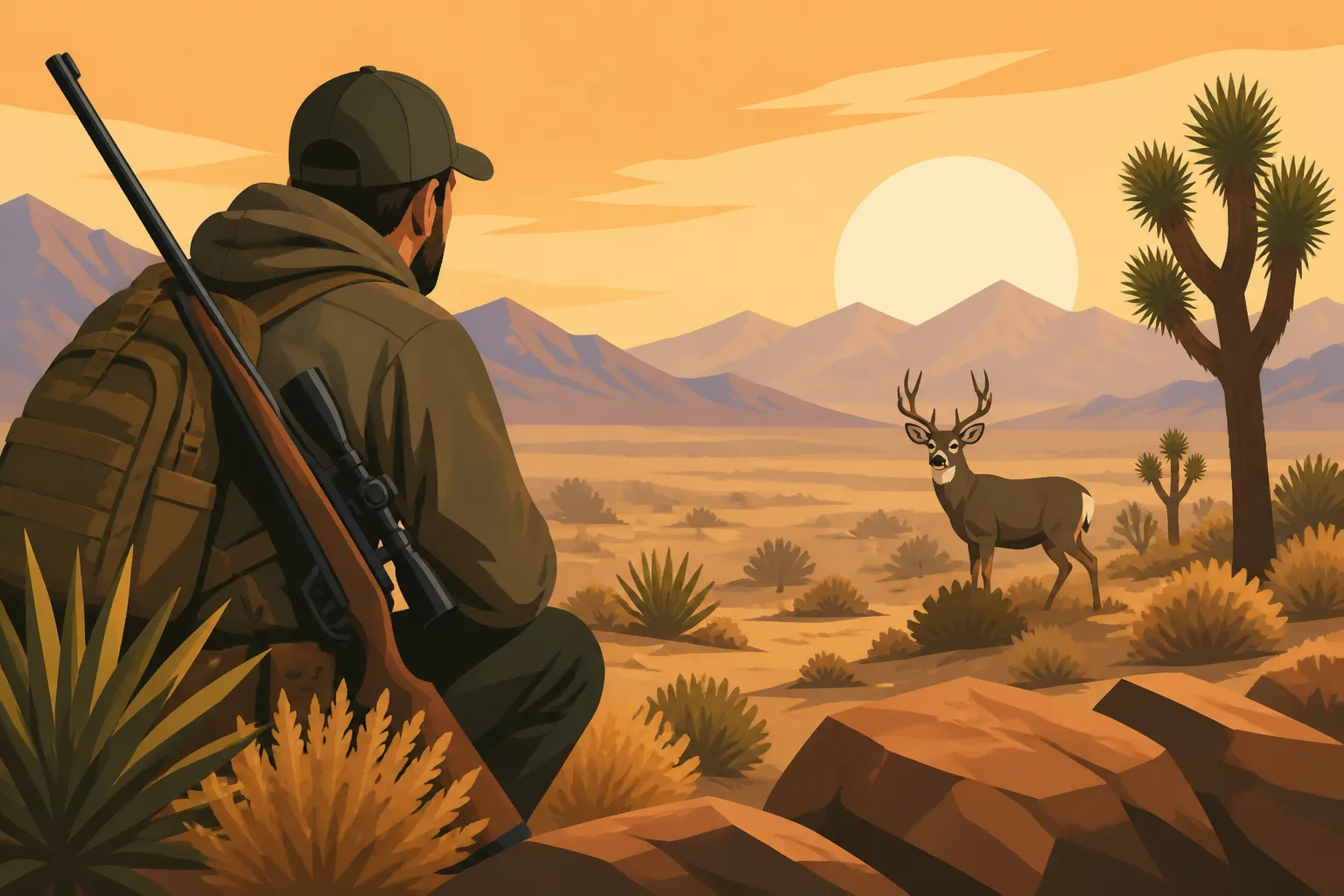
- The Mojave Desert: This is perhaps the most iconic, characterized by its famous Joshua trees, creosote bush flats, and dramatic mountain ranges like the Providence Mountains or the Calico Hills. It's generally higher in elevation than the Sonoran and experiences more extreme temperature swings, often with surprisingly cold winters and scorching summers. Game here learns to thrive on sparse water and uses every available rock pile and wash for cover.
- The Sonoran Desert: While most of California's Sonoran Desert is technically a transition zone, the extreme southeastern corner near the Arizona border touches this warmer, lower-elevation desert. You'll find different plant life here, including ironwood, palo verde, and various cacti. It can be incredibly dense with thorny vegetation, making travel and visibility challenging but offering excellent cover for game.
- The Great Basin Desert: Extending from the northeastern part of the state, this high desert region is characterized by vast sagebrush flats, pinyon-juniper woodlands, and rimrock country. Elevations are generally higher, and it experiences colder winters with more snow than the southern deserts. This is prime habitat for certain mule deer populations that move between the desert floors and the higher mountain ranges.
Each of these regions presents a unique puzzle for the hunter, from navigating thorny cholla thickets to traversing vast, open sagebrush basins. Understanding which desert you're in helps immensely in anticipating the landscape, the vegetation, and ultimately, where the game might be.
Common Misconceptions About Desert Hunting
Many hunters shy away from the desert, often due to ingrained misconceptions that simply don't hold up once you spend some time out there. Let's bust a few of these myths:
- "There's no game out there, it's just barren." This is probably the biggest misconception. While the desert isn't teeming with elk or massive concentrations of deer like some other states, it absolutely holds resilient populations of specialized game. Desert mule deer, various species of quail, cottontail and jackrabbits, and a healthy population of predators like coyotes and bobcats call these lands home. The key isn't that there's no game, it's that the game is often incredibly spread out and has adapted to utilize subtle features for cover and sustenance. You won't see a deer every few hundred yards, but when you find one, it's usually well-earned.
- "It's always too hot to hunt." While summer in the California desert is indeed brutal and best avoided for most hunting activities, spring and fall offer fantastic conditions. The early archery seasons for deer often fall into late summer, meaning you need to adapt to hot-weather strategies like hunting dawn and dusk near water. But by late fall and into winter, temperatures can be mild and even quite cold, especially at night or higher elevations in the Great Basin. This means that Hot-Weather Sitting Strategy in August is crucial, but so is being prepared for chilly mornings.
- "There's no cover for hunters or game." From a distance, many desert landscapes appear flat and exposed. However, up close, you'll discover a labyrinth of washes, dry creek beds, rocky canyons, and dense patches of creosote, mesquite, or thick sagebrush. These features provide excellent concealment for both game attempting to avoid predators and for hunters trying to close the distance undetected. The key is learning to "read" the subtle contours and vegetation that offer these critical breaks in the open landscape.
Why BLM Land is a Lifeline for California Hunters
In a state with a significant portion of its land tied up in private ownership, urban sprawl, or highly protected parklands, BLM land stands out as a true gift to the public land hunter.
- Vast, Accessible Acreage: The Bureau of Land Management oversees millions of acres in California, much of it in the desert regions. This means huge tracts of land are available for legal hunting, often with fewer access restrictions than other public land types. You can frequently drive deep into BLM areas on designated routes, set up camp, and hunt for days without seeing another soul. This offers a sense of wilderness and solitude that's becoming increasingly rare.
- Opportunities for Solitude and True Wilderness Hunting: If you're tired of competing for space with dozens of other hunters, the desert can be your refuge. While some areas near population centers might see more pressure, the sheer vastness and ruggedness of much of California's BLM desert mean that those willing to put in the effort and hike away from roads can find genuine solitude. This isn't just about avoiding other hunters; it's about connecting with the land on a deeper level and experiencing hunting as it was meant to be – a true immersion in the wild.
- Diverse Hunting Experiences: From glassing vast basins for a bedded mule deer to sneaking through dense washes for quail, or calling coyotes across a moonlit plain, BLM desert land offers a variety of hunting experiences. It pushes you to develop new skills, adapt your tactics, and truly learn the nuances of a unique ecosystem.
Species You Can Pursue on California BLM Desert Lands
While the desert might not boast the same sheer volume of game as some other habitats, it offers unique opportunities to pursue resilient and challenging species.
Desert Mule Deer: The Elusive Kings of the Arid Lands
Hunting desert mule deer in California's BLM lands is a demanding, yet incredibly rewarding pursuit. These aren't your timber deer; they've adapted to an unforgiving environment.
- Characteristics of Desert Mule Deer: These deer are often lighter in color than their mountain cousins, blending seamlessly with the dry, rocky terrain. They tend to be smaller-bodied overall, and while some impressive bucks are taken, their antler growth can sometimes be less robust than mule deer from richer habitats due to limited nutrition. Don't let that fool you; they are tough, wily, and masters of their environment. They have larger ears to dissipate heat and are incredibly tuned into their surroundings.
- Where to Find Them: Desert mule deer are not randomly distributed. They concentrate around critical resources. Look for them in and around deep washes, which provide shade, cover, and often funnel what little water might exist. Pinyon-juniper breaks, rocky hillsides, and areas with sparse oak or mesquite patches are also key. They'll use the slightest elevation change for vantage and to catch a breeze. Hunting a BLM Desert Wash for Mule Deer is a classic strategy, as these natural drainages act as highways and hideouts. They often bed on slopes where they can see danger approaching from below.
- Their Reliance on Scattered Water Sources: This is the single most critical factor in locating desert deer. Natural springs, man-made guzzlers (often developed by wildlife agencies or conservation groups), and even ephemeral pools after rare rains are magnets for all desert wildlife. Scouting these areas, either physically or through mapping apps, is paramount. Deer will often be found within a reasonable distance of reliable water, especially during hotter periods. Learning to identify these water sources and their associated game trails will dramatically increase your odds.
Small Game Opportunities: Quail, Rabbits, and Jackrabbits
The desert is a fantastic place for small game hunting, offering action and a chance to hone your shooting skills.
- Desert Quail (Gambel's, California) and Their Covey Behavior: California's deserts are home to Gambel's quail, particularly in the southeastern regions, and in transition zones, you'll find California quail. Gambel's are known for their distinctive topknot and their habit of running like Olympic sprinters before flushing. They form coveys and are typically found near dense thorny brush, mesquite thickets, or rocky washes that provide cover and roosting sites. Hunting them often involves walking up draws or pushing through dense patches, listening for their distinctive calls. Quail Hunting California Foothill Chaparral offers similar challenges, though the species might differ slightly depending on the exact locale.
- Cottontails and Jackrabbits: Surprisingly Abundant: Don't underestimate the humble rabbit! Cottontails are common in brushy areas and rocky outcrops, providing fast-paced hunting opportunities. Jackrabbits, on the other hand, are larger, faster, and incredibly challenging targets. They often prefer more open country with scattered low brush. Both species provide excellent table fare and are a great way to introduce new hunters to the field or just enjoy a productive day. They offer a fantastic way to sharpen your tracking and snap-shooting skills.
- Habitat for Small Game: Look for small game in areas with a mix of cover and open ground for feeding. Dense patches of creosote, cholla, catclaw acacia, or mesquite provide crucial protection from predators and the elements. Rocky areas and washes also provide escape routes and cooler microclimates. Water is less of a limiting factor for rabbits and quail than for deer, as they can often get enough moisture from vegetation, but they'll still gravitate towards areas with more greenery.
Predator Hunting: Coyotes and Bobcats
The desert is a prime location for predator hunting, offering year-round opportunities and a chance to contribute to wildlife management.
- Year-Round Opportunities for Predator Calling: Coyotes are incredibly adaptable and abundant across California's desert BLM lands. Unlike big game, there's no closed season for coyotes, making them a fantastic target for off-season hunting or when big game tags are filled. Coyote Calling California Ranch Land shares many techniques applicable to desert terrain, but the open nature of the desert allows for different setups and longer shot opportunities. Bobcats are also present, though much more elusive, offering a true challenge for the experienced caller.
- Their Role in the Desert Ecosystem: Coyotes are apex predators in the desert, playing a crucial role in regulating populations of small game and rodents. Hunting them is not only an exciting pursuit but also a way to help maintain a healthy balance in the ecosystem, especially in areas where prey species might be under pressure.
- Best Times and Tactics for Calling: Early mornings and late evenings are often the most productive for coyotes, as they are more active during cooler periods. In the hot desert, night calling can also be very effective, though check local regulations regarding night hunting. Use a variety of calls – distress cries of rabbits or birds, pup howls, or challenge howls – to pique their interest. Look for calling setups that offer good visibility, a solid backdrop for concealment, and consideration for the prevailing wind direction, which is always crucial for predator hunting. Predator Calling California's Mojave Desert Country demands patience and meticulous attention to scent control.
Navigating the Challenges of Desert Hunting
Hunting California's BLM desert is not for the faint of heart. It demands meticulous planning and a deep understanding of its unique environmental challenges.
Extreme Weather and Hydration Strategies
The desert environment is unforgiving, and underestimating its power can quickly turn a hunt into a dangerous situation.
- Summer Heat: Vital Importance of Water, Electrolytes: If your hunt falls in the hotter months (early archery seasons, for example), daytime temperatures can easily soar into the triple digits. This isn't just uncomfortable; it's genuinely dangerous. Dehydration can set in rapidly, leading to heat exhaustion and even heat stroke. You must carry far more water than you think you need – a gallon per person per day is a bare minimum for active hunting, and two gallons is safer. Electrolyte supplements are also crucial to prevent cramping and maintain fluid balance. Plan your hunts for the cooler hours of dawn and dusk, resting during the midday heat.
- Unexpected Cold Fronts: Desert Nights Can Drop Dramatically: Just as extreme heat is a concern, so is the dramatic temperature drop after sunset. Desert nights can be surprisingly cold, even after a scorching day, particularly in the higher elevation Great Basin regions or during late fall and winter hunts. A clear desert sky allows heat to radiate away quickly. Always pack layers for warmth, even if the forecast looks mild. Getting caught unprepared in a sudden cold snap without adequate clothing can lead to hypothermia.
- Gear for Temperature Extremes: Layering, Hydration Systems: Proper gear is non-negotiable. Invest in a high-quality hydration pack with enough capacity, and consider carrying additional water bottles. For clothing, focus on lightweight, breathable, moisture-wicking materials for warm weather, and bring insulating layers (fleece, puffy jacket) for cold nights and mornings. A wide-brimmed hat, sunglasses, and sunscreen are essential for sun protection. Remember, Staying Cool During a Hot Zone A Hunt involves not just hydration but also intelligent clothing choices and strategic shade seeking.
Terrain and Navigational Prowess
The desert's seemingly endless landscape can quickly become disorienting if you're not prepared.
- Vast, Featureless Areas Versus Hidden Canyons and Washes: From a distance, large expanses of desert can appear flat and devoid of landmarks. However, this is deceiving. Up close, you'll encounter countless subtle features: small washes that turn into deep canyons, rocky hills, eroded badlands, and dense thickets of brush. These features can obscure your line of sight and make it easy to lose your bearings, especially when tracking game or moving quickly. Always be aware of the terrain's nuances.
- The Critical Role of Mapping Apps like onX Hunt for Land Boundaries and Features: In such an expansive and often remote environment, a reliable GPS and mapping system is your most valuable tool. Apps like onX Hunt are indispensable. They provide detailed topographic maps, satellite imagery, and, most crucially, property boundaries that clearly delineate BLM land from private parcels or other public land types. You can mark waypoints for water sources, game sightings, camp locations, and vehicle parking. The ability to use these maps offline, even without cell service, is critical. Using an App for California BLM Land Status isn't just a convenience; it's a safety and legality necessity.
- Physical Demands: Walking Long Distances Over Uneven Ground: Don't expect easy going. Desert hunting often involves significant walking, often over loose gravel, rocky hillsides, and through sandy washes. This is physically demanding. Be in good physical condition, wear comfortable, supportive boots, and break them in thoroughly before your hunt. A twisted ankle far from the road can be a serious problem.
Water Sources: Finding Them and Hunting Them
In the desert, water is life, and it dictates the movement of nearly all wildlife.
- Guzzlers, Springs, Ephemeral Pools – Their Importance to All Desert Life: Natural springs are rare and precious, often marked by a small oasis of greener vegetation. Guzzlers are man-made water collection systems designed to provide water for wildlife, often consisting of a rain catchment apron and a drinking tank. Ephemeral pools are temporary puddles that form after rain, but they can be crucial temporary attractants. All of these are magnets for game, not just deer but also quail, rabbits, and predators. Learning to identify these on maps and scouting for them is paramount.
- Scouting for Sign Around These Precious Spots: Once you've located potential water sources, the real work begins. Look for game trails radiating out from the water, fresh tracks, droppings, and browse marks on vegetation. Focus on areas downwind of water, or where game might funnel to access it. A single fresh track near a guzzler can tell you a deer is in the area. Remember to keep your distance and observe without disturbing the site too much, as these are vital resources.
- Ethical Considerations Around Water Sources: It's important to approach water sources ethically. While they are obvious places to find game, avoid setting up directly on top of them or making them unusable for other animals. Consider hunting a discreet distance away, intercepting game as they approach or leave. The goal is to hunt responsibly and ensure these critical resources remain viable for all wildlife throughout the season.
Essential Gear and Tactics for BLM Desert Success
Being properly equipped and employing smart tactics are the cornerstones of a successful and safe desert hunt. The environment itself demands a different approach than hunting timber or agricultural fields.
Optics: Your Best Friend in Open Country
In the expansive, open terrain of the California desert, your eyes (and good optics) are your most potent hunting tool.
- High-Quality Binoculars and Spotting Scopes are Non-Negotiable: Forget trying to hunt the desert without top-tier glass. You'll be spending hours, if not days, behind your binoculars, picking apart distant hillsides and canyon bottoms. A good pair of 10x or 12x binoculars with clear, bright glass is essential. For really picking apart distant country or confirming an animal's legal status, a spotting scope (20-60x or similar magnification) mounted on a sturdy tripod is indispensable. This allows you to conserve energy by glassing vast areas from a single vantage point rather than walking them. Best Binoculars for Glassing a Burn Scar discusses similar principles of long-range observation crucial here.
- Glassing Techniques for Vast Expanses: Don't just randomly scan. Pick apart the landscape methodically. Start close and work your way out, section by section. Focus on shaded areas, the edges of washes, saddles between hills, and any subtle changes in vegetation or terrain that might offer cover to a bedded animal. Look for horizontal lines (like the back of a deer) in a vertical world, or subtle movements. Take breaks to rest your eyes, and then start again. Patience is absolutely key.
- Tripods for Stability: Whether for your binoculars or spotting scope, a sturdy tripod is critical. Hand-holding binoculars for extended periods leads to fatigue and shaky images, making it nearly impossible to spot a subtle ear twitch or the glint of an antler at a mile. A lightweight, robust tripod will allow you to hold your optics steady, increasing your effective glassing time and reducing eye strain significantly.
Footwear, Clothing, and Backpacks
Your personal gear needs to withstand the desert's harshness and keep you comfortable and safe.
- Durable, Supportive Boots for Rocky, Uneven Terrain: Your feet will take a pounding in the desert. You'll encounter sharp rocks, loose scree, thorny plants, and hard-packed earth. Invest in high-quality, ankle-supporting boots with stiff soles that can protect your feet. They should be well-broken in to prevent blisters, and ideally, provide good ventilation for warmer conditions. Best Boots for Dry Desert Wash Hunting highlights the specific demands of this environment.
- Layered, Breathable Clothing for Temperature Swings: The desert's dramatic temperature swings mean layering is crucial. Start with a moisture-wicking base layer. Add a durable, breathable outer layer (preferably in a camouflage pattern that blends with desert scrub or rocks). For colder mornings and evenings, pack an insulating fleece or lightweight puffy jacket. Avoid cotton, which holds moisture and can become dangerous when temperatures drop. Consider lighter color palettes like tan, sage, or muted greens and browns that blend with arid environments. Layering for Hot-to-Cold Zone A Archery Days offers excellent insights applicable here.
- Packs for Carrying Ample Water, Game, and Emergency Supplies: A good hunting pack is not just for carrying your gear; it's also your lifeline. It needs to be comfortable for long hikes, durable enough to handle scrapes from brush and rocks, and have sufficient capacity. Crucially, it must be able to carry several liters of water, as well as space for emergency supplies (first-aid kit, fire starter, shelter, navigation tools) and, hopefully, a quartered deer or small game. Look for packs with good external compression straps for securing a spotting scope or extra layers. Best Pack for a Multi-Day Elk Hunt might be overkill, but the principles of carrying capacity and comfort apply.
Firearms and Ammunition Considerations
The open nature of desert hunting often means longer shots, necessitating careful rifle and ammunition choices.
- Calibers Suited for Longer Shots on Open Terrain: While ethical shot distance is always hunter-dependent, the desert often presents opportunities beyond typical timber ranges. Calibers that offer flat trajectories and retain energy well at extended distances are often favored. Popular choices include the .270 Winchester, .30-06 Springfield, .308 Winchester, 6.5 Creedmoor, and various magnum cartridges for those comfortable with them. The goal is to ensure enough energy for a clean, ethical kill on a mule deer that might be a few hundred yards away. Best Rifle Caliber for California Mule Deer is a good resource for this.
- California's Non-Lead Ammunition Requirement: What It Means for Desert Hunting: This is not an option; it's the law statewide in California. All firearms used for hunting must be loaded with non-lead ammunition. For deer and other big game, this typically means copper monolithic bullets. For small game and predators, non-lead shot (steel, bismuth, tungsten-matrix) or non-lead bullets are required. This law is particularly relevant in areas with sensitive species like the California Condor, which can be found in some of the peripheral desert regions. You must zero your rifle with your chosen non-lead load well in advance of your hunt, as ballistics can differ from traditional lead rounds. Choosing Non-Lead Rifle Ammunition in California is an absolute must-read.
- Accuracy and Ethical Shot Placement: Regardless of your chosen caliber or ammunition, paramount importance must be placed on accuracy. Practice shooting from various positions – prone, kneeling, sitting – that mimic real-world hunting scenarios. Use shooting sticks or a bipod to ensure stability for those longer shots. Never take a shot you're not 100% confident in making an ethical kill. The vastness of the desert can make tracking a wounded animal incredibly difficult and potentially lead to a lost animal.
Planning Your BLM Desert Hunt: From Scouting to Regulations
Success in the desert isn't accidental; it's the result of meticulous planning before you ever step foot in the field.
Pre-Season Scouting and e-Scouting
Modern technology has revolutionized how we prepare for hunts, especially in vast, remote landscapes like the desert.
- Using Satellite Imagery and Topographic Maps (e.g., GoHunt's mapping tools) to Identify Potential Game Habitat, Water, and Access Points: Before you ever burn a drop of gas, spend hours studying maps. Tools like onX Hunt and GoHunt's mapping platforms offer invaluable satellite imagery and topographic data. Look for variations in terrain: areas where washes converge, slight changes in elevation, patches of denser vegetation, and the location of known water sources (springs, guzzlers). Identify potential travel corridors and bedding areas. Mark vehicle access points and plan potential hiking routes. This "e-scouting" allows you to cover hundreds of square miles from your couch, narrowing down productive areas.
- Identifying Hunting a BLM Desert Wash for Deer or Hunting a Ridge-Top Saddle at First Light: As you e-scout, look for specific features. A deep, winding wash system offers cover and travel routes for deer. A ridge-top saddle or pass can be a natural funnel point for animals moving between feeding and bedding areas. Burn scars from previous wildfires can be fantastic attractants, as they often produce new, nutritious forage. Identify these key landscape features and mark them on your digital maps as potential ambush or glassing spots.
- Looking for Historical Burn Scars or Unique Topographical Features: Burn scars, even old ones, can reveal areas of new growth that attract deer and other herbivores. Unique topographical features like isolated rock formations, a lone stand of trees, or a particularly deep canyon can also act as micro-habitats or navigational markers for game. These small details can often concentrate animals in an otherwise expansive landscape.
Understanding BLM Regulations and Access
Navigating the rules of public land use is critical for a legal and responsible hunt.
- Vehicle Access Rules: Sticking to Established Roads: BLM lands have rules regarding vehicle use to prevent habitat damage. Generally, you must stick to established roads and trails. Off-roading or creating new trails is usually prohibited. Always check the specific BLM field office's regulations for the area you intend to hunt. Many mapping apps will show designated roads and trails, which is incredibly helpful. Respecting these rules not only keeps you legal but also minimizes your impact on the fragile desert ecosystem. For more detail, Vehicle Rules on California Public Land provides a good general overview.
- Camping, Fires, and Leave No Trace Principles: Dispersed camping (camping outside of designated campgrounds) is often allowed on BLM land, but again, always verify specific regulations. Fire restrictions are extremely common, especially in dry desert environments, so always check current fire danger levels and restrictions before lighting any flame. Practice Leave No Trace principles rigorously: pack out everything you pack in, minimize your impact on vegetation and soil, and properly dispose of human waste. The desert is a fragile environment, and our responsibility to protect it is paramount.
- Checking for Seasonal Closures (e.g., Fire Restrictions): Beyond general hunting seasons, BLM lands can have dynamic closures. Fire danger might close entire areas to vehicle access or even foot traffic. Environmental protection for sensitive species might also lead to temporary or permanent closures. Always check the local BLM field office website or call them before your hunt for the most up-to-date information.
Safety and Emergency Preparedness
Remote desert hunting comes with inherent risks, making thorough safety planning absolutely essential.
- Communicating Your Plans, Carrying a Satellite Communicator: Cell service in many BLM desert areas is non-existent. Before you head out, leave a detailed itinerary with a trusted person, including your planned route, expected return time, and vehicle description. Better yet, carry a satellite messenger or communicator like a Garmin inReach or a Zoleo. These devices allow you to send and receive messages even without cell service and, crucially, to trigger an SOS in a true emergency. This is not optional for remote desert hunting; it's a life-saving tool.
- First Aid, Navigation Tools, Emergency Water/Food: Beyond your primary hydration, always carry a small emergency supply of water and shelf-stable food (energy bars, dried fruit). A comprehensive first aid kit is critical, especially one that includes mole skin for blisters, wound care, and pain relievers. Always have a physical map and compass as a backup to your electronic devices, and know how to use them. A headlamp with extra batteries is also a must for navigating in the dark or setting up camp. Best First Aid Kit for a Remote Hunt covers essential items.
- Wildlife Encounters (Snakes, Scorpions): The desert is home to venomous creatures. Be aware of rattlesnakes, especially during warmer months. Watch where you step, where you put your hands, and shake out your boots before putting them on. Scorpions are also common; be mindful when reaching into dark crevices or picking up rocks. While encounters are usually avoidable with common sense, knowing how to react is important.
Specific BLM Desert Hotspots and What Makes Them Unique
California's BLM desert lands are not monolithic. Different regions offer distinct characteristics and hunting experiences.
The Mojave's Vastness: Opportunities and Challenges
The Mojave Desert epitomizes the "vast open spaces" often associated with desert hunting. It's truly immense, covering a significant portion of Southern California.
- Large, Remote Areas: Within the Mojave, you'll find enormous tracts of BLM land that are incredibly remote, such as those surrounding the Mojave National Preserve (where hunting is generally restricted within the preserve itself, but ample BLM lies outside). This means the potential for solitude is high, but so is the potential for getting truly lost or stranded. These remote areas hold some excellent desert mule deer, but finding them requires extensive glassing and hiking. Access can be limited to graded dirt roads, which can become impassable after rain.
- Species Specific to This Region: While mule deer are the primary big game species here, the Mojave is also excellent for jackrabbits, cottontails, and especially Gambel's quail in suitable habitats. Predator calling for coyotes can be very productive across its varied terrain. Some areas might be on the fringe of desert bighorn sheep range, but tags for those are exceedingly rare and highly specialized.
- Specific Challenges Like Limited Access Points: Many areas of the Mojave are crisscrossed by historical mining roads or old faint tracks. It's vital to know which are legally open to vehicles and which are closed or require high-clearance 4×4. Always carry extra fuel, spare tires, and recovery gear. Water is extremely scarce, emphasizing the importance of carrying enough for yourself and any game you might harvest.
Carrizo Plain National Monument: A Unique Ecosystem
While parts of the Carrizo Plain are highly protected, surrounding BLM lands offer hunting opportunities in a truly unique environment.
- Home to Diverse Wildlife, Including Tule Elk: The Carrizo Plain National Monument is famous for its recovery of Tule Elk and pronghorn antelope, making it a critical wildlife area. While hunting for these species is highly regulated and usually done through specific draw tags (often on private lands or dedicated hunts), the general BLM lands in the surrounding area can still offer opportunities for other species. The monument itself has complex hunting rules, with some areas closed or designated for special hunts only.
- Seasonal Considerations: The Carrizo Plain bursts into vibrant wildflowers after winter rains, and spring brings incredible bird migrations. However, summers are brutally hot and dry. Hunting here is best pursued in the fall and winter months when temperatures are more moderate, and animals are active. Pay attention to seasonal closures, as parts of the monument may close to protect sensitive species during certain times of the year.
- Limited Hunting Areas Within the Monument, But Surrounding BLM Can Be Productive: It's crucial to understand the boundaries and regulations within the monument itself. While the core of the monument is largely a preserve, the vast stretches of BLM and private land surrounding it can be very productive for mule deer (especially if they move in and out of the monument), wild pigs (in areas where habitat overlaps with oak woodlands), quail, and coyotes. Hunting Pigs on Central Coast Oak Ranges might describe habitat that fringes the Carrizo Plain area. Detailed mapping is essential to discern what's open to hunting.
Eastern Sierra BLM: Transition Zone Hunting
Where the vastness of the Great Basin Desert meets the dramatic rise of the Sierra Nevada, you find a hunting paradise.
- Where Desert Meets Mountains, Offering More Varied Terrain and Species: This region, encompassing areas like the Alabama Hills near Lone Pine, or the BLM lands east of Bishop and Mammoth Lakes, is a transition zone. You have the classic sagebrush flats and pinyon-juniper hills of the desert, but quickly ascend into pine forests and granite peaks. This creates incredibly diverse habitats and movement patterns for game. Deer often move between the higher elevations in summer and the lower, more sheltered desert slopes in winter.
- Often Holds Good Mule Deer Populations Due to Proximity to Higher Country: The Eastern Sierra BLM is particularly renowned for its mule deer. These deer often summer in the high Sierra and migrate down to the lower BLM lands as winter snows push them out. This makes for dynamic hunting, where you might be glassing open desert flats one day and climbing into pinyon-juniper groves the next. These mule deer tend to be larger-bodied than their true desert counterparts due to richer forage availability in the mountains.
- Considerations for Hunting California's Sierra Nevada Backcountry Adjacent to Desert: Many of these BLM areas are directly adjacent to national forest lands and wilderness areas in the Sierra Nevada. This offers opportunities for truly expansive hunts that blend desert tactics with mountain strategies. You might find yourself tracking a deer that has just dropped out of the high country or glassing desert foothills for a buck that will eventually head back up. Understanding these migratory patterns, and using tools like the CDFW hunting app, is key to success here.
Ethical Considerations and Leave No Trace in the Desert
Hunting on California's BLM desert lands comes with a profound responsibility to protect its fragile ecosystem and uphold the highest ethical standards. The desert is a harsh environment, and our actions can have a disproportionate impact.
Respecting the Fragile Desert Ecosystem
The desert, while seemingly resilient, is actually incredibly vulnerable to human impact. Its slow growth rates mean that damage can take decades, or even centuries, to heal.
- Minimizing Impact: Staying on Trails, Packing Out All Trash: This is the golden rule of desert stewardship. Stick to designated roads and trails, whether on foot or in a vehicle. Driving off-road can crush delicate cryptobiotic soil crusts, destroy plants, and create erosion that lasts for generations. Every piece of trash you generate must be packed out – that includes spent shell casings, food wrappers, and even organic waste like fruit peels (which break down incredibly slowly in arid environments and can attract unwanted wildlife). "Pack it in, pack it all out" is not just a suggestion; it's a moral imperative.
- Avoiding Sensitive Habitats: Be aware of areas that might be particularly sensitive. This could include rare plant communities, archaeological sites (which are legally protected), or designated wilderness study areas where vehicle access is strictly prohibited. Use your mapping apps to identify these areas and ensure you avoid disturbing them. Understanding Hunting Pressure on California Public Land is also key to choosing areas where your presence is less likely to compound existing stress on the environment. Spreading out and finding less-traveled areas helps alleviate pressure on specific spots.
- Being Mindful of Noise and Disturbance: The quiet of the desert is one of its most valuable attributes. Be mindful of excessive noise from vehicles, generators, or loud conversations, especially at dawn and dusk when wildlife is most active. Your goal should be to blend into the environment as much as possible, minimizing your footprint and disturbance.
Water Ethics and Wildlife
Water is the single most precious resource in the desert, and our interactions with it must be handled with extreme care and respect for wildlife.
- The Immense Value of Water in the Desert: Every drop of water in the desert is critical for survival. Natural springs, seeps, and guzzlers are oases that concentrate life. Disturbing these sources, contaminating them, or monopolizing them can have ripple effects throughout the entire ecosystem, impacting multiple species.
- Avoiding Disturbing Animals at Critical Water Sources: While scouting or hunting near water, do your utmost to avoid directly disturbing animals that are coming to drink. If you observe animals at a water source, give them space. Don't pressure them off, as this could deny them a vital opportunity to rehydrate. Setting up too close or constantly walking directly to a water source can make animals nocturnal or push them out of the area entirely.
- Leaving Water Sources Undisturbed for Continued Wildlife Use: Never tamper with guzzlers or natural springs. Don't block access, leave trash near them, or do anything that could reduce their effectiveness or pollute the water. These are vital infrastructure for wildlife, often maintained by dedicated conservation efforts. Your responsibility is to leave them exactly as you found them, or better.
Responsible Game Recovery and Field Care
The desert's high temperatures and remoteness demand quick, efficient, and ethical game recovery and field care.
- Hot Weather Meat Care: Importance of Rapid Field Dressing and Cooling: If hunting during warmer periods, heat is your biggest enemy when it comes to meat spoilage. After a successful harvest, rapid field dressing is absolutely crucial. Remove all entrails immediately to allow the carcass to cool as quickly as possible. Get the hide off if feasible, and quarter the animal to allow for maximum airflow. Elevate the meat off the ground. Field Dressing a Deer in Hot Weather is a skill you must master for desert success. Game bags made of breathable cotton or synthetic material are essential for protecting the meat from flies and dirt while allowing it to cool.
- Game Bags and Packing Strategies: Once quartered, place the meat in clean game bags. Even small game can benefit from proper care. If you plan to pack out a deer, ensure your pack system is capable of handling the weight and bulk. Multiple trips might be necessary, but prioritizing the meat's integrity is key. Consider using a sturdy external frame pack for heavy loads. Bring enough ice and coolers to quickly chill the meat once you get it back to your vehicle. Packing Meat Out of a Steep Canyon provides valuable insights into load management and endurance, relevant to any challenging terrain.
- Blood Trailing After Dark in California and the Challenges in Open Desert: While we all strive for quick, clean kills, sometimes a blood trail is necessary. Blood trailing in the desert presents unique challenges. Hard, rocky ground might not hold tracks or blood well. The vastness means a lost trail can quickly become an impossible task. If you must trail after dark, do so methodically, marking the last known blood, and be prepared to return at first light if the trail is sparse. A powerful headlamp and a systematic approach are essential. Knowing when to back out and return in the morning is a crucial, ethical decision.
| BLM Desert Region | Dominant Features | Primary Game Species | Key Hunting Challenges | Scouting Tips |
|---|---|---|---|---|
| Mojave Desert | Vast open flats, dramatic mountain ranges, Joshua trees, creosote bush | Mule Deer, Coyotes, Jackrabbits, Gambel's Quail | Extreme heat, water scarcity, remote access, limited cell service | Focus on washes, springs, higher elevations, pinyon-juniper breaks |
| Sonoran Desert (SE CA fringe) | Lower elevation, denser thorny brush, palo verde, cholla, mesquite thickets | Mule Deer, Cottontails, California Quail, Coyotes | Extreme heat, dense thorny vegetation, limited visibility, sharp plants | Seek out mesquite thickets, hidden drainages, rocky outcrops for quail |
| Great Basin Desert (Eastern CA) | Sagebrush steppe, pinyon-juniper woodlands, rimrock, higher elevations | Mule Deer (larger), Cottontails, Jackrabbits, California Quail, Coyotes | Variable weather (cold nights), vast distances, fewer reliable water points | Identify large sagebrush basins, rimrock edges, transition zones to mountains |
Disclaimer
This article is for general informational purposes only and does not constitute professional advice. Laws, prices and regulations vary by location and change over time. Consult a qualified professional for guidance on your specific situation.