Predator Calling California’s Mojave Desert Country
Hunting in California's vast and often intimidating Mojave Desert country can feel like searching for a needle in a colossal haystack, especially when you're targeting wily predators like coyotes. The sheer scale and sparse cover can make traditional hunting methods seem futile, leaving many hunters frustrated and coming home empty-handed. But don't give up! This comprehensive guide will break down the specialized strategies, essential gear, and unique considerations for effectively calling predators in the challenging, yet rewarding, landscapes of the Mojave.
The Mojave's Unique Predator Puzzle
The Mojave Desert isn't your typical timber or open field hunting ground. It's a land of extremes, from scorching summer days to surprisingly cold nights, characterized by wide-open vistas, jagged mountain ranges, and seemingly endless washes. Understanding the resident predators and their intricate relationship with this harsh environment is the first step to success.
Understanding Desert Coyotes and Their Behavior
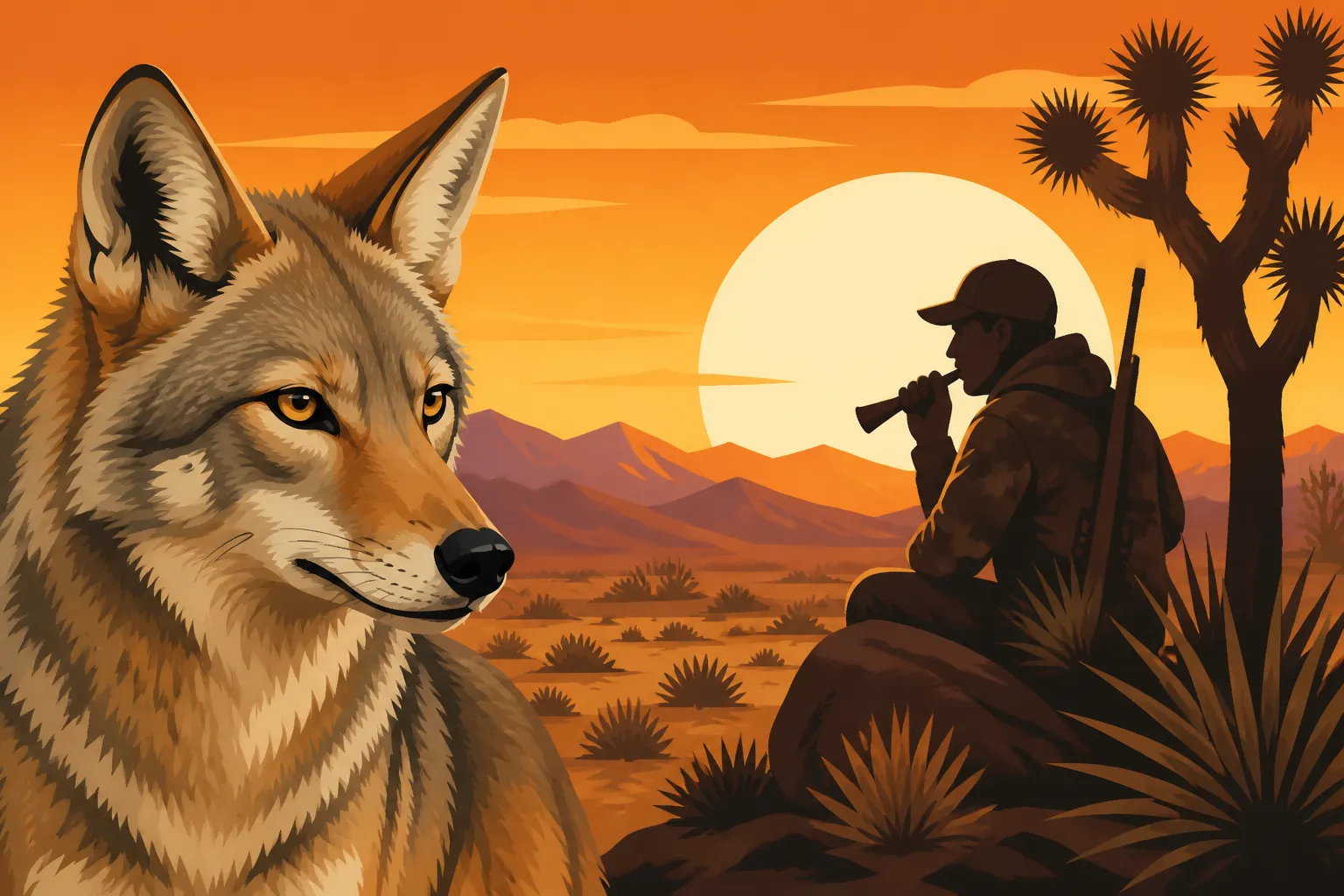
Coyotes in the Mojave are absolute survivors. They're leaner, often lighter-colored, and incredibly resourceful compared to their counterparts in more lush environments. Their survival hinges on stealth, speed, and an uncanny ability to find food in a landscape that offers little in the way of easy meals.
Their diet is incredibly varied, but in the desert, it heavily relies on small mammals like jackrabbits, cottontails, ground squirrels, and even rodents. This reliance on smaller, often fast-moving prey dictates their hunting tactics and, by extension, where and how you'll find them. They'll often den in rocky outcrops, under thick mesquite bushes, or within the intricate network of desert washes and dry creek beds that crisscross the landscape. These areas provide shade, protection from the elements, and ambush points for hunting their next meal. You'll often find them traveling along ridgelines at dawn and dusk, using the elevation to spot prey, or moving through thickets of creosote and cholla cactus that offer a degree of concealment. Their daily patterns are heavily influenced by temperature, often leading to more nocturnal activity during the peak heat of summer, or movement during the cooler hours of early morning and late afternoon in milder seasons.
Other Opportunistic Predators of the Mojave
While coyotes are often the primary target for predator callers in the Mojave, they aren't the only game in town. The desert is home to a host of other opportunistic predators that might respond to your calls, offering exciting secondary opportunities or unexpected encounters.
Bobcats, with their distinctive short tails and tufted ears, are masters of ambush. They also rely on the same small prey animals as coyotes, making similar calling techniques effective. You're less likely to see them during the day, as they are largely nocturnal or crepuscular (most active at dawn and dusk), preferring to hunt under the cover of low light. Look for areas with dense brush, rocky crevices, and canyon bottoms where they can hide and pounce. Mountain lions, though protected and not a target species, are also present and might be drawn in by calls, so always be aware of your surroundings, especially in remote, rugged areas. Gray foxes are another common desert predator, smaller than coyotes and often found in more broken terrain with rocks and brush. They're incredibly quick and can be quite curious, sometimes coming in quickly to distress calls. Even badgers, though less frequently called in, are powerful diggers that prey on rodents and can occasionally be drawn to a commotion. Understanding these different species helps you prepare for a variety of responses and appreciate the rich biodiversity of the Mojave.
Essential Gear for Mojave Calling Success
Hunting in the Mojave is tough on gear. The abrasive sand, sharp rocks, extreme temperatures, and vast distances demand equipment that is rugged, reliable, and perfectly suited to the environment. Skimping on the right tools will only lead to frustration and missed opportunities.
Electronic vs. Mouth Calls for the Desert
When it comes to the core of predator calling – the calls themselves – you've got a couple of primary routes, each with its own advantages and disadvantages in the Mojave.
Electronic calls are often the go-to for many desert hunters, and for good reason. Brands like Foxpro or Primos Alpha Dogg offer a wide array of realistic sounds, from various distress calls (jackrabbit, cottontail, fawn) to coyote howls and barks. The main advantage here is volume and consistency. In the wide-open, often windy expanses of the Mojave, an electronic call can project sound much further than a mouth call, drawing in animals from greater distances. You can also place the caller away from your position, drawing the predator's attention to a different spot, which is a huge tactical advantage when dealing with wary desert coyotes. This can be especially helpful if you're using a ground blind on BLM land. However, electronic calls require batteries, can be pricey, and if they malfunction, you're out of luck. Carrying extra batteries is not just a suggestion; it's a necessity in the remote desert.
Mouth calls, on the other hand, offer portability, affordability, and a more intimate connection to the sounds you're making. Open-reed calls excel at replicating jackrabbit and cottontail distress, while closed-reed calls can produce convincing puppy barks and some coyote vocalizations. The primary challenge with mouth calls in the desert is projecting enough volume, especially on windy days. Your ability to consistently produce varied and loud sounds will be tested. However, they are invaluable for close-range work, subtle adjustments, and as a backup if your electronic caller fails. Many experienced callers use a combination, using an electronic call for long-range attraction and switching to a mouth call for realistic, subtle sounds as the predator approaches. Consider practicing extensively with both to see what feels most natural and effective for your style of hunting in the harsh Mojave environment.
Optics, Clothing, and Other Must-Haves
Beyond calls, a suite of specialized gear will make your Mojave predator hunt safer and more successful. The desert demands careful consideration of every item you pack.
Optics are paramount in the wide-open desert. You'll be spending a lot of time glassing distant terrain, looking for approaching coyotes or scanning for movement. High-quality binoculars, 10×42 or 12×50 power, are essential. Brands like Vortex, Leupold, or Swarovski offer excellent clarity and light gathering for spotting a camouflaged coyote against a similar-colored hillside. A good rangefinder is also non-negotiable for quickly judging distances, especially for those longer shots that are common in open country. You'll often be glassing a canyon for a bedded buck, but the same principles apply to spotting a coyote. When planning your hunt, useful platforms like GoHunt can help you analyze terrain features and identify potential travel corridors where optics will be most effective.
Clothing needs to be durable, breathable, and provide excellent camouflage against the desert backdrop. Lightweight, quick-drying fabrics are crucial for staying comfortable in the heat, but don't forget layers for the often chilly mornings and evenings. Camo patterns that blend with sagebrush, rock, and sparse desert vegetation are ideal. Think muted browns, tans, and grays. Durability is key; you'll be crawling through sharp rocks and thorny brush. Good quality hiking boots designed for dry, rocky terrain are a must – something sturdy with ankle support to navigate uneven ground. Hydration is critical; carry far more water than you think you'll need, along with electrolyte supplements. A reliable GPS or mapping app like onX Hunt, coupled with a portable power bank, is vital for navigation in areas where landmarks can look surprisingly similar. Don't forget a sturdy backpack to carry all your gear, a first-aid kit, and a basic survival kit.
| Gear Category | Recommended Item / Feature | Why it's Important in the Mojave |
|---|---|---|
| Calls | Electronic Caller (Foxpro, Primos) | High volume, versatile sounds, remote placement for wary predators. |
| Mouth Calls (Open/Closed Reed) | Portable, cost-effective, subtle close-range sounds, reliable backup. | |
| Optics | Binoculars (10×42 or 12×50) | Spotting camouflaged animals at long distances in open terrain. |
| Rangefinder | Accurate shot placement, judging distance in vast, featureless country. | |
| Clothing | Layered, breathable, desert camo | Adapting to extreme temperature swings, blending with sparse cover. |
| Durable Hiking Boots (ankle support) | Navigating rocky, uneven, and thorny terrain without injury. | |
| Navigation | GPS / Mapping App (onX Hunt), Power Bank | Crucial for safe navigation in remote, often featureless landscapes. |
| Hydration | 3-5+ Liters Water, Electrolytes | Preventing dehydration in extreme heat and strenuous conditions. |
| Safety/Survival | First-Aid Kit, Survival Kit, Headlamp | Preparedness for injuries, unexpected overnight stays, low-light movement. |
| Comfort/Concealment | Ground Blind, Shooting Sticks | Breaking up your silhouette, stable shooting platform in open country. |
Crafting Your Calling Strategy in the Vast Desert
The vastness of the Mojave is both its biggest challenge and its greatest opportunity. Unlike dense timber where you're often limited to short calling sequences, the open country allows you to reach out and touch predators from afar, but it also means they have ample space to approach cautiously or circle wide.
Locating Promising Calling Stands
Finding the right spot to set up your calling stand is paramount to success in the Mojave. It's not just about finding a place with a good view; it's about anticipating how a coyote will approach and maximizing your advantage.
Start by scouting, even if it's just digitally. Use satellite imagery on mapping apps like GoHunt to identify key terrain features. Look for areas where different habitat types converge: the edge of a mountain range meeting a flat wash, the intersection of multiple dry creek beds, or a small mesa offering a vantage point overlooking a large basin. These transition zones are often high-traffic areas for predators moving between bedding grounds and hunting areas. Focus on areas with natural funnels or pinch points that can channel a coyote's approach. This might be a narrow canyon, a saddle between two hills, or a distinct break in elevation. When you're scouting California public land before season, pay close attention to old two-track roads or game trails that follow these natural contours.
Once you've identified a promising area, your actual stand location needs to offer specific advantages. First, you need excellent visibility, preferably 180 to 270 degrees, allowing you to spot approaching coyotes early. Second, you need good concealment. Even in sparse desert, you can find cover behind a large rock, a thick clump of creosote, or a small hill. The goal is to break up your silhouette and remain unseen. Third, position yourself to take advantage of the wind. Coyotes almost always approach into the wind or crosswind to catch your scent. Set up so the prevailing wind carries your scent away from where you expect the coyote to appear. Lastly, consider your backdrop. Avoid silhouetting yourself against the sky. A stand with a dark background, like a shadowed hillside, will make you much harder to spot. Remember, the coyote's eyes and nose are their primary defenses; your setup needs to defeat both.
Mastering Call Sequences and Sound Selection
Once you're set up, the real art begins: manipulating sound to draw in a wary desert predator. Your choice of call, sequence, and volume will dictate your success.
The most effective sounds in the Mojave are typically distress calls of common prey animals. Jackrabbit distress is often the king, as these large hares are a staple in the coyote diet. Cottontail distress is also highly effective, as are sounds of ground squirrels or even bird distress. Start your sequence with a fairly loud, urgent distress call to grab attention, especially if you're trying to reach out across a large basin. Let it run for 30-60 seconds, then pause for 1-2 minutes. During this pause, be absolutely still and scan intensely. Coyotes often appear silently and quickly.
Vary your sounds and sequences. If a coyote doesn't respond to jackrabbit, switch to a cottontail or a rodent. Sometimes a single, long, mournful howl can elicit a territorial response, especially if you suspect there are coyotes in the area that aren't responding to distress. Follow up howls with distress calls. The cadence is crucial: start loud and excited, then slowly taper off the intensity as if the prey animal is weakening. If a coyote hangs up at a distance, a few short, soft whimpers or squeaks might entice them to close the last few yards. Many successful hunters utilize the mapping features of GoHunt to pre-plan their routes, noting areas where certain prey species are abundant, which can inform their initial call selection.
Always be ready to shoot as soon as you start calling. Many coyotes will charge in hard, especially if they are hungry or territorial. Others will circle downwind, trying to catch your scent. Being aware of both possibilities and having your rifle ready is paramount. Maintain constant vigilance, as a coyote might appear from an unexpected direction, especially in the deceptive terrain of the Mojave.
Navigating the Challenges of Desert Calling
The Mojave Desert presents a unique set of obstacles that differentiate it from other hunting grounds. Understanding and adapting to these challenges is crucial for a successful and safe outing.
Adapting to Wind, Heat, and Sparse Cover
The elements in the Mojave are not just inconvenient; they can be defining factors in your hunting success and personal safety.
Wind is an almost constant companion in the desert, and it can be a hunter's best friend or worst enemy. On one hand, wind helps carry your calls further, drawing in coyotes from extended distances. On the other hand, it makes sound localization difficult for the coyote, meaning they might struggle to pinpoint your exact location. More critically, it carries your scent. Always hunt with the wind in your favor, positioning yourself so your scent is blown away from where you expect the predator to approach. If the wind is swirling or unpredictable, it can be incredibly challenging. In such cases, shorter calling stands with more frequent repositioning might be necessary. Gusty winds can also muffle your calls, so you might need to increase the volume of your electronic caller, or blow your mouth calls with more force, to cut through the ambient noise.
Heat is arguably the most dangerous factor in the Mojave. During most of the prime calling seasons, daytime temperatures can easily soar past 100 degrees Fahrenheit. This dictates when and how you hunt. Early mornings and late evenings are often the only viable times, as coyotes themselves become largely nocturnal during peak heat. Hydration, as mentioned before, cannot be overstressed. Dress in light, breathable layers, and consider a wide-brimmed hat to protect from the sun. Recognize the signs of heat exhaustion and be prepared to cut your hunt short if necessary. The intense heat also affects your equipment; electronics can overheat, and batteries drain faster.
Sparse cover means you'll rarely have the luxury of dense trees or thick brush to hide behind. You'll need to utilize every available rock, mesquite bush, or dip in the terrain to conceal yourself. A good ground blind or even just a well-chosen natural depression can make a world of difference. The key is to blend in and break up your outline. Remember that a coyote's eyesight is excellent, especially in open country, so even a small movement can give you away. Remain absolutely still during calling sequences and pauses, only moving when the coyote is looking away or its view is obstructed.
The Importance of Entry and Exit Routes
In the vast, open, and often featureless landscapes of the Mojave, how you approach and depart your calling stand is just as critical as the calling itself.
A poorly planned entry can spook every animal within a mile radius before you even get set up. When hunting a BLM desert wash for deer or coyotes, you need to think about minimizing your visibility and sound. Always approach your stand into the wind, or at least crosswind, to prevent your scent from preceding you. Use natural terrain features like washes, gullies, or the backside of hills to stay out of sight until you reach your desired setup location. Avoid walking over skylines or silhouetting yourself against the sunrise or sunset. If you're using a vehicle, park it well out of sight and sound of your intended calling area. The initial 15-20 minutes after arriving at your stand are critical; remain motionless and allow the area to settle down before you start calling. Many experienced hunters will use GoHunt to mark their planned entry routes, ensuring they utilize cover and avoid potential bedding areas.
Your exit strategy is equally important. Even if you've been successful, you don't want to alert other coyotes in the area to your presence, especially if you plan to hunt that area again. If you've called in a coyote, approach it cautiously and retrieve it, then often it's best to exit the area using a different route than your entry, again utilizing terrain for cover and keeping the wind in your favor. If you haven't had success, leave as quietly and discreetly as you arrived. The goal is to leave as little sign of your presence as possible. This includes visual sign (like trash) and olfactory sign (your scent). The less disturbed an area is, the more likely you are to find success on subsequent hunts. Always be aware of the vastness of the desert and use your GPS to ensure you don't get disoriented or lost during your entry and exit in low light conditions.
Responsible and Effective Predator Management
Predator calling, especially in a sensitive ecosystem like the Mojave Desert, comes with a responsibility to hunt ethically and within legal guidelines. Effective management also means understanding the impact of your actions and striving for clean, humane harvests.
Ethical Considerations and Local Regulations
Hunting is a privilege, and ethical behavior is paramount, particularly when pursuing predators. The Mojave is home to a diverse array of wildlife, and distinguishing your target is critical.
California has specific regulations regarding predator hunting. For coyotes, there is no closed season or bag limit statewide, but you must possess a valid California hunting license. However, be aware of specific local restrictions, especially when hunting California's BLM desert land or other public lands. Some areas might have restrictions on night hunting or the use of certain firearms. Always double-check the current California Department of Fish and Wildlife (CDFW) regulations and any specific land management rules for the area you plan to hunt. Using non-lead ammunition is also a statewide requirement for hunting with a firearm in California, which includes predator hunting. Be sure your chosen caliber and bullet weight adhere to this regulation and are appropriate for dispatching coyotes efficiently. Choosing non-lead rifle ammunition in California requires careful consideration to ensure clean kills.
Ethically, always strive for a clean, humane kill. This means taking responsible shots within your effective range, ensuring you have a clear line of sight, and aiming for vital organs. Avoid taking questionable shots that might wound an animal. After a shot, always track the animal thoroughly, even if you think you missed. Coyotes can be incredibly tough, and a wounded animal can travel a long way. Use binoculars to scan the area after the shot, looking for any indication of a hit. Respect the land and leave no trace. Pack out all your trash, including spent shell casings. Be mindful of other desert users, such as hikers or off-road enthusiasts, and always prioritize safety.
Maximizing Your Chances of a Clean Harvest
Beyond ethical considerations, practical steps can significantly increase your odds of a clean, efficient harvest, which is the mark of a skilled and responsible hunter.
First and foremost, shot placement is critical. A coyote's vitals are a relatively small target, especially compared to larger game animals. Practice shooting from various positions – kneeling, sitting, and prone – that mimic real-world hunting scenarios in the desert. Know your rifle and ammunition intimately, including its trajectory at various distances. A quality scope that is properly zeroed with your chosen non-lead ammunition is essential. The open nature of the Mojave often presents longer shot opportunities, so be prepared for them. A good set of shooting sticks for open country or a bipod can provide the stability needed for those extended shots.
Secondly, patience and observation are key. Don't rush the shot. Let the coyote commit to the call, giving you time to evaluate the shot opportunity. Observe its body language; is it focused on the sound, or is it scanning for danger? Does it offer a clear broadside or quartering-away shot? Wait for the best possible angle. Sometimes, letting the coyote move a few more yards will turn a marginal shot into a high-probability one. If a coyote hangs up at a distance, rather than forcing a low-percentage shot, try to entice it closer with softer, more subtle calls. Sometimes, switching to a pup distress or a submissive howl can convince a wary coyote to take those last few steps. Always be aware of your backdrop and ensure a safe shooting lane. The expansive nature of the Mojave means your bullet could travel a very long distance if you miss your target.
Finally, consider the time of day and light conditions. While early morning and late evening are prime calling times, they also present challenges with rapidly changing light. A good headlamp is useful for navigating pre-dawn and post-dusk, but ensure your optics perform well in low light. Being able to clearly identify your target and place your shot accurately in fading light is crucial for a clean harvest.
Disclaimer
Please note that hunting regulations, seasons, and tag requirements in California can change. It is your responsibility to always consult the most current California Department of Fish and Wildlife (CDFW) regulations before engaging in any hunting activity. This guide is for informational purposes only and does not supersede state law.