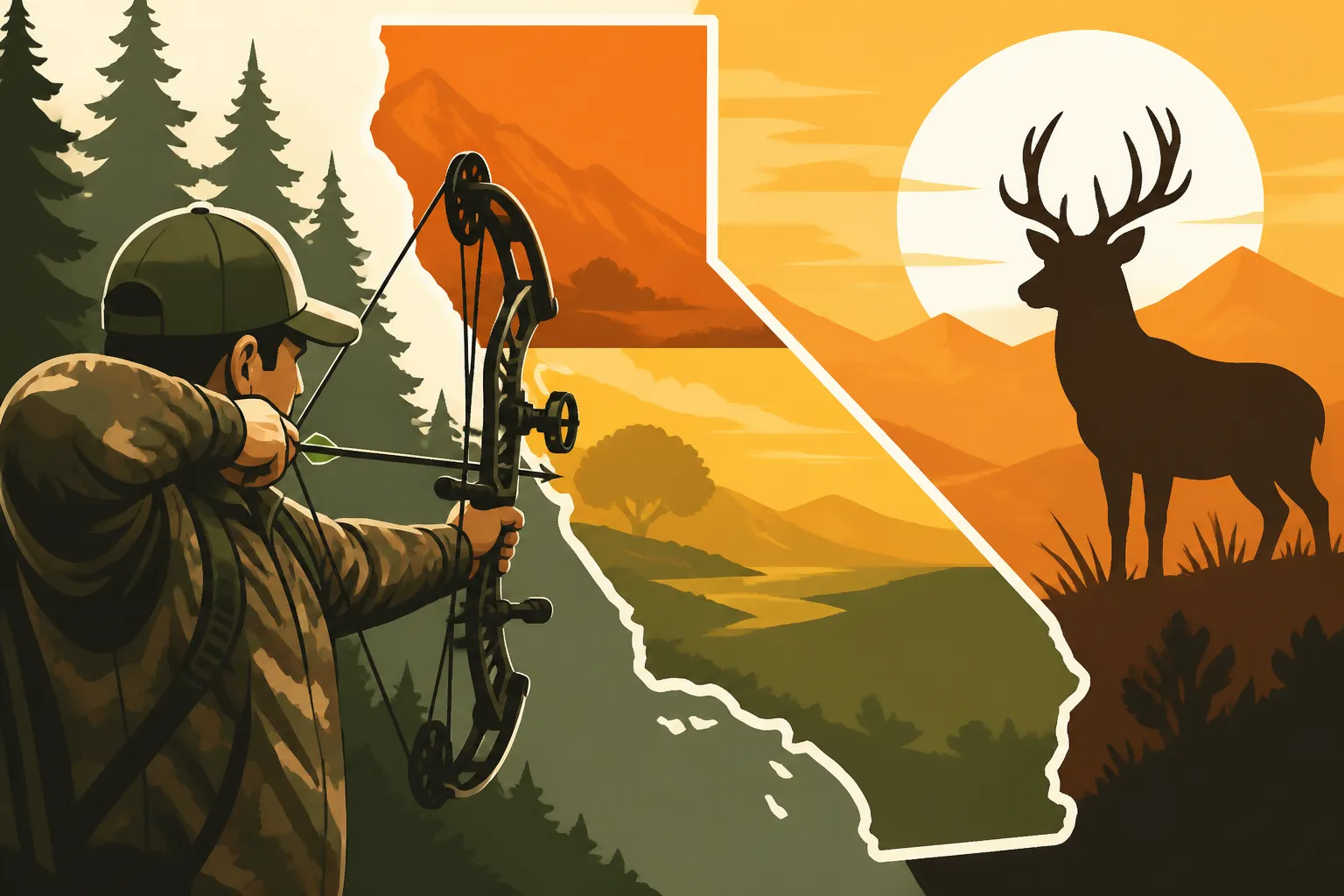
Hunting the Zone C August-September Archery Window
The August and September archery window in California's Zone C can feel like an impossible puzzle. You're dealing with scorching temperatures, deer that are still in their dense summer patterns, and often, a surprising amount of early-season pressure. This guide is dedicated to breaking down these frustrations, offering practical strategies, and equipping you with the knowledge to make your Zone C archery hunt a success, even when the odds feel stacked against you.
Demystifying California's Zone C Archery Deer Season
Zone C, for many California bowhunters, represents a significant chunk of the state's prime blacktail country. However, truly understanding its nuances – from its geographic sprawl to its specific season dates – is the first step toward filling a tag. It's not just "deer hunting"; it's a unique challenge that demands specific preparation.
Zone C Boundaries and Key Characteristics
Zone C is a massive area, encompassing portions of the Coast Range, Klamath Mountains, and even extending into parts of the Cascade Range. We're talking about counties like Mendocino, Lake, Sonoma, Trinity, Humboldt, and Del Norte, among others. What unites this diverse landscape for deer hunting purposes is the primary species: the California blacktail. These are notoriously cagey critters, preferring the dense cover of oak woodlands, chaparral, and conifer forests. Unlike the wide-open spaces of eastern California, Zone C is often steep, brushy, and unforgiving, making spot-and-stalk archery hunting a true test of patience and woodsmanship. Understanding these underlying characteristics helps set realistic expectations for your hunt. The terrain itself dictates your approach, emphasizing close-quarters encounters over long-range glassing.
The sheer variety within Zone C means that what works in the thick redwood forests of Humboldt might not be ideal for the drier, more open oak foothills of Lake County. You really need to dial into the specific characteristics of the area you plan to hunt. Think about elevation, water sources, and the predominant vegetation – these are all critical factors in predicting where deer will be, especially during the early season.
August-September Archery Dates and Regulations
The Zone C archery season typically opens in mid-August and runs through mid-September, preceding the general rifle season. This early opening means you're often hunting deer that are still in velvet (though they'll likely be hard-horned by September), and they're very much on their summer feeding and bedding routines. The key regulation, of course, is that during this archery-only period, you can only use archery equipment – no firearms, and specific rules apply to broadheads and arrow weights to ensure humane harvests. It's crucial to review the current California Department of Fish and Wildlife (CDFW) regulations each year, as dates and specific rules can sometimes shift. For instance, knowing the precise California Zone C Season Dates is non-negotiable before you ever step foot in the woods.
One of the most common frustrations hunters face is ensuring their equipment is legal and effective. This means ensuring your bow has a minimum draw weight, your arrows meet minimum length requirements, and your broadheads are fixed-blade or specific mechanical designs that meet penetration standards. There's no room for error here; a successful hunt starts with compliant gear.
The Blacktail Deer of Zone C
The Columbia blacktail deer (a subspecies of mule deer, often with a unique coastal adaptation) is the star of Zone C. These deer are known for their wariness, reliance on dense cover, and relatively smaller body size compared to their Rocky Mountain mule deer cousins. You won't typically find massive herds; instead, blacktails tend to live in smaller, more scattered groups. During August and September, bucks are often still grouped up in bachelor herds or moving solo, primarily focused on feeding to pack on weight before the upcoming rut. They favor north-facing slopes, dense riparian corridors, and thick pockets of brush where they can find relief from the heat and feel secure. Learning Where California Blacktail Bucks Bed is crucial for patterning them.
Their diet at this time of year heavily revolves around browse, forbs, and any available mast crops, like early acorns, if they're dropping. Locating these food sources, especially those near reliable water and escape cover, is paramount. They often move minimally during daylight hours, preferring to feed during the cooler evenings and early mornings. Understanding this behavior is vital for formulating an effective archery strategy; you're not going to be glassing open hillsides at noon for a cruising buck.
Overcoming the Unique Challenges of Early Season Bowhunting
The Zone C archery season isn't for the faint of heart. It throws a unique combination of environmental and behavioral hurdles at bowhunters, making success feel hard-earned. But with proper planning and a realistic mindset, these challenges can be managed.
Dealing with Heat and Hydration in August
August in Zone C can be brutal. Interior areas can easily hit triple digits, and even coastal regions can be hot and humid, especially away from the immediate ocean breeze. This extreme heat isn't just uncomfortable; it's a significant factor in deer behavior and hunter safety. Deer will become largely nocturnal, seeking the densest shade and staying near water sources during the day. For hunters, overheating, dehydration, and heat exhaustion are serious risks. You need to carry significantly more water than you think you'll need, wear lightweight, breathable clothing, and plan your movements to avoid the hottest parts of the day. Early morning and late evening hunts become your most productive windows.
A critical frustration for many is judging how much water to carry. It's almost always more than you anticipate. Consider investing in a good hydration pack and even carrying backup water bottles. I've had hunts in the Mendocino National Forest where I thought two liters would be enough for a morning hunt, only to be desperate for more by 10 AM. You also need to factor in game care. Recovering an animal in extreme heat requires rapid processing to prevent spoilage, often necessitating extra water for cleaning and a well-thought-out packing plan.
Locating Deer in Thick Summer Cover
This is arguably the biggest headache for Zone C bowhunters. The same lush vegetation that provides food and shelter for deer in summer also makes them incredibly difficult to spot. Visibility can be limited to mere yards in places, turning a potential spot-and-stalk into a game of hide-and-seek where the deer almost always win. Deer often bed in the thickest, nastiest tangles of chaparral, manzanita, or young timber, making a silent approach nearly impossible. You might be within 20 yards of a blacktail and never know it.
The strategy here shifts from visual detection to focusing on fresh sign: tracks, droppings, rubs, and active trails leading to water or feeding areas. Learning to read these subtle cues becomes paramount. Instead of trying to see the deer, you're looking for where they were and where they will be. Focus your efforts on pinch points, saddles, and small clearings within the dense cover, particularly those offering access to water or preferred forage. Hunting Coastal Range Oak Woodlands often means navigating through dense undergrowth where deer vanish like ghosts.
Managing Hunting Pressure on Public Lands
California has a lot of public land, but it also has a lot of hunters. Come opening day of the Zone C archery season, many easily accessible public areas, like parts of the Mendocino or Six Rivers National Forests, will see significant foot traffic. This pressure, even from a few other bowhunters, can quickly push blacktails deeper into cover or onto private land. Deer become even more nocturnal and wary, making daylight encounters scarce. It's a real bummer when you've done your scouting, only to find another hunter's boot prints on "your" trail.
The key to overcoming this is twofold: First, go where others won't. This means packing in further, tackling steeper terrain, and exploring less obvious access points. Use tools like GoHunt or ONX to identify areas with difficult access points or those surrounded by private parcels that create natural sanctuaries. Second, hunt smart. Consider hunting mid-week if possible, or focusing on the latter half of the season when initial pressure subsides. Sometimes, the best strategy is to embrace still-hunting, moving slowly and deliberately, taking advantage of any pockets of overlooked cover that other hunters might blow past.
Proven Scouting and Hunting Strategies for Success
Success in Zone C during the archery window isn't about luck; it's about meticulous preparation and disciplined execution. From identifying promising areas to finessing your approach, every detail matters.
Pre-Season Digital and On-the-Ground Scouting
Your scouting efforts for Zone C archery should begin long before the season opener, often months in advance. Digital tools are your best friend here. Utilize satellite imagery on platforms like GoHunt to identify key features: north-facing slopes with dense cover, riparian zones, potential water sources (especially critical in August), old logging roads, and saddles that funnel deer movement. Look for areas where different habitat types meet, creating "edge" environments that deer love. Once you have a few promising spots, it's time for boots on the ground.
During the spring and early summer, visit these areas. Look for old sign, but pay close attention to fresh tracks, droppings, and developing rub lines as bucks grow their antlers. Find out what natural food sources are present – are the acorns developing? Are there berry bushes? Map out potential bedding areas, travel corridors, and water access points. This is also a great time to check for existing hunting pressure, identifying areas with excessive trail camera setups or blind locations. The goal is to paint a detailed picture of deer movement patterns specific to your chosen area, well before the season arrives. You can even use the CDFW Hunting App to cross-reference land ownership and regulations while you're out there.
Effective Stand Placement and Still-Hunting Tactics
Given the thick cover and wary nature of blacktails, both stand hunting and still-hunting have their place in Zone C. For stand placement, focus on pinch points: narrow strips of cover between open areas, saddles on ridges, or trails leading directly to isolated water sources or prime feeding spots. Ambush sites near active scrape lines along a forest service road can be deadly during the rut, but in August-September, focus more on feeding and bedding transitions. Set up your stand or ground blind downwind of the anticipated travel route, ensuring you have clear shooting lanes within your effective archery range. Remember, blacktails have incredible noses.
Still-hunting is often the most productive method in the dense, broken terrain of Zone C. This involves moving incredibly slowly, taking only a few steps, then pausing for several minutes to glass, listen, and scan your immediate surroundings. Use terrain features, fallen logs, and dense brush as cover for your movement. Focus on areas where you expect deer to be bedded or feeding, moving into the wind or with a favorable thermal. The goal is to detect the deer before it detects you, giving you time to set up for a shot. For a detailed breakdown of how to move quietly through this challenging terrain, check out our guide on Still-Hunting California's Sierra Nevada Timber – many of the principles apply here.
Understanding Wind and Thermals in Zone C Terrain
This is where many Zone C hunts are won or lost. Wind and thermals are not just important; they are everything for blacktail hunting. Blacktails are masters of using air currents to detect danger. In the rugged, often canyon-riddled terrain of Zone C, thermals can be highly unpredictable. Generally, in the mornings, cold air drains down into canyons and low spots, creating a downhill thermal. As the sun warms the earth, this reverses, and thermals begin to rise uphill in the afternoons.
However, local topography can significantly alter these patterns. A small ravine, a steep cliff face, or even a dense stand of timber can create swirling currents that defy general rules. Before every hunt, pay close attention to the wind direction, and be hyper-aware of how thermals are shifting, especially if you're hunting steep country. Carry a wind checker and use it constantly. Your approach to a bedding area or a feeding zone must always keep your scent out of the deer's nose. Often, this means making wide circles to approach from above or cross-wind. Neglecting Wind and Thermals in Steep Sierra Country is a surefire way to spook deer.
Essential Gear and Setup Considerations for Archery in Zone C
Having the right gear isn't about luxury; it's about survival, comfort, and efficacy. The early Zone C archery season presents specific demands that your equipment needs to meet.
Bow, Broadhead, and Arrow Optimization
Your archery setup needs to be dialed in for blacktails. A compound bow with a smooth draw cycle and sufficient kinetic energy is paramount. Most hunters will be comfortable with draw weights between 50-70 pounds, ensuring enough power for ethical penetration. Precision is key, so ensure your bow is properly tuned, with consistent arrow flight. For broadheads, many seasoned Zone C hunters favor fixed-blade broadheads for their reliability and penetration through dense hide and bone, especially in brushy conditions where mechanicals might not deploy perfectly. Choose a sharp, durable broadhead that matches your arrow weight and bow speed.
Arrow choice is also critical. A slightly heavier arrow (400-450 grains total weight, including broadhead) will carry more kinetic energy and momentum, aiding in penetration on thick-skinned deer. Ensure your arrows are consistently spined for your bow's draw weight. Practice extensively with your chosen broadheads, as they often fly differently than field points. Your effective range in the field, especially in thick cover, might be significantly less than your range on a flat target course, so be honest with yourself about your limitations.
Apparel, Optics, and Pack Choices for Warm Weather
Given the likely hot weather, your clothing choices are incredibly important. Lightweight, breathable, moisture-wicking layers are essential. Think synthetic blends or merino wool that will pull sweat away from your body and dry quickly. Avoid heavy cotton. Camouflage patterns that blend with the varied greens and browns of California's oak woodlands and chaparral are ideal. Brands like Sitka, Kuiu, and First Lite offer excellent warm-weather options, with materials designed for active hunting in challenging conditions.
For optics, a good pair of 8x or 10x binoculars is indispensable, even in thick cover. They help you pick apart brush, identify deer sign from a distance, and confirm antler points. A rangefinder is non-negotiable for archery hunting, helping you make precise shot placements in varying terrain. Your pack should be sized for day hunts, capable of carrying ample water, snacks, emergency gear, and ideally, having a meat-carrying system for the hike out. A pack with good ventilation and a comfortable suspension system will make those long, hot treks much more bearable. Check out guides like Staying Cool During a Hot Zone A Hunt for more specific apparel advice, much of which applies directly to Zone C.
Essential Field Gear and Safety Equipment
Beyond your bow and clothes, a few other items are critical. A reliable headlamp (with extra batteries) is a must for pre-dawn hikes and post-sunset recovery. A sharp knife for field dressing is obvious, and consider a game processing kit if you plan on quartering your animal in the field. First-aid kit, fire starter, emergency shelter, and a whistle should always be in your pack for safety, especially if you're hunting remote public lands. A personal locator beacon (PLB) or satellite messenger can be a lifesaver in areas without cell service.
Don't forget scent control. While blacktails are notoriously cagey, doing what you can to minimize human odor, such as showering with scent-free soap and wearing freshly washed clothes, can't hurt. A small squirt bottle of wind indicator powder or thread is also essential for constantly checking those swirling thermals. Planning for recovery is also a big one: know how you'll get your deer out of the woods, especially if you're hunting solo in steep terrain. Think about game bags to protect the meat from flies and dirt.
| Feature / Consideration | Zone C Archery (August-September) |
|---|---|
| Primary Species | Columbia Blacktail Deer |
| Typical Weather | Hot, dry, potential for heatwaves |
| Deer Behavior | Nocturnal, in thick cover, near water; bachelor groups |
| Key Sign | Tracks, droppings, rubs (early velvet), active trails |
| Hunting Methods | Still-hunting, stand/blind on pinch points |
| Terrain | Steep, brushy, oak woodlands, chaparral, conifer |
| Water Needs (Hunter) | HIGH (3-5+ liters/day) |
| Gear Focus | Lightweight, breathable clothes, hydration pack, fixed-blade broadheads, rangefinder |
| Scouting Emphasis | Water sources, dense cover, north slopes, digital mapping |
| Pressure Management | Go deep, hunt mid-week, use difficult access |
Maximizing Your Chances on Zone C Public and Private Lands
Whether you choose public or private land, access and ethical considerations are paramount. California offers both, each with its own set of opportunities and challenges for the Zone C bowhunter.
Researching and Accessing Public Hunting Areas
California boasts millions of acres of public land, including National Forests, BLM lands, and CDFW Wildlife Areas. The trick is identifying which of these lands fall within Zone C and offer good blacktail habitat that isn't overrun. National Forests like the Mendocino National Forest, Six Rivers National Forest, and portions of the Shasta-Trinity National Forest are prime examples. BLM lands in some of the northern and central coast counties also offer opportunities. Research specific regulations for each area; some national forests have fire restrictions or special rules for camping. Online mapping tools like GoHunt, which I personally use, are invaluable for overlaying public land boundaries, identifying potential access roads, and visualizing terrain.
When you're looking at public land, don't just focus on the easily accessible areas. As mentioned, these will often see heavy pressure. Look for roadless areas, wilderness boundaries, or parcels that are difficult to reach due to natural barriers. This is where you often find unpressured deer. Also, understand that not all public land is created equal. A vast swathe of BLM land might look promising on a map but could be devoid of water or suitable browse. Ground-truthing your digital scouting is essential to confirm the habitat quality. Learning about Hunting California's Los Padres National Forest can provide insights, even if it's not directly in Zone C, because many public land strategies carry over.
Strategies for Gaining Private Land Access
While public land offers vast opportunities, private land can often hold older, less pressured bucks. Gaining private land permission in California can be challenging but isn't impossible. It often comes down to respectful communication, offering assistance to landowners, and demonstrating your commitment to ethical hunting. Start by identifying parcels adjacent to public lands or those with known deer activity. Then, approach landowners well in advance of the season. A friendly, face-to-face conversation is almost always more effective than a phone call or email.
Offer to help with chores, fix fences, or assist with varmint control. Be upfront about your intentions, emphasize your safety protocols, and offer to share some of your harvest. Leave a business card or contact information, even if they say no, as circumstances can change. Remember, even if you can't hunt the entire property, gaining permission for retrieval of a wounded animal is invaluable. For more detailed advice, consider reading up on Getting Private Land Permission in California – it's a skill that pays dividends.
Minimizing Your Impact and Hunting Ethically
Regardless of where you hunt, ethical behavior is paramount. This means understanding and adhering to all CDFW regulations, including tagging and reporting requirements. It also means leaving no trace – pack out everything you pack in, including spent broadheads, food wrappers, and anything else. Minimize your disturbance to the land and other users. If you encounter other hunters, be courteous and respect their space.
For archery hunting, specifically, ethical shot placement is critical. Only take shots within your proven effective range, and ensure you have a clear understanding of deer anatomy to maximize your chances of a clean, humane kill. If you wound an animal, commit to a diligent recovery effort, even if it takes hours or extends into the next day. Being an ethical hunter not only respects the animal and the land but also helps preserve hunting opportunities for future generations.
Post-Harvest Considerations and Game Care
Harvesting a blacktail during the Zone C archery season is a hard-earned reward, but the work isn't over when the arrow flies. Proper game care, especially in August-September heat, is critical to ensuring quality meat.
Field Dressing and Cooling in Warm Temperatures
Once your deer is down, time is of the essence, particularly if temperatures are high. The first step is to immediately field dress the animal. Remove the entrails as quickly as possible to allow the carcass to cool internally. If you're hunting in particularly hot conditions, consider quartering the animal in the field. This reduces the mass that needs to cool and makes it easier to transport the meat. Get the hide off the animal as soon as possible, as it acts as an insulator, trapping heat.
After field dressing or quartering, get the meat into game bags immediately to protect it from flies and dirt. Hang the quarters in a shaded, airy spot if you can, allowing them to cool down. If you're deep in the backcountry, you'll need to pack out the quarters and get them to a cooler with ice as quickly as possible. Don't let the meat sit in a warm vehicle for any extended period. The goal is to drop the internal temperature of the meat rapidly to prevent bacterial growth. Our guide on Field Dressing a Deer in Hot Weather provides more in-depth, crucial tips for preserving your harvest.
Transporting and Processing Your Harvest
Transporting your deer out of Zone C, especially from steep, brushy terrain, can be a monumental task. If you've quartered the animal, a good frame pack designed for carrying heavy loads will be your best friend. Make multiple trips if necessary; attempting to carry too much can lead to injury or compromise the meat. Once back at your vehicle, get the meat directly into a cooler filled with ice. Ensure the meat isn't submerged in water; drain the cooler regularly or use frozen water bottles/gel packs that won't leak. Keep the meat cool during the drive home.
Upon reaching home, you have options: take it to a professional butcher, or process it yourself. If butchering yourself, ensure you have a clean workspace, sharp knives, and plenty of freezer space. Label all cuts clearly with the date and type of meat. For many, processing wild game is a rewarding part of the hunting experience, offering complete control over the cuts and preparation. Remember to accurately report your harvest to the CDFW, often via their online system, within the required timeframe. This data helps wildlife management.
Utilizing All Parts of Your Harvest
Ethical hunting extends beyond the shot and game care; it involves respecting the animal by utilizing as much of it as possible. Beyond the prime cuts of venison, consider making ground meat, sausage, or jerky from tougher cuts. The heart and liver are incredibly nutritious and often overlooked by many hunters. The hide can be tanned, and the antlers (if you harvested a buck) can be used for European mounts or other crafts, serving as a lasting memory of your hunt.
Even the scraps and bones can be simmered to make rich, flavorful broth for soups and stews. Think about the entire animal and how each part can be repurposed. This commitment to utilization not only honors the animal but also maximizes the value of your hard-earned harvest, making the effort of your Zone C archery hunt even more worthwhile.
Disclaimer
Please remember that hunting regulations, season dates, and specific requirements can change. Always consult the current California Department of Fish and Wildlife (CDFW) regulations before planning and embarking on any hunting trip. This guide is for informational purposes only and should not be considered a substitute for official legal advice or current regulations.