Spot-and-Stalk Bear Hunting a Berry Patch
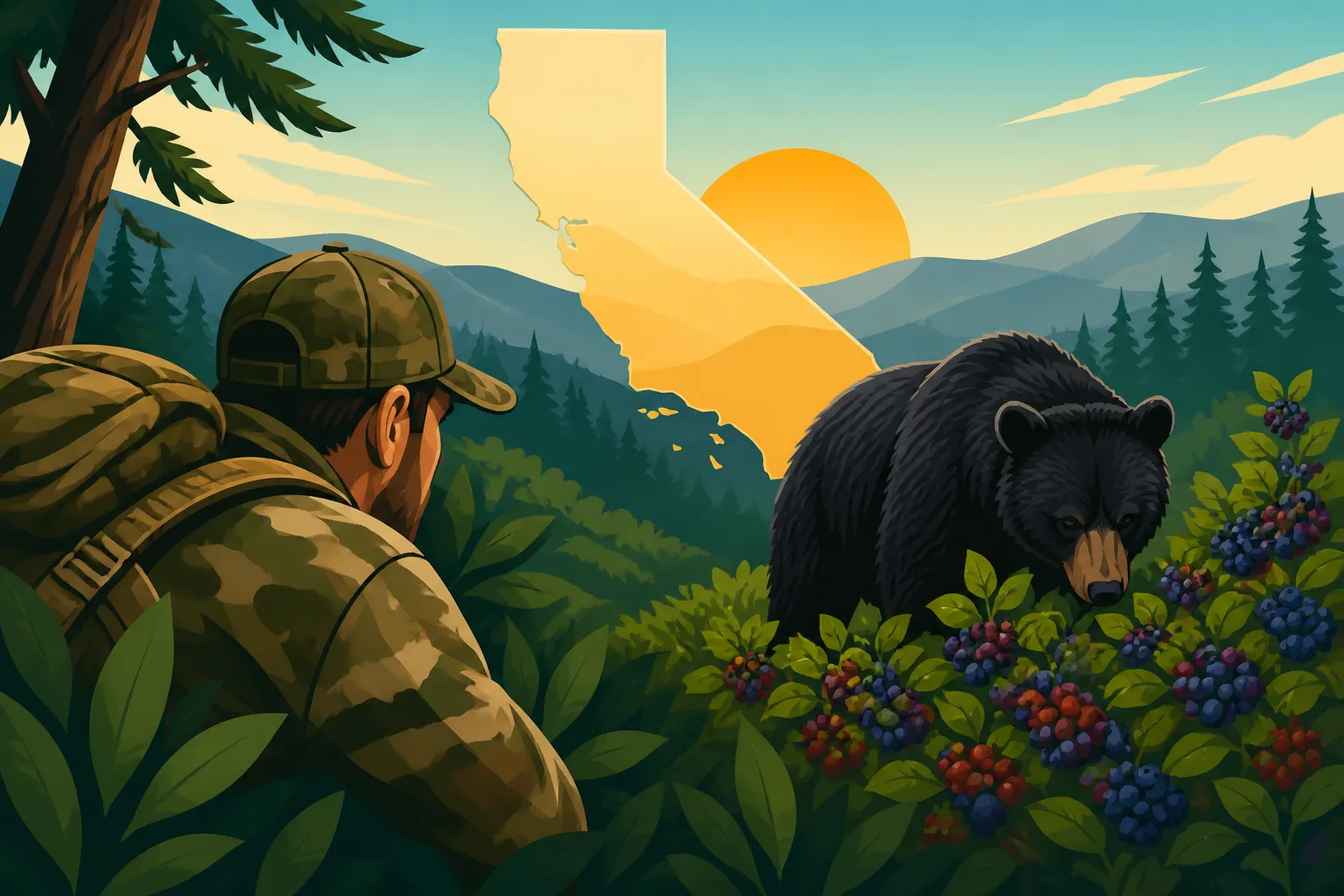
Hunting California's black bears, especially when you're focusing on a specific food source, can be incredibly rewarding but also uniquely frustrating. Trying to find a large, elusive animal in vast tracts of dense California wilderness, particularly when they're hiding in thick brush, feels like searching for a needle in a haystack. This guide is all about cutting through that frustration by detailing an effective strategy: spot-and-stalk bear hunting specifically targeting active berry patches, giving you the knowledge to put yourself in the best position for success.
The Allure of the Berry Patch for California Bears
California's black bears are opportunists, and when certain food sources are ripe, they can become hyper-focused on them. Berry patches are one of those undeniable draws, acting as natural buffets that bears simply can't resist, especially as they pack on fat for the lean months ahead.
Why Berries are Bear Magnets
For a black bear in California, berries aren't just a snack; they're a critical component of their diet, providing a rich source of carbohydrates and sugars necessary for building up fat reserves. As the seasons progress, bears are keenly attuned to the ripening cycles of various wild fruits. Early in the summer, you might find them hitting wild strawberries or serviceberries, but as summer progresses into fall, their attention shifts to more substantial offerings.
Consider the common manzanita, with its small, tart berries, or the various species of huckleberry and elderberry found throughout the Sierra Nevada and Coastal Ranges. These dense shrubs offer both food and excellent cover, making them ideal hangouts. Wild grapes, often found in riparian zones or climbing through trees, are another favorite, providing a concentrated energy boost. Bears will systematically work these patches, often returning to the same location day after day until the food source is depleted or hunting pressure pushes them elsewhere. Their incredible sense of smell allows them to locate ripe patches from a surprising distance, and their memory helps them return to productive spots year after year.
Timing Your Berry Patch Hunt
Understanding a bear's daily and seasonal rhythms is paramount. Generally, bears are most active during the cooler parts of the day – dawn and dusk – especially when feeding in exposed berry patches. This is when they feel most secure, though hungry bears will feed throughout the day in dense cover. California's bear hunting seasons, including the California Bear Archery Season Opening Day and the California Bear General Season Opening Day, often coincide with peak berry ripening, particularly in the later summer and early fall months.
Weather plays a significant role. During hot spells, bears might prefer to feed at night or only during the very coolest hours of morning and evening, retreating to dense, shady cover during the heat of the day. A sudden rainstorm can make berry leaves wet and noisy, causing bears to move less or shift to quieter feeding areas. Conversely, a prolonged dry spell can make berries shrivel, pushing bears to seek out alternative food sources like acorns or even green grasses if conditions are right. You need to be flexible and observe the conditions on the ground.
Pinpointing Productive Patches
Finding these bear magnets isn't always easy, but it’s a crucial first step. Start your scouting long before the season by looking at topographical and satellite maps. Identify areas that scream "berry patch": south-facing slopes, especially those in the foothills or lower mountain elevations that get plenty of sun. Look for old clearcuts or Hunting a National Forest Burn Scar areas; these disturbed landscapes are often the first places where berry bushes flourish, thriving on the increased sunlight and nutrients. Riparian corridors, where wild grapes and other water-loving berries grow, are also high-potential spots.
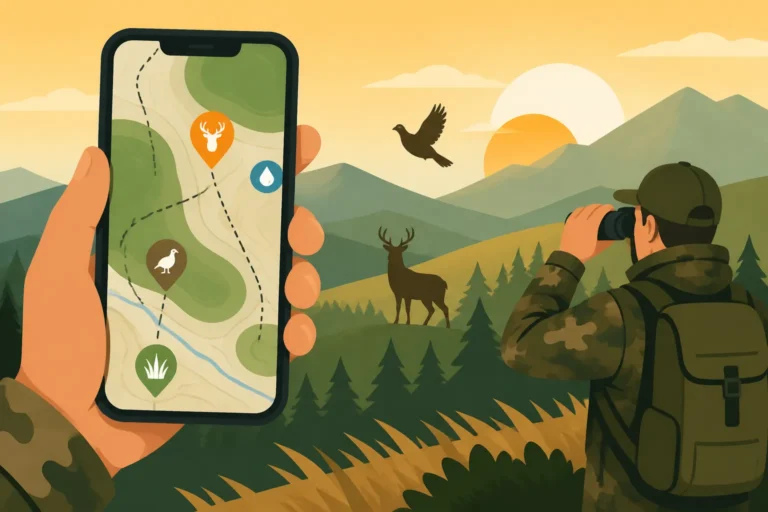
Once you have some potential locations on a map, the real work begins: boots-on-the-ground scouting. Look for actual bear sign – tracks, scat loaded with berry seeds, torn-up bushes, or even bedding areas nearby. A tool like Best GPS App for California Public Land can be invaluable here, allowing you to mark specific patches and potential glassing points. Remember, bears are creatures of habit, and if you find a patch with fresh sign, chances are they'll be back as long as the berries last and pressure remains low. Pay close attention to subtle details; an experienced eye can tell if a patch has been actively fed upon recently or if the sign is a few days old.
Essential Gear and Strategic Setup for Berry Patch Success
Successfully executing a spot-and-stalk hunt in berry country requires more than just knowing where to go; it demands the right gear and a thoughtful approach to your setup. California's diverse terrain and specific hunting regulations necessitate careful preparation.
Optics: Your Eye in the Wilderness
When you're trying to locate a black bear in a vast landscape, often obscured by thick vegetation, your optics are truly your most important tool. High-quality binoculars, in the 10x or 12x magnification range, are non-negotiable for thoroughly scanning broad swaths of hillside and dense berry patches. They allow you to pick apart shadows, identify subtle movements, and confirm if that dark blob is a rock or a feeding bear.
For even greater detail and long-range identification, a good spotting scope (15-45x or 20-60x) mounted on a sturdy tripod is indispensable. This setup lets you stay far away, minimizing your disturbance, while carefully observing a bear's behavior, size, and even direction of travel. When considering optics, brands like GoHunt often provide excellent reviews and guides on what to look for in different hunting scenarios, helping you choose durable, clear glass that can withstand the rigors of the California backcountry. Take your time, systematically glassing every inch of a promising patch, especially at dawn and dusk when light is low and bears are most active.
Weapon and Ammunition Choices
California's strict hunting regulations dictate specific weapon and ammunition requirements, especially the statewide California's Non-Lead Ammunition Requirement. This means you'll need to use non-lead projectiles for any firearm or archery equipment when hunting black bear. For rifles, popular calibers like .30-06, .308, 6.5 Creedmoor, or .270 are more than adequate for black bears, provided you choose a well-constructed non-lead bullet designed for deep penetration. Copper bullets, for example, retain nearly 100% of their weight, leading to excellent penetration and reliable expansion.
For archery hunters, the rules for Hunting the August Archery Bear Window mandate specific draw weights and arrow configurations. Ensure your broadheads are sharp and designed for ethical harvest, providing maximum penetration on a bear's thick hide and heavy bone. Regardless of your chosen weapon, practice extensively with your non-lead ammunition or broadheads to ensure shot placement accuracy. A bear's vitals are tucked low and forward, and a clean, ethical shot is crucial for a quick recovery and minimal tracking, especially in challenging berry patch environments.
Footwear and Clothing for a Stealthy Stalk
The varied terrain you'll encounter when hunting California bear – from rocky slopes to dense, noisy chaparral – demands the right footwear. A sturdy, comfortable pair of boots with good ankle support and quiet soles is paramount. You'll be covering miles, often off-trail, and silently navigating through crunchy leaves and twigs. Brands that focus on hiking performance and durability, sometimes highlighted in Boots and Clothing for California's Varied Terrain articles, can make a huge difference in reducing fatigue and noise.
Layering your clothing is also essential given California's unpredictable mountain weather. Mornings can be freezing, while midday can turn scorching hot, especially during the early fall seasons. Start with a moisture-wicking base layer, add insulating layers, and top it off with a quiet, breathable outer layer in a camouflage pattern that blends with California's typically dry, golden oak woodlands or chaparral. Avoid noisy fabrics that rustle with every movement, as bears have incredibly keen hearing. A comfortable, well-fitting pack is also critical for carrying your optics, water, first-aid, and game bags for the eventual pack-out.
Executing the Spot-and-Stalk in Berry Country
Once you've done your homework, scouted your patches, and prepped your gear, it's time to put it all into action. The execution of a spot-and-stalk hunt for bear in berry patches is a delicate balance of patience, observation, and calculated movement.
Mastering the Art of Glassing
This isn't just about looking; it's about seeing. Find an elevated position that gives you a commanding view of the berry patch, preferably across a canyon or drainage, and use the sun to your advantage – not shining directly into your eyes, but ideally over your shoulder. Set up your spotting scope and binoculars on a tripod for maximum stability. Then, methodically grid-search the entire patch, pausing frequently. Bears often blend surprisingly well, looking like shadows or dark stumps. Look for subtle movements: a twitch of an ear, a sway of a branch, a flash of black disappearing into the cover.
Be patient. Bears often feed in cycles, disappearing into the densest parts of the patch only to reappear moments later. Spend at least an hour, sometimes two or three, glassing an area before moving on. Pay attention to how the light changes throughout the morning or evening; what was hidden in shadow at 6 AM might be illuminated at 7 AM. This detailed glassing is where a significant portion of your "hunting" takes place, often preventing unnecessary and noisy stalks. Consider what GoHunt resources might say about optimal glassing strategies for Western big game, as many principles apply directly to bear.
The Delicate Dance of the Stalk
Once you spot a bear, the real challenge begins. The number one rule is always play the wind. A bear's nose is its most potent defense, and if it catches your scent, your hunt is over. Use a wind checker (talcum powder, milkweed seeds, or a commercial indicator) constantly, watching for swirls. Plan your route using terrain features like ridges, draws, and dense timber to stay out of sight. Move slowly, deliberately, placing each foot carefully. Every crunchy leaf or snapped twig is a potential alarm bell for the bear.
Approach from below the bear if possible, or from an angle where any noise you make will be carried away by the wind. Use the bear's own movements to your advantage; when it puts its head down to feed, that's your cue to move. When it raises its head, freeze. Be prepared to wait, sometimes for a long time, for the bear to move into a better position or for the wind to stabilize. In thick berry patches, getting a clear line of sight for a shot can be incredibly difficult, so patience and adaptability are key. Remember the lessons learned from Still-Hunting California's Sierra Nevada Timber – stealth is everything.
Ethical Shot Placement and Recovery
When the moment arrives, and you have a clear, ethical shot opportunity, ensure the bear is broadside or slightly quartering away. Aim for the "bear triangle" – the area behind the shoulder, slightly low, targeting both lungs and the heart. Avoid taking head-on or extreme quartering shots that offer small, challenging vital areas. Use solid shooting sticks or brace against a tree for maximum stability.
After the shot, pay close attention to the bear's reaction and its direction of travel. Mark the exact spot where the bear was standing. Then, wait at least 30-60 minutes before initiating the track, especially if the shot wasn't immediately fatal. This allows a wounded bear to lay down and stiffen up. When tracking, move slowly, looking for blood, broken branches, and disturbed earth. If darkness approaches, mark your last blood and return the next morning, as tracking a bear in the dark through dense berry patches or timber can be dangerous and inefficient. Successfully recovering your animal is the ultimate goal, requiring grit and perseverance. Field dressing a bear, particularly if it's hot, needs to be done quickly and efficiently, similar to tips found in Field Dressing a Deer in Hot Weather to ensure the meat quality.
Overcoming Obstacles and Adapting Your Strategy
Spot-and-stalk bear hunting in California's berry patches is rarely straightforward. You'll encounter challenges that demand flexibility, persistence, and a willingness to adapt your game plan.
Navigating Challenging Terrain and Cover
California's bear habitat is often synonymous with steep, rugged terrain and incredibly dense vegetation. The frustration of trying to move silently through thick chaparral or noisy, dry oak leaves is a common one. When you're in a berry patch, the very food source that draws the bear can also create a nearly impenetrable screen of brush, making both spotting and stalking incredibly difficult. Instead of getting discouraged, focus on maximizing the advantages you do have.
In extremely thick areas, prioritize finding a quality glassing spot and dedicating extended periods to observation. A bear might eventually step into a small opening, even for a few seconds. If the cover is too dense for a silent stalk, you might need to adjust your strategy to a more ambush-style hunt near a heavily used trail leading into or out of the patch. Consider utilizing game trails that bears use for travel; these can offer slightly less noisy pathways. Patience becomes your superpower here; sometimes, the best move is no move at all, just waiting for the bear to provide a better opportunity.
Understanding Bear Responses to Pressure and Conditions
Bears are intelligent and quickly adapt to pressure. If a berry patch is frequently disturbed by hunters, the bears will become nocturnal or abandon the area entirely, moving to more secluded food sources or bedding grounds. This is why minimizing your presence and glassing from a distance is so important. Hot weather can also drastically change bear behavior. During intense heatwaves, bears might only feed at night, seeking refuge in cool, dense timber or near water sources during the day.
On the other hand, a sudden cold front can increase activity as bears feel the urge to feed heavily before winter. Keep a close eye on weather patterns and adjust your hunting times and locations accordingly. If the berries in your primary patch are over-foraged or shriveled due to drought, you'll need to pivot. This might involve Glassing a Burn Scar for a Feeding Bear if there are active burn areas in your zone, or scouting for alternative food sources like acorns in oak woodlands, which are a major fall food for bears. Always have a backup plan.
Post-Harvest Protocol and Reporting
After a successful harvest, California law mandates specific actions. First and foremost, you must immediately validate your tag by cutting out the correct date and attaching it to the bear. This is a critical step to avoid violations. Once field dressed, you'll need to transport your bear. If you're hunting in a remote area, having quality Packs and Gear for a Backcountry Elk Hunt (many of which are suitable for quartered bear) or a game cart can be invaluable for getting the animal out.
Within 10 days of harvesting your bear, you are legally required to report it to the California Department of Fish and Wildlife (CDFW). This is usually done online through their Automated License Data System (ALDS), similar to how you would report a deer or Reporting a Pig Harvest Through ALDS. This reporting is crucial for managing bear populations and is a mandatory part of your hunting responsibilities. Be aware that What Happens When the Bear Quota Fills Early is a real possibility in California; the statewide quota of 1,700 bears can be met before the official season end date, at which point the season closes immediately. Always check the CDFW website or call their hotline before heading out to ensure the season is still open.
Disclaimer
Please note: Hunting regulations and seasons in California can change. Always consult the current California Department of Fish and Wildlife hunting regulations booklet and website for the most up-to-date and accurate information before planning any hunting trip. This guide is for informational purposes only and does not supersede state law.