Getting Private Land Permission in California
The dream of hunting unpressured ground, away from the crowds of public land, often leads California hunters to consider private property. It's a tough nut to crack, for sure, with many landowners wary of opening their gates. This comprehensive guide is here to walk you through the often-intimidating process of finding and securing private land hunting permission in California, giving you the tools and insights to approach landowners respectfully and increase your chances of success.
Understanding California's Private Land Landscape
California is a massive state with diverse ecosystems, and while we're fortunate to have a lot of public land, a significant portion of the prime hunting habitat, particularly in the foothills, valleys, and coastal ranges, lies on private property. For many hunters, securing access to these private parcels is the holy grail. It's not just about avoiding crowded public land; it's about the quality of the hunting experience and the potential for better game.
Why Private Land Hunting is Appealing in California
Let's be honest, we've all been there: driving up to a public land gate on opening day, only to see a dozen other trucks already parked. The pressure on public land in California, especially for popular species like deer and wild pigs, can be immense. This constant human presence often pushes game into nocturnal patterns or deeper, thicker cover, making them incredibly challenging to hunt. Private land, by contrast, often offers a sanctuary.
Imagine a sprawling ranch in the Central Coast region, dotted with massive oak trees, lush grasslands, and hidden creek bottoms. This kind of property, if managed well, can hold healthy populations of deer and pigs that see minimal human disturbance. The game might be more relaxed, more predictable, and more likely to move during daylight hours. This leads to unique opportunities for strategic hunting, whether it's setting up on a well-used game trail or calling turkeys in an undisturbed oak grove. Furthermore, private land often has better food and water sources, maintained fences that prevent game from dispersing too widely, and simply more undisturbed habitat, leading to potentially larger, healthier animals.
The Reality of Limited Access and High Demand
Now, let's get real. While the idea of private land access is appealing, the reality in California is that it's increasingly difficult to come by. Our state has a rapidly growing population, and with it, an increasing number of hunters. This puts immense pressure on available hunting ground, both public and private. Landowners, especially those with desirable hunting opportunities, are often bombarded with requests. Many, frankly, have had bad experiences with hunters in the past – gates left open, trash strewn about, property lines disrespected. This creates a natural hesitancy, and it's something you have to acknowledge and work to overcome.
Adding to this challenge is the commercialization of hunting access. Many prime private ranches have opted to lease their hunting rights to outfitters or private clubs, effectively taking them off the table for the average hunter looking for free or low-cost access. These leases can generate significant income for landowners, making it hard to compete with a simple handshake and a promise to be respectful. It's a business decision for them, and you need to understand that going in. This doesn't mean it's impossible, but it does mean you need a solid, respectful, and value-driven approach.
Distinguishing Private from Public Land
Before you even think about approaching a landowner, you absolutely must know where you are and whose property it is. This might sound basic, but mistakes happen, and trespassing is a surefire way to ruin any future chances of getting permission. California has a patchwork of public and private ownership, with Forest Service lands, BLM parcels, state parks, and wildlife areas often bordering or intermingling with private ranches and timber holdings.
Modern mapping applications are an absolute game-changer for this. Tools like onX Hunt or GoHunt allow you to overlay property boundaries onto satellite imagery, showing you exactly where public land ends and private land begins, often even displaying landowner names and parcel information. Before you ever set foot near a potential hunting spot, spend time on these apps. Zoom in, identify roads, access points, and potential ambiguities. Knowing the exact property lines is not just about avoiding legal trouble; it shows the landowner you've done your homework and are a responsible, serious hunter. This diligence is especially critical when you're looking at Hunting Small Private Tracts in California which might be surrounded by other private parcels or even urban areas.
Legal Frameworks and Ethical Considerations
Navigating the legalities of private land access in California is crucial. Ignorance of the law is no excuse, and a single misstep can land you in serious trouble, not to mention permanently souring relationships with landowners and the broader hunting community. Beyond the letter of the law, a strong ethical foundation is essential for building trust and ensuring sustainable access.
California Trespass and Permission Law
In California, hunting on private property without permission is illegal, plain and simple. It's considered trespassing, and depending on the circumstances, it can range from an infraction to a misdemeanor, potentially carrying fines, jail time, and even the loss of your hunting privileges. The key phrase here is "without permission." This permission must be explicit.
While verbal permission can be legally binding, it's always, always, always better to get it in writing. A simple written agreement, signed by both parties, detailing the dates, areas, and conditions of your access, provides clarity and protection for everyone involved. This is especially true if you are hunting with others or if the landowner might not always be available to confirm your presence. Imagine a new ranch hand or a neighbor seeing you on the property without knowing you have permission; a quick call to law enforcement could lead to an awkward, if not legally problematic, situation. Don't leave it to chance. The laws around California Trespass and Permission Law are clear, and you want to be well within them.
Retrieving Game From Private Land in California
This is a scenario every hunter dreads: you make a great shot, the animal runs, and then you realize it crossed a fence onto adjacent private property where you don't have permission. What do you do? In California, the law is generally clear: you do not have an automatic right to enter private land, even if you are tracking wounded game. Entering without permission, even to retrieve your animal, is still trespassing.
Your first, immediate step should be to contact the landowner for permission to enter their property. Be polite, explain the situation calmly, and ask for their assistance or permission to retrieve your animal. Offer to field dress the animal right there on the fence line if that makes them more comfortable. If you can't reach the landowner, or if they refuse permission, you are in a tough spot. While it's heartbreaking to lose an animal, you cannot violate the law. Some landowners might be understanding, especially if you've tried to establish communication beforehand or if you offer to share some of the meat. Others may be adamant. Respect their wishes. It's a hard lesson, but it reinforces the importance of knowing your hunting area thoroughly and having contingency plans, or ideally, permission for adjacent properties. Understanding Retrieving Game From Private Land in California is critical to avoid legal issues and maintain your integrity.
Hunter Responsibility and Landowner Rights
When a landowner grants you access, they are extending a huge privilege. It's a gesture of trust, and it comes with immense responsibility on your part. Your actions directly reflect on all hunters, and a single bad actor can ruin opportunities for countless others.
This responsibility means adhering to every single rule the landowner sets, no matter how minor it may seem. This could include things like specific parking areas, gate protocols (always close gates, even if you found them open!), restrictions on vehicle use, limits on hunting hours, or specific areas that are off-limits. It also means leaving absolutely no trace behind – pack out all your trash, spent casings, and anything else you brought in. Do not damage fences, disturb livestock, or cut across fields without explicit permission.
Landowners also have specific rights: they have the right to control who accesses their property, what activities occur there, and to protect their property and livestock. They can revoke permission at any time, for any reason. Your job as a hunter is to respect these rights implicitly. Be communicative, be transparent, and always err on the side of caution. If you have a question about whether something is allowed, ask first. This ethical approach is the bedrock of establishing and maintaining long-term private land access.
Strategies for Approaching Landowners
So, you've done your homework, identified some promising private parcels, and you know who owns them. Now comes the intimidating part: making the approach. This isn't a science, but there are definitely strategies that increase your chances of success. It's all about making a good first impression and demonstrating you're a responsible individual.
The "Knocking on Doors" Method
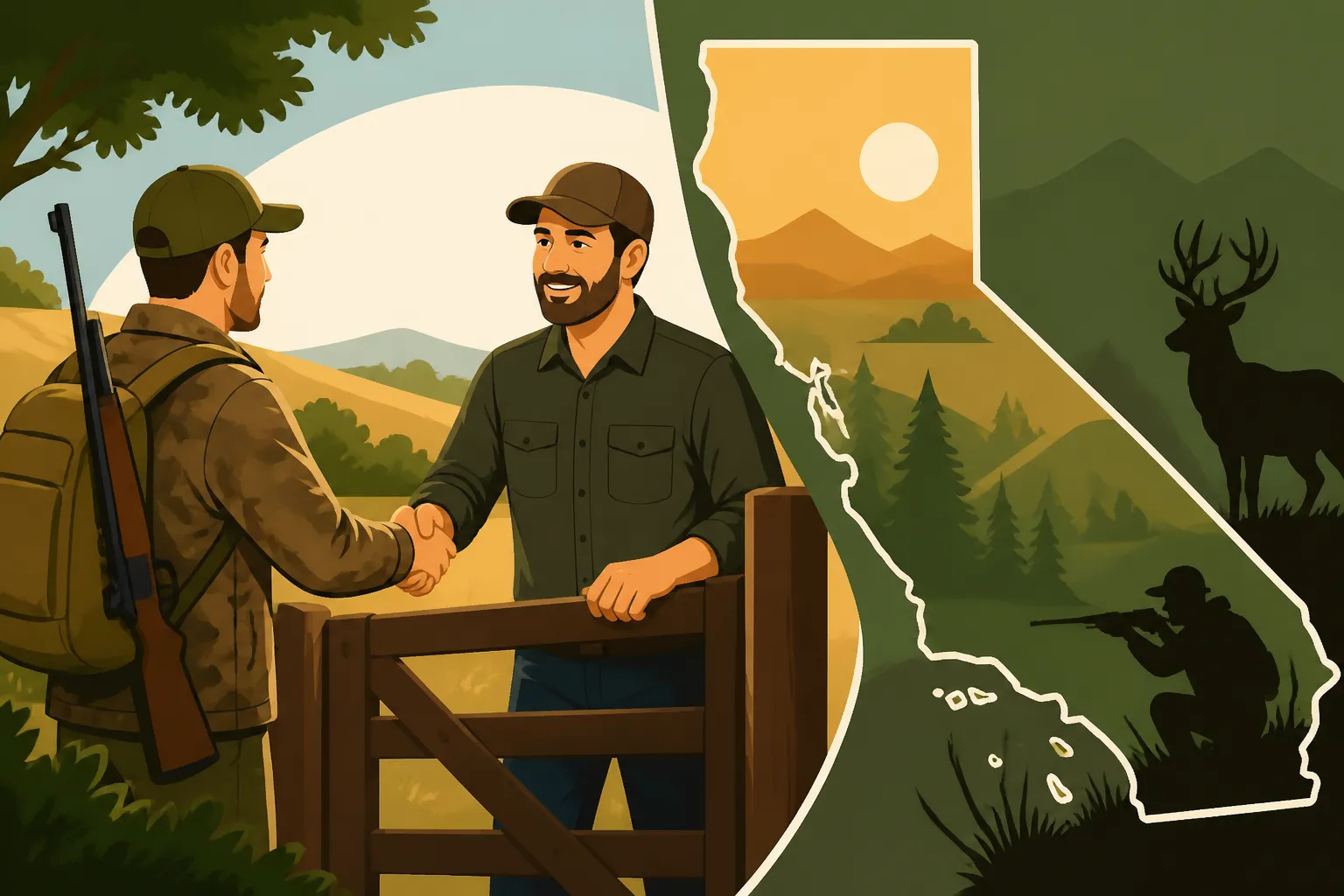
This is the classic, old-school approach, and it still works in many rural areas, especially when trying Knocking on Doors in California Ranch Country. The key here is respect, timing, and presentation.
First, timing is everything. Never show up unannounced during meal times, early in the morning, or late in the evening. Weekday afternoons, when chores might be winding down but it's not dinner time, can often be a good window. Avoid hunting season openers or busy agricultural periods like harvest or planting, as landowners will be preoccupied.
Second, your appearance matters. You don't need to wear a suit, but don't show up in your grimy hunting clothes, smelling like camp coffee and deer scent. Dress cleanly, respectfully, and presentably. This instantly conveys that you take the interaction seriously.
Third, be prepared and polite. Have a clear, concise introduction ready. "Hi, my name is [Your Name]. I'm a local hunter, and I was wondering if you ever allow hunting on your property. I'm looking for a place to hunt [specific game, e.g., wild pigs] and noticed your property backs up to some good habitat." Keep it brief. Be ready to explain why you're a good choice – mention your hunter education, your respect for property, and your commitment to safety. Have a small, well-organized folder with your hunting license, hunter education card, and maybe even a map of their property you've studied on onX Hunt, ready to show them you've done your research. Don't expect an answer on the spot. Often, they'll want to think about it, or they might not be the primary decision-maker. Leave your contact information and follow up politely a week or two later if you don't hear back.
Writing Effective Introduction Letters
Sometimes, a face-to-face meeting isn't possible, or you prefer a more formal initial approach. A well-crafted introduction letter can be an excellent way to get your foot in the door. This method gives the landowner time to consider your request without feeling pressured on their doorstep.
Your letter should be professional, concise, and personalized. Avoid generic templates. Start by introducing yourself and clearly stating your purpose – you're a responsible hunter seeking permission to hunt. Mention specific game you're interested in, and briefly explain why you chose their property (e.g., "I've noticed your ranch has excellent oak habitat that looks ideal for wild pigs"). Crucially, highlight your commitment to safety, respect for their property, and ethical hunting practices. Emphasize that you understand the responsibility that comes with private land access.
Include a copy of your hunting license and hunter education certification. Provide clear contact information (phone and email). You might even include a stamped, self-addressed envelope to make it easy for them to reply, though a follow-up call is also appropriate after a reasonable time. The goal is to make a positive impression and convey that you are a serious, trustworthy individual who will treat their property with the utmost care.
Leveraging Local Connections and Community
Sometimes, the best access comes not from a cold call, but from a warm introduction. California's rural communities, while vast, can still be tight-knit. Tapping into local connections can open doors that would otherwise remain closed.
Start by getting involved in the local community. This could mean frequenting local diners, hardware stores, or feed shops. Talk to people, make connections, and politely express your interest in hunting. You might be surprised who knows a rancher looking for a hand with pest control or someone whose distant cousin owns a property that needs pig management. Joining local conservation groups, even if they aren't directly hunting-focused, can also be beneficial, as they often have ties to landowners who value conservation.
Another avenue is to offer your services. Are you handy with a chainsaw, willing to help mend fences, or good with general labor? Many landowners, especially those with larger properties, could use a hand. Offering to help with chores or property maintenance in exchange for hunting access can be a powerful way to build trust and demonstrate your value beyond just being a hunter. It shows you're committed to being a part of the solution, not just someone looking to take from their land. Word of mouth is incredibly powerful, and a good reputation within a community can lead to opportunities you'd never find otherwise.
Building Relationships and Offering Value
Securing private land access isn't a transactional event; it's the beginning of a relationship. For long-term access, you need to prove yourself as a reliable, valuable, and respectful partner to the landowner. This means thinking beyond just the hunt itself.
Beyond Just Hunting: Offering Help and Services
Many landowners, especially those running working farms or ranches, are busy people with endless lists of tasks. Offering to help with non-hunting chores can be an incredibly effective way to build rapport and demonstrate your commitment. Think about what a rancher might need:
- Pest Control: Wild pigs, coyotes, ground squirrels, and various other critters can cause significant damage to crops, fences, and livestock. Offering to help manage these populations can be a huge value proposition. For instance, Hunting Pigs Without a Closed Season is an ongoing challenge for many landowners, and offering to help control them is a win-win.
- Property Maintenance: Fence repair, clearing brush for fire breaks (a major concern in California), mending gates, even basic landscaping around outbuildings. These are all tasks that can be time-consuming for landowners.
- General Labor: Helping with haying, moving cattle, or assisting with other farm chores during non-hunting times.
When you offer your services, be specific about what you're capable of and committed to. Don't promise to re-roof a barn if you've never swung a hammer. Start with smaller, manageable tasks and consistently follow through. This builds trust and shows you're not just there for the kill, but genuinely care about their property and operation. This creates a reciprocal relationship that benefits both parties.
The Power of Consistent Communication and Follow-Up
Once you've secured permission, your job isn't done. In fact, it's just beginning. Maintaining consistent, respectful communication is key to retaining that access.
- Before You Go: Always let the landowner know when you plan to be on their property. A quick text or phone call stating, "Hey [Landowner's Name], just wanted to let you know I'm heading out to the north pasture this afternoon for a pig hunt, will be leaving by dusk," is simple courtesy and a safety measure.
- After You Leave: A follow-up text or call thanking them, reporting any observations (e.g., "Saw a broken fence line by the creek you might want to check," or "The cattle are looking good"), and letting them know you've left, is also highly appreciated.
- Beyond Hunting Season: Don't just disappear after your hunt. Send a holiday card, a gift basket, or simply check in periodically throughout the year. Ask if there's anything you can help with. These small gestures reinforce your appreciation and keep the relationship alive.
This consistent communication builds a foundation of trust. It shows you're not taking their generosity for granted, and it keeps them informed, which can prevent misunderstandings.
Being a Responsible and Respectful Guest
This should go without saying, but it's the most critical aspect of retaining private land access. Treat the property as if it were your own, or even better, as if it were your most prized possession.
- Adhere to All Rules: Whatever rules the landowner sets – specific hunting areas, vehicle restrictions, times of day, no alcohol, no campfires – follow them to the letter. If they say no driving on wet roads, don't drive on wet roads, even if it means a longer walk.
- Leave No Trace: Pack out absolutely everything you pack in. This includes spent casings, food wrappers, water bottles, and any other trash. If you harvest an animal, dispose of entrails discreetly and away from main travel paths or water sources.
- Safety First: Always prioritize safety, not just for yourself but for the landowner, their family, their livestock, and their property. Know your backstop, adhere to all firearm safety rules, and be mindful of where shots will travel.
- Game Reporting: Be honest and transparent about what you harvest. If the landowner asked you to help with pig control, for example, report how many you took. If they want to see your deer tag validated, show it to them.
- Share the Harvest: If you have a successful hunt, offer some of the game meat to the landowner. This is a traditional gesture of gratitude and a fantastic way to share the bounty. A package of fresh backstraps or ground venison can go a long way in solidifying your relationship.
Remember, every time you hunt on someone's private land, you are an ambassador for all hunters. Your actions determine not only your future access but potentially the access of others who might follow.
Utilizing Mapping and Scouting Tools
In the digital age, mapping and scouting tools have revolutionized the way we identify and approach private landowners. Gone are the days of just guessing or driving around hoping to see a "Hunting Allowed" sign. Modern technology gives you an incredible advantage.
Identifying Potential Private Land Parcels with Technology
Before you even step out the door, you can do a massive amount of reconnaissance right from your computer or phone. Mapping applications like onX Hunt are indispensable for this. They allow you to:
- View Property Boundaries: Clearly see where one parcel ends and another begins, identifying landowners as you go. This is crucial for avoiding trespass and targeting specific properties.
- Identify Landowner Names and Contact Information: Many apps and online county assessor sites provide landowner names, and sometimes even mailing addresses, which are essential for sending introduction letters.
- Analyze Terrain and Habitat: Use satellite imagery to identify key habitat features like oak woodlands (prime for deer and pigs), water sources, creek beds, dense cover, and potential food plots. You can see how these features relate to property boundaries and public land access points.
- Study Access Routes: Determine feasible access roads, parking areas, and natural barriers (e.g., steep canyons, thick brush) that might influence how you hunt or where you ask for permission to enter.
- Track Game Movement: By observing public land adjacent to private parcels, you might identify pinch points or travel corridors where game could be moving between properties.
Tools like GoHunt, while often geared towards public land draw units, can also provide valuable insights into general game distribution and habitat quality across broader regions, helping you narrow down your search for promising private areas. This upfront technological scouting saves countless hours of driving and knocking on doors that aren't suitable. Knowing Finding California Property Lines precisely is non-negotiable.
Researching Landowners and Property Information
Once you've identified a promising parcel, the next step is to research the landowner. This isn't about being creepy; it's about being informed and tailoring your approach.
- County Assessor Websites: Most California counties have online portals where you can search property records by address or parcel number. This will confirm ownership and often provide contact information (usually a mailing address, sometimes a phone number if it's a business).
- Public Records: A simple online search of the landowner's name might reveal if they are involved in local businesses, agricultural operations, or community groups. This information can give you common ground or help you understand their perspective. Are they a farmer struggling with pig damage? Are they a timber company interested in sustainable forest management?
- Local Knowledge: Sometimes, the best "research" comes from talking to people in the area. Local businesses, post offices, or feed stores might know who owns what and might even be able to offer an introduction or insight into the landowner's preferences.
The more you know about the landowner and their property, the better you can tailor your request and demonstrate that you're a serious, thoughtful individual who has done their homework. This preparation sets you apart from the casual, unprepared requests. Using onX Layers for California Land Status can provide an incredible amount of this information at your fingertips, streamlining your research process.
Scouting From a Distance: Observing Boundaries and Access Points
After you've done your digital detective work, it's time for some physical reconnaissance – but still from a distance, respecting all private property boundaries.
- Drive By (Legally): Drive public roads that border or offer views of the private property. Observe any "No Trespassing" signs, gate conditions, and general activity on the land. Are there cattle? Crops? Residences? This helps you understand the landowner's operation and potential concerns.
- Identify Natural Barriers: Note natural features like rivers, steep canyons, or dense chaparral that might act as natural boundaries or funnels for game. This information helps you visualize how you might hunt the property if granted access.
- Look for Sign: From public vantage points, use binoculars or a spotting scope to look for game trails, bedding areas, or feeding patterns, especially near the property lines. This can confirm the presence of the game you're interested in and help you articulate to the landowner why their property is attractive for hunting.
- Respect Privacy: Never enter private land, even briefly, without permission. Never peer into windows or linger in a way that could be perceived as intrusive or suspicious. The goal is to gather information from public areas, not to snoop. The same rules apply when considering Using a Ground Blind on BLM Land or other public areas adjacent to private parcels.
Exploring Hunting Leases and Clubs
For many, outright permission from a landowner proves elusive. In such cases, exploring hunting leases or joining a hunting club can be a more structured, albeit often more costly, path to private land access. These options provide guaranteed access for a set period, often with specific amenities and rules.
California Hunting Lease Costs
Hunting leases in California can vary dramatically in cost, influenced by a multitude of factors. It's not uncommon for leases to range from hundreds to thousands of dollars per hunter per season, or even per animal harvested.
Factors influencing lease costs include:
- Property Size and Location: Larger parcels in prime hunting areas (e.g., strong deer, pig, or turkey country) will command higher prices. A remote, rugged ranch in Mendocino County with abundant blacktail deer and wild pigs will lease for significantly more than a smaller, less game-rich property in the Central Valley.
- Game Quality and Quantity: Properties with a proven track record of producing trophy animals or consistent harvest opportunities will be more expensive. If it's known for its Best California Counties for Turkeys or Best California Counties for Wild Quail, expect to pay a premium.
- Amenities: Does the lease include a cabin, water, power, or even blinds and feeders? These additions will increase the cost.
- Exclusivity: An exclusive lease for you or your small group will cost more than a lease that grants access to multiple, unrelated parties.
- Duration: Annual leases are common, but some might be for a single season, or even just a weekend hunt, with pricing adjusted accordingly.
- Inclusions: Are game cameras, habitat improvements, or guides included? These are often add-ons or part of a premium lease.
Understanding California Hunting Lease Costs is essential to setting realistic expectations. Don't go into discussions expecting a bargain, but also know what you're getting for your money.
Finding a California Hunting Lease
Finding available leases can be challenging, as the best ones often go by word of mouth or are retained year after year. However, there are several avenues to explore:
- Online Platforms: Websites specializing in hunting leases or land for sale/lease often list properties. These can range from large, national sites to smaller, California-specific portals.
- Real Estate Agents: Some rural real estate agents specialize in ranches and recreational properties and might have listings or connections to landowners looking to lease.
- Local Advertisements: Check local newspapers, agricultural publications, or bulletin boards in rural towns. Sometimes, landowners will post simple notices.
- Outfitters and Guides: While often providing fully guided hunts, some outfitters might offer unguided lease options or know of landowners looking for leaseholders.
- Networking: Talk to other hunters, particularly those in local clubs or organizations. They might know of properties coming up for lease or existing groups looking for new members.
Persistence is key. The best leases often require proactive searching and quick action when an opportunity arises. Be prepared with references and a clear understanding of your expectations and responsibilities as a leaseholder. For more specific insights, research Finding a California Hunting Lease.
Joining a California Hunting Club
Hunting clubs offer a structured way to gain access to private land, often with established rules, shared responsibilities, and camaraderie. These clubs typically lease large tracts of land and then manage access for their members.
Benefits of joining a club:
- Guaranteed Access: You have consistent access to specific properties for the duration of the club's lease.
- Shared Costs: The cost of the lease and property maintenance is divided among members, making it more affordable than a private lease for a single individual.
- Amenities: Many clubs have cabins, campgrounds, blinds, and other shared facilities.
- Community: You gain a network of fellow hunters, often with diverse experience levels, leading to mentorship and shared knowledge.
- Managed Properties: Clubs often have rules and management plans in place to ensure sustainable hunting and quality game.
Drawbacks to consider:
- Rules and Restrictions: Clubs have bylaws and specific rules that all members must follow, which might include limitations on harvest, hunting methods, or guest policies.
- Commitment: Most clubs require active participation in work parties for habitat improvement, maintenance, or other club activities.
- Waitlists and Dues: Popular clubs often have long waitlists. Membership involves annual dues and sometimes an initial initiation fee. Understanding California Hunting Club Dues and Costs is crucial before committing.
- Less Flexibility: You're often tied to the club's schedule and rules, which might be less flexible than a private arrangement.
When looking for a club, research its reputation, talk to current members if possible, and understand the full scope of commitment required. This is a longer-term investment in your hunting future. For more on this, check out Joining a California Hunting Club.
Specific Land Types and Their Unique Challenges
California's private lands are incredibly diverse, from vast agricultural fields to dense timber forests and sprawling rangelands. Each type of property presents its own set of opportunities and challenges when seeking hunting permission. Understanding these nuances can help you tailor your approach and manage expectations.
Ranch Land and Agricultural Operations
Many of California's private hunting opportunities exist on working ranch lands or agricultural operations. These properties often encompass large areas of prime habitat, but they also come with specific concerns for the landowners.
- Cattle Operations: If cattle are present, landowners will be extremely concerned about open gates, spooked livestock, and bullet trajectory. You absolutely must understand and respect their ranching operations. Offer to help move cattle if needed, and always, always close gates. A spooked herd or a cow injured by a stray bullet can mean significant financial loss for a rancher.
- Crop Fields: Farmers are typically dealing with wildlife damage. Wild pigs can root up fields, deer can browse on young crops, and birds can decimate grain harvests. This can be an entry point for you: offer to help manage these nuisance animals. However, you must also be incredibly careful not to damage crops or irrigation systems while hunting. Know where the boundaries of cultivated fields are and avoid walking or driving through them.
- Water Sources: Ranchers rely heavily on water for their livestock. Be respectful of stock tanks and creeks. Don't contaminate them or disturb animals watering there.
- Residences and Structures: Many ranches have residences, barns, and outbuildings. Understand the legal setback rules for discharging firearms near occupied dwellings and always maintain a safe distance.
When approaching a rancher, emphasize your understanding of their business and your commitment to not interfering with their operations. If you can frame your hunting as a service (e.g., pest control for wild pigs), you're more likely to succeed. This ties into Knocking on Doors in California Ranch Country.
Timberland and Managed Forests
California has extensive private timber holdings, particularly in the northern parts of the state. These properties can offer excellent hunting for deer, bear, and sometimes elk, but they have their own set of dynamics.
- Logging Activity: Timber companies are actively engaged in logging, road building, and reforestation. You'll need to be aware of their operational schedules. Hunting during active logging can be dangerous and disruptive. They may also have specific rules about vehicle access on logging roads, especially during wet weather to prevent road damage.
- Road Access: Timber companies often have extensive private road networks. Gaining permission to use these roads can be crucial for accessing remote hunting areas. However, these roads are not typically open to the public, and unauthorized use is trespassing.
- Special Permits: Some large timber companies have formal recreation permit programs, where you pay an annual fee for access to specific tracts. This can be a good way to gain legal access without needing a personal connection. Research these programs in areas you're interested in.
- Conservation Efforts: Many timber companies are involved in sustainable forestry and wildlife habitat management. Highlighting your commitment to ethical hunting and leaving no trace can resonate with them.
Be prepared to understand and abide by industrial safety rules and potentially fluctuating access based on their logging schedules.
Small Private Tracts in California
Not all private land is vast ranchland. Many hunters live near or want to hunt on smaller, more isolated private tracts, often bordering suburban areas or intermingled with public lands. These can be tough to gain access to, but not impossible.
- Diverse Landowners: These smaller parcels are often owned by individuals who may or may not have an agricultural background. They might be hobby farmers, retirees, or people simply owning land for recreational purposes. Their motivations and concerns will vary widely.
- Safety Concerns: Hunting near residential areas or busy roads requires extreme caution and adherence to all safety regulations, including legal setbacks for discharging firearms. Landowners will be highly sensitive to any perceived safety risk.
- Nuisance Wildlife: Even small parcels can have nuisance wildlife like deer browsing gardens or wild pigs tearing up lawns. This can be an opportunity for you to offer a solution.
- Community Relations: Being a good neighbor is paramount. Word of mouth, both good and bad, travels quickly in these smaller communities.
When approaching owners of Hunting Small Private Tracts in California, focus heavily on safety, your respect for their property, and potentially offering solutions to nuisance wildlife issues. A small, polite, and well-executed hunting effort on a modest parcel can be incredibly rewarding and less competitive than larger tracts.
Common Pitfalls and How to Avoid Them
Even with the best intentions and preparation, securing private land permission can be a journey filled with ups and downs. Understanding common pitfalls can help you navigate the process more smoothly and increase your overall success rate.
The "No" is Not the End: Learning from Rejection
Let's face it, you're going to hear "no" more often than "yes." This is simply the reality of asking for access to valuable private land in California. The key is not to take it personally and to view each "no" as a learning opportunity.
- Maintain Politeness and Gratitude: Even if a landowner says no, thank them for their time and consideration. A polite departure leaves a positive impression, and circumstances can change. They might reconsider in a few years, or they might recommend you to a neighbor. Burning bridges gets you nowhere.
- Ask for Feedback (Respectfully): If appropriate and delivered politely, you might ask, "Is there any particular reason you don't allow hunting, or perhaps something I could do differently if I were to ask again in the future?" They might offer valuable insight, such as a prior bad experience with hunters, concerns about liability, or that they already have family hunting the property.
- Keep a Record: Note down who you spoke with, when, and their response. This helps you avoid repeatedly asking the same person and keeps your efforts organized.
- Persistence, Not Harassment: The difference is crucial. Persistence means continuing your search and trying new approaches. Harassment means hounding the same landowner repeatedly after they've given a clear "no." Know the difference. Remember, the journey to Finding Ground That Sees Fewer Hunters often involves many rejections.
Misunderstandings About Verbal Agreements
While a handshake deal can feel warm and trusting, it leaves far too much open to interpretation, especially when it comes to legalities. Verbal agreements, though sometimes legally valid, are incredibly difficult to prove or enforce if a dispute arises.
- Memory Fades: Years down the line, details of a verbal agreement can become fuzzy for both parties. "I thought you said I could hunt the back forty, not the front pasture."
- Personnel Changes: What if the landowner sells the property, or a new ranch manager comes in? A verbal agreement with the previous owner or manager holds little weight with the new party.
- Specifics Unclear: Was it for deer only? What about pigs? What dates? Are guests allowed? These details are often glossed over in a casual conversation but become critical later.
This is why, as mentioned earlier, always, always get it in writing. A simple, signed document outlining the terms of access (dates, species, areas, safety rules, vehicle use, guest policy, etc.) protects both you and the landowner. It provides clarity and a tangible reference point. If a landowner is hesitant to put something in writing, it might be a red flag, or it might simply require you to explain that it's for everyone's mutual protection and clarity. Emphasize that you want to avoid any misunderstandings. For explicit rules, review Do You Need Written Permission in California?.
Overstaying Your Welcome or Breaking Trust
This is the fastest way to lose private land access, not just for yourself, but potentially for all future hunters who might approach that landowner. Trust is hard-earned and easily shattered.
- Pushing Boundaries: If the landowner says "hunt only this section," do not venture into the next section. If they say "no driving past the main gate," don't drive past it. Testing the limits is disrespectful and shows you can't be trusted.
- Bringing Unapproved Guests: Never bring a hunting partner, friend, or family member onto the property without explicit, prior permission from the landowner. Your permission is for you, not for your entire hunting party.
- Violating Game Laws: Any violation of California hunting regulations (e.g., shooting illegal game, hunting out of season, exceeding bag limits) reflects poorly on the landowner who granted you access, and it's a breach of trust. It can also lead to legal trouble for both of you.
- Leaving a Mess: From trash to gut piles left in obvious places, leaving any kind of mess is a sign of disrespect and carelessness.
- Causing Damage: Damage to fences, gates, roads, or property structures, even accidentally, must be immediately reported to the landowner and rectified. Attempting to hide it will only make things worse.
The golden rule here is simple: never give the landowner a reason to regret granting you permission. Consistently be an exemplary guest, and your access will likely be long-lived. One instance of broken trust can permanently close a door.
| Method of Access | Pros | Cons | Ideal Scenario |
|---|---|---|---|
| Knocking on Doors | Personal connection, potentially free access | High rejection rate, time-consuming, requires confidence | Rural areas, smaller parcels, community connections |
| Introduction Letters | Non-intrusive, professional impression, gives time | Slower response, easily ignored, less personal interaction | Distant landowners, busy professionals |
| Offering Services | Builds strong relationships, provides value | Requires time/skills, not always hunting-focused, delayed access | Working farms/ranches, long-term goals |
| Hunting Leases | Guaranteed access, clear terms, often exclusive | Can be expensive, limited availability | Specific game quality, larger groups, consistent access |
| Hunting Clubs | Shared costs, amenities, community, managed access | Rules & restrictions, dues/fees, less flexibility, work requirements | Social aspect, learning, shared resources |
| Local Connections | Warm introductions, trusted referrals, hidden gems | Relies on networking, can take time to build | Integrated into rural community, word-of-mouth |
Disclaimer
This article is for general informational purposes only and does not constitute professional advice. Laws, prices and regulations vary by location and change over time. Consult a qualified professional for guidance on your specific situation.