Knocking on Doors in California Ranch Country
It’s a tough reality for many California hunters: finding good ground to pursue game can feel like an impossible puzzle. While our state boasts some incredible public lands, the sheer pressure often means prime spots are crowded, or the animals are long gone. This frustration frequently leads dedicated hunters to ponder a less common, but potentially rewarding, path: asking private landowners for access. This guide will walk you through the often-intimidating process of respectfully approaching ranchers and farmers, offering actionable steps to increase your chances of securing a private hunting opportunity.
The Challenge of Gaining Private Land Access in California
California is a unique beast when it comes to hunting, particularly on private property. Unlike some other states where "permission hunting" is almost a tradition, the Golden State presents its own set of hurdles that can make even the most seasoned hunter hesitant to knock on a stranger's door. It's not just about finding a landowner; it's about understanding the deep-rooted nuances of the landscape and the people who manage it.
Understanding the Landscape of California Ranching
California's agricultural and ranching communities are vast and diverse, spanning from the sprawling cattle ranches of the Central Coast and Sierra Foothills to the immense nut and fruit orchards of the Central Valley. These lands, often privately owned for generations, represent significant investments and livelihoods. For many landowners, their property isn't just land; it's their heritage, their business, and their sanctuary. This means their priorities often revolve around livestock management, crop protection, or simply maintaining privacy, not necessarily providing recreational hunting access.
You'll encounter various types of operations, from small family farms to large corporate ranches. Each will have different concerns. A cattle rancher, for instance, might be worried about hunters spooking their herd or leaving gates open. A vineyard owner in Sonoma or Napa County might be more concerned about trespass and liability, especially if their property is high-value. This isn't to discourage you, but to set a realistic expectation: their first thought isn't always about the hunting opportunity. They’re assessing risk and interruption to their daily lives.
The Frustration of Limited Public Land
Let's be honest, California's public land hunting can be a grueling experience. We've all been there: driving miles into a national forest, only to find every promising trailhead packed with other trucks. You might spend days Scouting California Public Land Before Season only to find your hard work negated by crowds come opening day. Our large population means that even vast tracts of BLM land or national forest can feel surprisingly small when hundreds of hunters converge on them. This high pressure can push game animals deeper into private holdings, making private access even more coveted.
For deer hunters, this often means that the "easy" bucks are taken early, and the remaining animals become incredibly wary. For turkey hunters, those public land birds get called at relentlessly, becoming "call-shy" almost overnight. Waterfowl hunters face similar scenarios on popular wildlife areas. The scarcity of truly unpressured public ground is a major driver for hunters seeking private opportunities, highlighting why learning the ropes of door-knocking is such a valuable skill in California.
Why Knocking on Doors is Different Here
In many other parts of the country, asking permission to hunt a farmer's back forty is a rite of passage, often leading to easy access. In California, it's a bit more complex. The reasons are multifaceted:
- Liability Concerns: California's legal landscape can make landowners wary of anyone on their property, fearing lawsuits in case of injury.
- Increased Value of Hunting Rights: Many large ranches already lease their hunting rights to outfitters or private clubs, providing significant income. This means the prime spots are often already spoken for.
- Urban Proximity: A lot of desirable hunting ground is relatively close to urban centers, leading to more non-hunting recreational users (hikers, mountain bikers) and a general distrust of strangers on private land.
- Misconceptions about Hunters: Unfortunately, a few bad apples have created negative stereotypes. Landowners might associate hunters with trash, gates left open, or unsafe practices. You're often fighting against preconceived notions before you even open your mouth.
- Sheer Scale: Many properties are so massive that a landowner might not even know what's on the far reaches, making them reluctant to grant access to an unknown individual.
This isn't to say it's impossible. It just means you need a more thoughtful, respectful, and prepared approach than just a casual ask.
Preparing for the Knock: Your Homework and Presentation
Successfully securing private land access starts long before you ever pull up to a ranch gate. It's about thorough preparation, strategic thinking, and presenting yourself in the best possible light. Think of it as a job interview where you're asking for a privilege, not a right.
Researching Potential Properties and Landowners
Before you even consider driving up a private driveway, do your homework. This is where modern technology really shines.
- Mapping Apps: Tools like Google Earth, Gaia GPS, or specialized hunting apps like
GoHuntare indispensable. Use satellite imagery to identify promising habitat – oak woodlands for deer and turkey, creek bottoms, natural funnels, or agricultural fields that might attract game. Overlay public land boundaries to ensure you're looking at private property. Identifying where deer might move between public and private land, perhaps through a "funnel between two oak ridges", is a prime scouting tactic. - Property Ownership: Once you've identified a promising parcel, use your mapping app or county assessor websites to find the landowner's name and contact information.
GoHuntand similar apps often have property line layers that show landowner names, which saves a lot of legwork. Knowing who owns the land is step one. - Target Specific Game: Are you after Wild Pig Hunting California Year-Round or perhaps aiming for Spring Turkey Hunting in California? Tailor your approach to the game. If you see signs of pig rooting near a vineyard in Monterey County, your pitch to the vineyard owner might be about helping control a nuisance animal.
- Observe from Afar: Drive or walk nearby public roads (without trespassing) to get a feel for the property. Look for signs of activity, other hunters, or specific crops. Sometimes, seeing a "no hunting" sign from a distance saves you a wasted trip.
The more you know about the property and its owner, the better prepared you'll be to have a concise, relevant conversation when you finally make contact.
Crafting Your Introduction and Pitch
When you do get a chance to speak with a landowner, those first few moments are crucial. You need to be respectful, brief, and clear.
- Be Polite and Self-Introduced: Start with a warm greeting and introduce yourself clearly. "Hello, my name is [Your Name], and I live in [Your Town]. I hope I'm not bothering you, but I was wondering if you might be open to a question."
- State Your Purpose Directly but Gently: Get straight to the point, but explain why you're asking. "I've noticed some deer/pigs/turkeys on your property, and I'm an ethical hunter looking for opportunities. I was wondering if you ever allow hunting here." If it's a specific problem animal, highlight that. "I saw a few wild pigs rooting up the field edge, and I'd be happy to help you with that problem." Remember, Why Wild Pigs Have No Bag Limit can be a strong point in your favor with landowners suffering damage.
- Emphasize Responsibility: Immediately address their likely concerns. "I'm a very safe and responsible hunter. I only use [non-lead ammunition if applicable], I'm fully licensed, and I would treat your property with the utmost respect. I would never drive off-road without permission, leave trash, or disturb any livestock." Mentioning you have a current California Hunting Licenses and What They Cost and are familiar with all regulations, including California's Non-Lead Ammunition Requirement, can go a long way.
- Be Prepared for "No": Mentally prepare yourself for rejection. A polite "no" is not a personal affront. Thank them for their time and move on gracefully.
What to Bring With You
Your appearance and what you bring can speak volumes before you say a word.
- Appropriate Attire: Dress neatly and conservatively. No full camo unless you're coming directly from a hunt, and even then, consider changing. A clean pair of jeans, a collared shirt, and clean boots project respect. You want to look like a responsible adult, not someone who just rolled out of a bivvy.
- Documentation: Have your current hunting license and any relevant tags (like a California Wild Pig Tag Costs) readily available. It shows you're prepared and legitimate. Even better, bring a printed copy of your hunting license and liability insurance if you have it (many sportsmen's groups offer liability policies).
- A Simple Map: A printout from
GoHuntor Google Earth, showing their property lines and where you've seen game sign, can be incredibly helpful. It demonstrates you've done your homework and clarifies exactly what you're asking about. - A "Leave Behind" Card: A simple business card with your name, phone number, and perhaps a small note about your interest in hunting, can be a great idea. Even if they say no on the spot, they might reconsider or know someone else who would say yes.
- A Gift (Optional, but Thoughtful): A small, non-demanding gift can sometimes break the ice. Think local produce, a pie from a local bakery, or even just a good bottle of water on a hot day. This is tricky and should be used with discretion – you don't want it to seem like a bribe. The primary goal is genuine respect and good faith.
The Approach: Making a Good Impression and Respecting "No"
You've done your research, you're prepared, and you're at the gate. This is the moment of truth. How you conduct yourself can make all the difference between a slammed door and a handshake agreement.
Best Times and Etiquette for Knocking
Timing is everything when approaching busy landowners.
- Avoid Peak Work Hours: Don't show up during breakfast, lunch, or dinner, or when they are actively working in the fields or with livestock. Mid-morning (10 AM – 12 PM) or mid-afternoon (2 PM – 4 PM) are generally better.
- Weekdays are Often Better: Weekends are usually family time or when landowners are catching up on personal errands. A weekday visit suggests you're serious and respectful of their personal time.
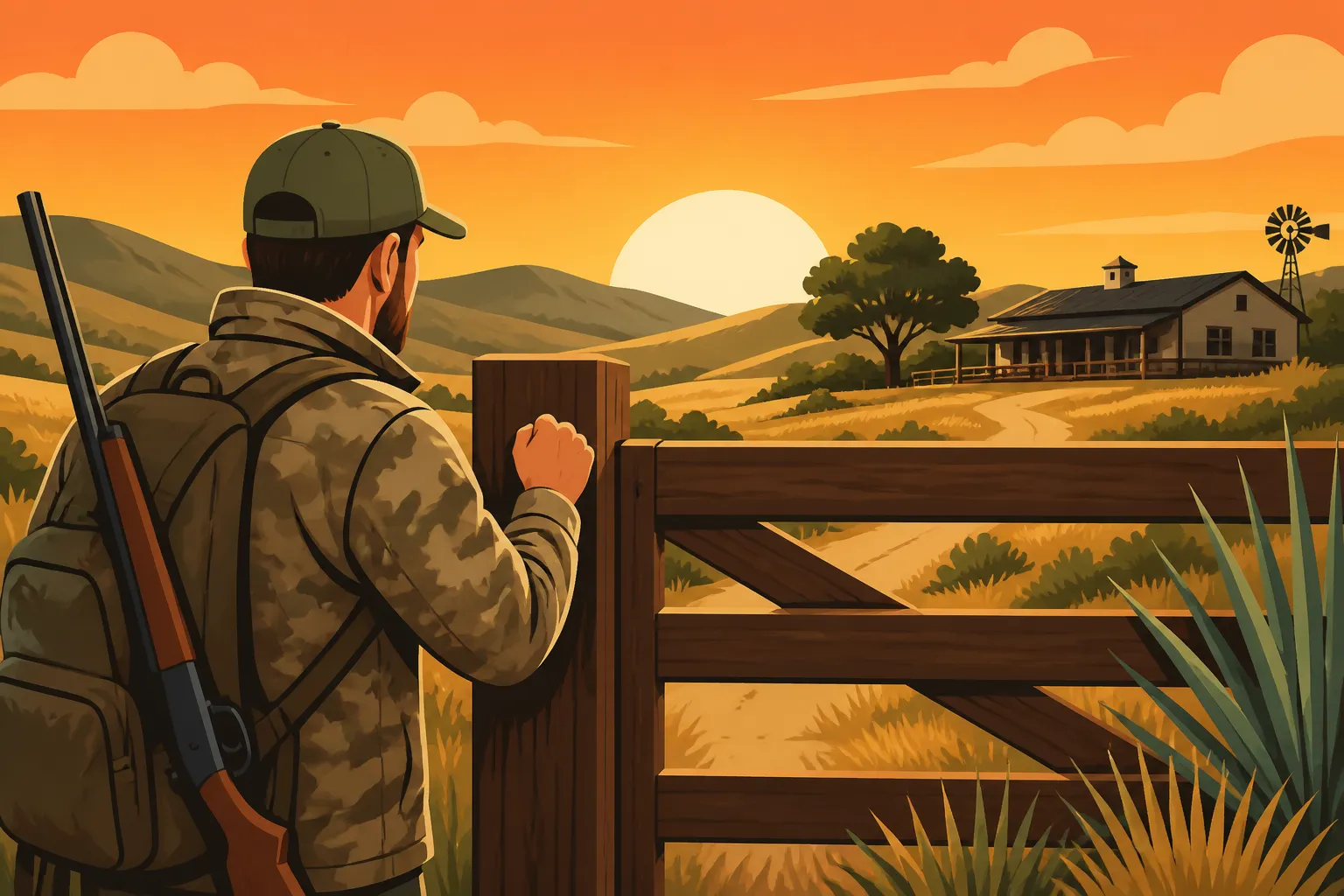
- Don't Drive Right Up to the House: Park respectfully at the main entrance or gate, leaving plenty of room for vehicles to pass. Walk to the house or main building. This shows respect for their personal space.
- Be Observant: If you see "No Trespassing" signs or "Private Property" markers that explicitly state no solicitations, respect them. Don't push it. You should always be aware of California Trespass and Permission Law before stepping foot on private ground.
- Be Patient: If no one answers, don't keep knocking. Leave your card if you have one, or simply try another day. Never enter the property without explicit permission.
Asking the Right Questions and Listening Actively
If the landowner is open to talking, this is your chance to shine.
- Ask About Their Concerns: Instead of just talking about what you want, ask about their concerns. "Do you have any problems with trespassers or wild pigs damaging crops? Are there any areas where you have livestock I should avoid?" This demonstrates you're thinking about their property first.
- Clarify Boundaries: If they seem open, ask them to clarify boundaries. "Could you show me on a map, or describe the boundaries where I'd be allowed to hunt? I want to make absolutely sure I don't accidentally stray onto a neighbor's land." Services like
GoHuntallow you to quickly pull up property lines, making this conversation much easier. - Understand Rules and Expectations: Every landowner will have unique rules. "Are there any specific gates I should use? Do you have a preferred parking spot? Are there any days you prefer I don't hunt?" Or for game specific rules, "If I were to hunt pigs, would you prefer I use a rifle or a bow, and are there any areas I should avoid?" For some landowners, the noise of a rifle might be an issue, making a silent approach for Hunting Pigs on Central Coast Oak Ranges with archery equipment more appealing.
- Discuss Liability: If they don't bring it up, you might gently ask, "Do you have any concerns about liability? I carry my own insurance, and I'd be happy to sign a waiver or agreement if that would make you more comfortable." Many landowners appreciate that you're thinking about this, and it shows you're serious. It's good to know if Do You Need Written Permission in California? is something they are considering.
- Listen More Than You Talk: Pay close attention to their answers, concerns, and any anecdotes they share. It's not just about getting a "yes," it's about building rapport.
Handling Rejection Gracefully (and What to Do Next)
Even with the best preparation and a perfect pitch, you'll hear "no" more often than "yes." This is simply part of the game, especially in California.
- Maintain Composure and Politeness: A simple, "I completely understand, thank you for your time anyway," is all that's needed. Don't argue, don't push, and don't look disappointed.
- Leave a Good Impression: Even if they say no today, a positive interaction might lead to a "yes" down the road, or a referral to a friend. You never know who they might talk to.
- Don't Give Up: Rejection is not failure; it's just part of the process. Note down who you spoke to, when, and the outcome, so you don't bother them again too soon. Move on to the next potential property. Remember, the goal is to find Hunting Small Private Tracts in California that might get overlooked.
- Consider Other Options: If direct permission is proving too difficult, you might explore other avenues like California Hunting Lease Costs for a longer-term solution, or joining a hunting club that already has private land access.
Building Lasting Relationships and Earning Future Opportunities
If you're fortunate enough to gain permission, the real work of maintaining that privilege begins. This isn't a one-time transaction; it's the start of a relationship that, if nurtured, can lead to years of enjoyable hunting and a valuable connection.
Delivering on Your Promises
The absolute foundation of a good relationship is trust.
- Follow All Rules, Explicitly and Implicitly: If you said you'd only hunt with archery equipment, stick to it. If you said you'd close all gates, double-check every single one. If they told you to avoid a certain pasture, steer clear. Always follow the rules, even the unwritten ones.
- Report Back: After your hunt, especially if you were successful, let them know. A quick text or phone call, "Just wanted to let you know I harvested a nice pig and cleaned up after myself, thank you again!" goes a long way. If you were targeting pigs because they were a nuisance, showing them the carcass or even offering them some meat can be a huge bonus.
- Cleanliness is Key: Pack out everything you pack in. Leave no trace. That includes shell casings, trash, and especially any gut piles if they prefer you don't leave them near active areas.
- Share Your Harvest (Optional): Offering a package of venison or wild pig sausage is a tangible thank you that many landowners truly appreciate, especially if they enjoy wild game but don't hunt themselves. It builds goodwill and shows your gratitude.
Offering Help Beyond Hunting
Think about how you can be an asset to the landowner, not just someone taking from their property.
- Varmint Control: Many ranchers have issues with ground squirrels, coyotes, or other pests. "If you ever have problems with coyotes harassing your livestock, I'd be happy to come out and help thin them down," is a fantastic way to offer year-round value. You can even combine this with Coyote Calling California Ranch Land.
- General Labor: Are they mending fences? Moving cattle? Hauling wood? Offer a few hours of your time. "If you ever need an extra hand around the ranch, please don't hesitate to call. I'm happy to help." This shows you're a person of character, not just a hunter.
- Be an Extra Set of Eyes: If you're on the property regularly, you might notice a broken fence, a gate left open by others, or even suspicious activity. Reporting these things proactively makes you a valuable partner.
- Provide Wildlife Observations: Share interesting observations about the game you're pursuing. "The turkeys are really roosting up near the creek bottom this year," or "I saw a really nice buck chasing does up by the old oak grove." This information can be valuable to a landowner, especially if they are interested in the wildlife on their property.
The Long-Term Payoff
Building a relationship with a California landowner takes time and effort, but the rewards can be immeasurable.
- Consistent Access: Instead of scrambling for public land spots each year, you could have consistent, low-pressure hunting on private ground.
- Better Quality Hunts: Private land often holds larger, less pressured animals, leading to higher quality hunting opportunities.
- Referrals: A happy landowner might refer you to their friends or neighbors who also own land, expanding your opportunities exponentially. This is how many hunters gain access to some of California's most coveted private land.
- A Deeper Connection: Beyond the hunt itself, you'll gain a deeper understanding of California's ranching culture and build genuine friendships. These connections are often more valuable than any trophy.
The effort involved in Knocking on Doors in California Ranch Country is significant, but the potential rewards are well worth it for those willing to put in the time and demonstrate unwavering respect and responsibility.
| Aspect | Benefits of Private Land Hunting | Challenges of Private Land Hunting |
|---|---|---|
| Game Quality/Quantity | Less pressured animals, potentially larger trophy quality, higher success rates. | Access often granted for nuisance animals (e.g., pigs), not always for trophy bucks/bulls. |
| Hunting Pressure | Significantly reduced compared to public land, leading to more natural animal behavior. | Landowner might allow multiple hunters, or have specific restrictions on timing/method. |
| Accessibility/Convenience | Often closer to home, can scout and hunt more frequently without large crowds. | Requires constant communication and adherence to specific, potentially restrictive, rules. |
| Relationship Building | Opportunity to build trust, form lasting friendships, and potentially gain future access/referrals. | Initial approach can be intimidating; requires persistence, politeness, and handling rejection gracefully. |
| Costs | Potentially free if permission is granted, compared to expensive leases or guided hunts. | Could lead to offering services or gifts, which has a non-monetary cost. |
| Rules & Regulations | Landowner sets additional rules beyond state law; often very specific to their operation. | Misunderstanding or breaking a landowner's rule can permanently revoke access. |
| Knowledge/Experience | Gain unique insights into local wildlife patterns and land management. | Requires learning how to effectively communicate and negotiate with landowners. |
Disclaimer
The information provided in this article is for general guidance and educational purposes only. Hunting regulations, seasons, and private property laws in California are complex and subject to change. Always consult the latest California Department of Fish and Wildlife (CDFW) regulations and local ordinances before engaging in any hunting activities. It is your responsibility to understand and comply with all applicable laws and to obtain all necessary licenses and permits. Additionally, always prioritize safety and ethical hunting practices.