Working a Creek Bottom for Late-Season Deer
As the late season grinds on here in California, many deer hunters find themselves scratching their heads. The deer that were visible during the early-season rut or feeding frenzies seem to have vanished, making it incredibly frustrating to locate them. This is often because their patterns shift dramatically with colder weather and increased pressure. This comprehensive guide will reveal why creek bottoms become late-season deer sanctuaries and equip you with the knowledge and tactics to effectively hunt these often-overlooked, yet highly productive, areas.
Why Creek Bottoms Are Late-Season Deer Magnets
When the temperatures drop, winds pick up, and the landscape starts to lose its vibrant green, deer, particularly the mature bucks, become incredibly focused on two things: conserving energy and finding thermal cover. Creek bottoms, especially those found in California’s diverse terrain from the coastal ranges to the Sierra foothills, naturally provide these critical elements, making them prime real estate for deer trying to survive the colder months.
Providing Crucial Thermal Cover and Protection
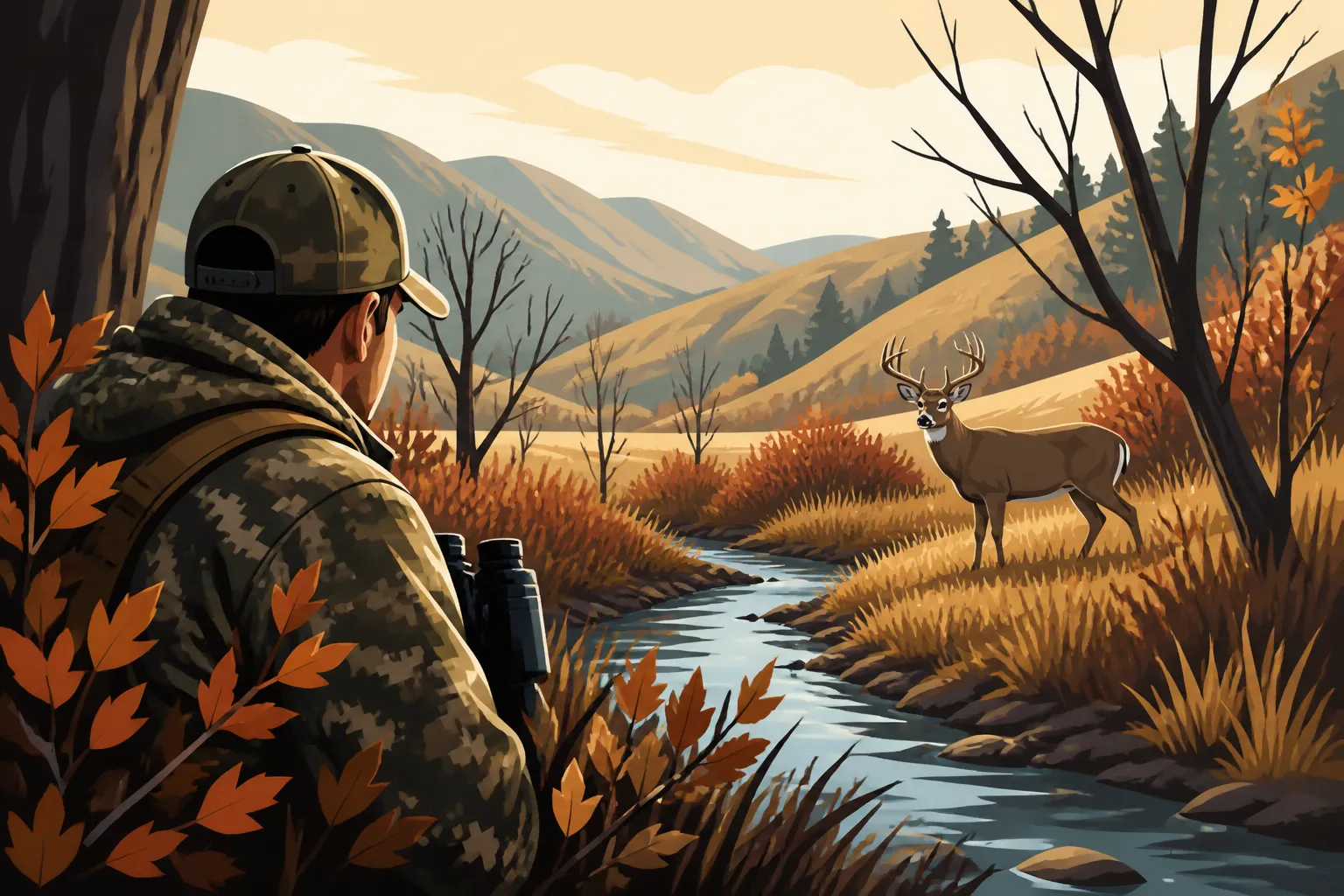
One of the primary reasons deer gravitate towards creek bottoms late in the season is the superior thermal cover they offer. Think about it: a deep canyon or a meandering drainage lined with dense vegetation, like willows, alders, or even evergreen oaks and conifers, creates a microclimate that can be significantly warmer than the exposed ridges and hillsides. These low-lying areas block harsh winds, and the thick canopy traps what little warmth the winter sun provides, or retains ground heat. This natural insulation allows deer to expend less energy staying warm, which is paramount when food sources might be scarcer.
Imagine a biting wind whipping across a high ridge—a deer trying to bed there would be constantly burning calories just to maintain body temperature. Now picture that same deer hunkered down in a sheltered creek bottom, surrounded by thick brush and towering trees, completely out of the wind. The difference in energy expenditure is enormous. This is especially true after a cold front pushes through, as deer will immediately seek out the warmest, most protected spots they can find. If you're wondering about where deer really hunker down after a significant temperature drop, consider exploring areas with thick, multi-layered vegetation within these drainages.
Accessibility to Water and Residual Forage
Even in late fall and winter, water is a non-negotiable for deer. While major rivers and perennial streams are obvious water sources, creek bottoms often hold smaller seeps, springs, or damp pockets that retain moisture longer than drier uplands. These consistent water sources are a major draw. Beyond just water, these sheltered areas can also hold lingering food sources. Certain brush species and herbaceous plants that grow along watercourses might remain palatable longer than their upland counterparts. Green browse might persist in these moist, protected microclimates when everything else has withered and died.
For instance, in many of California’s oak woodlands, deer will browse on evergreen shrubs like toyon or specific varieties of manzanita and ceanothus that hug the stream beds. These areas can sometimes offer pockets of sustenance when other late-season food sources for California deer have been consumed or are dormant. A creek bottom might also retain acorns that have rolled down from the hillsides, creating a hidden larder that deer will exploit. This combination of available water and residual forage means deer don't have to travel far, further aiding in energy conservation.
Natural Travel Corridors and Escape Routes
Deer are creatures of habit and efficiency. Creek bottoms, with their natural contours and dense cover, serve as prime travel corridors, allowing deer to move between bedding areas, feeding zones, and water sources with minimal exposure. They can travel safely, concealed from predators—including human hunters—using the topography and vegetation to their advantage. These low-lying areas often act as natural funnels, directing deer movement along predictable paths.
Think of a creek bottom as a deer highway, especially when the surrounding terrain is open or has been thinned by recent fires or timber operations. Deer prefer to walk the path of least resistance while remaining hidden. If you've ever scouted for deer movement in broken country, you know that identifying a funnel between two oak ridges or through dense chaparral can be a game-changer. Creek bottoms inherently create these funneling effects, concentrating deer movement and offering predictable opportunities for hunters who understand how to intercept them.
Reading the Sign in a California Creek Bottom
Hunting creek bottoms effectively means becoming a keen observer. Deer sign in these dense environments can be subtle, but once you learn what to look for, you'll start to unlock their late-season secrets. It's not just about seeing tracks; it's about interpreting a narrative left behind by the deer.
Identifying Fresh Tracks and Concentrated Trails
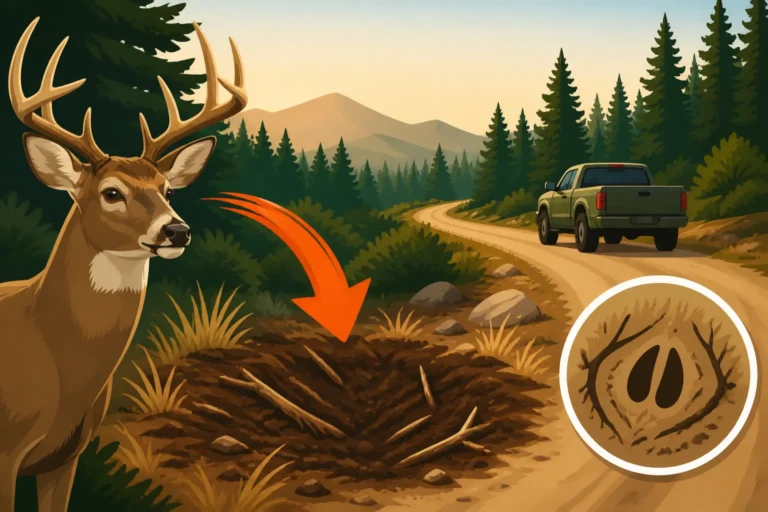
The first thing you’ll want to look for is tracks, and more importantly, fresh tracks. Creek bottoms, with their softer, often damp soil or sand, are excellent places to find clear deer tracks. Look for well-worn trails that parallel the creek or cut across bends. These are likely routes deer use daily. Fresh tracks will have sharp edges, and if the ground is damp, the dirt inside the print might still look moist. Older tracks will be dried out, have crumbled edges, or show signs of weather erosion.
Pay attention to track size and depth. Larger, deeper tracks often indicate a heavier animal, like a mature buck. Sometimes, you'll find an explosion of tracks around a specific bush or a small seep, indicating a stop-over point. This is where using a tool like GoHunt's mapping features can be incredibly helpful; you can mark these concentrations of sign on your digital map to build a picture of deer movement over time. Understanding how to read California mud for fresh deer movement is a skill that becomes particularly valuable in these damp creek environments, giving you an edge on what might be a cold trail elsewhere.
Pinpointing Rubs, Scrapes, and Bedding Areas
While late-season rubs and scrapes might not be as fresh or as frequent as during the rut, they still offer clues. Bucks might refresh a scrape or rub a sapling even in December if they feel a renewed urge or are simply marking their territory in a safe zone. Look for rubs on smaller trees or brush, especially those that have been hit multiple times over the season. These indicate established travel routes.
The real prize in a creek bottom during late season, however, is finding bedding areas. Deer will bed in the thickest, most protected cover they can find, often on a slight rise within the creek bottom that offers a vantage point downwind, or tucked into a brush pile that blocks the prevailing wind. Look for flattened grass or leaves, often with scat nearby. These beds will be close to escape routes and dense thermal cover. Knowing where California blacktail bucks bed is crucial; they often seek out these sheltered nooks where they can conserve heat and have multiple options for escape.
Analyzing Browse and Identifying Escape Routes
What are the deer eating? Even if the primary rut is over, deer still need to feed. Look for nipped twigs, stripped leaves, or bark damage on specific plants. This tells you what's on their menu during the late season and can help you identify their feeding zones within the creek system. If you see heavy browse on particular plants, it's a good bet deer are spending significant time in that immediate area.
Equally important are the escape routes. Deer rarely bed or feed in an area without a clear exit strategy. These might be hidden trails that lead up a steep bank, through a dense thicket, or along the creek bed itself where they can quickly melt away into the shadows. Observing these escape routes will help you anticipate where a spooked deer might go and, conversely, where you should position yourself to intercept them before they disappear.
Strategic Approaches for Creek Bottom Hunts
Hunting creek bottoms isn't like hunting open country. It requires a more deliberate, stealthy approach, and a deep understanding of how deer use the terrain. This isn't about covering miles, it's about precise, quiet movement and intelligent positioning.
Still-Hunting and Using Ground Blinds
Still-hunting is perhaps the most effective method for creek bottoms. This involves moving incredibly slowly, taking a few steps, then pausing for several minutes to scan, listen, and simply melt into your surroundings. Use the natural cover of the creek bottom—the dense brush, trees, and undulating terrain—to break up your outline. Move into the wind whenever possible, and be acutely aware of every twig underfoot. The goal is to blend in so completely that you spot the deer before it ever knows you're there.
Another effective strategy, especially if you've identified a heavily used trail or feeding area, is to set up a ground blind. These don't have to be elaborate pop-up blinds; often, simply finding a thick cluster of brush, a downed log, or a rock outcrop that offers good concealment is enough. Brushing in a blind on a field edge is a common tactic, but the same principles apply here: use natural materials to enhance your cover and break up your silhouette. Make sure you have a clear shot lane, but otherwise prioritize being completely hidden. This allows you to wait patiently, letting the deer come to you.
Understanding Wind and Thermals in Low-Lying Terrain
This is arguably the most critical factor when hunting creek bottoms. Wind and thermals behave differently in drainages compared to open country. During the early morning, as the air warms, thermals will typically rise, carrying your scent uphill. In the evening, as the air cools, thermals will sink, carrying your scent downhill. The wind, however, can swirl unpredictably in these confined spaces, creating tricky scent currents.
Always try to hunt with the wind in your favor, moving in a direction where your scent is blowing away from where you expect deer to be. When the thermals are at play, position yourself to take advantage of the rising or falling air currents. For example, if you're hunting in the morning, approach from above the creek bottom to avoid blowing your scent down into it. In the evening, an approach from below might be better. Understanding wind and thermals in steep Sierra country, for instance, is paramount; these principles are magnified in narrow drainages where air currents can become unpredictable and easily betray your presence.
Strategic Stand Placement and Undetectable Entry/Exit
If you're using a tree stand, placement is everything. Look for a sturdy tree that offers a commanding view of a well-used trail, a pinch point, or a bedding area, while still providing good background cover. Ideally, the stand should be placed just off the main travel corridor, allowing deer to pass naturally without looking directly at your position. Entry and exit routes are just as important as the stand itself. Plan your approach and departure so you don't spook deer entering or leaving the creek bottom. This often means using natural terrain features, moving during low-activity periods (like midday), or utilizing routes that keep you out of the deer's primary line of sight and scent cone.
Consider hunting a funnel between two oak ridges that converges on the creek bottom. A well-placed stand overlooking that funnel can be incredibly productive. For public land hunters, this level of detailed planning, sometimes aided by advanced mapping solutions like those offered by GoHunt, can be the difference between success and a frustrating day in the field.
| Creek Bottom Feature | Late-Season Deer Potential | Hunting Strategy Notes |
|---|---|---|
| Dense Thickets/Brush | High thermal cover, bedding, escape routes | Still-hunt slowly, use ground blinds, focus on downwind approaches. |
| Water Seeps/Springs | Consistent water source, concentrated activity | Position stands or blinds overlooking these areas, mind wind and thermals. |
| Steep Banks/Canyons | Natural travel funnels, thermal protection | Look for trails along the base, glass opposing slopes, consider elevated stands. |
| Downed Timber/Logs | Bedding cover, obstacle for movement | Deer will bed beside or behind, can create pinch points. |
| Evergreen Trees (Oaks, Conifers) | Excellent thermal cover, some browse | Likely bedding areas, focus on sun-exposed sides during cold mornings. |
| Dry Creek Beds | Easy travel routes, can hold lingering acorns | Walk slowly, look for tracks in sand/gravel, good for still-hunting. |
Essential Gear and Safety Considerations for Creek Bottom Hunts
Hunting creek bottoms, especially later in the season, often means dealing with colder, potentially wetter conditions and more rugged terrain. Having the right gear isn't just about comfort; it's about safety and increasing your chances of success.
Layering for Variable Conditions and Appropriate Footwear
California's weather, even in late season, can be incredibly variable. A morning might start with freezing fog in a creek bottom, but by midday, a warm sun could break through. Effective layering is key. Start with a moisture-wicking base layer, add insulating layers like fleece or down, and top it with a waterproof and windproof outer shell. This allows you to shed or add layers as conditions change, preventing you from getting too hot and sweaty (which can lead to a chill later) or too cold.
Your footwear is equally critical. Creek bottoms are often wet, muddy, or icy, with uneven terrain. You'll want waterproof, insulated boots with excellent ankle support and aggressive tread. Whether it's the best boots for steep wet-season Sierra trails or just navigating a muddy Central Coast drainage, keeping your feet dry and stable is paramount. Consider adding gaiters to prevent water, mud, or snow from entering the top of your boots. Nothing saps morale faster than wet, cold feet.
Navigation, Communication, and Emergency Preparedness
Navigating dense creek bottoms can be disorienting. Even familiar areas can look different once you're down in the thick stuff. A reliable GPS device or a robust mapping app on your phone (with downloaded offline maps) is non-negotiable. Apps like GoHunt offer detailed topographic maps and land ownership overlays that can be invaluable for staying on course and ensuring you're on legal hunting ground, especially when scouting California public land before season. Always carry a compass and a physical map as a backup.
Communication is another critical safety aspect. Cell service is often spotty or non-existent in deep canyons and dense drainages. Carry a satellite messenger or a two-way radio to stay in contact with hunting partners or for emergencies. A whistle can also be useful for signaling. Pack a basic first-aid kit, a headlamp with extra batteries, fire-starting materials, and enough water and high-energy snacks for longer than you anticipate being out. Recovering a deer from a steep canyon, for instance, is physically demanding and can take longer than expected, making preparedness crucial.
Game Recovery and Field Care
When you do connect with a deer in a creek bottom, the challenge isn't over. Recovering game from these often-dense and sometimes steep areas can be tough. A good, sharp knife for field dressing is essential, and considering a small, lightweight bone saw can be helpful if you plan to quarter the animal to make extraction easier. Game bags are a must for keeping meat clean, especially if you're working alone or anticipate a long pack-out.
Think about how you’ll get the deer out. A game cart might be useful if the creek bed is relatively flat and open, but if it’s steep and brushy, you’ll likely be quartering and packing it out on your back, or with a good pack frame. If you're hunting in warmer, late-fall conditions, prompt field dressing and cooling are critical to preserving the meat. While less of a concern than during August, knowing how to handle venison from a CWD testing zone or field dressing a deer in hot weather is still important, as California's varying climates can present these challenges even late into the year.
Disclaimer
Always check the current California Department of Fish and Wildlife (CDFW) regulations before heading afield, as rules and season dates can change. Ensure you possess all necessary licenses and tags, and adhere strictly to all hunting laws, including those regarding non-lead ammunition and public land access. Safety should always be your top priority.