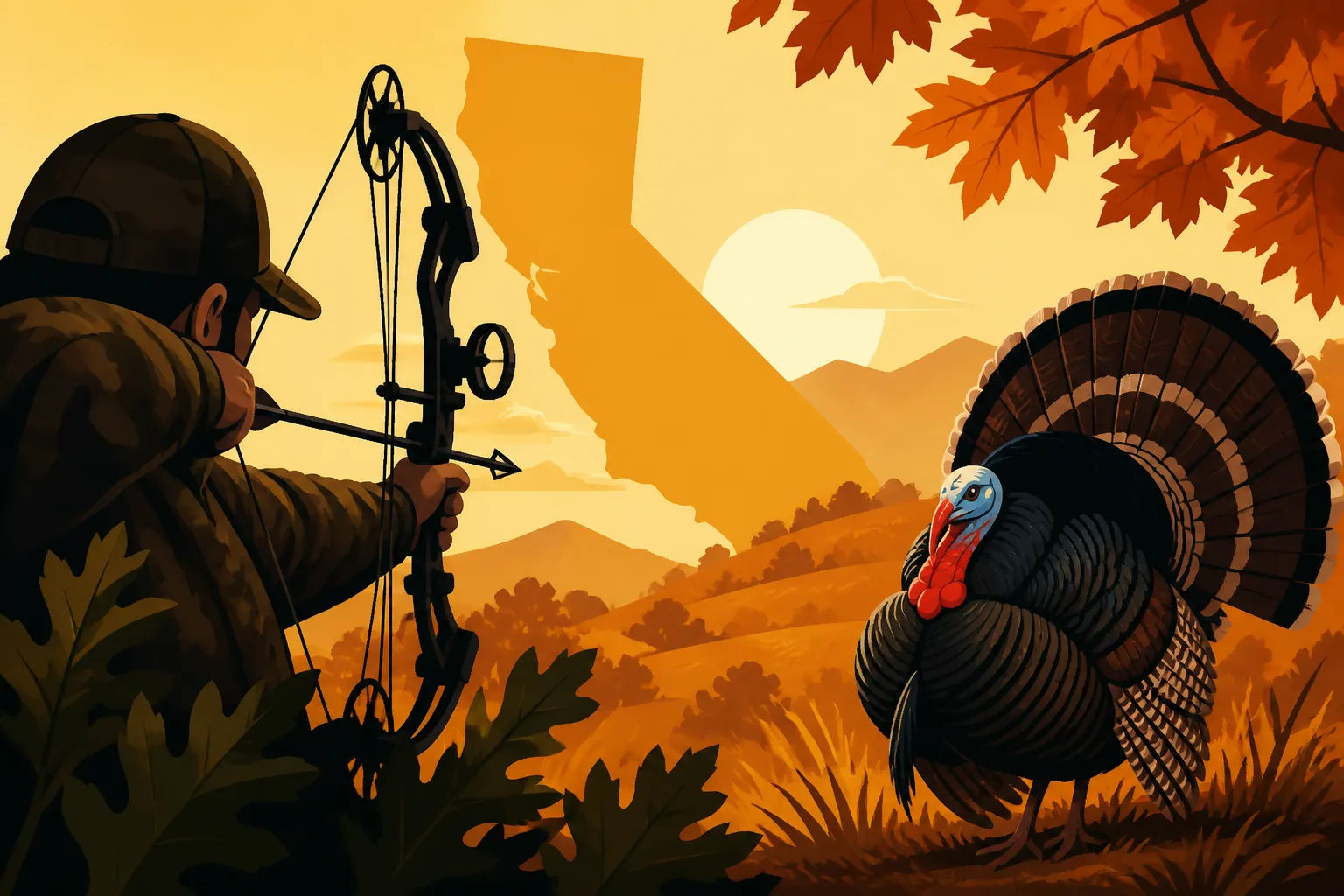
Hunting the Archery-Only Fall Turkey Season
For many hunters in California, the thought of turkey season immediately conjures images of crisp spring mornings, booming gobblers, and strutting toms responding to a perfect call. But when the fall archery-only season rolls around, a lot of folks scratch their heads, wondering how to even approach it. This guide is here to unravel the unique challenges and incredible opportunities of pursuing California wild turkeys with a bow during the autumn months, transforming that confusion into confident, effective hunting strategies.
Understanding California's Fall Archery Turkey Season
The fall archery-only turkey season in California presents a completely different puzzle than the spring general season. Gone are the days of aggressive gobblers seeking hens; instead, you're dealing with flocks that are primarily focused on survival, food, and safety. This shift in behavior demands a significant adjustment in tactics, gear, and mindset from hunters.
Season Dates and Bag Limits
California's fall turkey season typically opens in November and runs for 30 consecutive days, with specific dates varying slightly year to year. It's strictly archery-only, which means no shotguns or rifles are allowed, keeping the challenge high. The bag limit during this season is usually one turkey, of either sex. This "either sex" allowance is a major departure from spring hunting, where hunters are typically restricted to bearded birds (males). This opens up opportunities to harvest hens or jakes, which are often easier to locate and pattern than mature gobblers in the fall. Always double-check the current year's California Department of Fish and Wildlife (CDFW) regulations booklet or their website for the most accurate and up-to-date information on exact dates and any specific area restrictions.
The ability to harvest a hen or jake can be a relief, especially for those who struggle to locate the more elusive fall gobblers. It shifts the focus from trophy hunting to simply enjoying the pursuit and putting wild game on the table. However, it also means exercising good judgment, especially if you're hunting in an area with lower turkey densities. Over-harvesting hens can impact future populations, so being selective is always a good practice, even when regulations allow for it.
Why Fall Archery is Different
The core difference between spring and fall turkey hunting lies in the birds' priorities. In spring, turkeys are driven by breeding instincts. Gobblers are vocal and aggressive, trying to attract hens. Hens are receptive and eventually seek out gobblers. In the fall, after the breeding season is long over and poults are grown, turkeys consolidate into larger, more stable flocks. These flocks are highly focused on finding abundant food sources, staying safe from predators, and establishing consistent routines. Their vocalizations change, becoming less about attraction and more about maintaining flock cohesion.
This behavioral shift means that traditional spring calling tactics—like aggressive gobbling or seductive hen yelps—will often fall flat or even spook birds in the fall. Instead, you need to understand flock dynamics, locate prime feeding areas, and be incredibly patient and stealthy. The landscape itself also changes; leaves fall, exposing more terrain, but also providing rustling sounds that can mask your movements if you're careful. The weather can also be more unpredictable, ranging from warm, sunny days to cold, rainy, or even snowy conditions depending on where you're hunting in California.
Deciphering Fall Turkey Behavior and Dynamics
Understanding how turkeys operate in the fall is the cornerstone of successful archery hunting. Forget everything you know about spring gobbler behavior; fall turkeys are on a completely different program, and if you don't adapt, you'll likely be going home empty-handed.
Flock Structures and Daily Routines
In the fall, turkeys typically congregate into distinct social groups. You'll often find mature hens with their poults (juveniles) from the spring hatch, forming large, cohesive family units. Jakes (yearling males) might form their own smaller groups, often sticking close to the hen flocks but maintaining a bit of independence. Mature gobblers, having shed their breeding season bravado, usually form bachelor groups. These groups can be incredibly wary and often stick to denser cover. Sometimes, especially later in the fall, you might encounter mixed flocks of hens, jakes, and even a few gobblers, particularly around prime food sources.
Their daily routine revolves around three main things: roosting, feeding, and watering. Turkeys will fly up into tall trees (often oaks or pines) to roost safely overnight. At dawn, they fly down and immediately begin foraging. Their feeding patterns are heavily dictated by available food, primarily acorns in oak woodlands, but also insects, seeds, and agricultural waste grains if you're hunting near fields. They'll spend hours scratching and pecking, slowly moving across the landscape. Midday might see them resting, dusting in dry dirt patches, or heading to water sources. As evening approaches, they'll make their way back to their roosting trees, often the same ones night after night, offering a predictable pattern you can exploit.
Adapting Your Calling Strategy
Fall calling is far more subtle and nuanced than spring calling. You're not trying to entice a lovesick gobbler; you're trying to communicate with a wary flock. The primary goals of fall calling are often to reassemble a scattered flock or to draw in curious individuals. The kee-kee run, which mimics a lost or juvenile bird, is arguably the most effective fall call. It's a series of high-pitched whistles followed by yelps, suggesting a bird trying to find its family. Other useful calls include soft clucks and purrs, which convey contentment and can draw in birds that feel safe. You can also use lost yelps, similar to spring, but often with less urgency.
One of the most classic and effective fall tactics involves "breaking up" a flock. This means intentionally spooking a group of turkeys so they scatter in all directions. Once they've dispersed, you settle in and wait, then begin calling with kee-kees and lost yelps to mimic a bird trying to reunite. The turkeys, driven by their strong flocking instincts, will often respond and try to regroup. The key is to wait long enough for them to feel safe and then start calling subtly. Aggressive calling right after a bust can be counterproductive. Remember, the goal isn't to make them come to you, but to make them come together, and you just happen to be in the middle.
Essential Gear for Fall Archery Turkey Hunting
Success in the fall archery-only turkey season hinges not only on strategy but also on having the right gear. Given the close-range nature of archery hunting and the wary disposition of fall turkeys, every piece of equipment plays a critical role in your concealment, shot execution, and overall effectiveness.
Bow Setup and Broadhead Selection
For fall turkeys, your bow setup should be precise and dependable. Ensure your bow is well-tuned, with broadheads flying true, as shot placement is absolutely critical for a clean kill on a turkey. Turkeys are deceptively tough birds, and their vitals are relatively small and protected by thick feathers and bones. A full-draw weight that you can comfortably hold for extended periods is more important than sheer power, as you might need to hold your draw as a bird slowly makes its way into range. Many archers choose to hunt with a mechanical release aid for consistency, but traditional archery is also viable with proper practice.
When it comes to broadheads, maximizing cutting diameter is often preferred. Large cutting diameter mechanical broadheads, often those designed for turkeys specifically, create a massive wound channel that helps bring down these tough birds quickly and ethically. Options like Rage Turkey Broadheads or Grim Reaper Hades Pro offer cutting diameters designed to drop birds fast. Fixed-blade broadheads can also be highly effective, especially with two or three sharp blades. Regardless of your choice, ensure your broadheads are razor sharp. Aiming for the base of the wing (to hit vitals) or the head/neck (if you're highly confident in your shot) are common strategies. However, the head/neck shot is notoriously difficult on a moving bird. Most hunters prefer the body shot through the vitals.
Camouflage and Concealment
Concealment is paramount when bowhunting turkeys, and it's even more critical in the fall when trees may have shed their leaves. Turkeys have exceptional eyesight, and they will spot the slightest movement or unnatural outline. Full camouflage from head to toe is a must. This includes a face mask, gloves, and clothing that blends seamlessly with the specific fall environment you're hunting. For hunting California's oak woodlands or chaparral, patterns with muted greens, browns, and grays will serve you well. Avoid anything that creates a stark contrast against the natural backdrop.
Consider layering your clothing, as fall mornings can be chilly but afternoons can warm up significantly. Being able to shed or add layers quietly is important. A crucial piece of gear that often goes overlooked is a good quality ground blind, even if it's just a simple pop-up blind or a ghillie suit. If you're planning on still-hunting or using spot-and-stalk tactics, maintaining a low profile and moving slowly, using every piece of available cover, will be your biggest asset. Don't forget to break up your human silhouette as much as possible, as turkeys are experts at spotting unnatural shapes.
Calls, Decoys, and Optics
Your calling arsenal for fall should be different from spring. Focus on mouth calls (diaphragms) for hands-free operation, as well as friction calls (slate or box calls) for their versatility. As mentioned, the kee-kee run, lost yelps, clucks, and purrs are your bread and butter. Consider a push-pull call for easy, consistent kee-kees.
Decoys can be a mixed bag in the fall. Unlike spring, where a strutter or breeding hen decoy can be irresistible, fall flocks are less interested in romance. However, a few realistic hen or jake decoys can still be effective, especially if you're trying to draw in a scattered flock or bring birds into bow range in an open area. Sometimes, less is more; a single feeding hen decoy can convey a sense of safety and calm. If using decoys, set them up within your effective bow range.
Lastly, small, lightweight binoculars (e.g., 8×32 or 10×42) are incredibly valuable for glassing open areas to locate distant flocks, identify patterns, and plan your approach without alarming the birds. A good mapping app on your phone, like those offered by GoHunt, can also be a game-changer for scouting and navigating public lands, helping you identify prime habitat and potential ambush points long before you even step foot in the woods. While not a traditional "optic," the detail and insight provided by these apps are invaluable for turkey hunters.
Effective Strategies for Fall Archery Success
The beauty of fall turkey hunting with a bow lies in the diverse array of strategies you can employ. It’s less about one magic call and more about adapting to the birds’ behavior and the terrain. Patience, stealth, and a keen understanding of turkey routines will be your best friends.
Spot-and-Stalk Tactics
Spot-and-stalk is arguably the most exciting and challenging way to hunt fall turkeys with a bow. This method relies heavily on your ability to locate birds from a distance, then meticulously plan and execute a silent approach to get within bow range. This is particularly effective in more open terrain, like agricultural fields bordering oak woodlands or along wide creek bottoms where turkeys might be feeding. Hunters often spend a lot of time glassing open areas for a bedded buck, but applying that same patience to spotting a feeding flock of turkeys can pay huge dividends.
Success in spot-and-stalk hinges on several factors:
- Observing from a Distance: Use your binoculars or spotting scope to locate flocks. Watch their movement patterns, where they’re feeding, and where they seem to be headed.
- Using Terrain and Cover: Identify natural features like ridges, draws, brush lines, or tall grass that can provide concealment during your approach. Move slowly, deliberately, and always check the wind direction. Turkeys have an excellent sense of hearing and smell, though the latter is often debated for turkeys, it's always safer to play the wind.
- Timing Your Moves: Turkeys often put their heads down to feed for extended periods. These are your opportunities to advance. Freeze instantly when a bird's head is up and scanning. If you're Hunting Coastal Range Oak Woodlands, the undulating terrain and dense cover can provide excellent opportunities for a stealthy approach.
- Patience is Key: This isn't a race. A good stalk can take hours. Don't rush it, or you'll likely blow it. Be prepared to belly crawl, use every ditch, and take advantage of any available cover.
Ambush and Ground Blind Hunting
For hunters who prefer a more static approach or want to capitalize on predictable turkey movements, ambush hunting from a ground blind is incredibly effective. This strategy involves identifying key locations that turkeys frequent and setting up ahead of time, allowing you to be concealed and ready when they arrive.
Prime ambush locations include:
- Roost-to-Feed Travel Corridors: Turkeys often follow consistent paths from their roosting trees to their favorite feeding grounds. Setting up along these routes, especially at first light, can be highly productive.
- Active Feeding Areas: If you've scouted an area rich in acorns, wild berries, or agricultural crops, setting up a blind nearby can put you right in the turkeys' dinner plans.
- Water Sources: In drier parts of California, or during periods of drought, water sources can be magnets for turkeys. Setting up near a secluded spring, stock pond, or creek can yield results.
- Dusting Bowls: Turkeys love to dust bathe to clean their feathers and rid themselves of parasites. Identifying these dusty depressions and setting up a blind can be a good midday strategy.
When using a ground blind, remember to set it up well in advance of your hunt, if possible, to allow the birds to get accustomed to its presence. Brush it in thoroughly using natural vegetation from the area to help it blend even better. For example, when Brushing In a Blind on a Field Edge, use corn stalks, oak branches, or sagebrush to break up its outline. Inside the blind, minimize movement, especially when turkeys are in sight, and practice drawing your bow quietly.
Breaking Up a Flock: The Classic Fall Tactic
This strategy is unique to fall turkey hunting and can be incredibly exciting. The idea is to intentionally spook an entire flock of turkeys, sending them scattering in all directions, and then use calling to bring them back together. Turkeys have an incredibly strong flocking instinct, and scattered birds will almost always try to regroup.
Here's how it generally works:
- Locate a Flock: Find a large flock of turkeys, preferably while they are feeding on the ground.
- Bust Them Up: Aggressively charge the flock, yelling and running directly at them. Your goal is to get them to fly or run off in as many different directions as possible. The more scattered they are, the better.
- Set Up Quickly: Immediately after busting the flock, find a concealed spot that offers a good shooting lane in several directions. A fallen log, a dense thicket, or the base of a large oak tree (like when Setting Up Against a Big Valley Oak) can work. Position yourself so you can see a good distance but remain hidden.
- Wait and Call: Give the turkeys 15-30 minutes to settle down and feel safe. Then, begin with soft, plaintive lost yelps or kee-kees. Don't call too loudly or too frequently initially. You're trying to mimic a lost turkey trying to find its family. As birds start responding, you can increase the intensity slightly.
- Be Ready: Turkeys will often approach cautiously, clucking and yelping as they get closer. They might come from unexpected directions. Be prepared for a shot at any moment, and resist the urge to move until you see a clear opportunity. This tactic takes patience and steel nerves, but it’s one of the most rewarding fall turkey hunting experiences.
Scouting and Locating Fall Turkey Hotspots
You can have the best bow and broadheads, master every call, and move like a ghost, but if you're not in an area where turkeys are, it's all for naught. Scouting is arguably even more critical in the fall than in the spring, as turkey locations are driven by food availability and security rather than predictable breeding patterns.
Pre-Season Reconnaissance
Your fall turkey hunt success really starts long before the season opener. Just like you'd scout for deer by Reading Aerial Photos for Sierra Deer, applying similar diligence to turkeys is essential. Turkeys thrive in California's diverse landscapes, particularly in areas with good oak stands, mixed conifer forests, and agricultural interfaces.
Here's what to look for during your pre-season scouting:
- Food Sources: This is the absolute number one factor. In fall, turkeys are obsessed with acorns. Identify areas with abundant oak trees, especially those that are producing heavily. Blue oak, live oak, and black oak are all favorites. Besides acorns, look for areas with wild oats, grass seeds, insects, and berries. If hunting near agricultural areas, scout for cut grain fields or areas where turkeys might be gleaning spilled crops.
- Water Sources: Turkeys need daily access to water. Locate springs, creeks, stock ponds, or other reliable water sources that might concentrate birds, especially in drier regions.
- Roosting Areas: Identify tall, sturdy trees with strong horizontal limbs, usually near water and food sources, where turkeys are likely to roost. These are often in mature timber, providing a safe elevated vantage point. Fresh droppings and disturbed bark can be tell-tale signs of an active roost.
- Sign: Look for fresh tracks, droppings (larger, j-shaped for gobblers; smaller, spiral for hens), feather piles (indicating dusting or preening), and dusting bowls. The more fresh sign you find, the closer you are to a consistent flock.
- Using Technology: Digital mapping tools, such as those from GoHunt, are invaluable for identifying promising terrain features, property boundaries, and potential travel corridors. You can mark potential roost sites, water sources, and feeding areas, creating a detailed scouting plan. This digital recon can save you countless hours of unproductive walking.
Reading Sign In-Season
Once the season opens, your scouting efforts shift to interpreting fresh sign and adapting to current turkey movements. Fall weather, hunting pressure, and the depletion of food sources can all cause turkeys to shift their patterns, so staying flexible is key.
When you're actually in the field, keep your eyes peeled for:
- Fresh Tracks: Look for tracks in soft dirt along trails, creek beds, or field edges. Fresh tracks will have crisp edges and won't be filled with debris. The size of the tracks can give you a clue about whether it's a mature bird or a poult.
- Droppings: As mentioned, gobbler droppings are typically J-shaped or elongated, while hen droppings are more coiled or globular. Fresh droppings will be moist and have a distinct smell.
- Dusting Bowls: These are circular depressions in dry, soft dirt where turkeys dust themselves. Freshly used bowls will show disturbed dirt and often a few loose feathers. They indicate an active area where birds feel safe enough to relax.
- Scratchings: Turkeys are constantly scratching the ground with their feet to uncover food. Fresh scratchings in leaf litter or dirt, often in a V-pattern with the point of the V facing the direction the bird was moving, tell you where they've been feeding.
- Vocalizations: Even in fall, turkeys can be vocal. Listen for subtle clucks, purrs, and the occasional kee-kee. If you hear a distant yelp, use it as a starting point to locate the flock.
Remember that hunting pressure can quickly change turkey behavior. If you notice an area that was hot during pre-season scouting suddenly goes cold, it might be due to other hunters. Be prepared to move and explore new areas if your primary spots aren't producing. Understanding California Turkey Population Estimate in your region can also help you manage expectations and adjust your scouting radius accordingly.
Field Care and Legal Reporting for Fall Turkeys
Harvesting a wild turkey with a bow is a fantastic accomplishment, and the work isn't over once the shot is made. Proper field care ensures your hard-earned bird makes it to the table in prime condition, and legal reporting fulfills your responsibility as a hunter.
Proper Field Dressing and Meat Care
California's fall archery season can sometimes experience warmer weather, especially in the early weeks or lower elevations. This means swift and proper field dressing is crucial to prevent meat spoilage. Turkeys, especially larger gobblers, can retain a lot of body heat, so cooling the meat quickly is paramount.
Here are the steps for proper field dressing:
- Immediate Care: As soon as you recover your bird, tag it immediately as required. Then, carefully inspect the bird for feather damage. If you plan on a full mount, take extra care.
- Bleeding and Gutting (Optional but Recommended): While not strictly necessary for just the breast, if you plan to keep the whole bird, bleeding it out can improve meat quality. Make a cut behind the breastbone or sever the neck. Many hunters opt to gut the bird in the field, just like deer. Make an incision from the sternum to the vent, carefully remove the entrails, and clean out the body cavity. This removes the internal organs, which are a major source of heat and bacteria.
- Breasting Out: For many, the breast meat is the primary prize. To breast out a turkey, lay it on its back. Pluck a small area of feathers directly over the breastbone. Using a sharp knife, make an incision down the center of the breastbone. Then, carefully work your fingers under the breast meat, separating it from the rib cage on both sides. The entire breast can be removed in two large halves. You can also carefully remove the thighs and drumsticks.
- Cooling the Meat: Once field dressed or breasted, the meat needs to cool rapidly. If you're backpacking, place the meat (in game bags) in a breathable area in the shade, allowing air circulation. If you're near your vehicle, get the meat into a cooler with ice as soon as possible. Avoid putting meat directly on ice without a barrier to prevent it from soaking in water. Dry ice can also be an option for remote trips if carefully used.
Reporting Your Harvest
In California, successful turkey hunters are required to report their harvest to the CDFW. This is a critical step in managing wildlife populations and gathering important data. The good news is that reporting is quite straightforward these days. You no longer have to find a physical check station or mail in a card.
Here’s how to report your turkey harvest:
- Online Portal: The easiest and most common method is to report your harvest through the CDFW's online Harvest Reporting System (ALDS). You’ll need your customer ID, the tag number, and details about your harvest (date, county, zone, sex of the bird).
- Mobile App: The CDFW also offers a mobile app that allows for easy reporting directly from your smartphone, which can be incredibly convenient when you’re still in the field.
- Deadline: Be sure to check the specific deadline for reporting your fall turkey harvest, as failing to report can result in penalties or impact your ability to purchase licenses in the future. Generally, it's within a few days of your successful hunt.
Reporting your harvest helps the CDFW track California Turkey Season Rules and population trends, which in turn informs future hunting regulations and conservation efforts. It's a small but essential part of being a responsible hunter.
Disclaimer
Please note: Hunting regulations and season dates can change. Always consult the latest official California Department of Fish and Wildlife (CDFW) regulations booklet or their website before planning any hunt. This guide is for informational purposes only and does not supersede state laws or regulations.