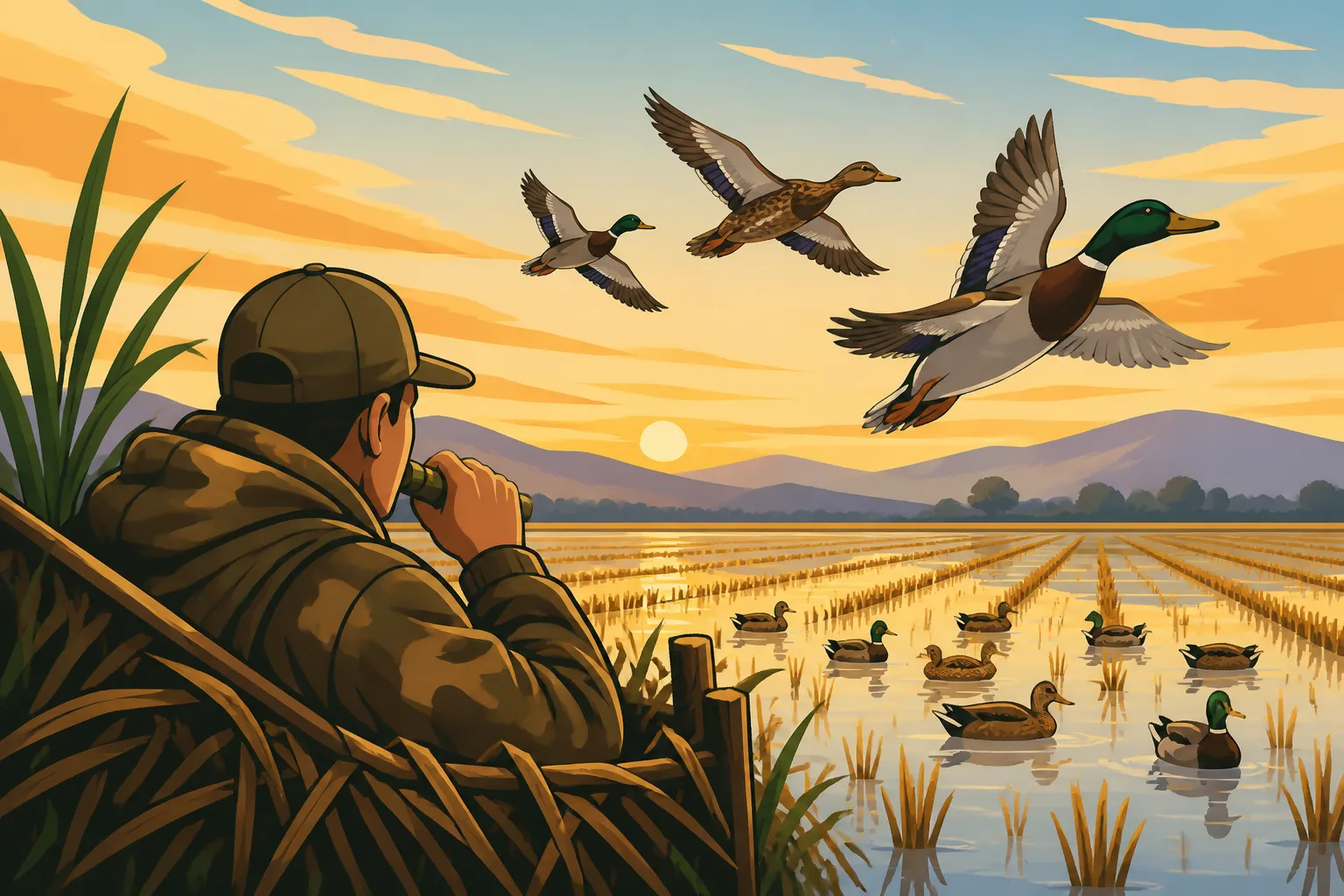
Decoying Ducks in California’s Central Valley Flooded Rice
Hunting ducks in California's vast Central Valley can be incredibly rewarding, but let's be honest, it also presents its fair share of challenges. You’re often contending with highly pressured birds, unpredictable weather, and the sheer scale of the landscape. This guide dives deep into mastering the art of decoying ducks specifically within the flooded rice fields, offering practical, real-world strategies to bring those wary mallards and pintails into range, turning frustrating mornings into memorable hunts.
Understanding the Central Valley Flooded Rice Environment
The Central Valley is a waterfowl mecca, especially when the rice fields are flooded. It’s a dynamic environment that, when understood, can significantly increase your success. Ignoring its nuances is a recipe for frustration.
The Unique Appeal of Flooded Rice Fields
Flooded rice fields are a magnet for ducks, and it's not hard to see why once you understand their needs. After the harvest, these fields are intentionally flooded, often to decompose rice straw and provide crucial habitat for overwintering birds. For ducks, it's a buffet and a safe haven rolled into one. They're drawn to the residual rice grains left after harvest, which provide a high-energy food source vital for their long migrations and survival through winter. Beyond food, the shallow, standing water offers ideal loafing areas, protection from ground predators, and a place to rest and preen. The vast expanses of these fields can feel overwhelming, but understanding this fundamental draw is your first step to effective decoying. Ducks are looking for safety, food, and companionship, and a well-set spread can mimic all three. It’s no wonder so many birds choose to winter in this region, making it an incredible destination for hunters targeting species like Mallards and Pintails in the Central Valley.
Reading the Landscape: Water Depth and Cover
Successfully decoying in flooded rice hinges on your ability to read the water and understand the available cover. Rice fields typically have varying water depths – some areas are barely submerged, while others might be a foot or more deep. This is critical for decoy placement. Ducks prefer to land in shallower water where they can dabble for food, but also where they feel secure. Setting decoys in water that's too deep might look unnatural to incoming birds. Pay attention to how the natural vegetation, even submerged rice stubble, might offer concealment for your blind or create natural breaks in your spread. The edges of fields, irrigation ditches, and any slight rises in elevation can create subtle choke points or preferred landing zones that ducks have grown accustomed to using. A good hunter can spot these details and use them to their advantage, placing decoys where ducks want to be, rather than just where it's convenient. Remember, your goal is to make your spread look as natural and inviting as possible.
The Impact of Hunting Pressure and Migratory Patterns
Let’s face it, California's Central Valley sees a lot of hunting pressure. This isn't necessarily a bad thing, but it means the ducks get smart, fast. Early in the season, birds might be a bit more naive, but as the weeks go on, they become incredibly wary, flaring at the slightest hint of danger. This pressure significantly influences how ducks approach spreads and how quickly they’ll commit. Understanding Hunting Pressure on California Public Land is key here. Additionally, migratory patterns play a huge role. Early season might see local birds and early migrants, which can respond differently than the large waves of true wintering ducks that arrive later. Knowing when different species are moving through, or if a new push of birds has arrived, can inform your decoy spread choices. A small, realistic spread might work for local birds, while a larger, more aggressive spread might be needed to draw attention from high-flying migrants. Keeping an eye on weather patterns to the north can give you clues about incoming flights, which is a big advantage for planning your hunts.
Essential Decoy Types and Their Purpose
To effectively decoy ducks in flooded rice, you need the right tools in your bag. Not all decoys are created equal, and knowing when and how to use each type is crucial.
Floating Decoys: Mallards, Pintails, and Wigeons
Floating decoys are the bread and butter of any duck spread, especially in flooded rice fields. Most hunters start with a good number of mallard decoys, and for good reason—they're ubiquitous and recognizable. But don't stop there! The Central Valley hosts a diverse array of waterfowl, and incorporating other species can significantly increase the realism and appeal of your spread. Pintails, with their elegant long necks and distinctive plumages, are a common sight and make excellent additions. Wigeons, shovelers, and even teal can add variety and make your spread appear more natural, reflecting the actual species ducks see on the water. The key isn't just numbers, but realism. Choose decoys with good paint schemes and lifelike body postures. A mix of drakes and hens, with a slight lean towards hens for comfort, can make your spread look more inviting. The idea is to present a calm, secure flock that other ducks will want to join. A dynamic spread, with some decoys facing different directions, suggests a natural, feeding environment.
Motion Decoys: Spinners, Swimmers, and Jerk Rigs
If there's one thing that can revolutionize your duck hunting in flooded rice, it's motion. Static decoys can only do so much, especially on calm days or when birds are working high. Motion decoys break up the monotony, simulate activity, and, most importantly, create flash that catches the eye of distant birds. Spinner-wing decoys, often referred to as "Mojo" decoys after a prominent brand, are incredibly popular for a reason. The rotating wings mimic a landing bird, signaling safety and drawing attention from miles away. When selecting your spinner, consider models like the Mojo Decoys for Central Valley Mallards, which are designed to withstand tough conditions. Battery-powered swimmers create ripples and movement on the water, while jerk rigs allow you to manually animate a small cluster of decoys with a pull of a string, making them feed or splash. While spinners can be exceptionally effective, remember that wary, late-season birds might flare from too much, unnatural motion. It's often a balance, and sometimes less is more. Having a few different motion options allows you to adapt to the birds' mood and the day's conditions.
Shells and Full-Bodies: Adding Depth and Realism
While floating decoys are paramount in the water, shell and full-body decoys have a valuable place, particularly if you're hunting shallow edges or fields with dry ground nearby. Shell decoys are essentially the top half of a duck, designed to be placed on land or in very shallow water, giving the impression of a bird loafing or preening out of the water. Full-body decoys, as the name suggests, are three-dimensional, complete replicas. These can be particularly effective when placed along dry levee banks or even scattered sparingly in the very shallowest parts of a flooded field. They add crucial depth and dimension to your spread, making it look larger and more inviting from the air. This can be especially important if you’re hunting a Refuge-Adjacent Field at Dawn where birds are accustomed to seeing large, diverse flocks. Ducks flying overhead see your spread in three dimensions, and adding these types of decoys can make it pop, conveying a sense of numbers and security that floating decoys alone can't achieve. They truly help to paint a more complete picture of a thriving, undisturbed flock.
Crafting Effective Decoy Spreads for Rice Fields
Once you have your arsenal of decoys, the next step is to arrange them in a way that truly fools those keen-eyed ducks. It's an art as much as a science, and adapting to the conditions is key.
The Classic J-Hook or U-Shape Spread
The J-hook or U-shape spread is a waterfowl hunting staple, and for good reason – it's incredibly effective, especially in flooded rice fields. The basic premise is to create a large, open landing zone right in front of your blind. You arrange your decoys in the shape of a "J" or "U," with the long leg of the J (or one side of the U) extending downwind, and the shorter leg (or other side of the U) coming back towards your blind, leaving the open water in the middle. Ducks, almost instinctively, want to land into the wind, much like an airplane landing into the wind for stability. This spread guides them directly into your pre-determined landing zone, presenting them broadside or with their feet down, wings set, making for an ethical shot. You can vary the density of the decoys, perhaps putting a tighter cluster at the "bend" of the J to represent a core feeding group. The size of the J or U will depend on the size of the field and the number of decoys you have, but always aim for that inviting, open water. Many hunters find this setup to be the Best Duck Decoy Spread for Flooded Rice due to its consistent performance.
The Loosely Scattered Feeding Flock
Sometimes, especially with heavily pressured birds, the more structured J-hook can look a bit too "perfect" and unnatural. In these situations, a loosely scattered feeding flock spread can be deadly. Instead of a tight formation, imagine a group of ducks naturally scattered across a flooded field, quietly dabbling and feeding. This spread emphasizes realism and conveys a sense of utter security. You're not trying to funnel them into a tight pocket, but rather inviting them to join an undisturbed feeding frenzy. Place small groups of decoys in clusters of 3-5, facing various directions, mimicking birds that are actively sifting through the water for food. Use motion decoys, like swimmers or jerk rigs, within these clusters to enhance the feeding illusion. This spread works particularly well when combined with quiet, contented feeding calls. The idea is to make your spread appear so unassuming and natural that ducks let their guard down, drifting in to join their seemingly peaceful comrades. This strategy ties in nicely with skills like Reading a Wetland for a Morning Flight, allowing you to mimic what natural duck behavior looks like on the water.
Adapting Spreads for Wind and Sun Conditions
The wind and sun are two of the most critical, yet often overlooked, factors in decoy spread placement. Ducks always want to land into the wind. Period. This means your landing zone must be positioned upwind of your blind. If the wind shifts, you often need to adjust your spread, or at least your understanding of where ducks will approach. Strong winds also help create natural motion in your floating decoys, making them bob and weave more realistically. On the flip side, calm days demand more from your motion decoys, as there's no natural wind to help. The sun's position is equally important. Hunting with the sun at your back means incoming birds will be looking directly into it, often silhouetting them against the bright sky and making it harder for them to spot your blind. If the sun is in your face, however, it can cast glare on your decoys, making them difficult for ducks to see clearly and potentially revealing your position prematurely. Always try to position your blind and spread so that the sun is behind you or to your side as ducks approach. This might mean adjusting your setup during the day or choosing a spot that naturally accounts for the sun's path.
Integrating Calls and Blinds with Your Decoy Setup
Decoys are just one piece of the puzzle. To achieve consistent success in the Central Valley's flooded rice, you need to seamlessly integrate calling, concealment, and smart scouting into your overall strategy.
Calling Strategies for Decoyed Ducks
Calling ducks isn't just about making noise; it's about communicating with them in conjunction with your decoy spread. Your calls should reinforce the visual message your decoys are sending. If you have a large, active spread, a hail call followed by lively greeting and feeding calls can draw distant birds' attention. As they respond and begin to circle, soften your calls, using contented clucks and quacks, perhaps even a pintail whistle or a wigeon call, to reassure them that your spread is a safe place to land. The goal is to finish them in your landing zone. However, with pressured California birds, over-calling can be a huge mistake. Less can often be more. Sometimes, a few soft quacks and contented murmurs, letting your decoys do most of the talking, is all it takes. Observing how the birds react to different calls is crucial; if they flare, back off the calls. If they lock up and commit, keep doing what you're doing. Mastering a variety of calls, from a loud hail call to the subtle feeding chatter, allows you to adapt to the situation, much like choosing the Best Duck Call for Flooded Rice Ground for various scenarios.
Effective Blind Concealment in Rice Fields
Flooded rice fields are often open and flat, making concealment a significant challenge. Ducks have incredible eyesight, and if they spot you, the hunt is over. This is where a good blind setup truly shines. Layout blinds are incredibly effective in this environment. They keep you low to the ground, breaking up your outline, and can be easily brushed in with natural vegetation from the field itself. Think rice stubble, grasses, or tules if they're available nearby. The goal is to become part of the landscape. Don't just throw a few handfuls of stubble on your blind; really take the time to make it disappear. This might mean spending an extra 20-30 minutes before first light to ensure you're completely hidden. For those who prefer a more portable option or are hunting slightly higher ground, an A-frame blind can also work, provided it's heavily brushed. The critical factor is to ensure there are no unnatural straight lines or dark holes that ducks can pick out from the sky. Remember to fill in the gaps and blend with the surroundings, a skill that's transferable from Brushing In a Blind on a Field Edge strategies.
Scouting and Digital Tools for Optimal Placement
You can have the best decoys and calls in the world, but if you're not where the ducks want to be, you won't have much success. This is where thorough scouting comes into play. Before the season, or even the day before a hunt, spend time observing bird patterns. Where are they flying? Where are they landing to feed? Are they using specific flight corridors? Pay attention to prevailing wind directions and sun angles. Digital scouting tools have revolutionized this aspect of hunting. Apps like GoHunt, for instance, offer invaluable satellite imagery and public/private land boundary overlays. This allows you to identify access points, locate potential hunting spots, analyze field configurations, and even predict how ducks might approach given the terrain, all from the comfort of your home. Using these tools to inform your Scouting California Public Land Before Season efforts is a game-changer. Coupled with on-the-ground observations, these digital aids help you choose the ideal location for your spread and blind, minimizing guesswork and maximizing your chances of being in the right place at the right time.
Advanced Tactics and Troubleshooting
Even with a solid plan, ducks can be finicky. Sometimes you need to pull out a few extra tricks or troubleshoot when things aren't going as planned.
The Role of Confidence Decoys: Geese and Coots
When ducks are wary, sometimes you need to show them that your spot is really safe. This is where confidence decoys come in. Adding a few Canada goose floaters or full-body shells to your spread can make a huge difference. Geese are large, conspicuous birds, and if they're contentedly feeding or loafing in a spot, it signals to ducks that the area is secure and free from predators. Likewise, a handful of coot decoys, placed along the edges of your spread, can add another layer of realism. Coots are often found mingling with ducks in feeding areas, and their presence makes the scene look even more natural and unthreatened. Don't go overboard; a few strategically placed confidence decoys are usually enough. Their purpose isn't to draw attention to themselves, but to subtly enhance the overall feeling of safety and undisturbed activity in your spread. This tactic can be especially potent when you're hunting particularly shy birds or in areas that receive high hunting pressure.
Adjusting for Late Season and Wary Birds
As the season progresses, ducks become incredibly educated and wary. The tactics that worked on opening weekend often won't cut it in December or January. Late-season birds have seen it all: big spreads, loud calling, and every type of blind. This requires a significant shift in strategy. First, consider scaling back your spread. Instead of a massive number of decoys, opt for a smaller, ultra-realistic spread of a dozen or two. Focus on quality over quantity, with top-tier paint jobs and lifelike postures. Reduce calling, relying more on soft clucks, contented quacks, and feeding chatter, or even go silent altogether. Wary birds often respond better to subtlety than aggression. Pay even closer attention to concealment; any flaw in your blind will be spotted. You might also consider hunting during the middle of the day, after the initial morning rush, when birds are more likely to be seeking undisturbed feeding or resting areas. Patience is paramount, and being willing to adapt your approach to these late-season food sources for California deer (and ducks!) is crucial.
Maintaining Decoys and Gear for Longevity
Investing in quality decoys and gear is just the first step; maintaining them ensures they last season after season and continue to fool ducks. Over time, paint fades, bodies get chipped, and anchor lines fray. A decoy that looks like a faded blob in the water won't attract anything. Regularly inspect your decoys for chipped paint, especially on the heads and bills, and touch them up with flat, non-reflective paint. Check your anchor lines and weights; nothing is more frustrating than losing a decoy in a deep flood. Keep your motion decoys clean, especially the battery compartments, and ensure wings are free of debris. Proper storage is also vital: keep decoys out of direct sunlight during the off-season to prevent fading and cracking. Clean your waders, calls, and blind material after each hunt to prevent mold and mildew. A small repair kit with extra line, weights, and paint can be invaluable in the field. Remember, realism is your most powerful tool, and well-maintained decoys convey that better than anything. Choosing Waders for Flooded Rice Fields with durability in mind, and properly caring for them, makes a big difference.
Here's a quick look at common decoy types and their typical uses in flooded rice:
| Decoy Type | Best Use Case | Pros | Cons |
|---|---|---|---|
| Floating Decoys | Core of any spread, representing feeding/loafing ducks | Realistic, easy to deploy, wide variety of species | Can look static on calm days, prone to paint fading |
| Spinning Wing | Attracting distant birds, simulating landing | Highly visible, creates flash and motion, catches eyes | Can flare wary birds if overused, battery dependent |
| Swimmer Decoys | Creating ripples and subtle movement in still water | Adds natural water motion, very realistic | Battery dependent, less visible from very far distances |
| Jerk Rigs | Manual motion for a natural, controlled effect | Adjustable motion, no batteries, very realistic | Requires hunter input, can spook birds if movement is jerky |
| Shell/Full-bodies | Adding depth and realism on shallow edges or dry ground | Enhances spread size and 3D appearance, confidence-builder | Less critical for purely flooded field hunting, bulky to transport |
| Confidence Decoys | Making spread look safer with non-target species | Increases sense of security, attracts wary birds | Can take up valuable space if overdone |
Disclaimer
Hunting is an inherently dangerous activity. Always prioritize safety, follow all local, state, and federal regulations, and practice ethical hunting principles. The information provided in this guide is for informational purposes only and should not be taken as legal advice. Always verify current hunting seasons, tag requirements, and rules with the California Department of Fish and Wildlife (CDFW) before heading afield.