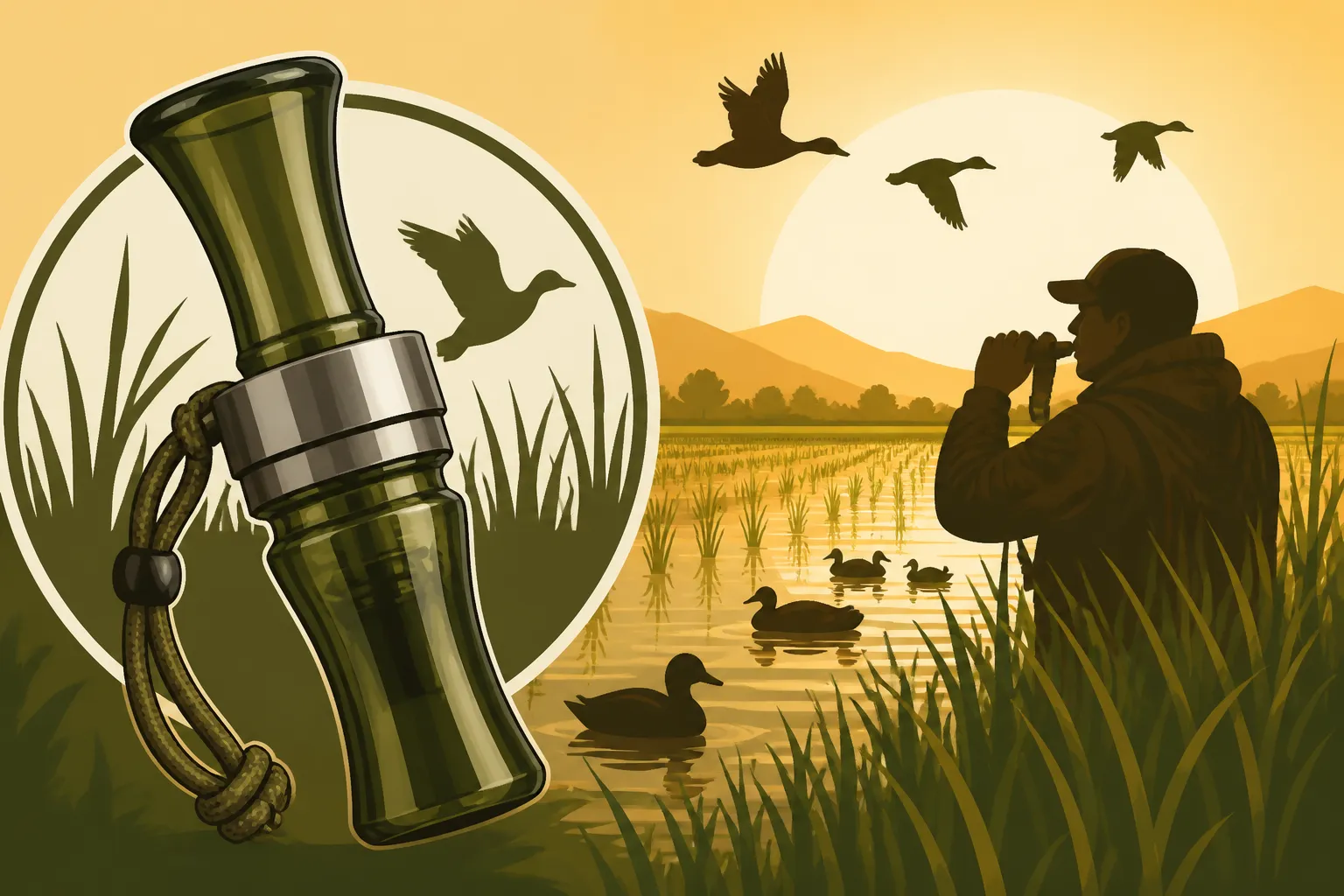
Best Duck Call for Flooded Rice Ground
Trying to pull wary ducks down into a flooded rice field can feel like trying to convince a teenager to clean their room – it’s a constant battle against their natural inclination to do anything but. The vast, open expanse of a Central Valley rice field presents unique challenges for waterfowl hunters, where sound travels far but can also dissipate quickly, and birds have seen every trick in the book. This guide is all about helping you cut through the noise, literally, by choosing and using the best duck call to make those mallards commit to your spread on that challenging flooded ground.
Understanding the Unique Acoustics of Flooded Rice Fields
Hunting ducks in California's flooded rice country is a world away from hunting in timber or over a small pothole. The environment itself dictates how your calls will sound, how far they'll carry, and how the ducks will perceive them. It’s a game of projection, realism, and adaptation to an incredibly open landscape.
The Expansive Soundscape of Central Valley Rice
Imagine standing in a flooded rice field just before dawn. The water is shallow, maybe six to twelve inches deep, stretching out to the horizon, broken only by a few levees or blinds. There are very few trees, hills, or other natural obstructions to absorb sound. This means your call will travel a long way, but it also means there's little to hold or direct that sound. It can easily get lost in the vastness, especially on a windy day. Birds approaching from high up can hear you from incredible distances, but if your call lacks power and realism, they might dismiss it as a distant, unconvincing sound rather than an enticing invitation. Understanding this wide-open, often flat acoustic environment is the first step in selecting the right tool for the job. You're not trying to mimic a mallard in a tight cypress brake; you're trying to project a symphony of contentment across miles of open water.
Decoy Spreads and Calling Ranges in Open Fields
In flooded rice fields, decoy spreads are often larger and more spread out than in other habitats. Hunters might deploy hundreds of decoys, including motion decoys like spinning wing models, to create a massive, visible attraction. This means you're often trying to call to birds that are a quarter-mile out, or even further, that are circling high above before committing. Your call needs to have the raw volume and carrying power to reach these distant birds and grab their attention. Once they begin to commit and get closer, typically within 100-200 yards, you'll need to transition to more subtle, realistic calling to seal the deal. This dual requirement – projecting sound over long distances and then refining it for close-in work – means your call choice needs to be versatile. Many hunters will set up their Decoying Mallards on Flooded Rice Ground to simulate a large, happy flock, and their calling should match that visual.
Essential Features of a Rice Field Duck Call
When you're trying to entice ducks over vast stretches of flooded rice in California's Central Valley, your call isn't just a noisemaker; it's a precision instrument. It needs specific characteristics to perform effectively in such an open, often windy, and challenging environment.
Projecting Volume and Realistic Tones
The number one feature you need in a rice field duck call is the ability to generate significant volume and project it across long distances. Ducks flying high or far out need to hear your call above the wind and the general ambient noise of a busy flyway. This is where the material and reed configuration of the call become crucial. Acrylic calls, for instance, are known for their loud, crisp, and pure tones, offering excellent volume and projection that can carry for incredible distances. They tend to be less forgiving for beginners but, in the hands of an experienced caller, can truly cut through the air. Polycarbonate calls, while often not quite as loud, can still offer good volume and are generally more durable and easier to blow, making them a great choice for many hunters.
Beyond sheer volume, the realism of the sound is paramount. You need a call that can produce deep, raspy quacks, excited high-ball greetings, and realistic feed calls. Mallards are smart, especially later in the season when they've been hunted hard across California's Flooded Rice Fields and Waterfowl. They've heard countless calls, good and bad. A call that sounds artificial or lacks the authentic tonal range of a mallard hen will often send them packing. The best calls allow you to transition seamlessly from a loud, attention-grabbing hail call to softer, more contented feeding chatter, mimicking a natural flock on the water.
Durability and Ease of Maintenance in Wet Conditions
Flooded rice fields are inherently wet, muddy, and often cold environments. Your duck call will get wet, it will get dropped, and it might even get a little muddy. Because of this, durability is a non-negotiable feature. Calls made from tough, weather-resistant materials like acrylic or high-grade polycarbonate will stand up to the rigors of frequent use in damp, sometimes freezing, conditions. Wooden calls, while beautiful and capable of producing excellent sound, can be susceptible to warping or cracking with constant exposure to moisture and temperature fluctuations, which might alter their sound characteristics or even make them unplayable.
Ease of maintenance is another practical consideration. Reeds can get sticky from duck slobber, condensation, or bits of debris, causing the call to stick or sound off-key. A call that can be easily disassembled for cleaning and reassembled quickly in the field is a huge advantage. You don't want to miss a flight because you're struggling with a stuck reed. Simplicity in design, with minimal parts, generally translates to easier field maintenance. When you're out there focusing on the Duck Migration Timing Through California, the last thing you want is a finicky call.
Top Duck Call Types for Flooded Rice Ground
Navigating the world of duck calls can be overwhelming, but for the specific environment of California's flooded rice fields, certain types consistently rise to the top. It often comes down to a balance of volume, realism, and your personal calling skill.
Single Reed Acrylic Calls: The Powerhouses
For many seasoned waterfowl hunters in the Central Valley, a single reed acrylic call is the undisputed king of the rice fields. These calls are renowned for their incredible volume and raw power, allowing you to reach high-flying ducks from impressive distances. The dense acrylic material produces a loud, crisp, and pure tone that cuts through wind and vast open spaces. Think of it like this: if you need to shout across a football field and be heard clearly, a single reed acrylic call is your megaphone. They excel at delivering loud, piercing hail calls and aggressive comeback calls that can turn a distant flock heading for another county.
However, with great power comes the need for great skill. Single reed calls are less forgiving than their double reed counterparts. They require more air control and a finer touch to produce a wide range of realistic sounds, particularly the softer quacks and contented feed chatter needed to finish birds within the spread. A slight error in air pressure or technique can result in a "squawk" or an unnatural sound that will immediately send wary mallards packing. If you're serious about mastering your calling for the rice fields, dedicating time in the off-season to practice with a quality single reed acrylic call is invaluable. Many hunters use resources like GoHunt to research different brands and models, looking at reviews and specifications to find the right fit for their style. Once you get the hang of it, the versatility to go from booming hail calls to soft quacks is unmatched.
Double Reed Polycarbonate Calls: Forgiveness and Versatility
While single reeds offer maximum power, double reed polycarbonate calls often strike an excellent balance for many hunters, especially those who might not spend hours perfecting their calling technique every week. The two reeds work together to create a more forgiving call that requires less air pressure and technique to achieve realistic duck sounds. This makes them significantly easier to blow, and they are less prone to sounding "off" if your breath control isn't perfect. They still offer good volume and projection, certainly enough to be effective in many flooded rice scenarios, but perhaps not the ear-splitting range of the loudest acrylic single reeds.
Polycarbonate is a durable and affordable material, making these calls a great value. They hold up well to the abuse of duck season and are relatively easy to clean. Double reed calls often excel at producing realistic, raspy quacks and a full range of feed calls, which are critical for convincing birds in close. If you're a newer caller, or you prefer a call that offers more consistency without demanding absolute perfection, a good double reed polycarbonate call can be an incredibly effective tool for enticing ducks into your Best Duck Decoy Spread for Flooded Rice. They are particularly good for Layout Blind Hunting a Flooded Field where you might be tucked away and need a call that's easy to manage.
Specialty Calls for Diverse Duck Species
While mallards are often the primary target in the rice fields, California's Central Valley is a migratory hotspot for a wide variety of waterfowl. Pintails, wigeon, and teal are incredibly common, and often just as, if not more, wary than mallards. Relying solely on a mallard call means you're missing out on opportunities to bring in these other species. This is where specialty calls become essential additions to your lanyard.
- Pintail Whistles: Pintails are arguably the most iconic duck of the Central Valley. Their distinctive "whistle" call is instantly recognizable. A simple pintail whistle can be incredibly effective at stopping a flock of sprig in their tracks or even bringing them back around after they've flared.
- Wigeon Whistles: Wigeon also have a unique, three-note whistle that can be imitated with a dedicated call. These calls are often easy to use and can add realism to your spread's sound profile, signaling other species are content.
- Teal Calls: While teal will often respond to softer mallard hen calls, a dedicated teal call, especially a high-pitched "peep" call, can be very effective at luring in flocks of green-winged and cinnamon teal, which are incredibly fast and agile.
Incorporating these specialty calls allows you to speak the language of a broader range of birds, making you a more versatile and successful hunter in the diverse ecosystem of the Central Valley. Don't forget, these can be just as important as your primary mallard call, especially if you're Decoying Ducks in California's Central Valley Flooded Rice and seeing mixed flocks.
Here’s a quick overview of call types for flooded rice fields:
| Call Type | Material | Volume/Projection | Ease of Use | Key Application | Best For |
|---|---|---|---|---|---|
| Single Reed Mallard | Acrylic | Very High | Challenging | Long-range hail calls, aggressive comeback calls | Experienced callers, high wind, wary birds |
| Double Reed Mallard | Polycarbonate | High | Moderate | Versatile calling, feed chatter, finishing birds | Most hunters, beginners, close-in work |
| Pintail Whistle | Various | Moderate | Easy | Imitating pintail "whistle" | Luring pintails, mixed species |
| Wigeon Whistle | Various | Moderate | Easy | Three-note wigeon whistle, adding realism | Luring wigeon, mixed species |
| Teal Call | Various | Moderate | Easy | High-pitched "peep" for green-winged/cinnamon teal | Luring teal, mixed species |
Mastering Your Call in the Rice Fields
Having the "best" duck call for flooded rice ground is only half the battle. The other, arguably more important, half is knowing how to use it effectively. Even the most expensive, high-performing call is just a piece of plastic or acrylic without a skilled caller behind it.
Consistent Practice in the Off-Season
This might sound obvious, but it's where most hunters fall short. Duck calling is a perishable skill, much like shooting or anything else. The off-season, when the ducks aren't around, is the perfect time to hone your craft. Don't just practice in your garage or living room; take your calls out to an open field or a local park where you won't annoy anyone. This simulates the actual hunting environment and allows you to understand how your call sounds at a distance. Focus on developing consistency in your air presentation, learning to blow soft, medium, and loud quacks, and mastering a realistic cadence for feed calls. Practice the entire sequence: a loud hail call to grab attention, a series of comeback calls if they swing wide, and then soft, contented chatter to bring them the last 50 yards into your Mojo Decoys for Central Valley Mallards. Record yourself and listen back critically. This consistent practice is key to ensuring that when opening day arrives, you're not fumbling with your call, but rather speaking the language of the birds fluently. A platform like GoHunt can be useful for finding online tutorials or calling competitions to learn from others.
Reading the Birds and Adjusting Your Calling
The most crucial aspect of effective duck calling is knowing when and how to adjust. Ducks are not machines; their behavior changes based on pressure, weather, time of day, and how many times they've already been called to. A good caller is constantly reading the birds:
- Distance: Are they far off? Hit them with loud, high-ball hail calls. Are they closer? Tone it down, use fewer calls, and focus on softer quacks and feed calls.
- Direction and Altitude: Are they heading away? Give them an aggressive comeback call. Are they committed and dropping? Go quiet or use very soft, contented clucks.
- Response: Are they looking? Great, keep calling, but don't overdo it. Are they flaring? Stop calling, or drastically change your tone to something much softer. Are they ignoring you? Try a different cadence or a different type of call altogether, perhaps a pintail or wigeon whistle if you're seeing those species.
It's a dance, not a monologue. You're communicating with the birds, trying to reassure them that your spread is a safe and inviting place to land. Knowing when to lay off the call entirely can be just as important as knowing when to blow it. Often, on heavily pressured public land like a Hunting a Refuge-Adjacent Field at Dawn, less is more when it comes to calling. Observe how the birds react to different levels of calling and adjust your strategy in real-time. This dynamic approach will lead to far more ducks with their feet down than a static, one-size-fits-all calling routine.
Crafting a Convincing Calling Sequence
Ducks, especially mallards, are social birds. They rarely fly alone, and they certainly don't just make a single quack. A convincing calling sequence mimics the natural sounds of a flock, making your spread appear more authentic and inviting. This involves blending various calls seamlessly:
- The Hail Call: This is your attention-grabber. A series of five to seven loud, distinct quacks, usually starting high and tapering off. It needs to be authoritative and carry far. Use this for distant birds.
- The Comeback Call: If birds circle wide or start to drift away, hit them with a fast, excited series of eight to ten aggressive quacks. This says, "Hey, don't leave the party!"
- The Greeting Call: Once birds are committed and swinging within 200 yards, a shorter, softer series of three to five quacks is often effective. It's a friendly "hello."
- The Feed Call: As birds work closer, and especially when they're directly over or in front of the spread, switch to contented feed chatter – quick, soft clucks and quacks. This tells them, "Everything's fine down here, there's good food, come on in!" This is often the most important call to seal the deal on wary birds that are Reading a Wetland for a Morning Flight.
- The Lonesome Hen: Sometimes, a single, drawn-out, pleading quack can entice a curious single bird or a small group.
The key is to make these transitions smooth and natural. You want to sound like a cohesive group of happy ducks, not a series of disconnected noises. Practice these sequences until they flow effortlessly. Remember that every duck hunt is different, and what works one day might not work the next. Adaptability, combined with a good call and solid technique, is your best bet for success in the flooded rice fields of California. And always remember to carry your California Migratory Bird Certification along with your license!
Disclaimer
This article is for general informational purposes only and does not constitute professional advice. Laws, prices and regulations vary by location and change over time. Consult a qualified professional for guidance on your specific situation.