Calls for California Valley Quail
Hunting California's elusive Valley Quail can feel like chasing ghosts in the chaparral—they're there one moment, gone the next, leaving you wondering if you're even in the right spot. The frustration of hearing their distinct calls only to have them flush wild or run silently through thick cover is a common experience for even seasoned hunters. This guide will dive deep into understanding and using quail calls effectively, equipping you with the knowledge to locate, lure, and ultimately succeed in pursuing these iconic California game birds.
Understanding California Valley Quail Vocalizations
Before you can mimic a quail, you first need to understand their language. Valley Quail are incredibly vocal birds, and their various calls serve specific purposes, from warning others of danger to simply communicating their location. Learning to distinguish these different sounds is the first step to becoming a more effective quail hunter.
The "Chi-ca-go" Call: The Iconic Rally Cry
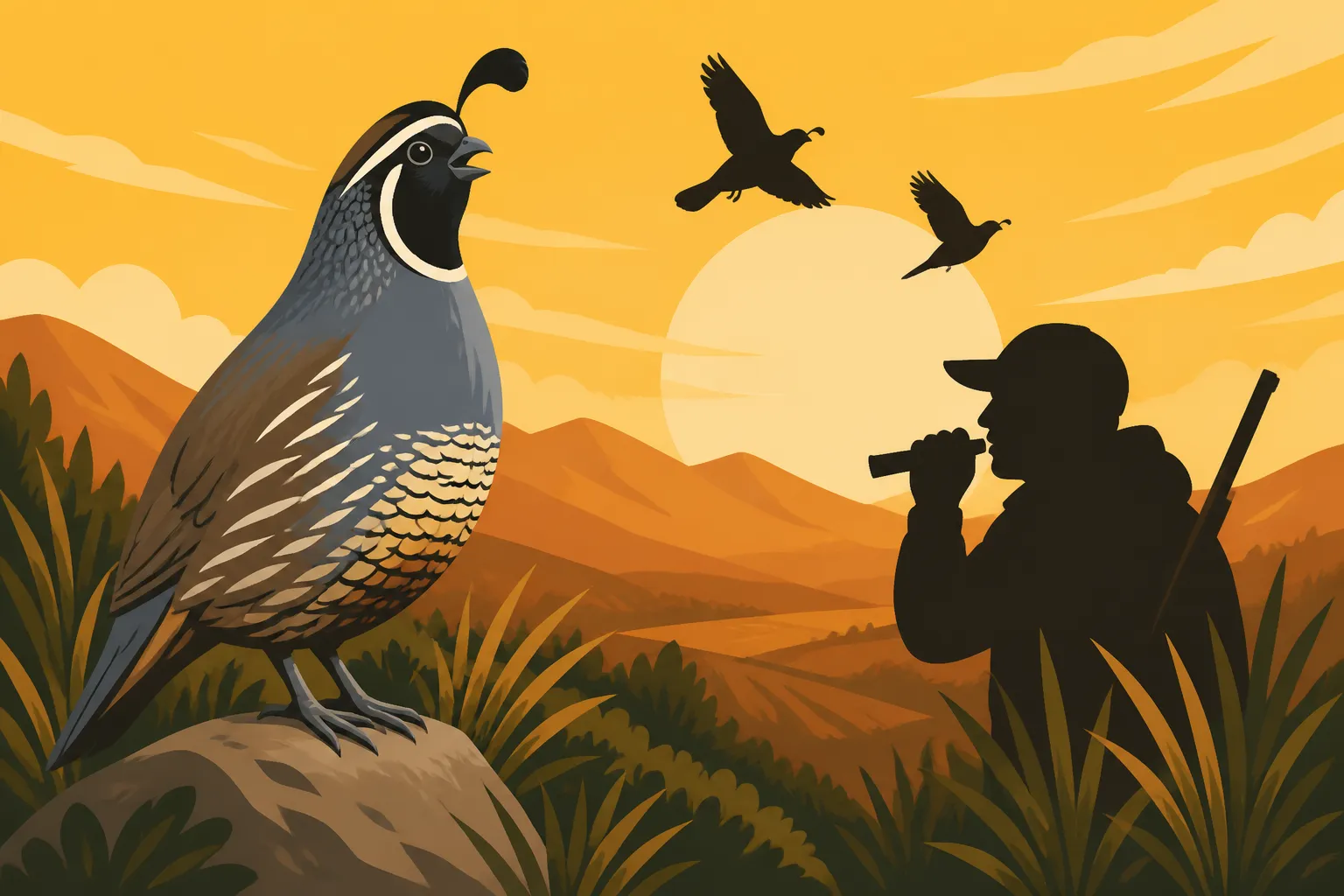
This is probably the most recognizable call of the California Valley Quail, often described as sounding like "Chi-ca-go," "Ca-li-for-nia," or sometimes even "cut-cut-ca-cow!" It's a loud, distinct three-note whistle that serves as a primary assembly or rally call. Imagine a covey that's been scattered by a predator or a hunter walking through their cover. Once the immediate danger has passed, individual birds will start making this call to try and regroup with the rest of their covey.
As a hunter, hearing this call is like striking gold. It tells you two critical things: first, there are quail in the area, and second, they are trying to come together. This is often the call you'll want to mimic when trying to draw scattered birds back into range or to pinpoint their location more accurately. Don't underestimate the power of this call; it's designed to carry across distances, signaling to other birds that it's safe to emerge and gather. It’s also a good sign that the birds are not feeling immediate pressure.
Assembly and Alarm Calls: What They Mean
Beyond the primary rally call, quail have a range of other vocalizations that convey different messages. Their general assembly calls, often softer and more consistent "whit" or "pit" sounds, are used when the covey is simply moving together or feeding, keeping track of each other without broadcasting their location too widely. These are subtle communications that signify a cohesive group. If you're deep in the thick stuff, like coastal range oak woodlands, and you hear these softer clucks, it's a good indication you're very close to a tight-knit covey.
Then there are alarm calls. These are sharper, more urgent "pit-pit-pit" or "squeak-squeak" sounds, sometimes escalating into a rapid, almost machine-gun-like chatter. When you hear these, it's a clear warning: danger is near. The covey is likely hunkering down, freezing in place, or getting ready to explode into flight. As a hunter, an alarm call means you've probably been spotted, or the birds have detected a threat. At this point, trying to call them in might be counterproductive; they’re already on high alert, and any further unnatural sound could send them scattering irrevocably.
Feeding and Contentment Chatter: Subtle Clues
When a covey of Valley Quail is feeding comfortably, scratching through leaf litter, or simply basking in the sun, they'll often emit a soft, continuous "chatter" or "cluck." This isn't a loud, far-reaching call, but rather a low-volume, almost murmuring sound that signals to other birds that all is well. Think of it as background noise in their daily life. This chatter is typically heard when birds feel secure in their cover, perhaps in a dense patch of chaparral or under a thick oak canopy.
For the observant hunter, this subtle chatter is a valuable clue. It tells you that birds are present, they are relaxed, and they are likely stationary or moving slowly as they forage. Approaching quietly and cautiously when you hear this can lead to a surprise flush, or if you're working with a pointing dog, it gives them time to lock up on scent. Attempting to mimic this soft chatter can sometimes encourage nearby birds to reveal their presence or even draw them slightly closer if they perceive it as other quail going about their business. It’s a call of reassurance, not a locator, and should be used with extreme subtlety.
Types of Quail Calls and How They Work
Just like with turkey hunting or elk calling, there are various types of calls designed to mimic the unique sounds of California Valley Quail. Each has its own learning curve, advantages, and disadvantages. Knowing which call to choose and how to operate it can significantly impact your success in the field.
Mouth Calls: Versatility and Practice
Mouth calls, often diaphragm calls, are small, crescent-shaped pieces of latex stretched over a frame, held in the roof of your mouth. They are incredibly versatile, allowing you to produce a wide range of quail vocalizations with practice, including the iconic "Chi-ca-go" call, assembly clucks, and even distress cries. The main advantage of a mouth call is that it allows for hands-free operation, meaning you can keep your gun mounted, binoculars up, or prepare for a shot without fumbling. This is huge when dealing with fast-moving, unpredictable birds like quail.
However, mouth calls have a steep learning curve. Mastering the technique requires controlling your breath, tongue, and throat to produce realistic sounds. Many hunters spend hours practicing in their truck or at home to get the cadence and tone just right. Different calls might have one, two, or three reeds, each producing slightly different sounds. While challenging, the payoff for mastering a mouth call is unparalleled stealth and realism in the field, making it a favorite for experienced quail hunters. When you're trying to sneak through dense cover, the last thing you want is a call that requires a lot of movement.
Box Calls: Simplicity and Volume
Box calls for quail are typically small, simple friction calls consisting of a box with a lid that rubs across a lip. By varying the pressure and speed of the lid movement, you can create a range of quail sounds. They are generally easier to learn than mouth calls and can produce good volume, which can be useful for reaching scattered birds over longer distances or cutting through light wind. They often excel at producing the classic "Chi-ca-go" rally call with a very authentic tone.
The primary drawback of a box call is that it requires two hands to operate, which can be cumbersome if you need to quickly shoulder your shotgun. They can also be a bit bulkier to carry than a small mouth call. Despite this, their ease of use and consistent sound production make them a popular choice, especially for newer quail hunters or for situations where you're setting up in a stationary position and can afford to use both hands. Always ensure your box call is kept dry; moisture can significantly affect its sound quality.
Push-Button Calls: Ease of Use
Push-button calls, sometimes called plunger calls, are another type of friction call. They typically consist of a small wooden or plastic box with a plunger or button that you press down and release. This action causes a small piece of wood or rubber to rub against another surface, creating the quail sound. These calls are incredibly easy to operate, often requiring minimal practice to produce realistic sounds. They are excellent for beginners and can be operated with one hand, though perhaps not as subtly as a mouth call.
The simplicity of push-button calls is their biggest asset. They are consistent, durable, and can produce decent volume. However, they may not offer the same nuanced range of sounds as a diaphragm call, and their volume might not be as commanding as a well-operated box call. They are great for quickly getting out a realistic "Chi-ca-go" or assembly cluck when you need to confirm birds are in an area or try to draw a lonely bird back to the covey. Like box calls, keeping them dry and free of debris will ensure consistent performance throughout the season.
| Call Type | Pros | Cons | Best Use Cases | Learning Curve |
|---|---|---|---|---|
| Mouth Call | Hands-free, versatile, realistic, compact | Difficult to master, sensitive to saliva | Stealth calling, scattered coveys, close-range luring | High |
| Box Call | Easy to learn, good volume, authentic sound | Requires two hands, can be bulky, sensitive to moisture | Locating scattered coveys, general calling, stationary setups | Low-Medium |
| Push-Button | Very easy to use, consistent, one-handed | Limited sound range, moderate volume, sensitive to debris | Quick locator calls, beginner friendly, close-to-medium range | Low |
Mastering the Art of Calling Valley Quail
Possessing a quail call is one thing; effectively using it to draw in birds is an entirely different skill. It's not just about making the right sound, but when to make it, how often, and what other factors you consider. It's a blend of mimicry, woodsmanship, and a touch of psychology.
Situational Calling: When and Where to Use Each Call
Knowing when to use which call is paramount. The general rule of thumb is to start with a locator or rally call, like the "Chi-ca-go" call, especially if you suspect birds are in the area but haven't seen or heard them. This call travels well and can provoke a response from distant coveys, helping you pinpoint their general location. I often do this when hunting coastal range oak woodlands where thick pockets of cover can hide birds effectively. On a crisp morning, that three-note whistle can carry a long way.
Once you've located birds or scattered a covey, switch to more subtle assembly or contentment calls. If birds have flushed and scattered, give them a few minutes to settle down before starting with softer "whit" or "pit" calls. These are designed to bring individuals back together without screaming "hunter!" at them. If you’re pushing through heavy brush and hear faint chatter, responding with very soft contentment calls might just make them feel safe enough to hold tighter or reveal a bit more movement. Avoid loud calling if you know birds are close and undisturbed; you'll likely just spook them.
Calling Sequence and Cadence: Sounding Realistic
The key to effective calling is realism. Quail don't just blast out a "Chi-ca-go" call repeatedly without pause. Their calling is often interspersed with periods of silence, or it builds gradually. When mimicking a rally call, start with a single series, then pause for 30-60 seconds. Listen intently. If you get a response, you know they're interested. Then, you might offer another series, perhaps slightly softer, moving towards where you heard the response.
Vary your cadence. Sometimes a lonely single "Chi-ca-go" can be more effective than a rapid-fire sequence. Other times, a slightly more excited sequence of two or three calls might be what's needed to convince them to come in. The most important thing is to sound like a quail, not a desperate human. Practice makes perfect here. Record yourself and listen back, comparing it to actual quail calls you might find online or have heard in the field. Don't be afraid to experiment with different volumes and rhythms until you find what works in your specific hunting area.
Decoy Usage and Calling Strategies
While not as common for quail as for turkeys or ducks, some hunters do experiment with small, realistic quail decoys, especially when setting up for a stationary ambush near a known travel corridor or watering hole. The visual of a contented quail, combined with soft assembly or feeding calls, can sometimes provide that extra bit of confidence for wary birds to approach. Decoys are often most effective in open areas where birds can see them from a distance.
Beyond decoys, consider integrating your calling with other hunting strategies. If you're running pointing dogs on California Valley Quail, your calls can help your dog locate birds by causing them to vocalize. If you're still-hunting, use calls to pause and listen, then move in the direction of any responses. For scattered coveys, one popular strategy is to "box call and move." You make a series of calls, wait for a response, then slowly move towards the sound, pausing to call and listen again, until you're within shooting range. Using mapping tools, like those found in GoHunt, can help identify key terrain features such as brush lines, water sources, and open areas where birds might regroup or travel, allowing for strategic decoy placement and calling locations.
Common Calling Mistakes and How to Avoid Them
Even with the best calls and the most earnest intentions, hunters can make mistakes that actively work against their success. Understanding these pitfalls is just as important as knowing the right techniques. Valley Quail are quick, intelligent birds, and they are incredibly sensitive to unnatural sounds and behaviors.
Over-Calling and Spooking Birds
One of the most common mistakes hunters make is over-calling. It’s exciting when you hear a response, and the natural inclination is to keep calling, louder and more frequently, to try and bring them in faster. However, constant, aggressive calling can actually sound unnatural and alarm the birds. Imagine a person shouting at the top of their lungs repeatedly; it's unsettling. Quail are wary, and too much noise can make them suspicious. They might move away, or simply hunker down and go silent.
Instead, practice patience and subtlety. After an initial series of locator calls, pause and listen. If you get a response, wait a good 30 seconds to a minute before calling again, and perhaps make your second series a bit softer, as if you're a bird moving closer to them. Let the birds come to you, or at least feel comfortable enough to reveal their position without feeling pressured. Less is often more when it comes to quail calling.
Poor Imitation and Unrealistic Sounds
Another significant hurdle is producing unrealistic calls. If your call doesn't sound like a real quail, the birds will quickly ignore it or, worse, identify it as a threat. A screechy, off-key "Chi-ca-go" call won't fool anyone. This often comes down to insufficient practice or improper technique with your chosen call. Different calls, like a push-button versus a diaphragm, require different muscle memory and breath control.
To avoid this, invest time in practicing. Listen to actual quail recordings. Many resources are available online. Focus on the pitch, tone, and cadence. It's better to make fewer, highly realistic calls than many poor ones. If you're struggling, try a different type of call that might be easier for you to master. Remember, the goal is to sound like another quail, not just make a quail sound. Consistency and authenticity are your best friends here.
Ignoring the Environment and Wind Conditions
Calling in a vacuum, without considering the environmental factors around you, is another common mistake. Wind, terrain, and even the time of day can dramatically affect how your calls are heard and how birds respond. On a windy day, your calls won't travel as far, and their direction can be distorted. In steep, broken terrain, sounds can echo strangely or be blocked entirely.
Always consider the wind. Try to call with the wind if you're trying to reach distant birds, or if the birds are downwind of you, their response will be harder to hear. When hunting through quail hunting California foothill chaparral, the dense vegetation can muffle sound, so you might need to adjust your volume and call more frequently. Also, quail are typically most vocal in the early morning and late afternoon. Calling aggressively during the quiet midday hours, especially in hot weather, might not yield many results because the birds are likely hunkered down and not actively communicating. Using a powerful mapping tool from GoHunt to identify saddles and draws can reveal natural sound corridors, helping you predict how your calls will carry.
Maintenance and Care of Your Quail Calls
Your quail calls are tools, and like any good tool, they perform best when properly maintained. Neglecting your calls can lead to poor sound quality, reduced effectiveness, and even early replacement. A well-cared-for call can last for many seasons, becoming a trusted companion in the field.
Cleaning and Storage for Longevity
The specific cleaning routine for your call will depend on its type. For mouth (diaphragm) calls, hygiene is crucial. After each hunt, gently rinse your mouth call with cool water to remove saliva and debris, then allow it to air dry completely. Storing it in a small, breathable case, rather than just loose in your pocket, will prevent the latex from stretching, tearing, or collecting lint. Some hunters even keep them in a small, airtight container in the freezer between seasons to preserve the latex.
Box calls and push-button calls require different care. Keep them dry! Moisture is the enemy of friction calls, as it can swell the wood or make the surfaces slick, ruining the sound. If your call gets wet, dry it thoroughly as soon as possible. Lightly sand the friction surfaces occasionally with fine-grit sandpaper (usually provided with the call) to keep them rough and ensure good sound. Store these calls in a protective pouch or case to prevent dings, scratches, and dust accumulation.
Troubleshooting Common Call Issues
Even with good care, calls can sometimes act up. If your mouth call sounds weak or squeaky, the latex might be worn out, torn, or stretched. Inspect it closely. A tiny tear can completely ruin the sound. If it's old, it might just be time for a new one. For box and push-button calls, a common issue is a loss of friction, resulting in a dull or inconsistent sound. This usually means the surfaces need to be cleaned of oil and re-roughened.
If your box call squeaks unnaturally, it might be due to a loose lid or improper application of chalk/rosin. Check all screws for tightness. Sometimes, simply adjusting the tension on the lid or reapplying friction agent can fix it. Always refer to the manufacturer's instructions for specific troubleshooting tips, as each call can be slightly different. Don't let a poorly performing call frustrate you; often, a simple fix is all that's needed to get it singing again.
Field Repairs and Emergency Fixes
Sometimes, a call goes south when you’re out in the field, far from home. Knowing a few emergency fixes can save your hunt. For a mouth call, if a reed gets slightly bent or stuck, gently try to straighten it with a clean finger. If the latex tears mid-hunt, unfortunately, there's not much you can do other than switch to a backup call or try to make do. This is why many experienced hunters carry two or three mouth calls.
For box and push-button calls, a small piece of fine-grit sandpaper or an emery board can be a lifesaver. If your call becomes slick or quiet, a quick, light roughing up of the friction surfaces can often restore its sound. If a screw loosens on a box call, a small multi-tool or even a sturdy knife blade can sometimes tighten it enough to get you through the day. Always carry a small kit with basic tools and spare parts if your calls are particularly delicate or prone to specific issues. You might be surprised how often a quick fix can turn a silent hunt into a successful one.
Integrating Technology for Better Quail Calling
While the art of quail calling is steeped in tradition, modern technology offers incredible advantages for hunters willing to embrace it. These tools don't replace calling skill, but they enhance your ability to find birds, understand their habitat, and make more informed decisions when deploying your calls.
Using Mapping Apps to Locate Roosts and Water
One of the biggest challenges in quail hunting is finding birds in the first place. This is where mapping applications become indispensable. Platforms like GoHunt allow you to overlay various map layers, including public land boundaries, topo lines, satellite imagery, and even historical burn data. You can mark potential quail habitat, such as dense riparian corridors, chaparral edges, abandoned orchards, or areas with good water sources like springs or ephemeral creeks. Scouting California public land before season using these apps can save you countless hours of unproductive walking.
By digitally scouting, you can identify natural funnels, potential roosting sites (often dense cover on a ridge or hillside), and prime feeding areas. For example, satellite imagery can reveal subtle changes in vegetation density that might indicate where quail prefer to hide, or show small ponds or stock tanks that are magnets for birds, especially in hotter, drier parts of the state. Knowing these spots before you ever step foot in the field means you can plan your approach, where to start calling, and where birds are likely to regroup if scattered.
Digital Scouting and Data Analysis
Beyond simply looking at maps, modern hunting apps allow for advanced data analysis. You can track your own movements, mark points where you heard calls or flushed birds, and even log weather conditions. Over time, this creates a personalized database of quail activity in your chosen areas. Notice that birds consistently respond best to calls from a particular ridge line or always scatter towards a specific canyon? Log it. This data can inform your calling strategy on future hunts.
Some apps also integrate with community-shared data (where applicable and allowed), giving you insights into general bird movements or pressure in certain zones. While you should always verify information yourself, these platforms provide a rich tapestry of data that helps build a clearer picture of game behavior. This kind of systematic approach, enabled by digital tools, transforms guesswork into an informed strategy, allowing you to fine-tune not just where you call, but also when and how aggressively.
Pairing Calls with Other Scouting Tools
Calling is just one piece of the puzzle. Effective quail hunting relies on integrating calls with other scouting tools and techniques. Handheld GPS devices or mapping apps on your phone help you navigate complex terrain, especially in areas like hunting California's Sierra Nevada backcountry or vast BLM lands. Knowing your precise location allows you to accurately mark where you hear birds, where you flushed them, and where you might want to return later.
Trail cameras, while perhaps less common for quail than for deer, can still provide valuable insights into quail habits if placed near water sources or dusting areas. They can confirm presence, traffic patterns, and even covey size. Combining the visual evidence from a camera with the auditory responses you get from calling creates a powerful synergy. You might use a map to find a promising area, place a camera to confirm activity, then use your calls strategically based on that confirmed intel, knowing you’re not wasting time in barren country. This multi-pronged approach significantly increases your odds of finding and connecting with California Valley Quail.
Disclaimer
This article is for general informational purposes only and does not constitute professional advice. Laws, prices and regulations vary by location and change over time. Consult a qualified professional for guidance on your specific situation.