Running Pointing Dogs on California Valley Quail
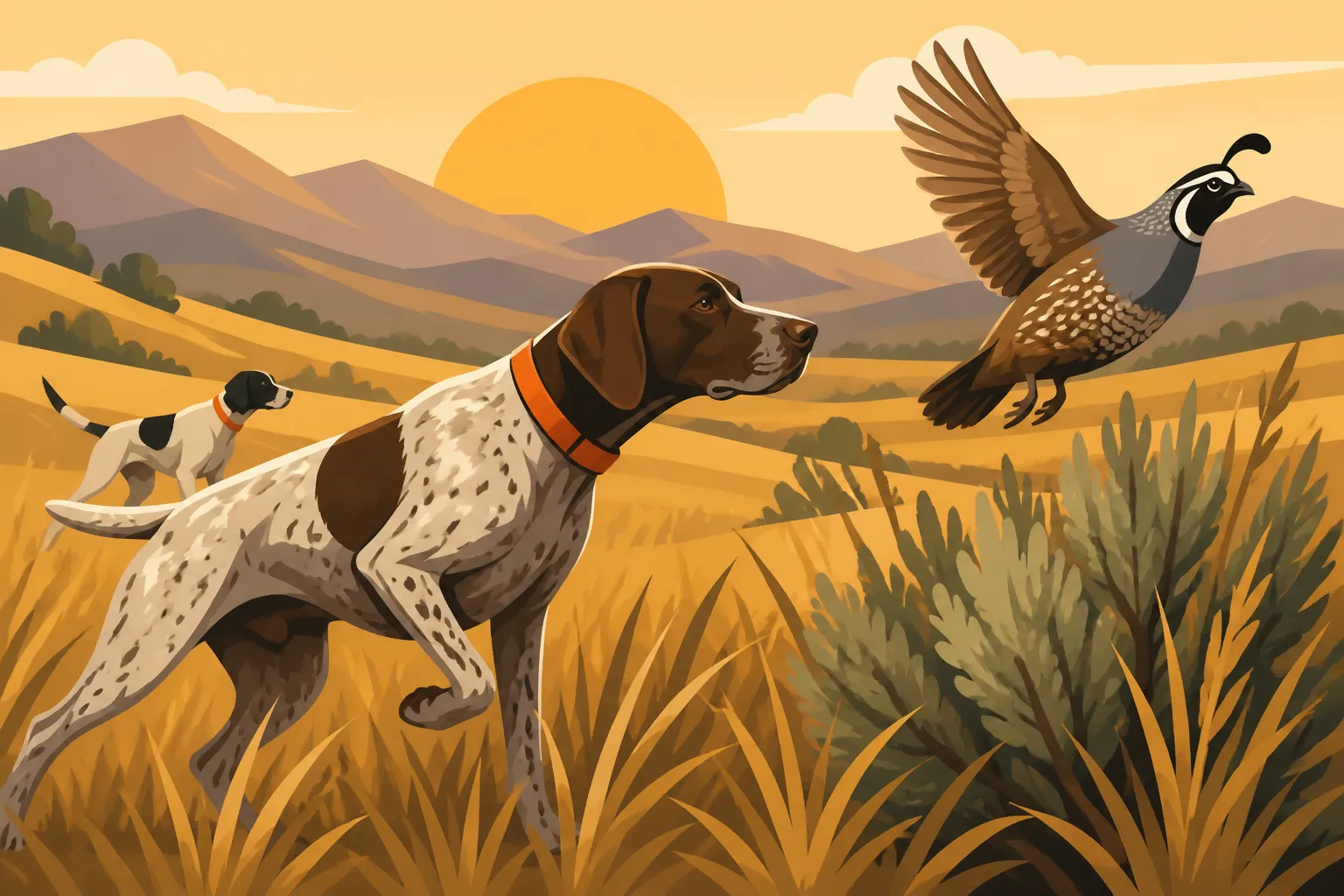
If you've spent any time chasing California Valley Quail, you know the immense frustration of seeing a covey scamper away through the brush, disappearing into impenetrable cover before you even get a chance to shoulder your shotgun. These birds are notorious for running, not flying, leaving many hunters bewildered and exhausted. This guide is all about embracing the classic method of running pointing dogs, transforming that frustration into exhilarating, productive hunts.
Understanding California Valley Quail Behavior for Dog Work
California Valley Quail are not like pheasants that often hold tight in a ditch or bobwhites that create predictable flushes. They're wily, often choosing to use their strong legs rather than their wings, which is precisely why a well-trained pointing dog becomes an invaluable partner.
Habitat and Cover Preferences
Valley Quail thrive in a variety of California landscapes, but they all share common characteristics: dense cover for escape and roosting, and open areas nearby for feeding. You'll often find them in foothill chaparral, along the edges of oak woodlands, or in riparian corridors with thorny thickets. This dense environment, full of ceanothus, manzanita, and scrub oak, is where they truly shine at disappearing acts. For a solo hunter, busting through this kind of brush blindly is a recipe for frustration, yielding few birds and many scratches. Imagine the challenge of trying to find a needle in a haystack, except the needle can run like a sprinter and melt into the foliage. This is where your pointing dog’s keen nose and instinct to freeze on scent become your greatest asset. They can pinpoint birds that you would walk right past, or that would simply run ahead of you unnoticed. This strategy is especially effective when you're Hunting Coastal Range Oak Woodlands where the cover can be particularly thick.
Why They Run Instead of Hold
The Valley Quail's running behavior is deeply ingrained in their survival strategy. In many open or semi-open environments, running provides a better escape option from aerial and ground predators than flying directly into danger. When a human approaches, their first instinct is often to put distance between themselves and the threat on foot. This is particularly true on heavily pressured public lands where birds have learned to associate human scent with danger. The beauty of a pointing dog is that their presence and scent can often make quail hold tighter. The dog's intense point, the silent stand-off, can sometimes confuse the covey just long enough to make them decide that flying is now their best bet, or at least slow their running down considerably. It’s a subtle dance, and a good dog learns to pressure the birds just enough to get them to commit to a hold or a short flush. Without a dog, it feels like an endless chase, a game of cat-and-mouse where the mouse always wins.
Training Your Pointing Dog for California Quail
Successfully hunting California Valley Quail with a pointing dog isn't just about having a dog with a good nose; it's about having a dog that's disciplined, steady, and understands the nuances of these specific birds. This takes time, patience, and consistency in training.
Foundation Training: Steadiness and Whoa
The cornerstone of any good pointing dog for quail is rock-solid steadiness. This means your dog must stop when it encounters bird scent, hold that point until you arrive, and remain steady to wing and shot. The "whoa" command is paramount. Start teaching "whoa" early and often in low-distraction environments. Use a check cord and gentle pressure, praising them heavily when they comply. Many hunters make the mistake of rushing this, eager to get their dog on birds, only to find their dog breaking point and chasing birds, effectively blowing up the covey and ruining the shot opportunity. The goal is a dog that's so reliable on "whoa" that when it hits scent and locks up, you can take your time to get into position for the flush and shot. This patience on your part during training pays off immensely in the field, preventing those heartbreaking moments when your dog flushes a covey 50 yards out.
Scent Work and Bird Introduction
Once your dog is steady on "whoa," it's time to introduce them to bird scent. Pen-raised quail or pigeons are excellent tools for this. Start with retrieving drills, then move to planting birds in a bird launcher or a trap. This allows your dog to encounter live bird scent in a controlled manner, reinforcing the point. The trick is to ensure a positive association with finding and pointing birds. Allow your dog to retrieve a bird (or a dummy if you're not shooting live birds yet) after a successful point. Developing a strong retrieve is also crucial for ethical hunting, ensuring that every bird you harvest is brought back promptly. California Valley Quail can be tough to find in thick cover even after they're shot, and a good retriever saves countless lost birds. For hunters looking to refine their dog's abilities, professional finishing schools or guided hunts focused on specific bird species can accelerate this process, exposing the dog to real-world scenarios under expert guidance.
Field Exposure and Real-World Scenarios
Transitioning from controlled training to actual hunting situations is where the rubber meets the road. Start your dog in areas where quail are known to be present but perhaps in lighter cover, allowing them to gain confidence. This gradual exposure helps them understand how real quail behave – how they run, how their scent lays on the ground, and how to adjust their point accordingly. Practice working your dog into the wind, understanding how air currents carry scent. Simulate actual hunts, complete with a partner if possible, to practice flanking and flushing. Don't be discouraged by setbacks; real quail are challenging. Every broken point or missed bird is a learning opportunity for both you and your dog. Consistency and positive reinforcement are key. Remember that just like us, dogs need repetitions to truly master their craft, and the varied terrain of California's quail country provides endless learning opportunities.
On the Ground: Hunting Valley Quail with Your Dog
The true magic of hunting California Valley Quail with a pointing dog unfolds in the field. It’s a partnership, a conversation without words, where both hunter and dog must work in concert with the landscape and the birds.
Reading Your Dog and the Landscape
A good pointing dog will communicate volumes through subtle cues. Pay close attention to changes in their gait, the intensity of their tail wag, how they lift their head, or sudden shifts in direction. These are all signals that they’re picking up scent. In the field, you'll need to learn to match your dog's pace and anticipate where the birds might be. Valley Quail often stick to edges – the interface between open feeding areas and thick escape cover. Think about drawing lines between different types of cover. Use mapping apps like GoHunt to scout potential quail cover and identify these edges before you even step foot in the field. When your dog locks up on point, analyze the landscape. Where is the densest cover? Which way is the wind blowing? These clues will inform your approach to the birds. Understanding the intricacies of Wind and Thermals in Steep Sierra Country can also be surprisingly relevant, as scent pools and moves in unexpected ways.
Flanking and Flushing Strategies
Once your dog is on a solid point, your job is to convert that point into a flush. This often involves flanking the dog, moving around the dog and the presumed location of the birds, ideally positioning yourself between the quail and their escape cover. If the quail are runners, getting ahead of them is crucial. A common strategy is to circle wide, then move in from the side or even from slightly ahead of where you believe the covey is. This cuts off their escape route and pressures them to hold or flush. As you approach, be ready. Valley Quail can erupt like popcorn, often in several directions, presenting thrilling but challenging shots. The sound of a full covey rise is one of the most exciting moments in upland hunting, a testament to the partnership you’ve built with your dog.
Dealing with Difficult Birds and Terrain
California's quail country is rarely easy. Expect thick, thorny brush, steep hillsides, and often dry, hot conditions. Running birds are a constant challenge. If your dog points, and you suspect the birds are running, you may need to encourage your dog to relocate – to break point and follow the scent trail on command, re-pointing when they catch up. This takes advanced training but is incredibly valuable. In dense chaparral, bells on your dog’s collar can help you keep track of them, and bright orange vests can make them more visible, especially if you're hunting with multiple people. Always be mindful of your dog's safety. The terrain can be brutal on paws, and rattlesnakes are a very real concern in many California quail habitats. Taking care of your dog means being prepared for anything. This rugged country demands the right gear, from Best Boots for Dry Desert Wash Hunting for you to protective vests for your canine companion.
Essential Gear and Best Practices for Dog Hunters
Beyond the fundamental hunting gear, bringing a dog into the mix requires additional considerations for their safety, performance, and your overall success and enjoyment.
Dog Protection and Tracking Technology
Protecting your hunting partner is paramount. California's landscapes are beautiful but unforgiving. Invest in a durable, brightly colored protective vest for your dog. These vests shield against thorns, burrs, and can offer some protection against minor cuts, though no vest is entirely snake-proof. When it comes to tracking, modern GPS collars are absolute game-changers, especially in California's vast and often remote public lands. Brands like Garmin offer excellent GPS and e-collar systems that allow you to see your dog's exact location on a handheld device, track their movements, and even issue commands from a distance. Mapping apps, such as those provided by GoHunt or Best GPS App for California Public Land, can be integrated with these systems, giving you real-time information about your dog's position relative to terrain, property lines, and known quail hotspots. This technology is not just about finding a lost dog; it's about making sure you know where your dog is pointing in that dense patch you can't see into, and ensuring you can always retrieve them safely, even when they've pushed a running covey over a ridge.
Hydration, First Aid, and Post-Hunt Care
Hunting California Valley Quail often happens in dry, warm conditions, making hydration critical for both you and your dog. Always carry plenty of water and a portable bowl for your dog. Dehydration can quickly become a serious issue, especially for high-energy working dogs. A comprehensive canine first-aid kit is another non-negotiable item. This should include essentials for cuts, scrapes, paw pad injuries, and an emergency snakebite kit if you hunt in known rattlesnake country. Familiarize yourself with basic dog first aid before heading out. After the hunt, inspect your dog thoroughly for burrs, ticks, cuts, and any signs of exhaustion or injury. Proper nutrition and rest are essential for their recovery and readiness for the next outing. Treating your dog as an athlete and a beloved family member ensures they have a long, healthy, and happy hunting career. Remember, responsible hunting also means being aware of the broader picture, like California Valley Quail Population Trends, to ensure sustainable practices.
| Feature / Consideration | Hunting Without a Pointing Dog | Hunting With a Pointing Dog |
|---|---|---|
| Effort to Find Birds | High (random flushes, lots of walking) | Moderate (dog pinpoints birds, more strategic walking) |
| Flush Rate | Often low or out of range | Higher (dog holds birds, closer flushes) |
| Bird Retrieval | Difficult, high risk of lost birds | Much easier, higher retrieval rate |
| Enjoyment Factor | Can be frustrating, lonely | Deep partnership, highly engaging, rewarding |
| Pace of Hunt | Fast, often chasing | Slower, more deliberate, strategic |
| Required Skill (Dog) | N/A | Extensive training (steadiness, whoa, retrieve) |
| Gear Investment | Basic hunting gear | Basic gear + dog equipment (GPS, vest, first aid) |
| Ethical Considerations | Higher chance of wounded/lost birds | Lower chance of wounded/lost birds due to retrieve |
Disclaimer
Please remember that hunting regulations, license requirements, and season dates are subject to change. Always consult the official California Department of Fish and Wildlife (CDFW) regulations before planning any hunting trip. Hunter education is mandatory for all first-time resident hunters, and is a great way to brush up on safety for everyone. Make sure you have your California Hunter Education Requirements fulfilled and your California Resident License Options in order. This article is for informational purposes only and does not constitute legal advice.