Dove Hunting a Cut Sunflower Field
Many California dove hunters know the feeling: you’re excited for the season opener, you head out to a field you think looks good, only to spend hours watching doves fly high and wide, nowhere near your decoys. It's incredibly frustrating to put in the effort, only to feel like the birds are playing a cruel joke. This guide is designed to help you cut through that frustration by focusing on one of the most reliable hotspots for doves in California: the cut sunflower field, and how to maximize your chances of filling your bag.
Why Cut Sunflower Fields Are Dove Magnets in California
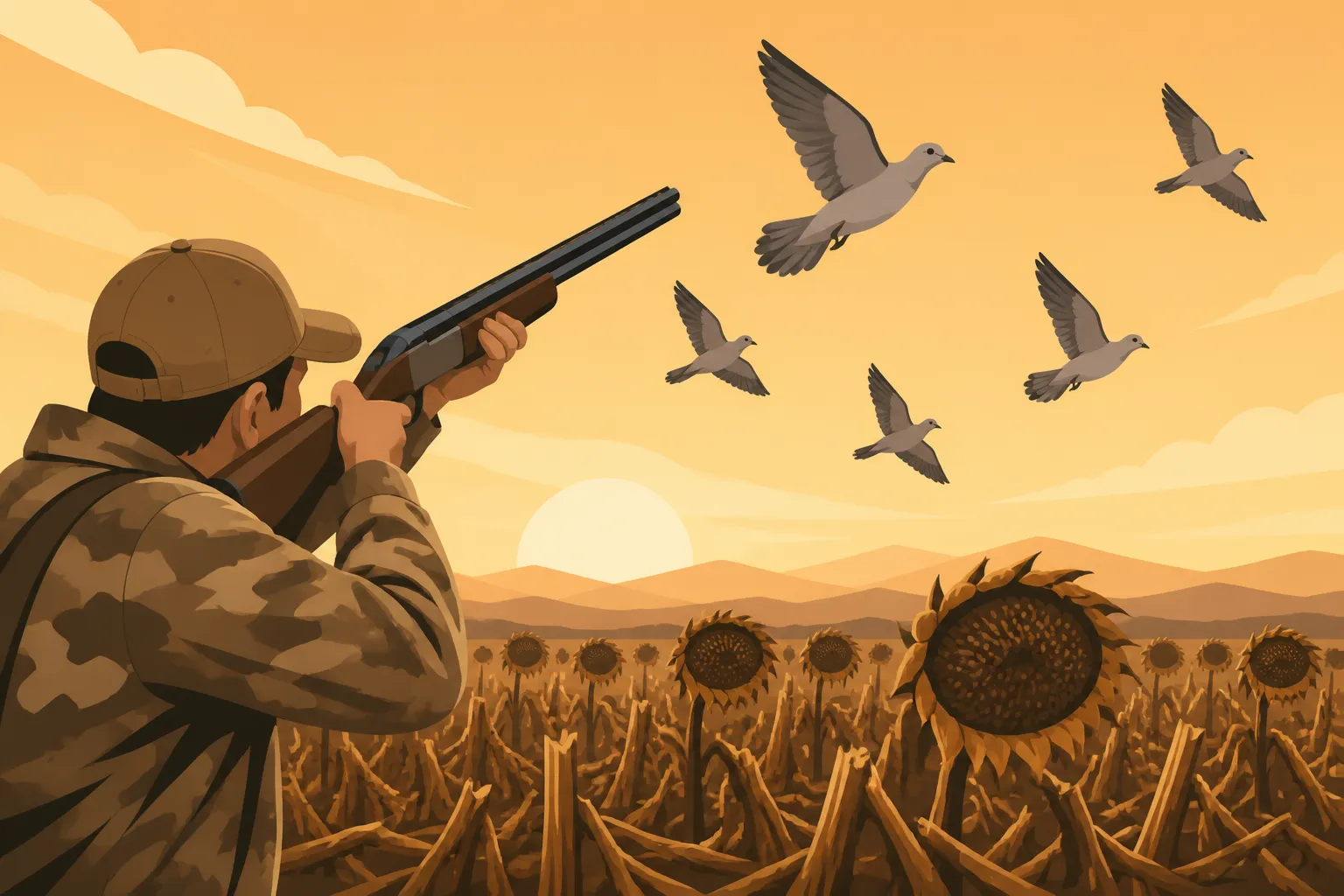
When it comes to dove hunting in California, particularly during the fast and furious early season, certain habitats just stand out. Among these, the cut sunflower field consistently proves to be a top-tier location for both mourning doves and white-winged doves. It's not just a lucky guess; there are very specific reasons why these fields attract such high numbers of birds, creating prime opportunities for hunters.
Understanding the Dove's Dietary Needs and Habitat Preferences
Doves are predominantly seed-eaters, and they possess a particular affinity for larger, oil-rich seeds like those found in sunflowers. When a sunflower field undergoes harvest, it inevitably leaves behind a substantial amount of spilled seeds on the ground. Modern harvesting equipment, despite its efficiency, cannot collect every single seed, and this residual bounty forms an irresistible food source for doves. Unlike, say, a cornfield where kernels might be too large or sparsely scattered, sunflower seeds are perfectly sized and often concentrated enough to make a feeding frenzy highly productive. Furthermore, doves prefer open ground for feeding, a critical aspect of their survival strategy as it allows them to easily spot potential predators. A freshly cut field offers exactly this: wide-open access to their preferred food, with just enough stubble and residual cover to provide a sense of security without hindering their feeding efforts. This openness is a key differentiator from standing fields, which offer too much concealment and make feeding difficult for these ground-feeding birds.
The Crucial Role of Nearby Water and Roosting Sites
While an abundance of food from a cut sunflower field is a massive draw, doves require more than just a meal. Water and safe roosting sites are equally vital components of their daily cycle. The most productive sunflower fields are almost always situated within a reasonable flight distance of a reliable water source. This could be anything from a small pond, a flowing irrigation ditch, a river, or even frequently used cattle troughs. Doves typically follow a predictable routine: they feed heavily in the mornings and late afternoons, often making a trip to water either in between these feeding periods or immediately afterward. Observing and understanding these flight patterns between food and water is absolutely critical to placing yourself in the right spot for a successful hunt.
Similarly, doves need secure locations for roosting overnight and for resting during the warmer parts of the day. A sunflower field that is adjacent to a patch of oak woodland, a dense riparian corridor, or even a line of mature trees along a fenceline creates a comprehensive habitat package. This allows doves to efficiently move from their roosts to the food source, then to water, and back again, all within a predictable daily circuit. Without the complete triumvirate of food, water, and roosts, a field, regardless of how many sunflower seeds it holds, might only experience sporadic bird activity. Taking this holistic view is essential whether you're diligently Scouting California Public Land Before Season or exploring private land options. It’s about more than just finding the food; it’s about understanding the entire ecosystem that supports the birds.
Mastering the Art of Scouting and Setup for Doves
Locating a cut sunflower field is merely the first step; knowing precisely how to hunt it effectively is where experience and strategy truly pay off. Many hunters, eager for the action, simply show up, jump out of their vehicle, and set up in the first seemingly good spot they find. However, with doves, a precise and well-thought-out approach to scouting and setup can dramatically swing the odds in your favor, transforming a slow day into a memorable limit hunt. The old adage about the early bird definitely applies here – in more ways than one.
Identifying Productive Fields and Key Flight Paths
Your scouting efforts should commence well before opening day, ideally a week or two beforehand. Take the time to drive or walk the perimeters of known sunflower fields within your designated hunting zone. Your primary objective is to confirm recent harvesting and, more importantly, to observe actual dove activity. Are you consistently seeing birds flying into and out of the field during the crucial morning and evening feeding times? Which specific sections of the field are they utilizing? Look for tell-tale signs like "white wash"—accumulations of dove droppings—on power lines, fence posts, or bare patches of ground, which are clear indicators of heavy usage.
Pay particularly close attention to their flight lines. Doves are creatures of habit and will often follow the same predictable pathways when entering and exiting a field, especially if these paths lead directly to a water source or their roosting area. These flight corridors—whether they follow a tree line, a power line, a fenceline, or even a subtle depression in the landscape—are your primary target zones. Mentally mapping these out before your hunt will allow you to position yourself in the most advantageous ambush points. Tools like GoHunt can be invaluable here, allowing you to overlay satellite imagery with property boundaries to identify potential sunflower fields, which you then verify in person. Remember, while finding a cut sunflower field might be straightforward, discovering the cut sunflower field with consistent, heavy dove traffic is the real pursuit.
Strategic Blind Placement and Effective Decoy Spreads
Once you've pinpointed the key flight paths and primary feeding zones, the next critical step is your setup strategy. Doves possess incredibly keen eyesight, and they will quickly detect and flare away if they spot you silhouetted against the sky or if you're making erratic movements. Natural cover is almost always your best asset. Seek out opportunities to hide within irrigation ditches, dense fence rows, thick clumps of brush, or even the remnants of standing sunflower stalks that can offer some natural concealment. If natural cover is sparse or nonexistent, investing in a portable blind or a simple layout blind can be incredibly beneficial. The fundamental goal is to effectively break up your human outline.
When positioning your blind, always consider the sun's position. Ideally, you want the sun at your back during the morning or evening hours. This ensures that incoming birds are not looking directly into the sun, which can make them harder to see, and crucially, prevents you from being silhouetted against the bright sky. Decoys are an absolute game-changer in dove hunting. A realistic decoy spread can effectively pull birds out of their established flight patterns and guide them directly into your prime shooting zone. Combine static decoys, which should be placed on the ground to simulate feeding birds, with dynamic motion decoys. Motion decoys, such as spinning wing models (similar to how one might use Mojo Decoys for Central Valley Mallards), are incredibly effective at capturing a dove's attention from a significant distance. Arrange your static decoys in small, natural-looking clusters, perhaps 10-20 yards in front of your blind, with motion decoys positioned slightly higher or to the sides to maximize their visibility. Strive to mimic a natural feeding flock; avoid perfectly symmetrical or artificial-looking arrangements. Also, consider the wind direction – incoming doves, much like waterfowl, will often cup their wings and approach into the wind, making them easier targets as they slow down. This nuanced understanding of avian behavior is crucial whether you are Decoying Ducks in California's Central Valley Flooded Rice or perfecting your dove spread.
Effective Hunting Techniques and Safety Considerations
With your scouting complete, your blind perfectly placed, and your decoys strategically spread, the real excitement begins. However, successful dove hunting demands more than just pointing a shotgun; it requires a deep understanding of dove behavior, consistent practice of shooting fundamentals, and an unwavering commitment to safety. Doves are small, incredibly fast, and often exhibit erratic flight patterns, making them one of the most challenging game birds to hit consistently.
Shooting Angles and Leading for Fast-Flying Doves
Doves are notoriously difficult targets. Their speed, unpredictable zig-zagging, and sudden changes in direction can frustrate even seasoned shooters. The most common reason for missed shots is insufficient lead. You're not aiming at the bird; you're aiming where the bird is going to be. The amount of lead required will fluctuate significantly based on the bird's speed, its distance from you, and its flight angle. Regular practice, ideally with clay targets before the season, is the best way to develop this crucial skill.
For birds crossing in front of you, a sustained lead or swing-through method generally yields the best results. For birds flying directly toward you, allow them to get within a comfortable range where you can clearly discern their flight path, then pick them up, swing through, and fire. A critical mistake many hunters make is lifting their head off the gun stock prematurely to see if they've hit the bird, which almost invariably causes them to shoot over the target. Keep your cheek firmly pressed against the stock and maintain your swing through the shot. Remember, hitting your personal best on California Deer Harvest Records involves a completely different set of skills and target dynamics compared to consistently hitting these agile, fast-flying doves.
| Flight Path | Recommended Lead (Approximate) | Notes |
|---|---|---|
| Straight Away | Minimal, just above/on bird | Ensure bird clears other hunters' lines of fire; aim for head/neck. |
| Straight Incoming | Minimal, just below/on bird | Wait for closer range; aim to shoot just under the bird's chest area. |
| Crossing (20-30 yds) | 2-3 feet | Focus on the head, maintain a smooth swing through the bird. |
| Crossing (30-40+ yds) | 4-6 feet or more | Requires significantly more lead; consistent swing is vital for hits. |
| Decoy Commit | Minimal to 1 foot | When doves are cupping wings over decoys, they present slower targets. |
Prioritizing Hunter Safety and Ethical Shooting
Safety is the absolute cornerstone of any hunting endeavor, and this is especially true when multiple hunters are sharing a field, engaging with fast-moving birds. Always maintain a keen awareness of where other hunters are located and establish clear, pre-defined zones of fire. Under no circumstances should you ever swing your shotgun barrel in the direction of another person. When a bird approaches, confirm that it is well within your safe shooting zone and high enough to be clear of any low-lying obstacles or other hunters before you even think about mounting your shotgun. Even though the sky seems vast, crowded dove fields can quickly become hazardous if constant vigilance is not maintained. Effective communication with your hunting partners about incoming birds and downed game is essential for a safe outing.
In California, the lead ammunition ban is a statewide mandate, meaning you must use non-lead shotshells for dove hunting. Steel shot is the most commonly available and cost-effective option, though higher-performance bismuth and tungsten-based loads are also legal, albeit at a higher price point. It’s crucial to verify your shotgun's choke compatibility with steel shot, as its harder composition can potentially damage older barrels or certain choke tubes not rated for it. Knowing precisely Which Non-Lead Bullets California Approves is a fundamental requirement before you even consider stepping into the field. Beyond ammunition, always adhere to basic hunter education principles. If you're a new hunter or mentoring one, ensure everyone is thoroughly familiar with California Hunter Education Requirements and practices responsible firearm handling at all times. Ethical shooting also involves understanding your personal limits. Avoid taking speculative "Hail Mary" shots at birds that are clearly out of your effective range; this only leads to wounded birds, frustration, and a poor representation of ethical hunting. Concentrate on achieving clean, swift, and ethical kills within your proven capabilities.
Navigating Regulations and Ethical Practices for Dove Hunting
The exhilaration of dove hunting in a bustling cut sunflower field is a special experience, but this enjoyment comes with a significant responsibility: understanding and strictly adhering to California's specific hunting regulations. These rules are far from arbitrary; they are meticulously crafted to ensure sustainable game populations, promote fair chase principles, and prioritize hunter safety. Ignorance of these laws is never an acceptable excuse, and staying thoroughly informed is an integral part of being a responsible and ethical hunter.
Understanding California's Dove Hunting Season and Limits
California's dove season typically begins with its highly anticipated September opener, often extending through the first week or two of the month, sometimes followed by a shorter, later season. The initial opener is almost always the most popular and productive period, primarily because the birds haven't yet experienced significant hunting pressure. It is absolutely imperative to consult the most current California Department of Fish and Wildlife (CDFW) regulations booklet or their official website for the precise season dates, legal shooting hours (which are typically from one-half hour before sunrise to sunset), and exact bag limits. As a general guideline, the daily bag limit for mourning doves is often 15 birds, with a possession limit three times the daily bag, but these figures can occasionally be adjusted based on regional surveys or yearly population assessments. White-winged doves may have separate or combined bag limits. It is absolutely crucial to be aware of these numbers before you even step foot in a field, especially if you find yourself in the midst of a phenomenal flight. Exceeding bag limits not only results in severe legal penalties but also directly undermines critical conservation efforts. Ensure you possess your current California hunting license and the required Upland Game Bird Validation. Comprehensive details regarding California Hunting Licenses and What They Cost are readily available through CDFW.
Legal Ammunition and Other Equipment Requirements
The statewide prohibition on lead ammunition for all hunting activities in California means you are legally obligated to use non-lead shot for dove hunting. For shotgun hunters, this primarily translates to steel shot, though bismuth or tungsten-based alternatives are also legal and available, albeit at a higher cost. It's essential to confirm that your shotgun is certified to handle steel shot, as its harder composition can potentially cause damage to older barrels or specific choke tubes not designed for it. Beyond the lead ban, several other equipment rules apply. For instance, shotguns used for migratory birds, including doves, must be plugged to a maximum capacity of three shells (one in the chamber, two in the magazine). While there are no legal restrictions on shotgun gauge, 12-gauge and 20-gauge shotguns remain the most popular choices, offering an excellent balance of shot payload and manageable recoil. While not explicitly mandated by law, wearing appropriate eye and ear protection is a non-negotiable safety practice, particularly in a busy dove field where numerous shots will be fired. Utilizing a mapping application like GoHunt can be highly beneficial for understanding public land boundaries and specific regulations that might pertain to certain wildlife areas. This proactive approach helps prevent inadvertent trespass and ensures all your hunting activities remain fully compliant with the law.
Responsible Hunting Practices and Landowner Relations
Whether you find yourself hunting on public land or have been granted the privilege of hunting on a private cut sunflower field, responsible behavior is paramount and reflects directly on the entire hunting community. If you're utilizing public lands, always show respect to fellow hunters by maintaining adequate distance and establishing clear shooting lanes. Furthermore, commit to leaving the area cleaner than you found it; this means collecting all your spent shell casings, any other trash, and every downed bird you are able to recover. Hunting pressure on California public land can be substantial, so proactively scouting for less-pressured areas or being among the first to locate a newly cut field often yields the best results.
If you are fortunate enough to gain access to private land, treating the landowner with the utmost respect is absolutely essential. Always request permission well in advance of the season. Consider offering to share a portion of your harvest, assisting with a chore on their property, or simply expressing your profound gratitude. Ensuring you pick up all your trash and drive carefully and courteously on their property significantly increases the likelihood of being invited back for future seasons. A positive reputation as a hunter is painstakingly built upon courtesy, respect, and consistently ethical conduct. Sometimes, securing those truly exceptional hunting spots isn't about finding Hunting a Funnel Between Two Oak Ridges on a map, but rather about cultivating long-term relationships and building trust with local landowners.
Disclaimer
This guide provides general information regarding dove hunting in California. Hunting regulations, season dates, and access rules are subject to change. It is your responsibility to always consult the most current California Department of Fish and Wildlife (CDFW) regulations booklet and any relevant local ordinances before engaging in any hunting activity. Ensure you possess all required licenses, validations, and stamps. Hunter safety is paramount; always strictly adhere to firearms safety rules and uphold ethical hunting practices at all times.