Calling a Bull Elk in September
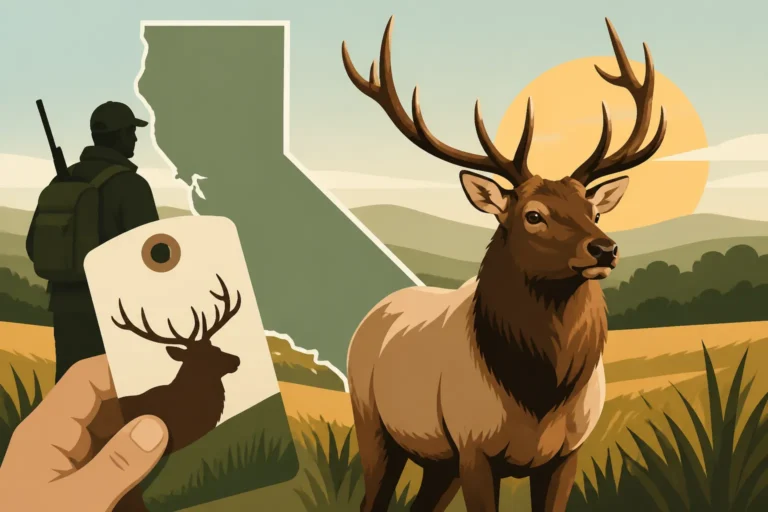
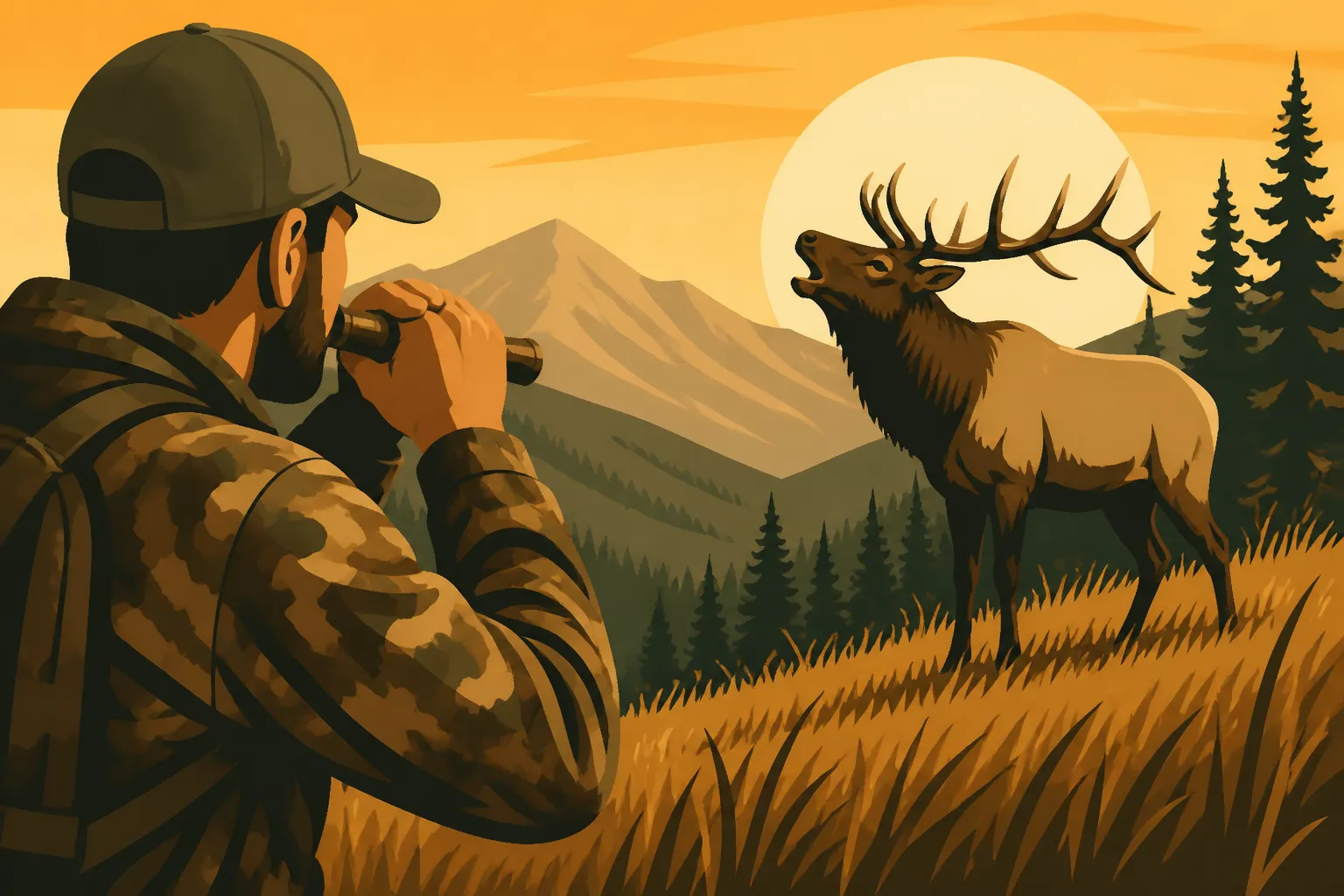
You waited years to draw a California elk tag, and now it is September and the bulls are talking. You have a bugle tube, a cow call and a pile of online videos in your head, but the first bull you call to goes silent and walks away. This guide explains how to call bull elk in September in California, from reading the rut to setting up for the shot.
How the September Rut Works in California
Calling works because it taps into what bulls are already doing in September. The better you understand the rut, the better your calling decisions will be, and the fewer bulls you will educate.
Three Species, Slightly Different Calendars
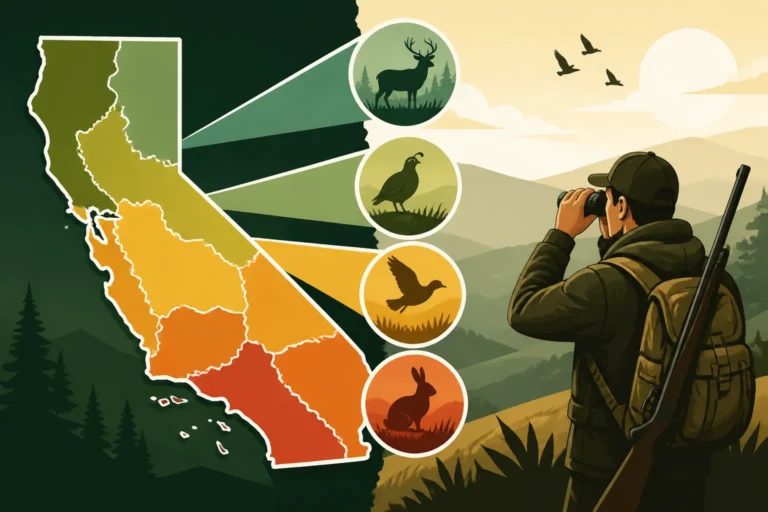
California is unusual because it has three kinds of elk: tule elk in the Central Valley and the coastal hills, Roosevelt elk in the redwood and Douglas fir country of the northwest, and Rocky Mountain elk in the northeast. If you are new to the differences, Hunting California’s Three Elk Species is a good overview.
All three rut in late summer and early fall, but the timing and the feel of it differ. Tule elk often start their rut earlier than the others, with bulls bugling and gathering cows in late summer, and the activity can be well underway by the time September arrives. Roosevelt elk in the coastal fog belt tend to rut in September, with bulls holding cows in meadows, prairies and openings near heavy timber. Rocky Mountain elk in the northeast follow a pattern familiar to anyone who has hunted elk in Oregon, Idaho or Montana, with September the heart of the rut.
The practical point is this: September calling in California is not one-size-fits-all. A tule elk bull in early September may already be deep into the rut with a harem, while a Rocky Mountain elk bull in the same week may still be building up to it. Watch how the bulls you find are actually behaving.
What Bulls Are Doing and Why They Answer
In September, a bull’s world revolves around cows. Dominant bulls gather groups of cows and defend them from rivals. Satellite bulls hang around the edges, hoping to slip in and breed a cow or steal part of the herd. Bugles announce a bull’s presence, warn other bulls, and help cows find him.
When you call, you are pretending to be part of that system. A cow call says “there is a cow over here,” which can draw in a bull looking for cows or a satellite bull looking for an opportunity. A bugle says “there is another bull here,” which can provoke a herd bull into defending his cows or draw a curious or aggressive bull to investigate. Understanding which message you are sending, and to which kind of bull, is the core skill.
Early, Peak and Late September Behavior
Early September often brings more bugling and searching. Bulls are actively looking for cows and challenging rivals, and they can be quite responsive to cow calls and moderate bugles.
Around the peak, herd bulls are busy holding cows and may be less willing to leave them. They will often bugle back but stay with the herd. In that situation, you may need to move closer and challenge the bull aggressively, or sneak in on the herd and try to catch the bull in a shooting lane.
Late in the month, many cows have been bred and bulls can become worn out. Some bulls go quiet and focus on rest, while others respond eagerly to a cow call because they are still looking for a receptive cow. Persistence and patience pay off late in the rut.
| Rut Phase | Typical Bull Behavior | Calling Approach |
|---|---|---|
| Early | Searching, bugling, responsive | Cow calls and moderate bugles |
| Peak | Herding cows, defending, less mobile | Get close, challenge or sneak in |
| Late | Tired, quieter, still searching for cows | Soft cow calls, patience |
Choosing and Using Your Calls
Good calling is less about owning the perfect call and more about knowing when to use the calls you have.
Cow Calls and When They Work Best
Cow calls are the most versatile tool you can carry. A soft mew or chirp sounds like a contented cow feeding or moving, and it is unlikely to scare anything. A louder, more urgent call can sound like a cow looking for the herd or a cow in estrus. Diaphragm calls let you call hands-free while drawing a bow or shouldering a rifle, while external reed calls are easier to learn and more forgiving.
Use soft cow calls when you are close to elk or when you are trying to reassure a bull that is coming in. Use them to cover small noises you make while moving. Use them as a locating tool when bulls are not bugling, because a bull will sometimes answer a cow call with a bugle.
The most common mistake is calling too much. A real cow herd makes a lot of sound, but it is spread out and natural. A hunter who blasts the same call every thirty seconds sounds like nothing an elk has ever heard. Call, listen, and let the elk tell you what to do next.
Bugles, Grunts and Challenge Calls
A bugle is a big, attention-getting sound. Locator bugles at dawn and dusk can help you find bulls by getting them to answer. Once you know where a bull is, a bugle can provoke him, but it can also push him away if he is a smaller bull or one that has been beaten up by bigger rivals.
Challenge calls, such as an aggressive bugle followed by chuckles or grunts, are best used when you are close to a herd bull and want to provoke a fight. Combine them with sounds like raking a tree or breaking branches to sound like a real bull. This is high-risk calling: when it works, the bull comes in angry and fast; when it fails, the bull may take his cows and leave.
Use bugles sparingly in pressured areas. Because California hands out so few elk tags, many bulls here hear fewer hunters than bulls in states with big over-the-counter seasons. That is an advantage, but it does not last. Bulls near popular access points, or on ground shared with deer and bear hunters in the same weeks, learn quickly to go quiet and move away from a bugle that sounds wrong.
Practicing Before the Hunt
Practice your calls long before September. Listen to recordings of real elk, and practice until your calls sound natural. Ask someone experienced to critique you if you can. Diaphragm calls in particular take time to master.
Practice in the field, too. Calling in a quiet room is different from calling on a windy ridge, and you need to know how far your calls carry and how they sound in real conditions.
Common Calling Mistakes
The first big mistake is calling from the wrong place. A hunter standing in the open on a ridgetop, bugling into a basin, is advertising their location to every elk below. Call from cover, with the wind right, and with a shooting lane already picked out.
The second is moving too soon. Bulls often take a long time to come in, especially older ones. Many hunters give up after ten or fifteen minutes and stand up just as a silent bull is closing the distance. After a bull answers or after you have called to a likely area, stay put and ready for at least half an hour, and longer in timber.
The third is ignoring the cows. A herd bull’s cows have eyes and noses too, and a lead cow that spots or smells you can take the whole herd, bull included, out of the country. When you are working a herd, assume every elk is a lookout.
Setting Up a Calling Sequence That Works
The best call in the world will fail if your setup is wrong. Elk have excellent noses and eyes, and a bull coming to a call is on high alert.
Reading the Wind and the Terrain
Wind is everything. A bull will often circle downwind of a call before he commits, so set up where he has to show himself before he can get your scent. Use terrain features like steep slopes, thick brush or open ground that funnel a bull into a shooting lane before he can get downwind.
In mountainous country, thermals matter as much as the prevailing wind. In the morning, cool air flows downhill, then reverses as the day warms and air rises. In the evening, thermals start flowing downhill again. Plan your setups with this in mind. See Wind and Thermals in Steep Sierra Country for a deeper look at how thermals behave.
Choose setups with cover in front of you and shooting lanes where the bull is likely to come. Avoid wide-open meadows where a bull can see that there is no cow there, and avoid thick brush where you have no shot.
The Caller-Shooter Setup
If you hunt with a partner, the caller-shooter setup is one of the most effective approaches. The shooter sets up 30 to 80 yards in front of the caller, in the direction the bull is expected to come from. The caller stays back and calls. The bull focuses on the sound and walks right past the shooter.
This setup is especially effective for archery hunters, who need the bull close. It also works well for rifle hunters in timbered country where shots are short.
Communicate with your partner before the setup. Agree on where the shooter will be, where the shooting lanes are, and what the caller will do if the bull hangs up. Hand signals can help when you cannot talk.
Solo hunters can still use the idea. Call from a spot a little behind your shooting position, then slip forward a few steps into a better lane once the bull answers and starts coming. Some solo archers set a cow decoy slightly behind and to the side of them, which gives an approaching bull something to look at besides the hunter. Whatever you do, be ready to draw or shoulder your rifle without big movements, because a bull that is looking for the source of a call notices everything.
When a Bull Hangs Up
Bulls often stop just out of range, bugling but refusing to come closer. This is one of the most frustrating situations in elk hunting. There are several ways to handle it:
- Stop calling and wait. Sometimes silence makes a bull curious enough to come looking.
- Have the caller back away while calling, making it sound like the cow or bull is leaving.
- Move closer to the bull quietly and set up again, if the wind allows.
- Change your call. If you have been bugling, switch to cow calls, or vice versa.
- Try raking a tree or making other sounds of a real elk.
There is no guaranteed fix, but changing something is usually better than repeating the same call that got the bull to stop in the first place.
A September Morning, Start to Finish
Picture a two-person archery hunt for Roosevelt elk on public ground in the northwest. The hunters leave the truck an hour before first light and walk a closed logging road to a bench above a meadow they scouted in August. They stop well short of the opening and listen.
At gray light, a bull bugles from the timber on the far side of the meadow. Another, fainter bugle answers from farther up the drainage. The hunters do not call yet. They note the direction of each bull, check the wind with a puff of powder, and see that the cool morning air is still drifting downhill toward the meadow.
They circle below the closer bull, staying in the timber so the downhill air carries their scent away from him. When they are about 150 yards away, the shooter moves ahead to a small opening between two big firs, and the caller settles 50 yards behind. The caller makes two soft cow mews and goes quiet.
The bull bugles immediately but does not move. After five minutes, the caller mews again and rakes a small tree with a stick. The bull bugles twice and starts coming, grunting as he walks. He angles slightly downwind, as bulls often do, but the steep bank on the downhill side pushes him through the opening in front of the shooter. The shooter draws as the bull’s head passes behind a tree trunk and takes a quartering-away shot at 25 yards.
What made it work was not a magic call. It was patience, a good read on the wind, a setup that used terrain to limit the bull’s options, and a caller who said very little.
California-Specific Considerations for September Elk
Calling a bull in California comes with a few factors that hunters from other states do not always expect.
Tags, Seasons and Methods
California elk tags are allocated through the Big Game Drawing, with very few tags available for most hunts. Each hunt has its own season dates and allowed methods, and some hunts are archery-only, while others allow rifles. Read your tag conditions carefully, and see The California Big Game Drawing Explained for how the system works.
If you are hunting a specific species, the details matter. Our guides Hunting Tule Elk in the Central Valley, Hunting Roosevelt Elk in Redwood Country and Hunting Rocky Mountain Elk Near the Oregon Line cover each one in detail.
California also requires non-lead ammunition for all hunting. For rifle hunters, that means copper or other non-lead bullets designed for elk. For archers, make sure your broadheads and arrow setup can handle a large animal. Our gear guides Best Non-Lead Bullets for Elk-Sized Game and Arrow Weight for Elk-Sized Game help you choose.
Heat, Water and Meat Care
September in California can be hot, especially in tule elk country and the dry interior. Hot weather affects elk behavior: they move and call most at dawn and dusk, and bed in shade during the heat of the day. Plan your calling around the cool hours.
Water is the other half of the equation. In dry country, elk often visit water and wallows in the late morning or early afternoon, even on hot days. A quiet setup near a muddy wallow or a spring, with a few soft cow calls every half hour, can produce a bull in the middle of the day when everyone else has gone back to camp. Bulls rolling in a wallow are usually fired up, and they are often quick to respond to a nearby cow.
Heat also shapes how long you can stay in the field. Carry more water than you think you need, especially on long walks in tule elk country or the interior hills. A dehydrated, exhausted hunter makes poor decisions, calls too much, and is not ready when a bull finally shows up.
Heat also affects meat care. An elk is a huge animal, and the meat can spoil quickly in warm weather. Have a plan for field dressing, quartering and cooling before you go hunting. Bring game bags, a good knife, and a plan to get the meat to cold storage quickly. See Packs and Gear for a Backcountry Elk Hunt for gear that helps with this.
Using Research and Mapping Tools
Before your hunt, research your hunt area thoroughly. Mapping apps can show you land ownership, terrain and water sources, which helps you plan setups and access. GoHunt and similar platforms combine mapping with hunt research, which can help you understand your unit before you set foot in it.
During the hunt, keep notes on where you hear bulls, where they come from, and how they respond to calls. Those notes help you adjust your strategy as the season progresses. GoHunt lets you drop waypoints for bugles and sightings on the same map you used to plan, which makes it easier to spot patterns over several days.
Disclaimer
This article is for general informational purposes only and does not constitute professional advice. Laws, prices and regulations vary by location and change over time. Consult a qualified professional for guidance on your specific situation.