The California Big Game Drawing Explained
Navigating the California Department of Fish and Wildlife (CDFW) big game drawing system can feel like trying to solve a Rubik's Cube blindfolded, especially for new hunters or those used to simpler over-the-counter tag sales. It’s a frustrating maze of preference points, bonus points, application windows, and draw odds that often leaves even seasoned veterans scratching their heads. This comprehensive guide is here to untangle that complexity, explaining exactly how the California big game drawing works so you can apply with confidence and maximize your chances for that coveted tag.
Understanding California's Unique Drawing System
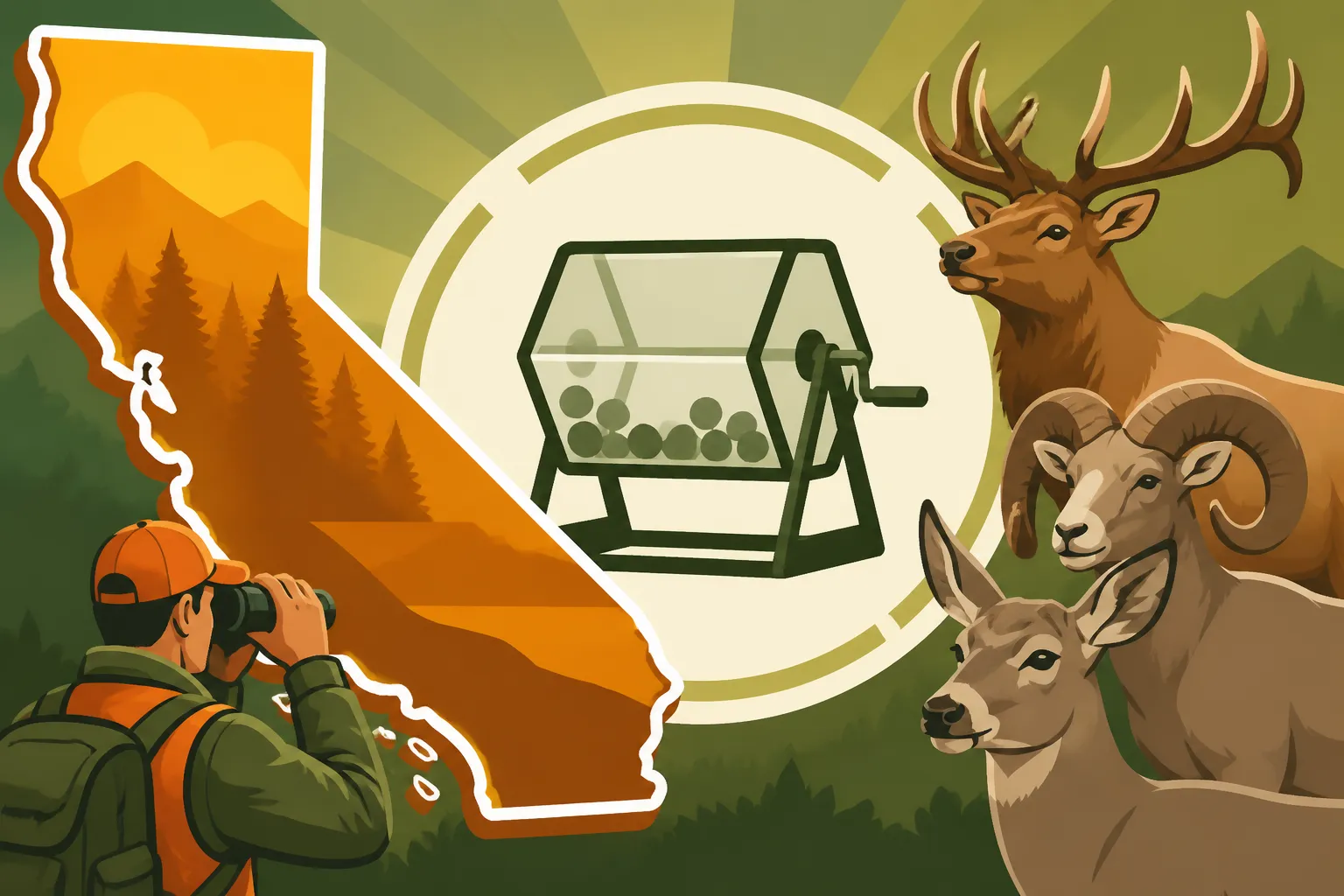
California's approach to allocating its most sought-after big game tags is definitely unique, often causing a fair bit of confusion among hunters accustomed to other state systems. Unlike some states that rely purely on a preference point system, where the hunter with the most points is guaranteed a tag eventually, California blends a preference point model with a bonus point lottery. This hybrid system aims to provide a degree of fairness by rewarding consistency, while still giving every applicant, even those with zero points, a chance at drawing a premium tag each year.
The underlying philosophy is to balance opportunity. On one hand, you have incredibly desirable tags like those for Tule elk or specific X-zones for deer, where demand far outstrips supply. Without some form of regulated draw, it would be a free-for-all, or worse, only accessible to a select few with deep pockets for landowner tags. The draw creates a level playing field, at least in theory, by distributing these limited opportunities. It’s a system built on patience, strategy, and a little bit of luck, designed to manage harvest pressure and maintain healthy game populations across the state's diverse landscapes.
The Preference Point vs. Bonus Point Confusion
This is often where the biggest misunderstandings arise. Many hunters hear "preference points" and immediately think of states where accumulating enough points guarantees you a tag, like a queue. California's system is subtly, but critically, different. For most deer and elk tags, California operates on a bonus point system, not a true preference point system. This means your accumulated points don't put you in a higher position in a direct line. Instead, they increase the number of times your name is entered into the draw.
Let's break that down: every year you apply for a premium tag and are unsuccessful, you earn one bonus point. When you apply the following year, you'll have all your accumulated bonus points, plus one entry for the current year. So, if you have 5 bonus points, your name will be entered into the draw 6 times (5 bonus points + 1 for applying that year). This significantly increases your odds compared to someone with fewer points, but it doesn't guarantee you a tag. There's always a chance that someone with fewer points, or even zero, could get lucky because their single entry happens to be the one drawn. It's a true lottery, just one where consistent applicants get more tickets.
Now, for some elk tags, California does implement a true preference point system for a limited number of opportunities, primarily for the general elk tag. This is where your points actually accumulate and give you a higher priority. However, for most of the highly sought-after elk hunts (Tule, Roosevelt, Rocky Mountain), it reverts to the bonus point lottery. It's vital to check the specific regulations for the tag you're applying for to understand which system applies. This dual-system approach is a key reason why hunters often find the California draw so complex, requiring careful attention to the details for each species and specific hunt choice.
A System Designed for Opportunity and Patience
At its heart, the California big game drawing system is built on two core principles: creating opportunity and fostering patience. For many, drawing a premium tag in California, such as a coveted X-zone deer tag or a Tule elk tag, represents a once-in-a-lifetime experience or at least a multi-year endeavor. The draw system ensures that these limited opportunities are distributed annually, giving a chance to hunters who actively participate in the draw. It prevents a scenario where tags are solely allocated on a first-come, first-served basis, which would heavily favor those with immediate access or the fastest internet connection on opening day.
This design also implicitly rewards patience and persistence. While a brand-new hunter could theoretically draw a top-tier tag in their first year, the odds are heavily stacked against them. The system encourages hunters to consistently apply, year after year, accumulating those bonus points that steadily improve their chances. For many, the annual application process becomes a ritual, a hopeful investment in future hunting adventures. It teaches you to play the long game, understanding that building points might take a decade or more for the most exclusive tags, but that payoff, when it finally comes, is incredibly rewarding. It’s not just about the hunt itself, but the anticipation and the strategic planning that goes into chasing those dream tags.
The Annual Application Window and Key Deadlines
Missing the application deadline for California's big game drawing is a hunter's nightmare, equivalent to forgetting your license on opening day. The CDFW operates on a strict timeline, and there are no do-overs once that window closes. It’s crucial to understand when the application period opens and, more importantly, when it absolutely slams shut. While specific dates can shift slightly year to year, the general framework remains consistent.
The application period for most big game species, including deer, elk, antelope, and bighorn sheep, typically runs from mid-March to early June. The exact closing date is usually the first Tuesday in June. This gives hunters a solid two to three months to research their options, decide on their hunt choices, and submit their applications. It might seem like a generous window, but time flies when you're busy, and it's easy to get caught up in spring activities and let it slip by. Don't let that happen to you! Mark your calendar as soon as the CDFW announces the official dates.
One critical aspect of this window is that all applications must be submitted and paid for by the deadline. It's not enough to just start the application process; it must be fully completed. Any application received or finalized after the cut-off will be rejected, and you'll forfeit any chance of drawing a tag that year, along with the opportunity to accumulate a bonus point. This can be particularly heartbreaking for those who have been building points for years, as missing a single year means missing a chance to draw and effectively "pausing" your point accumulation.
Marking Your Calendar for Success
To avoid the agony of a missed deadline, proactive planning is absolutely essential. As soon as the California Department of Fish and Wildlife (CDFW) officially releases the Big Game Hunting Regulations booklet and confirms the application dates for the upcoming year, usually around February or March, you should be marking your calendar. Set multiple reminders on your phone, put a sticky note on your computer, tell your hunting buddies to remind you – whatever it takes!
Many experienced California hunters treat the application window like a mini-season in itself. They dedicate time in late March or April to thoroughly review the regulations, pore over unit maps, and check historical draw odds. Tools like those found on GoHunt can be invaluable here, providing detailed breakdowns of draw odds, point requirements, and unit data that help you make informed decisions. It’s not just about getting the application in, it’s about submitting the best possible application for your goals, whether that’s a high-odds "backup" zone or a long-shot premium tag you’ve been dreaming about for years. Don't underestimate the power of early research; it can truly make or break your draw strategy.
Navigating the Online Application Portal
In today's digital age, nearly all California big game drawing applications are submitted online through the CDFW's Automated License Data System (ALDS) portal. This system can be a bit clunky at times, but it’s generally reliable. First things first, you'll need a current California hunting license. You can purchase your annual license and any necessary validations, like the Upland Game Bird Validation or the California Duck and Goose Bag Limits Federal Duck Stamp, directly through ALDS.
Once you have your base license, you can then apply for specific big game tags. The portal will walk you through selecting your preferred hunt choices, which can vary by species. For deer, you’ll typically select up to three choices for different deer zones, including those covered by California's Multi-Zone Deer Season System or specific X-zones. For elk, you'll choose from specific hunt codes for Tule, Roosevelt, or Rocky Mountain elk. Make sure you double-check all your selections before finalizing and paying. An incorrect hunt code or zone choice can’t usually be changed after submission, so a moment of carelessness can cost you a year's worth of points and effort. Always log back in after submitting to confirm your application status and that your choices were correctly recorded.
Applying for Specific Big Game Species
California offers diverse big game hunting opportunities, but each species comes with its own set of drawing rules, tag types, and levels of demand. Understanding these nuances is crucial for navigating the drawing successfully. Whether you're chasing blacktail deer in the coastal range, dreaming of a bull elk in the high country, or simply want to secure a wild pig tag, the application process requires attention to detail.
It's important to remember that not all big game tags are drawn through the same lottery. While deer and elk tags are almost exclusively obtained through the annual drawing, other species like wild pigs are over-the-counter (OTC) year-round. Black bear tags also have a different system, often available OTC with a statewide quota that can close the season early. Knowing which system applies to which species prevents unnecessary confusion and ensures you're applying for the correct permits.
Many hunters focus their energy solely on deer, given the sheer number of zones and opportunities. However, overlooking the other species can mean missing out on fantastic experiences. For instance, while elk tags are notoriously hard to draw, applying consistently is the only way to build those valuable bonus points. Even if it feels like a long shot, every year you apply is a step closer to that dream hunt.
Deer Tags: Zones, Premium Hunts, and Antlerless Opportunities
Deer hunting is arguably the most popular big game pursuit in California, and the drawing system reflects this demand. The state is divided into numerous deer zones, some of which are general season tags that might be available over-the-counter or through a simple draw with high odds, while others are highly sought-after premium "X-zones" requiring many bonus points to draw. When applying for deer, you'll typically select up to three choices. Your first choice is your top priority, and if you don't draw that, your application rolls to your second, and then your third.
It's essential to research each zone thoroughly. Some D-zones, for example, might have relatively low pressure and decent deer numbers, while others, particularly the X-zones like X-9a or X-5b, are known for their trophy potential and can take a decade or more of consistent applications to draw. Consult the CDFW hunt tables and utilize resources that track California Deer Harvest Records and draw success rates. For the ambitious hunter, understanding how to strategically select tags, perhaps by mixing a long-shot X-zone as a first choice with a more realistic D-zone as a second or third, is a key part of the process. Also, don't forget about antlerless tags; these are often easier to draw and provide a great opportunity to put venison in the freezer, especially in zones with high deer populations.
The Elusive California Elk Tags: Tule, Roosevelt, and Rocky Mountain
Elk hunting in California is a truly special opportunity, given the incredible recovery stories of the state's three distinct species: the diminutive Tule elk, the majestic Roosevelt elk, and the imposing Rocky Mountain elk. However, "elusive" is the operative word when it comes to drawing an elk tag. These tags are among the hardest to obtain in the state, with draw odds for most hunts often well under one percent for residents and even more challenging for non-residents, who are typically limited to California's One-Tag-Per-Nonresident Elk Rule.
Applying for a California Tule Elk Tag in the Big Game Drawing, or for Roosevelt and Rocky Mountain elk, involves a separate application process from deer. You'll choose from specific hunt units and dates. The bonus point system is in full effect here, meaning consistent applications are the only path to building competitive odds. For instance, to draw a Tule elk tag in a desirable area like Grizzly Island, hunters often need ten, fifteen, or even more bonus points. The waiting game is real, but for those dedicated enough to stick with it, the reward of a California elk hunt is unparalleled. Detailed information on draw odds and application deadlines can be found by looking into California Elk Tag Draw Odds by Species and California Elk Application Deadline.
Wild Pig and Bear Tags: Simpler, But Still Important
While deer and elk tags dominate the complex drawing discussions, California's wild pig and black bear tags operate under different, generally simpler, systems. For wild pigs, California hunters are fortunate to have a year-round open season and can purchase a California's Year-Round Wild Pig Tag over-the-counter at any time. There's no drawing involved for wild pigs, and you can buy as many tags as you wish. Each tag is valid for one pig, and you simply report your harvest through the ALDS system. While there's no draw, understanding wild pig habits and hunting areas is still critical for success.
Black bears also have a somewhat unique system. While a California Black Bear Tag is generally purchased over-the-counter, similar to pigs, there is a statewide harvest quota of 1,700 bears. Once this quota is met, the general season closes, regardless of the published end date. This means that hunters need to keep an eye on the CDFW website for updates on the California's 1,700-Bear Statewide Quota. There's also an archery-only season that precedes the general season, and for those tags, you'd apply within that specific framework. It's a system that combines the convenience of OTC tags with a crucial population management mechanism, making it different from the lottery draws for deer and elk.
Deciphering Draw Odds and Strategy
One of the most intimidating parts of the California big game drawing is trying to understand your chances. The CDFW publishes draw odds annually, but interpreting that data and developing a coherent strategy can feel like an advanced mathematics problem. Yet, with a little persistence and the right tools, you can significantly improve your understanding and make more informed application choices.
The key to deciphering draw odds lies in understanding the interplay of bonus points, tag quotas, and applicant numbers. For a specific hunt unit, if there are only 5 tags available and 500 applicants, the odds are obviously low. But if 400 of those applicants have 10+ bonus points, and you have zero, your individual odds are even slimmer within that larger pool. This is where strategic thinking comes in: do you go for the long shot dream tag, or apply for a unit with slightly higher odds but potentially less trophy potential?
This strategic decision-making is deeply personal and depends on your hunting goals. Some hunters prioritize accumulating points, aiming for that trophy unit down the road, while others prefer to hunt every year, choosing units with higher draw success rates, even if they're not "premium." There's no single "right" strategy, but an informed strategy is always better than a random one.
Understanding Preference Points and How They Accumulate
California's bonus point system is the backbone of its drawing. You earn one bonus point for each year you apply for a premium drawn tag (like deer, elk, antelope, bighorn sheep) and are unsuccessful in drawing your first choice. If you successfully draw your first choice, your bonus points for that species reset to zero. If you don't draw your first choice but draw a second or third choice, your bonus points do not reset; you still accumulate a point for that year's unsuccessful first choice. This is a critical distinction many hunters miss.
The maximum number of bonus points you can hold for any species is typically what's necessary to draw the hardest tag. For example, some X-zones for deer might require upwards of 15-20 bonus points to have a statistically high chance of drawing, meaning you've applied and been unsuccessful for that many years. These points are species-specific, so your deer points don't transfer to elk, and vice-versa. You also get an additional entry in the draw for the current year, on top of your accumulated bonus points. So, if you have 10 bonus points, you actually have 11 "tickets" in the hat for that year's draw, greatly increasing your individual odds. This patient accumulation is the heart of the California Preference Point System Explained.
Analyzing Draw Odds with Realistic Expectations
When looking at published draw odds, it's easy to get discouraged, especially for premier hunts where success rates can be less than 1%. However, it's important to analyze these numbers with realistic expectations. Odds are typically presented as "Applicants per Tag" or a percentage. A 1% draw chance means that for every 100 applicants, one tag is awarded. While that sounds daunting, if you have 10 bonus points, your effective entries might make your personal odds much better than the overall pool.
The CDFW website provides detailed draw statistics, including the number of applicants at various point levels, the number of tags issued, and the points required by the lowest successful applicant. These tables are invaluable. For example, if a unit gave out 10 tags, and the lowest successful applicant had 8 points, it tells you that drawing with fewer than 8 points is highly unlikely for that specific year. Pay close attention to these numbers, especially the "lowest successful applicant points" column. Using this data, you can gauge whether your current point level makes a particular unit a realistic option or if it's still a "point building" year for you. Remember that What Draw Odds Under One Percent Mean is often that you're playing a long game, but every year adds another "ticket" to the lottery.
The Power of Research: GoHunt and CDFW Data
In the modern era of hunting, data and research are powerful allies, especially when tackling complex draw systems like California's. While the CDFW provides the raw data on draw odds and unit information, tools from third-party services like GoHunt can significantly streamline your research process. These platforms often aggregate and analyze CDFW data, presenting it in user-friendly formats that help you quickly identify trends, compare units, and strategize your application.
For instance, GoHunt's Insider membership offers advanced drawing odds calculators, unit-by-unit breakdowns, and filtering options that allow you to see what kind of points were drawn in previous years for specific zones. They might even offer "Troop Tag" features, where you can view group application strategies. This kind of detailed analysis can show you not just the overall odds, but what your personal odds are given your bonus point level. This level of insight is crucial for making informed decisions, whether you're prioritizing a high-success D-zone or patiently building points for a premium X-zone for deer or a California Tule Elk Draw Odds tag. Combine these powerful tools with a thorough reading of the official CDFW regulations, and you'll be well-equipped to make the best possible application choices for your hunting goals.
Common Pitfalls and How to Avoid Them
The California big game drawing system, with its layers of rules and specific requirements, can be a minefield of potential errors. Even experienced hunters can sometimes trip up, leading to a rejected application, a missed opportunity, or even a loss of accumulated bonus points. Being aware of these common pitfalls and taking proactive steps to avoid them is just as important as understanding the system itself.
One of the biggest frustrations for hunters is having their application rejected due to a technicality, especially when they've invested years in building points. This can range from simple data entry mistakes to misunderstanding a specific regulation. It's not just about getting the application submitted; it's about submitting it correctly. The CDFW typically does not offer refunds or allow corrections after the deadline, so vigilance is key.
Another pitfall is simply not doing enough homework. Relying on old information or hearsay can lead to selecting hunt choices that no longer align with your point level or hunting goals. The regulations and draw odds can shift annually, so what was a good strategy five years ago might not be today. A little extra time spent reviewing current information can save a lot of heartache down the road.
The Non-Lead Ammunition Requirement Reminder
This cannot be stressed enough: California has a statewide requirement for non-lead ammunition for all hunting, including big game. This law has been in full effect since July 1, 2019. If you draw a big game tag and show up in the field with lead ammunition, you are breaking the law and face serious penalties, including fines and potentially losing your hunting privileges. This is a common pitfall for hunters who might be new to the state or those who haven't hunted big game in California for several years.
Before you even think about applying for a tag, you should be researching and sourcing California's Non-Lead Ammunition Requirement. This includes knowing which non-lead bullets California approves and ensuring your rifle is sighted in with these specific loads. Non-lead bullets, typically copper or copper alloy, can have different ballistics compared to traditional lead-core bullets, so re-zeroing your rifle is not just recommended, it's essential for ethical hunting. Don't wait until a week before your hunt to realize you can't find appropriate non-lead ammo. Plan ahead, purchase your ammunition well in advance, and spend time at the range patterning your rifle with your chosen non-lead load.
Avoiding Application Errors and Disqualifications
The online application portal, while convenient, can be a source of errors if not handled carefully. Here are some of the most common mistakes that can lead to disqualification:
- Incorrect Hunt Codes: Each specific hunt unit for deer or elk has a unique five-digit hunt code. Entering the wrong code, even by one number, means you've applied for a different hunt or an invalid one. Double-check these codes against the official CDFW regulations booklet.
- Duplicate Applications: You can only apply once for each species (e.g., one deer application, one elk application). Submitting multiple applications for the same species will result in all your applications for that species being rejected, and you'll lose any accumulated bonus points for that year.
- Missing License Information: Ensure your GoID number and personal information are correct and match your CDFW profile.
- Late Submission: As mentioned, applications must be fully completed and paid for by the deadline. Technical glitches can happen at the last minute, so don't wait until the final hour.
- Residency Misrepresentation: Applying as a resident when you do not meet California's strict residency requirements can lead to serious penalties.
Always review your entire application before clicking "submit" and keep a copy of your confirmation. Even better, log back into the ALDS system a day or two later to ensure your application status is "submitted" and all your choices are accurately reflected. A small amount of attention to detail can prevent a major headache.
Managing Multiple Tag Applications and Priority
Many California big game hunters apply for multiple species each year, which can add another layer of complexity. You might be applying for a deer tag, an elk tag, and perhaps even purchasing a wild pig tag. While you submit separate applications for each species (e.g., one for deer, one for elk), it's important to understand how the drawing prioritizes your choices within a single species application.
For deer, for instance, your first choice is considered first. If you don't draw that, your application goes into the pool for your second choice, and then your third. If you draw your first choice, the process stops there, and your bonus points for deer reset. If you don't draw your first choice but are successful on your second or third, you still earn a bonus point for that year (because your first choice was unsuccessful), and your overall deer bonus point total for future draws continues to grow. This is a critical distinction for strategic point building.
For elk, the process is similar but often even more complex due to the extreme rarity of tags. You select your preferred hunt choices, and the draw proceeds. Because of the incredible difficulty in drawing some of the more premium elk tags, many hunters consider buying a Tule Elk Landowner Tag as an alternative if they have the means, as these tags bypass the drawing entirely but come with a hefty price tag. Managing these multiple applications efficiently, keeping track of different deadlines, and understanding the point implications for each outcome is essential for long-term success in the California draw.
What Happens After the Draw Results are Released
The period between the application deadline and the release of draw results is often filled with anxious anticipation for California hunters. It’s like waiting for exam results, but with potentially a lot more venison involved. When the results are finally released, usually in late June or early July, it's a moment of truth that can range from elation to disappointment. Understanding what happens next, whether you've drawn a tag or not, is crucial for both practical steps and future strategy.
The CDFW typically releases results through the ALDS portal. You'll receive an email notification indicating that results are available, prompting you to log into your account to check your status. It’s important to remember that a "successful" draw means different things depending on the species and the hunt. For deer, it means you've secured one of your chosen zone tags. For elk, it's that incredibly rare notification that you've drawn one of the highly coveted permits.
For those who are unsuccessful, it's not the end of the world. While disappointing, it means you've likely earned another bonus point, inching you closer to that dream tag in a future year. It's all part of the long game that California's system entails.
Claiming Your Successful Tag
Congratulations, you drew a tag! This is the moment every applicant dreams of. Once you log into your ALDS account and see that coveted "successful" status, the next step is typically to print your tag. Most big game tags in California are issued electronically and must be printed by the hunter on durable paper, often waterproof paper is recommended. This physical tag, along with your hunting license, must be carried with you at all times while hunting.
Immediately after printing, make sure to read all the instructions on the tag carefully. This will include specific dates, hunt boundaries, legal take (e.g., antlered deer, bull elk), and reporting requirements. For deer, this also includes understanding California Deer Reporting Requirements, which usually involves reporting your harvest through the ALDS system within a specified timeframe, typically 30 days after harvest or by January 31, whichever comes first. This reporting is not just a formality; it's vital data for the CDFW to manage populations. Failure to report your harvest can lead to penalties and a forfeiture of your ability to draw tags in future years. So, celebrate your success, but don't forget the important administrative steps that follow!
Understanding Unsuccessful Applications and Point Accumulation
For many California hunters, seeing "unsuccessful" in their draw results is a familiar, if somewhat disheartening, experience. However, an unsuccessful application isn't a total loss. As we discussed, for most drawn species like deer and elk, if you don't draw your first choice, you accumulate a bonus point for that species. This point is then added to your existing total for the next year's draw, increasing your odds for future applications. This is a fundamental aspect of the California Preference Point System Explained.
When you receive an unsuccessful notification, log into your ALDS account and verify that your bonus point has been added correctly. It's a good practice to track your points over the years, perhaps in a simple spreadsheet, to ensure accuracy. If you believe there's an error, contact the CDFW license branch immediately. While it's tough to miss out on a tag, remember that every unsuccessful application brings you closer to your goal. Many hunters patiently accumulate points for years, sometimes decades, for a single, highly coveted tag like a prime X-zone deer tag or one of the limited Rocky Mountain Elk tags. Your patience is an investment, and each point is a step forward in that long-term strategy. This consistent effort is truly What Happens If Your Deer Draw Application Fails.
Hunting Licenses and Fees: The Foundation
Before you even dream of applying for a specific big game tag in California, you absolutely must have a current California hunting license. This isn't just a formality; it's the foundational requirement for any hunting activity in the state. Without it, you cannot legally hunt, purchase tags, or even apply in the big game drawing. Understanding the various license options and their associated costs is the very first step in your California hunting journey.
California offers different license structures for residents and nonresidents, each with its own pricing and stipulations. It's crucial to correctly identify your residency status, as misrepresenting this can lead to serious legal issues. Beyond the basic hunting license, you'll also need to purchase specific validations or stamps depending on what you plan to hunt. For example, bird hunters need a Upland Game Bird Validation and potentially a California Federal Duck Stamp. For big game, your license simply allows you to then purchase or apply for the species-specific tags.
The cost of these licenses and tags is also an important consideration. Hunting in California, especially for big game, can be a significant financial investment. Budgeting for your annual license, specific tags, and any application fees is part of responsible planning.
California Resident License Options
For those fortunate enough to call California home, the process typically starts with purchasing a California Resident Base License Cost. This annual license is the gateway to all hunting opportunities in the state. As of recent years, the resident base hunting license typically costs around $60-$70. This license is valid for a full license year, which runs from July 1st to June 30th of the following year. It's important to buy a new license annually, as it expires.
In addition to the base license, residents will need to add specific validations and tags for the species they wish to pursue. For deer, you'll need a California Resident Deer Tag Cost, which is an additional fee. For wild pigs, a California Wild Pig Tag Cost for Residents is required, and for bear, you'll need a California Bear Resident Tag Cost. These are separate purchases on top of your base license. There are also specialized licenses and stamps for things like migratory birds, furbearers, and junior hunters. Junior hunters often benefit from reduced fees and specific youth hunting opportunities, making hunting more accessible for the next generation. Always refer to the current CDFW Hunting Regulations for the most up-to-date pricing and requirements.
California Nonresident License Options
Hunting in California as a nonresident requires a different set of licenses and generally comes with higher costs, reflecting the state's policies on out-of-state hunters. The first step for any nonresident is purchasing a California Nonresident Base License Cost, which can be significantly more expensive than the resident equivalent, often in the range of $200-$250. This base license is mandatory before you can purchase any tags or apply in the big game drawing.
Similar to residents, nonresidents must then acquire species-specific tags. A California Nonresident Deer Tag Cost, for instance, will be substantially higher than the resident tag. The same applies to California Bear Nonresident Tag Cost and California Wild Pig Tag Cost for Nonresidents. Nonresidents also face stricter limitations for some premium species. For example, for elk, California's One-Tag-Per-Nonresident Elk Rule means only one nonresident elk tag is typically allocated statewide each year, making the draw odds for nonresidents incredibly low, if not practically zero, for most units. This system is designed to prioritize resident hunters for the state's most limited and coveted big game resources. It’s a challenging path for nonresidents, but a thorough understanding of the costs and limitations is essential from the outset.
| Big Game Species (Draw) | Typical Application Window | Primary Tag System | Approx. Resident Tag Cost (Excluding License) | Minimum Points for Success (Highly Variable) |
|---|---|---|---|---|
| Deer (Premium Zones) | March – Early June | Bonus Point Lottery | $30 – $40 | 0 – 20+ (depending on zone & demand) |
| Elk (Tule, Roosevelt, RM) | March – Early June | Bonus Point Lottery | $40 – $50 | 5 – 20+ (often 10+ for desirable hunts) |
| Antelope | March – Early June | Bonus Point Lottery | $50 – $60 | 5 – 15+ |
| Bighorn Sheep | March – Early June | Bonus Point Lottery | $200 – $300 (if drawn) | 10 – 20+ |
| Over-the-Counter Tags | ||||
| Wild Pig | Year-round | OTC | $25 – $30 | Not Applicable |
| Black Bear | Archery: Aug; Gen: Oct | OTC (Quota-based) | $40 – $50 | Not Applicable |
Note: All costs are approximate and subject to change. A base hunting license is required in addition to tag fees.
Disclaimer
Please remember that hunting regulations in California are complex and subject to change. While this guide provides comprehensive information, it is not a substitute for reviewing the official California Department of Fish and Wildlife (CDFW) regulations each year. Always consult the current Big Game Hunting Regulations booklet and the CDFW website for the most up-to-date and authoritative information regarding seasons, tags, application procedures, and legal requirements. Your understanding and adherence to these official regulations are solely your responsibility.