Judging a Boar’s Cutters Before the Shot
For many California hunters, the pursuit of wild pigs is a year-round passion, offering thrilling challenges and fantastic table fare. But let's be honest, there's a special allure to taking down a mature boar, particularly one sporting impressive cutters. The frustration often lies in the fleeting moments afield where you have to make a quick decision – is that a shooter boar with real ivory, or just a younger pig that looks bigger than it is? This guide aims to help you hone your eye, providing practical tips and insights on judging a boar's cutters before you ever squeeze the trigger.
Why Judging Cutters Matters Beyond Just Size
Hunting wild pigs in California is a unique experience. Unlike deer or elk, where antler or horn size is a primary measure of trophy quality, for a boar, it's all about those formidable tusks, often called "cutters." But it's more than just bragging rights; understanding a boar's age and tusk development can give you valuable insights into the animal itself.
The Thrill and the Practicality
There's no denying the primal thrill of encountering a truly mature, tusked boar. These animals are often survivors, cunning and tough, having navigated many seasons. For many, taking such an animal represents the pinnacle of their pig hunting efforts. Beyond the "trophy" aspect, judging cutters can also give you a hint about the meat quality. While all wild pig meat is delicious, older boars, especially those in the rut, can sometimes have a stronger, more gamey flavor and tougher meat due to increased hormones and muscle development. Younger boars or sows generally offer more tender cuts. So, if your primary goal is prime pork for the freezer, you might pass on that old, scarred-up brute with massive tusks for a more tender, younger animal. If it's the challenge and the tusks you're after, then that old warrior is exactly what you're looking for. The beauty of Wild Pig Hunting California Year-Round is you can pursue both types of experiences.
Understanding California's Wild Pig Landscape
California's wild pig population is robust and widespread, thriving in a variety of habitats, from the oak woodlands of the Central Coast to the agricultural fields of the Central Valley. These aren't native animals; they're a mix of European wild boar descendants and domestic stock that escaped and went feral. This mixed lineage means you'll see a huge range in appearance, from black, bristly, "true" wild boar types to spotted or reddish pigs that clearly show their domestic ancestry. This genetic diversity also means tusk development can vary, but generally, the classic "European" looking boars are the ones that tend to develop the most impressive cutters. Knowing How Many Wild Pigs Roam California and their habits can help you anticipate what you might see.
Anatomy of a California Boar's Cutters
To effectively judge cutters, you first need to understand what they are and how they grow. It's not just a single set of tusks; it's a dynamic system designed for fighting, rooting, and self-defense.
Upper and Lower Tusks
A boar's "cutters" actually refer to the lower canine teeth. These are the impressive, curved tusks that often protrude from the lower jaw. Complementing these are the upper canine teeth, known as "whetters." The whetters are typically shorter and point downwards, and their primary function is to constantly sharpen the cutters as the boar chews and grinds its teeth. This continuous sharpening action is what keeps the cutters razor-sharp, an essential tool for defense against other boars, predators like mountain lions, or even when Hunting Coastal Range Oak Woodlands and rooting through tough soil.
The interaction between the upper whetters and lower cutters is crucial. If a boar loses an upper whetter, the corresponding lower cutter can grow unchecked, sometimes curling back into the jaw or face, creating an impressive but often problematic growth. This is less common, but certainly a unique characteristic you might observe. The thickness of the tusks at the base, where they emerge from the jaw, is often a better indicator of age and overall size than just the length of the visible portion.
Growth Patterns and Wear
Boar tusks grow continuously throughout the animal's life, much like rodents' incisors. However, their visible length and condition are heavily influenced by age, diet, and behavior. Younger boars (often called "shoats" or "pigs" rather than "boars") will have small, barely visible tusks, if any at all. As they mature, the tusks begin to emerge and lengthen.
The most impressive cutters are typically found on boars that are three years old or older. At this age, the tusks have had time to grow significantly and often show signs of wear from constant sharpening and fighting. Look for tusks that have a good outward curve and a substantial amount of visible ivory extending beyond the jawline. The tips might be worn, chipped, or stained, indicating heavy use. Sometimes, older boars will have cutters that are not incredibly long, but are exceptionally thick at the base and have a deep, rich color from mineral staining in the soil.
Contrast this with a younger boar, whose tusks might appear sharp and pointed but lack the substantial thickness and deep curve. You might notice less visible tusk protruding, or they may appear almost white or yellowish, without the darker staining of an older, more established boar. This understanding helps separate a truly mature boar from a younger one that might appear large in body size but lacks the telltale signs of age in its tusks.
In-Field Visual Cues for Judging Cutters
Spotting a pig in thick California chaparral or across a wide-open field can be tough enough. Actually judging its tusks takes a keen eye and knowing what to look for.
Body Size and Proportions
While not always a perfect indicator, a boar's overall body size and proportions often correlate strongly with its tusk development. A truly mature boar, one with impressive cutters, will typically have a large, blocky head, a heavily muscled neck and shoulders, and a distinct "shield" or thick hide around its shoulders. This shield is often scarred and calloused from years of fighting. These animals simply look old and tough.
Compare this to a younger boar. It might be long-bodied but will often appear lankier, with a less defined neck and shoulder musculature. Its head might seem proportionally smaller to its body, and its snout might appear longer and more pointed. While a young boar can still be a big animal in terms of weight, it generally won't have the broad, powerful build of an older, tusked boar. Always try to get a full view of the animal if possible. Observing it in different postures or walking can help confirm its overall size and bulk. When Hunting a Standing Alfalfa Field, for instance, you might only see a portion of the animal, making full body assessment challenging.
Head Shape and Jawline
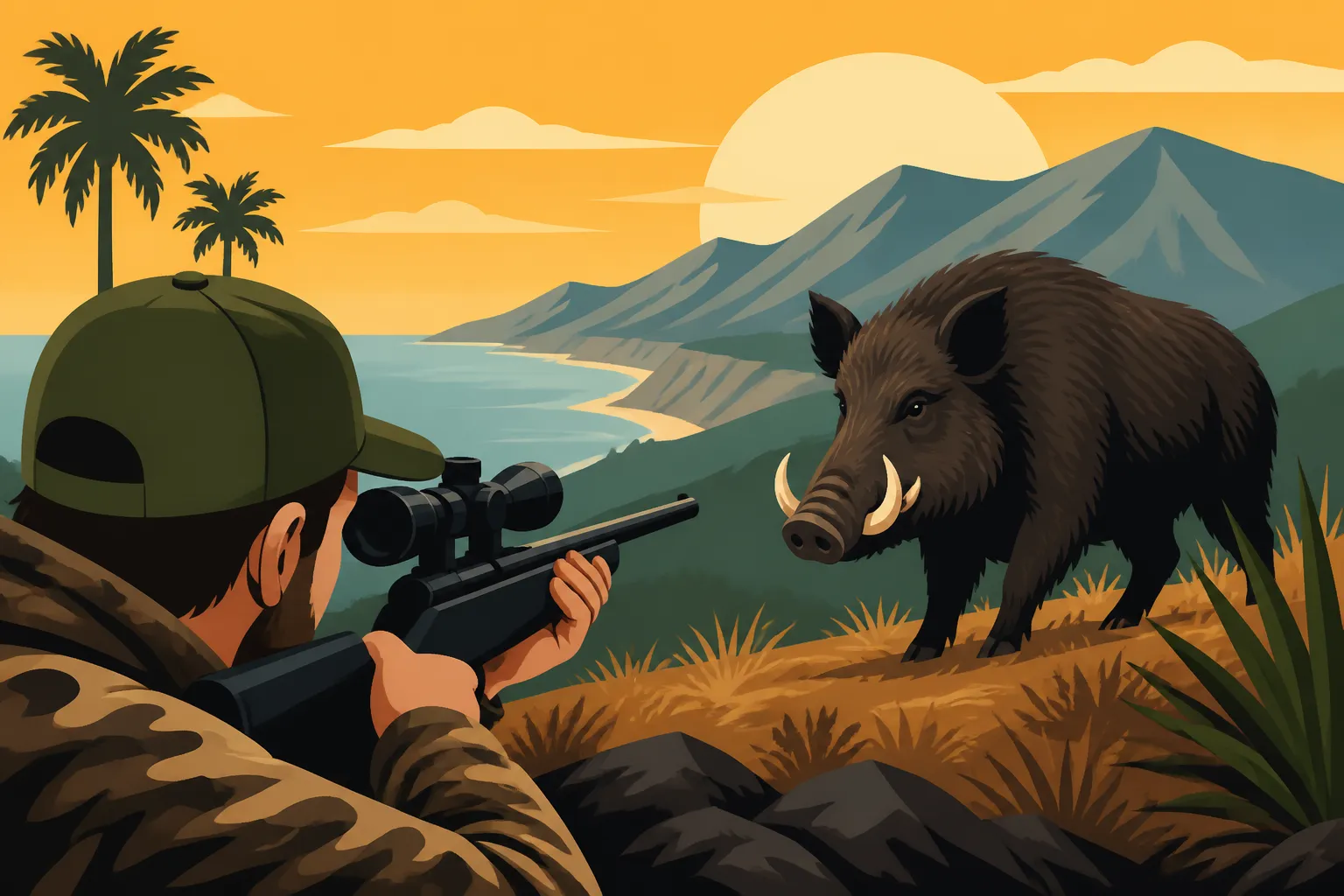
This is where much of your focus should be. Mature boars with good cutters will often have a distinctively wide, robust jawline. The cutters themselves will cause a noticeable bulge or protrusion along the lower jaw, making the jaw appear deeper and more pronounced. The tusks should be visibly extending out and often curving upwards, away from the snout, and sometimes even backwards towards the eyes.
Look for the "ivory" itself. Are the tusks thick at the base? Do they show a decent amount of length outside the mouth? Are they stained brown, black, or reddish from dirt and minerals, or are they a cleaner, whiter ivory? The darker, more stained tusks usually indicate an older, more experienced boar that spends a lot of time rooting and fighting. A good rule of thumb is to look for cutters that extend at least 3-4 inches beyond the jawline, but thickness and curvature are equally important.
Behavior and Solitary Nature
Older, mature boars, especially those with significant cutters, tend to be more solitary animals, particularly outside of breeding season. While you might occasionally see them with a small group of other boars, they are less likely to be found in large sounders with sows and piglets. If you spot a single, large pig moving deliberately through the brush or rooting independently, there's a higher probability it's a mature boar.
Younger boars, on the other hand, are often found in bachelor groups or still accompanying sounders. Their behavior might be less cautious, more prone to fleeing immediately. A truly old boar, while still wary, might hold its ground longer, testing the wind, or slowly slipping away, indicating a more experienced and cunning animal. This subtle difference in behavior, combined with physical cues, can be a strong indicator of age and tusk development. It's often during these lone encounters that you get the best opportunities for careful observation, which is paramount for Judging a Boar's Cutters Before the Shot.
Lighting and Distance Challenges
Let's be realistic, judging cutters in the field is rarely easy. You're often dealing with low light conditions at dawn or dusk, dense cover, or long distances. The angle of the animal can obscure the tusks entirely. A boar facing directly away or towards you will make judging incredibly difficult. The best opportunities arise when the boar is broadside or slightly quartering away, allowing you to see the profile of its jaw and the tusks protruding.
Mirage can also distort your view over long distances, making it hard to discern fine details. Understanding these limitations is key to managing your expectations and making ethical decisions. If you can't clearly see the tusks to make an informed judgment, it's often best to hold your shot or try to close the distance if conditions allow. Sometimes, a quick glance through Best Binoculars for Glassing Open California Desert Terrain is all you get, and you have to make the most of it.
Tools and Techniques to Aid Your Judgment
Even the most experienced hunter needs help sometimes. Modern optics and a dose of patience can drastically improve your chances of making an accurate assessment.
Optics Are Your Best Friend
High-quality binoculars and spotting scopes are indispensable tools for judging boar cutters. Instead of just trying to glimpse with the naked eye, use your optics to magnify the view and pick out those crucial details. A good pair of 10x binoculars can make a huge difference, allowing you to clearly see the length, thickness, and curve of the tusks, as well as the overall mass of the boar's head.
For longer distances, a spotting scope becomes invaluable. You can often dial it up to 40x or 60x magnification, giving you a detailed look at the tusks even if the animal is hundreds of yards away. This is particularly useful in more open country or when you're trying to evaluate a pig before Hunting a Funnel Between Two Oak Ridges where it might disappear quickly. Remember to use a stable rest, like a tripod, for your spotting scope to minimize shake and maximize clarity. Brands like Vortex, Leupold, and Maven offer excellent optics that can withstand the rigors of California hunting.
Patience and Observation
This might sound simple, but it's probably the most critical "tool" in your arsenal. Rushing a shot or making a judgment based on a fleeting glimpse often leads to disappointment. If you spot a pig and think it might be a tusked boar, slow down. Set up your optics, find a stable rest, and observe the animal. Wait for it to turn, to lift its head, or to move into better light. It might take several minutes, or even longer, for the animal to present a clear view of its cutters.
Consider the wind direction and your cover. Can you slowly reposition yourself to get a better angle without spooking the animal? Often, waiting for the boar to move to a slightly more open area or to present its broadside profile is well worth the extra time. Remember, Why Wild Pigs Have No Bag Limit in California means you usually have opportunities for multiple pigs, so passing on one because you can't get a good look isn't the end of the world.
Field Judging Aids
While not strictly "tools" in the same sense as optics, various resources can help you refine your field judging skills. Look for online forums, hunting articles, or even dedicated apps that provide visual examples of tusk development at different ages. Some hunting apps, like GoHunt, offer mapping tools and can sometimes provide insights into typical animal characteristics in specific zones based on user reports, although specific tusk details are less common. The more images and videos you study of boars with known tusk measurements, the better your eye will become in the field.
Consider carrying a small rangefinder, not just for shot distance, but to help calibrate your eye. If you know a particular branch or rock is, say, 10 inches long, it can give you a mental reference point when estimating tusk length relative to the boar's head.
Table: Visual Comparison for Judging Boar Cutters
| Characteristic | Younger Boar (1-2 years) | Mature Boar (3+ years) |
|---|---|---|
| Overall Body | Leaner, lankier build; smaller chest/shoulders. | Blocky, heavily muscled neck and shoulders; distinct "shield." |
| Head Shape | Appears proportionally smaller; longer, pointed snout. | Large, broad, blocky head; deeper, pronounced jawline. |
| Visible Cutters | Short, sharp, often barely protruding (1-2 inches). | Long, thick, curved, extending well past jaw (3+ inches). |
| Cutter Color/Wear | Whiter, yellowish, smooth; less visible wear. | Darker, stained (brown/black/red); worn, chipped tips. |
| Behavior | Often in sounders; less cautious, more skittish. | More solitary, wary, deliberate movements; holds ground longer. |
| Jaw Protrusion | Minimal to none. | Clear bulge or deep appearance along the lower jaw. |
Ethical Considerations and Shot Placement
Regardless of your goal—whether it's a giant tusked boar or tender meat for the family—ethical hunting practices are always paramount.
Prioritizing a Clean Kill
No matter how impressive a boar's cutters might be, the number one priority is always a clean, humane kill. Focus on precise shot placement to ensure a quick and ethical harvest. Wild pigs are incredibly tough animals, and their "shield" can deflect poorly placed shots. Always aim for the vital organs: the heart-lung area (just behind the shoulder) or the brain (a very small target, only recommended for experienced shooters at close range).
If you've spent all that time Glassing a Canyon for a Bedded Buck and now have a tusked boar in your sights, don't let "tusk fever" override your judgment on shot opportunity. If the angle isn't right, or if the animal is obscured, wait for a better shot. It's better to pass on a potential trophy than to wound an animal. After the shot, be prepared for a vigorous blood trail, as pigs don't always drop immediately, even with a good hit. Having Knives and Processing Gear for Field Dressing ready is key for prompt field care.
The Value of Any Wild Pig
While this guide focuses on judging cutters, it's important to remember that every wild pig harvested in California is a valuable animal. They are an invasive species, and hunting them helps manage their populations, which can cause significant damage to agriculture, natural habitats, and even endangered species. California Wild Pig Population Estimate numbers show they are a pervasive problem.
Whether you take a monstrous boar with impressive tusks or a smaller sow, you're contributing to conservation efforts and bringing home some of the finest wild game meat available. Plus, the experience of Hunting Pigs on Central Coast Oak Ranges or any other part of California is rewarding in itself. After the hunt, don't forget your responsibility to Reporting a Pig Harvest Through ALDS. Every harvest reported provides crucial data to CDFW, helping them better manage California's diverse wildlife resources.
Disclaimer
Always consult the latest California Department of Fish and Wildlife (CDFW) regulations before any hunting activity, as rules and seasons can change. This guide is for informational purposes only and does not supersede official CDFW regulations.