Coyote Calling California Ranch Land
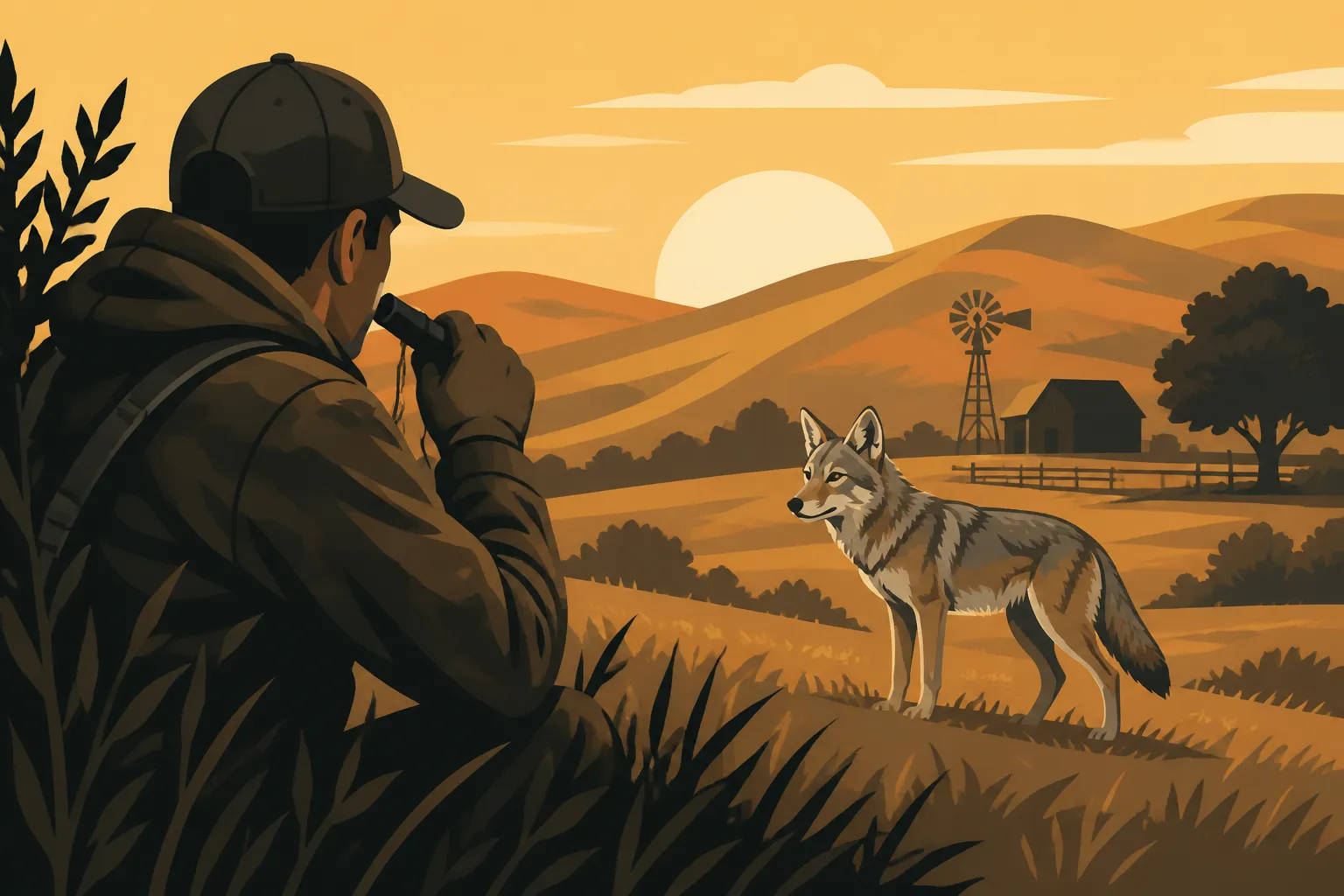
Coyotes can be a real headache for ranchers and a challenging quarry for hunters in California. From preying on young livestock to impacting deer and game bird populations, their presence on ranch lands is often a concern. Mastering the art of coyote calling on these private properties isn't just about reducing predator numbers; it's about understanding their habits, respecting the land, and employing smart tactics to bring these wily canines into range. This guide will walk you through everything you need to know to become a more effective coyote caller on California's vast ranch landscapes.
Understanding Coyote Behavior on California Ranch Land
Before you even think about setting up a call, it’s absolutely essential to get inside the head of a coyote living on a working ranch. These aren't your typical wilderness coyotes; they're often more wary, more opportunistic, and their movements are heavily influenced by the presence of livestock, crops, and human activity. Ignoring these nuances is a sure path to frustration.
Ranch Land Food Sources and Habits
Coyotes are incredibly adaptable predators, and ranch lands offer a smorgasbord of potential meals. Their diet isn't fixed; it shifts with the seasons and the availability of prey. In spring, you might find them keying in on newborn calves, lambs, or fawns. These vulnerable young animals represent a high-calorie, low-effort meal for a hungry coyote, or an entire pack. As the year progresses, their focus might shift to rodents like gophers, ground squirrels, and voles that thrive in pastures and hayfields. Large rodent populations can sustain a surprising number of coyotes. Additionally, rabbits, both cottontails and jackrabbits, are consistent prey items. Many hunters specifically mimic the distress calls of these smaller animals because they represent such a common food source. Understanding these primary food sources can inform your calling strategy; for instance, using a fawn bleat in spring or a rabbit distress in fall. If you're observing their habits, you'll notice they often hunt along fencelines, field edges, and natural travel corridors that provide cover and easy access to prey. For a deeper dive into what these opportunistic feeders consume, check out our guide on California Coyote Diet in Ranch Country.
Territoriality and Pack Dynamics
Coyotes are highly territorial animals, and this plays a massive role in how they respond to calls. A typical ranch might host one or more established packs, each defending its turf. These packs often consist of a breeding pair and their offspring from previous years. They communicate constantly through howls, barks, and yips, marking their territory with scent posts like urine and scat. When you introduce a foreign call – say, a challenge howl from an unknown coyote – you're essentially trespassing on their auditory landscape. A dominant male or female might come in to investigate, driven by a desire to defend their territory from perceived intruders. On the flip side, a lone, transient coyote might respond to a lonesome howl, seeking social interaction or a potential mate. Paying attention to fresh scat or tracks can give you clues about the presence of a pack versus a lone animal, allowing you to tailor your calling approach.
Impact of Human Activity
Ranch land isn't pristine wilderness; it's a dynamic environment shaped by daily human operations. Coyotes here learn quickly. They become accustomed to tractors, ATVs, cattle movements, and even the sounds of gunshots. This can make them incredibly wary, but also surprisingly bold in some situations. Coyotes near areas with consistent human presence might be more nocturnal, moving under the cover of darkness to avoid detection. On the other hand, coyotes that have learned to associate human activity with easy meals (like afterbirth from calving or discarded scraps) might be less wary. It's crucial to observe how the specific ranch operates. Is it a bustling cattle operation, a quiet vineyard, or a vast open grazing land? Each scenario will influence how the coyotes behave, how pressured they are, and how you should adapt your calling strategy.
Scouting and Setting Up for Success on California Ranches
Calling coyotes is far more than just blowing on a call. It's an intricate dance of preparation, observation, and strategic positioning. Without proper scouting and setup, even the most realistic calling sequence will likely fall flat.
Reading the Landscape and Coyote Sign
Before you ever make a sound, you need to understand where the coyotes are and how they move through the ranch. This means getting out there and "reading" the land. Look for travel corridors – these are often natural funnels like saddles between hills, dry creek beds, fencelines, or edges of dense cover. Coyotes will naturally use the path of least resistance, especially if it offers concealment. Water sources, even seasonal ones, are magnets for all wildlife, including coyents, and often reveal well-used trails. Pay close attention to fresh sign: tracks in dusty roads or damp soil, scat (often containing hair, bone fragments, or berries), and perhaps even den sites during breeding season. The presence of tracks consistently moving in a certain direction, or fresh scat along a ridge, gives you invaluable clues about their routines. Using mapping apps like those found on GoHunt can be incredibly helpful for identifying these features and planning your approach remotely. For general insights into tracking, our article on Reading California Mud for Fresh Deer Movement offers valuable principles that can be applied to coyotes.
Wind, Thermals, and Stand Location
This is perhaps the single most critical factor in coyote calling success. A coyote's nose is its most powerful tool, and if they catch a whiff of you, the hunt is over before it begins. You must always set up with the wind in your favor, blowing from the target coyote's most likely approach to you. This usually means the wind should be blowing from where you expect them to come from, across your position, and away from where you are calling.
Thermals add another layer of complexity, especially in California's often hilly or mountainous ranch country. Early in the morning, cold air sinks, causing thermals to pull down into valleys. As the sun rises and warms the earth, thermals reverse and begin to lift up the hillsides. This means a perfect morning stand in a valley could quickly become a scent trap as the day warms up. You need to position yourself not just for the prevailing wind, but also for the expected thermal movement during your stand. On a morning hunt, starting high and letting your scent drift down is often effective. In the afternoon, setting up low where the thermals are rising can work better. Understanding these air currents is paramount for staying undetected. You can find more detailed information on this topic in our article about Wind and Thermals in Steep Sierra Country, which applies broadly to undulating terrain.
Concealment and Approach Strategies
Getting to your stand without being seen or heard is just as important as the stand itself. Coyotes have excellent eyesight and hearing, so move slowly, deliberately, and use terrain features to your advantage. Wear camouflage that matches the local vegetation – whether it's the golden hues of dry oak woodlands, the greens of chaparral, or the muted tones of a winter pasture. Once you've chosen your stand location, you need to blend in. This means breaking up your silhouette against a natural backdrop like a large oak tree, a rock outcropping, or a dense thicket. A portable ground blind can be incredibly effective, especially in open country, as it allows for slight movements without immediate detection. Learning to effectively brush in a blind, as discussed in Brushing In a Blind on a Field Edge, can make all the difference. Always consider your backdrop: don't sit on a skyline, and ensure any movement you make is against a solid, camouflaged background. Your goal is to become an invisible part of the landscape.
Choosing and Using Coyote Calls Effectively
The variety of coyote calls on the market can be overwhelming, but understanding their purpose and how to wield them is key. There's an art to calling, and it's not just about making noise, but about creating a believable auditory scenario.
Types of Calls: Distress, Howls, and Barks
Coyote calls generally fall into a few main categories, each designed to tap into a different instinct.
- Distress Calls: These are perhaps the most common and effective. They mimic the cries of an injured or vulnerable prey animal – a rabbit, a fawn, a bird. Coyotes are hardwired to respond to distress, as it signals an easy meal. Rabbit distress calls are a classic for a reason; they're universal and often bring coyotes in hard and fast. Fawn bleats can be deadly during spring and early summer when fawns are present.
- Howls: Howls serve multiple purposes. They can be used as locator calls to determine if coyotes are in the area without immediately alerting them to your presence as a threat. A lonesome howl might attract a territorial male or a seeking female. Challenge howls are aggressive and designed to provoke a response from dominant coyotes defending their turf. Group howls, mimicking a pack, can also elicit responses from rival packs or single coyotes looking to join a group.
- Barks and Yips: These shorter, sharper vocalizations often convey alarm, agitation, or warning. Pup distress calls, a combination of yips and whines, can be incredibly effective, especially when adult coyotes are actively raising their young. They'll often come in quickly to investigate what's happening to a perceived pup.
Understanding when to deploy each type of call is crucial for effective communication with your quarry.
Electronic Callers vs. Mouth Calls
Both electronic and mouth calls have their place in the coyote hunter's arsenal.
- Mouth Calls: These include open reed, closed reed, and diaphragm calls.
- Pros: They are lightweight, inexpensive, and don't require batteries. They offer a hands-on, intimate experience and allow for subtle variations in tone and volume that can be hard to replicate with electronics. They're excellent for close-quarters calling in thicker cover. You can manipulate the sound with your breath and hands, adding realism.
- Cons: They require practice to master, especially to get realistic distress sounds or howls. You have to move your hands, which can be detected by sharp-eyed coyotes. Volume can be a limiting factor in windy conditions or very open terrain.
- Electronic Callers: Brands like Foxpro and Lucky Duck dominate this market.
- Pros: They offer a huge library of realistic sounds, from various distress calls to howls, barks, and even bird calls. You can control them remotely, allowing you to place the sound source away from your position, drawing the coyote's attention there instead of directly to you. This also keeps your hands free for your firearm. Volume is usually much higher, making them effective in windy or open conditions.
- Cons: They are more expensive, require batteries, and can be heavier. While realistic, they lack the spontaneous, subtle nuances a skilled mouth caller can achieve. Some coyotes, especially highly pressured ones, might become "call shy" to certain electronic sounds they've heard repeatedly.
Many experienced hunters will carry both, using an electronic caller for its versatility and volume, and a mouth call for nuanced follow-ups or situations requiring absolute silence in deployment.
Developing Effective Call Sequences
Simply blaring a call for five minutes straight is rarely effective. Coyote calling is about building a believable narrative. A common sequence starts subtly.
- Start Soft: Begin with a few soft, intermittent distress cries, like a slightly injured rabbit. This often piques curiosity without alarming distant coyotes.
- Increase Intensity: After a minute or two of soft calls, increase the volume and urgency. Make it sound like the animal is in more distress.
- Vary Sounds: If using an electronic caller, try switching between two different distress sounds (e.g., a cottontail and then a jackrabbit). If using mouth calls, vary your pitch and rhythm.
- Incorporate Howls/Barks: After several minutes of distress, you might try a challenge howl if you think there are territorial coyotes, or a lonesome howl if you suspect a lone transient. Be cautious with howls, as they can sometimes deter wary coyotes if overused.
- Silence is Golden: Critically, incorporate periods of silence. Coyotes don't just scream constantly. They pause, listen, and approach cautiously. A minute or two of silence can be when a coyote commits and shows itself, thinking the "prey" has quieted down and might be easier to approach. Many experienced callers say more coyotes are called in during silent periods than during active calling.
Your calling sequence should ideally last 15-25 minutes per stand. If nothing shows up after that, it's time to move to another location. Remember, the goal is to sound like an easy meal or a threat, not a loudspeaker.
Essential Gear for California Coyote Calling
Successfully calling coyotes on California ranch land requires more than just calls and a rifle. The right gear enhances your effectiveness, comfort, and safety, allowing you to maximize your time afield.
Optics: Binoculars, Spotting Scopes, and Rangefinders
In the often vast and open expanses of California ranch country, optics are your best friend.
- Binoculars: A good pair of 8x or 10x binoculars is indispensable. They allow you to scan wide areas, identify movement, and confirm what you're seeing from a distance. You'll use them constantly to spot incoming coyotes, often before they commit to the call, giving you valuable time to prepare for a shot. Look for optics with good light gathering capabilities for dawn and dusk hunts.
- Spotting Scopes: While not always necessary, a spotting scope (like those used for Glassing Mule Deer in Open California Country) can be invaluable for identifying distant coyotes in extremely open terrain or analyzing their behavior without spooking them. If you're hunting vast, rolling hills, a spotting scope can confirm if that distant speck is a coyote, a rock, or a cow.
- Rangefinders: Knowing the exact distance to your target is crucial for ethical and accurate shooting. Coyotes can often appear closer or further than they actually are. A rangefinder eliminates guesswork, especially when shooting across varied terrain with elevation changes. For specific recommendations, check out our guide on the Best Rangefinder for Open Desert Country. Having clear optics allows you to pick up subtle movements, confirm the target, and ensure a clean shot.
Firearms and Ammunition Considerations
When it comes to firearms, precision and adequate power for humane dispatch are key.
- Calibers: Popular calibers for coyotes include .223 Remington, .22-250, .204 Ruger, and .243 Winchester. These cartridges offer flat trajectories, minimal recoil, and sufficient energy for coyotes, which can range from 20 to 50 pounds. Many hunters choose a lighter, faster bullet that minimizes pelt damage if they plan to skin the animal.
- Non-Lead Ammunition: This is absolutely critical in California. The statewide non-lead ammunition requirement means all big game and predator hunting must use non-lead projectiles. This isn't just a recommendation; it's the law. For coyotes, copper-jacketed or solid copper bullets are the standard. Always double-check that your chosen ammunition complies with California's regulations. It's a good idea to practice with your non-lead loads before the season to ensure accuracy, as they can sometimes behave differently than traditional lead-core bullets. Our comprehensive guide on Choosing Non-Lead Rifle Ammunition in California offers detailed advice, including options like the Best Non-Lead Bullet for a .270 which can also be effective for coyotes.
- Shotguns: For thick brush or very close-range encounters, a shotgun loaded with non-lead (e.g., steel or bismuth) buckshot or heavy shot can be effective, particularly with a tight choke.
Camouflage, Blinds, and Comfort Gear
Your clothing and setup play a huge role in disappearing into the landscape.
- Camouflage: Choose patterns that blend with the prevailing vegetation on the ranch. This might be a brushy pattern for oak woodlands, a dry grass pattern for pastures, or a rocky desert pattern for arid regions. The goal is to break up your human outline.
- Ground Blinds: As mentioned earlier, a portable ground blind can provide excellent concealment, especially in open fields or sparse cover. It allows for more movement and helps contain your scent cone. If you're hunting in an area with a lot of pressure, a well-brushed-in blind is a must.
- Comfort Gear: Coyote calling often involves long, stationary sits, sometimes in varying weather conditions. Bring a comfortable cushion or seat to minimize fidgeting. Layered clothing is crucial for California's unpredictable weather, where mornings can be chilly and afternoons can be scorching. A good pair of gloves and a face mask not only help with concealment but also protect you from the elements. Don't forget water and snacks for those extended waits. All these small details contribute to your ability to remain still and focused.
Tactical Approaches for Ranch Land Coyotes
Even with the best gear and scouting, your success hinges on smart tactical execution. Coyotes on ranch land, particularly those near human activity, are often educated and wary, demanding a thoughtful approach.
Stand Duration and Multiple Setups
Patience is a virtue in coyote calling, but so is knowing when to move. A typical stand should last 15 to 25 minutes. Why this specific window? Usually, if a coyote is going to respond, they will do so within the first 10-15 minutes. The remaining time allows for those slower, more cautious coyotes to commit. If nothing has shown itself after 25 minutes, it’s highly unlikely they will. It’s better to pack up and move to a new location.
The strategy of multiple setups is incredibly effective on ranch land. Instead of spending an hour on one stand, try hitting three or four different locations in that same amount of time. Each new stand offers a fresh approach angle, different wind conditions, and a chance to call to a new set of coyotes. When moving between stands, do so quietly and cautiously. Walk with purpose, but avoid making unnecessary noise. Your approach and exit from each stand should be as discreet as your time on the stand itself. This "run and gun" approach maximizes your chances by covering more ground and encountering more animals.
Hunting Different Times of Day and Season
Coyote activity varies significantly throughout the day and year, and adjusting your tactics accordingly can dramatically increase your success rate.
- Time of Day:
- First Light: This is often the prime time. Coyotes are typically wrapping up their nocturnal hunts, heading back to bedding areas, and are more receptive to calls, especially distress calls. They're hungry and potentially less wary in the low light. Our guide on Coyote Calling at First Light elaborates on this golden hour.
- Mid-Day: Don't dismiss mid-day. While less active, coyotes still move, especially if pushed by livestock or if they've found an easy food source. During winter, they might even sun themselves. A soft distress call can sometimes entice a bored or curious coyote.
- Last Light: Similar to first light, the evening transition is a good time as coyotes become more active. They're beginning their nightly hunt and can be receptive to howls and distress calls.
- Night Hunting: Where legal (and with proper landowner permission), night hunting for predators like coyotes can be highly effective. California has specific rules regarding night hunting, which are detailed for other species in our article on Night Hunting Rules for California Hogs. These regulations often involve specific lights and weapon restrictions, so always confirm local laws.
- Time of Year:
- Winter: Cold weather and breeding season (late winter/early spring) make coyotes more responsive. They're often hungry, and males are actively seeking mates, making howls and challenge barks very effective.
- Spring/Early Summer: Pups are born, and adult coyotes are actively hunting to feed their young. Pup distress calls, fawn bleats, and rabbit distress calls can be deadly as adults try to protect their offspring or secure food.
- Late Summer/Fall: Young coyotes are dispersing, and older ones are establishing new territories. Distress calls are still effective, and social howls can draw in curious youngsters.
Dealing with Pressured Coyotes
Ranch lands, especially those near populated areas or those that have been hunted frequently, often hold "educated" or "call-shy" coyotes. These animals have heard it all and learned to associate certain sounds with danger.
- Subtlety is Key: Instead of aggressive, loud calling, try starting with very soft, intermittent distress sounds. Mimic a mouse squeak or a quiet bird distress. The goal is to make them think the meal is there and easy, not that a hunter is trying to lure them.
- Vary Your Calls: If you've been using the same rabbit distress sound for years, switch it up. Experiment with bird calls, rodent squeaks, or even an injured deer sound (like a fawn bleat if appropriate). Electronic callers like those from Foxpro often have a huge library of unique sounds specifically for wary predators.
- Longer Silences: With pressured coyotes, the silent periods between calls can be even more crucial. They'll often approach slowly, trying to pinpoint the source without exposing themselves. Give them plenty of time to commit.
- Use Decoys: A motion decoy, like a small motorized critter, can distract a wary coyote's eyes, drawing their attention away from your position and giving them something to focus on other than potential danger. Place it about 50-100 yards out and slightly to the side of your calling location.
- Advanced Scouting: Spend extra time scouting for hidden travel routes or thick cover where pressured coyotes might feel safer approaching. They're less likely to cross wide-open spaces. Using satellite imagery from tools like GoHunt can help you identify these subtle terrain features.
Navigating California's Regulations and Ethics
Hunting on private ranch land in California comes with specific responsibilities, both legal and ethical. Respecting the law and fostering strong relationships with landowners are paramount for continued access and a positive hunting experience.
California-Specific Predator Hunting Rules
While coyotes are generally considered a non-game animal in California and can be hunted year-round, there are still important regulations to be aware of. Unlike deer or elk, there's no specific season or bag limit for coyotes, but this freedom doesn't mean a lack of rules.
- Hunter Education: Anyone hunting in California, regardless of species, generally needs to complete an approved hunter education course. If you're new to hunting or haven't taken the course, this is a must.
- Hunting License: You must possess a valid California hunting license.
- Non-Lead Ammunition: As mentioned previously, the statewide non-lead ammunition requirement applies to all hunting, including coyotes. Make sure your bullets are certified non-lead.
- Night Hunting: While legal for coyotes, specific restrictions apply. You generally cannot use artificial lights to hunt game animals, but these rules differ for non-game animals like coyotes. Always check the current California Department of Fish and Wildlife (CDFW) regulations or local ordinances, as rules can change. For a general overview of night hunting considerations, though for a different species, our article on Night Hunting Rules for California Hogs offers context.
- Weapon Restrictions: Be aware of any local firearm restrictions, especially if hunting near populated areas or within certain county limits.
- Public vs. Private Land: On public land, there might be additional restrictions or specific areas where predator hunting is prohibited. On private land, always confirm with the landowner if they have any specific rules regarding weapons or hunting hours.
Always consult the most current CDFW hunting regulations handbook or website before heading afield. Ignorance of the law is not an excuse.
Building Strong Landowner Relationships
This is arguably the most critical aspect of hunting private ranch land. Access to private land is a privilege, not a right, and maintaining that privilege depends entirely on your relationship with the landowner.
- Seek Permission Diligently: Never, ever trespass. Always secure explicit permission before entering any private property. Our guide on Asking a California Landowner for Permission offers strategies for making a good impression.
- Get it in Writing: While verbal permission might suffice in some cases, written permission is always best, especially if you're hunting multiple times or if you're hunting land that might have ambiguous boundaries. It protects both you and the landowner. Learn more about what Do You Need Written Permission in California? entails.
- Communicate Openly: Let the landowner know when you'll be there, what areas you plan to hunt, and when you expect to leave. Share your hunting plan, including your intended entry and exit routes.
- Respect Their Property: This means driving only on designated roads, closing gates, not disturbing livestock, avoiding cultivated fields, and leaving no trash behind. Treat their property better than you would your own.
- Offer Assistance: Offer to help with chores, fix a fence, or check on livestock. Showing appreciation and being helpful goes a long way.
- Share Your Success (if appropriate): If you're successful, offer to share some of the meat (if you're keeping it) or simply report your success. Landowners appreciate knowing that their predator problems are being addressed.
- Know Their Concerns: Understand why they want coyotes removed. Is it for livestock protection, to boost fawn survival, or simply property management? This can inform your hunting strategy and show you're invested in their goals.
A good relationship with a landowner can grant you access for years to come, turning a one-time hunt into a long-term opportunity. Conversely, one act of disrespect can close doors for all hunters.
Coyote Calling Quick Reference
Here's a quick look at key elements for successful coyote calling on California ranch land:
| Aspect | Key Considerations | Best Practice |
|---|---|---|
| Scouting | Identify travel corridors, water sources, fresh sign. | Use mapping tools like GoHunt, look for tracks and scat near fencelines. |
| Wind & Thermals | Always hunt into the wind; understand thermal shifts (up-hill in PM, down-hill in AM). | Position yourself to keep your scent away from expected coyote approach. |
| Concealment | Break up your silhouette, blend with local vegetation. | Utilize natural cover (trees, rocks) or a well-brushed ground blind. |
| Call Type (Distress) | Mimics injured prey (rabbit, fawn, rodent). | Start soft, increase intensity. Effective year-round. |
| Call Type (Howl) | Locator, territorial challenge, social. | Use to locate or challenge existing coyotes. Be cautious not to over-howl. |
| Electronic Calls | Realistic sounds, remote placement, high volume. | Great for open areas, multiple sounds, and diverting attention from self. |
| Mouth Calls | Lightweight, inexpensive, nuanced sounds, close-range. | Excellent for subtle follow-ups or situations requiring minimal gear. |
| Call Sequence | Start soft, build intensity, incorporate silence. | 15-25 minute stands; vary sounds and intensity. Silence is crucial. |
| Optics | Binoculars, rangefinder for spotting and distance. | Essential for scanning, identifying, and ethical shot placement. |
| Firearm/Ammo | Flat-shooting caliber (.223, .22-250, .243), non-lead ammunition. | Practice with non-lead. Shotgun with non-lead buckshot for thick cover. |
| Landowner Relation | Respect property, communicate, offer help, get written permission. | Critical for continued access. Treat it as a privilege. |
| Regulations | Valid license, hunter education, statewide non-lead law. | Always check current CDFW regulations for any specific rules or changes. |
Disclaimer
Always ensure you are aware of and comply with all current California Department of Fish and Wildlife (CDFW) regulations, seasons, and licensing requirements before engaging in any hunting activities. Hunting regulations can change, and it is the hunter's responsibility to stay informed. Obtain all necessary permissions when hunting on private land.