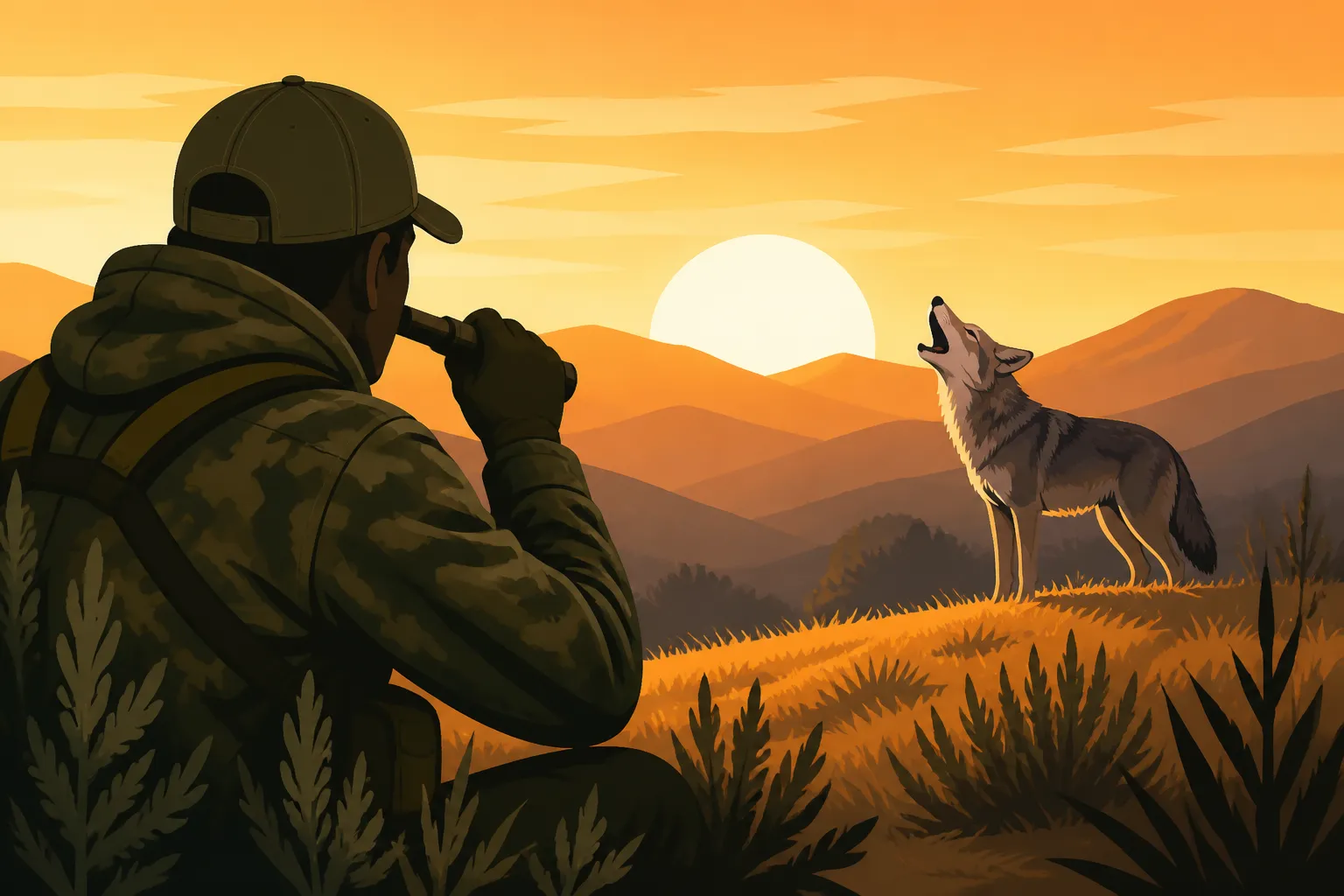
Coyote Calling at First Light
There's nothing quite like the hopeful anticipation of a new hunting day, especially when you're geared up for coyote calling as the first hints of dawn paint the eastern sky. Many hunters get frustrated, setting up too late, rushing their calls, or spooking wary coyotes before they even get a chance. This comprehensive guide will walk you through the nuances of successful coyote calling specifically at first light in California, helping you understand their behavior, perfect your setup, and execute calling sequences that consistently bring them in.
Why First Light is the Ultimate Window for Coyote Calling
Coyotes, like many predators, are at their most active during the low-light hours of dawn and dusk. This isn't just a preference; it's deeply ingrained in their biology and survival strategy. Understanding why this window is so critical will dramatically improve your success rates when you're out there on a frosty California morning, trying to coax a wary 'yote into range.
Understanding Coyote Circadian Rhythms
Just like us, coyotes have a natural rhythm to their day. They are crepuscular, meaning they are most active around dawn and dusk. As the night gives way to morning, their hunger often peaks. They've been on the prowl, but perhaps haven't secured a meal, or they're looking for that last opportunity before settling down for the day. This makes them highly receptive to distress calls. At first light, the world is just waking up, and food sources like rabbits, mice, and even deer fawns are becoming active, providing both a reason for the coyote to be out and a realistic prey sound for your calling. If you're trying to figure out where the critters are moving, resources like the California Coyote Range and Density can offer insights into local populations and their typical haunts.
Moreover, the human factor is often at its lowest during these precious pre-dawn moments. Hiking trails are empty, ranch hands haven't started their chores, and traffic is minimal. Coyotes are incredibly sensitive to human presence, and the quiet of first light provides a more comfortable, less threatening environment for them to move and respond to calls. As the sun rises higher, human activity increases, and the coyotes, being smart survivors, tend to become more cautious and seek cover.
The Role of Thermals and Wind Patterns
For predator calling, wind is king, and thermals play a crucial role in how scent moves through the air, especially in California's varied topography, from the rolling oak woodlands to the steep Sierra canyons. At first light, thermals are often relatively stable or beginning to shift downwards. This phenomenon, known as a "thermal drain," means that cold air is sinking into low-lying areas, carrying scent down with it. As the sun starts to warm the ground, these thermals will eventually reverse and begin to rise.
This period of stable or falling thermals at dawn is ideal because it allows you to predict scent dispersal more accurately. By setting up with the wind (and falling thermals) in your face, you can minimize the chances of a coyote scenting you from downwind. Coyotes are notorious for circling downwind to get a whiff of whatever is making the sound before committing. If you don't account for this, they'll bust you every time. In areas with significant elevation changes, like those found when Wind and Thermals in Steep Sierra Country are a factor, understanding these dynamics becomes even more critical for successful setup. It’s a small window, but if you get it right, that coyote won’t smell you until it’s too late for them.
Strategic Setup: Mastering Your First Light Stand
Calling coyotes at first light isn't just about blowing a call; it's about putting yourself in the best possible position for success before you even make a sound. A well-chosen stand ensures you have good visibility, cover, and a critical advantage over the notoriously cagey coyote.
Reading the Terrain for Optimal Vantage Points
Before you even step foot in your chosen calling location, do your homework. This means scouting the area for potential coyote travel corridors, bedding areas, and vantage points. Tools like the GoHunt app can be incredibly useful here, allowing you to study topographical maps, aerial photos, and land ownership boundaries from your couch. Look for natural funnels like saddles between ridges, creek bottoms, or the edges of dense cover bordering open fields. Coyotes use these features just like deer, and a savvy hunter will intercept them there.
When you arrive at first light, pick a spot that offers a clear view of the area where you expect a coyote to approach. This usually means setting up on a slight rise or ridge, overlooking a basin, a clearing, or a long draw. Your goal is to see them before they see you. Always consider your backdrop: don't skyline yourself. Position yourself against a large tree, a rock outcrop, or dense brush to break up your outline. In California's varied landscape, whether you're working Coyote Calling California Ranch Land or Predator Calling California's Mojave Desert Country, the principles remain the same: understand how the land forces animal movement.
Managing Wind Direction and Scent Control
As we discussed, wind is paramount. Before you choose your exact calling location, verify the wind direction. A small wind checker or a pinch of powder is your best friend here. You want the wind in your face or quartering across your face from left to right, or vice versa. This forces any approaching coyote to either come directly at you (into the wind) or to circle widely, giving you more time to spot them before they get downwind of your position.
Scent control isn't just for deer hunters; it's vital for coyotes too. Wear freshly washed hunting clothes, use scent-eliminating sprays, and avoid strong-smelling foods, colognes, or anything that could give away your presence. If you're planning a longer sit or setting up in a spot without much natural cover, consider deploying a ground blind. Using a Ground Blind on BLM Land can be an excellent strategy, especially in open country, to conceal your movement and contain your scent. Remember, a coyote’s nose is thousands of times more sensitive than a human’s, and they will absolutely bust you on scent if given the chance.
Mastering the Calls: Sequence and Sound
Once your setup is perfect and the first light is painting the landscape, it's time to bring those coyotes in with your calls. This is where art meets science, and knowing what to say, and how to say it, makes all the difference.
Choosing Your Calls for First Light
For first light, distress sounds are generally your go-to. Coyotes are often hungry and actively hunting during this time, so the sound of an easy meal is incredibly enticing. Rabbit distress calls are a classic for a reason – they work. You can also have great success with fawn distress calls, particularly during late spring and early summer when fawns are abundant and vulnerable. Other options include bird distress calls or even rodent squeaks, especially in areas with high populations of those prey animals.
While open-reed and closed-reed mouth calls give you incredible versatility, an electronic call can be a game-changer for new callers or for those who want to project sound over long distances. Brands like Foxpro and ICOtec offer realistic sound libraries. Regardless of your choice, make sure you're familiar with your calls and can produce realistic, convincing sounds. Check out guides like Best Predator Call for California Coyotes for specific recommendations.
Crafting Your Calling Sequence
A common and effective first-light sequence involves starting with a moderate volume, then increasing intensity as needed. Here's a basic outline:
- Initial Burst (1-2 minutes): Start with a 30-60 second burst of moderately loud distress calls. This is your "wake-up" call for any coyotes in the immediate vicinity. After this, go silent for 1-2 minutes, scanning intently for any movement.
- Increased Intensity (2-3 minutes): If no response, repeat the distress calls, but this time with more urgency and perhaps a bit louder. Mix in some whines and pauses, mimicking a real struggle. Again, follow with a silent period of intense scanning.
- Adding Howls or Pup Calls (Optional): If still no luck after 5-7 minutes, consider adding a few coyote howls or pup distress calls. A lone howl can alert distant coyotes to your presence, while pup calls can tap into their territorial instincts or maternal urges. Be cautious with aggressive howls, though; they can sometimes intimidate smaller or younger coyotes.
- Sustaining the Call (Up to 20-30 minutes): Continue with distress calls, interspersing them with 30-60 second silent periods. Vary the volume and cadence. The key is to be patient. Coyotes might take their sweet time, approaching cautiously, especially if they’ve been pressured before.
It’s crucial to remain still and scan constantly during those silent periods. Often, the coyote will appear silently, almost magically, during a break in your calling.
Table: Common First Light Coyote Calls & Their Purpose
| Call Type | Primary Purpose | Best Time to Use | Notes |
|---|---|---|---|
| Rabbit Distress | Mimics injured prey, appeals to hunger | Most of the year, highly effective at dawn | Versatile, usually a good opener. Vary cries and whimpers. |
| Fawn Distress | Mimics young deer in trouble, strong prey drive | Late spring/early summer, when fawns are present | Very effective when deer are fawning. Can draw in protective does. |
| Bird Distress | Mimics injured birds, softer sound for close range | Any time, useful for wary coyotes or close setups | Less aggressive, can be good for initial soft calling. |
| Rodent Squeaks | Mimics small prey, curiosity/hunger | Any time, good for close-range work | Subtle, great for coyotes that might be very close but undetected. |
| Lone Howl | Locates distant coyotes, territorial challenge | After initial distress, or for locating | Use sparingly, can make wary coyotes hesitant. |
| Pup Distress/Whine | Mimics lost or injured pups, taps into maternal/pack | Late spring/summer, can draw in older coyotes | Good for triggering a protective response or curiosity from a denning coyote. |
Reading the Landscape and Reacting to the Approach
Calling a coyote in is one thing, but successfully getting a shot off is another. Coyotes are incredibly clever, and their approach often gives away their wariness. Being able to read their body language and predict their movements is paramount.
Understanding Coyote Approach Patterns
Most coyotes, especially those that have been hunted before, will not come trotting straight in. They're masters of using cover and the wind to their advantage. A common pattern is for a coyote to appear, stop, scan, and then circle downwind to try and catch a scent. They might dart from bush to bush, or use a dip in the terrain to approach unseen.
As you're calling, scan constantly, not just directly in front of you, but to your sides and even behind. A good pair of binoculars, like the kind you'd use for Glassing a Powerline Cut at Last Light, are essential for spotting subtle movements at long range. Pay attention to any flicker of movement, a patch of fur against the brush, or the distinct shape of a coyote's ears or head. Often, the first thing you'll see is just a pair of eyes or the outline of their head peeking over a rise. Don't assume they're going to appear from the most obvious direction. Sometimes, they'll circle far out and come in from an unexpected angle.
When to Cease Calling and Prepare for the Shot
Knowing when to stop calling is almost as important as knowing when to start. Once you spot a coyote approaching, especially if it's within 150-200 yards and committed to coming in, ease off the calls. Continue with very soft, intermittent distress sounds only if the coyote seems to hesitate or lose interest. Too much calling once they're close can make them nervous, or they might pinpoint your exact location too easily.
Your primary focus should shift to getting your firearm or bow into a shooting position without making any sudden movements. If the coyote is circling downwind, anticipate where they'll likely appear next and prepare for that shot. If you're using an electronic caller, remember to place it 20-50 yards in front of your position. This draws the coyote's attention away from you, focusing on the sound source and giving you a bit of a buffer. For those considering hunting in general, familiarizing yourself with California Hunter Education Requirements is always a good idea, ensuring you're up to date on all safety protocols. And remember, when choosing your equipment, make sure your rifle and caliber are appropriate, similar to considerations for California Legal Firearms for Deer Hunting.
Practical Tips for First Light Success
Beyond the technical aspects of calling and setup, a few practical considerations can significantly boost your success during those critical first-light hours.
Pre-Scouting and Access Strategies
You can't just wake up and decide to go coyote calling. Effective first-light hunts start with good Scouting California Public Land Before Season or private property. Use mapping apps like GoHunt to identify potential calling locations – areas with a mix of cover and open ground, known game trails, and evidence of coyote activity (tracks, scat, dens). Look for elevated positions with good visibility and safe shooting lanes. Consider your entry and exit routes; you want to get to your stand without disturbing the area, and ideally, approach into the wind.
If you're hunting private land, make sure you have all necessary permissions in advance. Nothing ruins a first-light hunt faster than realizing you're on the wrong side of a fence. For public land, always double-check regulations for that specific area, as rules can vary between National Forests, BLM land, and Wildlife Areas. Resources like Reading Aerial Photos for Sierra Deer can give you an edge in understanding terrain and potential animal movement, which applies equally well to predators.
Patience and Persistence
Coyote calling, especially for educated California coyotes, demands patience. A successful stand can take anywhere from 10 minutes to over an hour. Don't pack up after a short stint of no activity. Sometimes, a coyote might be a long way off and needs time to commit and make its way to your calls. Other times, they might be very hesitant, approaching slowly and cautiously.
If your first stand doesn't yield results, don't get discouraged. Often, the best strategy is to make several stands throughout the morning, moving a quarter-mile to a half-mile between each one. This "run-and-gun" approach allows you to cover more ground and increase your chances of encountering an active coyote. The key is to keep believing that the next setup will be the one that brings in that elusive predator.
Disclaimer
Hunting is an inherently dangerous activity. Always follow all local, state, and federal laws and regulations. Ensure you have the proper licenses and permits. Prioritize safety, practice ethical hunting, and respect wildlife and the environment. This guide is for informational purposes only and does not replace professional instruction or local wildlife agency guidelines.