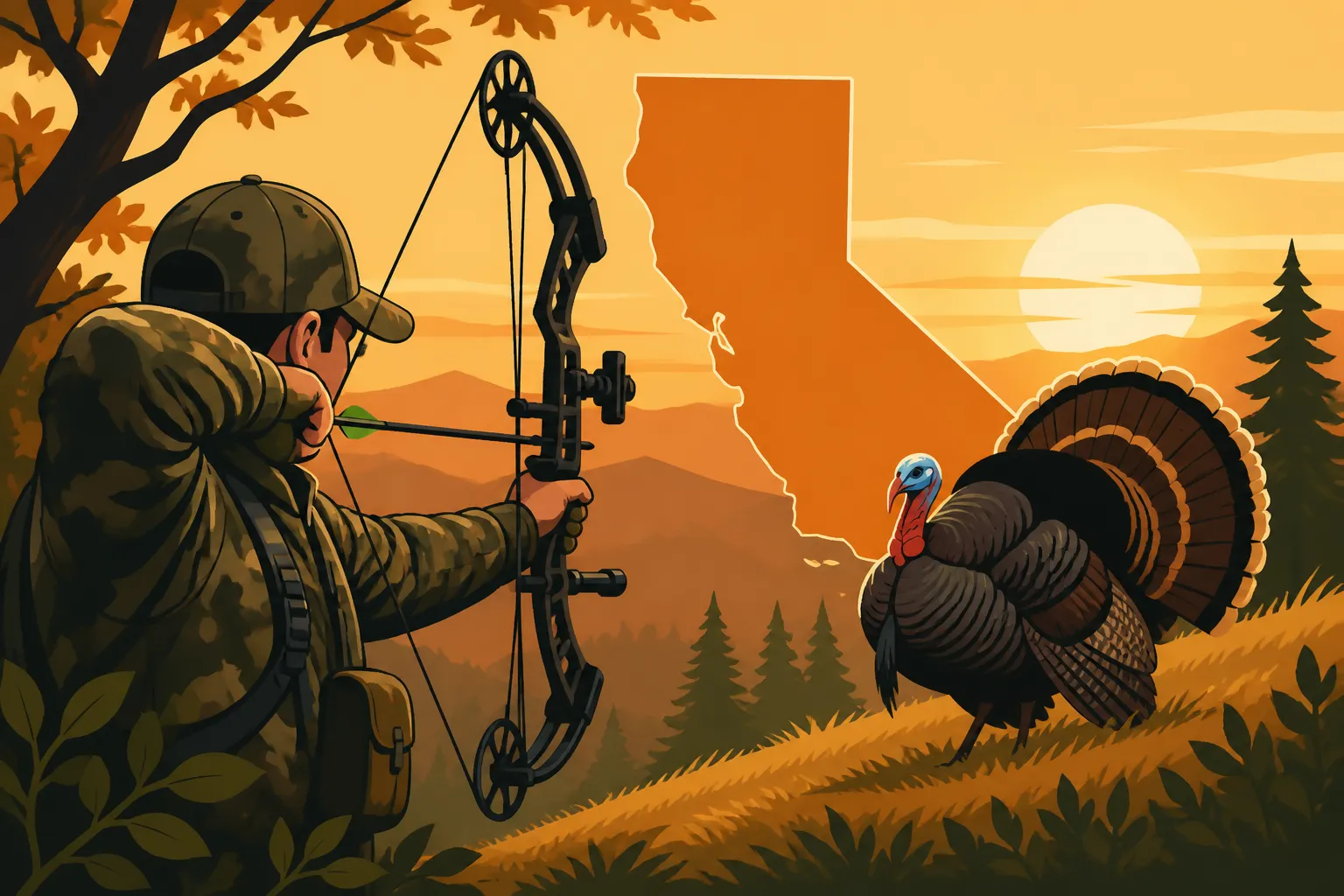
Archery-Only Fall Turkey Hunting in California
Oh, the crisp air of a California fall! It brings promises of changing leaves and quiet mornings, but if you're an archery hunter with a turkey tag in your pocket, it also brings a unique set of challenges. Unlike the vocal, strutting gobblers of spring, fall turkeys are often silent, spread out in family groups, and far less forgiving of a missed step, making success feel like a distant dream. This guide is here to dive deep into the world of archery-only fall turkey hunting in California, equipping you with the knowledge and tactics to fill your tag during this truly rewarding, albeit difficult, season.
Understanding the Fall Turkey Landscape in California
Fall turkey hunting is an entirely different beast than spring, and recognizing these differences is the first step toward success. If you approach it with a spring mindset, you're likely to be frustrated, tired, and turkey-less.
Why Fall Turkeys are Different from Spring Birds
Forget the loud gobbling and aggressive strutting displays of spring. That breeding frenzy is long over by fall. Instead, you're typically dealing with flocks—often hens and their poults, or bachelor groups of jakes and adult gobblers—that are focused almost entirely on feeding and survival. Their primary goal is to fatten up for winter and avoid predators. This makes them much more wary, less vocal, and often spread across a wider area as they search for diverse food sources. You won't hear that booming gobble announcing their presence from a mile away; instead, you'll rely on subtle sounds, visual cues, and meticulous scouting. The social dynamics change too; instead of a lone gobbler seeking a hen, you're trying to integrate into or break up a family unit. This shift requires a completely different calling strategy and a much higher degree of stealth.
Key Habitat Types and Food Sources in Autumn
California's diverse landscape means turkey habitat varies widely, but in the fall, they are almost universally drawn to dependable food sources. Oak woodlands are a prime example, especially those with a healthy mast crop. Acorns are like gold to turkeys, providing crucial energy for the colder months. You’ll find them scratching tirelessly under oaks, particularly canyon live oaks, black oaks, and scrub oaks. Beyond acorns, they'll forage for seeds, berries, insects, and even agricultural leftovers in fields bordering suitable cover. Look for areas where different food sources converge, or where food is abundant near water and dense roosting cover. This could be a transition zone between an oak flat and a chaparral hillside, or a creek bottom lined with sycamores and cottonwoods that offers both food and roosting spots. Understanding what they're eating and where they're finding it is paramount.
The Impact of Weather and Acorn Crops
The weather and the annual acorn crop can drastically alter fall turkey behavior. A banner acorn year might mean birds are widely dispersed, as food is plentiful everywhere, making them harder to concentrate. Conversely, a poor acorn year will push them to more predictable alternative food sources or agricultural fields, where they'll often gather in larger, more visible flocks. Fall weather, especially early rains, can soften the dry, crunchy ground, making quiet movement a little easier. Hot, dry conditions, however, make every step a loud announcement, forcing you to move incredibly slowly and deliberately. Early season heat can also make turkeys more dependent on water sources, creating predictable ambush points. Keep a close eye on local conditions, from rainfall to the health of the oak trees, as these factors will be major determinants of where and how turkeys are behaving.
Essential Gear for Archery Fall Turkey Hunters
Successful fall archery turkey hunting hinges not just on knowing the birds, but on having the right gear to execute your plan silently and effectively. Every piece of equipment, from your bow to your boots, plays a critical role.
Bow and Arrow Setup Considerations
When it comes to your archery setup, precision and kinetic energy are your best friends. You're not looking for a pass-through on a deer; you're looking to anchor a bird quickly with a devastating hit. This often means broadhead selection is critical. While some archers use traditional fixed-blade broadheads, many opt for large mechanical broadheads specifically designed for turkeys, like the Rage Turkey X or the Gobbler Guillotine. These create massive wound channels, ensuring a quick, humane kill even on a poorly placed shot that might only hit a wing or leg bone. They're designed to either sheer off wings or provide maximum trauma. Consider your arrow weight too; a slightly heavier arrow can deliver more kinetic energy for those crucial body shots. Before heading out, make sure your bow is perfectly tuned and you've practiced extensively with your chosen broadheads. Consistency is key when shooting at wary birds, and you'll want to ensure you're confident in your setup. If you're wondering about options for other game, you might find some useful insights in discussions about "Broadhead Choices for California Blacktail" or "Arrow Weight for Elk-Sized Game".
Camouflage and Stealth Clothing
Turkeys have incredible eyesight, perhaps their most potent defense mechanism. They see in color and can detect the slightest movement. This means your camouflage needs to be top-notch and, just as importantly, your clothing needs to be silent. Choose a pattern that blends with the specific fall environment you'll be hunting – think dry oaks, chaparral, or pine needles. Many patterns from brands like Sitka or Kuiu offer excellent concealment in California's varied terrains. Crucially, focus on clothing that doesn't make a sound when you move or brush against vegetation. Fleece, soft shell, or even wool blends are often preferred over noisy synthetics. Layering is also important for California’s fluctuating fall temperatures, allowing you to shed or add clothing to stay comfortable without disturbing the birds. You might start a hunt in the chilly pre-dawn and find yourself sweating by midday, so adaptability is key. Don't forget a facemask and gloves; any exposed skin or shiny surfaces will stand out like a beacon.
Calls and Decoys for Fall Scenarios
Fall calling is less about aggressive gobbling and more about subtle hen and poult vocalizations. Your goal is often to sound like a lost bird or a contented flock. Yelp, cluck, purr, and kee-kee run calls are invaluable. A box call or slate call can produce realistic hen sounds, while a diaphragm call allows for hands-free operation, which is a huge advantage when drawing a bow. The "kee-kee run" of a lost poult can be especially effective after you've broken up a flock, as hens and younger birds will often respond to re-gather. Decoys can be highly effective, but use them wisely. A single hen decoy or a jake decoy can draw in curious birds, especially after a flock has been dispersed. Position them to draw the turkey into your shooting lane and at a distance that offers a comfortable archery shot. Remember, though, that pressured birds on public land might be wary of decoys, so sometimes going without is the better option. For more specific advice on this, you can check out "Decoy Placement for Pressured California Birds".
Scouting and Locating Birds Before the Hunt
You can’t hit what you can’t find, and in fall archery turkey hunting, pre-season scouting is arguably more critical than the hunt itself. Turkeys don't just appear; they leave clues, and your job is to become a detective.
Pre-Season Reconnaissance and E-Scouting
Long before opening day, you should be out in the field, or at least behind a computer screen. E-scouting with satellite imagery and topographic maps is an invaluable first step. Look for areas with a mix of suitable roosting trees (tall pines, oaks, sycamores along watercourses), feeding areas (oak flats, open meadows, agricultural fields), and reliable water sources. Identify natural funnels, ridges, and saddles where birds might travel. Pay attention to property boundaries if you're hunting public land; turkeys don't read "No Trespassing" signs. Programs like GoHunt's mapping software allow you to layer public and private land boundaries, topo maps, and even historical satellite imagery to pinpoint potential hotspots. Once you have some promising areas, hit the ground. Look for actual turkey sign: droppings, scratch marks, feathers, and dusting bowls. Listen for distant yelps or cackles at dawn or dusk, though fall birds are often quieter. This reconnaissance is critical to understanding where the birds are spending their time.
Interpreting Fall Turkey Sign
Turkeys are messy eaters and leave plenty of evidence of their presence. Fresh droppings are a dead giveaway – look for larger, J-shaped droppings from gobblers and more coiled droppings from hens. The color and texture can even give you an idea of how recent the sign is. Scratch marks in the leaf litter, especially around oak trees, indicate feeding activity. The depth and width of the scratches can even suggest the size of the birds. Dusting bowls, shallow depressions in soft dirt where birds "bathe" to rid themselves of parasites, are another clear indicator. Look for feathers, particularly flight feathers, under suspected roost trees. The more fresh sign you find, the closer you are to locating birds. Don't just look for a sign, look for a pattern of sign, indicating consistent use of an area.
Using Technology for Smart Scouting
Modern technology has revolutionized scouting. Handheld GPS devices or, more commonly, mapping apps on your phone like GoHunt's platform, allow you to mark specific locations of turkey sign, roost trees, water sources, and potential ambush points. You can track your movements, measure distances, and visualize the terrain in 3D, which is incredibly helpful in understanding elevation changes and how turkeys might move through a specific area. These apps often include public land overlays, helping you stay legal and find overlooked pockets of huntable ground, especially on the vast amounts of public hunting land in California. Some hunters even use trail cameras in legal areas to monitor turkey activity and patterns, getting a visual confirmation of their presence and movement times. This data can be invaluable for pinpointing exactly where to set up or where to focus your stalk.
Fall Archery Turkey Hunting Strategies
Once you've done your homework and understand the birds, it's time to put those insights into action. Fall archery turkey hunting is all about adapting your approach to the birds' behavior, which often means employing tactics that would be unheard of in the spring.
Breaking Up Flocks and Calling Back
One of the most effective and classic fall turkey hunting strategies is the "flock break." When you locate a group of turkeys, the goal is to surprise them and scatter them in every direction. This can involve running at them, yelling, or simply making a lot of noise. The panic will cause them to fly or run, breaking up their social cohesion. Once they're scattered, find a hidden setup position and wait. After an hour or so, start with soft, plaintive hen yelps or the lost "kee-kee run" of a young bird. The turkeys, now feeling vulnerable and wanting to re-group, will often come searching. This is where your archery skills come in; they'll often come in cautiously, peeking over ridges or through brush, making precise shot opportunities. This strategy works particularly well on family groups, as the maternal instinct to gather poults is strong. Remember to be patient; it can take a while for them to feel secure enough to start calling and moving back toward the break area. This method can be especially fruitful when hunting a specific area over a period, like "Hunting the Thirty-Day Fall Archery Turkey Season."
Spot-and-Stalk Tactics in Open Country
California offers vast open country, especially in the foothills and eastern ranges, where spot-and-stalk can be a viable, albeit challenging, archery tactic. This involves using optics to locate birds from a distance, then carefully planning a route that uses terrain features, drainage bottoms, and vegetation to close the distance without being seen. Turkeys in open country are constantly scanning, so every step needs to be deliberate and silent. Wind direction is crucial; always approach with the wind in your face or quartering to you to prevent your scent from spooking the birds. Use a rangefinder to judge distances as you approach, identifying potential shooting lanes. When you get close, be prepared for a long crawl or a slow, deliberate movement to get into a shooting position. This requires immense patience and mental fortitude, as one wrong move can send the entire flock scurrying. For those looking for a similar approach for deer, tactics like "Glassing Mule Deer in Open California Country" share some fundamental principles.
Ambushing Travel Corridors and Water Sources
Turkeys are creatures of habit, especially when it comes to travel. They'll often use the same ridge lines, drainage bottoms, or old logging roads to move between roosting areas, feeding grounds, and water sources. Identifying these "travel corridors" through scouting can provide excellent ambush opportunities. Set up a ground blind or hide yourself meticulously along one of these routes, positioning yourself for a good archery shot. Water sources also become critical, especially in the dry California fall. Ponds, creeks, seeps, or even cattle troughs can concentrate birds at certain times of day, particularly during hotter periods. Setting up near a water source, especially one with good cover nearby, can be a highly effective sit-and-wait strategy. Patience is key here, as you might wait for hours, but the payoff can be a close-range shot on a thirsty bird. Finding these natural choke points is often more productive than trying to chase birds through thick cover. You might also consider how "Hunting a Funnel Between Two Oak Ridges" applies to turkey movement as well.
Mastering the Shot with a Bow
Taking a turkey with a bow is a true accomplishment, but it requires precision and a deep understanding of turkey anatomy. Unlike deer, turkeys are deceptively tough, and improper shot placement can lead to a lost bird.
Critical Shot Placement for Turkeys
A turkey's vitals are surprisingly small and well-protected. The classic target is the "Texas heart shot" (not recommended for ethical reasons) or aiming for the head and neck. However, with a body shot, you're typically aiming for the broadside wing butt, where the wing attaches to the body. This shot aims to break the wings and penetrate the vitals (heart and lungs) located behind the breast plate. A shot to the center of the breast can easily be absorbed by dense muscle and bone, leading to a superficial wound. Some archers prefer to aim for the junction of the body and the leg if the bird is facing away at an angle, aiming to hit the femoral artery and spine. Regardless of your chosen spot, accuracy is paramount. You need to know your bow, your broadheads, and your effective range inside and out. Practice aiming at 3D turkey targets or printed vital zone targets to truly understand where to send your arrow.
Practicing for Real-World Hunting Scenarios
Target practice is one thing, but hunting scenarios are another. Practice shooting from your knees, sitting, or even lying down, as these are common positions you'll find yourself in when a turkey approaches. Practice drawing your bow silently and smoothly while in full hunting gear. Recreating the adrenaline rush is hard, but practicing under pressure, with distractions, or after a short walk can help simulate the real thing. Focus on smooth releases and follow-through. Judge distances accurately. A turkey at 30 yards looks much closer than a deer at the same distance due to its smaller profile. Using a rangefinder consistently in practice will build that muscle memory. And remember, the goal isn't just to hit the target, but to hit the right part of the target consistently.
Handling Adrenaline and Close Encounters
When a wary fall turkey finally commits and walks into your shooting lane, your heart will pound, and your hands might tremble. This surge of adrenaline can wreak havoc on your shot execution. The key is controlled breathing: take a deep breath, exhale slowly, and focus on a single feather or spot on the bird. Remind yourself to execute your shot routine just as you've practiced. Avoid looking at the bird's head or eyes, as that can induce target panic. Instead, focus on your aim point. If the turkey is too close and you feel rushed, try to let it walk past a bit to give you more room or wait for it to move behind cover before drawing. Patience, even in those high-stakes moments, will save you from a rushed shot. It takes discipline, but mastering your mind is as important as mastering your bow.
Dealing with Challenging Conditions
Fall archery turkey hunting in California often means facing conditions that would make other hunters pack up and go home. From crunchy ground to educated birds, success demands adaptability and grit.
Hunting Dry, Crunchy Terrain Quietly
California's fall can be notoriously dry, leaving a carpet of crunchy leaves, twigs, and dry grasses that make silent movement feel impossible. This is a major frustration for archers needing to get close. To combat this, you'll need to slow down your pace dramatically. Think "cat walking"—placing your foot down heel first, feeling for a solid spot, and then slowly rolling your weight forward. Wear soft-soled boots with good traction. Look for pathways of bare dirt, rock outcroppings, or even damp areas along creek beds to navigate more quietly. Use wind and other ambient noises (like a passing car or gusting wind) to mask your sounds. Sometimes, waiting for a light rain to soften the forest floor is your best bet. If you simply can't move quietly, then a sit-and-wait ambush becomes your primary strategy, using the terrain to force birds into your shooting lanes.
Overcoming Pressured Birds and Public Land Challenges
Hunting turkeys on California's public land can be tough. These birds have seen it all: calls, decoys, and hunters in every kind of camo. They are often "call shy" and incredibly wary. This means you need to get creative. Avoid common access points and popular areas. Hike deeper, go where others won't, or hunt during weekdays when pressure is lower. Your calling needs to be much more subtle and less frequent. Instead of aggressive yelping, try soft clucks, purrs, and the occasional lost kee-kee. Focus more on reading sign and ambushing their movements than on trying to call them into an open field. Pay close attention to "Public Hunting Land in California" maps and use mapping apps like GoHunt to identify overlooked corners or areas with limited access that might hold less-pressured birds. The less human interaction they've had, the more likely they are to respond naturally.
Patience and Persistence: The Fall Archery Hunter's Best Friends
More than any other attribute, patience and persistence will define your success in fall archery turkey hunting. You'll spend hours, maybe days, without seeing a bird. You'll have close calls, blown stalks, and turkeys that simply refuse to cooperate. It’s easy to get discouraged. But the archer who keeps grinding, keeps scouting, keeps learning, and keeps putting in the time is the one who will eventually find success. Remember that turkeys can cover significant ground, and their patterns might change daily based on food availability or pressure. Be prepared to adapt your strategy on the fly. If one area isn't producing, don't be afraid to pick up and move. Every time you're in the woods, you're learning, even if you don't fill a tag. That perseverance is what makes an archery fall turkey truly earned.
Legalities and Regulations Specific to Fall Archery
Before you even think about putting an arrow to string, it's absolutely crucial to understand the specific rules and regulations governing fall turkey hunting in California. Ignorance is no excuse, and violating these rules can lead to hefty fines or loss of hunting privileges.
California's Fall Archery Turkey Season Length
The California Department of Fish and Wildlife (CDFW) sets specific dates for all hunting seasons, and the archery-only fall turkey season is no exception. This season typically offers a generous window, often lasting around 30 days, allowing ample opportunity to pursue these birds. However, it's distinct from the general fall season, which allows firearms. As an archery hunter, you must adhere strictly to these dates. Always consult the most current CDFW hunting regulations booklet or their website for the exact start and end dates for the current year. These dates can sometimes vary slightly by zone or even be subject to emergency closures due to wildfires or other natural events, so staying informed is key. For a comprehensive overview, you should always consult the official "California Turkey Season Rules" which covers all turkey hunting periods. The specific duration of this season is detailed in resources like "California Fall Turkey Season Length."
Tagging and Reporting Requirements
Just like with any other big game in California, harvesting a turkey requires a valid tag, and that tag must be immediately validated and attached to the bird. For fall turkeys, you typically need a fall turkey tag. This tag usually allows for the harvest of "any turkey," meaning you can take either a tom or a hen, which is a significant difference from many spring hunts where only gobblers are legal. After the kill, you must immediately fill out the tag information, including date, time, and location, and attach it to the bird in a visible manner. Furthermore, the CDFW often requires you to report your harvest. This can usually be done online through their Automated License Data System (ALDS) portal. Reporting is vital as it provides the CDFW with crucial data for managing the state's turkey population, including insights into "California Turkey Population by Region." It's your responsibility as a hunter to contribute to these conservation efforts.
Understanding "Any Turkey" vs. "Gobbler Only" Rules
This is a critical distinction, especially for new hunters or those more familiar with spring seasons. In California's general fall turkey season and, specifically, the archery-only fall turkey season, the regulations typically allow for the harvest of "any turkey." This means you can legally take a hen or a gobbler (tom), as long as it's a wild turkey. This differs markedly from the spring season, which is almost exclusively "gobbler only" to protect breeding hens and ensure future turkey populations. This "any turkey" rule in fall is why the flock break strategy, which often targets groups of hens and poults, is so effective. However, it's still good practice to be able to distinguish between a gobbler, a jake (a young male), and a hen in the field, even if the tag allows for either. Knowing the difference can inform your decision-making, particularly if you're trying to selectively harvest older, larger birds. For specific details on taking females, you can refer to information on "Taking a Hen During Fall Turkey Season."
| Feature/Behavior | Spring Turkey (Archery) | Fall Turkey (Archery) |
|---|---|---|
| Primary Goal | Reproduction (gobblers seeking hens, hens nesting) | Survival & Feeding (fattening for winter) |
| Vocalizations | Frequent gobbling, aggressive calls, strutting | Less vocal, subtle yelps, clucks, kee-kees (lost calls) |
| Social Structure | Lone gobblers, small bachelor groups, hens nesting | Family groups (hens & poults), bachelor groups |
| Best Strategy | Calling gobblers to decoys, ambush travel routes | Flock breaking, spot-and-stalk, ambushing food/water |
| Ease of Locating | Easier due to gobbling | Harder, relies on scouting and subtle sounds |
| Shot Opportunities | Often close range, as birds commit to decoys | Can be close (flock break), but often from longer stalks |
| Allowed Harvest | Usually "Gobbler Only" | Typically "Any Turkey" (gobbler or hen) |
| Terrain Impact | Often lush green, soft ground after spring rains | Dry, crunchy, noisy terrain in late summer/fall |
Disclaimer
Hunting is a challenging and inherently risky activity. Always prioritize safety, adhere strictly to all local, state, and federal hunting regulations, and ensure you have the appropriate licenses and tags. The information provided in this article is for informational purposes only and should not be considered a substitute for official hunting regulations or professional guidance. Always double-check current regulations with the California Department of Fish and Wildlife before heading afield.