Hunting the Junior-Only Turkey Weekend
The thrill of chasing wild turkeys is an unforgettable experience, especially when you're just starting your hunting journey. For many young hunters in California, the thought of their first gobbler can be incredibly exciting, but the journey to get there – understanding the rules, finding a good spot, and figuring out the right techniques – can feel like a maze, not just for the junior but for their seasoned mentor too. This guide is dedicated to demystifying California's special junior-only turkey weekend, walking you through everything you need to know to plan a fantastic hunt, secure that first bird, and create cherished outdoor memories.
Understanding the Junior-Only Turkey Weekend
California offers a fantastic opportunity specifically designed to introduce young people to the joy and challenge of turkey hunting through a designated junior-only season. This isn't just a random weekend; it's a carefully structured window that allows youth to hunt before the general season opens, often providing less pressured birds and a more focused experience away from the crowds. This unique structure is a testament to the California Department of Fish and Wildlife's (CDFW) commitment to fostering the next generation of conservationists and hunters. It's a prime time to learn the ropes without the added stress of competing with many other hunters.
Why a Dedicated Season for Juniors?
The concept of a junior-only season is rooted in conservation and hunter recruitment. By giving young hunters a head start, the CDFW aims to provide a positive, encouraging environment for them to learn hunting ethics, wildlife biology, and outdoor skills. Imagine the excitement of calling in a gobbler when the woods are relatively quiet, and you don't have to worry about other hunters sneaking in on your setup. This dedicated window helps reduce pressure on new hunters and allows mentors to truly focus on teaching rather than navigating crowded public lands. It’s also a strategic way to manage turkey populations, spreading out the harvest pressure over a longer period.
The dates for the junior-only spring turkey season typically precede the general statewide season, often in late March or early April. These dates are crucial and can change slightly year to year, so always confirm them directly with the CDFW regulations well in advance of your hunt. To participate, the junior hunter must be under 16 years of age and possess a valid California junior hunting license, along with an upland game bird validation. Mentors must be 18 years or older, possess a valid hunting license, and be present and directly supervising the junior hunter in the field. Remember, the mentor cannot carry a firearm or bow, or take game, if they do not possess the appropriate licenses and tags themselves. It's truly about the junior's experience. You can find comprehensive details on California Junior Turkey Hunt Rules directly from the CDFW website or their regulations booklet.
Licensing and Tag Requirements for Young Hunters
Navigating the licensing process is often the first hurdle, but it's simpler than it seems. Every junior hunter needs to complete a hunter education course, a foundational requirement for any hunter in California. This course teaches crucial safety, ethics, and conservation principles. Once certified, they can purchase their annual junior hunting license. In addition to the base license, a California Upland Game Bird Validation is required for turkey hunting. Unlike big game, there isn't a specific "turkey tag" that needs to be drawn or applied for; the upland game bird validation covers wild turkeys.
Here’s a quick overview of what's needed:
| Item | Requirement | Notes |
|---|---|---|
| Hunter Education | Required for all first-time hunters. | Can be taken online with a follow-up field day, or entirely in-person. Check the CDFW website for approved courses. |
| Junior Hunting License | Required for hunters under 16 years of age. | Purchased annually. Provides privileges for various small game and, with proper validations, big game. |
| Upland Game Bird Validation | Required to hunt turkeys and other upland game birds. | This is the "tag" for turkeys. Purchased in conjunction with the hunting license. |
| Parent/Guardian Consent | Required for license purchase. | Minors typically need a parent or guardian's signature to acquire a hunting license. |
| Adult Mentor | Required to be present and directly supervising the junior hunter in the field. Mentor must be 18+ and licensed. | The mentor is there to guide, instruct, and ensure safety. They can carry their own firearm and hunt if they possess valid licenses and tags for themselves, but their primary role during the junior hunt is to focus on the junior. Remember, safety first! You can also review California Turkey Season Rules for broader context. |
It’s always a good idea to purchase licenses and validations well before the season opens. You can do this through the CDFW’s online license service or at authorized license agents across the state. Don't wait until the last minute!
Planning Your Hunt: Location, Gear, and Mentorship
A successful junior turkey hunt starts long before you ever step foot in the woods. Thoughtful planning, especially regarding location, appropriate gear, and the crucial role of the mentor, lays the groundwork for a safe, educational, and ultimately rewarding experience. This isn't just about bagging a bird; it's about building character and a love for the outdoors.
Finding Good Turkey Spots in California
California is home to a robust wild turkey population, primarily concentrated in oak woodlands, riparian areas, and open grasslands adjacent to timber. These birds thrive in diverse habitats, and finding them requires a bit of research and scouting.
Public Land Opportunities:
California offers millions of acres of public land open to hunting, including National Forests, Bureau of Land Management (BLM) lands, and various State Wildlife Areas. Many of these areas hold turkeys.
- National Forests and BLM Land: These vast tracts often have turkeys, especially in areas with a mix of oak, pine, and brush. Look for signs of turkeys like droppings, tracks, and dusting bowls. Access can sometimes be challenging, requiring hiking away from roads, which can be an advantage as it reduces pressure. Tools like GoHunt can be invaluable for pinpointing public land boundaries, identifying potential turkey habitat, and scouting remote areas from your computer. You can utilize resources like Public Hunting Land in California to narrow down options.
- State Wildlife Areas: Some wildlife areas managed by the CDFW offer turkey hunting, often through a permit or lottery system to control hunter numbers. Check the specific regulations for each wildlife area, as rules can vary widely. While often more accessible, they can also see more hunting pressure, even during the junior-only season.
When Scouting California Public Land Before Season, pay close attention to areas with good water sources, roosting trees (often large, mature oaks or pines), and open areas where birds can feed. The rolling hills and oak woodlands of the Coast Range, Sierra Nevada foothills, and portions of the Cascade Range are prime turkey country. Game Species like Why Turkeys Thrive in California Oak Woodland is excellent reading for understanding their habitat preferences.
Private Land Opportunities:
Gaining access to private land can significantly increase your chances of success, as these areas often hold less pressured birds.
- Knocking on Doors: This old-school method still works. Approach landowners respectfully, dressed neatly, and be prepared to explain your hunting plans, emphasize safety, and offer to share some of the harvest. Farmers and ranchers often deal with turkeys, which can sometimes be nuisances, and might appreciate the help. A guide on Asking a California Landowner for Permission can provide excellent tips for this.
- Hunting Clubs or Leases: While often more expensive, joining a hunting club or lease can provide consistent access to prime turkey habitat. Some clubs offer special rates or opportunities for junior hunters.
No matter where you choose to hunt, scouting is paramount. Spend time before the season looking for fresh turkey sign, listening for gobblers at dawn, and understanding the terrain. Using an App for California BLM Land Status can help you distinguish between public and private ground accurately.
Essential Gear for Young Hunters
Equipping a young hunter doesn't need to break the bank, but having the right gear makes a huge difference in comfort, safety, and success.
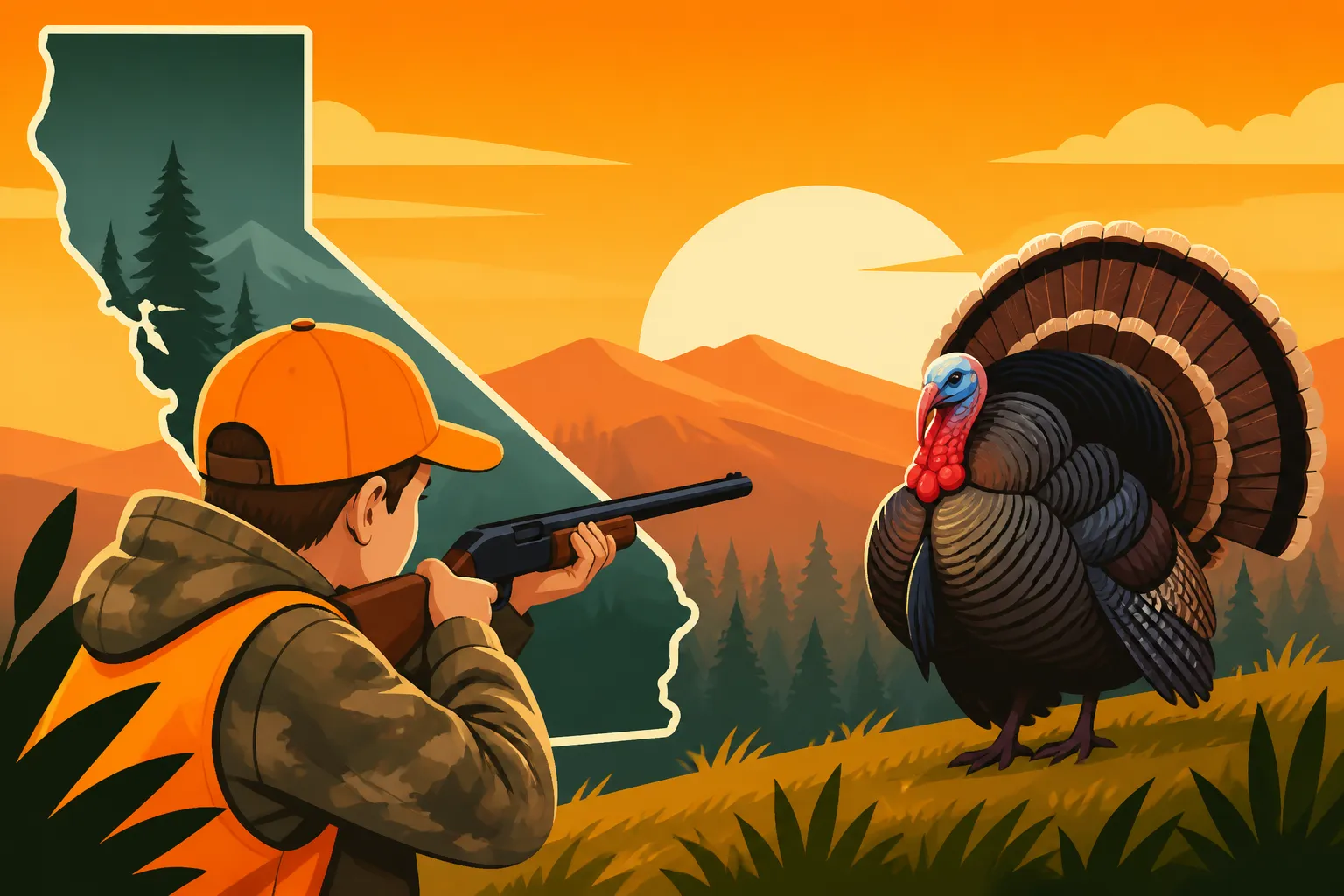
- Shotgun: A lightweight, youth-model 20-gauge shotgun is often ideal for turkeys. It has less recoil than a 12-gauge, making it more comfortable for smaller frames, but still delivers plenty of knockdown power with the right non-lead turkey loads (California is non-lead only for upland game). Ensure it fits the junior properly, with a stock that allows for a comfortable cheek weld and easy sight picture. Proper fitting is crucial for accuracy and enjoyment.
- Ammunition: As per California's regulations, all ammunition used for hunting must be non-lead. For turkeys, this typically means heavy buffered lead-free loads, often made of bismuth or tungsten alloys. Pattern your shotgun with these specific loads before the hunt to understand their effective range.
- Camo Clothing: Turkeys have excellent eyesight. Full camouflage, including a face mask or paint and gloves, is essential. Dress in layers appropriate for spring weather, which can range from chilly mornings to warm afternoons. Durability is key, as young hunters can be hard on gear.
- Footwear: Comfortable, waterproof hunting boots are a must. They'll keep feet dry and provide good support for walking uneven terrain.
- Seat/Chair: A small, lightweight hunting stool or a comfortable cushion can make long waits much more bearable for a junior, especially when sitting against a tree.
- Turkey Vest: A good turkey vest, like the ALPS OutdoorZ Impact Turkey Vest, can make life easier by providing dedicated pockets for calls, shells, water, and even a comfortable sit-pad. Getting the Best Turkey Vest for Oak Woodland Terrain will make a big difference.
- Calls: Start with a simple pot call or a box call for beginners. These are relatively easy to learn and can be very effective. A mouth call can be added later as skills develop. Learning the basics of Calling a Gobbler in Oak Woodland is a fantastic start.
- Decoys: A single hen decoy or a jake and hen combo can be incredibly effective, drawing curious gobblers into range. Decoy Placement for Pressured California Birds is an art form worth studying.
- Safety Gear: Hearing protection and eye protection are non-negotiable for shooting. A bright orange vest (for walking in and out of the hunting area, though removed when sitting to hunt) and a first-aid kit are also vital.
- Backpack: A small backpack for water, snacks, extra layers, and any harvested bird.
The Crucial Role of the Mentor
The mentor is the cornerstone of a successful junior hunt. This isn't just about showing up; it's about patient guidance, teaching, and safety.
- Patience is Key: Young hunters have shorter attention spans and may get bored or tired faster than adults. Be prepared for breaks, questions, and perhaps fewer hours of active hunting. Celebrate small victories, like a successful calling sequence or spotting fresh tracks.
- Safety First, Always: Continuously reinforce firearm safety rules. Emphasize target identification, muzzle control, and keeping fingers off the trigger until ready to shoot. Reviewing California Hunter Education Requirements is a great refresher for mentors.
- Teach, Don't Just Tell: Explain why you're doing something – why you're calling a certain way, why you're setting up in a particular spot, or why you're waiting for the bird to commit. Make it an active learning experience.
- Share the Knowledge: Explain turkey behavior, the sounds they make, and how to read the landscape for sign. Talk about the importance of conservation and ethical hunting. This is about building a foundation for a lifetime of responsible hunting.
- Make it Fun: Beyond the hunting itself, focus on the overall experience. Pack good snacks, tell stories, enjoy nature, and make it an adventure. The memories made in the field, even without a harvest, are often the most valuable.
Tactics for Success During the Junior Hunt
Once you've done your homework and gathered your gear, it's time to put a plan into action. Hunting turkeys, especially with a junior, requires a blend of patience, smart setups, and understanding bird behavior. The goal is to maximize the chances of a close encounter while prioritizing the junior's learning and enjoyment.
Effective Calling Strategies for Young Hunters
Calling is arguably the most exciting part of turkey hunting, and it's a skill that juniors can pick up quickly. For a junior-only hunt, simplicity and consistency often beat complexity.
- Start Simple: Begin with a basic box call or a slate/pot call. These are easy to learn, produce consistent turkey sounds, and don't require the delicate touch of a diaphragm call. Teach the junior how to make soft yelps, clucks, and purrs – the fundamental sounds that attract turkeys. The goal is to sound like a hen looking for company.
- Less is Often More: While it's tempting to call aggressively, especially with an eager junior, often a few soft, convincing calls are more effective than continuous loud ones. Turkeys, especially in areas that might see a bit of pressure, can be wary of overly enthusiastic calling. Start with soft tree yelps at dawn, then transition to a series of clucks and yelps once you're set up.
- Listen and Adapt: Teach the junior to listen intently. Are the birds gobbling on their own? What direction is the sound coming from? Are they moving towards you or away? Sometimes, silence is the best call. If a gobbler is approaching, let him come. Overcalling can sometimes make a bird hang up. Check out how to improve your Calling a Gobbler in Oak Woodland for more in-depth techniques.
- Practice Makes Perfect: Practice calling at home before the hunt. Not only does this build confidence, but it also allows the junior to develop rhythm and consistency without the pressure of a real bird.
Strategic Setup with Decoys and Blinds
Where and how you set up can make or break a turkey hunt, especially with a young hunter who might need to minimize movement.
- Utilizing Ground Blinds: A pop-up ground blind is an absolute game-changer for hunting with juniors. It offers concealment, allowing the junior to fidget, eat snacks, or stretch without spooking wary birds. It also provides a comfortable, sheltered spot to sit for extended periods. When using a blind on public land, ensure it's allowed and follow all regulations for placement and removal. If you're on a field edge, consider Brushing In a Blind on a Field Edge for added concealment.
- Choosing Your Location: Look for areas with good visibility and clear shooting lanes. Turkeys often travel along field edges, logging roads, or ridges. Setting up on a ridge-top saddle at first light or along a creek bottom for late-season deer can be equally effective for turkeys. Position the blind with the sun at your back, if possible, to make it harder for the turkeys to spot movement inside. Also, ensure there's a solid backdrop like a large tree or dense brush to break up your silhouette. For example, Setting Up Against a Big Valley Oak provides excellent cover.
- Decoy Placement: Decoys are incredibly effective for turkeys, acting as a visual magnet to draw birds into close range. A single hen decoy placed 15-20 yards from your position, facing away from you (so the approaching gobbler comes to "breed" the hen and turns its back to you, presenting a good shot), is a classic setup. If using a jake or tom decoy, place it where a real gobbler will see it as a challenge and come to investigate. Ensure decoys are clearly visible from a distance and avoid placing them where you might accidentally shoot them. Decoys are also excellent for distracting the bird from the slight movements a junior might make.
- Patience and Persistence: Turkeys operate on their own schedule. Be prepared to sit quietly for long stretches. This teaches juniors valuable lessons in patience and observation. If no birds respond after an hour or two, consider moving to a new spot, especially if you heard birds gobble earlier from a different location.
Understanding Turkey Behavior and Habits
Knowing how turkeys move and react to their environment is crucial for predicting their actions.
- Roosting and Fly-Down: Turkeys typically roost in tall trees at night. At dawn, they'll fly down to the ground. This is a prime time to call and try to intercept them. Listen for their tell-tale fly-down cackles and wing beats. Setting up near their suspected roosting area before they fly down can be highly effective.
- Feeding Patterns: Once on the ground, turkeys will begin to feed, often moving through open fields, clearings, or along river bottoms, scratching for insects, seeds, and acorns. They often follow predictable routes. Hunting After a Poor Acorn Year might mean they're foraging more widely.
- Mid-Day Lulls: As the morning progresses and hens begin to nest, gobblers often become less vocal and may "hen up" (join real hens), making them harder to call in. This is a good time for a break, or to try "run-and-gun" tactics, moving and calling from different spots until you get a response.
- Breeding Season Behavior: During the spring, gobblers are primarily focused on breeding. They will respond to hen calls in hopes of finding a mate and will often come to investigate jake or tom decoys to challenge a perceived rival. Understanding When California Gobblers Go Quiet in Late Spring can help you adjust your tactics.
Post-Hunt Responsibilities and Memory Making
Successfully harvesting a wild turkey with a junior hunter is an incredible achievement, but the hunt doesn't end when the shot is fired. There are important responsibilities and opportunities to solidify a lifelong love for hunting and the outdoors. This is where the real lessons in respect for the animal and conservation come into play.
Reporting the Harvest
One of the most critical responsibilities after a successful hunt in California is reporting your harvest. This isn't just a formality; it's vital data for the California Department of Fish and Wildlife (CDFW) to manage turkey populations effectively. Accurate harvest data helps the CDFW make informed decisions about season lengths, bag limits, and overall management strategies to ensure healthy turkey populations for future generations of hunters.
- Online Reporting: California generally requires hunters to report their turkey harvest through the CDFW's Automated License Data System (ALDS). This can typically be done online through their website. Make sure you understand the specific deadline for reporting, which is usually within a certain number of days after the harvest.
- Information Needed: You'll typically need your license number, the date of harvest, the county where the bird was taken, and potentially information about the bird itself (e.g., beard length, spur length, weight). This is a great opportunity to teach the junior about recording biological data and its importance. Take time to measure and photograph the bird together.
- Why it Matters: Explain to your junior why reporting is so important. It ties their individual hunt directly to broader conservation efforts. It helps them understand that hunting isn't just about taking an animal; it's about being an active participant in wildlife management.
Field Dressing and Meat Care
Proper field dressing and meat care are essential steps to ensure the harvested turkey provides high-quality wild game meat. It’s also an important practical skill for any hunter to learn, and a prime moment for a mentor to teach.
- Cooling the Bird: Turkeys, especially if taken during a warm spring day, need to be cooled quickly to prevent spoilage. As soon as the bird is recovered, the first step is to gut it. Make an incision from the breastbone to the vent, reach in, and remove all internal organs. This allows the body cavity to cool.
- Plucking or Breast Filleting: You have a couple of options for processing. You can pluck the entire bird, which yields the most meat (including legs, thighs, and wings), or you can simply fillet out the breast meat. For a junior's first bird, often just taking the breast meat is a simpler and less messy introduction to processing. To do this, make an incision down the center of the breastbone, then slice along each side, separating the breast meat from the bone.
- Transport and Storage: Once field dressed, place the bird in a game bag or cooler with ice. Ensure the bird is not submerged directly in water. Once home, either finish plucking and butchering or prepare the breast fillets for immediate cooking or freezing. Cooking a Wild Turkey Breast is a fantastic way to celebrate the successful hunt!
- Respect for the Harvest: Emphasize that every part of the animal should be respected. Teach the junior about using the meat, honoring the animal, and minimizing waste. This reinforces ethical hunting principles.
Celebrating the Experience and Making Memories
While the harvest is certainly a highlight, the true treasure of the junior-only turkey weekend lies in the shared experience, the lessons learned, and the memories created.
- Relive the Hunt: Talk through the hunt, recalling moments of anticipation, successful calls, and the final shot. Look at photos and videos together. These shared stories become family lore.
- Showcase the Trophy: Whether it's the breast meat for dinner, the spurs, or the beard from the gobbler, help the junior create a tangible reminder of their success. A simple European mount of the fan and beard or even just a framed photo can be incredibly meaningful.
- Beyond the Kill: Remind the junior of all the other amazing things they saw and experienced – the sunrise, the sounds of the waking woods, a deer sneaking by, or the intricate details of a wildflower. Hunting is deeply intertwined with nature appreciation.
- The Lifelong Journey: This first turkey hunt is just the beginning. Encourage continued practice with calls, shooting skills, and scouting. Look forward to future hunts and other outdoor adventures. This foundational experience can spark a lifelong passion for conservation and responsible outdoor recreation. The junior-only season is truly an investment in the future of hunting, and by embracing all aspects of it, you contribute to that legacy.
Disclaimer
Please note: Hunting regulations can change frequently. Always consult the official California Department of Fish and Wildlife (CDFW) regulations and proclamations for the most current and accurate information before planning any hunt. This guide is for informational purposes only and does not supersede official state regulations.