Setting Up Against a Big Valley Oak
We've all been there, staring at a majestic Valley Oak, knowing deep down that deer are using it, but feeling utterly lost on how to actually set up to intercept them. It’s frustrating to pick a spot, settle in, only to have deer bust you or walk just out of range, completely oblivious to your presence, all because your setup wasn't quite right. This guide is going to walk you through the nuances of effectively setting up against a big Valley Oak, turning those majestic trees into strategic hunting advantages across California's diverse landscapes.
Understanding the Valley Oak's Role in Deer Habitat
California's Valley Oaks (Quercus lobata) are more than just beautiful trees; they are ecological powerhouses that play an absolutely critical role in supporting wildlife, especially deer. If you're hunting in areas like the Central Coast, the Sierra Nevada foothills, or even some of the D-zones further north, you’re almost guaranteed to encounter these giants. For deer, a mature Valley Oak is a hub of activity, a natural magnet that draws them in for multiple reasons throughout the year. Ignoring their importance or misinterpreting how deer use them can lead to a lot of fruitless hours in the field.
Food Source and Seasonal Importance
The most obvious draw of a Valley Oak for deer is, without a doubt, its acorns. When those acorns start to drop, it's like a five-star buffet for deer, pigs, and countless other critters. This isn't just a casual snack; it's a vital, energy-rich food source that can dramatically influence deer movement and behavior, especially from late summer through winter. A good acorn crop can pull deer out of thick cover and into more open areas where these oaks often stand. You'll notice deer focusing intensely on certain trees, sometimes ignoring others, because some oaks produce more acorns, or perhaps a sweeter variety, than their neighbors. The timing of the drop is crucial too. Early drops in August might coincide with bow season in zones like Zone C, while later drops can be a lifesaver for deer as other food sources diminish into the late season. Knowing when the acorns are falling, and which trees are dropping them, is paramount to a successful setup.
Beyond acorns, the Valley Oak's leaves and associated undergrowth also provide forage. In dryer periods, the shade of a massive oak can keep the ground cooler, allowing other browse to stay green longer, offering a hidden food source when surrounding areas are parched. Deer will browse on young oak shoots or the various forbs and grasses that thrive in the partial shade and nutrient-rich soil beneath these trees. This secondary forage might not be as glamorous as a pile of acorns, but it contributes to the overall appeal of an oak stand. Therefore, even outside the peak acorn drop, a Valley Oak can be a subtle but consistent draw for deer. Keeping an eye out for these more subtle browsing signs is just as important as looking for shelled acorns.
Cover, Shade, and Thermal Protection
Think about a hot California afternoon, especially during the early archery seasons. That scorching sun can bake the landscape, pushing deer into the densest, coolest cover they can find. A massive Valley Oak, with its expansive canopy, offers significant shade that can be a deer's refuge during the hottest parts of the day. This isn't just about comfort; it's about thermoregulation, helping deer conserve energy and stay hydrated. You'll often find deer bedded directly in the shade cast by these big trees, especially if there's any sort of natural depression, log, or brush nearby to offer additional visual concealment. This makes mornings and evenings, when deer might move from deeper cover to feed under the oaks, prime hunting times. However, don't rule out the middle of the day, as deer will often shift their beds just to stay in the shade.
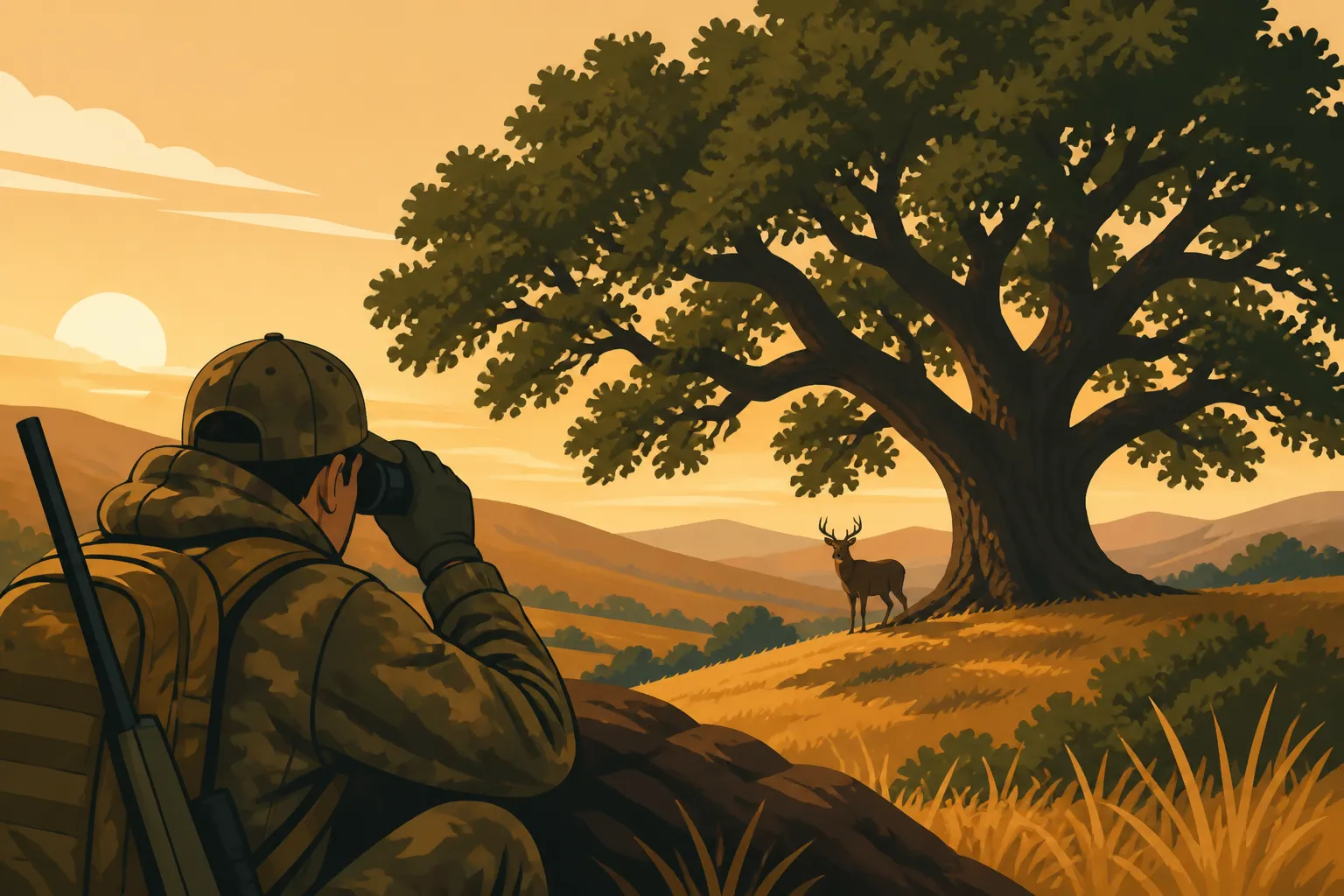
Beyond temperature, the sheer size and structure of a Valley Oak provide excellent visual cover. Their often gnarled and wide trunks can break up a deer's outline, making them feel secure. If an oak stands alone in a field, it's a landmark, a point of reference for deer. But when they are part of a larger oak woodland, they contribute to a complex environment where deer can move and hide with confidence. In dense areas, the branches and associated understory create natural "rooms" where deer might feel safe to browse or rest. This also means that as a hunter, you can often use the trunk itself as a natural blind, blending into its rough bark, which is a fantastic advantage when trying to remain undetected in a Still-Hunting California's Sierra Nevada Timber scenario.
Natural Travel Corridors and Rub Lines
Valley Oaks are not just static feeding or bedding sites; they often mark crucial points in deer travel patterns. A line of oaks might form a natural funnel, guiding deer movement between bedding areas and water sources, or from one feeding patch to another. Deer, like all animals, are creatures of habit and efficiency. They will take the path of least resistance or the path that offers the most security. A series of large oaks can provide that security, allowing deer to move through a landscape with a sense of concealment. Look for well-worn trails leading to and from these trees, especially where they connect to denser brush or water sources. These trails are goldmines for setting up.
Furthermore, Valley Oaks, particularly the larger ones, are often chosen for rub lines. Bucks, especially during the pre-rut and rut, will aggressively rub their antlers on the bark of these trees. A significant rub on a large oak is a billboard for a buck, signaling his presence and marking his territory. If you find a series of rubs leading to or from a specific oak, you've likely identified a buck's preferred travel route. A big, healthy Valley Oak might see repeated rubs year after year, indicating it's a perennial hotspot for mature bucks. Setting up near an actively used rub on a Valley Oak, especially one that also offers good cover or food, can be incredibly effective. Consider combining this knowledge with a Grunt Calls in Coastal Oak Timber strategy to bring a curious buck into range.
Strategic Positioning: The Art of the Setup
Now that we understand why deer use Valley Oaks, the real challenge begins: turning that knowledge into a successful hunting setup. This isn't just about picking any big oak; it’s about choosing the right oak and positioning yourself within its sphere of influence to maximize your chances while minimizing your footprint. It requires a keen eye, an understanding of deer behavior, and a healthy respect for the elements.
Reading the Landscape Around Your Chosen Oak
Before you even think about unpacking your gear, take a good, hard look at the surroundings of your potential Valley Oak. Is it standing alone in a pasture, or is it part of a larger cluster? What kind of undergrowth is present? Are there discernible deer trails leading to or from it? Look for fresh sign: tracks, scat, chewed browse, and especially fresh acorn shells. If you're hunting during the season, kick around the leaves under the tree to see if fresh, green acorns have recently dropped, indicating it’s an active feeding site. The more fresh sign you find, the better.
Consider the topography. Is the oak on a ridge, in a saddle, or in a draw? Deer often use subtle terrain features to their advantage, and you should too. An oak on a subtle knoll might offer a buck a good vantage point to survey his surroundings before entering a more open area. An oak in a slight depression might offer a hidden travel lane. Understanding these micro-terrain features is crucial. I often spend time Scouting California Public Land Before Season, focusing specifically on identifying these key oaks and the deer sign around them. Using mapping tools like those available through GoHunt can really help you identify these features from above and even mark potential stand locations before you ever step foot in the woods. Pay attention to how deer might approach the tree from downwind or from cover; these are your anticipated deer movement zones.
Wind, Thermals, and Scent Management
This is perhaps the single most critical factor in any setup, and it's especially true when setting up against a prominent feature like a Valley Oak. Your wind direction must be meticulously planned. Deer have an incredible sense of smell, and even the slightest whiff of human scent will send them packing. Always, always, always position yourself downwind of where you expect deer to approach or pass by the oak. This might mean setting up 50-100 yards away from the tree itself, looking back towards it, rather than directly under it. Don't fall into the trap of setting up at the tree just because it's the target; set up for the tree and the wind.
In California's varied terrain, especially in the oak woodlands of the Sierra foothills or the Coastal Range, thermals become just as important as prevailing winds. In the mornings, air typically flows downhill as the ground cools. As the sun rises and warms the earth, thermals reverse, carrying scent uphill. If you're Hunting a Ridge-Top Saddle at First Light, you need to be acutely aware of this. For an oak in a draw, an evening hunt might mean positioning yourself higher up the slope, letting your scent rise. For an oak on a ridge, a morning hunt might mean staying low. Always have an escape plan for your scent, and check wind and thermal conditions constantly, using a wind checker or even just by observing rising dust or leaves. There's nothing more disheartening than a deer blowing at you because your scent betrayed you, especially when you've done everything else right.
| Condition | Preferred Setup Position Relative to Oak | Rationale |
|---|---|---|
| Morning Hunt | Slightly uphill/crosswind | Thermals are typically falling; position allows scent to flow downhill past deer. |
| Evening Hunt | Slightly downhill/crosswind | Thermals are typically rising; position allows scent to flow uphill past deer. |
| Strong Prevailing Wind | Directly downwind, far enough to avoid detection | Minimizes direct scent cone to approach routes. May require wider shooting lanes. |
| Light/Variable Wind | Upwind or crosswind with ample cover | Hardest conditions; focus on maximum concealment and prepare for quick adjustments. |
| Hot Weather | On shaded side of oak, accounting for wind | Deer will seek shade; position yourself where they'll approach or bed in the cool. |
Optimizing Your Shooting Lanes and Concealment
Once you've factored in the wind and thermals, it's time to refine your actual position. Your goal is to be as invisible as possible while having clear, unobstructed shooting lanes to where you expect deer to be. If you're ground hunting, utilize the gnarly trunk of the Valley Oak itself for back cover. Position yourself so the sun isn't directly in your eyes during prime shooting light, and make sure you can see a good 360 degrees, or at least a clear 180 degrees in the direction of anticipated movement. Often, setting up behind or to the side of a large trunk is better than directly in front of it, allowing you to use the tree's mass to break up your silhouette.
For bowhunters, this is particularly critical. You need to be able to draw your bow smoothly and unimpeded, and your shooting lanes need to be clear of even small twigs and leaves that can deflect an arrow. This might mean doing a little strategic pruning (where allowed, of course!) before the season, or simply choosing a spot that naturally offers these lanes. For rifle hunters, while your range is greater, clear lines of sight are still paramount. Consider your typical shot distance in the terrain; in dense oak woodland, shots might be close, while in more open areas, you might be looking at 100-200 yards. Always have multiple potential shot opportunities in mind. Remember to practice Sighting In Before Switching to Non-Lead ammunition, as California's regulations require non-lead for all big game.
Advanced Considerations for Valley Oak Setups
A good setup isn't just about picking a spot; it's about understanding the dynamic nature of deer hunting and being prepared to adapt. California's hunting conditions can change rapidly, and deer behavior isn't static. Thinking ahead and having contingency plans can make all the difference between a successful hunt and a frustrating one.
Time of Day and Seasonal Adjustments
Deer behavior around Valley Oaks can vary significantly depending on the time of day and the season. During early archery seasons in August or September, especially in zones like Hunting the Zone C August-September Archery Window, deer might be most active around oaks during the cooler hours of dawn and dusk, feeding heavily on newly dropped acorns. Midday, they'll likely be bedded in dense cover or within the deep shade of the oak itself. Your setup needs to account for these patterns. For a morning hunt, you might position yourself on an approach route leading to the oak. For an evening hunt, you might be closer to the oak itself, anticipating deer coming to feed.
As the season progresses into colder months, especially if you're hunting a late-opening zone, acorns remain important, but other food sources might become scarce. Deer might spend more time under oaks during midday to conserve energy, especially if it's sunny and relatively warm. If you're in an area with a good water source nearby, consider how deer move between the oak and water. Late-Season Food Sources for California Deer might also include green grasses sprouting after early winter rains, which deer will access from the safety of an oak stand. Your setup might need to adjust from targeting a primary food source to intercepting travel between multiple resources.
Dealing with Hunting Pressure Near Productive Oaks
Let's be real: if you've found a good Valley Oak that's dropping acorns and showing fresh sign, chances are other hunters know about it too, especially on public land. Hunting pressure can significantly alter deer behavior. Deer might become more nocturnal, or they might abandon heavily pressured areas entirely. If you're scouting, look for signs of other hunters: treestands, blinds, or even just boot prints on trails. If a prime oak is clearly being pounded by pressure, you might need to adjust your strategy.
Instead of directly setting up on the obvious "hot" oak, consider finding a less-pressured oak nearby, or perhaps an oak on a secondary travel route that deer might use to avoid the main pressure point. Sometimes, hiking deeper into an area, away from obvious access points, will lead you to less-disturbed oaks. Deer will often "stage" in thicker cover near a food source before moving out into the open, especially if they feel pressured. Identifying these staging areas, even if they're 50-100 yards from the primary oak, can be a highly effective strategy. Don't be afraid to put in the miles; deer will too, to find solitude. For some insights on navigating public land, check out Hunting Pressure on California Public Land.
Integrating Technology and Scouting Tools
In today's hunting world, technology can be a huge asset in refining your Valley Oak setups. Mapping applications are indispensable. Platforms like GoHunt allow you to pore over satellite imagery, identifying potential oak stands, subtle terrain features like draws and ridges, and even existing game trails before you ever lace up your boots. You can mark potential bedding areas, water sources, and likely travel corridors, creating a detailed plan of attack. This remote scouting can save you countless hours in the field, helping you prioritize your physical scouting efforts.
Trail cameras are another fantastic tool for understanding deer movement around specific oaks. Set them up on active trails leading to the oak or directly on the oak itself to monitor when deer are visiting, how often, and which specific deer are using it. This intel can help you fine-tune your hunt times and even identify specific bucks. Just be mindful of local regulations regarding trail camera use on public land. When placing cameras, consider the angle of the sun and potential backlighting. Using a cellular trail camera can even give you real-time updates, allowing you to react quickly to changes in deer activity around your chosen Valley Oak. This combination of digital mapping and on-the-ground intel is a powerful way to maximize your chances. Additionally, tools for Reading Aerial Photos for Sierra Deer can show you how to interpret the landscape more effectively.
Disclaimer
Hunting is an activity with inherent risks. Always prioritize safety, adhere to all California Department of Fish and Wildlife regulations, and respect private property. The information provided in this guide is for educational purposes only and should not replace proper hunter education or professional guidance. Always check current regulations before heading afield, as rules and conditions can change.