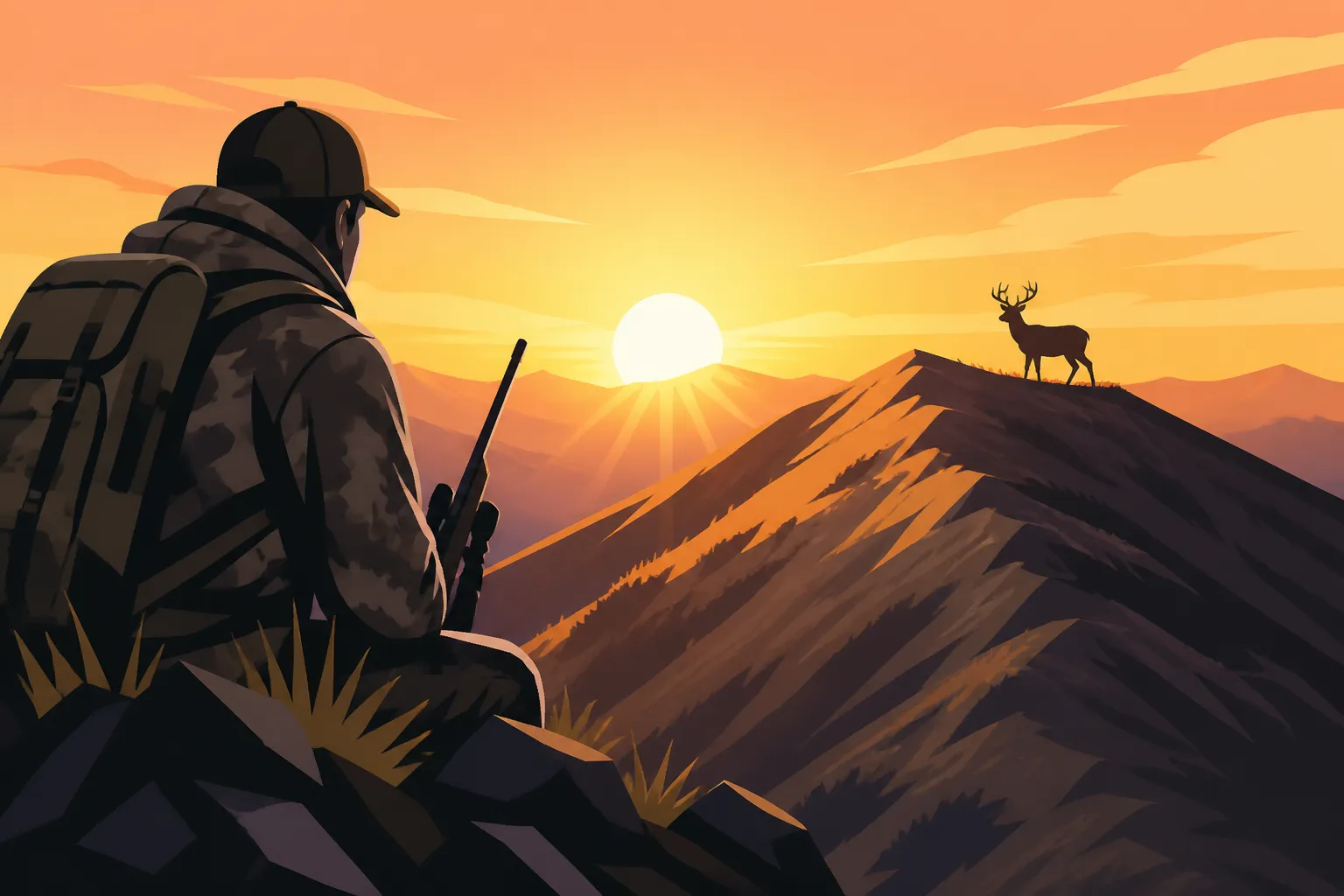
Hunting a Ridge-Top Saddle at First Light
There's nothing quite like the anticipation of first light in the deer woods, but for many California hunters, that early morning promise often ends in frustration. Deer, especially those savvy bucks, become incredibly elusive once the sun hits the ridges, making your initial approach and setup absolutely critical. This guide is all about mastering the art of hunting a ridge-top saddle at first light, helping you understand how deer use these natural funnels and how to position yourself for success when the woods are still waking up.
Why Ridge-Top Saddles Are Deer Magnets
Ridge-top saddles, often just subtle dips or low spots along a ridge line, are absolute goldmines for deer hunters, especially during those crucial first few hours of daylight. They act as natural travel corridors, funnels, and transition areas that deer, whether it's a coastal blacktail or a high-country mule deer, instinctively use to navigate their world. Understanding why they use them is the first step to successful hunting.
Natural Travel Corridors and Pinch Points
Think of a ridge-top saddle as a natural bridge or a low-traffic highway for deer. Instead of expending energy climbing over a higher, steeper point on a ridge, deer will almost always opt for the path of least resistance — the saddle. This makes them predictable travel routes between bedding areas, feeding grounds, and water sources. At first light, deer are often transitioning from their nocturnal feeding to their daytime bedding, and a saddle provides an efficient, relatively safe way to move.
These saddles also create what we call "pinch points." Imagine two steep draws or canyons on either side of a ridge, with a saddle forming the only easy crossing between them. Any deer moving along that ridge or trying to cross from one side to the other is naturally funneled through that narrow window. It's like a doorway in a fence, concentrating movement into a smaller, more predictable area. This is particularly true in rugged California terrain, whether you're stalking the steep slopes of the Sierra Nevada or picking your way through the dense chaparral of the Coastal Range. Identifying these pinch points is crucial when you're glassing a canyon for a bedded buck or looking for an entry route through a Sierra foothill meadow.
The Dynamics of Wind and Thermals
California's varied topography means that understanding wind and thermals isn't just important; it's non-negotiable, especially at first light. Ridge-top saddles are unique because they often represent a transition zone for air currents. In the pre-dawn hours, cooler, heavier air typically flows downhill (down-thermals). As the sun rises and warms the earth, the air begins to rise (up-thermals). This shift can happen quickly and unpredictably, making a first-light setup challenging.
During the pre-dawn down-thermal, a saddle might have air currents flowing down both sides of the ridge. However, as soon as the sun hits, those thermals will begin to pull upwards, often creating swirling or unpredictable winds within the saddle itself before a more consistent up-thermal establishes. This means your approach and stand placement must account for these shifting winds. A deer traveling through a saddle will be acutely aware of scent, using their nose to detect danger. If your scent cone drifts into the saddle during a thermal shift, your hunt is over before it begins. Experienced hunters know that wind and thermals in steep Sierra country can be particularly tricky, requiring a careful read of the environment.
Scouting for the Perfect Saddle
You can’t just walk out into the woods and expect to stumble upon the perfect saddle. Strategic scouting, both from your armchair and on the ground, is key to success. This takes time, effort, and a keen eye for terrain features that scream "deer highway!"
E-Scouting with Topo Maps and Aerial Photos
Before you ever lace up your boots, modern mapping tools are your best friend. Services like GoHunt are invaluable for identifying promising ridge-top saddles. Start by looking at detailed topographic maps. You want to find contour lines that show a clear dip in a ridge. Pay attention to how steep the terrain is leading up to and away from the saddle. Gentler slopes leading into a saddle often indicate easier travel for deer.
Next, switch to aerial or satellite imagery. This layer allows you to visualize the vegetation, which is critical for understanding deer movement and potential bedding areas. Look for saddles that connect denser timber or thick chaparral where deer might bed, to more open areas or oak woodlands where they might feed. A saddle that provides cover on approach for both you and the deer is ideal. Also, consider the aspect – which way does the saddle face? A north-facing slope might hold snow longer or stay cooler, affecting deer use, while a south-facing slope might dry out faster. When reading aerial photos for Sierra deer, you can often pick out subtle trails leading into and out of these natural funnels.
Boots-on-the-Ground Reconnaissance
E-scouting gets you in the ballpark, but nothing beats getting out there and putting boots on the ground, especially well before hunting season. This is where you confirm your theories and find the real details that maps can't show. Walk the ridge lines, noting the subtle dips and benches. Look for actual deer trails – heavily worn paths indicate consistent use. These trails are your confirmation that deer are indeed using that saddle as a travel route.
Beyond trails, look for other signs: droppings, rubs on small trees, and scrapes, especially during the rut. Fresh sign near a saddle is a huge indicator. Check the vegetation for browse lines, where deer have been feeding. Pay attention to prevailing wind patterns and how thermals behave in the specific saddle you’re scouting. Does the wind consistently swirl, or does it hold a direction? Is there water nearby? Even a small seep or spring can increase deer traffic. When scouting California public land before season, remember to keep your movements stealthy and minimize your scent, even when just scouting, so you don't educate the local deer. This ground truth is also essential for understanding where California blacktail bucks bed in relation to these saddles.
First Light Strategy and Execution
Once you've identified your target saddle and understand the local deer movement, it's time to craft your first-light strategy. This isn't just about showing up; it's about a methodical approach to maximize your chances during that brief, golden window.
Pre-Dawn Approach and Entry
The approach to your chosen saddle is arguably the most critical part of your first-light hunt. You need to get into position before deer begin moving from their feeding grounds towards bedding, and you need to do it silently and stealthily, without disturbing a single leaf or snapping a twig. This means planning your route in detail. Use terrain features like creek bottoms, ravines, or natural depressions to mask your movement and scent. If possible, approach from a downwind direction that keeps your scent blowing away from the saddle and any potential deer travel routes.
Always allow yourself ample time. Getting to your spot an hour or even 90 minutes before shooting light gives you time to navigate in the dark, find your chosen position, clear any shooting lanes, and allow the woods to settle down after your disturbance. Headlamps are indispensable for navigating in the dark, but use them sparingly once you're close to the saddle, switching to a red-light setting if possible to minimize your footprint. For those hunting a funnel between two oak ridges, a silent approach through the oak leaves can be a real challenge but is absolutely necessary.
Optimal Stand Placement and Concealment
Your stand or ground blind placement in a saddle is paramount. The goal is to be hidden, have good shooting lanes, and, most importantly, have a favorable wind. For treestands, look for trees that offer good concealment against the skyline and provide a clear view of the saddle and incoming trails. Aim to be 20-25 feet high to help your scent dissipate above deer level, if possible. For ground blinds, whether it's a pop-up or a well-brushed-in natural setup, ensure it blends seamlessly with the environment. Remember, in California, you're looking at a huge diversity of cover, from the thick stuff of coastal oak woodlands to the more open timber of the high country.
Consider the expected direction of deer travel and position yourself to intercept them, ideally with a quartering-away shot opportunity. Don't set up directly in the saddle unless the wind is absolutely perfect and consistent. Often, it's better to be on a subtle bench or ridge point just off the saddle, where you can observe it. This allows you to hunt the saddle without being directly in the swirling thermals. Always clear the area around your stand of any loose leaves or twigs that could give away your position when you shift for a shot.
Here's a quick comparison of saddle characteristics and their impact on your first-light hunt:
| Saddle Characteristic | Best for First Light? | Tactical Consideration |
|---|---|---|
| Narrow, Steep-Sided | High | Excellent pinch point; deer movement highly concentrated. Requires very careful wind assessment, as thermals can be extremely tricky and swirl easily. Position yourself slightly off to the side, downwind of the expected travel path. |
| Broad, Gentle Slope | Moderate | Deer might disperse more, making shot opportunities less concentrated. Look for subtle trails within the saddle or natural funnels created by small draws or rock formations. More forgiving with wind, but still requires vigilance. |
| Timber-Filled | High | Offers excellent cover for deer, making them feel secure. Also provides good concealment for the hunter. Focus on trails winding through the timber. Requires quiet movement and good shooting lanes through the trees. |
| Open, Brushy (Chaparral) | Moderate | Good visibility for the hunter, but deer might move more cautiously if exposed. Good for glassing. Focus on travel routes that offer the most cover, such as the edge of denser brush. Requires excellent concealment for the hunter, possibly a well-brushed ground blind or a very strategic treestand. |
| Connecting Bed/Feed | Very High | Prime target. This is where deer will be transitioning at first light. Focus on the most direct routes between identified bedding areas (thick cover) and feeding areas (oaks, clear-cuts). |
| Near Water Source | High | Increased activity, especially during dry periods. Deer might use the saddle to access water before bedding down. Position to intercept deer moving from water to cover. |
| Near Historical Rubs/Scrapes | Very High | Indicates a buck has frequented this area, especially during the rut. Set up to cover the scrape line and approach routes. Remember that a buck might scent-check the area before entering. |
Patience and Observation
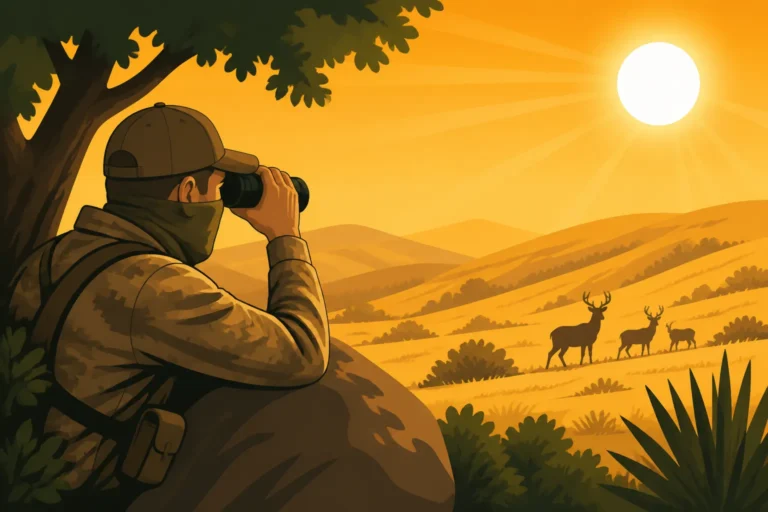
Once you're set up, the real hunt begins with patience. The first light period can be short and intense. Remain absolutely still and quiet. Use your binoculars to constantly scan the saddle and the approaches. Look for subtle movements, a flick of an ear, a patch of deer hide, or even the shadows moving. Remember, deer are masters of camouflage, especially in the mixed woodlands and brush of California.
Pay close attention to changes in the wind. A small puff of air on your neck, or seeing a leaf flutter in a different direction than your scent checker, could indicate a thermal shift. Be ready to adjust if your wind becomes compromised. A calm, quiet demeanor is crucial. Any sudden movement or sound can blow your chances. This waiting game is where you truly appreciate the effort of Hunting a D-Zone That Opens in August and the dedication it takes. For mule deer hunters, especially, glassing a canyon for a bedded buck from a vantage point near a saddle can yield incredible results.
Common Mistakes and How to Avoid Them
Even seasoned hunters can make mistakes, and when you're targeting those cagey deer at first light in a ridge-top saddle, small errors can cost you big. Being aware of these common pitfalls is the best way to avoid them.
Misreading Wind and Thermals
This is arguably the most common and damaging mistake. Many hunters simply check the wind direction at their truck or camp, assuming it will be the same in their hunting spot. In California's mountainous and hilly terrain, especially around ridge-top saddles, this assumption can be fatal. Thermals play a massive role, and they change as the sun rises. What was a stable down-thermal before light can quickly become swirling or an inconsistent up-thermal.
To avoid this, use a good wind checker frequently. Not just when you arrive, but throughout the first hour of light. Watch leaves, grass, and dust for subtle cues. If the wind starts to become inconsistent or blows in a direction that carries your scent into the saddle, you have two choices: either move immediately to a better position, or abort the hunt from that spot and try again another day. Sometimes, sitting an area with perfect wind is better than hunting a "hot" spot with iffy wind. This commitment to understanding wind is critical for success, especially if you're trying Rattling and Grunting California Blacktail Bucks. Using a detailed mapping app like GoHunt can help you visualize elevation changes that influence thermals.
Impatient or Noisy Approach
The excitement of first light can lead to rushing, which often results in noise. Breaking branches, scuffing leaves, or heavy footsteps are surefire ways to alert every deer in the vicinity. Deer have incredible hearing, and even slight disturbances in the pre-dawn quiet will put them on high alert, or worse, send them scurrying away.
To counter this, plan your route meticulously. Practice walking it in the dark if possible. Wear quiet clothing that doesn't rustle. Take small, deliberate steps, placing your feet carefully. If you encounter an obstacle, take your time to go around it quietly, rather than pushing through. As mentioned, arrive early—this allows for a slower, more deliberate approach and gives the woods time to settle before the deer start moving. This calm approach is also key when considering a specific tactic like Still-Hunting California's Sierra Nevada Timber.
Poor Concealment and Movement
Deer have sharp eyesight, especially for detecting movement. Many hunters make the mistake of thinking if they just wear camouflage, they're invisible. But camouflage only breaks up your outline; movement gives you away every time. In a saddle, where deer are often traveling through, they're typically focused on their surroundings, looking for danger.
Once you're in your stand or blind, become a statue. Only move when necessary, and do so slowly and deliberately. If you need to turn your head, do it in slow motion. Use the natural cover around you to break up your silhouette. Avoid sky-lining yourself on a ridge crest. This means setting up just below the crest or on a slightly lower bench. Even your best spotting scope for a blacktail buck won't help if the buck sees you first. For hunters who are really serious about blending in, considering Brushing In a Blind on a Field Edge can offer valuable insights into maximizing concealment.
Neglecting Pre-Season Scouting
Relying solely on e-scouting without putting boots on the ground is another common pitfall. While GoHunt and other apps are fantastic for initial planning, they can't show you everything. A map can't tell you if a key game trail is overgrown, if a promising saddle is now riddled with ATV tracks, or if a spring has dried up.
Make the effort to scout your chosen saddles physically well before the season. This allows you to confirm sign, check access points, identify potential ambush sites, and observe firsthand how the wind and thermals truly behave. It also allows you to trim shooting lanes, set up trail cameras, and ensure your stand location is viable. This pre-season work drastically increases your odds of success when hunting a late-opening high-country zone or any of California's challenging landscapes. Without it, you're essentially hunting blind.
Staying Flexible in Saddle Hunting
Even with the best scouting and planning, deer hunting, especially at first light in a dynamic environment like a ridge-top saddle, often throws curveballs. The key to consistent success lies in your ability to adapt and stay flexible.
Adjusting to Changing Conditions
California's weather can be notoriously unpredictable. A planned cold, still morning could turn into a warm, breezy one. The night before, a storm could roll in, changing deer movement patterns. If you arrive at your saddle and the wind is doing something completely different than what you anticipated, you need to be ready to change your plan. This might mean quickly moving to an alternative stand location you scouted for different wind directions, or even abandoning the saddle for a different type of terrain feature altogether, like a creek bottom for late-season deer.
Always have a backup plan or two. Understand what other features deer might use in various conditions. For instance, if the saddle becomes too windy, deer might drop into the lee side of the ridge. If it's raining heavily, they might hold tight in dense cover. Your willingness to adapt on the fly is a hallmark of an experienced hunter. Sometimes, what seems like a setback, like a sudden thermal shift, can be an opportunity if you're prepared to capitalize on it, perhaps by quickly moving to an overlooked spot you scouted using your GoHunt app.
Learning from Each Hunt
Every time you step into the woods, especially when targeting a specific feature like a ridge-top saddle, you're gathering data. Whether you fill your tag or not, take the time to evaluate your hunt. What did you observe? Did deer use the saddle as expected? How did the wind and thermals behave throughout the morning? Did you get busted, and if so, why?
Keep a detailed hunting journal. Note the date, time, weather conditions, wind direction, your stand location, and any deer sightings or sign you found. This accumulation of knowledge over time will allow you to build a comprehensive understanding of how deer use specific saddles under various conditions in your hunting area. This continuous learning process is what turns good hunters into great ones, helping you fine-tune your approach for Hunting a D-Zone That Opens in November or any other specific season. Understanding where California's two CWD cases were found and how that affects deer movement and hunter behavior is also part of staying informed.
Ultimately, hunting a ridge-top saddle at first light in California is a challenging but incredibly rewarding pursuit. It demands careful planning, a deep understanding of deer behavior and terrain, and the discipline to execute your plan perfectly. By focusing on smart scouting, a silent approach, precise stand placement, and unwavering patience, you'll dramatically increase your chances of being there when that trophy buck steps into view.
Disclaimer
The information provided in this guide is for general informational purposes only. Hunting regulations and conditions can change rapidly. Always consult the latest California Department of Fish and Wildlife (CDFW) regulations and local land management rules before planning any hunting trip. Hunter safety is paramount; always follow safe firearm and archery practices.