Hot-Weather Sitting Strategy in August
August in California means sweltering heat, and if you've ever tried to hunt deer when the mercury is pushing triple digits, you know the frustration. Deer seem to vanish, movement grinds to a halt, and you're left wondering if you're just baking yourself for nothing. This guide is all about tackling that exact challenge, breaking down effective hot-weather sitting strategies to increase your odds when the sun is relentlessly beating down.
Understanding the August Heat and Its Impact on Deer
California's August heat isn't just uncomfortable for us hunters; it profoundly impacts deer behavior, dictating when and where they move. Ignoring these environmental factors is a surefire way to spend long, unproductive hours in the field. Understanding the biology behind their reactions is key to planning a successful hot-weather sit.
The Biology of Heat Stress in California Deer
Deer, like most mammals, have a thermal neutral zone—a range of ambient temperatures where they don't have to expend extra energy to stay warm or cool. When temperatures soar above this zone, typically in the high 70s or 80s for deer, they experience heat stress. Their metabolism slows, their appetite decreases, and they actively seek ways to dissipate heat. This means reducing physical activity to a minimum, primarily moving during the coolest parts of the day. Their digestive process, which generates heat, also influences their feeding patterns; they're less likely to be out gorging on forage in the scorching midday sun. They'll often bed down in dense cover, seeking shade and any available breeze, sometimes even panting to cool down. This is particularly noticeable in zones like A or D, where the August openers can be brutally hot, making it imperative to understand where these animals seek refuge. You'll find a lot of overlap in these behaviors when you're considering a hunt during the Hunting California's Zone A July Archery Opener.
Prime Times for Deer Movement During August
Forget about midday movement in August. It just doesn't happen unless a deer is being pressured or is severely stressed. In these extreme conditions, deer become largely nocturnal or crepuscular, meaning they primarily move during the coolest parts of the day: dawn and dusk.
- Pre-Dawn to Sunrise: This is your absolute best window. Deer will be making their way back from evening feeding areas to their daytime bedding cover. The air is at its coolest, offering the most comfortable travel conditions. They might grab a quick drink at a water source before settling in for the day. Setting up well before first light is critical to intercept them.
- Late Evening to Post-Sunset: As the sun dips below the horizon and temperatures begin to fall, deer will start to stir from their beds. They'll move towards feeding grounds, often stopping at water along the way. This window can be just as productive as the morning, sometimes even more so, as deer feel a greater sense of security under the cover of fading light.
- Nighttime Activity: While you can't hunt at night for deer in California, understanding that much of their activity—feeding, breeding (if it's late enough in the year), and travel—occurs after dark is vital. This emphasizes the importance of setting up on travel corridors that connect bedding to feeding and water, knowing they'll be using these paths in the transitional hours. When you're looking at your hunt plans, especially for areas that might have early openers, thinking about Hunting a D-Zone That Opens in August will require a deep dive into these exact nocturnal habits.
Strategic Sitting Locations for August Hunting
When the heat is on, deer aren't just moving less; they're moving smarter. They prioritize comfort and survival, which means their choices of bedding and travel routes are highly predictable. Your hot-weather sitting strategy needs to mirror this predictability by focusing on specific habitat features that offer relief from the sun and access to vital resources.
Prioritizing Water Sources and Seeps
In August, water isn't just important; it's absolutely essential. Deer need water for hydration, to cool their bodies, and to aid in digestion. When natural water sources are scarce due to dry conditions, any persistent seep, small spring, or shaded pond becomes a magnet.
- Scouting for Hidden Water: Don't just look for obvious streams. In August, these might be dry. Instead, focus on topographic maps and aerial imagery. Look for drainages, depressions, and areas with lush green vegetation that stand out against dried-out surroundings. These are indicators of subsurface water or seeps. Trails converging on such areas are a dead giveaway. Sometimes, a tiny trickle that wouldn't get a second glance in spring becomes a vital resource in the dog days of summer.
- Setting Up on Water: Once you've identified an active water source, your setup is crucial. Deer will approach water cautiously, often using available cover. You'll want to be downwind, with a clear shooting lane, but concealed enough not to alert approaching animals. Consider a ground blind brushed into the natural surroundings, or find a large oak or rock formation for cover. Pay attention to their likely entry and exit points, as they rarely just walk directly to the water. They'll skirt edges, test the wind, and ensure the coast is clear. For more specific tactics, you might want to review strategies for Sitting a Water Hole in Late Season, which shares many similarities with August waterhole hunting.
Identifying Shady Bedding Areas and Thermal Cover
Deer spend the majority of their hot summer days bedded down, and they choose these spots with extreme care to minimize heat exposure.
- North-Facing Slopes and Dense Timber: These are goldmines. North-facing slopes receive less direct sunlight throughout the day, remaining cooler. Couple that with dense timber—conifers, thick oaks, or chaparral—and you have ideal thermal cover. The canopy provides shade, and the dense understory traps cooler air close to the ground, offering refuge. Deer will often bed just inside the tree line, using the edge for security while enjoying the shade.
- Creek Bottoms and Riparian Zones: Areas along creeks, even if the creek itself is dry, often hold cooler air and more moisture. The dense vegetation and overhanging trees create a shaded, humid microclimate. Deer will often bed in these areas, especially where a small breeze might funnel through. They're also close to potential water sources, even if it's just a damp patch of earth they can paw at.
- Analyzing Topography with GoHunt: Tools like the GoHunt app are invaluable here. You can use their mapping features to identify north-facing slopes, dense timber stands, and creek bottoms. Look for elevation changes that might create thermal pockets or funnels where cooler air settles. Layering satellite imagery with topographic maps can reveal those subtle features that deer depend on in the heat. It allows you to virtually scout prime bedding locations without disturbing the area.
Leveraging Elevated Positions for Airflow and Visibility
While deep cover offers shade, sometimes a bit of elevation can provide a crucial advantage, particularly for spot-and-stalk or glassing.
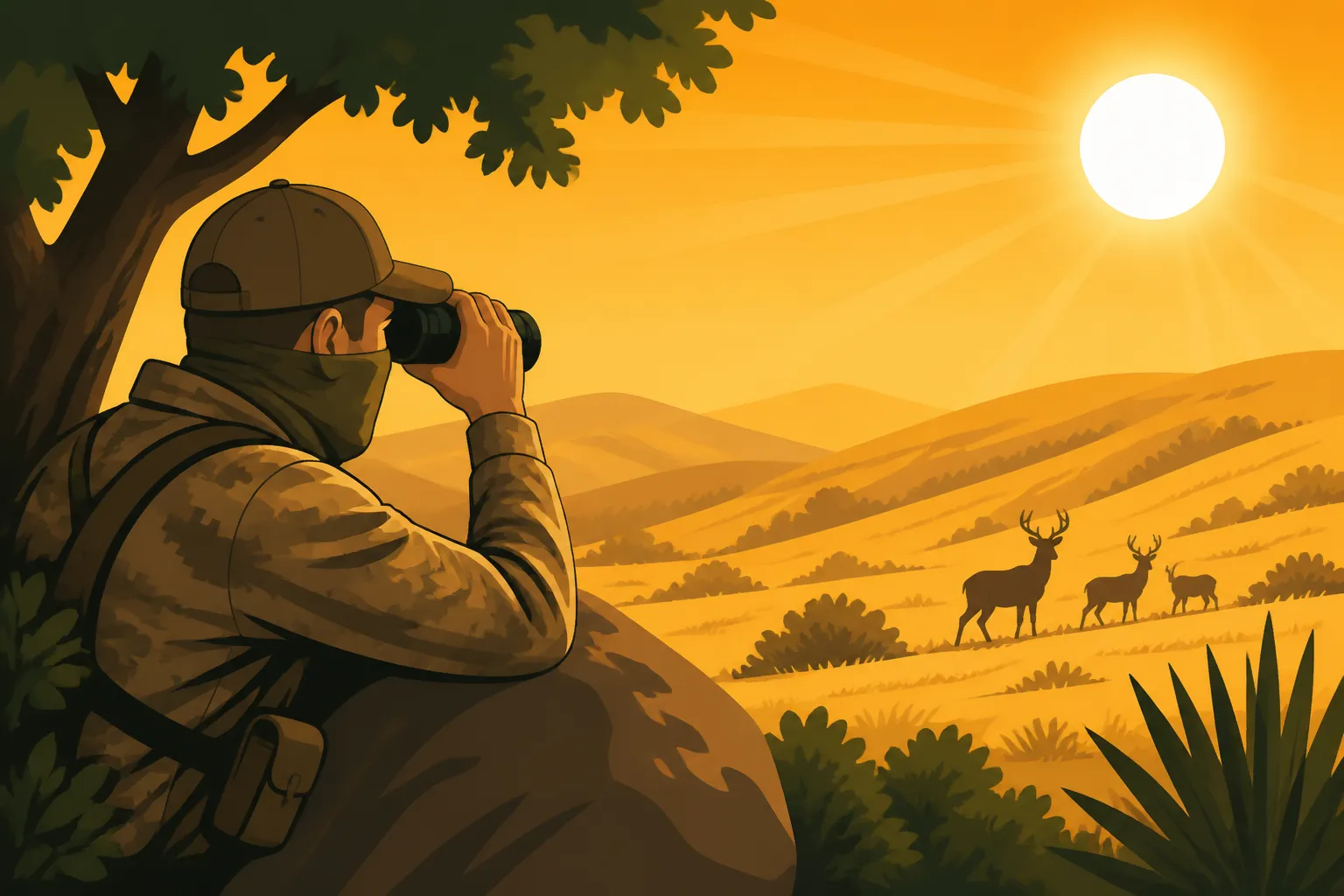
- Ridge Tops and Saddles: These areas often catch a breeze, which can be a game-changer on a hot day. A slight airflow helps to cool you and can dissipate your scent, making it harder for deer to pinpoint you. From a ridge, you can glass into shaded canyons or across open, but well-covered, slopes where deer might be moving to or from water. The key is to find a spot that offers both a breeze and good visibility into likely deer hangouts, without silhouetting yourself against the skyline.
- Overlooking Drainages and Burn Scars: Deer often use drainages as travel corridors, especially when moving between bedding and feeding areas under the cover of darkness. Positioning yourself on an elevated point overlooking a drainage at dawn or dusk can allow you to intercept them. Similarly, old burn scars, particularly those with new green growth, can attract deer seeking browse. From an elevated position, you can effectively Glassing a Burn Scar for a Feeding Bear (or a deer in this case), using good optics to pick apart the shadows and find a bedded animal. Remember, in August, movement might be minimal, so glassing intently is paramount.
Gear and Personal Prep for Hot-Weather Sits
Hunting in August heat isn't just about deer strategy; it's also about personal endurance and smart gear choices. Staying comfortable, scent-free, and healthy directly impacts your ability to stay in the field and remain effective.
Hydration and Cooling Essentials
Heatstroke and dehydration are real dangers in California's summer heat. Prioritizing your personal well-being is non-negotiable.
- Ample Water and Electrolytes: Carry more water than you think you'll need. A good rule of thumb is at least one liter per hour of strenuous activity, but for sitting, plan for several liters over a half-day sit. Electrolyte tablets or mixes (like Liquid IV or Propel packets) are crucial to replenish salts lost through sweat. Without them, even with plenty of water, you can still dehydrate. Consider a hydration pack system that allows for easy sips throughout your sit without fumbling with bottles.
- Cooling Towels and Shade: A simple cooling towel, soaked in water and draped around your neck, can make a huge difference. Re-wet it from your water supply as needed. Seek out natural shade whenever possible. If you're in an open area, a lightweight umbrella or portable blind with a shade awning can be a lifesaver. Even small actions like keeping direct sun off your skin make a difference. Lightweight, breathable clothing designed for hot weather is also a must; you can find good options for Layering for Hot-to-Cold Zone A Archery Days that work well in August.
Scent Control in High Heat
Heat amplifies everything, and that includes your human odor. Sweat carries scent molecules more effectively, making scent control even more critical in hot weather.
- Shower and Scent-Free Clothing: A thorough shower with scent-eliminating soap before heading out is your first line of defense. Wear clean, scent-free clothing that has been washed in odor-neutralizing detergent and stored in airtight bags. Synthetic fabrics that wick away moisture are generally better than cotton, which absorbs sweat and holds odor.
- Strategic Deodorant and Sprays: While not a magic bullet, a scent-free antiperspirant can help reduce sweat. Scent-eliminating sprays applied to your clothes and gear can provide an extra layer of protection. Remember to also spray your boots. Your entry and exit routes will lay down a scent trail, so minimize contact with vegetation where possible. Always play the wind, but a good scent control regimen gives you a little more wiggle room if the wind shifts unexpectedly.
Managing Optics and Electronics in the Sun
Your valuable gear also needs protection from the harsh August sun.
- Optics Protection: Binoculars, spotting scopes, and rangefinders can overheat, affecting their performance and potentially damaging internal components. Keep them shaded when not in use. Use lens caps, and if you have an optics harness, ensure it protects the lenses. Avoid leaving them exposed to direct sunlight for extended periods, especially on dark surfaces that absorb heat. A simple trick is to keep them in your pack until needed, or use a light-colored cloth to drape over them. When Glassing a Canyon for a Bedded Buck, intense sun glare can make it difficult to see, so consider using sun shades on your optics if available.
- Battery Life and Device Care: High temperatures can significantly shorten battery life in phones, GPS units, and rangefinders. Keep these devices in shaded pockets or insulated pouches. External battery packs are a smart investment, but they too should be protected from direct sun. Avoid leaving electronics on dashboards or in direct sunlight in your vehicle. Consider turning off unnecessary features like Wi-Fi or Bluetooth on your phone to conserve battery.
Patience and Adaptability: The Keys to August Success
Hot weather hunting is often a game of extreme patience, interspersed with moments of intense activity. You can't just sit all day and expect results. Success hinges on intelligently navigating the slow periods and maximizing your efforts during the precious windows of deer movement.
The Art of the Early Morning and Late Evening Sit
These are your power hours. The window of opportunity for deer movement is narrower in August than at other times of the year, making these transitional periods incredibly valuable.
- Get in Early, Stay Late: You need to be in your stand or blind well before first light, giving the woods time to settle after your approach. This means waking up extra early. Similarly, plan to stay until the last legal minute in the evening. Deer often make their most confident movements right at the edge of darkness. Don't pack up prematurely; that last minute can be the one that counts.
- Silent and Slow Movement: Minimize noise and movement during your approach and once you're on stand. Every rustle and every unnatural sound echoes in the quiet pre-dawn or fading twilight. Take your time, walk slowly, and use the natural contours of the land to mask your presence. This stealth is paramount to intercepting deer that are already on high alert due to the challenging conditions.
Midday Naps and Scouting for the Next Move
The midday lull is inevitable. Trying to force action during the hottest part of the day is usually futile and energy-draining.
- Rest and Recharge: Use the midday hours to your advantage. If you have a comfortable, shaded spot, take a nap. Rest your eyes and body. This helps you stay fresh and alert for the evening push. Don't be afraid to take a break from the active hunt.
- "GoHunt" for Your Next Spot: This is where the GoHunt app comes in handy again. During the slow midday hours, instead of baking in a stand, you can use the app to analyze new areas, mark potential water sources, or identify alternative bedding cover. You might see a faint game trail on the satellite imagery you missed before, or a small pocket of dense timber that could hold deer. This virtual scouting is low-impact and keeps you productive without disturbing the actual hunting ground. You can plan your next move, or even a different approach for the following morning, by using the detailed layers available on GoHunt.
- Minimal Impact Scouting: If you absolutely must scout physically, do it very minimally and intelligently. Stick to ridge tops where you can glass, or use existing trails to quickly check a water source, always being mindful of your scent and noise. Avoid busting deer from their beds, as this can push them completely out of the area.
Post-Shot Recovery in Hot Conditions
This is perhaps the most critical aspect of hot-weather hunting that many overlook until it's too late. The clock starts ticking immediately after a shot in August heat.
- Quick Recovery is Paramount: If you make a good shot, waste no time. Track and recover that animal as quickly as possible. The longer an animal lies in the heat, the faster the meat spoils. Every minute counts. Don't wait for hours if you're confident in your shot placement.
- Immediate Field Dressing: As soon as you recover the animal, begin field dressing immediately. Remove the entrails to allow the carcass to cool down from the inside out. This is the single most important step in preserving the meat. Get that body heat out! For detailed instructions, refer to guides on Field Dressing a Deer in Hot Weather.
- Cooling and Transport: Once field dressed, get the animal to shade. If possible, quarter the animal and place the meat in game bags. Get it on ice as quickly as possible. A good quality cooler filled with ice is indispensable. Consider pre-chilling your cooler before you leave home. If you're backpacking deep in, plan your pack-out strategy carefully. Having a lightweight frame pack and plenty of ice in soft coolers at the trailhead can make all the difference. Knowing how to use Best Cooler for Packing Out Meat in Hot Weather will save your venison.
Hot-weather hunting in California is undoubtedly a challenge, but with the right mindset, strategic planning, and careful execution, it can be incredibly rewarding. Embrace the early mornings and late evenings, prioritize hydration and cooling, and never underestimate the value of smart scouting, whether it's on the ground or with a robust mapping tool like GoHunt.
Disclaimer
Hunting is an inherently dangerous activity. Always prioritize safety, follow all local, state, and federal regulations, and be aware of your surroundings. This content is for informational purposes only and does not constitute professional advice. Consult with experienced hunters and official wildlife resources before engaging in any hunting activities.