Sitting a Water Hole in Late Season
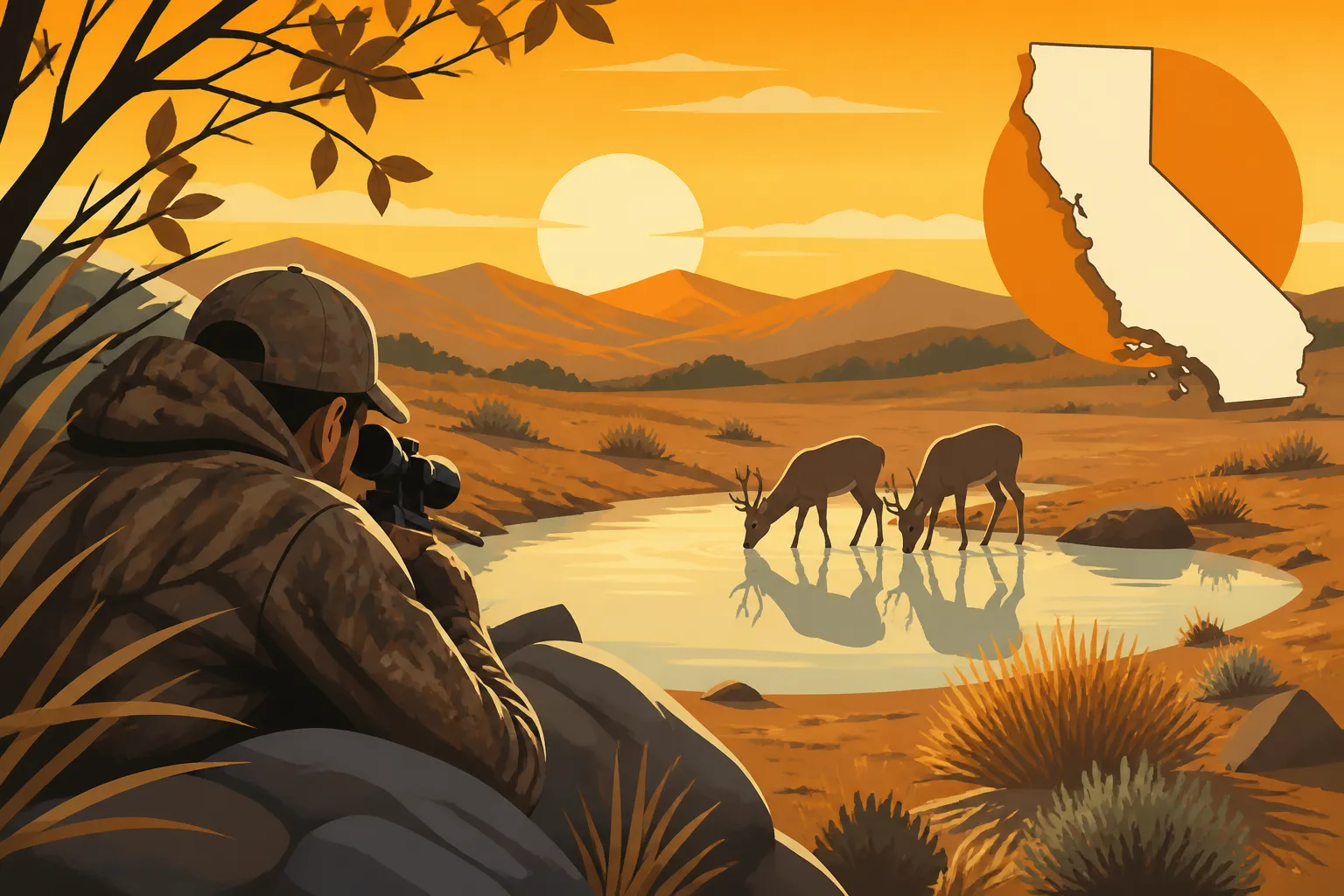
When the golden hues of autumn fade and California's deer seasons stretch into the colder, drier late weeks, finding deer can feel like an impossible task. The abundant food sources of earlier months have often dwindled, and deer activity becomes more sporadic and concentrated. But there's one critical resource that deer cannot live without, regardless of the season: water. This guide will delve deep into the art of sitting a water hole in the late season, providing you with practical strategies to turn these vital hydration points into your best chance for success.
The Late Season Water Imperative
As California transitions from the lingering warmth of early fall into the cooler, often drier, late season, the landscape changes dramatically. Gone are the lush, green understories and abundant streams that characterize spring and early summer. This environmental shift fundamentally alters deer behavior, making water sources undeniable magnets.
Why Water Becomes Scarce and Concentrated
California's unique climate, characterized by long, dry summers and often mild, but still dry, fall and early winter periods in many regions, means water sources naturally shrink. Creeks that were flowing robustly in September might be reduced to a trickle, or even dry entirely, by November or December. Small springs become less active, and temporary puddles from early rains disappear quickly. This desiccation is particularly pronounced in areas like the inner Coastal Range oak woodlands, where intermittent streams rely heavily on seasonal rainfall, or in the vast, arid stretches of the Mojave Desert fringe country.
Deer, like all wildlife, adapt to these changes. As their options for hydration dwindle, they instinctively gravitate towards the remaining reliable water points. These could be perennial springs, natural seeps, established stock ponds, or even man-made cattle troughs. This concentration effect is what makes water holes so powerful as a late-season hunting strategy. Instead of looking for deer scattered across miles of terrain, you can identify these critical pinch points where deer must eventually visit.
Deer's Undiminished Need for Hydration
It's a common misconception that deer need less water as temperatures drop. While they might not be panting from August heat, their physiological need for water remains strong. Deer are still actively digesting browse, which can be quite dry in the late season, and the metabolic processes of converting that forage into energy require ample hydration. Bucks, especially, might be recovering from the exhaustive rut, which can leave them significantly depleted. Their bodies are working overtime to rebuild fat reserves and recover lost energy, a process that absolutely depends on consistent water intake.
Imagine a mule deer buck in the high Sierra country during a late November cold snap. He's shed his velvet, the rut is mostly over, and he's likely focused on eating as much as possible before heavy snows might push him to lower elevations. He's consuming dry woody browse and fallen acorns. Without enough water, his digestive system can't efficiently process these foods, and his overall health will suffer. Similarly, blacktail deer in the chaparral-covered foothills still require regular drinks to stay healthy, even if the air feels crisp. Water is the silent, often overlooked, driver of their survival and late-season movement patterns.
The Funneling Effect of Water Sources
As natural water sources shrink, they create a natural "funnel" for deer movement. Instead of deer having countless options for water, they are forced to use a limited number of remaining points. This transforms vast hunting areas into smaller, more predictable zones of activity. If you can locate these surviving water sources, you've essentially found the deer's Achilles' heel, a place they absolutely have to visit.
This funneling effect isn't just about deer showing up at the water hole; it's about their travel corridors to and from it. Deer will often establish distinct trails leading to and from these precious hydration points, especially where cover allows them to approach and depart discreetly. Understanding these travel patterns, rather than just the water source itself, can be a game-changer. These funnels become prime spots not just for direct water hole sits, but also for understanding how deer move through the landscape in general.
Identifying Prime Water Sources for Late Season
Finding the right water source isn't just about spotting water on a map; it's about understanding the nuances of how deer use it, especially when conditions are tough. Not all water holes are created equal, and careful scouting is paramount to success.
Scouting for Reliable Water Before the Hunt
Before you even think about setting up a blind, you need to put boots on the ground and scout. Start by looking at topo maps and satellite imagery. Apps like GoHunt are incredibly helpful for this, allowing you to identify potential springs, seeps, and stock ponds, as well as terrain features that might concentrate water flow. Look for drainages, saddles, and areas where contours suggest water might collect, particularly if there's green vegetation in an otherwise dry landscape.
Once you have some potential spots, it's time for physical reconnaissance. Visit these locations, ideally a week or two before your hunt, to assess their viability. Is the water still flowing, or has it dried up? Are there signs of recent use? How much pressure does this area get from other hunters or cattle? Don't be afraid to walk a little further, climb an extra ridge, or push into thicker cover to find those tucked-away, less-pressured sources. Often, the best water holes are not visible from a main road or popular trail. Remember, these scouting missions are also an excellent opportunity for Scouting California Public Land Before Season.
Interpreting Sign Around Water Sources
Once you've located a water source, the next step is to carefully interpret the sign around it. Fresh tracks in the mud or dust are a clear indicator of recent deer activity. Look for different sizes of tracks – a mix of small doe/fawn tracks and larger, deeper buck tracks suggests a well-used spot. Pay attention to the direction of travel, which can reveal entry and exit routes.
Beyond tracks, look for droppings. Fresh droppings are moist and shiny, while older droppings are dry and weathered. The amount and consistency of droppings can tell you a lot about how frequently deer are using the spot and what they're eating. Browsed vegetation around the water, or even rubs and scrapes on nearby trees, especially if the rut is still sputtering in your area, are all positive indicators. You might even find bedding areas within a short distance, indicating deer are spending significant time in the vicinity. For more on interpreting these subtle cues, consider studying Reading California Mud for Fresh Deer Movement.
Overlooked Water Points: The Hunter's Advantage
Many hunters will head straight for the most obvious stock ponds or large creeks. While these can certainly hold deer, they also often hold more hunting pressure. Your real advantage in the late season often comes from finding those overlooked, smaller, and harder-to-reach water sources. Think about ephemeral seeps on a north-facing slope, tiny spring-fed puddles nestled deep in a canyon, or even rainwater collected in rock depressions.
These small, out-of-the-way spots might not provide enough water for a cattle herd, but they are perfectly sufficient for a few deer, and critically, they often see far less human disturbance. Using detailed mapping tools like GoHunt or other applications with topo and satellite overlays can help you pinpoint these subtle features. Look for areas with a slightly different vegetation pattern, indicating moisture, or unusual terrain features that might hold water. These are the places where a weary late-season buck, trying to avoid detection, is most likely to slip in for a quick drink.
Setting Up for Success at the Water Hole
Once you've identified a promising water hole, the real work begins: setting up your position to maximize your chances without alerting the deer. This involves careful consideration of the environment, your concealment, and the critical element of patience.
Understanding Wind, Thermals, and Approach
This is arguably the most crucial aspect of water hole hunting, especially in California's varied and often mountainous terrain. Deer have an incredible sense of smell, and a single gust of wind carrying your scent can ruin an entire hunt. Before you even approach your chosen water hole, always, always check the wind. Consider the prevailing wind direction for the day, but also remember that in areas with significant elevation changes, thermals play a huge role.
In the early morning, as the air warms, thermals tend to rise, carrying scent uphill. In the evening, as the air cools, they drop, carrying scent downhill. This means your setup location might need to change throughout the day, or you need to choose a spot that keeps your scent out of the deer's likely approach and escape routes. When hunting in Wind and Thermals in Steep Sierra Country, this is a constantly shifting puzzle. Plan your entry and exit routes carefully to avoid blowing your scent into the area or startling deer already present. This might mean making a longer, quieter loop to get to your position.
Concealment and Blind Placement
Effective concealment is non-negotiable. Whether you're using a ground blind or natural cover, you need to blend seamlessly into the environment. If you're using a portable ground blind, get it set up well in advance of your hunt, ideally days or even a week before, so deer have a chance to get accustomed to its presence. For more on this, check out Using a Ground Blind on BLM Land.
When placing your blind, consider the sun's position throughout the day to avoid being silhouetted or having direct sunlight on your position. Position yourself so you have a clear shooting lane to the water source, but also keep an eye on those likely approach trails. Pay attention to your backdrop – avoid setting up against an open sky or a bright, contrasting color. When building a natural blind, use materials already present in the area, such as fallen branches, rocks, and local vegetation. The goal is to break up your human outline and minimize movement. Sometimes, the best blind is simply a cluster of thick brush or the base of a large oak tree. Learning to master Brushing In a Blind on a Field Edge can greatly increase your chances.
The Art of Patience and Timing
Sitting a water hole, especially in the late season, is a game of patience. Deer might not visit frequently, and when they do, they can be incredibly wary. You might need to commit to long hours, from before first light until well after dusk. This means being prepared with all your essentials: water, snacks, warm clothing (even if the day warms up, mornings and evenings can be frigid), and a comfortable seat.
The best times to catch deer at a water hole are often early morning, shortly after sunrise, and late afternoon, just before sunset. These are periods of lower light when deer feel safer moving. However, don't rule out midday visits, especially if the weather is warm or the pressure elsewhere is high. Sometimes, a deer will slip in for a quick drink during the quietest parts of the day. The longer you can remain still and vigilant, the higher your odds. Remember, in the late season, any encounter is a gift, and it often comes to those who wait the longest.
Overcoming Challenges and Ethical Considerations
Water hole hunting, while effective, isn't without its challenges. Dealing with hunting pressure, ethical considerations, and leveraging technology are all part of a successful late-season strategy.
Navigating Hunting Pressure
California public land, especially around prime water sources, can see significant hunting pressure. It's a reality we all face. If you find a promising water hole that's easily accessible or shows signs of recent human activity, you'll need a strategy to deal with it. This might mean arriving earlier, staying later, or being willing to hike deeper into the backcountry to find less-pressured water. Sometimes, a slightly less optimal water source that sees no other hunters is better than a perfect one with constant intrusion.
Another approach is to scout multiple water sources and have backups. If your primary spot is occupied, or you notice excessive pressure, you can move to an alternative. Using mapping applications with land ownership layers can help identify isolated pockets of public land that might be harder for others to reach. Remember that deer are incredibly adept at avoiding people, so finding that quieter, out-of-the-way spot is often key to success when facing Hunting pressure on California public land.
Respecting the Resource and Ethical Practices
When hunting a water hole, it's paramount to practice ethical hunting. This means minimizing your disturbance to the area. If you find a water source that's the only remaining water for miles, consider your impact. While hunting is a management tool, excessively pressuring a vital, solitary water source could negatively impact the local deer herd's ability to access water without constant stress.
Always ensure you have a clear, ethical shot. Water holes can concentrate deer, but they can also create tricky shot angles or present multiple animals. Identify your target clearly, ensure no other deer are in the line of fire, and only take a shot when you are confident in a clean, humane kill. After the shot, track and recover your animal quickly and efficiently. For instance, knowing how to approach Blood Trailing After Dark in California can be critical if a shot happens late in the evening. Proper field dressing and game care, especially in areas where temperatures might still be warm during the day, are also crucial to preserving the meat.
Leveraging Technology for Informed Decisions
Modern hunting tools can significantly enhance your water hole hunting strategy. As mentioned earlier, robust mapping applications like GoHunt are invaluable for identifying potential water sources, assessing terrain, and understanding property boundaries. These tools allow you to virtually scout vast areas from your home, saving you time and effort in the field. They can show you historical aerial imagery, reveal subtle elevation changes, and even mark potential bedding areas near water.
A good rangefinder is also essential. When a deer approaches a water hole, you need to be able to instantly and accurately determine the distance, especially in varying light conditions. A high-quality device, like those recommended in Best Rangefinder for Sierra Canyon Shots, can eliminate guesswork and ensure precise shot placement. Additionally, consider portable weather apps that provide real-time wind direction and thermal forecasts, allowing you to adjust your setup on the fly. Technology doesn't replace woodsmanship, but it certainly augments it, giving you an edge in the challenging late season.
Comparing Water Hole Types for Late-Season Deer
Different types of water sources offer unique opportunities and challenges. Understanding their characteristics can help you prioritize your scouting efforts and refine your hunting strategy.
| Water Source Type | Pros | Cons | Best Use for Deer Hunting |
|---|---|---|---|
| Natural Spring/Seep | Often constant, less visible, less pressured | Can be small, hard to find, require deep scouting | Remote, low-pressure areas; ideal for wary bucks |
| Stock Pond/Cattle Tank | Reliable, often larger, easy to locate | Can attract livestock, higher human pressure | Areas with managed grazing; morning/evening sits |
| Drying Creek Bottom/River | Good travel corridors, residual puddles | Water can be inconsistent, difficult to predict | Spot-and-stalk along edges; funnel points |
| Rain Puddles/Rock Basins | Extremely low pressure, found in remote spots | Highly temporary, unreliable, small | Target immediately after rain in arid, rocky terrain |
Each of these water source types requires a slightly different approach, but the core principles of wind management, concealment, and patience remain the same. The key is to be adaptable and ready to adjust your strategy based on what you find on the ground and what the deer are telling you with their sign.
Beyond the Water: Other Late Season Considerations
While water holes are a primary focus, it's important to remember that they are part of a larger ecosystem. Deer still need food, and often, the food sources that require more water for digestion will lead deer to your water hole. Thinking about Late-Season Food Sources for California Deer in conjunction with water can help you understand the full pattern of deer movement.
Similarly, consider the overall movement patterns of deer in your zone. Are they migrating due to snow? Are they still trying to recover from the rut? Understanding these broader behaviors, often detailed in resources like California Wildlife Area Deer Check Station Data or specific zone information, can provide context for why deer are using particular water sources. The more pieces of the puzzle you can connect, the better your chances of intercepting a late-season buck.
Remember, late season hunting in California is often a grind. It's about persistence, careful planning, and sometimes, a little bit of luck. But by focusing on water, you're tapping into a fundamental need that deer cannot ignore, giving yourself a significant advantage when other strategies might falter.
Disclaimer
Hunting is an inherently dangerous activity. This article provides general information and recommendations. Always consult the current California Department of Fish and Wildlife regulations, local ordinances, and landowner permissions before engaging in any hunting activity. Safety should be your number one priority.