Dragging a Deer Out of a Steep Canyon
You've done it. After countless hours of scouting, dialing in your rifle, and probably a few pre-dawn hikes, you finally connected with a buck in a steep, unforgiving canyon. That rush of adrenaline quickly gives way to a daunting realization: now you have to get it out. Dragging a deer, especially a good-sized one, out of a steep canyon in California's rugged terrain—be it the Sierra Nevada, the Coast Range, or even some of the deeper desert washes—is a brutal, back-breaking chore that can turn a successful hunt into an endurance test. This guide will walk you through realistic, practical strategies to make that recovery as efficient and safe as possible, saving your back and ensuring your hard-earned venison makes it home.
Assessing the Challenge and Your Resources Before the Drag
Before you even think about putting a hand on that deer, take a moment. Pause, take a deep breath, and critically assess your situation. This isn't the time for bravado; it's the time for smart decision-making. Rushing into a recovery, especially from a tough spot, can lead to injury, spoiled meat, or even getting lost.
Understanding the Terrain and Your Location
Every canyon is different, and California's diverse landscapes throw unique challenges at you. Is it a rocky, brushy chasm in the Hunting California's Sierra Nevada High Country where every step is a gamble? Or a loose, sandy wash in the desert that saps your energy with each stride? Consider the grade—is it a gradual slope you can zig-zag up, or a near-vertical drop-off that demands ropes and a team?
Look around you. Identify the easiest path out. It might not be the most direct route to your vehicle. Often, the path of least resistance involves following game trails, dry creek beds, or even a less steep ridge, even if it adds mileage. Before the season, many hunters spend time Reading Aerial Photos for Sierra Deer or other areas to identify potential escape routes and terrain features that could aid in recovery. Think about what the terrain was like when you were coming down into the canyon. Remember those spots that made you think, "I wouldn't want to drag a deer up this." Avoid them if possible.
Your Team and Gear: Are You Alone or With a Crew?
Your recovery strategy will drastically change based on whether you're alone or hunting with a partner or a group. A solo hunter faces a much tougher challenge, often necessitating quartering the animal. If you're with a team, you have the advantage of shared labor, more gear, and extra eyes to navigate safely.
Essential gear can make or break a canyon recovery:
- Good Knives: Multiple sharp knives are paramount for field dressing and especially for quartering. A bone saw or a stout hatchet can also be invaluable.
- Game Bags: High-quality, breathable game bags are non-negotiable, especially in warmer California zones. They protect the meat from flies, dirt, and debris, and allow it to cool.
- Ropes/Cordage: At least 50-100 feet of durable rope (static climbing rope or strong utility rope) can be a lifesaver for rigging pulls, especially if you plan to use a system to haul the entire carcass.
- Gloves: Heavy-duty work gloves will save your hands from blisters, thorns, and sharp rocks.
- Headlamp: Even if it's midday, things can go wrong and recoveries can stretch into darkness. A reliable Best Headlamp for a Pre-Dawn Sierra Climb is essential.
- Water and Snacks: You'll be burning serious calories. Stay hydrated and fueled.
- First-Aid Kit: Small cuts and scrapes are common; a more serious injury in a remote canyon could be disastrous.
- Communication Device: A cell signal is often non-existent in deep canyons. A satellite communicator like a Garmin inReach or a Satellite Communicator for BLM Desert Land is a critical piece of safety gear, especially if you're solo.
- Mapping App/GPS: Knowing your exact location and the route back to your vehicle is crucial. Apps like onX Hunt or Best GPS App for California Public Land are indispensable.
- Footwear: Your boots need to handle steep, uneven terrain. Best Boots for Steep Wet-Season Sierra Trails are designed for traction and support, but even in dry conditions, robust hiking boots are a must.
Time and Weather Constraints: When Daylight and Heat Are Against You
California's hunting seasons often mean dealing with warm temperatures, even into late fall in some zones. Heat is the enemy of venison. If you're hunting during an early season, like the California Zone A Archery Opening Day or a D-zone that opens in August, you'll need to work fast to cool that meat. Every minute spent debating is a minute lost. If you're in a warm climate, immediate field dressing and getting the hide off (if possible and practical) are critical.
Daylight is another huge factor. A recovery that seems manageable at noon can become treacherous as shadows lengthen and darkness falls. Always overestimate the time it will take. If you hit an animal late in the afternoon in a deep canyon, you might need to consider a recovery plan that involves leaving the deer overnight (properly tagged and protected, of course) or making a serious push with headlamps. Be aware of California Public Land Hunting Hours and any specific regulations regarding night activity.
Strategies for Effective Deer Recovery from Steep Canyons
Once you've assessed the situation, it's time to act. The strategy you choose will depend heavily on the factors we just discussed.
Field Dressing and Quartering: Reducing the Load
This is arguably the most impactful step you can take to make a canyon recovery manageable. The gut pile accounts for a significant portion of the deer's weight, and removing it immediately lightens your load.
-
Standard Field Dressing:
- Perform a thorough field dress immediately after the kill. This not only lightens the load but also allows the carcass to begin cooling internally, which is crucial for meat quality, especially in warmer weather.
- Open the chest cavity as much as possible, remove all organs, and wipe out any excess blood.
- Pro tip: Bring a small tarp or heavy-duty contractor bag to place the deer on if the ground is particularly dirty or thorny. This keeps the meat cleaner.
-
Quartering in the Field:
- If you're solo, have a long distance to cover, or the terrain is exceptionally steep and rugged, quartering is almost always the best option. It breaks the animal down into manageable pieces you can carry out in a backpack.
- Start by removing the front quarters. These are usually the easiest, as they're not connected by bone to the spine. Just cut through muscle and connective tissue.
- Next, remove the hindquarters. You'll need to separate them from the pelvis, which can involve cutting through the ball-and-socket joint or carefully boning around it.
- Finally, the backstraps and tenderloins are the prized cuts along the spine. These can be removed with a sharp knife.
- Some hunters will also take the neck meat.
- Once quartered, place each piece immediately into individual game bags. This protects the meat and makes it easier to handle. These are not trash bags; they are breathable, reusable bags designed for game.
- Place the bagged meat into a sturdy pack, ideally one with an external frame designed for hauling heavy loads, like the Best Backpack Frame for Quartered Elk. Distribute the weight evenly for comfort and balance.
- Remember to keep the head attached to an antlered buck (or at least the skull plate with antlers) and ensure your tag is properly affixed to the appropriate portion, as required by California regulations. You can find more specific details on this in guides like California Deer Reporting Requirements.
Utilizing Mechanical Advantage: Ropes and Pulleys
For those who prefer to keep the deer whole or are dealing with a moderate incline, ropes and a pulley system can be incredibly helpful. This is especially true if you have a hunting partner.
-
Single Rope Drag:
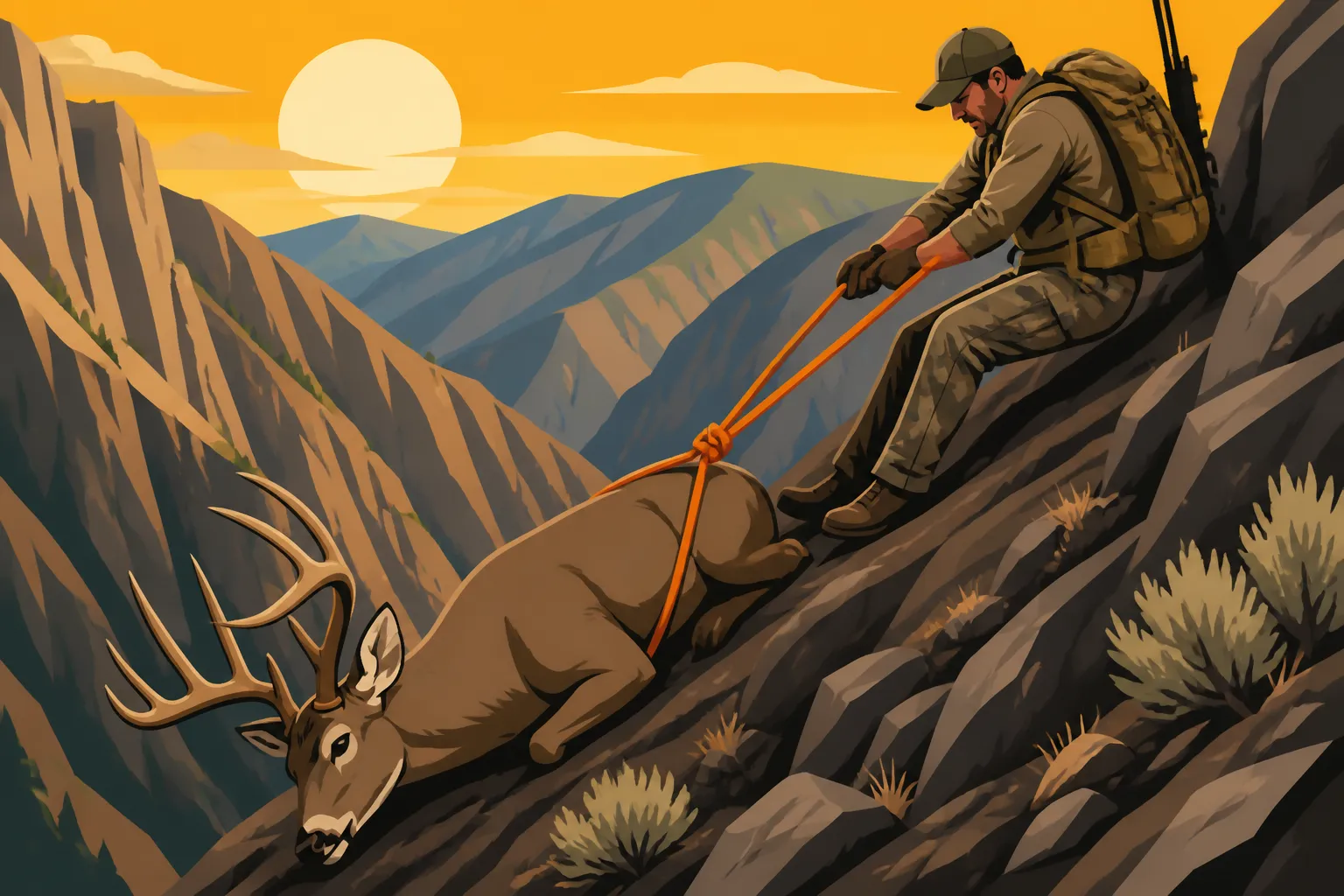
- Attach a sturdy rope (or a deer dragging harness, which can be much more comfortable) to the deer's antlers or neck.
- If you're solo, create a loop for your chest or over one shoulder to distribute the weight. Use short, controlled pulls, resting frequently. Avoid trying to drag continuously for long distances.
- If you have a partner, one person can pull from the front while the other pushes or guides from the rear, especially over obstacles.
-
Rope and Pulley System:
- This is where mechanical advantage shines. You'll need at least two pulleys and a strong tree or anchor point up the slope.
- Secure one pulley to a sturdy tree higher up the canyon wall.
- Attach the second pulley to the deer.
- Thread the rope through both pulleys, creating a 2:1 or even 3:1 mechanical advantage, meaning you'll only need to exert half or a third of the force to move the deer.
- This method is best for shorter, steeper sections where you need to overcome significant resistance. It's slower, but far less strenuous on your body.
- Make sure all knots are secure and the anchor point is absolutely solid. The last thing you want is a runaway deer or a snapped rope on a steep incline.
The Game Cart and Sled Option: When the Path Allows
While often impractical in truly "steep" and "canyon" terrain, a game cart or sled can be a godsend if you eventually reach a more moderate slope, a dirt road, or a wider game trail.
- Game Carts: These wheeled devices are fantastic for relatively flat or gently sloping terrain. If you can get the deer out of the absolute steepest part of the canyon and onto a semi-stable path, a cart can save your back the rest of the way. Look for models with large, rugged tires that can handle some bumps and brush. However, don't expect to push a loaded cart straight up a 45-degree slope or through dense chaparral.
- Sleds: A sturdy plastic sled can be surprisingly effective for moving a whole deer over rocky, snowy, or muddy ground, especially if you have a partner or two to help pull. They glide over obstacles better than a cart in some conditions. Again, extremely steep, brushy terrain will likely defeat a sled.
Many hunters will use a hybrid approach: quarter the deer out of the nastiest terrain, carry the quarters a ways, then reassemble the carcass or load the quarters onto a game cart when the terrain becomes more forgiving.
Calling for Help (and knowing when to)
There's no shame in knowing your limits. Sometimes, the canyon is just too gnarly, or you're simply too exhausted.
- Hunting Buddies: If your hunting partners are in the area, a quick radio call (if you have line of sight) or a text via a satellite communicator to describe your predicament can bring much-needed reinforcements.
- GoHunt Resources: While not directly a rescue service, resources like the GoHunt app can provide invaluable public land boundary and topography layers that could help you identify an easier alternative exit route or even a closer access point for a partner to meet you. This kind of pre-hunt Scouting California Public Land Before Season with detailed mapping tools can make all the difference in a recovery scenario.
- Emergency Services: In the direst circumstances – if you or a partner are injured, or you're truly stuck in a dangerous situation – your satellite communicator's emergency SOS function is there for a reason. Don't hesitate to use it. This should be a last resort, of course, but it's vital to have that option.
Practical Techniques for Moving the Carcass
Once you’ve decided on your primary recovery method, these practical tips will make the process safer and more efficient.
Single-Person Dragging Techniques
Dragging a whole deer by yourself, especially uphill, is an exercise in pain and patience.
- The Chest Harness: As mentioned, a dedicated deer drag harness that goes around your chest and shoulders is far superior to simply pulling a rope with your hands. It distributes the weight to your strongest muscles.
- Short Bursts: Don't try to drag the deer 50 yards in one go. Drag for 10-15 feet, then stop, rest, and assess. Repeat.
- Zig-Zagging: On steep slopes, don't go straight up. Instead, zig-zag across the incline. This lengthens your path but significantly reduces the grade you're fighting against, making the pull much easier.
- Utilize Gravity (Carefully): If you need to move the deer downhill for a short distance to a more accessible spot, let gravity do some work. Just ensure you maintain control, especially if the ground is loose or rocky. A runaway deer can be dangerous.
- Leverage Obstacles: Use rocks, stumps, or small logs as pivot points to change the deer's direction or gain a momentary mechanical advantage.
Team-Based Hauling Strategies
With two or more hunters, you can accomplish much more with less individual strain.
- Front and Back: The most common method. One person pulls from the front, another pushes/guides from the rear. The rear person can lift the hindquarters to prevent snagging and help distribute weight.
- Relay System: For very long, difficult drags, rotate positions. The person on the "pull" end works the hardest. Swap out every few minutes to avoid exhaustion.
- Shoulder Carry (for quarters): If the deer is quartered, each person can carry a quarter or two in their pack. This is generally the most efficient way to move meat out of truly rough country. When you're carrying a heavy pack on steep, uneven ground, make sure your Best Gaiters for Desert Wash Hunting or mountain boots are secure to prevent debris from getting in and causing discomfort.
Navigating Obstacles: Rocks, Logs, and Brush
California's wild places are rarely manicured. You'll encounter all sorts of natural obstacles.
- Rocks: For small rocks, try to drag the deer over them, using its momentum. For larger boulders, you'll need to lift the deer (or a quarter) over the obstacle, often with a concerted team effort. Never try to drag under a rock unless it’s unavoidable and safe.
- Logs and Fallen Trees: Similar to rocks. If possible, lift the deer over. If a log is too big, you might have to pivot the deer around an end or even saw through a smaller section if you have a saw.
- Dense Brush and Chaparral: This is where you really earn your venison. Try to find game trails or areas where the brush is thinner. If you have to push through, the person in front can clear a path with a stout stick or even a machete (if it's legal and safe to carry). The deer will snag on every branch, so slow and steady wins the race.
Post-Recovery Care and Legalities
Once you've finally wrestled that deer out of the canyon and back to your vehicle, the work isn't quite done.
Preserving the Meat After a Tough Haul
All that effort will be wasted if the meat spoils.
- Cooling is King: Get the meat cooled down as quickly as possible. If it's still hot, hang it in the shade, ideally in game bags, to allow air circulation. You can also drape a wet towel over it to aid evaporative cooling.
- Ice: If you've quartered the deer, get the game bags into coolers with ice. Don't let the meat sit in melted water. Use block ice or frozen water bottles, or use dry ice for faster cooling.
- Transport: Transport the meat out of the field cleanly. Even if it's just a short drive, keeping the meat cool and clean is paramount. Check out tips for Game Bags for Field Care in August Heat for more specific advice on hot weather care.
Reporting Your Harvest and Transport
California has specific requirements for reporting your deer harvest.
- Tagging: Ensure your deer tag is properly filled out and affixed to the carcass or a portion of the carcass before you move it from the kill site.
- Reporting: Most deer harvests in California must be reported online or through the CDFW Mobile App. Make sure you complete this step as soon as you have cell service or access to the internet, and certainly before the deadline. Missing this step can result in penalties. Always know The California Deer Reporting Deadline for your specific tag.
Moving a deer out of a steep canyon is never easy, but with careful planning, the right gear, a solid strategy, and a healthy dose of determination, you can turn a potential nightmare into a successful and memorable hunt.
Disclaimer
The information provided in this guide is for educational and informational purposes only and does not constitute legal advice. Hunting regulations and safety guidelines can change. Always consult the current California Department of Fish and Wildlife (CDFW) regulations and local land management rules before engaging in any hunting activities. Safety is paramount; be prepared for emergencies and hunt responsibly.