Hunting a Clear-Cut Regrowth Edge
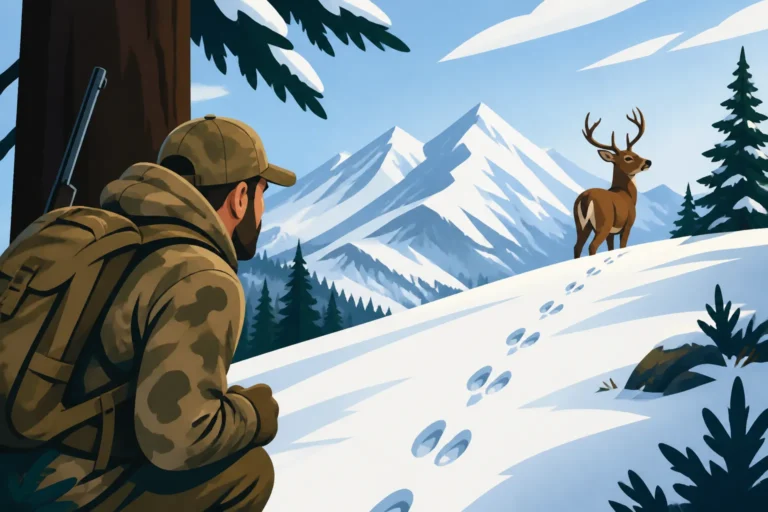
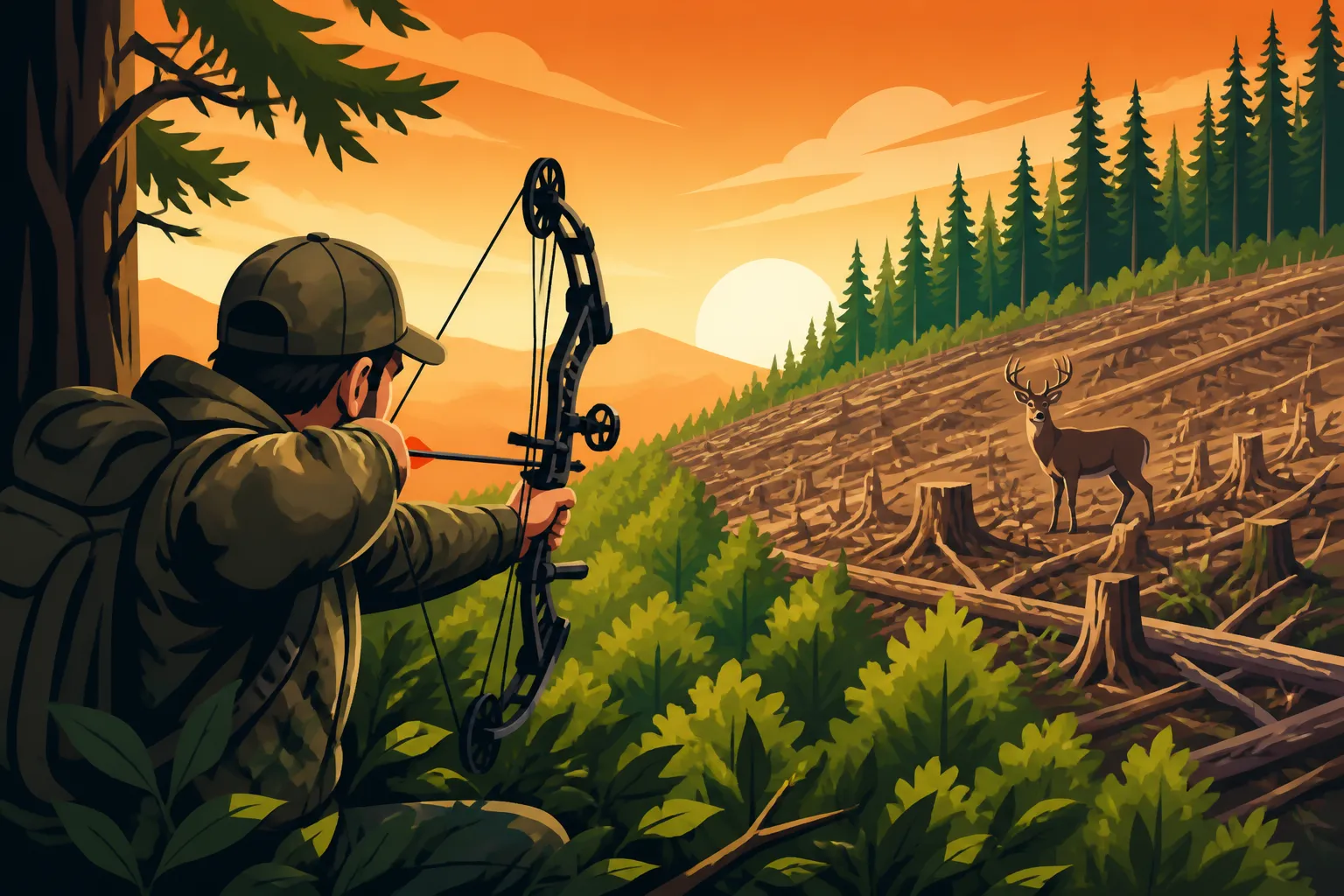
Let's talk about clear-cuts, because if you've ever found yourself staring at a satellite map of California's vast timberlands, you've probably seen those jarring, patchwork sections where the trees just… aren't there anymore. It's easy to dismiss these areas as desolate or ugly, thinking there's no way a deer would ever be there. But, I'm here to tell you, you'd be missing out on some incredible hunting opportunities. This guide is all about understanding why deer absolutely love clear-cut regrowth edges and, more importantly, how you can effectively hunt them in California.
Why Clear-Cuts Become Deer Magnets
Clear-cuts, for all their initial starkness, are actually phenomenal ecological reset buttons. While they might look like a landscape scar right after logging, nature quickly reclaims them, creating a buffet and sanctuary for deer and other wildlife. It’s a dynamic habitat that changes year to year, offering different advantages at various stages of regrowth.
The Nutritional Bonanza of Early Regrowth
When timber is harvested, the forest floor is suddenly exposed to sunlight, kicking off an explosion of new growth. Think about it: all that energy from the sun that was once gobbled up by the towering canopy now reaches the smaller plants below. This causes a burst of nutritious forage – tender shoots, succulent forbs, and young shrubs that deer absolutely crave. This early stage, typically within the first 1-5 years after a clear-cut, is like a grocery store grand opening for deer. They'll flock to these areas to browse on species like ceanothus, manzanita, and various grasses, which are packed with vital nutrients they need for antler growth and body mass.
It’s a feast that just isn't available in the deep, shaded timber. When you're glassing a clear-cut, don't just look for deer in the dense stuff; look for their trails leading into and out of these areas where they're actively feeding. This fresh growth offers a stark contrast to the often sparse understory of mature forests, making clear-cuts crucial feeding zones, especially in zones with limited food sources.
Ideal Cover and Security in Dense Young Stands
As the clear-cut matures, say from about 5 to 15 years post-harvest, those tender shoots transform into incredibly dense, thick stands of young conifers or brush. While this might be a nightmare for a hunter trying to walk through, it's a dream come true for a deer seeking security. This thick regrowth offers incredible thermal cover, protecting them from harsh weather, and almost impenetrable visual cover, making them feel incredibly safe from predators.
Deer will often bed down right inside these dense stands, just a few yards in from the edge, where they can hear and smell any approaching danger long before it sees them. These areas become prime bedding sites, especially for older, wiser bucks who prioritize security. Understanding Where California Blacktail Bucks Bed is crucial here; often, it’s not just a specific type of cover, but a transition area that offers both food and security. The edge of a clear-cut provides exactly that – a quick dash from dense cover to prime feeding grounds.
Navigational Corridors and Transition Zones
The "edge" of a clear-cut is where the magic truly happens. It's not just the clear-cut itself, but the transition line where the open regrowth meets the mature timber. These edges act as natural travel corridors, funnels, and staging areas for deer. They'll use the timber for concealment during the day, then move along these edges to access the feeding grounds in the clear-cut during low light.
Think of it like a highway interchange. Deer aren't usually in a hurry to cross wide-open spaces, but they'll often travel along the security of the tree line, dipping into the clear-cut to feed, or using it as a protected path between different pockets of habitat. This is especially true in areas of heavy Hunting Pressure on California Public Land. Bucks often use these edges as scrape lines or rub lines, marking their territory as they move between bedding and feeding areas. Learning to identify these transition zones on your maps, perhaps with an app like GoHunt, can be a game-changer for your scouting efforts.
Reading the Regrowth Edge: Key Scouting Strategies
Hunting a clear-cut effectively starts long before you ever step foot into it with your rifle or bow. It's all about diligent scouting, both from afar and on the ground, to understand how deer are using that specific piece of habitat.
Digital Scouting: Mapping the Cut
Before you even leave your couch, use satellite imagery and mapping applications to identify clear-cuts in your target areas. Tools like GoHunt or similar mapping apps allow you to overlay public land boundaries with satellite views, helping you pinpoint these features on National Forests or BLM land. Pay attention to the age of the clear-cut if possible; some mapping programs or forest service websites might even have timber harvest dates.
Look for areas where clear-cuts abut different types of habitat – a north-facing slope with heavy timber meeting a south-facing clear-cut can be a thermal transition deer love. Identify potential access points, but also spots that look difficult to reach. Often, the harder it is to get to, the less hunting pressure it sees. When you're Reading Aerial Photos for Sierra Deer, these clear-cut boundaries will jump out, and you can start to trace potential travel routes and bedding areas even before you step foot on the ground. Also, look for any water sources nearby, as deer will always need access to water, and a clear-cut often creates new seeps or damp spots as vegetation changes.
Boots-on-the-Ground Reconnaissance
Once you've narrowed down some promising clear-cuts digitally, it's time to get your boots dirty. Early season scouting or post-season exploration is ideal for this. Your goal is to find fresh sign: tracks, droppings, rubs, and scrapes. Deer will leave a clear story if you know how to read it. Look for heavily used game trails entering and exiting the thickest regrowth. If you find trails that are matted down and have lots of fresh droppings, you know deer are routinely using that path.
Walk the edges of the clear-cut, especially at different elevations. Are there particular points where deer seem to be crossing into the timber? Is there a subtle saddle or a bench that funnels deer movement along the edge? Spend time glassing these edges from a distance, particularly during the golden hours of dawn and dusk. You might be surprised at how many deer emerge from the thick stuff to feed or move. When Scouting California Public Land Before Season, mark all these observations on your mapping app so you have a solid plan for opening day. Don't be afraid to poke around inside the edges, too, if you can do so quietly and without spooking everything for miles around.
Identifying Key Food Sources and Bedding Areas
During your scouting, pay close attention to what the deer are actually eating. Are there specific types of browse or forbs that are heavily nipped? Different clear-cuts will regenerate with different vegetation mixes, so identifying the preferred food sources in your area is key. If it's a recent cut, you might find deer targeting fresh grasses and forbs. If it's a bit older, they might be hitting young saplings or berry bushes.
Just as important is confirming bedding areas. Look for flattened grass or brush, often with fresh droppings nearby, in the densest parts of the regrowth. These are typically just a few yards into the thick stuff, offering maximum concealment. If you find a heavily used bedding area, you'll know where the deer are spending their daylight hours, which can inform your approach and stand placement. Remember, mature bucks often seek out the most secure and overlooked bedding spots, so don't be afraid to look in the nastiest tangles.
Hunting Tactics for Clear-Cut Edges
Okay, you've done your homework, found a promising clear-cut edge, and now it's game time. How do you actually hunt these challenging but rewarding areas? It requires a blend of patience, smart positioning, and a keen understanding of deer behavior.
Stand Placement and Ambush Points
For hunters utilizing tree stands or ground blinds, the clear-cut edge offers fantastic ambush opportunities. The goal is to set up where deer will naturally travel or where they'll emerge to feed. Look for pinch points along the edge, areas where the dense regrowth narrows, or where a terrain feature (like a small ridge or gully) funnels deer movement. A small saddle leading into or out of the clear-cut is often a goldmine.
Consider setting up just inside the mature timber, overlooking the clear-cut. This provides you with a solid backdrop, better concealment, and often a clearer shooting lane into the feeding zone. Conversely, a well-brushed-in ground blind within the clear-cut, especially if it's an older cut with thick, uniform regrowth, can put you right in the middle of their feeding area. Always play the wind, as deer will approach clear-cuts from downwind to scent-check the area before entering. Setting up to catch deer coming in from their bedding area to feed, or vice-versa, is often the most effective strategy. If the clear-cut is on a slope, remember that Wind and Thermals in Steep Sierra Country. Thermals will typically rise in the morning and fall in the evening, so position yourself accordingly to keep your scent out of the deer's nose.
Still-Hunting the Perimeter
Still-hunting is perhaps one of the most effective methods for clear-cut edges, especially in California's varied terrain where trees might be sparse for traditional tree stands. This involves moving incredibly slowly and deliberately along the edge, taking a few steps, then pausing to glass and listen for extended periods. Your eyes should constantly scan not just for an entire deer, but for parts of a deer – a horizontal backline, an ear flick, the glint of an antler.
Focus on the transition zone itself. Deer often parallel the edge, just inside the timber or just inside the dense regrowth. Move into the wind, or with a crosswind, to keep your scent from blowing ahead of you. When Still-Hunting California's Sierra Nevada Timber, remember that patience is paramount. You might only cover a few hundred yards in an hour, but those patient pauses are when you detect subtle movements or hear the rustle of leaves that gives away a deer's presence. Clear-cuts can be noisy underfoot due to downed branches and dense brush, so pick your steps carefully and try to move on soft ground.
Glassing from a Distance
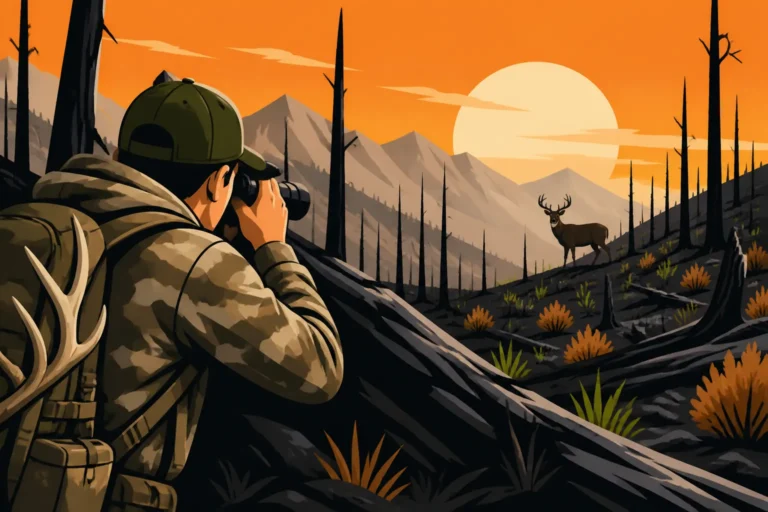
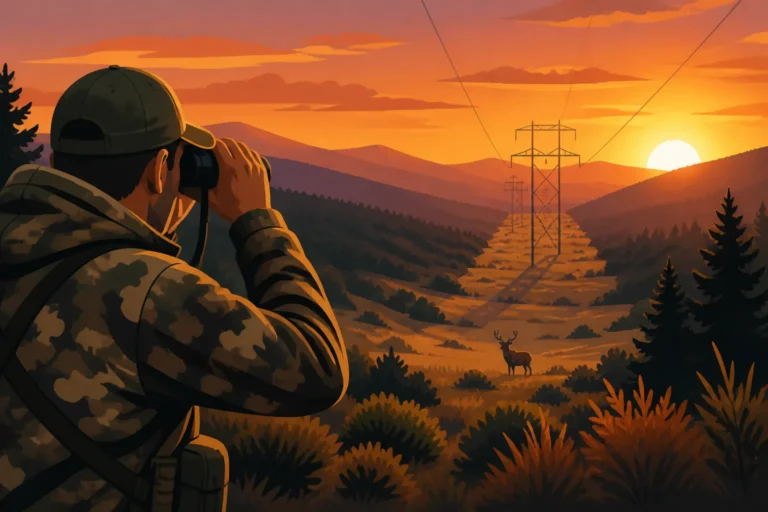
If you're hunting expansive clear-cuts, especially those on larger slopes or rolling hills, distant glassing can be incredibly productive. Position yourself on an opposing ridge or high point that offers a clear view of the clear-cut and its edges. Using good binoculars or a spotting scope, meticulously pick apart the clear-cut during dawn and dusk. Deer will often emerge into the more open parts of the clear-cut to feed, or they might be moving along a discernible game trail on the edge.
This method is particularly effective for Glassing a Canyon for a Bedded Buck. Once you spot a deer, you can then plan a stalk, using terrain features and wind direction to your advantage. Be prepared for long waits and to spend a lot of time behind your optics. A solid tripod for your binoculars or spotting scope is essential to prevent fatigue and detect subtle movements. Early morning, as the sun hits the clear-cut and warms up the forage, can be a great time to spot deer as they browse before bedding down for the day.
Challenges and Considerations When Hunting Clear-Cuts
While clear-cuts offer incredible potential, they also present unique challenges that every hunter needs to be aware of. Being prepared for these can make or break your hunt.
Navigating the Dense Thickets
One of the biggest frustrations for hunters in clear-cuts is the sheer density of the regrowth. It's often a tangled mess of blackberry bushes, downed timber, and young, stiff conifer saplings. Moving quietly and efficiently through these areas can feel impossible. This makes still-hunting particularly challenging, as every step can sound like an elephant crashing through the woods.
When planning your approach, look for subtle game trails that deer have already beaten down. These will be your easiest (and quietest) paths. Also, consider wearing tough, brush-resistant clothing, as your gear will take a beating. Don't underestimate the physical demands; a clear-cut hunt can be a serious workout. Be mindful of your shooting lanes too; they can be extremely limited in thick regrowth, so you need to be prepared for close-range shots or to quickly find an opening.
Public Land Pressure in Accessible Areas
Because clear-cuts are often visible and offer such great habitat, they can attract a lot of hunting pressure, especially on readily accessible public lands. If a clear-cut is right off a main forest service road, chances are it will see a lot of foot traffic, especially during opening weekend. This pressure can push deer into even denser cover or make them largely nocturnal.
To mitigate this, try to find clear-cuts that are further off the beaten path. Look at your GoHunt maps for areas that require a longer hike in, or perhaps those surrounded by terrain that discourages casual hunters. Sometimes, a smaller, less obvious clear-cut in a more remote location will hold more undisturbed deer than a massive, easily accessed one. Consider hunting during weekdays or later in the season when pressure tends to drop. Being willing to walk an extra mile or two can put you into an area that others overlook, helping you with Finding Ground Others Walk Past.
Safety First: Visibility and Other Hunters
The dense nature of clear-cuts and the potential for other hunters means safety needs to be a top priority. It's easy for hunters to be concealed by the thick brush, making visual identification of other hunters difficult. Always wear blaze orange or blaze pink (where legal and appropriate for the species, though for deer it's optional in California unless hunting during a quota hunt requiring it).
Beyond other hunters, the terrain itself can be tricky. Uneven ground, downed logs, and hidden obstacles are common. Move carefully, especially when carrying a loaded firearm. Always be 100% certain of your target and what lies beyond it. If you're still-hunting, make noise every so often (a soft whistle or cough) to alert any other hunters to your presence. Remember, deer are resilient, and if you scare one, it'll likely be back, but safety is paramount for you and your fellow hunters.
Conclusion
Hunting clear-cut regrowth edges in California is a unique challenge, but one that offers incredible rewards for the diligent hunter. By understanding why deer are drawn to these areas, meticulously scouting for sign, and employing smart hunting tactics, you can turn what looks like a desolate landscape into your next honey hole. Don't shy away from the tangles and thickets; sometimes, the hardest places to hunt are exactly where the biggest bucks choose to hide.
Disclaimer
Please note: Hunting regulations and conditions can change rapidly. Always consult the latest California Department of Fish and Wildlife (CDFW) regulations before planning any hunting trip. Ensure you have all required licenses, tags, and validations. Safety should always be your number one priority while afield.