Hunting a Refuge-Adjacent Field at Dawn
Hunting waterfowl in California can feel like a relentless competition, especially when you're vying for a spot on crowded public refuges. Many hunters overlook one of the most consistent and often less-pressured opportunities: setting up in a private or public field immediately adjacent to a known waterfowl refuge. This guide will walk you through the nuanced strategies and critical considerations for successfully hunting a refuge-adjacent field at dawn, transforming your early mornings from frustration to feathered success.
Understanding Refuge-Adjacent Field Dynamics
The key to successful field hunting near refuges lies in truly understanding why ducks and geese utilize these areas. They aren't just randomly passing through; their movements are dictated by a primal need for safety and food. Knowing these dynamics helps you predict their behavior and position yourself for the best chance at a shot.
The Lure of the Refuge
California’s managed waterfowl refuges, especially those dotting the vast expanse of the Sacramento and San Joaquin Valleys, are sanctuaries. They offer undisturbed roosting areas, ample water, and often food sources that are protected from hunting pressure. This makes them magnetic to ducks and geese, particularly during the peak of the Pacific Flyway migration. Birds will spend the night on these safe havens, conserving energy and recuperating from long flights or daily foraging.
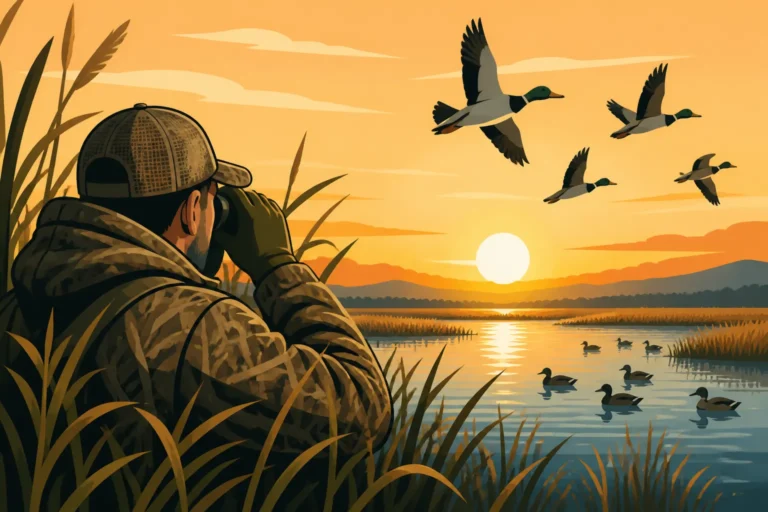
As the first sliver of dawn breaks, these birds begin to stir. Their internal clocks and biological drives kick in, compelling them to leave the safety of the refuge and seek out prime feeding grounds. These feeding grounds are almost invariably the agricultural fields that surround the refuges. Whether it’s flooded rice, cut corn, dry stubble, or even a standing alfalfa field, the birds know where the buffet is, and they fly straight to it. Your advantage lies in intercepting them on this predictable flight path.
Reading Bird Movement Patterns
Birds are creatures of habit, and their morning flights from a refuge to a feeding field are often remarkably consistent. They'll typically follow established flight lines, often along tree lines, sloughs, or the edges of different crops. Your job as a hunter is to identify these invisible highways. This isn't something you can do from your couch; it requires boots on the ground, watching and learning.
Consider how ducks often prefer flooded fields where they can dabble for waste grain, while geese might favor dry stubble fields for grazing on sprouts. Observing which species are using which fields on specific mornings is crucial. Are you seeing large flocks of pintails pouring out of the refuge, or is it mostly specklebellies and snow geese? The species, flock size, and direction of flight will heavily influence your setup. Pay attention to how high they fly; pressured birds will often stay high until they're directly over their chosen feeding spot, which means your decoys and calling need to be spot-on to pull them down. You can learn a lot about common waterfowl behavior by reading about topics like how to improve your skills at Reading a Wetland for a Morning Flight.
Scouting and Setup for Success
Effective scouting is non-negotiable when hunting refuge-adjacent fields. It’s where the hunt is won or lost, long before you ever set a decoy. This phase involves diligent observation and strategic planning to maximize your chances.
Pre-Season Reconnaissance
Long before opening day, or even during the week leading up to your hunt, you need to be out there observing. Drive the roads surrounding the refuges during dawn and dusk. Watch where birds fly out, and more importantly, where they land. Make notes on wind direction, common flight paths, and what crops are in the ground. Is it a cut grain field, a newly planted winter wheat field, or perhaps a field that's been recently flooded for duck season? All these details matter immensely.
Utilize mapping tools like GoHunt to identify property boundaries and potential access points. GoHunt can show you public land parcels right next to refuge boundaries, or help you identify private landowners for permission requests. Pay close attention to subtle terrain features like small rises, ditches, or fencelines that birds might use for navigation or that could provide natural cover for your blind. A small depression in a vast field might be invisible to the eye at ground level but could be a perfect hide for a layout blind. Knowing the specific crops is also vital; for instance, if you're targeting geese, a harvested corn or rice field might be gold, whereas ducks might prefer a shallower flooded area.
Effective Blind Placement
Once you've identified a promising field and observed bird movements, choosing your blind location is paramount. The goal is to be completely invisible to incoming birds, which often have excellent eyesight. For open field hunting, layout blinds are king. They allow you to lie flat, covered by a camouflaged shell, blending seamlessly into the agricultural stubble. When considering different options, think about Layout Blind Hunting a Flooded Field strategies, even if your field isn't completely underwater.
When placing your blind, always consider the sun and wind. Ideally, you want the sun at your back so that approaching birds are looking into it, making them harder to spot you. Position your blind so that the wind is blowing towards you; ducks and geese almost always land into the wind, bringing them directly over or in front of your setup. If the wind changes, be prepared to adjust your spread or even relocate your blinds if feasible. Additionally, brush in your blinds meticulously. Use natural materials from the field itself—stubble, weeds, corn stalks—to break up the outline. A perfectly placed but poorly brushed-in blind is just a big, suspicious lump to wary birds.
Decoy Spreads for Field Hunting
Your decoy spread is your advertisement to passing birds. It needs to look natural and inviting. For ducks, a relatively small spread of 2-3 dozen decoys, often placed in a loose "J" or "U" shape with a landing zone in the middle, can be incredibly effective. Consider using a mix of mallards, pintails, and widgeon, depending on what you've observed in the area. Motion decoys, like spinning wing decoys, can be deadly in the right conditions, especially on calm mornings to attract attention from afar. Just be mindful of local regulations on their use.
For geese, you'll need a larger spread, often 5-10 dozen or more, to replicate a large feeding flock. Full-body decoys are preferred for their realism, but silhouettes and shells can also work, especially mixed in with full-bodies to add bulk. Create family groups and leave plenty of open space for incoming birds to land. The "X" or "blob" configuration with a large landing zone is popular for geese. Remember to account for the specific species you're targeting; a spread designed for snow geese might not be as effective for specklebellies or Canada geese. For more specific decoy tips, check out our guide on Decoying Ducks in California's Central Valley Flooded Rice.
Here’s a quick overview of common decoy spreads for field hunting:
| Target Species | Decoy Type (Primary) | Quantity (Approx.) | Configuration | Ideal Conditions | Notes |
|---|---|---|---|---|---|
| Ducks (Mixed) | Mallard, Pintail | 2-4 Dozen | Loose "J" or "U" | Light wind, clear visibility | Add motion decoys; leave open landing zone. |
| Geese (Speck/Canada) | Full-body, Shells | 5-10 Dozen | Clustered "X" or "Blob" | Moderate wind, overcast | Mix species if targeting both; realistic spread. |
| Geese (Snow/Ross') | Full-body, Windsocks | 10+ Dozen | Massive "Sheet" or "Spread" | Any wind, good visibility | Focus on numbers; white adds visibility. |
Executing the Dawn Hunt
The early morning hours are critical. Precision in timing, calling, and mindful hunting practices will distinguish a successful hunt from a frustrating one.
Timing Your Arrival and Setup
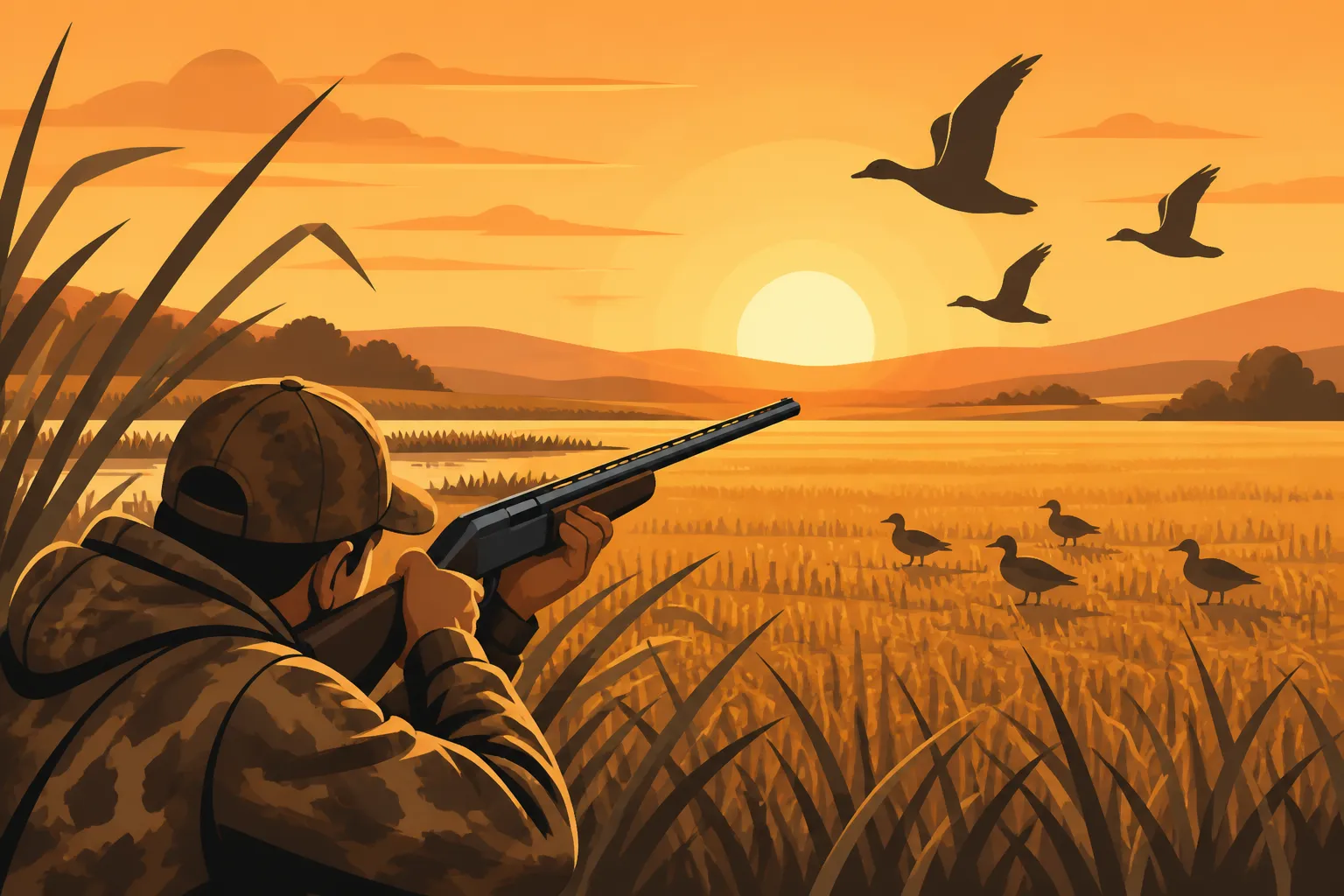
Waterfowl hunting is often synonymous with incredibly early mornings, and hunting refuge-adjacent fields is no exception. You need to arrive at your chosen field well before shooting light—often 1.5 to 2 hours before official sunrise. This allows ample time to transport your gear, set out your blinds, arrange your decoy spread, and meticulously brush everything in without rushing or making noise. The goal is to be completely hidden and ready to go before the first birds begin to move from the refuge.
This pre-dawn darkness can be challenging, but it’s essential for success. Use headlamps with red or green light filters to minimize disturbance to wildlife and protect your night vision. Work quietly and efficiently, assigning tasks if you’re hunting with a group. Any loud talking, slamming of truck doors, or excessive movement after birds start flying will likely flare them away, often for the rest of the morning. Being fully prepared and settled before legal shooting time is not just about ethics; it's a practical necessity for success when dealing with wary birds flying out of a protected area.
Calling Strategies for Field Birds
Calling is an art form, and when hunting refuge-adjacent fields, it's about being convincing, not necessarily loud. Birds coming off a refuge are often "educated" and have heard every call in the book. Start with soft, subtle calls, mimicking contented feeding or resting birds. For ducks, soft quacks, feed chuckles, and whines can be very effective. For geese, short, sharp clucks and moans, interspersed with a lively feed call, can draw their attention.
As birds approach, gauge their reaction. If they're locked onto your spread, ease up on the call. If they seem hesitant or start to drift, pick up the pace and volume slightly, trying to coax them in. Always try to match the cadence and volume to what the real birds are doing. One of the biggest mistakes hunters make is over-calling. Remember, the goal is to sound like a natural, safe haven, not a frantic convention. Knowing your California Duck and Goose Bag Limits and being mindful of those numbers can help you focus on quality calling over quantity of shots.
Safety and Etiquette in Fields
Safety should always be your top priority. Ensure you and your hunting partners are aware of each other's positions, especially when shooting at low-flying birds in a field. Always identify your target clearly and ensure you have a safe backdrop. Remember, most fields are flat, so your shot trajectory can carry for a considerable distance. It’s also crucial to be aware of other hunters who might be in adjacent fields or even within the refuge itself, as their presence can affect bird movement and your safety.
Respect for the land and other hunters is also paramount. If you're on private land, ensure you have explicit permission and leave no trace of your hunt. Pick up all your spent shells, trash, and any lost decoys. If you're on public land, adhere strictly to all regulations, including those specific to California Migratory Bird Certification and federal duck stamp requirements. Being a good steward of the land and a respectful hunter ensures these opportunities remain available for everyone. Also, always check the California Goose Season Dates for your specific zone to ensure you're hunting legally.
Gear Considerations for Field Hunting
Having the right gear makes a significant difference in comfort, effectiveness, and overall hunting success when you're out in those chilly, damp fields before dawn.
Choosing the Right Camo and Blinds
When hunting refuge-adjacent fields, concealment is absolutely paramount. Ducks and geese have phenomenal eyesight and will quickly spot anything out of place. For field hunting, your camouflage pattern should match the dominant crop stubble or dry grass. Most major brands offer field-specific patterns that mimic cornstalks, wheat stubble, or dry marsh vegetation. Don't underestimate the effectiveness of a good ghillie suit or a similar natural break-up pattern, especially if you're not using a layout blind.
As for blinds, layout blinds are the gold standard for open field hunting. They keep you low to the ground, out of sight, and offer some protection from the elements. Look for models that are easy to brush in and comfortable for extended waits. Brands like Avery, Final Approach, and Rogers offer excellent options. If you're hunting from a ditch or natural depression, sometimes a simple camouflaged netting or a pop-up chair blind can suffice, but always prioritize disappearing into the landscape.
Ammunition and Shotgun Selection
For waterfowl, you'll need a reliable shotgun, typically a 12-gauge, capable of handling 3-inch or even 3.5-inch shells for longer reach on high-flying birds. A semi-automatic shotgun is often preferred for quick follow-up shots, but a pump-action is also perfectly capable. Most hunters use a modified or improved modified choke to get a good balance of pattern density and spread at typical waterfowl ranges.
Ammunition choice is critical. California mandates non-lead ammunition for all hunting, including waterfowl. Steel shot is the most common and affordable non-lead option, but bismuth and tungsten alloys offer superior performance, especially at longer ranges, due to their higher density. For ducks, #2 or #4 steel shot is generally effective. For geese, you’ll want larger pellets, typically BB, BBB, or T-shot in steel, or #2 or #4 in bismuth/tungsten for better knockdown power. Always pattern your shotgun with your chosen load before the season to understand its effective range and shot dispersion.
Essential Accessories for the Field
Beyond your shotgun and camo, several accessories will make your field hunt more comfortable and successful. A good pair of waterproof, insulated boots is a must, as fields can be wet, muddy, and cold in the early morning. Layered clothing is also essential to adapt to changing temperatures as the sun rises. A quality headlamp with a red or green light option will aid in your pre-dawn setup without spooking birds.
Don't forget a sturdy blind bag to carry your shells, calls, snacks, and other essentials. A thermos with hot coffee or tea can be a lifesaver on chilly mornings. Good gloves that allow for dexterity while calling and shooting are also important. Finally, a pair of binoculars can be incredibly useful for scanning distant flocks and identifying species before they commit to your spread. Remember to always have your California Federal Duck Stamp Requirement and appropriate licenses on you.
Disclaimer
Please note: Hunting regulations, seasons, and licensing requirements are subject to change. Always consult the latest California Department of Fish and Wildlife (CDFW) regulations before planning any hunt. This guide is for informational purposes only and does not supersede official state regulations.