Hunting a California BLM Desert Wash for Deer
Hunting deer in California's vast, often intimidating BLM desert washes can feel like an impossible task. The sheer scale of the landscape, coupled with the elusive nature of desert deer and the extreme environmental conditions, can leave even seasoned hunters scratching their heads about where to even begin. This guide is here to demystify the process, breaking down effective strategies, critical gear considerations, and essential preparation steps to significantly improve your chances of success when pursuing deer in these unique California landscapes.
Understanding California's Desert Deer and Their Habitat
Before you even think about loading your pack or sighting in your rifle, you need to deeply understand the animal you're pursuing and the environment it calls home. Desert deer, particularly the mule deer subspecies found in California's arid regions, are incredibly adept at surviving in what appears to be a desolate wasteland. They're not like their timber-dwelling cousins; their adaptations and behaviors are finely tuned to the sparse resources and harsh conditions of the desert.
Identifying Desert Mule Deer Characteristics
When we talk about deer in California's BLM desert washes, we're primarily focused on mule deer. These aren't the big-bodied, dark-antlered giants you might imagine from the Rockies. California's desert mule deer are typically smaller in body size, a physical adaptation that helps them cope with extreme heat by having less mass to cool down. Their coats tend to be lighter, often a faded tan or gray, which provides excellent camouflage against the sun-bleached rocks, sand, and sparse vegetation of the desert.
Their antlers, while still exhibiting the classic "forked" mule deer appearance, might not be as massive as those from higher-elevation or more productive ranges. Don't let that fool you, though; a mature desert buck is a formidable and hard-earned trophy. Understanding their physical adaptations will help you recognize them in their environment and appreciate the resilience required to thrive where water is scarce and cover is minimal. They are masters of blending in, often appearing out of nowhere or disappearing into plain sight, making keen observation skills paramount for any hunter.
Key Habitat Features of a BLM Desert Wash
A "desert wash" might sound like a singular, uniform feature, but it's actually a complex micro-ecosystem. These are typically dry creek beds or arroyos, carved by infrequent but intense flash floods. They act as natural travel corridors, provide subtle changes in elevation, and often host more dense vegetation than the surrounding open desert. This vegetation, even if just a few scraggly mesquite bushes, palo verde, or desert willow, offers critical shade, cover, and browse for deer.
Water is, of course, the lifeblood of the desert, and deer will never be far from it. While a wash itself might be dry, deer rely on hidden seeps, springs, water holes fed by recent rains, or even residual moisture deep within the wash's substrate. Learning to read the subtle topography—where washes converge, where rock formations create shaded pockets, or where erosion has created small, secluded benches—is key. These features provide thermal cover from the scorching sun and refuge from predators, making them prime locations for deer to bed down during the hottest parts of the day or to browse during cooler hours.
Seasonal Movement and Activity Patterns
Desert mule deer movements are heavily dictated by two primary factors: heat and water availability. During the scorching summer and early fall months, when many California deer seasons open, deer activity will be concentrated during the cooler periods of the day – dawn, dusk, and even overnight. Midday, they'll be holed up in the thickest, shadiest cover they can find within a wash system, often bedded on north-facing slopes or under dense mesquite thickets where any breeze might offer relief.
As temperatures cool in the late fall and winter, their activity patterns might shift to be more spread throughout the day. However, access to water remains a constant driver. Knowing hunting a BLM desert wash after a rain can reveal fresh sign and open up temporary water sources that deer will quickly exploit. The rut for desert mule deer typically occurs later than in some other regions, often peaking from late November into December, which can influence their movement patterns as bucks become more active in seeking does. Understanding these seasonal shifts allows you to tailor your hunting efforts to when and where deer are most likely to be active and vulnerable.
Essential Scouting and Preparation Strategies
You wouldn't head into an exam without studying, and you certainly shouldn't head into California's vast desert without serious preparation. The desert is an unforgiving environment, and successful deer hunting here demands meticulous scouting, both from your armchair and with boots on the ground, long before opening day. This groundwork is what separates the consistently successful hunters from those who spend days walking in circles.
Pre-Season Digital Scouting with Mapping Tools
In today's age, digital mapping tools are an absolute game-changer for desert hunting. Services like GoHunt provide invaluable satellite imagery, topo maps, and land ownership overlays that allow you to virtually explore vast stretches of BLM land from the comfort of your home. Start by identifying large wash systems that look promising. Look for where multiple washes converge, creating more intricate cover and potential bottlenecks. Pay close attention to areas with denser vegetation, which often appears as darker green patches on satellite imagery.
Crucially, scout for potential water sources. This might be obvious stock tanks, guzzlers, or natural springs, but also look for subtle signs like green-up around dry lake beds, shadowed canyon bottoms, or areas with distinct tree lines that could indicate subsurface water. GoHunt's layering capabilities can also help you identify different types of terrain, from open flats to rocky hillsides, and understand potential access points and how far you'll have to hike from established roads. This digital reconnaissance helps you narrow down massive areas into manageable, high-probability zones, saving you countless hours of unproductive walking once you're on the ground. For more on maximizing digital resources, check out our guide on Scouting With the CDFW Hunting App.
Boots-on-the-Ground Reconnaissance
As powerful as digital tools are, nothing replaces actual boots-on-the-ground scouting. Once you've identified promising areas digitally, it's time to hit the dirt. Ideally, scout during the off-season or well before hunting pressure begins. Focus on finding fresh deer sign: tracks, scat, rubs on small desert shrubs, and most importantly, bedding areas. Deer often bed on small benches or elevated points within washes, offering them a vantage point to spot danger. Look for depressions in the sand or under brush where they've spent time.
Pay close attention to travel corridors. How are deer moving between bedding areas, feeding zones, and water? Are there distinct trails along the wash bottom, or are they using the subtle ridges above the wash? Identifying these patterns will be crucial for setting up an ambush or planning a still-hunt. Understanding Reading California Mud for Fresh Deer Movement can give you invaluable insights into recent activity, even if you don't see any deer yourself. Remember to carry plenty of water and be mindful of the desert heat, even during scouting trips. The more time you spend in an area before the season, the better you'll understand the deer's habits and the lay of the land.
Understanding Regulations and Access
California's hunting regulations can be complex, and desert BLM land is no exception. Before you embark on your hunt, thoroughly review the current CDFW regulations for the specific zone you plan to hunt. A critical aspect for all California hunting is the California's Non-Lead Ammunition Requirement. All projectiles for big game, including deer, must be non-lead. This means practicing with copper or other approved non-lead bullets before the season to ensure your rifle is zeroed correctly.
Additionally, understand the specific access rules for the BLM land you intend to hunt. While much of it is open, some areas might have seasonal closures, restrictions on vehicle access to designated roads only, or other limitations. Using GoHunt or a similar mapping application with BLM land overlays can clearly show property boundaries and designated routes. Always respect private property boundaries that might adjoin BLM land. Being informed about regulations and access not only keeps you legal but also ensures a safer and more enjoyable hunting experience for everyone.
Effective Hunting Techniques for Desert Washes
Hunting deer in a desert wash demands a different playbook than hunting dense timber or open agricultural fields. The tactics here revolve around patience, keen observation, and capitalizing on the deer's natural tendencies to use the washes for travel and cover. Adaptability is key, as conditions can change rapidly in the desert.
Spot-and-Stalk in Open Desert Terrain
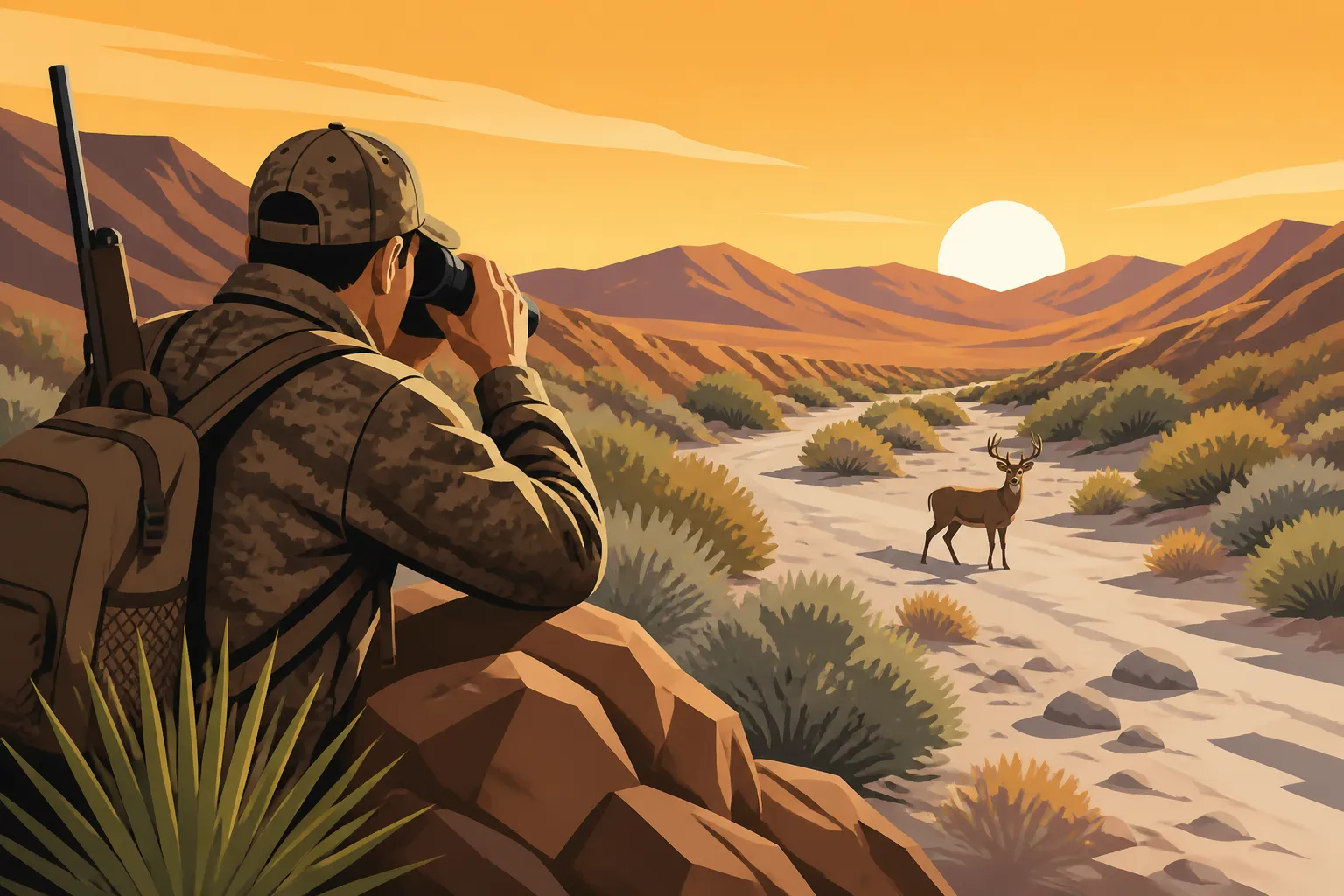
The vast, open nature of much of California's desert BLM land makes spot-and-stalk one of the most effective hunting methods. This technique relies heavily on high-quality optics. You'll spend hours, often literally, behind your binoculars or spotting scope, systematically picking apart distant hillsides, rock formations, and, of course, the washes themselves. Start by finding a high vantage point that offers a panoramic view of the area you intend to hunt. Use a good tripod to keep your optics steady and reduce eye fatigue.
Once you spot a deer, the real work begins. Plan your stalk meticulously, using terrain features like washes, ridges, and dense vegetation to conceal your approach. Pay extreme attention to the wind direction, as desert air currents can be tricky and unpredictable, especially in broken terrain. A successful stalk might involve a mile or more of careful maneuvering, often crawling or staying low to the ground. This method demands patience, physical fitness, and the ability to make a precise shot at potentially longer distances, so ensure you're proficient with your rifle and Choosing Non-Lead Rifle Ammunition in California for ethical shots.
Still-Hunting Through Wash Systems
Still-hunting is another highly effective technique, especially when you're working through a complex network of washes. This involves moving incredibly slowly and deliberately, taking a few steps, then stopping to scan the terrain for several minutes. Think of it as hunting at a snail's pace. Your goal is not to cover ground quickly, but to see the deer before it sees you. Use your binoculars constantly, scrutinizing every shadow, every cluster of mesquite, and every slight depression in the wash.
Focus on moving into the wind or with a quartering wind, allowing your scent to be carried away from potential deer. Deer often bed on the edges or in the middle of washes, using the terrain to break up their outline. Pay particular attention to dense cover on north-facing slopes during midday, as deer will seek shade there. When Hunting a Funnel Between Two Oak Ridges, the same principles of slow, quiet movement and wind awareness apply, even if the vegetation differs slightly. This method requires immense discipline and a trained eye to pick out antlers, an ear, or an eye against the cluttered backdrop of the desert.
Ambushing Key Travel Corridors and Water Sources
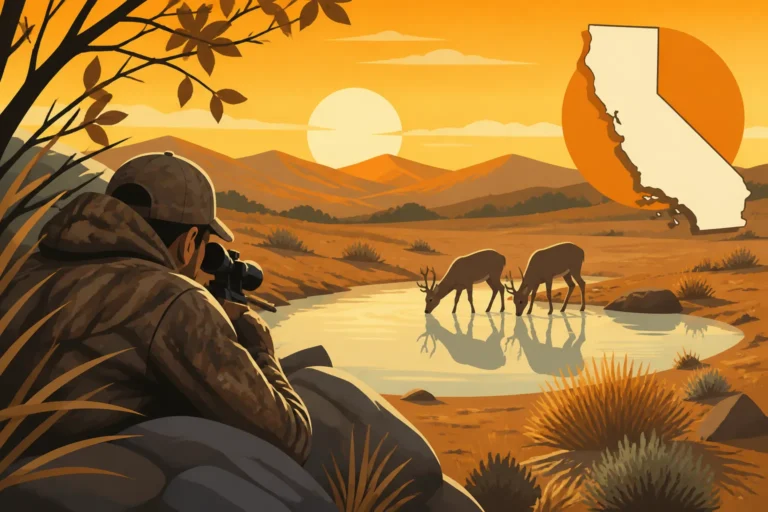
While spot-and-stalk and still-hunting cover a lot of ground, sometimes the most effective strategy is to simply wait. Desert deer are predictable in their need for water and their use of established travel routes. Identify pinch points where multiple washes converge, or where deer are forced through a narrow section between a steep hillside and a thick stand of mesquite. These are prime ambush locations. Similarly, known water sources – a small spring, a guzzler, or a stock tank – will attract deer, especially during hot, dry periods.
Setting up an ambush involves getting into position well before daylight or in the late afternoon, minimizing your movement, and utilizing natural cover. A well-brushed-in ground blind can be incredibly effective in areas with sparse cover. Patience is your greatest ally here. Be prepared to sit for hours, keeping scent control in mind. Knowing when and where deer access these crucial resources can be the difference between seeing a deer and just seeing tracks. This often aligns with understanding Hot-Weather Sitting Strategy in August, where early morning and late evening sits are paramount.
Gear and Logistics for Desert Hunting Success
The desert isn't just a place; it's an adversary if you're not properly equipped. From the relentless sun to the vast distances, your gear choices can literally make or break your hunt. Skimping on essentials or choosing the wrong equipment can lead to a miserable, and potentially dangerous, experience.
Optics: Your Most Important Desert Tool
In the expansive landscapes of California's desert BLM, your optics are arguably your most critical piece of gear. You'll spend far more time looking through glass than you will looking through your scope. High-quality binoculars, typically 10×42 or 12×50, are essential for prolonged glassing sessions. Look for models with excellent light transmission and edge-to-edge clarity. A good binocular harness will keep them secure and readily accessible.
A spotting scope, usually 60-80mm objective with 15-45x or 20-60x magnification, mounted on a sturdy tripod, is non-negotiable for identifying deer at extreme distances and judging antler quality. This allows you to evaluate bucks without spooking them by moving in too close. Brands like Vortex, Swarovski, and Kowa offer excellent options suitable for the desert's harsh conditions. A quality rangefinder, capable of accurately ranging targets out to 1000+ yards, is also crucial for making ethical shots once a deer is located. For more detailed advice, consider Optics for California's Open-Country Deer Hunting.
Here’s a quick comparison of essential optics for desert hunting:
| Optic Type | Magnification Range | Key Use Case | Pros | Cons |
|---|---|---|---|---|
| Binoculars | 8x-12x | General scanning, close-to-mid range identification | Lightweight, portable, wide field of view | Limited magnification for extreme distance or detail |
| Spotting Scope | 15x-60x | Long-range identification, antler judging | High magnification, superior detail at distance | Heavier, requires tripod, narrower field of view |
| Rangefinder | N/A | Precise distance measurement | Critical for accurate shooting, especially in open country | Only measures distance, not for observation |
| Tripod | N/A | Stabilizes optics, reduces fatigue | Essential for spotting scope, improves binocular stability | Adds weight and bulk to pack |
Hydration, Clothing, and Backpack Essentials
The desert demands serious attention to hydration. You cannot carry enough water. Plan for at least 1-1.5 gallons per person per day, plus extra for emergencies. Electrolyte supplements are also a good idea. Your clothing needs to protect you from the intense sun and heat while still allowing for breathability. Light-colored, long-sleeved shirts, pants, and a wide-brimmed hat are essential. Layering is key, as desert mornings can be surprisingly cool before the sun starts beating down. Brands like Sitka Gear or Kuiu offer excellent lightweight, breathable camo options that perform well in arid environments.
A well-fitted, comfortable backpack is vital, as you'll be covering many miles. It needs to be large enough to carry your water, food, optics, first-aid kit, emergency shelter, and game bags for packing out meat. Don't forget a headlamp, fire starter, knife, map, compass, and a reliable GPS device or app like GoHunt for navigation. Cell service is often non-existent in remote BLM areas, so a satellite communicator like a Garmin inReach is a wise investment for safety. Sturdy, broken-in desert boots with good ankle support are also critical for navigating rocky, uneven terrain.
Rifle, Ammunition, and Shooting Considerations
Given the open nature of the desert, shots can often be long, sometimes extending beyond 300 yards. This means choosing a rifle caliber capable of retaining sufficient energy at those distances and that you are proficient with. Popular choices include .270 Winchester, .308 Winchester, 6.5 Creedmoor, and .30-06 Springfield. Whatever you choose, practice extensively at various ranges, focusing on shooting from field positions, not just off a bench.
As mentioned, California mandates non-lead ammunition for deer. This primarily means copper bullets like Barnes TTSX, Hornady GMX, or Nosler E-Tip. These bullets perform exceptionally well but can have different ballistic characteristics than traditional lead-core bullets, so zero your rifle with your chosen non-lead load. Consider investing in a good set of shooting sticks or a bipod to ensure a stable shooting platform when taking those longer shots in open country. Ethical shot placement is paramount, especially when facing a long retrieve in potentially hot conditions.
Overcoming Desert Hunting Challenges
Hunting California's BLM desert washes presents a unique set of challenges that can quickly turn a dream hunt into a nightmare if not properly addressed. From the unforgiving climate to the sheer vastness of the landscape, being prepared for these hurdles is as important as finding the deer itself.
Dealing with Extreme Heat and Arid Conditions
The desert, particularly during California's early deer seasons, can be brutally hot. Dehydration and heatstroke are serious threats. This isn't just about carrying enough water; it's about managing your exertion. Plan to hunt during the coolest parts of the day – from legal shooting light until mid-morning, and then again from late afternoon until dark. Midday is for resting, rehydrating, and perhaps moving slowly between shaded areas if you're on a stalk.
Wear lightweight, breathable clothing that covers your skin to prevent sunburn and regulate body temperature. Electrolyte drinks can help replace salts lost through sweating. If you're fortunate enough to harvest a deer in these conditions, swift and meticulous field dressing is crucial to preserve the meat. Getting the hide off, gutting the animal, and quartering it into game bags as quickly as possible, then getting it into shade or onto ice, is paramount. This is where Aging Venison in Hot Weather becomes a critical skill you need to master. Don't underestimate the heat; it's a silent and constant threat.
Navigating Vast and Featureless Landscapes
One of the most disorienting aspects of hunting vast desert washes is how quickly familiar landmarks can disappear or change perspective. What looked like a distinct ridge line from afar can blend into a dozen similar ridges when you're up close. This is where robust navigation skills and tools are indispensable. Never rely solely on your memory. Carry a physical map and compass, and know how to use them.
Even more effective are GPS devices or smartphone apps like GoHunt, which allow you to mark waypoints, track your path, and always know your exact location relative to roads, water sources, and potential deer sign. Download offline maps before you leave home, as cell service will likely be nonexistent. Understand how to use topographic lines to read the terrain, even if it appears flat. Dropping a pin when you park your vehicle is a small but critical step that can prevent hours of frantic searching in the dark. For advice on getting around, consider our guide on Vehicle Rules on California Public Land.
Managing Hunting Pressure and Other Users
While California's BLM desert lands are vast, they are not always devoid of other people, especially during popular hunting seasons. You might encounter other hunters, off-road enthusiasts, hikers, or even cattle ranchers. Managing hunting pressure and respecting other users is vital for a positive experience. If you pull up to a spot and see other vehicles, consider moving on to avoid crowding. The desert is big enough for everyone.
To minimize encountering others, consider hunting during weekdays if your schedule allows, or focus on areas that require significant hiking to access. Most people stick close to roads, so walking an extra mile or two into a remote wash system can dramatically increase your chances of finding undisturbed deer. Always be courteous and respectful. A simple wave or a friendly greeting goes a long way. Ultimately, sharing the landscape responsibly ensures that these precious public lands remain open and enjoyable for all.
Disclaimer
Always consult the current California Department of Fish and Wildlife (CDFW) regulations before planning any hunting trip, as rules and seasons are subject to change. This guide provides general information and recommendations for hunting in California's desert washes.