Hunting the Archery-Only May Turkey Window
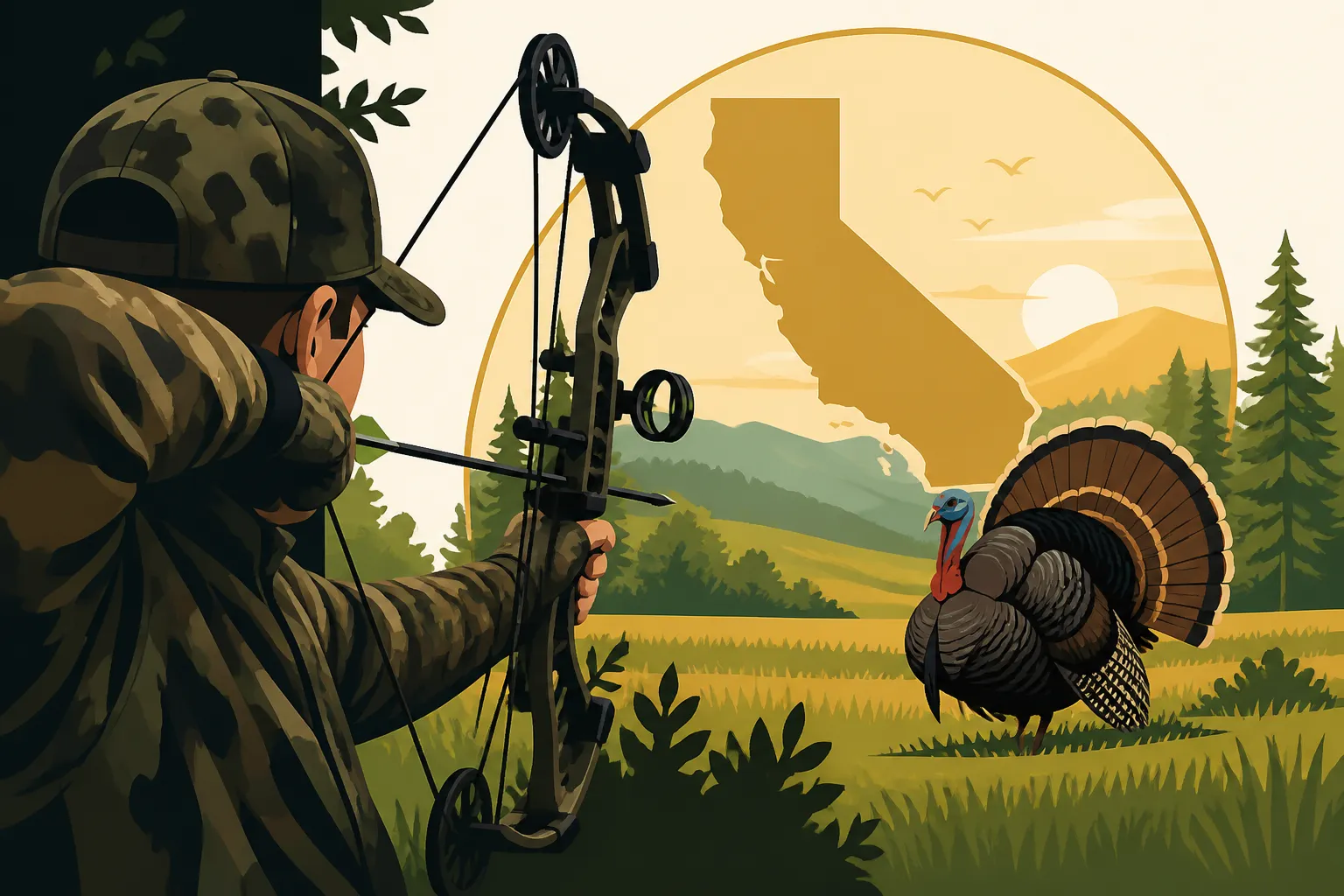
The May archery-only turkey window in California can feel like a totally different ballgame than the earlier general season. By this point, the gobblers have been hunted hard, they’re often henned up, and their once-eager strutting and gobbling can dwindle into frustrating silence. If you've felt the sting of a silent woods or watched a wary tom skirt your setup just out of bow range, you know the unique challenges this late-season opportunity presents. This guide is here to walk you through exactly how to adapt your strategy, dial in your gear, and boost your chances of tagging a California longbeard with a bow when the pressure is on.
Understanding California's May Archery-Only Turkey Season
Once the general spring turkey season wraps up, many hunters put their gear away, assuming the turkey action is over. But for those dedicated archers, California offers a specific May archery-only window, typically lasting a couple of weeks. This season is a fantastic opportunity for bowhunters to extend their spring chase, but it comes with its own set of unique circumstances. The birds have seen it all by now, and the vibrant, aggressive gobbling of early April has often quieted down considerably.
The Unique Challenge of Late Spring Birds
By May, the spring breeding cycle is winding down for a lot of hens, and they've started focusing more on nesting. This means gobblers are often still with hens, but perhaps not as frantically seeking new ones. They might be traveling in smaller groups, or even solo, but their primary focus isn't necessarily finding any hen anymore; it's staying with the ones they've got, or moving to areas with less pressure. This makes them incredibly difficult to pull away from real hens and into bow range. You're no longer dealing with a bird that's just happy to hear a hen call; you're dealing with a seasoned, educated tom that has likely dodged hunters for weeks. The challenge isn't just getting them to respond, it's getting them to commit to those crucial last few yards where an archery shot becomes feasible. This is precisely when California gobblers go quiet in late spring, making stealth and patience paramount.
Key Regulations and Dates to Remember
Before you even think about hitting the woods, it’s absolutely critical to be intimately familiar with the specific regulations for the May archery-only window. These dates are strict and there's no wiggle room. While the general season often includes both shotgun and archery, this particular period is bows and crossbows only. This means firearms are strictly prohibited, even if you’re just carrying one for self-defense and not actively hunting. Make sure your California Spring Turkey Permit Rules are in order, and always double-check the current year's regulations with the California Department of Fish and Wildlife (CDFW) website or digest, as dates can shift slightly. You also need to ensure you have your Upland Game Bird validation. Pay close attention to legal shooting hours, which are typically half an hour before sunrise to sunset. Transporting your harvested bird correctly, with a tag visibly attached, is also non-negotiable.
Why This Window Exists
This archery-only window isn't just a random extension; it serves a few important purposes. Primarily, it offers an additional opportunity for hunters who prefer the challenge of archery, or those who missed out earlier in the season. From a wildlife management perspective, by this time of year, most breeding has occurred, so the impact on the turkey population's reproductive success is minimal. It allows for a continued harvest opportunity without jeopardizing future populations. Furthermore, by restricting it to archery, the pressure on the birds is somewhat reduced compared to the general season with firearms, as bowhunting generally has lower success rates and requires closer encounters, which intrinsically adds a layer of difficulty and reduces the overall harvest numbers. It's a testament to California's commitment to diverse hunting opportunities while maintaining healthy game populations.
Archery Tactics for Pressured Spring Gobblers
Hunting turkeys with a bow is already a demanding endeavor, but doing it in May when birds are already wary pushes the envelope even further. These are not the easy-to-fool gobblers of opening weekend. Success hinges on a thoughtful approach to calling, decoy use, and, perhaps most importantly, your setup.
Adapting Your Calling Strategy
Forget the aggressive, loud calling you might have used in early April. By May, those tactics often send wise old gobblers running for the hills. Think subtle, soft, and infrequent. You're trying to sound like a lonesome hen, not a whole convention. Start with soft tree yelps and clucks at dawn, mimicking a hen waking up on the roost. As the day progresses, gentle purrs, clucks, and soft yelps are often more effective. Less is definitely more.
Instead of calling a gobbler off an oak ridge roost with booming cuts, try a few soft tree yelps and then go completely silent for a good 20-30 minutes. Let him wonder where you went. He might be curious enough to come investigate without a ton of encouragement. If you get a response, don't call back immediately. Wait. Let him gobble a few more times, then offer just a few more soft yelps or clucks. Sometimes, mimicking the sound of two hens subtly communicating can be just enough to pique a tom's interest, making him think he's missing out on a couple of easy dates. This is a complete shift from the bold Calling a Gobbler in Oak Woodland you might employ earlier in the season. Consider using friction calls like slate or glass, as they offer excellent control for soft sounds, or a mouth call for hands-free operation once a bird is approaching.
Mastering the Decoy Game for Bowhunters
Decoys become a powerful tool, but their placement and type are critical, especially for archery. For bowhunting, you absolutely need to bring the bird into a tight, defined kill zone. A single hen decoy, or a hen and jake combo, strategically placed can be incredibly effective. The goal is to draw the tom into 15-25 yards, offering a broadside or quartering-away shot. Place your decoy so the tom will face away from you when he approaches it, giving you a chance to draw your bow undetected as he postures to the decoy. A jake decoy can be particularly effective in May because many dominant toms are still looking to assert their dominance over younger males. When setting up against a big valley oak or other cover, ensure your decoy is visible but not out in the wide open where a wary gobbler can hang up at 60 yards. Using a full-strut tom decoy can be high-risk, high-reward. If a gobbler commits, he’ll come in hard and fast, but if he’s seen too many similar setups, he might be spooked by such an aggressive challenge. For more insights on this, look into Decoy Placement for Pressured California Birds.
A crucial tip for bowhunters: make sure your decoy isn't too close to your setup. You want the bird to focus on the decoy, not you. Give yourself enough space for an undetected draw.
Effective Setup and Concealment
Concealment is non-negotiable for archery turkey hunting, especially in the May window. A ground blind is almost a necessity. It allows for movement, provides excellent concealment, and blocks the sun, which can make it hard for turkeys to spot you. When setting up your blind, ensure it's brushed in thoroughly. Use natural vegetation to break up its outline. Place it against a backdrop that offers both cover and a clear shooting lane. Think about the sun's position – you don't want it in your eyes or glaring off your blind. Consider prevailing winds to help carry your subtle calls and mask your scent, though turkeys rely more on sight and sound than smell.
If a blind isn't feasible, you'll need to be absolutely still, wearing full camouflage, including a face mask and gloves. When setting up, position yourself with a wide, solid backdrop, like a large tree trunk or dense brush, to break up your outline. Always have your bow in your lap, ready to draw. The May window demands extreme patience; you might sit for hours without a peep, only for a gobbler to appear silently. Consider using a Best Backpack Blind for Turkey Hunting for ultimate mobility and concealment.
Essential Gear for the Archery-Only Turkey Hunter
Your gear can make or break your May archery turkey hunt. Every piece needs to be dialed in for maximum efficiency and stealth. From your bow setup to your clothing, precision matters.
Bow and Arrow Setup Considerations
For turkey hunting with a bow, accuracy and kinetic energy are key. You're aiming for a relatively small vital area, and turkeys are surprisingly tough. Ensure your bow is shooting broadheads consistently and accurately. Most hunters use a draw weight they are comfortable holding for an extended period, as a gobbler might hang up for minutes before offering a shot.
Your arrow setup should prioritize penetration. Heavy arrows with fixed-blade broadheads are a popular choice because of their reliability and cutting power. Mechanical broadheads can also be effective, especially if you're confident in your shot placement and the broadhead's deployment. Aim for a wide cutting diameter to maximize damage. Popular broadheads like those from Easton, Muzzy, or Slick Trick offer excellent performance. Before heading out, practice extensively with your hunting setup, shooting at turkey-sized targets at varying distances. Knowing your exact pin gaps and how your broadheads fly is crucial. Consider the Best Broadhead for California Blacktail, though your turkey broadhead might be slightly different, the principles of sharp, effective cutting remain the same.
Table: Common Broadhead Types for Turkey Hunting
| Broadhead Type | Description | Pros | Cons | Ideal Use Case |
|---|---|---|---|---|
| Fixed Blade | Solid, non-moving blades; durable. | Reliable, excellent penetration, strong construction. | Can be harder to tune with some bows, slightly less cutting diameter. | Dense cover, deep penetration needed, reliable performance. |
| Mechanical | Blades deploy on impact, creating a larger cutting diameter. | Larger cutting diameter, field-point accuracy for tuning. | Potential for mechanical failure, less penetration on bone, may be illegal in some areas (not CA). | Open country, maximizing cutting surface, easier tuning. |
| Hybrid | Fixed blades with mechanical blades that deploy. | Combines reliability with increased cutting diameter. | More complex design, potential for higher cost. | Balanced approach, good for various scenarios. |
(Note: Always check California's specific broadhead regulations, though currently, mechanicals are generally legal for archery turkey hunting.)
Crucial Camouflage and Blinds
In the late season, turkeys are masters of spotting movement. Your camouflage needs to be top-notch. Patterns that mimic oak woodlands, sparse brush, or even an open field are ideal, depending on your specific hunting location. Full head-to-toe camo, including gloves, face mask, and even covering your bow, is essential. When Layering for a Cold Sierra Morning might be necessary in other hunts, for turkey, focus on quiet, breathable fabrics that allow you to sit comfortably and still for long periods. Brands like Sitka Gear, Kuiu, or even more budget-friendly options from Cabela's or Bass Pro Shops offer excellent patterns.
As mentioned earlier, a ground blind offers the best concealment for bowhunting. If you’re not using one, find natural cover that completely breaks up your outline. Don’t rely on a single tree trunk; aim for a cluster of trees, dense brush, or a downed log. The goal is to become an invisible part of the landscape.
Scouting Tools and Technology
Scouting is paramount for May turkeys. These birds often change their routines once the general season ends. They might move to different roosts, feeding areas, or strut zones to avoid pressure. A great way to stay on top of these changes is by using modern scouting tools. Online mapping tools like those offered by GoHunt provide invaluable insights into public land boundaries, terrain features, and even recent harvest data if available. You can use these platforms to identify potential roosting areas, water sources, and open fields where turkeys might feed or strut.
Before your hunt, spend time glassing suspected areas from a distance with good binoculars. Look for fresh tracks, droppings, and dusting bowls. Listen for distant gobblers at dawn, even if they're soft and infrequent. Trail cameras, strategically placed near water sources or field edges on private land (check public land rules for trail cameras), can confirm turkey presence and patterns. However, remember the rules about trail cameras on California public land, as they might have restrictions. This combination of pre-season digital scouting and in-field reconnaissance will give you the best chance of finding where the birds are holding in the late season.
Finding and Accessing Prime Turkey Habitat
Even with the best tactics and gear, you won't tag a gobbler if you can't find him. California offers a variety of public and private land opportunities, each with its own advantages and challenges, especially during the May archery-only window.
Leveraging Public Lands in Late Season
California boasts millions of acres of public land, including National Forests, BLM lands, and various Wildlife Areas. Many of these hold turkey populations. However, by May, the easily accessible public lands will likely have seen significant hunting pressure. This means the birds will be even warier and often pushed into thicker cover or more remote areas.
To find success on public land, you need to be willing to work harder and go farther than most hunters. Use mapping apps like onX Hunt or GoHunt to identify areas with difficult access – steep terrain, areas far from roads, or dense chaparral. These "walk-in only" zones often hold less pressured birds. Focus on areas where you’d expect Finding Ground Others Walk Past. Look for water sources, especially during a dry May, as turkeys will need to drink daily. Creek bottoms, spring seeps, and even stock ponds can be magnets for birds. National Forests and Bureau of Land Management (BLM) lands are good places to start your search. While the birds might be quieter, knowing their habitat preferences can still guide you. Scouting California Public Land Before Season is crucial to understanding current bird patterns and identifying less-pressured areas.
Strategies for Gaining Private Land Access
Private land can offer fantastic opportunities for late-season archery turkey hunting, as it often receives less hunting pressure, leading to more predictable bird behavior. However, gaining access requires a respectful and strategic approach. Start by identifying properties with suitable turkey habitat – oak woodlands, agricultural fields, or mixed forests. Then, research the landowners. A polite, face-to-face request is often the most effective.
When approaching a landowner, be clear about your intentions: you’re an archery-only turkey hunter targeting the late May window. Emphasize your commitment to safety, respect for their property, and ethical hunting practices. Offer to share some of your harvest, help with chores around the property, or even assist with monitoring the turkey population. Many landowners appreciate responsible hunters who can help manage game populations. Persistence is key, and don't be discouraged by initial rejections. Sometimes, all it takes is building a relationship. Tools like GoHunt can help you identify landownership boundaries, which is crucial for making informed access requests. Remember, always have written permission if possible, or at least a clear verbal agreement, to avoid any issues with California Trespass and Permission Law. Even if you secure permission, be mindful of your impact; always close gates, pick up any trash, and leave no trace of your presence other than tracks.
Disclaimer
Always consult the latest California Department of Fish and Wildlife (CDFW) regulations and local ordinances before engaging in any hunting activities. Laws and seasons are subject to change, and it is the hunter's responsibility to ensure compliance.