Best Non-Lead Bullet for a .270
For many California hunters, the shift to non-lead ammunition has introduced a whole new set of questions, especially when it comes to dialing in a trusted rifle like the .270. It’s a challenge to move away from what you’ve always known, and finding a non-lead bullet that performs as reliably and accurately as your old lead loads can feel daunting. This guide is designed to help you navigate the options and confidently choose the best non-lead bullet for your .270, ensuring ethical and effective hunting in the Golden State.
Understanding California's Non-Lead Mandate and Your .270
The statewide ban on lead ammunition for all hunting in California has been fully implemented, and it's a significant change that affects every single hunter, regardless of their preferred cartridge. For us .270 enthusiasts, it means leaving behind those tried-and-true lead-core bullets that have filled freezers for generations. The frustration is understandable; many of us grew up with specific loads that performed flawlessly in our rifles. However, the mandate is here to stay, primarily driven by efforts to protect scavengers like the California condor, which can be poisoned by consuming lead fragments left in gut piles or unrecovered game.
The good news is that bullet manufacturers have stepped up to the plate, developing a wide array of non-lead options. The .270 Winchester, being one of the most popular deer cartridges in North America, has received significant attention in this development. While the switch requires re-evaluation and testing, it doesn't mean your reliable .270 is suddenly obsolete. Far from it, with the right non-lead projectile, your .270 can perform just as effectively, if not better, in some scenarios.
The Mandate's Impact on the .270 Shooter
You might be thinking, "My .270 shoots great with X-brand lead bullets, why mess with it?" And that's a perfectly valid thought. The lead ban can feel like an arbitrary hurdle, forcing you to re-learn your rifle's preferences. The simple fact is that lead fragments can be ingested by wildlife, and the science behind that risk led to the statewide requirement. This means we, as responsible hunters, must adapt. For a .270, this primarily involves understanding that non-lead bullets, typically made of copper or copper alloys, behave differently downrange and upon impact than traditional lead-core bullets.
Gone are the days of choosing from countless lead-based soft points or ballistic tips. Now, the focus is almost exclusively on monolithic copper or similar alloy designs. These bullets tend to be lighter for their physical size compared to lead, yet they maintain their weight far better upon impact. This change in material means you can't just pick up a box of non-lead ammo and expect it to shoot identically to your old lead rounds. It necessitates a fresh start at the shooting bench. For a deeper dive into the specifics of the regulations, check out California's Non-Lead Ammunition Requirement.
Understanding Non-Lead Bullet Construction
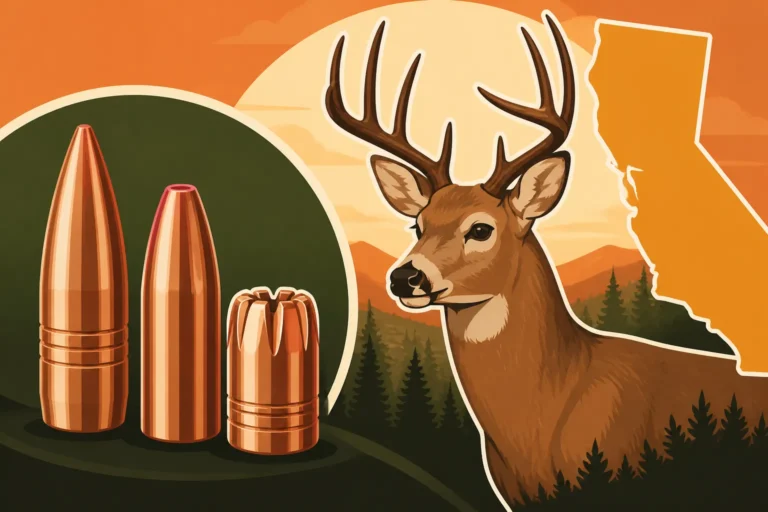
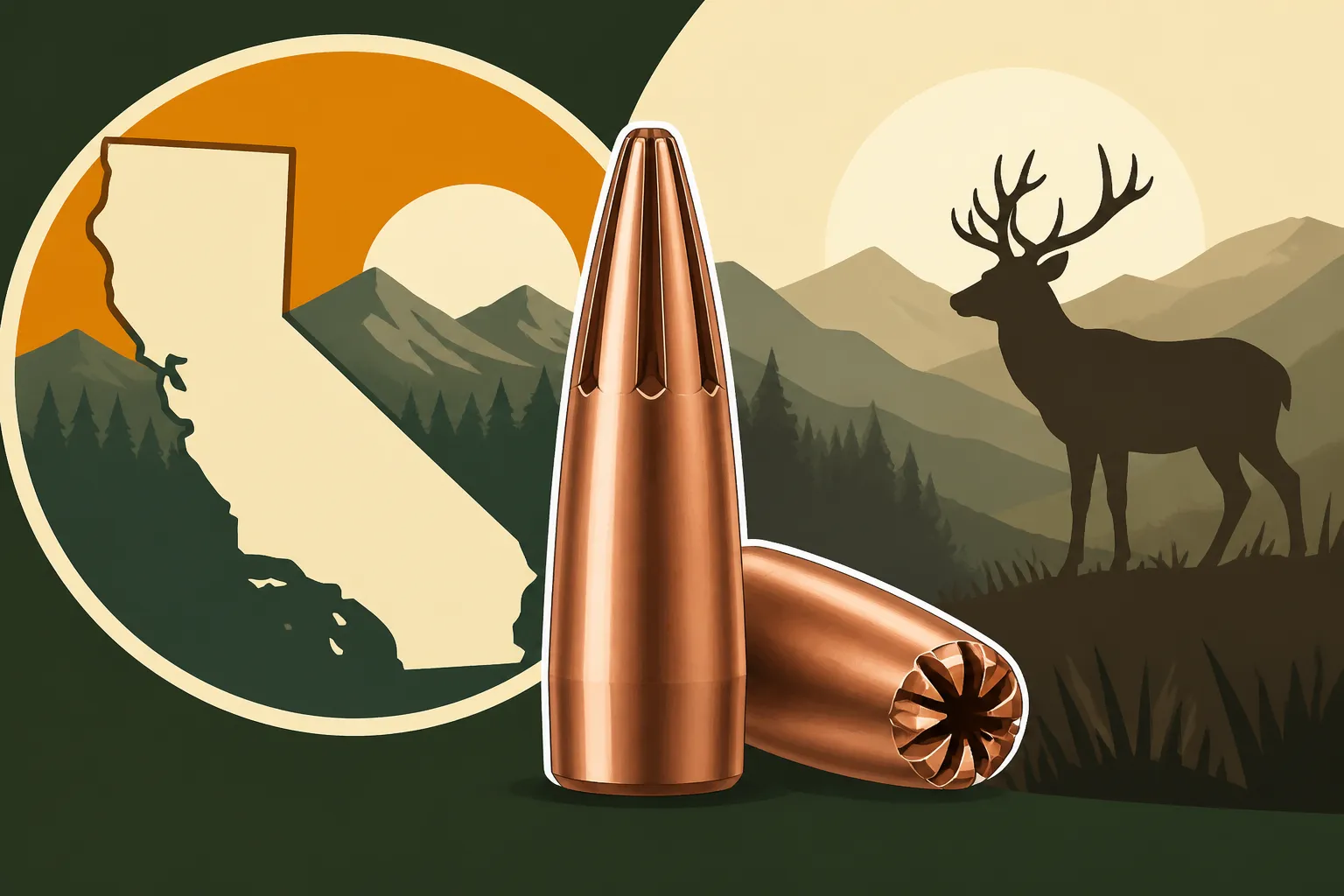
When we talk about non-lead bullets for your .270 in California, we're almost always referring to monolithic copper bullets. Unlike traditional bullets that have a lead core surrounded by a copper jacket, these are typically made from a single piece of copper or a copper alloy. This fundamental difference in construction dictates their performance.
One of the most notable characteristics of monolithic copper bullets is their incredible weight retention. Where a lead-core bullet might shed 30-50% or more of its weight as it fragments upon impact, a well-designed copper bullet will often retain nearly 100% of its original weight. This means that all the energy and mass of the bullet are driven deeper into the animal, creating a longer wound channel. The expansion process is also different; instead of mushrooming and fragmenting, most copper bullets feature a hollow point that causes four distinct "petals" to peel back upon impact, creating a sharp-edged, devastating wound. This controlled expansion, combined with deep penetration, is what makes them so effective, provided they hit the target at sufficient velocity.
Essential Characteristics of a Top .270 Non-Lead Bullet
Choosing the "best" non-lead bullet for your .270 isn't about finding a single magic bullet. It's about understanding what makes a bullet perform well and then matching that to your specific hunting conditions, target species, and rifle. The .270 is a high-velocity cartridge, and that characteristic pairs very well with many non-lead designs that rely on speed for optimal expansion.
Ballistic Performance and Trajectory
The .270 Winchester earned its legendary status largely due to its flat trajectory and impressive velocity, particularly with lighter 130-grain and 150-grain lead-core bullets. When transitioning to non-lead, you'll find that copper bullets often have different ballistic coefficients (BCs) and, due to their lighter weight for the same frontal area, might shed velocity differently. However, manufacturers have invested heavily in designing non-lead bullets that maintain much of the .270's renowned flat-shooting characteristics. Many modern copper bullets feature sleek, boat-tail designs and polymer tips to enhance their aerodynamics, compensating for the material differences.
For example, a 130-grain monolithic copper bullet might have a slightly lower BC than a comparable lead-core bullet, but its ability to be driven at very high muzzle velocities can often offset this, leading to surprisingly similar trajectories out to common hunting distances. It's crucial to consult ballistic charts for specific non-lead loads and to understand that your point of impact will almost certainly change from your old lead loads. Resources like GoHunt can be invaluable for cross-referencing bullet weights and designs against real-world ballistic data. For more on the technical side, check out Copper Bullet Ballistic Coefficient Versus Lead.
Terminal Performance on California Game
Terminal performance, or how the bullet behaves once it hits the animal, is arguably the most critical factor. For California deer hunting—whether you're pursuing a blacktail in the coastal range or a mule deer in the high Sierra—you need a bullet that expands reliably and penetrates deeply to reach the vitals. The .270 typically drives bullets fast enough to ensure excellent expansion with most non-lead designs.
The key with non-lead is controlled expansion and deep penetration. Unlike some lead bullets that might fragment explosively, copper bullets tend to hold together, creating a narrower but longer and more consistent wound channel. This means that while the initial "shock" might seem less, the continuous disruption through the vitals is extremely effective. For blacktail deer, which can be found in dense timber, or mule deer across open country, a bullet that can punch through hide, muscle, and bone to reliably reach the lungs and heart is paramount. A 130-grain or 140-grain monolithic copper bullet from your .270, placed accurately, will do the job with authority. Keep in mind that shot placement becomes even more critical with non-lead, emphasizing vital shots over shoulder shots, especially at longer ranges where velocity may drop below optimal expansion thresholds. For specifics on suitable weights for various game, you might find Best Non-Lead Bullet Weight for Blacktail Deer and Best Non-Lead Bullet Weight for Mule Deer helpful.
Top Non-Lead Bullet Types for Your .270 Rifle
The market for non-lead ammunition has matured significantly since the initial lead ban discussions. Today, .270 shooters have several excellent choices from reputable manufacturers, all designed to perform flawlessly on game. While exact models and availability can shift, certain designs have established themselves as benchmarks for non-lead performance.
Monolithic Copper Options
When hunters talk about reliable non-lead bullets, monolithic copper designs are almost always at the top of the list. These bullets are engineered for consistent expansion and superior weight retention. The Barnes TTSX (Tipped Triple-Shock X-Bullet) is perhaps the most famous and widely trusted. It features a polymer tip that aids in aerodynamics and initiates expansion, and its solid copper construction with pressure-reducing grooves ensures deep penetration and near 100% weight retention. Many seasoned hunters swear by the TTSX for its devastating performance and consistent results.
Another excellent option is the Nosler E-Tip. Similar in design to the TTSX, the E-Tip also features a polymer tip and a monolithic copper alloy construction. It's known for its accuracy and its ability to deliver reliable expansion and deep penetration across a wide range of velocities. Hornady's CX (Copper alloy eXpanding) bullet is another strong contender, incorporating their Heat Shield tip for optimal ballistic performance and consistent expansion. All of these options are tried and true, proving that your .270 can still be a formidable hunting tool without lead. GoHunt often has detailed reviews and user experiences with these specific bullets, which can aid in your research.
Manufacturer-Specific Offerings and Weights
Beyond the specific designs, the weight of the non-lead bullet you choose for your .270 also plays a significant role. Common .270 bullet weights typically range from 130 to 150 grains for deer-sized game. With non-lead, a 130-grain copper bullet often performs similarly to, or even surpasses, a heavier 150-grain lead bullet in terms of penetration due to its higher density retention.
For general deer hunting across California, a 130-grain non-lead bullet is an excellent all-around choice. It maintains the .270's flat trajectory and delivers ample energy for a clean kill on blacktail, mule deer, and wild pigs. If you anticipate shots at larger animals, or simply prefer a heavier projectile, a 140-grain or 150-grain non-lead option will provide even deeper penetration and greater kinetic energy transfer, though often with a slightly more rainbow-like trajectory at extended ranges. It's crucial to check the specific manufacturer's data for each bullet weight to understand its optimal velocity window for expansion and its ballistic trajectory. For a comprehensive overview of ammunition choices, you can look at Choosing Non-Lead Rifle Ammunition in California.
Comparison of Popular .270 Non-Lead Bullet Types
Here’s a quick overview of some excellent non-lead options for your .270, highlighting their key characteristics:
| Feature | Barnes TTSX (e.g., 130 gr) | Nosler E-Tip (e.g., 130 gr) | Hornady CX (e.g., 130 gr) |
|---|---|---|---|
| Material | Solid Copper | Solid Copper Alloy | Monolithic Copper Alloy |
| Tip Type | Polymer Tip | Polymer Tip | Heat Shield Polymer Tip |
| Expansion Style | Four Petals, Wide | Controlled Mushroom | Four Petals, Consistent |
| Weight Retention | Near 100% | Near 100% | Near 100% |
| Penetration | Excellent, Deep | Excellent, Deep | Excellent, Deep |
| Minimum Velocity | Moderate to High | Moderate to High | Moderate to High |
| Key Advantage | Proven track record, reliable | Highly accurate, consistent | High BC, reliable expansion |
Remember that while these are common weights, manufacturers continuously innovate. Always verify the specific bullet type and weight with current offerings.
Field Testing and Practical Considerations for Your .270
Finding the "best" non-lead bullet for your .270 isn't just about reading specifications; it's about putting rounds downrange and seeing how they perform in your specific rifle. Every rifle is a unique beast, and what one .270 loves, another might tolerate.
The Importance of Range Time and Zeroing
This is perhaps the most critical step when transitioning to non-lead ammunition. You absolutely cannot assume that your new non-lead load will shoot to the same point of impact as your old lead loads, even if they are the same bullet weight. Non-lead bullets often have different bearing surfaces, overall lengths, and propellant charges, all of which influence barrel harmonics and point of impact. You’ll need to allocate dedicated range time to test different brands and bullet weights.
Start by shooting at 50 yards to get on paper, then move back to 100 and 200 yards. Pay close attention to group sizes and consistency. Some rifles can be finicky, while others will shoot nearly anything well. It’s also a good idea to shoot from various positions—bench rest, prone, kneeling—to get a feel for how the rifle performs under different conditions. Don't be surprised if your .270 shows a clear preference for one non-lead bullet over another. For comprehensive guidance on preparing your rifle, read Zeroing a Rifle for Non-Lead Loads and Sighting In Before Switching to Non-Lead. This range time is also an excellent opportunity to use tools from GoHunt to map out shooting lanes and distances for different scenarios.
Shot Placement and Ethical Hunting with Non-Lead
Regardless of the bullet type, ethical hunting always comes down to shot placement. With non-lead bullets, this truth is amplified. While modern copper bullets are incredibly effective, they tend to perform optimally when they hit an animal at a certain velocity threshold to ensure full expansion. This means carefully considering your shots, especially at longer distances where bullet velocity might have dropped.
Aim for the vitals: the heart and lungs. A well-placed shot through this zone with a good non-lead .270 bullet will lead to a quick, humane kill. Avoid trying to break shoulders at extreme angles, as the deep penetration of non-lead can sometimes mean a narrower wound channel through dense bone compared to highly fragmenting lead bullets. Instead, trust the bullet to do its job through the softer tissues of the chest cavity. Knowing your rifle's capabilities with your chosen non-lead load, combined with disciplined marksmanship, ensures you’re being a responsible hunter. If you're targeting specific game, understanding their anatomy is key, as highlighted in topics like Best Rifle Caliber for California Mule Deer.
Availability and Cost Considerations
It's no secret that non-lead ammunition generally carries a higher price tag than traditional lead-core rounds. This is due to the materials used (copper is more expensive than lead) and the more complex manufacturing processes involved. Beyond the cost, availability can sometimes be a factor, particularly if you're looking for specific brands or bullet weights.
My advice to every California hunter is to plan ahead. Don't wait until the week before opening day to buy your ammunition. Purchase several boxes well in advance, allowing yourself ample time for range testing and to ensure you have a good supply. Check with local sporting goods stores, but also explore online retailers. Many companies specialize in shipping ammunition, and sometimes you can find a better selection or even bulk discounts. Being proactive about your ammunition needs is key to avoiding last-minute stress and ensures you're fully prepared for the season. For more practical advice on this, refer to Non-Lead Ammo Availability and Cost and Finding Non-Lead Ammo in Stock Before Season.
Disclaimer
This article is for general informational purposes only and does not constitute professional advice. Laws, prices and regulations vary by location and change over time. Consult a qualified professional for guidance on your specific situation.