Predator Calls for California Coyote and Bobcat
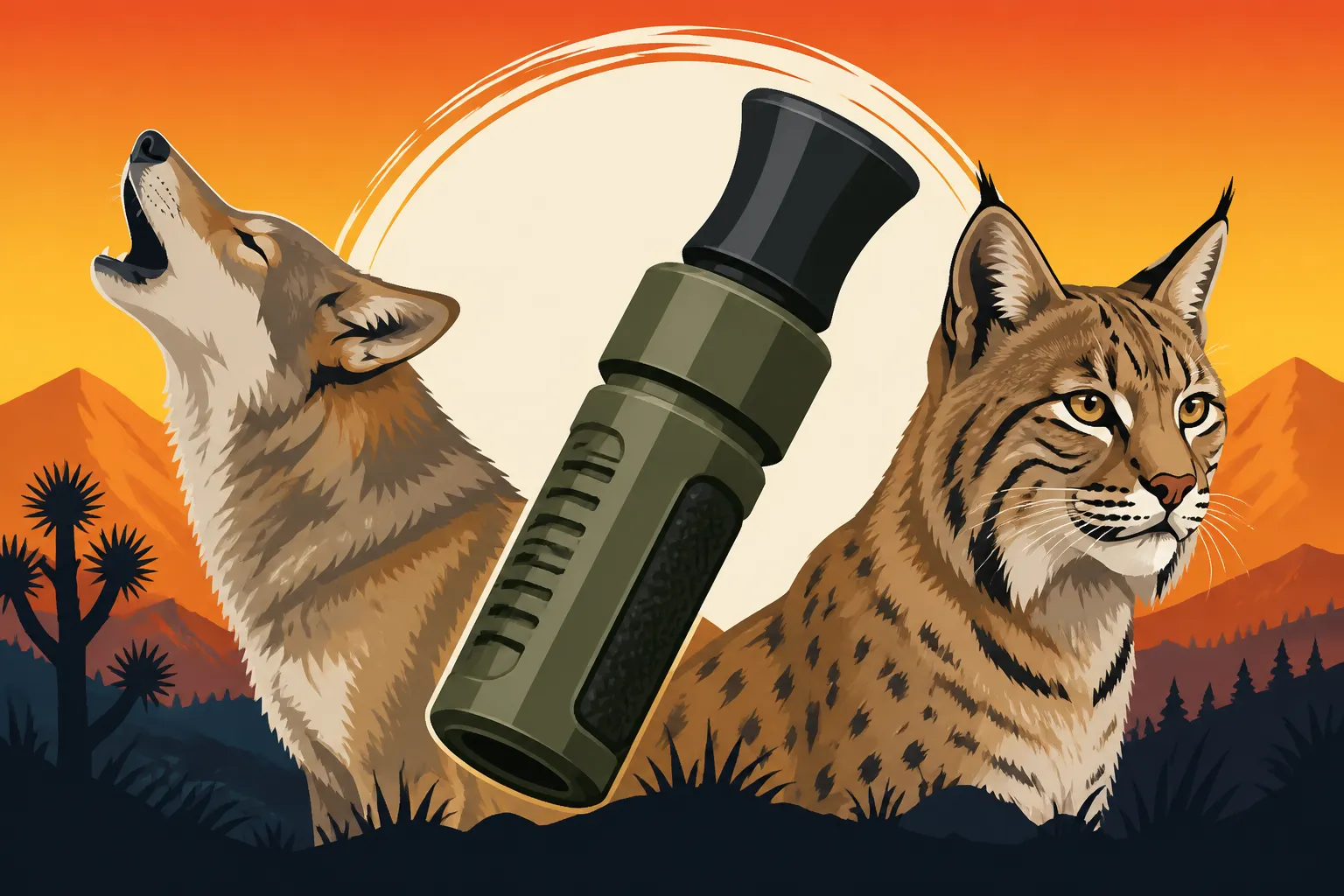
One of the most thrilling and challenging forms of hunting in California is pursuing predators like coyotes and bobcats. These wily animals offer a unique test of skill, patience, and knowledge, often frustrating hunters who just try to go out and "wing it." This guide is designed to dive deep into the world of predator calling, specifically focusing on the techniques, gear, and strategies needed to successfully call coyotes and bobcats across California’s incredibly diverse landscapes, helping you understand how to lure them into range.
Understanding California Coyotes and Bobcats
Before you even think about blowing a call, you need to understand the animals you're pursuing. Coyotes and bobcats, while both predators, have distinct behaviors, vocalizations, and habitat preferences that will dictate your calling strategy. Treating them both the same is a surefire way to come home empty-handed.
Coyote Behavior and Vocalizations
Coyotes are incredibly adaptable and intelligent canids, thriving in nearly every corner of California, from high deserts to dense suburban fringes. They are opportunistic hunters, preying on small mammals, birds, and even deer fawns, but they’re also scavengers. Their social structure can range from solitary individuals to small family groups or larger packs, which significantly influences how they respond to calls. A lone coyote might be more cautious, while a pack could come in aggressively to defend territory or investigate a potential meal. Their activity peaks during dawn and dusk, but they can be active throughout the day, especially in less pressured areas. They also have distinct breeding and denning seasons which impact their movements and responsiveness. You can learn a lot more about their spread and populations by looking at California Coyote Range and Density.
Their vocalizations are varied and complex, making them fascinating subjects for calling. You have the classic howls, which serve to announce presence, mark territory, or rally the pack. There are barks, often used as alarm calls or to communicate within the pack. Whines and yips can indicate submission, play, or distress, especially from pups. The most crucial for calling, however, are distress sounds. These mimic injured prey animals—a rabbit squealing, a bird chirping frantically, or even a fawn bleating—which trigger a coyote's predatory instinct. Understanding these nuances helps you select the right call at the right time. For example, a lone howl might bring in a distant coyote looking for company, while a pup distress call could bring in an adult looking to defend or investigate.
Bobcat Behavior and Vocalizations
Bobcats are far more elusive and solitary than coyotes, making them a greater challenge for hunters. These beautiful felines prefer thick cover, such as dense chaparral, oak woodlands, rocky outcroppings, and riparian corridors, where they can ambush prey. They are primarily crepuscular and nocturnal, meaning they are most active during twilight and nighttime hours, though they can be seen during the day, particularly when hunting or during the breeding season. Their diet consists mainly of rabbits, rodents, and birds, and they are incredibly stealthy hunters with exceptional hearing and eyesight. Unlike coyotes, bobcats are highly territorial and generally avoid interactions with other bobcats unless it's for breeding.
Bobcat vocalizations are less diverse and often more subtle than coyotes. They can purr, hiss, growl, and even "chirp" or "mew" to communicate, especially during breeding. The key vocalizations for calling them are often distress sounds, mimicking small prey. A dying rabbit squeal or a bird in distress can pique a bobcat's curiosity and trigger their predatory response. However, they tend to approach with extreme caution, often circling downwind to get a scent before revealing themselves. This makes precise setup and wind management absolutely critical when calling for bobcats. Unlike coyotes who might charge in, a bobcat will often materialize silently out of the brush, appearing as if from nowhere. Because of their secretive nature, observing their behavior in the field without the aid of a call is a rare treat.
Types of Predator Calls for California Hunting
The market is flooded with predator calls, and it can feel overwhelming trying to choose. The truth is, different calls excel in different situations and cater to different preferences. Knowing the pros and cons of each will help you build an effective arsenal.
Electronic Calls (E-Calls)
Electronic calls, or e-calls, have revolutionized predator hunting. These devices play pre-recorded sounds, offering a vast library of distress calls, howls, barks, and even specialty sounds like territorial challenges or pup whines. Their major advantage is versatility and consistency. You can cycle through dozens of sounds, adjust volume precisely, and even program custom sequences to create realistic scenarios. Many modern e-calls come with a remote control, allowing you to place the caller away from your position, drawing the predator's attention away from you and making it easier to set up a shot. This also allows you to play sounds that might be difficult or impossible to replicate with a mouth call, such as a full-blown pack howl or specific bird distress.
However, e-calls aren't without their drawbacks. They require batteries, which can die at the worst possible moment, especially in cold weather. They can also be expensive, with advanced models costing a significant amount. Some hunters also find them less "sporting" than mouth calls, though their effectiveness is undeniable. Brands like Foxpro and ICOtec are popular choices among California hunters, known for their sound quality and remote functionality. When using an e-call, consider placing it far enough away (50-100 yards) that the animal focuses on the sound, not your hiding spot. The GoHunt platform often features articles on optimal e-call placement strategies for different terrains.
Mouth Calls: Open Reed, Closed Reed, and Diaphragm
Mouth calls require more skill and practice but offer an incredibly authentic and immediate connection to the calling process. They are generally much more affordable, don't require batteries, and are lightweight.
- Open Reed Calls: These are perhaps the most versatile mouth calls. By varying lip pressure, bite, and airflow, you can produce a wide range of sounds, from rabbit distress to bird chirps, and even some coyote vocalizations. They are excellent for creating realistic, nuanced sounds that can be crucial for calling pressured animals. Common examples include various "rabbit squealers" or "fawn bleats." The downside is the learning curve; it takes practice to produce consistent, realistic sounds.
- Closed Reed Calls: These calls have a reed encased in a barrel, making them easier to learn and more consistent in sound production. They often mimic a specific prey animal, like a cottontail rabbit or a jackrabbit. While less versatile than open reeds, they are incredibly effective for their dedicated sound and are a great starting point for beginners.
- Diaphragm Calls: Often associated with turkey hunting, diaphragm calls are also effective for some predator sounds, particularly higher-pitched distress cries or pup whines. They are held in the mouth, allowing for hands-free operation, which is a huge advantage when you need to keep your rifle ready. However, they have the steepest learning curve and require significant practice to master.
| Call Type | Pros | Cons | Best For |
|---|---|---|---|
| Electronic | Versatile, consistent, remote operation, wide sound library | Expensive, battery-dependent, can feel less "traditional" | Covering large areas, shy predators, diverse soundscapes |
| Open Reed | Highly versatile, realistic, affordable, no batteries | Steep learning curve, requires practice | Mimicking varied distress, nuanced calling |
| Closed Reed | Easy to learn, consistent, affordable, no batteries | Less versatile, often limited to one prey sound | Beginner hunters, specific prey imitation |
| Diaphragm | Hands-free, compact, realistic high-pitched sounds | Steepest learning curve, niche use | Hands-free operation, pup/bird distress |
Specialty Calls and Hand Calls
Beyond the main categories, there's a world of specialty calls. Some hunters swear by specific bird distress calls, like a magpie or a woodpecker, for bringing in curious bobcats or coyotes. There are also specific "howler" calls designed to replicate coyote barks and howls, which can be used for locating animals or challenging territorial coyotes. Hand calls that imitate fawn bleats are also very effective, especially during late spring and early summer when coyotes are actively hunting fawns.
Another category is "lip-squeaks" or "kissing calls," which involve simply making a squeaking sound with your lips. While subtle, these can be incredibly effective for enticing a hung-up predator a few extra yards, particularly in thick cover or when a coyote has gone silent after hearing your main call. These are often used as a last-ditch effort when a predator has stalled out. The key is to experiment and find what works for you and the animals in your specific hunting area. GoHunt often showcases new and innovative calls, offering reviews and usage tips that can be invaluable.
Mastering Calling Strategies in California's Diverse Terrain
California’s landscape is incredibly varied, from the dense coastal chaparral to vast desert washes and alpine forests. What works in one area might be useless in another. Adapting your calling strategy to the terrain and the specific species is paramount.
Calling Coyotes in Open Country and Rangeland
Open country, like the vast rangelands of the Central Valley or the rolling hills of the Carrizo Plain, presents unique challenges and opportunities for coyote hunters. Visibility is often excellent, allowing you to spot incoming predators from a distance. This is where good optics, such as binoculars and a spotting scope, become absolutely essential. When setting up, find an elevated position that offers a wide field of view, but also provides good cover for yourself. Think about the sun's position – you want it at your back if possible, both for your visibility and to avoid silhouetting yourself.
The calling strategy in open country often involves longer, louder sequences to reach distant animals. Start with a series of distress calls, perhaps a jackrabbit or a cottontail in distress, played for 30-60 seconds, then pause for a minute or two. Coyotes in open country might take their time to approach, often circling downwind. Be patient, scan constantly, and be prepared for a shot at various ranges. Varying your call sounds can also be effective; sometimes switching from a rabbit distress to a bird in distress after a few minutes can re-engage a cautious coyote. Don't be afraid to try some howls to locate coyotes or challenge a territorial male, especially if you're out at Coyote Calling at First Light. Remember that coyotes are smart; they've been hunted before. The more you hunt a specific area, the more those coyotes learn.
Calling Bobcats in Brush and Timber
Bobcats, being far more secretive, demand a different approach, particularly in dense brush, oak woodlands, or timbered areas. Here, visibility is limited, and bobcats will use the cover to their advantage, often approaching unseen until they are very close. Your setup is critical: find a spot that offers a clear shooting lane, even if it's a small window, while still providing ample concealment for yourself. Pay extreme attention to wind direction; bobcats will circle downwind to scent-check the source of the call. A slight change in wind can ruin your hunt. Hunting Coastal Range Oak Woodlands can be particularly tricky due to the thick vegetation.
When calling for bobcats, less is often more. Shorter, softer bursts of distress calls – a mouse squeak, a bird chirping, or a very light rabbit distress – can be more effective. Play for 15-30 seconds, then remain silent for several minutes, scanning every single shadow and patch of brush. Bobcats are patient, and you need to be even more so. They might take 10-15 minutes, or even longer, to commit. Because they are so cautious, they often stop and listen intently before taking another step. Focus your calling efforts on times when they are most likely to be active, like dawn and dusk. Sometimes, a very subtle lip-squeak can pull a hung-up bobcat into view. Think about where a bobcat would typically hunt or travel, such as along a game trail, a dry creek bed, or a ridge line, and set up your call accordingly.
Adapting to Calling Pressure and Specific Seasons
California's predator populations, particularly coyotes, face significant hunting pressure in many accessible areas. This pressure makes them warier and less responsive to standard calling techniques. If you're hunting public lands like BLM desert washes or areas near popular hunting spots, expect the coyotes to be educated. To overcome this, vary your sounds, use more subtle approaches, and try less common distress calls. Sometimes, switching to a more niche sound like a crow in distress or a specific bird call can make the difference. Also, consider changing your calling duration and cadence; instead of long, loud sequences, try shorter, softer bursts with longer pauses.
Seasonal changes also play a huge role. During the spring, when coyotes are denning and raising pups, pup distress calls or even a lone female howl can be incredibly effective, as adults are highly protective. Later in the summer, when prey might be scarcer, general distress calls are usually effective. During the fall and winter, male coyotes might be more responsive to territorial howls. Bobcats, too, have a breeding season, typically from winter into early spring, when they might be more vocal and responsive to calls. Understanding these seasonal shifts, often detailed on the GoHunt wildlife pages, allows you to tailor your strategy for maximum success. Don't be afraid to hunt during inclement weather, either; a light drizzle or heavy overcast skies can sometimes make predators more active and less wary. For those hunting in the extreme temperatures, consider the timing for Hunting a D-Zone That Opens in August or Hunting Into a Late-November Zone Close.
Essential Gear Beyond the Call
While the call is central to predator hunting, it's just one piece of the puzzle. Effective predator hunting requires a combination of well-chosen gear, keen observation skills, and a deep understanding of your environment.
Optics for Spotting Predators
California’s vast and varied terrain demands quality optics. In open country, you'll be glassing vast distances, searching for the flick of an ear or the subtle movement of a coyote cresting a ridge. A good pair of binoculars (8x to 10x magnification) is indispensable for scanning and identifying animals at mid-range. Don't skimp here; clear, bright glass reduces eye strain during long scanning sessions. For those truly expansive views, particularly when Glassing a Canyon for a Bedded Buck or scanning wide desertscapes, a spotting scope (20-60x magnification) becomes invaluable. It allows you to confirm if that distant speck is a coyote, a rock, or a piece of tumbleweed, saving you wasted stalks.
In denser cover, where animals might appear suddenly at close range, your binoculars might be less useful for actual shooting, but they are still crucial for initial scanning and identifying movement. A rangefinder is also a critical tool, especially in varying terrain where judging distance can be difficult. Knowing the exact yardage to an approaching coyote or bobcat ensures an ethical shot placement. Consider using a quality harness for your binoculars and rangefinder to keep them secure, easily accessible, and to distribute their weight comfortably, especially if you're Hunting Sierra Nevada High Country or other physically demanding areas. The GoHunt community frequently shares recommendations for optics that perform well in California’s unique light and conditions.
Camouflage and Concealment
Predators have exceptional eyesight, and many hunters underestimate this. Effective camouflage isn't just about blending into the background; it's about breaking up your human outline. Choose camo patterns that match the specific environment you'll be hunting. For instance, a green-dominant pattern for oak woodlands in spring, or a more arid, tan-based pattern for a Hunting a California BLM Desert Wash for Deer. Even more important than the pattern is the concealment. Using natural cover—sitting against a large oak tree, behind a rock outcropping, or in dense brush—is paramount.
Beyond a good camo suit, think about a head net, face paint, or a balaclava to break up the tell-tale oval of your face. Hands should also be covered with gloves. Movement is another critical factor. Predators will pick up on even subtle movements, so remain as still as possible while calling. Small adjustments to your position should be slow and deliberate. If a predator is coming in, freeze. Wait for it to look away or drop its head before making any adjustments for a shot. The GoHunt community often provides excellent advice on effective camo patterns for specific California regions.
Scent Control and Wind Awareness
This might be the single most overlooked aspect of predator hunting, yet it's often the most critical, especially for elusive bobcats. Coyotes and bobcats have an incredible sense of smell, far superior to ours. If they catch your scent, your hunt is over before it even began. Wind awareness is non-negotiable. Always, always, always approach your calling location from downwind, and set up so the prevailing wind blows your scent away from where you expect the predator to approach. This often means sacrificing a perfect view for a sound setup. Check the wind direction constantly using a wind checker (a small bottle of powder or thread).
While it's impossible to eliminate all human scent, scent control measures can drastically reduce your signature. This includes showering with scent-free soap, washing your hunting clothes in scent-free detergent, and storing them in airtight bags or containers. Avoid strong deodorants, colognes, or even the smell of breakfast coffee on your breath. Some hunters use scent-eliminating sprays or wear carbon-lined clothing, though proper wind management is still the most effective defense. Remember, a bobcat will almost always circle downwind, so if your scent cone intersects its approach, it will bust you every time. Pay close attention to wind and thermals, particularly in areas like Wind and Thermals in Steep Sierra Country.
Legal Considerations and Ethical Hunting
Hunting predators in California comes with specific rules and regulations that every hunter must understand and follow. Beyond the law, ethical considerations are vital for maintaining the sport and ensuring responsible hunting practices.
Night Hunting and Trapping Rules
California has specific regulations regarding night hunting and the use of artificial lights for taking game. Generally, night hunting for most game animals is prohibited. However, there are often exceptions for certain species, like non-game animals or furbearers, under specific conditions. For predators like coyotes, there can be provisions for night hunting, often requiring special permits or being restricted to private land. Artificial lights, such as spotlights or night vision, might be allowed in certain contexts but are heavily regulated. It's absolutely crucial to consult the current California Department of Fish and Wildlife (CDFW) regulations booklet or their website to understand the exact rules for night hunting coyotes and bobcats in your specific area. These rules can change, and ignorance is no excuse.
Trapping also falls under a distinct set of regulations in California. While not strictly "calling," trapping is another method of predator management. If you are considering trapping coyotes or bobcats, be aware that California has stringent laws governing trap types, setback distances from roads or dwellings, checking requirements, and mandatory reporting. For example, specific trap sizes and types are mandated to prevent harm to non-target species. Rules for Trapping and Baiting Rules for California Wild Pigs are distinct from those for furbearers like coyotes and bobcats. Always ensure you are fully licensed and educated on all trapping laws before deploying any traps.
Ethical Calling Practices
Ethical hunting goes beyond legal compliance; it's about respecting the animals, the land, and the perception of hunting. When calling predators, several ethical considerations come into play.
Firstly, responsible shot placement is paramount. Predators are often shot at longer ranges, and their erratic movement can make for challenging shots. Always ensure you have a clean, ethical shot and are confident in your abilities and equipment. Avoid "sky-busting" or taking Hail Mary shots that are likely to wound rather than kill humanely. This links to having the right rifle and caliber for Rifles Suited to California's Non-Lead Ballistics.
Secondly, avoid over-calling or calling solely for sport without the intention of harvest or population management. While predators are often abundant, especially coyotes, ethical hunters aim to make each hunt meaningful. This doesn't mean you can't enjoy the challenge, but it implies a respectful approach.
Thirdly, respect private property and secure permission before hunting on any land that isn't clearly designated as public. Trespassing is not only illegal but also damages the reputation of all hunters. Even when Finding Ground That Sees Fewer Hunters, always verify land status. Using a mapping app like GoHunt or onX Hunt can help you confirm land boundaries.
Finally, understand the role of predators in the ecosystem. While you may be hunting them, predators play a vital role in maintaining ecological balance. Your hunting efforts contribute to wildlife management, and understanding this bigger picture enhances the ethical dimension of your pursuit.
Predator calling in California is a journey of continuous learning, adaptation, and respect for the wild. By understanding the animals, mastering your calls, adapting to the terrain, and upholding ethical practices, you’ll find immense satisfaction in this challenging and rewarding pursuit.
Disclaimer
This article is for general informational purposes only and does not constitute professional advice. Laws, prices and regulations vary by location and change over time. Consult a qualified professional for guidance on your specific situation.