Trapping and Baiting Rules for California Wild Pigs
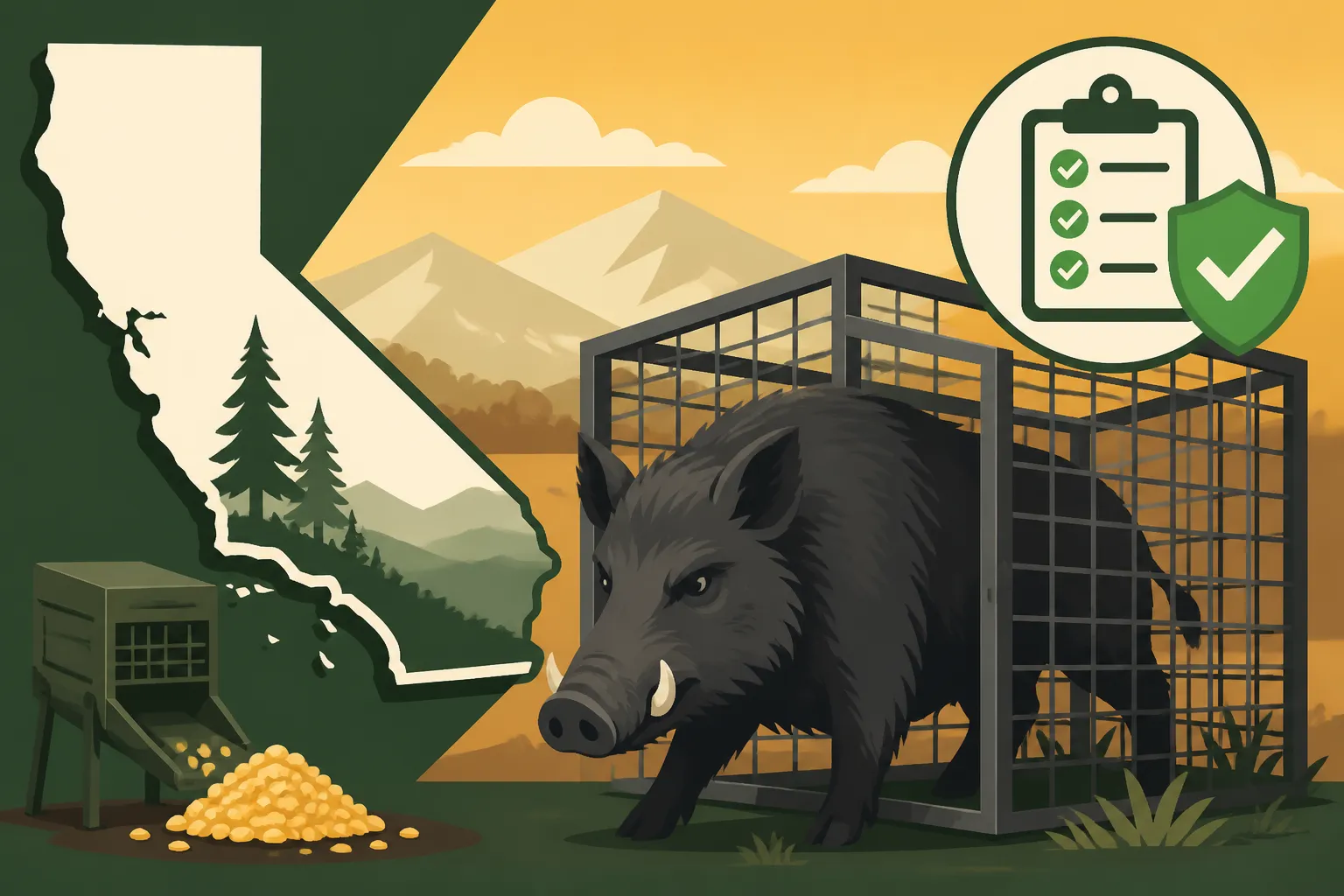
Wild pigs can be a major nuisance for landowners, causing significant agricultural damage and posing ecological threats. For hunters, they offer a thrilling and challenging pursuit, but navigating California's often complex regulations around trapping and baiting rules for California wild pigs can feel like walking through a minefield. This guide is here to untangle the legal knots, offering clear, actionable information on how to legally and ethically trap and bait wild pigs, helping you understand the "dos and don'ts" to ensure a successful and compliant hunt.
Understanding California's Legal Framework for Wild Pigs
California's approach to wild pigs is unique, often causing confusion even for seasoned hunters. Unlike many states where pigs are simply considered pests, here they occupy a curious space, designated as both a game animal and a species that can inflict substantial damage. This dual status influences every rule and regulation surrounding their take, particularly when it comes to methods like trapping and baiting. It's not just about what you can do, but where and how you can do it, always with an eye toward public safety and resource conservation.
Wild Pig Status as a Game Animal
Despite the immense damage they cause to agriculture and natural habitats, wild pigs in California are officially classified as a game animal by the California Department of Fish and Wildlife (CDFW). This designation means that anyone wishing to hunt, trap, or otherwise take a wild pig must possess a valid California hunting license and a wild pig tag. It's a critical distinction, as it prevents unregulated eradication efforts and places the responsibility for management squarely within the established hunting framework. For example, if you're a landowner experiencing severe rooting damage, you still can't just set up a snare without adhering to these rules. The CDFW maintains this classification to ensure sustainable populations, even if the general consensus among landowners and environmental groups often leans towards more aggressive control measures. This framework creates a year-round opportunity for hunters, as outlined in our guide on Wild Pig Hunting California Year-Round.
Specific Regulations for Wild Pig Harvest
Beyond the general game animal status, there are specific rules governing how you can actually harvest these animals. Unlike deer or elk, there's no closed season for wild pigs, and there isn't a bag limit, meaning you can take as many as you legally tag. However, the methods are strictly regulated. For instance, the use of dogs is common for hunting pigs, but even that comes with specific guidelines on pack size and handler control. When it comes to trapping and baiting, the regulations become even more granular, distinguishing heavily between private and public lands. This isn't a "one-size-fits-all" situation; what's perfectly legal on your own property might land you in hot water if attempted on public land. Always consult the most current CDFW regulations booklet or their online resources, perhaps even using a mapping tool like GoHunt to verify land ownership before you plan any activity.
General Hunting License and Tag Requirements
Before you even think about setting a trap or scattering bait, you absolutely need to have your basic hunting credentials in order. Every wild pig hunter, regardless of age (unless participating in specific youth mentor programs), must possess a current California hunting license. On top of that, you need a specific wild pig tag for each pig you intend to harvest. These tags are relatively inexpensive compared to deer or elk tags, and you can purchase them year-round. This is a crucial step that many overlook, thinking that because pigs are "pests," the rules are lax. They are not. After a successful hunt, you are also required to validate and report your pig harvest through ALDS, as detailed in Reporting a Pig Harvest Through ALDS. Failing to properly tag and report your pig is a serious violation, and one that the CDFW takes very seriously. It's part of the comprehensive system designed to track harvest data and manage populations, even for an animal as prolific as the wild pig. You can find more details on California Wild Pig Tag Costs.
The Nuances of Wild Pig Trapping Regulations
Trapping wild pigs can be an incredibly effective method for controlling their populations, especially in areas where they cause significant damage to crops or sensitive ecosystems. However, it's also a method fraught with strict regulations designed to prevent unintended harm to non-target animals, ensure humane treatment, and maintain public safety. These rules dictate not only if you can trap, but how you must construct, place, and monitor your traps. Skipping any of these steps can lead to severe penalties, so understanding the specifics is paramount.
Permits and Restrictions for Trapping Devices
In California, using any trap for wild pigs, even on private property, requires a specific Furbearer Trapping License or a depredation permit if you're a landowner actively managing damage. This isn't something you can just decide to do one afternoon. The state wants to ensure that anyone setting traps understands the responsibilities involved. For hunters, a regular hunting license and pig tag usually suffice for taking pigs by means other than traps. If you're planning to use a trap specifically, you'll need to look into those additional trapping licenses. These regulations are designed to prevent the indiscriminate use of traps and ensure that only trained or permitted individuals are employing methods that could potentially harm other wildlife. Snares, for example, have very specific tension and break-away requirements, and leg-hold traps are highly restricted and often require special justification or permits, making them generally impractical for recreational pig hunting. Our article on Trapping a Sounder on Private Land dives deeper into the practicalities.
Design and Placement of Legal Traps
When it comes to the physical trap itself, California has stringent rules on design and placement. You can't just use any old cage trap you found online. Generally, wild pig traps must be live-capture devices, such as large corral traps or box traps, designed to safely contain the animals without causing injury. These traps need to be of a sufficient size and sturdy construction to hold agitated pigs. Crucially, they must be placed in a manner that minimizes the risk of catching non-target species like deer, bears, or even domestic animals. This often means placing traps away from public access points, residential areas, and known corridors for protected wildlife. Additionally, signage indicating the presence of a trap is often required, a measure to inform the public and prevent accidental encounters. You might find resources on GoHunt that help visualize optimal trap placement based on terrain and known pig activity patterns.
Monitoring, Reporting, and Animal Welfare
The responsibility doesn't end once the trap is set. California law mandates regular monitoring of traps—often every 24 hours—to ensure that any captured animals are dealt with promptly and humanely. This is a critical component of ethical trapping and is strictly enforced. If you capture a non-target animal, you must release it unharmed. For captured wild pigs, you must dispatch them in a humane manner. This typically means a quick, clean shot to the head. It is illegal to relocate captured wild pigs, as this only spreads the problem and potentially diseases. After dispatching, the pig must be properly tagged, and the harvest reported according to CDFW guidelines. This meticulous process underscores the state's commitment to animal welfare and responsible resource management. Always be prepared for what happens after a successful capture.
Legal Considerations for Baiting Wild Pigs
Baiting can be an incredibly effective strategy for luring wild pigs into a specific area, concentrating them for a more efficient harvest, whether by traditional hunting methods or trapping. However, like trapping, baiting is heavily regulated in California, with a clear distinction between what's permissible on private land versus public land. Understanding these rules is essential to avoid violating game laws and ensures that your efforts are both legal and ethical. Many hunters, eager to improve their odds, often misunderstand these distinctions, leading to unintentional infractions.
Acceptable Baiting Practices on Private Land
On private land, the rules for baiting wild pigs are generally more lenient. As a landowner, or with the landowner's explicit permission, you can use bait to attract wild pigs. Common baits include corn, fermented grains, or even commercial pig attractants. The key here is the "private land" aspect – you're essentially managing your own property. However, even on private land, there are still ethical considerations. You should avoid creating a scenario where pigs become unnaturally dependent on bait, and always strive for a clean, ethical harvest once they are drawn in. This demonstrates a responsible approach to California Wild Pig Diet and Rooting Damage. This flexibility on private land is largely due to the recognition of the damage wild pigs can cause to agricultural interests and personal property, as discussed in detail in California Wild Pig Damage to Vineyards. It's a tool for landowners to mitigate those impacts. For an in-depth look at what's allowed, refer to Baiting Hogs Legally in California.
Prohibitions on Public Land Baiting
This is where the rules become much stricter and often trip up hunters. Baiting wild pigs on public lands in California is generally prohibited. This includes National Forests, BLM land, State Wildlife Areas, and other public access areas. The reasoning behind this prohibition is multifaceted: it aims to prevent unfair chase, minimize potential conflicts between hunters, avoid habituating wildlife to human-provided food sources (which can lead to dangerous encounters), and maintain the natural foraging behaviors of all wildlife. Imagine if every hunter could bait freely on public land; it would quickly become chaotic and ecologically damaging. Any attempt to place bait, even a small amount, on public land for the purpose of hunting or attracting wild pigs for harvest is illegal. This includes scattering corn, pouring liquid attractants, or placing mineral blocks where pigs are likely to find them. When planning your public land excursions, platforms like GoHunt can be invaluable for clearly identifying land ownership boundaries, ensuring you don't inadvertently cross into prohibited areas with bait.
Quantity, Type, and Placement of Bait
Even on private land where baiting is permitted, there are often unwritten expectations and sometimes explicit rules about how it should be done. While there isn't a hard limit on the quantity of bait, responsible practice dictates using only what's necessary to attract pigs, not to feed them indefinitely. The type of bait is also important; while corn is common, some hunters experiment with expired pastries or fruits. The primary concern is that the bait does not attract or inadvertently harm other protected wildlife. For placement, bait should be strategically located in areas where pigs are already active, perhaps near known rooting sites or water sources, but always with a clear line of sight for a safe shot. It should be dispersed in a way that minimizes consumption by non-target animals, for instance, by placing it within a feeder or behind a protective barrier that only pigs can access. Never place bait directly in or adjacent to waterways, as this can lead to contamination and harm aquatic ecosystems. Understanding California's general rules, like those discussed in Hunting Pigs on Central Coast Oak Ranges, can also inform your baiting strategy.
Ethical Hunting Practices and Regulations Beyond the Law
Beyond the strict letter of the law, ethical considerations play a vital role in wild pig hunting. As responsible hunters, we have a duty to ensure our actions reflect positively on the hunting community and respect the animals we pursue. While the regulations provide a legal framework, ethics guide us in making choices that are humane, sustainable, and considerate of both the wildlife and the broader public. Especially with trapping and baiting, methods that can sometimes invite scrutiny, upholding high ethical standards is more important than ever.
Minimizing Non-Target Catches and Incidental Take
One of the biggest ethical challenges with trapping and baiting, especially trapping, is the risk of catching non-target animals. Deer, bears, small game, and even domestic pets can be inadvertently attracted to bait or caught in traps. Ethically, we must do everything in our power to minimize this. For traps, this means meticulous placement, using trap designs that are pig-specific, and avoiding locations with high populations of other sensitive species. Regularly monitoring traps (as legally required) is also critical to quickly release any non-target animals unharmed. When baiting, consider using feeders or placement strategies that make it harder for other animals to access the bait. For example, placing bait inside a sturdy, hog-specific feeder can reduce access for deer. The goal is to be highly selective, ensuring that our impact is focused solely on the wild pigs we intend to harvest. This reflects a commitment to the entire ecosystem, not just our target species.
Ensuring a Clean Harvest and Respect for the Animal
Whether you're dispatching a trapped pig or shooting a baited one, ensuring a clean, humane harvest is an absolute ethical imperative. This means making an accurate shot that results in a quick, decisive kill. For trapped pigs, a headshot with a firearm is generally considered the most humane method. For baited pigs taken by rifle or archery, practicing your marksmanship and knowing your ethical shot distances are critical. Never take a risky shot that could wound an animal, leading to prolonged suffering or a lost animal. Respect for the animal extends beyond the moment of harvest. It includes proper field dressing, care for the meat, and utilizing as much of the animal as possible. This demonstrates gratitude and honor for the life taken. While there's no official "California Legal Firearms for Deer Hunting" specific to pigs, using an appropriate caliber and projectile is part of this ethical responsibility. GoHunt often features articles on shot placement and ethical hunting practices that apply across various game species.
Public Perception and Hunter Responsibility
The public perception of hunting, and particularly methods like trapping and baiting, can be quite sensitive. As hunters, we are ambassadors for our sport. Unethical or illegal practices, even by a few individuals, can cast a negative shadow over the entire hunting community, potentially leading to stricter regulations or reduced public land access. This is why adhering to both the letter and the spirit of the law is so important. When trapping, ensure all required signage is visible. When baiting on private land, ensure the bait isn't accessible to the public or creating a nuisance. Be mindful of neighbors and non-hunters who might misunderstand your activities. Being transparent, respectful, and visibly ethical in all your hunting endeavors is key to maintaining public support and ensuring the future of hunting opportunities in California. Remember, the way we conduct ourselves afield directly impacts how hunting is viewed by society at large.
Securing Permission and Planning for Success
Successfully trapping or baiting wild pigs in California often hinges on two critical elements: gaining appropriate land access and meticulous planning. Since public land restrictions are so tight regarding these methods, private land becomes the primary arena. This means building relationships, understanding property boundaries, and then leveraging that access with smart scouting and strategy. Without these foundational steps, even the best trap or baiting system will likely fall short.
Navigating Private Land Access for Trapping and Baiting
Given the severe limitations on public land, securing private land access is almost a prerequisite for effective trapping and baiting. This often involves Knocking on Doors in California Ranch Country, introducing yourself to landowners, and explaining your intentions. Many landowners are desperate for pig control due to the extensive damage these animals cause to crops, fences, and irrigation systems. Offering to help manage their pig population can be a win-win. Be prepared to discuss your methods, assure them of your adherence to all regulations, and emphasize your commitment to safety and responsible hunting. Written permission is always a good idea, detailing the scope of your activities and the duration of your access. Building trust is paramount, and a good relationship with a landowner can open up incredible hunting opportunities for years to come. Mapping tools integrated with GoHunt can help you identify potential private land contacts by clearly delineating property lines.
Pre-Season Scouting and Identifying Productive Areas
Once you have secured private land access, the real work begins with scouting. You can't just throw up a trap or scatter corn anywhere and expect results. Pre-season scouting, even for pigs which are available year-round, is crucial. Look for signs of pig activity: extensive rooting, tracks near water sources, rubs on trees, and well-used trails. Pay attention to food sources available – oak trees for acorns, agricultural fields for crops, or natural grasslands. Understanding the pigs' travel patterns and bedding areas will inform the most effective placement of traps or bait sites. This also involves observing wind patterns and thermal currents, particularly in hilly terrain, to avoid having your scent carry into the area you're trying to attract pigs to. Even when using bait, pigs are still wild animals driven by natural instincts, and strategic placement will always yield better results. Consider combining your scouting with insights from topics like Hunting a Funnel Between Two Oak Ridges.
Integrating Trapping and Baiting with Other Hunting Methods
Trapping and baiting shouldn't be seen as standalone methods, but rather as tools that can be integrated into a broader wild pig management or hunting strategy. For instance, a well-placed bait site might concentrate pigs, making them easier to target during a traditional spot-and-stalk hunt or a still-hunt. Traps can be particularly effective during times when pigs are less active or in areas where access for traditional hunting is difficult. Many hunters will utilize trail cameras to monitor bait sites, learning pig patterns, herd sizes, and even identifying individual animals. This information can then be used to plan a hunt or determine optimal times to set and check traps. By combining these methods, such as using bait to draw in a sounder for a planned archery hunt, you increase your chances of success and gain a deeper understanding of the wild pig behavior on the property you're hunting. This holistic approach is often the most effective for consistent pig harvest, aligning with principles discussed in articles like Hunting Pigs Without a Closed Season. After all, there are roughly How Many Wild Pigs Roam California, meaning there's plenty of opportunity if you plan correctly.
Navigating Common Pitfalls and Ensuring Compliance
California's hunting regulations, especially concerning wild pigs, are designed to balance resource management with public safety and ethical hunting. However, the intricacies can sometimes lead to unintentional errors. Being aware of common pitfalls and understanding how to proactively ensure compliance can save you a lot of headache, fines, and potentially losing your hunting privileges. It’s not enough to simply know the rules; you must actively apply them and seek clarification when unsure.
Avoiding Misinterpretation of Public Versus Private Land Rules
One of the most frequent mistakes hunters make is misinterpreting the rules regarding public versus private land. As discussed, baiting is largely prohibited on public lands, and trapping generally requires specialized permits and specific conditions. However, a common pitfall is assuming that a piece of land looks private, or that because it's adjacent to private land, the same rules apply. This is rarely the case. Using mapping tools like those offered by GoHunt, or simply cross-referencing with official CDFW and U.S. Forest Service maps, is non-negotiable. Always verify land ownership before deploying any bait or trap. An accidental step across an invisible boundary with a bag of corn could turn a legitimate hunt into a violation. When in doubt, assume it's public and adhere to the stricter regulations, or seek explicit permission if you suspect it's private. The consequences of not doing so can be severe.
Staying Updated on Regulation Changes
California's hunting regulations are not static; they can and do change. While the general framework for wild pigs has been relatively consistent, specific nuances or interpretations can be updated. For instance, new restrictions might be imposed in certain areas due to environmental concerns, or new permitting requirements might arise. Relying solely on what you "heard" or what was legal "last year" is a recipe for trouble. Make it a habit to review the current CDFW hunting regulations booklet annually before you plan any hunting activity, especially if it involves trapping or baiting. The CDFW website is the official source for the most up-to-date information. Joining hunting forums or subscribing to email updates from the CDFW can also help keep you informed. A responsible hunter is an informed hunter.
Proper Tagging and Reporting Procedures
After all the effort of trapping or baiting, securing a pig, and ensuring an ethical harvest, the final critical step is proper tagging and reporting. Every wild pig harvested in California requires a valid tag to be immediately affixed to the animal and punched or marked as required. This tag must remain with the animal until it is processed. Furthermore, all pig harvests must be reported to the CDFW via their Automated License Data System (ALDS) within a specified timeframe, usually within 30 days of harvest or before the animal is cut up for consumption. This reporting is vital for the CDFW to monitor harvest rates and manage pig populations statewide. Failing to properly tag or report is not a minor oversight; it's a violation that can result in fines and penalties. It’s the final piece of the legal puzzle and one that should never be neglected. Remember, precise details on this can be found in our guide on Reporting Wild Pig Harvests Through ALDS.
Here's a quick reference table to help clarify key aspects of trapping and baiting for wild pigs in California:
| Feature/Method | Public Land (National Forests, BLM, State Wildlife Areas) | Private Land (With Owner Permission) | Key Regulations/Notes |
|---|---|---|---|
| Baiting Wild Pigs | Generally Prohibited | Permitted | Must not attract or harm non-target species. No bag limit, but tag required. |
| Trapping Wild Pigs | Highly Restricted/Generally Prohibited | Permitted (with license) | Requires Furbearer Trapping License or Depredation Permit. Live-capture only. |
| Trap Design | N/A | Live-capture, sturdy, pig-specific | Must minimize harm to trapped animals and prevent escape. |
| Trap Monitoring | N/A | Required (e.g., every 24 hours) | Must release non-target animals unharmed. Humane dispatch of pigs. |
| Hunting License | Required | Required | Valid CA Hunting License & Wild Pig Tag required for each harvested pig. |
| Reporting Harvest | Required | Required | Must report via ALDS within 30 days. Tag must be affixed to animal. |
| Night Hunting | Generally prohibited (check local rules) | Check local ordinances/permits | Specific rules apply to methods and lights. Refer to Night Hunting Rules for California Hogs. |
| Lead Ammunition | Prohibited Statewide | Prohibited Statewide | All ammunition must be non-lead. |
California's wild pigs offer a unique and challenging hunting opportunity, but success, especially with trapping and baiting, hinges on a deep understanding of and strict adherence to the law. By respecting the regulations, prioritizing ethical practices, and diligently planning your outings, you can effectively contribute to wildlife management and enjoy rewarding experiences in the field. Always consult the latest CDFW regulations and local ordinances for the most current information.
Disclaimer
This article is for informational purposes only and does not constitute legal advice. Hunting regulations in California are subject to change, and it is the sole responsibility of the hunter to understand and comply with all current federal, state, and local laws and regulations before engaging in any hunting activities. Always consult the official California Department of Fish and Wildlife (CDFW) regulations booklet and website for the most accurate and up-to-date information.