Wild Pig Hunting California Year-Round
Hunting wild pigs in California offers a unique challenge and a year-round opportunity for ethical hunters, but it's far from a walk in the park. These intelligent, tough animals thrive in diverse environments, often making their presence felt through significant agricultural damage and habitat disruption. This comprehensive guide will walk you through everything you need to know to pursue California's wild pigs successfully, from understanding their behavior to mastering proven hunting techniques and navigating the state's specific regulations.
Understanding California's Wild Pig Landscape
Wild pigs, often referred to as wild boars, feral hogs, or simply "pigs" by hunters, are a force of nature in California. Their populations have exploded across many counties, creating both a management challenge and an incredible hunting opportunity. Unlike many other game species with limited seasons, wild pigs in California can be hunted year-round, which adds a layer of complexity and constant readiness for hunters.
The Persistent Presence of Wild Pigs
California's landscape, with its mix of oak woodlands, riparian areas, agricultural fields, and even chaparral, provides an ideal environment for wild pigs to flourish. They're incredibly adaptable, able to thrive in areas from the hot, dry Central Valley to the cooler, more humid coastal ranges. This adaptability, combined with their rapid reproduction rates, means that despite consistent hunting pressure, their numbers remain robust in many areas. For landowners and farmers, wild pigs are often viewed as a serious pest due to the extensive damage they cause to crops, fences, and irrigation systems. Their constant rooting can decimate planted fields overnight and create hazards for machinery and livestock.
This year-round problem for agriculture translates directly into a year-round hunting season, a silver lining for hunters looking for consistent opportunities. The state manages them more like an invasive species than a traditional game animal, reflected in the liberal hunting regulations. Their persistence means that scouting isn't just a pre-season activity; it's an ongoing effort to locate and understand their ever-changing patterns, making the hunt a dynamic and engaging pursuit throughout the year.
Population Dynamics and Distribution
Estimates suggest that California's wild pig population is substantial and widespread, though exact numbers are difficult to ascertain due to their elusive nature and the vastness of their range. They are particularly concentrated in the oak woodlands and rolling hills of the Central Coast, parts of the Sierra Nevada foothills, and agricultural areas within the Central Valley. Counties like Monterey, San Luis Obispo, Santa Clara, and Sonoma are well-known hotspots, but populations exist in many other regions as well. Understanding Which California Counties Have the Most Pigs can be a great starting point for your research.
Pigs are social animals, often found in "sounders" led by an older sow, though mature boars frequently roam solitarily. Their distribution is heavily influenced by food availability, water sources, and cover. Areas with abundant acorns, particularly in good mast years, will draw pigs from miles around. Likewise, proximity to irrigated fields of alfalfa, corn, or grains makes these areas prime targets. Their population dynamics are fast-paced; sows can breed multiple times a year, producing large litters, which explains how they can quickly rebound even after significant culling efforts. This constant regeneration is why the year-round hunting season is so vital for management.
Legal Framework for Year-Round Hunting
Hunting wild pigs in California is primarily regulated by the California Department of Fish and Wildlife (CDFW). The most appealing aspect for hunters is the lack of a closed season or bag limit. This means that once you have the necessary licenses and tags, you can hunt pigs any day of the year, provided you adhere to other regulations. You'll need a valid California hunting license and a specific California's Year-Round Wild Pig Tag for each pig harvested. These tags are inexpensive compared to deer or elk tags and can be purchased over the counter at any license agent or through the CDFW's online portal.
A critical regulation to remember is California's statewide non-lead ammunition requirement for all hunting. This applies fully to wild pig hunting. You must use certified non-lead projectiles when pursuing pigs with a rifle, handgun, or shotgun slug. This change has impacted many hunters, requiring a switch from traditional lead-core bullets. Furthermore, while there's no bag limit, you must report your pig harvest through the CDFW's Automated License Data System (ALDS). This data helps the department monitor populations and hunter effort. Understanding Reporting a Pig Harvest Through ALDS is essential for compliance. Specific rules also apply to methods like night hunting, baiting, and the use of dogs, which vary by land type and local ordinances, so always check local regulations before planning these types of hunts.
Essential Gear and Preparations for Pig Hunting
Having the right gear isn't just about comfort; it's about increasing your success rate and ensuring your safety in the field. Wild pig hunting in California often involves rugged terrain, unpredictable weather, and potentially aggressive animals, making proper preparation paramount.
Rifles, Ammunition, and Caliber Choices
When it comes to firearms for wild pigs, versatility is key. Pigs are stout, tough animals, and a well-placed shot with a capable cartridge is crucial. Most popular deer calibers work wonderfully for pigs, such as .270 Winchester, .30-06 Springfield, .308 Winchester, and 6.5 Creedmoor. For closer range or dense cover, a lever-action .30-30 or a powerful handgun can also be effective. The overriding factor, however, is California's non-lead ammunition requirement. This means you'll be using copper-solid bullets or other approved non-lead alternatives.
Non-lead bullets often perform differently than traditional lead, sometimes requiring you to re-zero your rifle. They tend to retain more weight and can offer excellent penetration, which is ideal for breaking through the thick shield that mature boars develop over their shoulders. Consider bullet weights on the heavier side for your chosen caliber to maximize kinetic energy and penetration. For instance, if you're using a .308, a 150-grain or 165-grain copper bullet would be a good choice. Always practice with your chosen non-lead ammunition to ensure accuracy and understand its terminal performance. Researching Best Non-Lead Bullet Weight for Blacktail Deer can provide insight into suitable calibers and bullet weights, as pig and deer hunting often overlap in this regard.
Optics for Spot-and-Stalk Success
Pigs are often most active during low-light conditions – dawn, dusk, and even throughout the night in many areas. This makes quality optics indispensable for spotting animals, especially when they're concealed by brush or shadows. A good pair of 10×42 or 12×50 binoculars are your primary tools for glassing wide areas, picking apart distant hillsides, and identifying subtle movements. Look for optics with excellent low-light performance and a wide field of view.
A spotting scope, while not always necessary, can be a game-changer for long-range reconnaissance, allowing you to confirm if that dark blob under an oak tree is indeed a pig, and whether it's a boar or a sow. This is particularly useful in expansive, open country like some of California's rolling foothills or eastern Sierra fringes where pigs may be present. Finally, a reliable rangefinder is non-negotiable. Knowing the exact distance to your target is crucial for ethical shot placement, especially with non-lead bullets which can have different ballistic trajectories than lead-core counterparts. For mountainous or open terrain, a rangefinder that compensates for angle can be incredibly helpful.
Clothing, Boots, and Backpack Essentials
California's pig country is diverse, and so too should be your hunting attire. Early season (summer/fall) hunts in the Central Coast or foothills can be scorching hot, demanding lightweight, breathable clothing in natural camo patterns. Later in the year, particularly in higher elevations or during winter storms, conditions can quickly turn cold and wet, requiring layering systems, waterproof outer shells, and insulating garments. Durable, thorn-resistant pants are highly recommended as you'll often be pushing through thick chaparral and thorny brush where pigs seek cover.
Your boots are perhaps your most critical piece of equipment. You'll be covering miles over uneven, rocky, and often steep terrain. Invest in comfortable, waterproof, high-quality hiking or hunting boots with excellent ankle support. For wet-season hunts or areas with water crossings, consider Best Boots for Steep Wet-Season Sierra Trails, as the principles apply across much of California's pig habitat. A reliable hunting backpack, capable of carrying water, snacks, extra layers, a first-aid kit, and most importantly, your harvested pig's meat, is essential. When you successfully take a pig, you'll need to quarter it out and pack the meat. A pack with a strong frame and comfortable suspension will save you a lot of misery on the hike out. Don't forget game bags to protect the meat from dirt and flies.
Proven Hunting Methods for California Wild Pigs
Wild pigs are notoriously challenging to hunt, largely due to their keen senses and often nocturnal habits. However, with the right approach and a solid understanding of their behavior, success is certainly within reach. The most effective methods in California often involve covering ground and ambushing animals near their preferred haunts.
Spot-and-Stalk Tactics in Varied Terrain
Spot-and-stalk is arguably the most popular and often most effective method for hunting wild pigs in California. This strategy involves using optics to locate pigs from a distance, then carefully planning and executing an approach to get within ethical shooting range. This works particularly well in open oak woodlands, rolling grasslands, and areas with patchy cover where pigs may be seen grazing or moving between bedding and feeding areas. The Central Coast's oak country, for instance, provides ideal terrain for this method.
Success hinges on several factors: diligent glassing, understanding wind direction, and moving slowly and silently. Pigs have an incredible sense of smell and good hearing, though their eyesight is considered relatively poor. Always approach from downwind, taking advantage of terrain features like ridges, draws, and heavy brush to conceal your movement. Take your time, scanning ahead for any sign of movement, and be prepared to freeze if a pig looks your way. A good pair of binoculars, like the ones recommended for Glassing Mule Deer in Open California Country, are just as vital for pigs in similar environments. The goal is to get within 100-200 yards, set up a solid rest, and make a clean, ethical shot.
Still-Hunting in Dense Cover
While spot-and-stalk excels in open areas, still-hunting becomes the go-to method when pigs are holed up in thick cover – think dense chaparral, riparian bottoms, or extensive timber patches. Still-hunting involves moving through the woods very slowly, pausing frequently to scan and listen. The emphasis is on patience and acute observation. You're trying to sneak up on bedded or slowly feeding pigs that are using the cover for security.
The key to successful still-hunting is to minimize noise and maximize your awareness. Wear quiet clothing that won't rustle against branches. Take one or two steps, then stop and carefully examine your surroundings, listening for the tell-tale sounds of rooting, grunting, or moving through brush. Pay close attention to wind direction, as pigs will use dense cover to escape the wind while still being able to catch scent of intruders. Focus on areas with fresh sign – disturbed earth from rooting, fresh tracks, and active wallows. This method requires extreme stealth and the ability to distinguish subtle sounds and movements in the dense undergrowth.
Ambush Hunting Near Food and Water Sources
Pigs are creatures of habit when it comes to their daily routines, often following established travel routes between bedding areas, feeding grounds, and water sources. This predictable movement pattern makes ambush hunting a highly effective strategy, particularly in areas where pigs are consistently active. Identify natural funnels, game trails, and pinch points that pigs regularly use. These might be along creek bottoms, fence lines, saddles between ridges, or the edges of agricultural fields.
Setting up an ambush involves waiting patiently in a concealed position, usually a ground blind or a treestand, although treestands are less common for pig hunting in California compared to other states. The timing of your ambush is critical: focus on early morning when pigs are returning from night feeding, or late afternoon as they emerge to feed again. Ensure your setup provides a clear shot lane and keeps your scent away from where the pigs will approach. Using trail cameras can be incredibly helpful for identifying these high-traffic areas and determining the best times for an ambush. Remember to stay absolutely still and quiet, as any sudden movement or noise can spook wary pigs.
Scouting and Locating Productive Pig Habitat
Effective scouting is the bedrock of successful pig hunting. Wild pigs are nomadic and their patterns can shift quickly based on food availability, water, and hunting pressure. You need to be a detective, constantly reading the landscape for clues.
Reading Sign: Rooting, Tracks, and Wallows
Learning to read pig sign is paramount. The most obvious indicator of pig presence is rooting – areas where they've used their powerful snouts to dig up soil in search of roots, tubers, grubs, and fungi. Fresh rooting will be moist and the soil recently turned, while older rooting will be dry and compacted by rain or sun. Look for patterns in their rooting; sometimes they’ll systematically work a whole hillside, while other times it might be concentrated around specific oak trees.
Tracks are another key sign. Pig tracks are generally cloven, similar to deer, but they tend to be rounder and more blunt. The dew claws (the smaller, upper hooves) are often more prominent in pig tracks, especially in soft ground, indicating a heavier animal. Look for tracks along trails, near water, and in muddy wallows. Wallows are depressions filled with mud or water where pigs roll to cool down and rid themselves of parasites. Fresh wallows will show mud still disturbed or wet, and often hair rubbed off on nearby trees or rocks. Knowing Scrape Lines Along a Forest Service Road for deer can give you an idea of how to interpret animal sign along travel corridors for pigs as well. Finding these signs, especially fresh ones, means you’re in a prime area for a potential encounter.
Utilizing Technology for Scouting
In today's hunting world, technology can be a powerful ally in your scouting efforts. Mapping apps like OnX Hunt and Basemaps are invaluable for identifying public land boundaries, private property lines, and potential access points. These apps allow you to mark pig sign, plan routes, and navigate dense terrain with confidence. Using an app for California BLM Land Status can help you quickly distinguish huntable ground from private parcels.
Satellite imagery, available through these apps or services like Google Earth, allows you to scout from your couch. Look for areas with a mix of dense cover (for bedding), open feeding areas (oak groves, agricultural fields), and reliable water sources (creeks, ponds, seeps). Identify natural funnels, ridge lines, and dense riparian corridors that pigs might use for travel. The GoHunt app also offers a robust platform for mapping, species distribution overlays, and drawing odds information for various species, which can be an excellent resource for any California hunter, including those pursuing pigs. While GoHunt is best known for its draw-odds analysis for premium tags, its mapping features and land ownership data are incredibly useful for identifying potential pig habitat and access points. It’s about leveraging every tool at your disposal to gain an advantage.
Understanding Seasonal Pig Movements and Food Sources
Wild pig movements are heavily dictated by seasonal changes in food and water availability. In the fall, when acorns drop, pigs will congregate in oak woodlands, sometimes traveling considerable distances to get to a good mast crop. Understanding Hunting After a Poor Acorn Year can help you adapt your strategy, as pigs will then shift to other food sources like subterranean roots, grubs, and agricultural crops. In summer, as natural water sources dry up, pigs will stick close to perennial creeks, springs, and water holes, making these ambush points.
During spring and early summer, pigs often target tender new grasses, forbs, and crops like alfalfa and corn. Farmers frequently report pigs damaging these crops, creating potential opportunities for hunters to gain private land access. Hunting pressure can also significantly influence their movements. In heavily hunted areas, pigs become more nocturnal and will retreat to the thickest, most inaccessible cover during daylight hours. Adjusting your hunting times and focusing on deeper cover during these periods becomes essential. Knowing what pigs are currently eating and where they are finding water is the most crucial piece of the scouting puzzle.
Strategic Considerations for a Successful Hunt
Beyond the basic methods and scouting, there are crucial strategic elements that can make or break a wild pig hunt. These involve honing your senses, making ethical decisions, and ensuring proper care for your harvest.
Wind, Thermals, and Scent Control
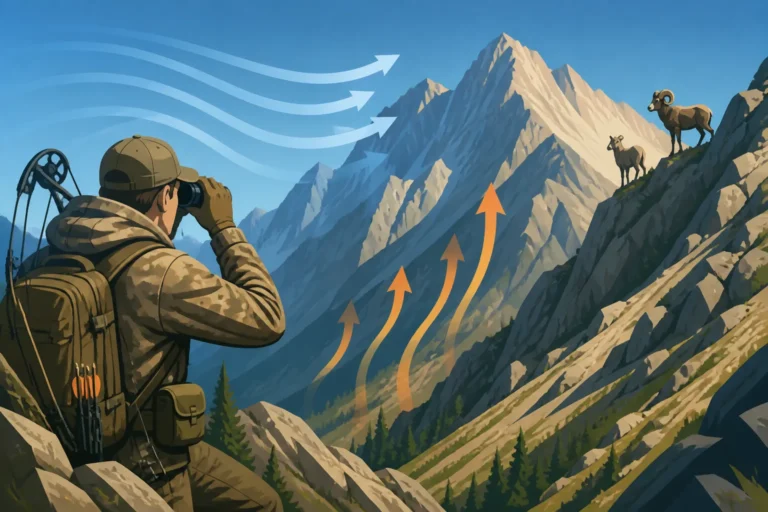
Pigs possess an unparalleled sense of smell, far superior to deer. This makes managing your scent and understanding wind patterns absolutely critical. Always approach a pig from downwind. Even a slight shift in wind can carry your scent directly to them, sending them crashing through the brush before you even know they're there. In hilly or mountainous terrain, thermals – rising air currents in the morning and falling air currents in the evening – also play a significant role. Learning Wind and Thermals in Steep Sierra Country is a skill that translates perfectly to pig hunting.
To combat a pig’s nose, practice meticulous scent control. This includes showering with unscented soap, washing hunting clothes in scent-free detergent, and storing them in airtight bags. Wearing carbon-activated clothing can offer an extra layer of protection, as can using scent-eliminating sprays. However, no amount of scent control can fully override hunting with a bad wind. Always prioritize the wind direction above all else when planning your approach. If the wind isn't right, don't force it; find another approach or wait for conditions to change.
Field Judging Wild Boars and Sows
While California has no antler point restrictions or specific legal requirements on pig size, field judging can be important for various reasons, whether you’re looking for a trophy boar, a meat animal, or trying to avoid a sow with piglets. Identifying a true "boar" (a male pig) from a sow (a female) can sometimes be tricky from a distance, especially with younger animals. Mature boars typically have thicker necks, broader shoulders, and often larger heads in proportion to their bodies. They may also have visible "cutters" – the bottom tusks that protrude from their mouth – though these are often only clearly visible on older, larger boars.
Sows, particularly older ones, can also be quite large. The most definitive sign of a sow is the presence of piglets. Always be absolutely certain of your target before you shoot, and if you see piglets, avoid shooting the sow. From a meat perspective, younger pigs (up to 100-150 pounds) often provide the most tender and flavorful meat, while older boars can have tougher, gamier meat, though still excellent for sausages or slow cooking. Knowing Judging a Boar's Cutters Before the Shot is a good skill to cultivate if you're targeting trophy boars.
Post-Shot Procedures and Meat Care
Once you’ve successfully harvested a pig, the work isn't over. Proper field dressing and meat care are crucial, especially in California's often warm climate. Pigs have a thick layer of fat and can spoil quickly if not handled promptly. Immediately after the shot, secure the animal, tag it, and then begin the field dressing process. This involves removing the internal organs to allow the carcass to cool down as quickly as possible. For detailed instructions, refer to guides like Field Dressing a Deer in Hot Weather, as the principles of rapid cooling apply equally to pigs.
If you’re in a remote area, quartering the animal is usually the most practical way to get it out. This involves breaking the pig down into its major muscle groups (front shoulders, hindquarters, backstraps, tenderloins). Place the meat in breathable game bags to protect it from dirt, flies, and debris. Never use plastic bags, as they trap heat and accelerate spoilage. Get the meat cooled down quickly – either by hanging it in a shady, airy spot if temperatures allow, or by placing it on ice in a cooler. Transporting your harvest cleanly and safely from the field back to camp or home is the final critical step for ensuring quality table fare.
Navigating Public and Private Land Opportunities
California offers a mix of public and private land for pig hunting, each with its own advantages and challenges. Understanding where you can hunt and how to gain access is fundamental to planning your year-round pig pursuits.
Public Land Hotspots and Challenges
California boasts millions of acres of public land managed by agencies like the Bureau of Land Management (BLM) and the U.S. Forest Service. These areas, particularly in the coastal ranges, Sierra foothills, and some parts of the Mojave Desert fringe, can hold good numbers of wild pigs. Popular National Forests like Los Padres, Sequoia, and Mendocino, along with various BLM holdings, offer vast expanses for exploration. However, public land hunting often comes with significant pressure, especially on easily accessible tracts. You might need to hike further or explore more remote areas to find unpressured pigs.
Wildlife Areas and Ecological Reserves managed by the CDFW can also offer pig hunting opportunities, though these often have specific regulations, quotas, or draw systems. Always check the individual area regulations before heading out. When hunting public land, be prepared for primitive camping, pack-in/pack-out regulations, and varying vehicle access. Using detailed mapping apps like GoHunt or OnX Hunt is critical for identifying public land boundaries and navigating the terrain. For example, Hunting California's Los Padres National Forest provides insights into hunting vast public areas that often hold pigs. Success on public land hinges on thorough scouting and a willingness to put in the miles away from popular access points.
Securing Private Land Access
While public land offers a challenge, private land can often provide more consistent opportunities with less hunting pressure. Pigs thrive in agricultural areas and oak rangelands that are predominantly privately owned. Securing private land permission can be incredibly rewarding. The best approach is often simple: knocking on doors. Farmers and ranchers frequently suffer significant damage from wild pigs and may be open to allowing hunters to help control populations.
When asking for permission, be polite, respectful, and prepared. Dress neatly, bring a written liability waiver (if they don't have one), and offer to share some of your harvest. Building trust is key, and proving yourself to be a responsible, ethical hunter can lead to long-term access. Don't be discouraged by initial rejections; persistence often pays off. Alternatively, hunting leases or joining a hunting club that has access to private land are options, though these can be costly. For a detailed guide on how to approach this, refer to Asking a California Landowner for Permission. Always have a clear understanding of the landowner's specific rules and boundaries, and stick to them rigorously.
Rules and Regulations Specific to Pig Hunting
Beyond the general hunting license and pig tag, there are specific regulations that apply to wild pig hunting in California. Night hunting for pigs is permitted on private land with written landowner permission, using artificial lights, provided you use legal firearms and adhere to all other safety regulations. However, night hunting is generally not permitted on public lands. Baiting for pigs, which involves placing food to attract them, is generally legal on private land with landowner permission, but check local county ordinances, as some areas may have restrictions. It is illegal to bait pigs on public land. For a full breakdown, understanding Trapping and Baiting Rules for California Wild Pigs is essential, as these can be complex.
Another critical regulation, as mentioned earlier, is the statewide non-lead ammunition requirement. This applies to all methods of take for wild pigs, whether you're using a rifle, shotgun, or handgun. Always carry proof of your hunting license and pig tags, and make sure your pig tag is immediately validated and attached to the animal after harvest. Familiarize yourself with CDFW's specific guidelines regarding transportation of carcasses, especially if you harvest a pig in one of California's Chronic Wasting Disease (CWD) testing zones, although CWD has not yet been detected in California's wild pig population. Remaining vigilant about all regulations will ensure a legal and enjoyable hunt.
Advanced Tactics and Year-Round Adaptations
The beauty of year-round pig hunting in California lies in its constant need for adaptation. What works in a cool, wet spring won't necessarily work in a scorching summer or a frosty winter. Becoming a truly proficient pig hunter means understanding how to shift your tactics with the seasons and environmental conditions.
Hunting Pigs in Different Seasons
Spring: As new green growth emerges, pigs often frequent open areas and agricultural fields, feeding on tender grasses and emerging crops. This can be a great time for spot-and-stalk as pigs are often more visible. Focus on early morning and late afternoon.
Summer: With temperatures soaring, pigs become more nocturnal. Water sources become critical magnets. Focus your hunting efforts around dawn and dusk, near reliable springs, creeks, and wallows. Midday hunting is often unproductive unless you're deep in dense, cool cover. Hot-Weather Sitting Strategy in August offers valuable lessons applicable to pig hunting.
Fall: This is prime time for acorn crops. Pigs will shift their focus heavily to oak woodlands, often feeding throughout the day in cooler weather. This season can offer some of the best opportunities for larger boars and more consistent sightings. Scouting for fresh rooting under oaks is key.
Winter: When conditions get cold and wet, pigs will seek thermal cover in dense brush or timber. They might feed more during daylight hours if the weather is mild, but will quickly bed down in heavy cover during storms. Focus on tracking in soft ground after a rain or still-hunting thickets.
Each season presents unique challenges and opportunities, demanding a flexible and informed approach.
Adapting to Weather and Terrain Challenges
California's varied topography means you could be hunting in steep, rocky canyons one day and flat, brushy plains the next. Always be prepared for the specific terrain you'll encounter. For steep country, good hiking boots and trekking poles are invaluable. Understand how sound travels and how scent drifts in different environments. For example, in deep canyons, thermals can swirl unpredictably, making scent control even harder.
Weather also dictates strategy. During a persistent rain, pigs may remain bedded in thick cover, making still-hunting more effective. After a storm, the ground can be perfect for tracking. In extremely hot weather, pigs will be close to water, and your meat care needs to be exceptionally fast and efficient. Conversely, in cold snaps, they might feed more aggressively during the day to build energy, but will quickly retreat to sheltered bedding areas. The GoHunt app's weather overlays, like those from other mapping apps, can be crucial for planning your daily strategy, showing wind direction, temperature, and precipitation forecasts.
Using Calls and Decoys (Limited Use but Worth Mentioning)
While not as universally effective as for deer or turkeys, certain calls can occasionally work for wild pigs. Pig calls primarily mimic distress sounds (piglets in distress) or social grunts. A distress call might draw in a curious sow, especially if she has piglets or is protective. Grunt calls can sometimes stop a moving pig for a shot or pique the interest of a boar looking for a fight. However, pigs are often very call-shy, especially those that have been hunted previously, so use calls sparingly and subtly.
Decoys are rarely used for pig hunting, as pigs are not typically attracted to visual representations of their kind in the same way deer or waterfowl are. However, in certain unique situations, a very realistic silhouette or a 3D decoy might potentially draw a curious animal closer, particularly if combined with calling or used to distract. For the most part, calling and decoying are secondary tactics for pig hunting; stealth, scent control, and precise shot placement remain paramount. Focus on these foundational elements first, and experiment with calls only once you've mastered the basics.
Disclaimer
Hunting is a demanding activity with inherent risks, including but not limited to, those related to wildlife, firearms, and the environment. This guide provides general information and recommendations. It is the responsibility of each hunter to understand and comply with all current federal, state, and local hunting laws and regulations. These regulations can change, so always consult the latest official California Department of Fish and Wildlife (CDFW) regulations before engaging in any hunting activity. Safety should always be your top priority.