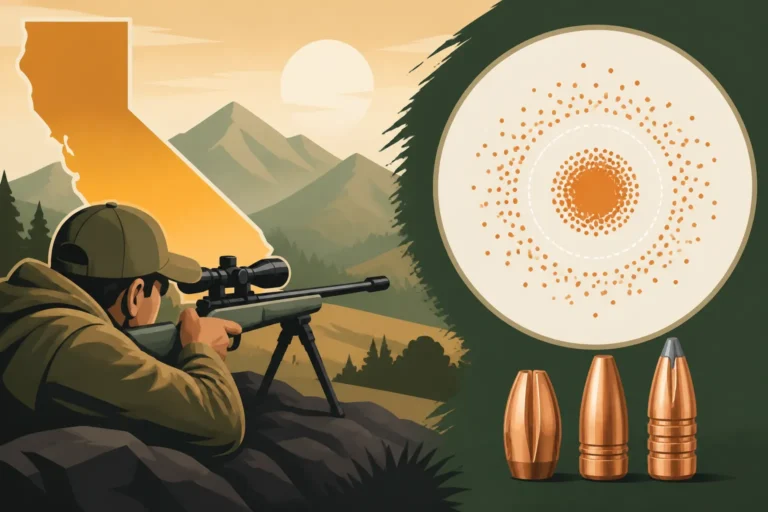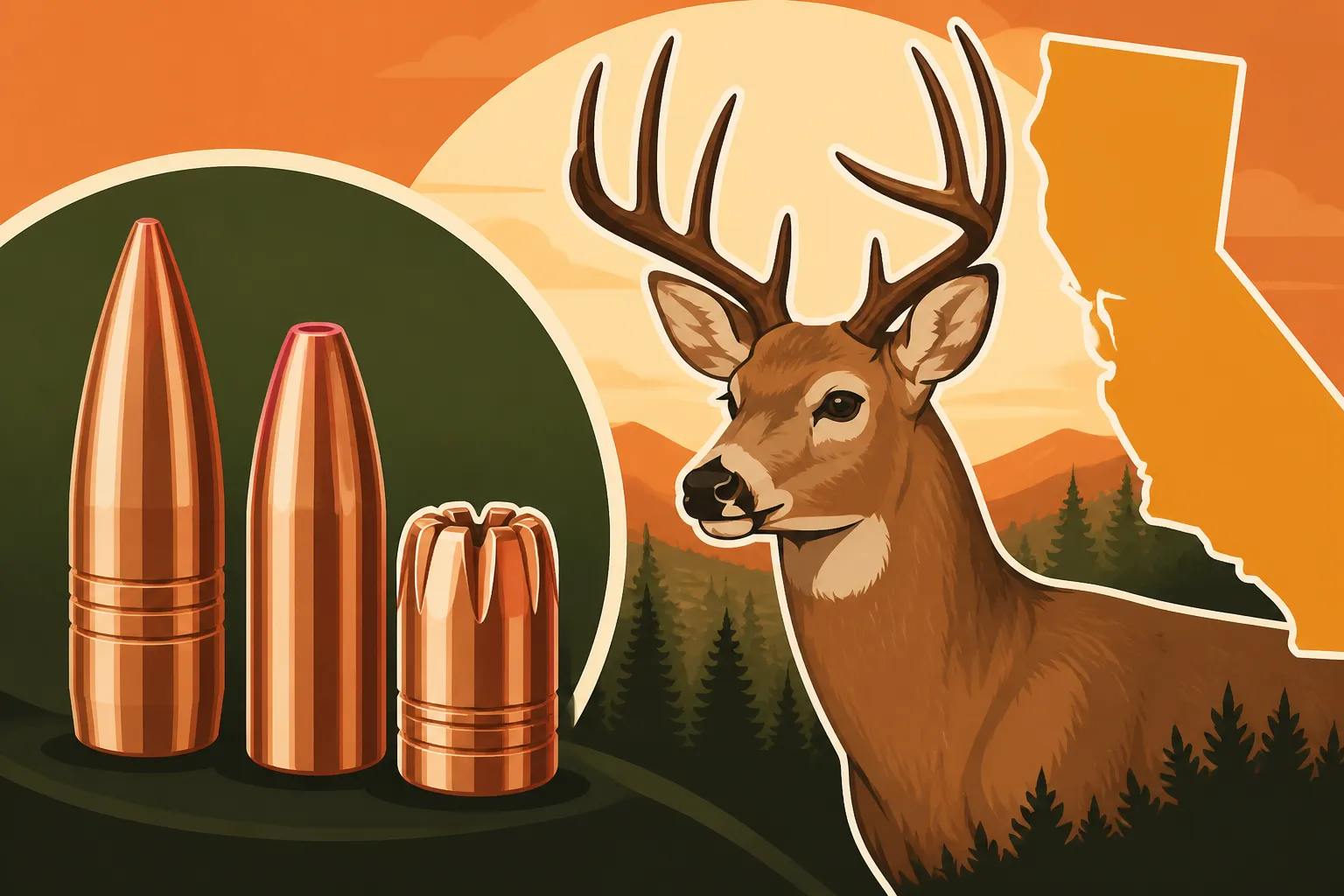
Best Non-Lead Bullet Weight for Blacktail Deer
It's tough enough trying to draw a good California blacktail tag, let alone then figuring out the perfect setup to ensure a clean, ethical harvest. One of the biggest questions that pops up is about non-lead ammunition – specifically, what's the best bullet weight to choose for blacktail deer when you can't use traditional lead. This guide will help demystify the choices, offering practical advice to help you select the ideal non-lead bullet for your next California blacktail hunt, ensuring both performance and compliance.
Understanding California's Non-Lead Mandate and Blacktail Deer
California's hunting regulations have seen some significant shifts over the years, and perhaps none as impactful as the statewide non-lead ammunition requirement. For many of us, this meant a complete re-evaluation of our go-to loads and a new learning curve for ballistics.
The Critical Shift to Non-Lead Ammunition
The transition to non-lead ammunition was a big one, driven primarily by conservation efforts to protect scavenging wildlife, like the California Condor, from lead poisoning. Before the statewide mandate, many hunters were accustomed to using traditional lead-core bullets, which performed reliably for generations. The thought of switching to a completely different bullet material, often with different ballistic characteristics, caused a lot of head-scratching and understandable frustration. It wasn't just about finding any non-lead bullet; it was about finding one that performed just as well as what we were used to, ensuring a quick and humane kill. This shift meant diving deep into new bullet designs, materials like copper or gilding metal alloys, and understanding how they interact with game. If you're new to this or just need a refresher, understanding California's Non-Lead Ammunition Requirement is crucial.
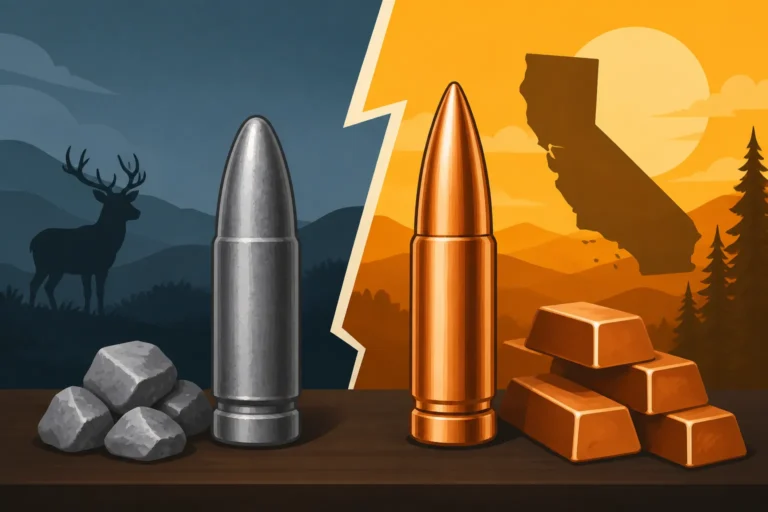
The concern wasn't unfounded. Lead bullets, known for their mass and often rapid expansion, transfer energy quickly. Non-lead bullets, typically made of copper, behave differently. They're usually monolithic, meaning they hold together extremely well, often retaining nearly 100% of their original weight. This can lead to excellent penetration but sometimes different wound channels compared to fragmenting lead bullets. This difference in terminal performance is exactly why bullet weight becomes such a critical factor – you need to ensure enough energy transfer and tissue damage to anchor a blacktail quickly.
Characteristics of California Blacktail Deer
Before we talk about bullets, let's talk about the quarry. California blacktail deer, specifically the Columbia blacktail subspecies, are generally smaller than their mule deer cousins found further east. A mature buck might weigh anywhere from 120 to 200 pounds, with some bigger specimens certainly pushing past that, especially in good habitat. They often live in thick, brushy country – coastal oak woodlands, chaparral, and the dense timber of the Sierra Nevada foothills. This habitat means shots can be relatively close, often under 150 yards, but also sometimes require reaching out across a canyon or through an open cut.
Their typical behavior also plays into bullet choice. Blacktail are notoriously wary and can be incredibly tough, especially when spooked. A well-placed shot is paramount for a quick kill and preventing a long, difficult track through dense cover. We've all heard stories of a seemingly well-hit deer that still manages to travel a surprising distance, only to disappear into a thicket. This underscores why we obsess over bullet performance – it's not about making up for poor shooting, but about maximizing the effectiveness of a good shot. When you're Hunting Coastal Range Oak Woodlands, for example, you're rarely going to get a second shot, so the first one counts immensely.
Factors Influencing Non-Lead Bullet Weight Choice
Choosing the "best" non-lead bullet weight isn't a one-size-fits-all answer. It's a blend of science, personal preference, and understanding your hunting conditions. Several factors come into play, from the inherent properties of the bullet material to your rifle's characteristics and the environment you're hunting in.
Caliber Considerations and Bullet Construction
When switching to non-lead, hunters often find that bullet manufacturers recommend slightly lighter-for-caliber options than they might have used with lead. For instance, if you traditionally shot 165-grain lead-core bullets in your .308 Winchester, you might find that a 150-grain copper bullet performs wonderfully. This isn't just about saving a few grains; it's about the material itself. Copper is less dense than lead. To achieve the same weight, a copper bullet will be longer than a lead-core bullet of identical caliber and weight. This extra length can sometimes cause stabilization issues in rifles with slower twist rates, or it might just give the bullet a different ballistic profile.
Manufacturers like Barnes, Hornady, and Nosler have invested heavily in designing non-lead bullets that perform exceptionally well. These monolithic copper bullets are engineered to expand reliably upon impact while retaining nearly all their weight, punching through bone and tissue with impressive integrity. This high weight retention means that even a slightly lighter copper bullet can often penetrate as deeply, or even deeper, than a heavier lead-core bullet that fragments significantly. For a common deer caliber like the .270 Winchester, you might typically use 130-grain or 150-grain lead bullets. With non-lead, something like a 130-grain copper bullet can be incredibly effective, maintaining speed and energy without over-penetrating or under-expanding. Similarly, for those using a 6.5 Creedmoor, a 120-130 grain copper bullet often hits the sweet spot for blacktail.
Hunting Terrain and Shot Distances
The varied landscapes of California where blacktail roam heavily influence bullet weight. If you're still-hunting dense timber in the Trinity Alps, anticipating close-range shots of 50-100 yards, a bullet that expands quickly and dumps its energy fast might be preferable. Here, a slightly lighter, faster non-lead bullet could be a great choice. Conversely, if you're glassing wide-open burn scars in a National Forest, hoping to reach out to 250-300 yards, you'll want a bullet with a higher ballistic coefficient (BC) to maintain velocity and energy over longer distances.
Bullet weight directly impacts trajectory. Lighter bullets, given the same powder charge, generally fly faster initially, but can lose energy more quickly than heavier bullets, especially if they have a lower BC. For blacktail hunting, which often involves shots within 300 yards, extreme long-range ballistics are less of a concern than consistent performance at common hunting distances. What's more important is knowing your bullet's trajectory at different ranges, which is something you'll want to verify at the shooting range. This is where tools like those found on GoHunt can be invaluable for mapping terrain and estimating distances to understand your shot opportunities better.
Personal Shooting Comfort and Rifle Twist Rate
Ultimately, the best bullet is the one you can shoot most accurately. Heavier bullets, all else being equal, will produce more recoil. While blacktail deer calibers aren't usually known for brutal recoil, a magnum cartridge with a heavy non-lead bullet could introduce flinching or poor form, leading to missed shots or poor placement. A slightly lighter bullet that allows you to maintain focus and execute a perfect shot is always preferable to a heavier one that makes you anticipate the recoil.
Beyond comfort, your rifle's barrel twist rate is a critical, often overlooked, factor for non-lead bullets. As mentioned, non-lead bullets tend to be longer than lead bullets of the same weight due to copper's lower density. Longer bullets require a faster barrel twist rate to stabilize them in flight. If your rifle has a relatively slow twist rate (e.g., 1:12" in a .308), a very long, heavy-for-caliber non-lead bullet might not stabilize properly, leading to "keyholing" or poor accuracy. Most modern hunting rifles have twist rates capable of stabilizing a wide range of common non-lead hunting bullets, but it's worth checking your rifle's specific twist rate and matching it with bullet manufacturers' recommendations. This is especially true if you are considering pushing the upper limits of bullet weight for your caliber.
Recommended Non-Lead Bullet Weights for Blacktail Deer
After considering the unique properties of non-lead ammunition and the typical characteristics of California blacktail, we can start to narrow down some general recommendations for bullet weights. Keep in mind, these are starting points; your rifle and your specific hunting style will dictate the ultimate "best" choice.
General Guidelines by Caliber
For common blacktail deer calibers, hunters have found good success with non-lead bullets that provide a balance of velocity, expansion, and penetration. Here’s a general breakdown:
- .270 Winchester: Many hunters find excellent performance with 130-grain non-lead bullets. These tend to be fast, flat-shooting, and offer reliable expansion on blacktail. While 150-grain non-lead options exist, the 130-grain often provides a better blend for the typical blacktail shot, as discussed in Best Non-Lead Bullet for a .270.
- .308 Winchester: For this popular and versatile caliber, 150-grain or 165-grain non-lead bullets are excellent choices. The 150-grain will generally offer higher velocity, which can be beneficial for flatter trajectory in open country. The 165-grain provides a bit more mass for potentially deeper penetration on larger bucks or for breaking bone.
- 6.5 Creedmoor: This cartridge shines with non-lead bullets in the 120-grain to 130-grain range. These bullets leverage the Creedmoor's efficiency and excellent ballistic profiles, delivering plenty of energy for blacktail at moderate to longer ranges.
- 30-06 Springfield: As a slightly more powerful .30-caliber, the 30-06 can handle a broader range. Non-lead bullets from 150-grain to 180-grain will work. A 165-grain non-lead option often provides a great blend of speed and mass for the 30-06 on blacktail.
It's important to reiterate that these are general recommendations. The specific design of the bullet from companies like Federal, Barnes, Hornady, or Nosler will also impact performance. For instance, a Barnes TTSX (Tipped Triple-Shock X-Bullet) is designed for maximum weight retention and deep penetration, while a Hornady GMX (Gilding Metal eXpanding) or CX (Copper eXcavator) is also designed for reliable expansion and high weight retention.
Here’s a quick reference table:
| Caliber | Common Lead-Core Weights (grains) | Recommended Non-Lead Weights (grains) | Performance Notes |
|---|---|---|---|
| .270 Winchester | 130, 150 | 130-140 | Fast, flat, reliable expansion. Good balance for blacktail. |
| .308 Winchester | 150, 165, 180 | 150-165 | Versatile. 150gr for speed, 165gr for deeper penetration. |
| 6.5 Creedmoor | 120, 140 | 120-130 | Excellent ballistics, efficient. Ideal for moderate to longer shots on blacktail. |
| .30-06 Springfield | 150, 165, 180 | 165-180 | Powerful. 165gr for all-around, 180gr for heavier bone or dense timber. |
| 7mm Rem Mag / .300 WM | 150, 160, 180 | 150-160 (7mm); 165-180 (.300) | Overkill for blacktail, but if used, mid-range weights offer sufficient performance with less recoil. |
The Importance of Testing and Practice
Picking a bullet weight from a table is just the first step. The absolute most crucial step is taking that ammunition to the range and testing it thoroughly in your rifle. Every rifle is an individual, and what shoots well in one .308 might not in another. You need to verify accuracy at various hunting distances – not just 100 yards. This is where you confirm your rifle's zero with the new non-lead load and learn your bullet drop. It's often surprising how different non-lead loads can be from lead-core equivalents, even with similar weights.
When you're at the range, don't just shoot for groups. Practice shooting from various field positions you might encounter while hunting blacktail. Practice quick target acquisition. Understanding How Non-Lead Bullets Pattern at Long Range is essential, especially if you anticipate a longer shot in open country. Remember that while non-lead bullets retain more weight, their expansion characteristics and energy transfer can be different. The only way to truly trust your setup is to put in the time at the bench and from field positions. GoHunt's resources can also guide you to public shooting ranges or private land options if you're looking for new places to practice.
Beyond Bullet Weight: Shot Placement and Ethics
No matter how perfectly engineered your non-lead bullet is, it cannot compensate for poor shot placement. An ethical hunter strives for a quick, humane kill every single time. This means placing your shot in the vital zone – the heart and lungs – which are typically a fairly small target on a blacktail deer. Even the heaviest, most potent bullet, if poorly placed, will result in a wounded animal and a potentially lost deer, which is the worst outcome for everyone involved.
Focus on your shooting fundamentals: breath control, trigger squeeze, and follow-through. Knowing your rifle and ammunition intimately, combined with disciplined shooting, will greatly increase your chances of success. A 130-grain non-lead bullet through both lungs is infinitely more effective than a 180-grain non-lead bullet in the gut. Always take the cleanest shot available, and if in doubt, wait for a better opportunity. This commitment to shot placement and ethical hunting is truly what defines a responsible hunter.
Sourcing and Preparing for Your Non-Lead Hunt
Making the switch to non-lead requires a bit more planning than simply grabbing a box of traditional ammo off the shelf. Availability, cost, and understanding the ballistic differences are all part of the preparation process.
Finding Approved Non-Lead Ammunition
The initial rollout of the non-lead mandate created some headaches for hunters. Many found their favorite brands and loads were either unavailable in non-lead versions or were difficult to find in stock. While availability has improved significantly over time, it can still be a challenge to find specific non-lead loads, especially for less common calibers or during peak hunting season. This is where a little foresight goes a long way.
Start looking for your ammunition well in advance of the season. Check with local sporting goods stores, but also explore online retailers. Many manufacturers now clearly label their non-lead offerings, and specialized hunting forums or communities can be great resources for recommendations and availability updates. You might find yourself needing to order your ammunition online, which can take time for shipping and FFL transfers if required in your area. Finding Non-Lead Ammo in Stock Before Season is a common challenge, but being proactive can save you a lot of stress. When you do find a load that works for your rifle, consider stocking up on a few boxes to ensure consistency for future seasons, especially since specific product lines can change.
Ballistics and Trajectory with Non-Lead
As we've touched on, non-lead bullets, particularly monolithic copper, have different ballistic properties than their lead-core counterparts. They might have a different muzzle velocity, a different ballistic coefficient (how aerodynamically efficient they are), and therefore a different trajectory. This is why it's absolutely critical to re-zero your rifle with your chosen non-lead load, even if the bullet weight is the same as your old lead-core load.
You can't just assume your rifle will shoot the new ammunition to the same point of impact. Take the time to confirm your zero and then shoot at various distances out to your practical hunting range. Use a rangefinder to verify distances to targets. Learning your new bullet's drop at 200, 300, and even 400 yards will give you the confidence you need in the field. Many ballistics calculators, including those integrated into advanced hunting apps or websites like GoHunt, can help you model these trajectories once you have your rifle's specific data (muzzle velocity, bullet BC, scope height). This preparation is fundamental to ensuring your aim is true, whether you're taking a shot across a Sierra canyon or in a brushy patch. Planning your shots with an understanding of Wind and Thermals in Steep Sierra Country is critical, and knowing your bullet's exact trajectory will allow you to make better adjustments.
Disclaimer
This article is for general informational purposes only and does not constitute professional advice. Laws, prices and regulations vary by location and change over time. Consult a qualified professional for guidance on your specific situation.