Which Non-Lead Bullets California Approves
The shift to non-lead ammunition in California has, understandably, left many hunters scratching their heads, feeling frustrated by the extra hoops to jump through just to enjoy their passion. It's a whole new ballgame when you've been using tried-and-true lead loads for years, and suddenly you need to figure out what's legal, what works, and what won't break the bank. This comprehensive guide is here to cut through the confusion, clearly outlining which non-lead bullets California approves for hunting, and equipping you with the knowledge to confidently choose your next box of ammo.
The Mandate: Why California Went Lead-Free for Hunting
For many of us, the idea of changing ammunition types feels like a bureaucratic hurdle, but understanding the root causes behind California's non-lead mandate can help shed some light on why this change was implemented across the state. It's more than just a passing regulation; it's a long-term conservation effort.
The Environmental Rationale and Condor Protection
The driving force behind California's statewide non-lead ammunition requirement is primarily environmental conservation, particularly the protection of scavengers. The concern revolves around lead fragmentation from bullets used in hunting. When a lead bullet strikes game, it can fragment into tiny pieces, contaminating the carcass or gut pile left behind in the field. Scavengers, such as eagles, hawks, and especially the critically endangered California Condor, feed on these remains and can inadvertently ingest these lead fragments.
This ingestion leads to lead poisoning, which is a serious, often fatal, condition. Condors, in particular, are highly susceptible due to their foraging habits and slow reproductive rates, making every individual bird crucial to the species' survival. The statewide ban, which fully went into effect in 2019, was the culmination of years of effort, stemming from earlier regional restrictions in areas where condor populations were attempting to recover. It's a direct response to scientific evidence linking lead ammunition use to condor mortality. For a deeper dive into the origins of this regulation, you might want to read up on California's Condor-Driven Ammunition Law.
What "Non-Lead" Actually Means to CDFW
When the California Department of Fish and Wildlife (CDFW) talks about "non-lead" ammunition, they're referring specifically to the projectile itself, not the cartridge casing. This distinction is crucial. You can still use brass casings, which often contain trace amounts of lead, as long as the bullet seated within that casing is composed entirely of non-lead materials. The primary approved non-lead materials for bullets are copper or copper alloys.
The CDFW maintains a publicly available list of certified non-lead ammunition. This list is a vital resource for any hunter in California, as it details specific bullet types, weights, and even some factory-loaded cartridges that have been verified to meet the state's stringent requirements. While many manufacturers have quickly adapted, it's always your responsibility to ensure the ammunition you're using for hunting is on this approved list or clearly marked as non-lead by the manufacturer and meets the material criteria. Ignorance of the law, as they say, is no excuse in the field.
Deciphering Non-Lead Projectile Types for Big Game
When you start looking at non-lead options for big game hunting, you'll quickly notice a prevalence of certain materials and designs. The vast majority of approved big game bullets fall into the category of monolithic projectiles, primarily copper. These aren't just a simple substitute for lead; they represent a significant advancement in bullet technology.
Monolithic Copper and Copper Alloy Bullets
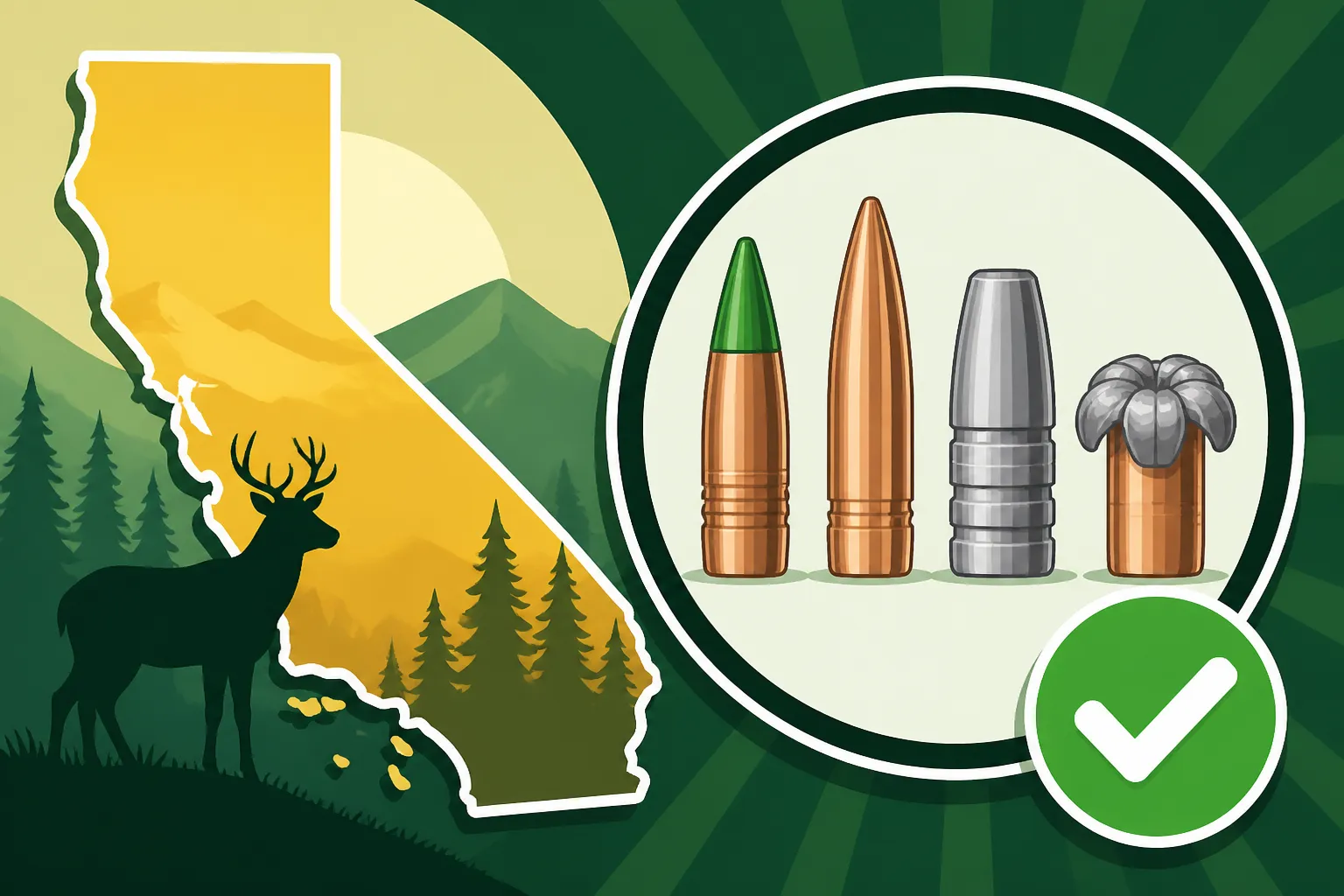
Monolithic copper bullets are the workhorse of California's lead-free big game hunting. Unlike traditional lead-core bullets that are jacketed with copper, these projectiles are machined from a single piece of copper or a copper alloy. Brands like Barnes VOR-TX (TSX, TTSX, LRX), Hornady GMX and CX, Federal Trophy Copper, and Nosler E-Tip are incredibly popular and reliable choices that dominate this market segment. These designs prioritize weight retention and deep penetration, which are critical for effective and ethical harvesting of game.
What makes these bullets stand out is their controlled expansion. Upon impact, the nose of the bullet peels back into sharp petals, creating a wide wound channel while the majority of the bullet's mass remains intact. This high weight retention means the bullet carries more energy deeper into the animal, often resulting in complete pass-throughs. A pass-through shot is highly desirable for creating two wound openings, which typically leads to a more pronounced blood trail, making game recovery much easier, especially in dense California chaparral or timber. Hunters often find these bullets perform exceptionally well for Best Non-Lead Bullets for California Deer-Sized Game and are equally capable for larger animals, making them an excellent choice if you're targeting Best Non-Lead Bullets for Elk-Sized Game. Compared to bismuth, which is more commonly found in shotgun loads, copper is the clear champion for rifle projectiles due to its ballistic properties and terminal performance, a key distinction when discussing Copper Versus Bismuth Ammunition.
Other Innovative Lead-Free Rifle Designs
While monolithic copper bullets are the most prevalent, manufacturers are always innovating to offer diverse non-lead options. Some companies have explored other lead-free alloys or designs that incorporate materials like tin or tungsten, though these are less common for traditional rifle bullets in the big game hunting market. The goal is to replicate or even improve upon the ballistic performance and terminal effects that hunters have come to expect from lead-core bullets, without the environmental impact.
For instance, some manufacturers have developed hollow-point designs in copper or brass that expand reliably at a wider range of velocities. These can be particularly useful for calibers that might struggle to achieve the high velocities needed for consistent expansion with some monolithic copper designs, or for hunters who prefer a different terminal performance profile. When you're choosing, it's not just about "copper vs. lead" anymore; it's about understanding the nuances of different non-lead constructions and how they perform in your specific rifle and for the game you're pursuing. Always cross-reference your chosen ammunition with the CDFW's approved list to ensure full compliance before heading out into the field.
Non-Lead Options Beyond Big Game Rifles
The non-lead mandate in California isn't just about deer and elk rifles; it extends to virtually all hunting with firearms. This means shotgunners, handgun hunters, and even muzzleloader enthusiasts have had to adapt to the lead-free requirements. The good news is that manufacturers have risen to the challenge, providing a wide array of specialized non-lead options for these applications as well.
Approved Shotgun Slugs and Birdshot
For shotgun hunters, the transition to non-lead has been a familiar one for some species for a long time, particularly for waterfowl. Steel shot has been the mandated non-toxic choice for duck and goose hunting nationwide for decades. In California, this extends to upland game and all shotgun hunting. For species like ducks and geese in the Central Valley flyway, steel shot remains the most common and cost-effective option. It performs admirably, especially with modern wads and choke tubes designed to handle its characteristics.
However, steel shot isn't the only player. Premium alternatives like bismuth, tungsten-alloy, and even blended shots offer superior knockdown power, longer ranges, and are often gentler on older shotgun barrels not rated for steel. These can be excellent choices for situations where you need a bit more reach or when hunting with a cherished heirloom shotgun. For those pursuing deer or wild pigs with a shotgun, non-lead slugs are readily available. These typically consist of solid copper or copper alloy slugs, much like their rifle counterparts, designed for deep penetration and reliable expansion. You can find excellent options from companies like Federal, Winchester, and Remington in various gauges. If you're planning on chasing quail in California's foothills or targeting doves, you'll want to ensure you're stocked up on Non-Lead Shotgun Loads for Upland Birds.
Muzzleloaders and Handguns in a Lead-Free World
Muzzleloader hunters faced a unique challenge with the non-lead requirement, as traditional round balls and patched lead conicals were the norm. Fortunately, manufacturers have developed innovative solutions. Today, you can find a variety of non-lead muzzleloader projectiles, primarily made from copper or similar alloys. These often come in the form of pre-saboted bullets, where a plastic sabot holds a smaller diameter copper bullet, allowing it to be loaded down the bore of a larger caliber muzzleloader.
These modern non-lead muzzleloader bullets offer excellent ballistics and terminal performance, often outperforming traditional lead projectiles in terms of accuracy and wound channel. The key is to find a sabot and bullet combination that your specific muzzleloader prefers and to practice extensively with it. For more detailed information on options, check out Non-Lead Options for Muzzleloaders. Handgun hunters, particularly those pursuing wild pigs, also need to comply. Many popular hunting handgun calibers now have dedicated non-lead offerings. These are typically solid copper or copper alloy projectiles designed for reliable expansion and deep penetration, suitable for taking down game ethically at handgun distances. Like rifle and shotgun ammunition, these options are widely available from major manufacturers and should be chosen carefully based on your handgun and the game you're hunting. Exploring Non-Lead Handgun Ammunition Options will give you a better sense of what's available.
Practical Considerations for Switching to Non-Lead
Making the switch to non-lead ammunition isn't just about buying a different box of bullets; it involves a few practical steps and adjustments to ensure you're just as effective and ethical in the field as before. It's an investment in your hunting success and in conservation.
Recalibrating Your Expectations and Your Rifle
One of the biggest hurdles for hunters transitioning to non-lead is often adjusting to different ballistic characteristics. Non-lead bullets, particularly the monolithic copper designs, are generally lighter for their given caliber compared to lead-core bullets of the same overall length, or they might be longer if they match the weight. This difference in density can affect everything from muzzle velocity and trajectory to how your rifle groups. It's not uncommon for a rifle perfectly sighted in with lead ammunition to shoot a different point of impact with non-lead loads.
This means re-zeroing your rifle is absolutely essential. You cannot simply swap out lead for non-lead and expect the same results. Take the time to get to the range, shoot several groups, and confirm your new point of impact with your chosen non-lead ammunition. Understand your new ballistic drops at various distances and adjust your scope's turrets or holdovers accordingly. Websites and apps like GoHunt can be invaluable resources here, often providing ballistic calculators that allow you to input your specific bullet data to predict trajectories. This meticulous process of Zeroing a Rifle for Non-Lead Loads is not a suggestion; it's a mandatory step for responsible and ethical hunting. It also means practicing from various positions and at different ranges, just as you would with any new load, to build confidence in your setup.
Finding and Affording Your Preferred Ammunition
Let's be real: Non-Lead Ammo Availability and Cost can be a significant concern for many hunters. Copper bullets and other non-lead alternatives often carry a higher price tag per round than their lead counterparts. This is due to the materials themselves (copper can be more expensive than lead) and the more complex manufacturing processes involved in machining monolithic bullets. Don't let the price deter you from proper practice, however; consider buying in bulk when you find a good deal, or at least enough for sighting in and a season's worth of hunting.
Finding particular brands or calibers can also sometimes be a challenge, especially right before popular hunting seasons. Stores might have limited stock, and certain niche calibers might be harder to come by. My advice for Finding Non-Lead Ammo in Stock Before Season is to start looking early—like, really early. Don't wait until August to buy your deer rifle ammo. Check local sporting goods stores like Bass Pro Shops or Sportsman's Warehouse, but also explore Ordering Non-Lead Ammo Online for California through reputable retailers. Many online vendors ship directly to your door (or to a local FFL if required by specific state or local laws for certain ammo types, though usually not for standard rifle/shotgun ammo). Sign up for in-stock notifications, and be flexible with brands if your first choice isn't available. Understanding Why Copper Bullets Cost More Than Lead can help manage expectations, but the market has largely adapted, and options are plentiful if you plan ahead.
Performance and Ethical Hunting with Non-Lead
Despite initial skepticism from some hunters, modern non-lead ammunition has proven its capability in the field. The key to ethical hunting always lies in proper shot placement, and non-lead bullets are designed to facilitate this with consistent, reliable terminal performance.
Terminal Ballistics and Ethical Harvest
One of the most common concerns about non-lead ammunition is its terminal performance: "Will it kill as quickly and cleanly as lead?" The answer, unequivocally, is yes, provided you select the right bullet and place your shot accurately. Modern copper and copper alloy bullets are engineered for excellent expansion and incredible weight retention. Unlike lead-core bullets that can shed significant weight through fragmentation, monolithic copper bullets typically retain 95% or more of their original weight.
This high weight retention, combined with controlled expansion, means deep, straight-line penetration through tissue and bone. The result is a wide wound channel and often complete pass-throughs, which deliver maximum energy transfer to the animal and, as mentioned before, provide two holes for a more robust blood trail. For example, a Barnes TTSX hitting a deer at 200 yards will often mushroom perfectly and exit the far side, creating an exit wound that helps drain blood and makes tracking easier. This is paramount for an ethical harvest, ensuring the animal is dispatched quickly and can be recovered efficiently. It reinforces that while the material has changed, the principles of precision and bullet effectiveness remain at the heart of responsible hunting.
Hunter Responsibility and Adaptation
Ultimately, the responsibility for an ethical and successful hunt rests with the hunter. Adapting to California's non-lead requirement means embracing that responsibility. This involves more than just buying the right box of bullets; it means investing time at the range, Sighting In Before Switching to Non-Lead, and truly understanding how your chosen non-lead ammunition performs out of your rifle.
It's about practicing shot angles, practicing at varying distances, and becoming intimately familiar with the new ballistic profile. Hunters have always adapted to new technologies, whether it was changing from black powder to smokeless, or from iron sights to scopes. The transition to non-lead is simply another evolution in hunting. Resources, including online forums, manufacturer websites, and hunting apps like those found on GoHunt, offer a wealth of information and fellow hunter experiences to help you make informed decisions and refine your skills. By doing your due diligence and committing to practice, you can continue to enjoy hunting in California, secure in the knowledge that you are complying with regulations and maintaining the highest standards of ethical hunting.
| Non-Lead Bullet Material | Primary Use Cases | Key Characteristics |
|---|---|---|
| Monolithic Copper | Rifles (Big Game), Handguns, Slugs | High weight retention, deep penetration, controlled expansion, consistent performance, less fragmentation |
| Steel | Shotguns (Waterfowl, Upland Game) | Cost-effective, good for dense patterns, lighter than lead/bismuth, may require specific chokes, less dense |
| Bismuth | Shotguns (Waterfowl, Upland Game) | Non-toxic, softer than steel (safer for older barrels), good density, more expensive than steel, performs closer to lead |
| Tungsten Alloy | Shotguns (Waterfowl, Upland Game) | Very dense, excellent range and knockdown power, very expensive, hardest shot material |
| Copper Alloy | Rifles (Big Game), Handguns, Slugs | Similar to monolithic copper, slight variations in hardness/expansion based on alloy composition |
Disclaimer
Please note that hunting regulations, including those concerning ammunition, are subject to change. Always consult the most current California Department of Fish and Wildlife (CDFW) regulations before engaging in any hunting activities. This article is intended for informational purposes only and should not be considered legal advice.