Copper Versus Bismuth Ammunition
Navigating California's hunting regulations can feel like trying to hit a moving target sometimes, especially when it comes to ammunition. The statewide shift to non-lead projectiles has fundamentally changed how we prepare for a hunt, leaving many of us scratching our heads and wondering which options actually perform in the field. This comprehensive guide is here to demystify the two primary non-lead contenders—copper and bismuth—helping you understand their unique properties, their best applications, and how to make the most informed choices for your California hunting adventures.
The California Non-Lead Mandate: Why We're Talking Copper and Bismuth
The mandate requiring the use of non-lead ammunition for all hunting statewide in California has been a significant change, and it's one that hunters have had to adapt to. It wasn't just a casual suggestion; it became the law, and understanding the 'why' behind it helps us appreciate the options we now have. For many years, traditional lead ammunition was the go-to, tried and true, but environmental concerns brought about this sweeping shift.
The initial rollout of the lead ban was met with a mix of confusion, frustration, and a good deal of speculation about how these new projectiles would perform. Hunters are, by nature, practical people, and anything that impacts the reliability and effectiveness of our gear warrants serious attention. This isn't just about complying with a rule; it's about ensuring an ethical and clean harvest every time we pull the trigger.
Understanding the Environmental Imperative
The driving force behind California's non-lead ammunition requirement is rooted in conservation, specifically concerning wildlife that are susceptible to lead poisoning. Scavenger species, like the iconic California Condor, were identified as being particularly vulnerable. These magnificent birds, along with eagles and other raptors, often feed on the carcasses or gut piles left by hunters. If those animals were harvested with lead bullets, fragments of lead could remain in the carrion, which the condors would then ingest. Even tiny lead fragments can lead to debilitating and often fatal poisoning for these protected species.
It's a complex ecological issue, and while not every hunter agreed with the blanket ban initially, the intention was to safeguard wildlife populations, especially those on the brink of recovery. The science pointed to a clear link between lead fragments in the environment and wildlife mortality. This is why the state took such a decisive step, moving away from a long-standing tradition to embrace a new era of ammunition technology. For more details, you can explore California's Condor-Driven Ammunition Law.
The Practical Impact on Hunters
For hunters, this shift wasn't just about buying different ammo; it forced a re-evaluation of everything from rifle zero to shot placement. Many of us had spent decades honing our skills with lead-core bullets, understanding their ballistic properties and terminal performance intimately. Suddenly, we were asked to switch to a material with different characteristics. This led to concerns about availability, cost, and, perhaps most importantly, how well these new bullets would actually perform on game.
The learning curve was real. Hunters had to find new loads that grouped well in their rifles, learn how these lighter-for-caliber, monolithic bullets expanded, and adjust their shooting habits accordingly. There was a period of trial and error, a lot of range time, and plenty of discussions around campfires about what worked and what didn't. This mandate spurred innovation in the ammunition industry, but it also placed the onus on hunters to educate themselves and adapt their practices to ensure continued ethical and successful hunting experiences in California. This is where understanding copper and bismuth truly comes into play, as they represent the primary solutions to this challenge.
Decoding Copper Ammunition: The Workhorse of Non-Lead Hunting
When California made the full transition to non-lead ammunition, solid copper projectiles quickly rose to prominence as the primary solution for rifle hunters. It wasn't a completely new technology, but its widespread adoption meant many manufacturers ramped up production and continued to refine their designs. For most big game species, from blacktail deer in the coastal range to a high-country mule deer, copper is often the first, and best, choice.
Many hunters, myself included, were initially skeptical, wondering if these "new" bullets could truly replicate the knockdown power and reliable expansion we'd come to expect from lead. What we've found, through extensive field testing and experience, is that modern copper bullets are incredibly effective when matched correctly to the game and the rifle. They've earned their reputation as the workhorse for a reason, providing consistent performance for the majority of California's big game hunting scenarios.
Solid Copper Projectiles: Characteristics and Performance
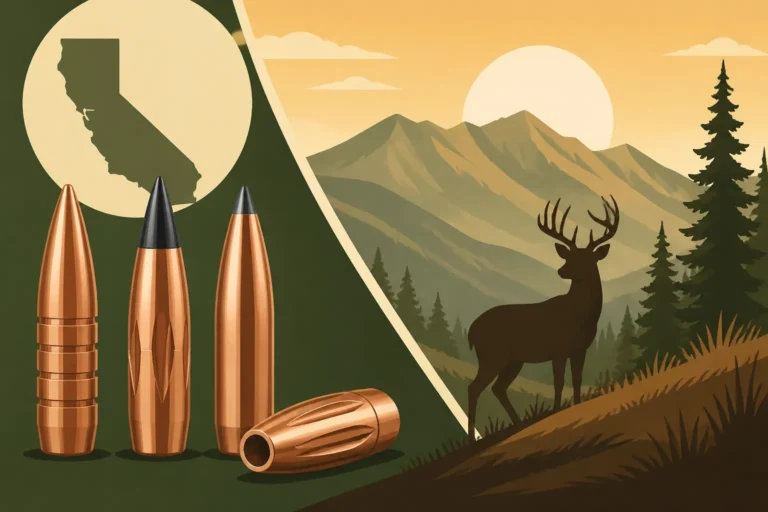
Solid copper bullets are typically monolithic, meaning they are machined or pressed from a single piece of copper or a copper alloy. Unlike traditional lead-core bullets that rely on a jacket to hold a lead core, copper bullets are designed to expand in a controlled, petal-like fashion. This design ensures extremely high weight retention, often retaining 95% or more of their original weight, even after passing through dense tissue and bone. This characteristic is a major advantage, as it means the bullet carries more energy deeper into the animal, increasing the likelihood of a clean pass-through and a quicker, more humane harvest.
Because copper is less dense than lead, a copper bullet of the same weight will be longer than its lead counterpart. This increased length can affect ballistic coefficients and require different twist rates in some rifles to stabilize them effectively. However, the superior weight retention often compensates for any perceived loss in initial momentum. The expansion is generally reliable across a wide range of impact velocities, creating a devastating wound channel while minimizing fragmentation, which was the original intent of the lead ban. Brands like Barnes, Hornady, and Nosler have invested heavily in developing and perfecting these designs.
Ballistics and Terminal Performance Considerations
The ballistic characteristics of solid copper bullets can differ noticeably from lead-core bullets. Because they are typically lighter for their physical size due to copper's lower density, they might have a slightly flatter trajectory at shorter ranges but can drop off more quickly at extended distances if not matched to velocity. This means hunters need to re-zero their rifles and understand the specific drop charts for their chosen non-lead load. Many hunters using tools like those offered by GoHunt for planning and scouting will also utilize their ballistic calculators to truly dial in these new loads. Getting a solid zero at 100 or 200 yards and then verifying impacts at longer ranges is absolutely critical. For more information on this, check out Zeroing a Rifle for Non-Lead Loads.
When it comes to terminal performance, copper bullets often shine with deep penetration. This is especially beneficial for larger game animals or when shots might encounter bone. The mushrooming "petals" create a wide wound channel, while the intact base of the bullet drives through, typically exiting the animal. This pass-through often creates two wound channels (entry and exit), increasing blood trails and making recovery easier. Hunters often find that shot placement becomes even more paramount with copper, aiming for the vitals to maximize the bullet's excellent penetrating and expanding qualities. Knowing Best Non-Lead Bullets for California Deer-Sized Game and Best Non-Lead Bullets for Elk-Sized Game is key.
Common Calibers and Availability
Copper ammunition is widely available across a vast array of common hunting calibers today, which is a huge relief for California hunters. Whether you're shooting a .270, .308, 30-06, or a 6.5 Creedmoor, you can almost certainly find a suitable non-lead copper load. Manufacturers quickly adapted to the demand, ensuring that popular cartridges have multiple copper bullet options from various brands. This means that while selection might not be as vast as it once was for lead, the choices are more than adequate for most hunting situations.
For instance, a hunter pursuing a blacktail in Zone A might opt for a 130-grain copper bullet in their .270, knowing it will perform reliably. Someone heading into the high country for mule deer might choose a slightly heavier 168-grain copper bullet in their .308 for better performance at longer ranges. Non-Lead Load Options for .308 Hunters are plentiful. The widespread adoption means that most well-stocked sporting goods stores, as well as online retailers, carry a good inventory of copper ammunition. While costs can be a bit higher than comparable lead loads, the increased availability has helped stabilize prices somewhat since the initial transition. Always check Non-Lead Ammo Availability and Cost before season.
Exploring Bismuth Ammunition: The Modern Alternative
While copper reigns supreme for most rifle hunting in California, bismuth ammunition carves out its own niche, primarily in the world of scatterguns. For hunters pursuing waterfowl, upland birds, or even small game with a shotgun, bismuth presents a fantastic non-toxic alternative to lead shot. It offers performance characteristics that are quite similar to lead, making it a favorite among bird hunters who lament the harsher properties of steel shot.
Bismuth isn't as new to the non-lead scene as some might think; it's been around for a while, particularly in areas with waterfowl hunting restrictions. However, with California's universal non-lead mandate, its importance as a viable and effective option has grown significantly for all shotgun hunting. It’s a softer, denser material than steel, which translates to a more forgiving shooting experience and better energy retention downrange.
Bismuth's Composition and Role in Hunting
Bismuth is a brittle, silvery-pink metal that, when alloyed with other metals like tin, becomes malleable enough to form into shotgun pellets. Critically, bismuth has a density very close to that of lead. This is its significant advantage over steel shot. Lead, being very dense, carries its energy well and penetrates effectively. Steel, being lighter, requires larger shot sizes and higher velocities to achieve similar energy levels, which can also lead to increased recoil. Bismuth, by closely mimicking lead's density, allows hunters to use smaller shot sizes than steel for the same target, achieving denser patterns and better kinetic energy transfer.
Its primary role in hunting is as a non-toxic substitute for lead shot in shotguns. For years, waterfowl hunters have been required to use non-toxic shot, and steel became the most common choice. However, many hunters found steel to be lacking in certain areas—it's harder on older barrels, patterns differently, and often results in less consistent kills due to its lighter weight. Bismuth offers a compelling middle ground, providing a non-toxic option that behaves much more like the lead shot that generations of hunters grew up with.
Performance in Upland and Waterfowl Scenarios
In the field, bismuth performs admirably for both upland birds and waterfowl, often exceeding the expectations of hunters accustomed to steel. For waterfowl, its increased density and softer nature mean less wind drift and more reliable penetration on ducks and geese. You can often drop down a shot size compared to steel and still achieve excellent results, allowing for more pellets in the pattern and a greater chance of hitting vital areas. This can be a game-changer when pass-shooting geese on a chilly morning or decoying mallards on flooded rice fields in the Central Valley. Many waterfowl enthusiasts who utilize tools like those from GoHunt for understanding migration patterns and weather impacts on flight, also delve deep into ballistics data for their bismuth loads to maximize their success.
For upland birds like California valley quail or pheasants, bismuth is a joy to shoot. Its softer nature means less potential for damage to game birds (less likely to shatter bones or create excessive bruising compared to harder steel shot). The patterns are often tighter and more consistent than steel, making clean kills more achievable, especially at the edge of typical shotgun range. This means fewer wounded birds and more delicious meals. Hunters who chase fast-flying doves during the September opener also appreciate the improved effectiveness of bismuth over lighter steel loads, particularly on those longer crossing shots. Steel Shot Versus Bismuth for Upland Birds provides more detail.
Cost and Availability Factors
Here's where bismuth can present a bit of a challenge: cost and, at times, availability. Bismuth is generally more expensive to produce than steel, and as a result, bismuth ammunition usually carries a higher price tag. This can be a consideration, especially for hunters who go through a lot of shells in a season. However, for those who value the performance and handling characteristics that closely mimic lead, many find the investment worthwhile, especially for special hunts or when targeting particularly prized game birds.
Availability has steadily improved since the California mandate, but it might still be less ubiquitous than copper rifle ammunition or even steel shotgun shells. Major ammunition manufacturers offer bismuth loads, but you might need to seek them out at larger sporting goods stores or order them online. It's always a good idea to stock up well before your season begins, especially if you have a favorite load or shot size. Despite the cost, for many passionate bird hunters in California, bismuth represents the best compromise between environmental responsibility and effective, ethical hunting.
Head-to-Head: Copper vs. Bismuth for California Hunters
Now that we've looked at copper and bismuth individually, let's put them side-by-side to really understand where each excels and where their paths diverge. It's not a question of which one is "better" overall, but rather which is better suited for specific hunting applications within California's non-lead regulations. Understanding these differences is crucial for making informed gear choices and ensuring you're compliant and effective in the field.
The state's lead ban wasn't a one-size-fits-all solution, and neither are these non-lead ammunition types. Your choice will depend heavily on the game you're pursuing and the firearm you're using. This comparative analysis will help clarify those distinctions, enabling you to select the right tool for the job.
Direct Comparison: Rifles vs. Shotguns
The most fundamental difference between copper and bismuth ammunition in California hunting boils down to the type of firearm they're designed for and, consequently, the game they're best suited to.
| Feature | Copper Ammunition (Rifle) | Bismuth Ammunition (Shotgun) |
|---|---|---|
| Primary Use | Big game hunting (deer, elk, bear, pigs) | Waterfowl, upland birds, small game (shotguns only) |
| Projectile Type | Monolithic bullet (single solid piece) | Pellets (many small spherical pieces) |
| Weight Retention | Excellent (95%+), deep penetration | Good density, better energy than steel shot, less penetration than copper bullets |
| Expansion/Pattern | Controlled, mushrooming expansion for wound channel | Dense, consistent patterns for multiple hits on moving targets |
| Density (relative to lead) | Less dense (requires longer bullets for same weight) | Very close to lead (similar ballistic performance) |
| Hardness | Very hard, designed to hold shape | Softer than steel, less barrel wear, less game damage |
| Typical Cost | Generally moderate to high | Generally high (more than steel, often more than copper rifle bullets) |
| Ethical Aspect | Minimizes lead fragmentation for scavengers | Non-toxic alternative to lead shot for birds and small game |
As you can see, copper is overwhelmingly the choice for rifles. Its design as a monolithic projectile is specifically engineered for penetration and controlled expansion on larger, tougher game. Bismuth, on the other hand, excels as a shot material, leveraging its density to deliver effective patterns on birds and small game, where multiple, smaller projectiles are desired. You wouldn't typically use copper shot for waterfowl, nor would you use bismuth bullets in a rifle for deer. Each has its distinct role.
Terminal Performance and Ethical Harvest
Terminal performance refers to how a bullet or shot performs upon striking an animal. For copper rifle bullets, this means reliable expansion and deep penetration. A well-placed copper bullet is designed to create a significant wound channel and exit the animal, maximizing hemorrhage and increasing the chances of a quick, humane kill. The high weight retention means it maintains its mass and energy, driving through tissue and bone with authority. This is crucial for an ethical harvest, especially on animals like deer or wild pigs.
Bismuth shot operates on a different principle. For birds, ethical harvest relies on delivering enough pellets with sufficient energy to critical areas (head, neck, vitals) to cause rapid incapacitation. Bismuth's density allows it to transfer more kinetic energy than steel shot of the same size, resulting in better penetration and more reliable kills at typical shotgun ranges. It's less prone to "prick" birds, meaning fewer wounded flyers that escape. Both materials, when used correctly, support the ethical imperative of harvesting game cleanly and efficiently, which is a core tenet of responsible hunting.
Recoil, Cost, and Accessibility
These practical considerations often influence a hunter's choice.
Recoil: Copper rifle ammunition generally produces similar recoil to lead-core ammunition of comparable weight and velocity. There isn't a significant difference that would drastically alter a shooter's experience. However, with bismuth shotgun loads, because they can achieve good performance with lighter shot charges or slower velocities compared to some hot steel loads, recoil can sometimes feel slightly more manageable. This can be a benefit for high-volume shooting during a waterfowl hunt.
Cost: This is usually the biggest hurdle for both non-lead options. Copper rifle ammunition, while pricier than traditional lead, has become more competitive due to higher production volumes. However, bismuth shotgun shells remain at the higher end of the price spectrum. This is a factor for hunters, especially those who shoot a lot of shells in a season. It sometimes prompts hunters to be more selective with their shots or to reload their own bismuth shells if they have the equipment and expertise. GoHunt can be a good resource for finding reputable retailers or deals on these specialized ammunitions.
Accessibility: Copper rifle ammunition is now quite widely accessible, with most major brands offering multiple options in popular calibers. Finding Non-Lead Ammo Availability and Cost information is crucial for hunters during peak season. Bismuth shotgun ammunition is also readily available, though perhaps not in every small town gun store. It's often found at larger retailers or online, and due to its premium price point, stores might carry fewer varieties. Planning ahead and purchasing your ammunition well before your season opens is a wise strategy for both copper and bismuth.
Making Your Choice: Matching Ammo to Your Hunt
The beauty of having both copper and bismuth as viable non-lead options in California is that hunters have specialized tools for specialized jobs. There's no single "best" non-lead ammunition; there's only the best choice for your specific hunting scenario. This means thinking critically about the game you're pursuing, the environment you'll be in, and the firearm you'll be using. It’s all about informed decision-making to ensure a successful and compliant hunt.
Remember, California's regulations are designed to protect wildlife, and as hunters, we have a responsibility to adhere to these rules while also striving for the most ethical and effective methods possible. This means understanding the nuances of our ammunition choices.
For Big Game and Rifles
When you're heading out to chase Columbia blacktail deer in the coastal oak woodlands, spot-and-stalk black bears in a Sierra burn scar, or even pursue the elusive Tule Elk, copper is almost universally the clear winner for your rifle. Its monolithic design, superior weight retention, and deep penetration are precisely what's needed for larger game animals. You want a bullet that will drive through hide, muscle, and bone, creating a devastating wound channel to ensure a quick and humane harvest.
For any rifle hunt in California, whether it's Bowhunting California's Zone A Season (if using a rifle in general season) or Rifle Hunting California's General Deer Season, selecting a high-quality copper bullet that your rifle shoots accurately is paramount. Experiment with different grain weights and brands to find what groups best in your firearm. Some rifles might prefer a slightly lighter copper bullet, while others might stabilize a heavier one. Spending time at the range to verify your zero and practice shooting is crucial. Remember, once you switch to a copper load, your point of impact will likely change from any previous lead loads you've used.
For Waterfowl and Upland Birds
If your passion lies in calling in pintails on the Waterfowl Hunting California's Central Valley or flushing California valley quail from chaparral, then bismuth steps into the spotlight as an outstanding non-lead option for your shotgun. While steel shot is often the more economical choice and perfectly legal, many experienced bird hunters gravitate towards bismuth for its superior performance characteristics that more closely mimic traditional lead.
Bismuth's density means you get better energy retention and tighter patterns than steel, often resulting in cleaner kills and less frustration in the field. This is particularly noticeable on larger, tougher birds like geese or on longer shots where steel might start to lose its effectiveness. For upland birds, the softer nature of bismuth reduces the likelihood of damaged meat, a benefit many appreciate. When considering your options for Decoying Ducks in California's Central Valley Flooded Rice or Quail Hunting California Foothill Chaparral, carefully weigh the trade-offs between cost and performance. If you want the closest thing to lead without the lead, bismuth is your answer.
The Importance of Testing and Practice
Regardless of whether you choose copper for your rifle or bismuth for your shotgun, the single most important step you can take is to thoroughly test your chosen ammunition. Buying a box of shells the day before opening day and hoping for the best is a recipe for disappointment, and potentially, an unethical outcome. Every rifle is a little different, and what one rifle "likes," another might not. The same goes for shotguns; choke tubes and ammunition brands can significantly affect patterns.
Take your rifle to the range and shoot multiple groups to confirm accuracy. Adjust your scope if necessary. Practice at various distances you expect to encounter in the field. For shotgunners, pattern your gun with your chosen bismuth load at different distances. See how dense the pattern is, and what your effective range truly is. This diligence not only builds confidence but also ensures that you are fully prepared to make a clean, ethical shot when the moment arrives. Remember, responsible hunting begins long before you step into the field, and that includes mastering your gear and understanding your ammunition.
Disclaimer
This article is for general informational purposes only and does not constitute professional advice. Laws, prices and regulations vary by location and change over time. Consult a qualified professional for guidance on your specific situation.