Setting Up a Crossbow Under California Rules
Getting a crossbow ready for hunting in California can feel like navigating a maze of rules and equipment choices. Many hunters, especially those new to crossbows or coming from other states, often worry about whether their setup is compliant with California's very specific regulations and how to ensure it's not just legal, but also effective and safe in the field. This guide will walk you through everything you need to know about legally setting up your crossbow for hunting in the Golden State, from understanding the nuanced regulations to fine-tuning your gear for success.
Understanding California's Crossbow Regulations
California has a reputation for having some of the most detailed and, let's be honest, sometimes frustrating hunting regulations in the country. Crossbows are no exception. It’s not enough to just buy one; you need to understand when and where you can actually use it, and under what conditions. The rules often differ significantly between archery-only seasons and general seasons, and misunderstanding them can quickly turn a potential hunt into a citation.
The Archery Season Specifics
For many, the appeal of a crossbow lies in its ability to extend their archery season opportunities. In California, during archery-only seasons, crossbows are generally permitted, but with a crucial caveat: they must meet certain physical requirements. Think about it – the state wants to ensure a fair chase and that the equipment used aligns with the spirit of archery. This means no mechanical or hydraulic devices designed to allow you to draw and hold the crossbow at full draw without continuous physical effort from the shooter, except for certain exemptions for disabled hunters. Basically, if you can "set it and forget it" without actively holding tension, it's likely not allowed for most hunters during archery-only periods. You're typically expected to draw the bow, aim, and shoot in one continuous motion, or at least keep active engagement with the draw mechanism. This detail is often overlooked, so always double-check the current regulations before heading out. For more details on these specific rules, you can consult Legal Weapons During California Archery Season.
It's important to remember that crossbows, while legally classified as "archery equipment" in many contexts, are often still subject to other general hunting rules. For instance, any broadhead used must be of a certain type, with specific cutting widths. During a Zone A archery opener, for example, knowing your crossbow is set up correctly and legally is paramount.
General Season Crossbow Use
When it comes to California's general hunting seasons – those open to rifles and shotguns – crossbows typically have fewer restrictions on their use. This is where many hunters, especially those who might find traditional archery challenging due to physical limitations or who simply prefer the precision a crossbow offers, choose to utilize them. During these general seasons, the "continuous physical effort" clause for holding at full draw usually doesn't apply. You can often use crossbows with cocking aids and mechanisms that hold the string at full draw, much like a rifle is loaded and ready. This flexibility makes them a viable alternative to firearms for hunters who still want to participate in these seasons but prefer a quieter, different kind of challenge.
However, even during general season, you still need to adhere to all other hunting regulations, such as tag validation, reporting requirements, and any specific zone rules. If you're hunting a D-zone that opens in August, your crossbow must be ready and legal according to the general season definitions. Always consult the official CDFW regulations booklet or website to confirm the specific language for the particular season and game you're pursuing. Don't assume that what was legal last year or in another state is legal here; California's rules are dynamic.
Hunter Education and Licensing Considerations
Before you even think about setting up a crossbow, you need to ensure you're legally able to hunt in California. This means holding a valid hunting license and, for most new hunters, completing a hunter education course. California's hunter education is mandatory for anyone buying a hunting license for the first time, or for anyone who doesn't have proof of a prior hunting license. It covers vital topics like firearm safety, ethical hunting practices, wildlife identification, and, critically, specific state regulations.
Even if you're an experienced hunter from out of state, if you've never held a California hunting license, you'll likely need to complete the course. This ensures everyone afield understands the unique aspects of hunting here, including the nuances of crossbow use. You can find more information about California Hunter Education Requirements to get started. Beyond education, you'll need to purchase the appropriate base hunting license and then the specific tags for the game you intend to hunt. For example, a deer tag is separate from your base license. Understanding California Resident License Options is your first step. Even GoHunt, an invaluable resource for hunting strategy and draw odds, stresses the importance of understanding licensing requirements before anything else.
Essential Crossbow Components and Legal Requirements
Once you've wrapped your head around the legal framework, it's time to ensure your actual equipment meets California's standards. There's a lot more to a crossbow setup than just the bow itself. From the bolts you shoot to the optics you use, each component has potential regulatory pitfalls if not chosen carefully.
Choosing a Compliant Crossbow Model
The crossbow itself is the foundation of your setup. In California, the primary legal consideration for the crossbow body, as mentioned, relates to its ability to be held at full draw during archery-only seasons. For most general hunting, a wide variety of modern crossbows are acceptable. However, you'll want to choose a model that's appropriate for the game you're pursuing. For deer, a modern crossbow with a decent draw weight and velocity is generally sufficient. For larger game like elk, you might want something with more kinetic energy. While there isn't a specific "minimum kinetic energy" rule for crossbows like there sometimes is for traditional bows, common sense and ethical hunting dictates using a setup capable of a clean, humane kill.
Consider the physical aspects too: weight, balance, and ease of cocking. Some crossbows require significant effort to cock manually, which can be an issue in the field. Many come with integrated cocking devices or compatible accessories that make the process much easier. When researching crossbows, look for models that advertise compliance with state hunting regulations, and always cross-reference with the latest CDFW rules.
Bolts, Broadheads, and Arrow Nocks
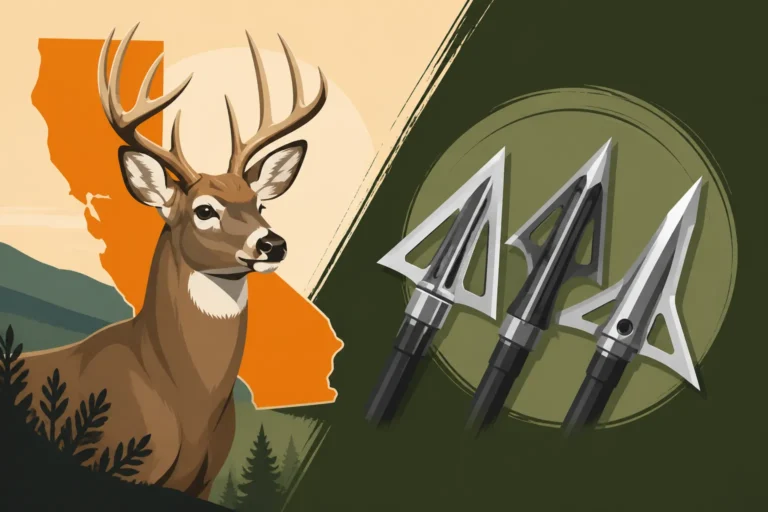
This is where many archery hunters, even experienced ones, can stumble. Your bolts (the crossbow equivalent of arrows) and broadheads must also comply with specific rules. For instance, the regulations often stipulate that broadheads must be of a specific type – typically fixed-blade or mechanical with a minimum cutting diameter – and must not be barbed or have features that prevent withdrawal. Expandable broadheads are generally legal as long as they meet the minimum cutting diameter when expanded. However, always check the exact wording for the current year, as these rules can change.
Furthermore, California has a statewide ban on lead ammunition for hunting. While this primarily impacts firearms, it's important to be aware of the spirit of the law. Your broadheads themselves typically aren't made of lead, but ensuring your entire setup is as environmentally friendly as possible is always a good practice. When selecting bolts, consider their weight and spine. Heavier bolts generally carry more kinetic energy and penetration, which is crucial for larger game, while lighter bolts offer flatter trajectories. You'll also need to ensure your nocks are compatible with your crossbow string, and that they securely engage. Don't skimp on quality here; a cheap nock can lead to dangerous dry-fires. For deeper dives into selection, articles like Broadhead Choices for California Blacktail and Arrow Weight for Elk-Sized Game are excellent resources, even if they focus on compound bows, the principles largely apply.
Sights and Scopes: What's Allowed
Crossbows offer the advantage of using scopes, which can greatly enhance accuracy, especially for those longer shots. Most standard hunting scopes are perfectly legal on crossbows in California. This includes magnified optics, red dot sights, and holographic sights. There are typically no specific magnification limits for crossbow scopes. However, you need to be mindful of any state regulations regarding illuminated reticles or night vision devices, particularly if hunting during legal daylight hours. Generally, passive light-gathering optics are fine, but any active illumination or night vision/thermal imaging is usually prohibited for hunting, especially for big game.
When choosing a scope, look for models specifically designed for crossbows. These often feature multiple aiming points or BDC (Bullet Drop Compensator) reticles calibrated for the trajectory of a crossbow bolt, which is much different from a rifle bullet. A good quality scope is an investment, and it will make a significant difference in your ability to place accurate shots. Best Bow Sight for California Archery Season might provide some crossover insights, even if focusing on traditional bow sights. GoHunt users often discuss their preferred optics setups for various California terrains, emphasizing clarity and light-gathering capabilities for those early morning or late evening shots.
| Component | Legal Requirement (Archery-Only Season) | Legal Requirement (General Season) | Common Considerations |
|---|---|---|---|
| Crossbow | Cannot hold at full draw mechanically without continuous physical effort (unless disabled) | Generally no restriction on holding at full draw mechanically | Appropriate draw weight/KE for game, ease of cocking |
| Broadheads | Fixed blade or mechanical, minimum cutting diameter (check current regs), not barbed | Fixed blade or mechanical, minimum cutting diameter (check current regs), not barbed | Sharpness, penetration, ethical kill potential |
| Bolts | Must be designed for crossbow use | Must be designed for crossbow use | Weight, spine, fletching, nock compatibility |
| Optics | Standard scopes, red dots are typically fine. No night vision/thermal. | Standard scopes, red dots are typically fine. No night vision/thermal. | Crossbow-specific reticle, clarity, light transmission |
| Cocking Aid | Generally not allowed to hold at full draw for archery-only season | Manual cocking ropes, crank devices are generally permitted to hold at full draw | Speed, effort, quiet operation |
Practical Steps for a Compliant and Effective Setup
Having the right gear is one thing; putting it all together and making sure it performs as expected is another. This section covers the hands-on process of getting your crossbow ready for the field, ensuring both legal compliance and hunting effectiveness.
Assembly and Initial Inspection
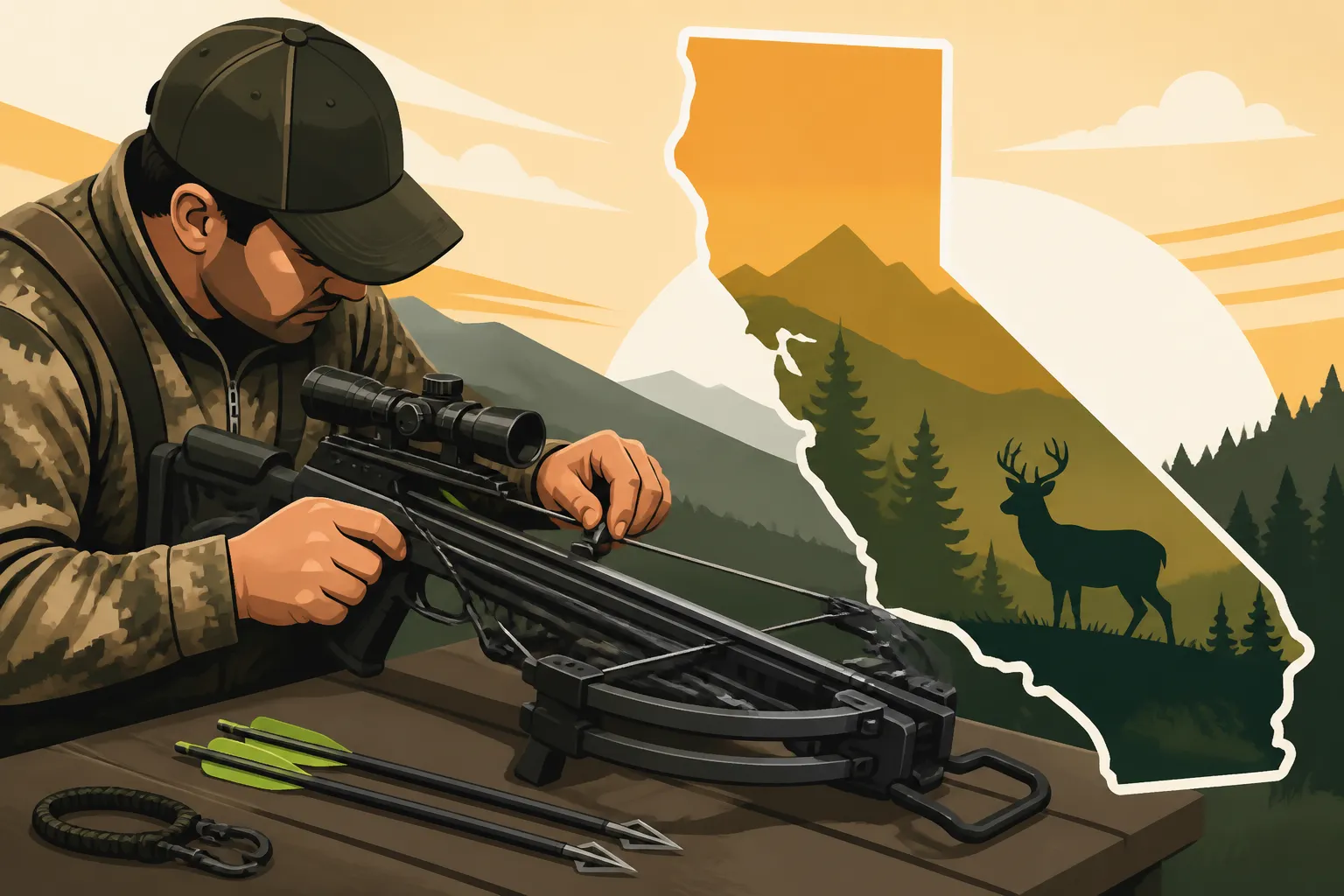
Most crossbows come partially disassembled, requiring you to attach the prod (limb assembly) to the stock, install the scope, and sometimes attach the stirrup. Follow the manufacturer's instructions precisely. Do not rush this step. Proper assembly is critical for safety and accuracy. Once assembled, conduct a thorough visual inspection: check all screws and bolts for tightness, ensure the string is properly seated, and inspect the limbs for any cracks or damage. This initial inspection is vital because any loose components or damage can lead to accuracy issues or even dangerous malfunctions.
Pay close attention to the string and cables, looking for frays or wear. Wax your string regularly, especially before your first shots, to prolong its life and ensure smooth operation. A well-maintained crossbow is a safe and accurate crossbow. If you’re ever unsure about assembly or notice any damage, consult a professional archery technician or the manufacturer directly. Don't risk a malfunction in the field, or worse, an injury.
Sighting In and Zeroing Your Optics
This is perhaps the most critical step for hunting success. Once your crossbow is assembled and your scope is mounted, you need to sight it in. Start at a close range, typically 10 or 20 yards, using field points. Adjust your scope until your bolts are consistently hitting the bullseye. Then, gradually move back to longer distances, often 30, 40, and 50 yards, adjusting for each reticle or aiming point if your scope has multiple. Remember, crossbow trajectories are significantly more parabolic than rifle bullets, so consistent distances are key.
It’s advisable to use a shooting rest or bench to eliminate human error during the initial sighting-in process. Take your time, focus on consistent form, and make small, deliberate adjustments to your scope. Once you're confident with field points, switch to your broadheads. It's not uncommon for broadheads to fly differently than field points, sometimes requiring slight adjustments to your scope or careful broadhead tuning. Sighting In Before Switching to Non-Lead is a good general resource for the methodical process of zeroing any hunting optic. This thoroughness is a hallmark of dedicated hunters, and sites like GoHunt often emphasize meticulous preparation.
Broadhead Tuning for Accuracy
Broadhead tuning is the art of making your broadheads fly exactly like your field points. It’s crucial because a poorly tuned broadhead can veer significantly off target, even at relatively close ranges, leading to wounded game and frustration. Start by shooting your broadheads at 20 or 30 yards. If they hit consistently with your field points, great! If not, you might need to make small adjustments.
Often, broadhead flight issues can be resolved by checking your nock point (if applicable for your setup), fletching alignment, or even slightly adjusting the orientation of the broadhead on the bolt. Some shooters find that different broadhead designs (fixed blade vs. mechanical) require different tuning approaches. Mechanical broadheads generally fly closer to field points, but fixed blades can be trickier. If you’re having persistent issues, check the squareness of your bolt ends and the broadhead ferrules. Sometimes, a tiny wobble can cause major accuracy problems downrange. Practice with the exact broadheads you plan to hunt with. This ensures you’re fully confident in your setup when that moment of truth arrives.
Field-Testing and Fine-Tuning Your Crossbow for the Hunt
The shooting range is one thing, but the real world of hunting is another. Your crossbow setup needs to perform reliably under genuine field conditions. This final stage of preparation ensures you're ready for anything California's diverse landscapes throw at you.
Practice, Practice, Practice
Once your crossbow is sighted in and broadhead tuned, the most important step is simply to practice. And not just from a bench. Practice from various positions you might encounter while hunting: kneeling, sitting, standing, even bracing against a tree or a fence post. Simulate hunting scenarios. If you're planning to hunt Hunting Coastal Range Oak Woodlands where shots might be through small openings, practice shooting between branches. If you're going to be Hunting a California BLM Desert Wash for Deer, practice longer shots in open, windy conditions.
Practice drawing and firing quickly, but smoothly. Get comfortable with the feel of your crossbow, the trigger pull, and the follow-through. Consistency is key to accuracy, and that only comes with repetition. The more comfortable you are with your crossbow, the less "target panic" you'll experience when a trophy buck steps into your shooting lane.
Maintaining Your Crossbow in the Field
A crossbow is a precision instrument, and like any fine tool, it requires regular maintenance, especially when exposed to the elements. Before each hunt, inspect your string and cables for wear, apply string wax, and check all bolts and screws for tightness. Keep your scope lenses clean and free of dust or moisture. A small cleaning kit in your pack can be invaluable.
During your hunt, protect your crossbow from dirt, debris, and moisture. A good crossbow case or cover is essential during transport. If it rains, dry your crossbow thoroughly afterwards. Don't forget to keep your broadheads razor sharp. Even a slight dulling can significantly reduce penetration and compromise an ethical shot. Good field maintenance ensures your crossbow is ready to perform when you need it most. After a successful hunt, proper cleaning and storage will preserve your investment for seasons to come.
Transporting and Storage Legally
California has specific rules about transporting hunting equipment, and crossbows generally fall under the "unloaded" category similar to firearms, though not as strictly as a loaded rifle. When transporting your crossbow in a vehicle, it should be uncocked and preferably in a case. While not always legally mandated to be cased, it's a best practice for safety, protecting your equipment, and avoiding any unnecessary attention. An uncocked crossbow cannot accidentally discharge, making it safer for everyone.
For long-term storage, keep your crossbow in a cool, dry place, away from direct sunlight and extreme temperatures. Reduce the tension on the limbs (if your crossbow allows for it easily, often by backing off the limb bolts slightly on recurve crossbows, or just leaving the string uncocked on compound crossbows) to prevent limb fatigue, especially for older models. Store bolts separately, ideally in a quiver or bolt case that protects the fletching and broadheads. Proper storage ensures your crossbow remains in top condition, ready for the next hunting season, whether you're targeting Wild Pig Hunting California Year-Round or gearing up for Hunting California's High-Country X-Zones.
Disclaimer
This article is for general informational purposes only and does not constitute professional advice. Laws, prices and regulations vary by location and change over time. Consult a qualified professional for guidance on your specific situation.