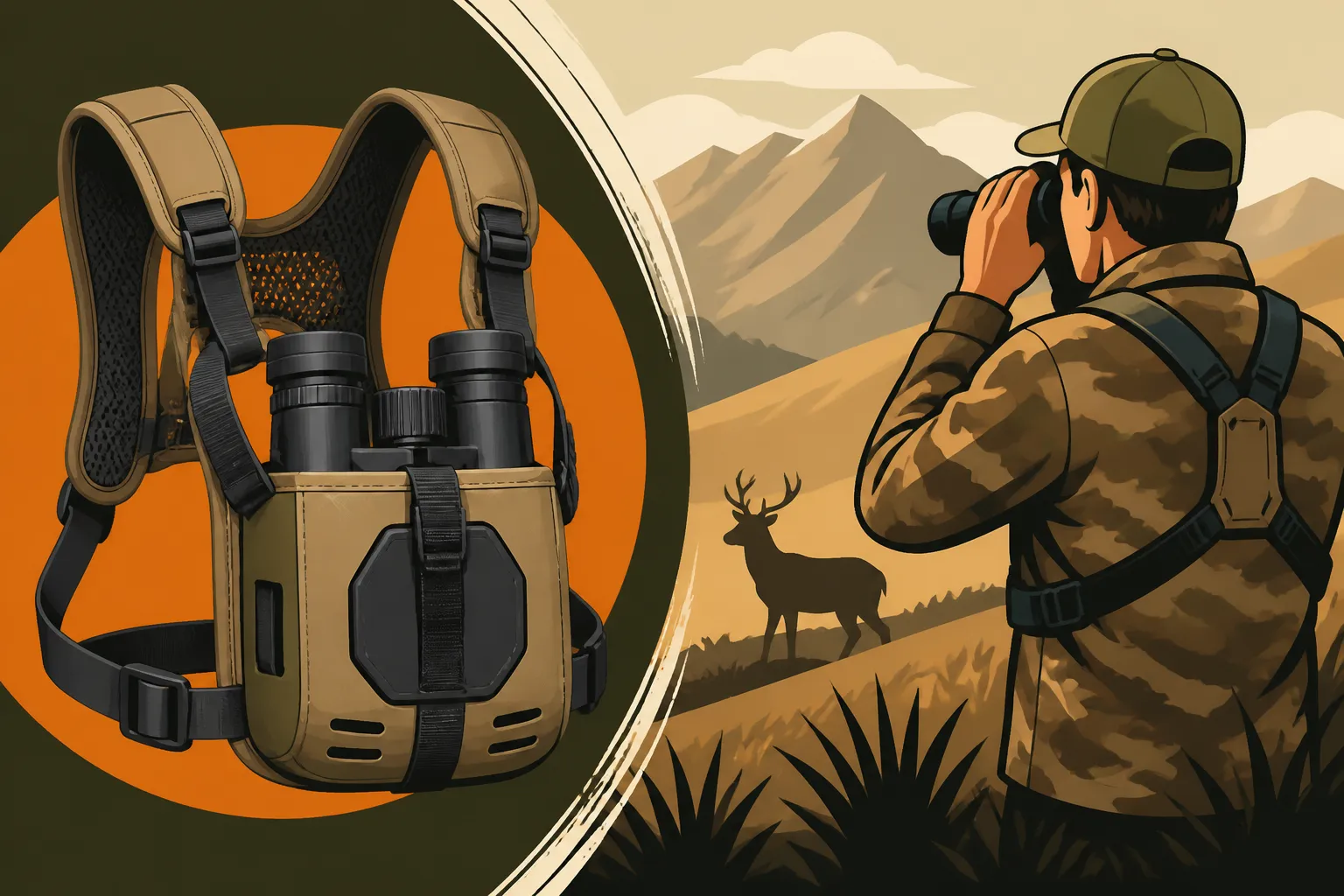
Best Optics Harness for a Spot-and-Stalk Hunt
There's nothing quite like the feeling of having your binoculars bounce off your chest as you try to sneak through a thick patch of chaparral, or fumbling for your rangefinder only to have it snag on a zipper when that buck steps into the open. For us California hunters, especially those of us who live for the spot-and-stalk, these little frustrations can derail an entire hunt. This guide is all about cutting through that noise and helping you find the absolute best optics harness to keep your glass secure, accessible, and protected, so you can focus on the hunt itself.
Why a Dedicated Optics Harness is a Game Changer for Spot-and-Stalk Hunters
Spot-and-stalk hunting is an art form, demanding stealth, patience, and quick reactions. Your optics are your most critical tool in this pursuit, allowing you to locate game from a distance and make informed decisions on your approach. Yet, how you carry those optics can either elevate or undermine your efforts.
The Frustrations of Traditional Carrying Methods
For years, many of us, myself included, relied on the simple neck strap that came with our binoculars. It seemed like the obvious solution, didn't it? But then you actually spend a day in the field, navigating steep Sierra slopes or picking your way through dense coastal brush. The binoculars swing freely, bouncing against your chest with every step, creating noise and constantly needing to be pushed out of the way. Not only is this distracting, but it also leads to incredible neck fatigue by the end of the day, especially if you're carrying a heavier pair of 10x42s or 12x50s.
And what about your rangefinder? Tucked in a pant pocket, it's a slow draw. Clipped to your belt, it can flop around or get caught on branches. We've all been there: that moment of truth when a legal buck offers a shot, but you spend precious seconds fumbling for your gear, only for the opportunity to vanish. Plus, leaving expensive optics exposed to the elements – dust, rain, sweat, or a rogue branch – is a surefire way to scratch lenses or damage sensitive internal components, something that hurts both your wallet and your hunting effectiveness.
The Core Benefits of a Harness System
Enter the optics harness, a piece of gear that has become indispensable for serious hunters. The primary benefit is vastly improved weight distribution. Instead of all the weight resting on your neck, a harness distributes it evenly across your shoulders and back, dramatically reducing fatigue. This means you can glass longer and move more comfortably, whether you're climbing into a Hunting Sierra Nevada High Country basin or still-hunting through Hunting Coastal Range Oak Woodlands.
Beyond comfort, a good harness keeps your binoculars secure against your chest, preventing them from swinging and making noise. The best designs offer quick, silent access, often with magnetic closures or quiet zippers, allowing you to draw your binoculars with one hand in mere seconds. This can be the difference between making the shot and watching your quarry disappear. Crucially, a well-designed harness also provides robust protection for your expensive glass, shielding it from impacts, dust, and moisture, ensuring clarity when it matters most.
Key Features to Look for in a California-Ready Optics Harness
California’s diverse hunting landscapes, from the sun-baked desert washes to the rain-soaked redwood forests, demand versatile and robust gear. When choosing an optics harness, consider features that will stand up to these varied conditions.
Durability and Weather Resistance
You're not just walking manicured trails; you're busting brush, scrambling over rocks, and potentially crawling on hands and knees to get into position. Your optics harness needs to be built tough. Look for materials like 500D or 1000D Cordura nylon, which offer excellent abrasion resistance without adding excessive weight. Stitching should be reinforced, and zippers should be heavy-duty, ideally YKK brand, known for their reliability.
Weather resistance is also paramount. While full waterproofing might add unnecessary bulk, a water-resistant fabric with DWR (Durable Water Repellent) coating and storm flaps over zippers will protect your optics from light rain, fog, and morning dew. After all, a surprise shower can hit anywhere, from the coast to the high desert. Think about dust, too; a sealed compartment will keep fine grit out of your lenses when you're Hunting a California BLM Desert Wash for Deer.
Comfort and Adjustability for Long Days
A harness should feel like a natural extension of your body, not a cumbersome accessory. Padded shoulder straps are essential, especially if you're carrying heavier binoculars or wearing a heavier pack. Look for breathable back panels, often made of mesh, to minimize sweat buildup against your chest, a real concern during warm August archery seasons in Zone A.
Adjustability is key for a custom fit. The straps should allow for easy tightening or loosening, accommodating different layers of clothing, from a thin base layer on a hot morning to a heavy jacket in late-season D-zones. A good chest strap design will also prevent the harness from riding up or sagging, ensuring it stays in place whether you're hiking, crawling, or sitting still. Many hunters find that the ability to fine-tune the fit makes a huge difference in comfort over a long day afield.
Quick and Quiet Access
In spot-and-stalk hunting, speed and silence are paramount. A harness should allow you to draw your binoculars and rangefinder with minimal movement and noise. Magnetic closures are a popular choice for the main binocular compartment because they are incredibly fast and completely silent. Some harnesses use quiet zippers or buckles that can be operated with one hand.
Test the draw yourself before committing. Can you get your binoculars out smoothly, without snagging, and put them back just as easily? Does the lid flop open noisily or stay in place? Many harnesses also include a dedicated, integrated lens cloth, often tethered, so you don't have to dig through pockets when dust or condensation obscures your view. Every second counts when that buck is just moments from disappearing over the ridge.
Integrated Storage and Organization
While the primary function is holding your binoculars, a well-designed harness offers smart storage for other small essentials. A separate, often smaller, side pocket is perfect for your rangefinder, keeping it secure yet instantly accessible. Some harnesses feature a small front pocket where you can keep your deer tag, license, or a wind checker.
Internal dividers can help organize spare batteries, a small headlamp for those pre-dawn hikes, or even a compact emergency whistle. Think about the small items you constantly reach for on a hunt and choose a harness that offers dedicated, secure spots for them. Many hunters who meticulously plan their gear loadouts, often after consulting online scouting tools like GoHunt, appreciate this level of thoughtful organization.
Different Styles of Optics Harnesses for Varied Hunting Scenarios
Just like there are different hunting methods and terrains, there are different styles of optics harnesses, each with its own advantages. Understanding these variations will help you choose the best fit for your specific California hunting adventures.
Chest-Mounted Harnesses (Traditional Style)
This is perhaps the most common and recognizable style of optics harness. It consists of a main compartment for your binoculars, typically worn on the chest, with a strap system that goes over your shoulders and around your back. The main benefits are unparalleled security and quick access. Your binoculars are always front and center, protected, and ready to deploy. The weight is distributed evenly across your upper torso, making even heavier glass feel less burdensome than a neck strap.
However, traditional chest-mounted harnesses can feel a bit bulky, especially when worn under a heavy backpack or a thick outer layer. They can also trap heat against your chest, leading to more sweating in warmer conditions, something you'll definitely notice during a Hot-Weather Sitting Strategy in August for blacktails. Still, for sheer accessibility and protection, they are hard to beat, and many hunters swear by them for all their Rifle Hunting California's General Deer Season and Bowhunting California's Zone A Season trips.
Backpack-Integrated Harnesses
A more recent innovation, backpack-integrated harnesses are designed to work seamlessly with specific hunting backpacks. Instead of a separate harness system, the optics compartment is built directly into or attaches directly to the front of your backpack's shoulder straps. The biggest advantage here is the truly seamless integration; there are fewer straps to tangle, and the weight distribution is often optimized with the pack itself. It creates a very streamlined profile, which can be a huge plus when navigating dense cover or carrying heavy loads on a multi-day backcountry hunt.
The downside is that these systems are less modular. You're often locked into a particular brand or model of backpack, and if you switch packs, your harness might not be compatible. They can also be harder to take off independently of the pack if you just need to shed your optics for a quick stalk. Many brands, like those often reviewed on platforms like GoHunt, offer integrated systems that are well worth exploring if you're in the market for a new pack and harness combo.
Minimalist Harnesses
For hunters who prioritize light weight and minimal bulk, or those who use very compact binoculars, minimalist harnesses offer a pared-down approach. These often consist of a simple elastic or webbing strap system that holds the binoculars snug against the chest, without a full protective case. The appeal lies in their extreme comfort and freedom of movement; you barely notice you're wearing them. They are ideal for fast-and-light hunts or when you need to layer extensively without added bulk.
The trade-off, however, is less protection for your optics. Your binoculars are more exposed to bumps, scratches, and the elements. Storage is also typically limited, usually just for the binoculars themselves, with no extra pockets for a rangefinder or other small items. If your hunt involves less extreme conditions and you're meticulous about protecting your glass elsewhere, a minimalist harness might be a good fit.
Choosing the Right Harness for Your California Spot-and-Stalk Adventures
Picking the perfect optics harness isn't a one-size-fits-all decision. It depends heavily on your specific optics, the terrain you hunt, and how it integrates with the rest of your gear.
Matching Your Optics Size
This might seem obvious, but it's crucial. Not all harnesses are designed for all binocular sizes. A harness built for compact 8×32 binoculars might be too snug for a bulky pair of 12x50s, making them hard to draw quickly. Conversely, a harness made for larger optics might allow a smaller pair to rattle around, creating noise and offering less protection.
Measure your binoculars, paying attention to both height and width, and check the harness's stated dimensions. Ideally, the fit should be snug but not tight, allowing for easy, one-handed removal and replacement. If you use a rangefinder, ensure there's a dedicated pocket that fits it securely and allows for quick access. This attention to detail will prevent constant fiddling when you're glassing a canyon for a Glassing a Canyon for a Bedded Buck.
Considering Your Hunting Terrain and Conditions
California's diverse geography means your harness needs to be adaptable. If you're spending your time in the dense, brushy chaparral of the coastal ranges, a streamlined harness that minimizes snagging will be critical. The quiet operation of magnetic closures will be a huge asset when Rattling and Grunting California Blacktail Bucks in thick timber.
If you're hiking the rugged, often dusty, high country for Hunting California's High-Country X-Zones, weather resistance against dust and sudden afternoon thunderstorms is important. For hunters tackling the expansive, open terrain of the desert fringes, where Glassing Mule Deer in Open California Country is the name of the game, comfort during long hours of glassing is paramount. Think about the mud, the dust, the potential for rain, and how each harness design will perform in those specific conditions. When preparing for those remote trips, using tools like GoHunt to scout areas can also give you insight into the likely conditions you'll face.
Integrating with Your Existing Pack System
For many hunters, a backpack is another essential piece of gear, whether it's a small daypack or a large pack for Packs and Gear for a Backcountry Elk Hunt. Your optics harness needs to work harmoniously with your pack, not against it. Test how the harness straps lie under your pack's shoulder straps and hip belt. Are there any points of uncomfortable pressure? Does it interfere with your pack's access pockets?
Some hunters prefer harnesses that connect directly to their pack's shoulder straps, reducing the number of straps around their torso. Others prefer a completely independent harness, which allows them to shed their pack while keeping their optics on for a short stalk. Consider how you typically carry your gear and how often you separate your pack from your optics. A well-integrated system will prevent annoying rubbing, bunching, or limited mobility, letting you focus on finding those Late-Season Food Sources for California Deer.
Here's a quick comparison of key optics harness features to consider:
| Feature | Traditional Chest Harness | Backpack-Integrated Harness | Minimalist Harness |
|---|---|---|---|
| Protection | Excellent (full coverage, padded) | Excellent (often rigid exterior, padded) | Minimal (often just elastic straps, exposed glass) |
| Access Speed | Very Fast (front and center) | Very Fast (front and center) | Fast (direct access) |
| Storage | Good (main bino, rangefinder, small pockets) | Varies by pack (often includes extras) | Limited (bino only) |
| Comfort | Good (distributes weight well) | Excellent (integrated with pack's suspension) | Excellent (lightweight, unrestrictive) |
| Bulk/Profile | Moderate (can feel bulky under pack) | Low (streamlined with pack) | Very Low (barely noticeable) |
| Modularity | High (works with any pack, stands alone) | Low (specific to certain packs/brands) | High (works with any pack, stands alone) |
| Ideal for | All-around hunting, heavy use, diverse conditions | Backcountry hunting, long hauls, streamlined setup | Fast & light, compact optics, minimal layering |
Ultimately, the best optics harness for you will be the one you forget you're wearing until you need it. It’s an investment in comfort, efficiency, and the protection of your valuable glass. Take the time to consider your hunting style, your optics, and the unique challenges of California's wild places, and you'll find a harness that truly makes a difference in your spot-and-stalk success.
Disclaimer
This article is for general informational purposes only and does not constitute professional advice. Laws, prices and regulations vary by location and change over time. Consult a qualified professional for guidance on your specific situation.