Best Shooting Sticks for Open Country
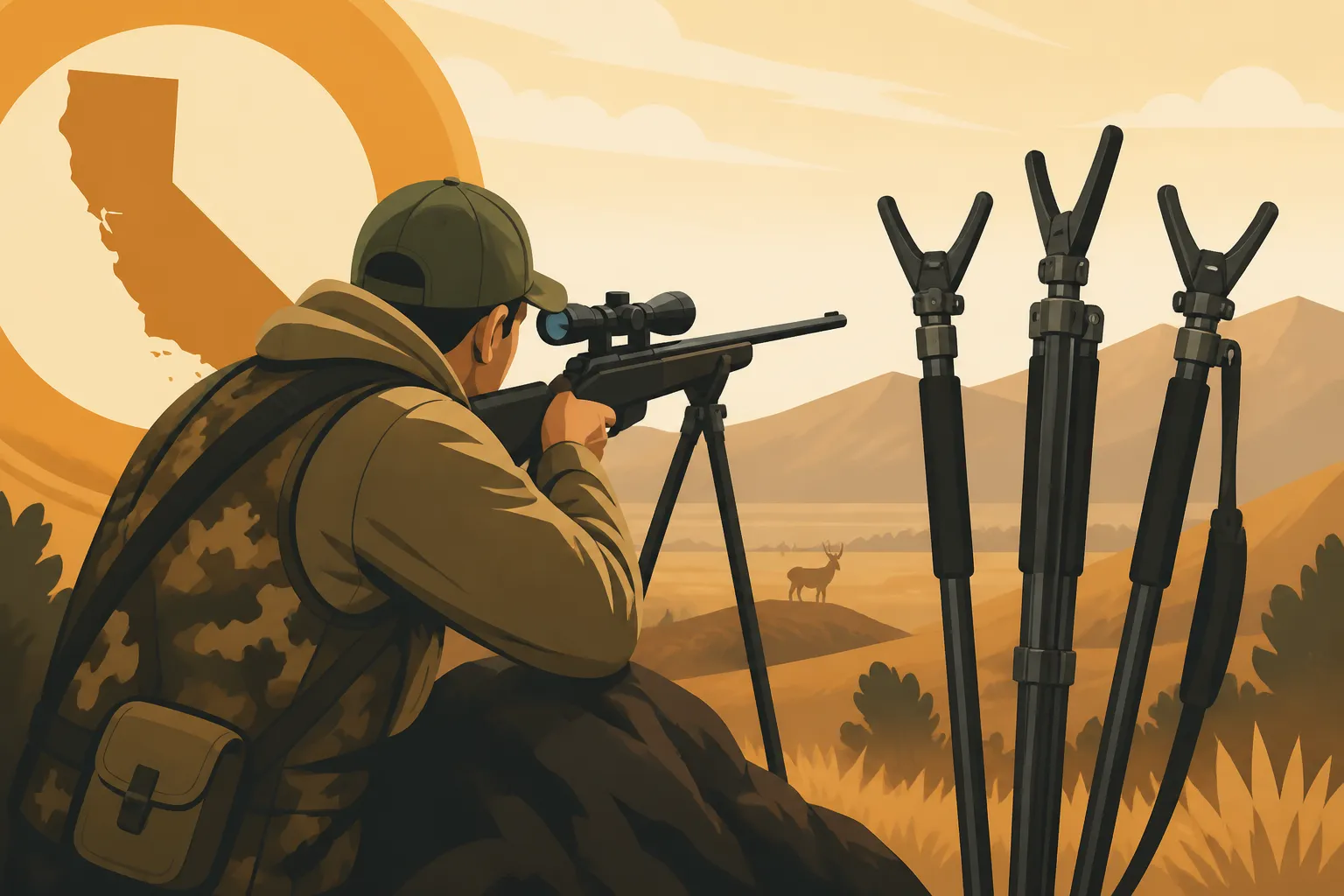
Picture this: you've spent days glassing, miles hiking, and finally, that trophy buck steps out at 300 yards across an open sagebrush flat in eastern California. Your heart is pounding, but there's no solid rest in sight, just undulating terrain and a few low bushes. This common scenario in California's vast open country highlights a critical challenge: achieving a steady, ethical shot at distance without a natural rest. This comprehensive guide will walk you through everything you need to know about choosing and utilizing the best shooting sticks for open country hunting, transforming those wobbly shots into confident, precise placements.
Why Shooting Sticks Are Essential in Open California Country
Hunting in California often means covering vast expanses of diverse terrain, from the sprawling, rolling hills of the Carrizo Plain to the wide-open, high-desert basins bordering Nevada. Unlike dense timber hunting where trees offer natural rests, these open environments present unique challenges for shot stability. Relying purely on prone shooting can be difficult due to brush or undulating ground, and freehand shots at significant distances are simply too risky for ethical hunting.
The Challenge of Long Shots and Unstable Positions
When that lone mule deer appears on a distant ridge in the Mojave Desert, or a blacktail steps out of a juniper thicket across a wide canyon in the Modoc Plateau, you're often looking at a shot opportunity that could be several hundred yards away. Trying to steady your rifle freehand at these distances is incredibly difficult, even for experienced shooters. Wobble is magnified with every extra yard, making a precise shot nearly impossible. You might try to brace against a knee or a backpack, but these improvised rests are rarely consistent or sturdy enough for truly long-range accuracy. The consequence? Missed opportunities, wounded animals, and a lot of frustration. That's where shooting sticks come into play, providing a stable platform to eliminate that dreaded wobble, allowing you to focus on breath control and trigger squeeze.
Dealing with Variable Terrain and Vegetation
California's open country isn't always flat. You'll encounter steep ravines, rolling hills, rocky outcrops, and varying heights of vegetation like sagebrush, chamise, or scattered junipers. A prone shot might be perfect in one spot, but move ten feet and suddenly a knee-high bush obscures your view. Attempting to shoot offhand over such obstacles introduces unacceptable instability. Shooting sticks, especially adjustable models, allow you to quickly adapt to these changes. You can extend them to shoot kneeling, sitting, or even standing over taller vegetation, ensuring you always have a clear line of sight and a solid rest, regardless of what the terrain throws at you. This adaptability is paramount when stalking game across diverse landscapes. You might spot a buck from a vantage point, then move to close the distance, only to find your final shooting position is less than ideal without artificial support.
Ethical Shot Placement at Distance
Ultimately, the goal of any hunter is to make a clean, ethical kill. In open country, where shot distances tend to be longer, this responsibility becomes even more pronounced. A poorly supported shot can lead to a wounded animal that might travel for miles, potentially never being recovered. Shooting sticks are not a crutch for poor marksmanship; they are a tool that enhances precision and confidence, ensuring your bullet lands where it's supposed to. By providing a rock-solid platform, they significantly increase your chances of placing that bullet directly into the vital zone, even when adrenaline is pumping and the animal is a good distance away. This commitment to ethical hunting is a cornerstone of our sport, and shooting sticks are an invaluable aid in upholding that principle, especially when hunting Glassing Mule Deer in Open California Country or Hunting a California BLM Desert Wash for Mule Deer.
Types of Shooting Sticks: Finding Your Perfect Match
When you start looking at shooting sticks, you'll quickly realize there isn't a one-size-fits-all solution. Different styles cater to different hunting scenarios, walking distances, and personal preferences. Understanding the pros and cons of monopods, bipods, and tripods is key to making the right choice for your next California open-country adventure.
Monopods: Quick Support, Minimal Weight
The monopod is the simplest form of shooting stick, essentially a single collapsible pole that extends to various heights. It's incredibly lightweight and quick to deploy, making it a favorite for hunters who prioritize mobility and quick, opportunistic shots. Think of those unexpected encounters where a deer suddenly appears from behind a ridge, and you need to get steady in seconds. A monopod can be extended with a flick of a wrist and planted firmly, offering a significant improvement over an unsupported freehand shot.
While a monopod dramatically reduces vertical movement, it still requires the shooter to control horizontal wobble. This means it's best suited for medium-range shots where speed and minimal gear are paramount, rather than extreme long-range precision. Many monopods also double as trekking poles, adding to their utility in the vast and sometimes rugged California backcountry, like when you're Hunting Sierra Nevada High Country. The trade-off for its speed and lightness is less overall stability compared to its multi-legged counterparts. For those who frequently stalk and need to react quickly without adding bulk, a monopod can be an excellent choice.
Bipods: Stable, Versatile, Often Rifle-Mounted
Bipods are probably the most common type of shooting stick seen in open country hunting, and for good reason. They feature two legs that provide a stable, triangular base when deployed, offering much greater stability than a monopod. Many bipods attach directly to the rifle's sling swivel stud or a Picatinny rail, meaning they're always with the rifle and ready for instant deployment. This integrated design is a huge advantage when you're crawling into position or making a quick setup.
Bipods excel in providing a stable rest from the prone or seated positions, which are often the most stable shooting postures. For hunters who spend a lot of time Glassing Mule Deer in Open California Country and then closing the distance for a shot, a rifle-mounted bipod allows for rapid setup and a solid rest. You can often cant the rifle to compensate for uneven ground, and some models even allow for slight left-to-right adjustments without moving the legs. While heavier than monopods, the stability they offer, especially at ranges common in wide-open areas, is well worth the extra ounces for many hunters. You'll find a wide array of options, from lightweight carbon fiber models to more robust aluminum versions.
Tripods: Ultimate Stability for Extreme Ranges
When maximum stability is the name of the game, especially for extreme long-range shooting or when hunting from a fixed position, a tripod reigns supreme. With three points of contact on the ground, a tripod eliminates virtually all rifle wobble, allowing for the steadiest possible shot. They are particularly favored by those engaging in precision shooting, or when facing shots at the outer limits of their rifle's effective range.
Tripods often feature highly adjustable legs, allowing you to shoot comfortably from standing, kneeling, or sitting positions, making them incredibly versatile for varied terrain or when shooting over tall brush. Many tripods also come with interchangeable heads, allowing them to serve double duty as spotting scope or binocular tripods, which is incredibly useful for extended glassing sessions in open country. Brands like Leupold, Vortex, and other optics manufacturers offer excellent tripods that can easily switch from holding a spotting scope to a rifle rest. The main drawbacks are their increased weight and bulk, and the time it takes to set them up compared to monopods or bipods. However, for those carefully planned, long-range engagements typical in some of California's most expansive hunting zones, a tripod provides an unparalleled level of confidence and precision. If you're planning an extensive scouting trip using platforms like GoHunt to pinpoint distant game, a versatile tripod can be indispensable for both glassing and potential shooting scenarios.
| Feature | Monopod | Bipod | Tripod |
|---|---|---|---|
| Stability | Good (vertical support only) | Excellent (two points of ground contact) | Superior (three points of ground contact) |
| Speed of Setup | Fastest | Fast (especially rifle-mounted) | Slowest (requires careful leg adjustment) |
| Weight | Lightest | Moderate | Heaviest |
| Portability | Excellent (can double as trekking pole) | Good (can be folded/attached to rifle) | Fair (bulkier, often requires dedicated carry) |
| Shooting Height | Versatile (standing, kneeling, sitting) | Best for prone/sitting, some extend to kneeling | Most versatile (standing, kneeling, sitting, prone) |
| Best Use | Quick, opportunistic shots; stalking | Stalking & still-hunting; stable prone/seated shots | Extreme long-range; fixed position shooting; glassing combo |
Key Features to Consider for Open Country Hunting
Choosing the right shooting sticks for California's open country isn't just about picking a monopod, bipod, or tripod. It's about delving into the specific features that will make the biggest difference when you're out in the field. Every ounce, every inch of adjustability, and every material choice can impact your success and comfort.
Height and Adjustability for Diverse Shots
The ability to adjust your shooting stick's height quickly and smoothly is paramount in California's varied open terrain. You might be shooting from a kneeling position over a low ridge, or needing to stand and shoot over chest-high sagebrush. A good shooting stick should offer a wide range of height adjustments, typically from a low prone setting up to a standing height of 60-70 inches or more.
Look for mechanisms that allow for rapid adjustment, such as flip locks or twist locks. Flip locks tend to be faster, especially with gloves on, but twist locks can offer a more compact folded length. Ensure the locking mechanisms are robust and won't slip under the weight and recoil of your rifle. Having the flexibility to quickly adapt to sitting, kneeling, or standing positions means you won't be limited by an inconvenient bush or a sudden dip in the terrain when that buck finally presents himself. This adaptability is especially crucial when hunting areas like Hunting California's Mojave Desert Fringe Country where terrain can change drastically.
Weight and Portability for Miles of Hiking
Hunting in California's open country often involves covering significant distances on foot, whether you're still-hunting the edges of a burn scar or picking apart distant hills with your binoculars. Every ounce added to your pack contributes to fatigue, and bulky gear can snag on chaparral or become a nuisance. When considering shooting sticks, carefully weigh their impact on your overall kit.
Lightweight materials like carbon fiber are excellent for reducing carry weight, though they often come with a higher price tag. Aluminum options offer a good balance of durability and cost, but are generally heavier. Think about how the sticks collapse and attach to your pack. Are they streamlined? Do they have a dedicated carrying case or straps? For hunters who might be hiking miles into areas like Hunting a National Forest Burn Scar, a compact and lightweight shooting stick that doesn't hinder movement is invaluable. Some hunters even prefer a monopod that doubles as a trekking pole, reducing the total amount of gear they need to carry, while platforms like GoHunt allow you to research user reviews on specific gear's packability.
Material and Durability for Rugged Environments
California's hunting environments can be unforgiving. From scorching desert heat to sudden Sierra thunderstorms, your gear needs to withstand the elements and rough handling. The material of your shooting sticks directly impacts their durability and performance.
- Carbon Fiber: Lightweight, strong, and excellent at dampening vibrations. It's also less prone to extreme temperature changes, meaning it won't feel freezing cold or scorching hot to the touch. However, it's generally the most expensive option.
- Aluminum: A popular choice for its good strength-to-weight ratio and more affordable price. It's robust and can take a beating, though it will be heavier than carbon fiber and can conduct temperature more readily.
- Steel: Very durable and strong, but also very heavy. Primarily found in less portable, often fixed-position stands or older designs.
Beyond the main material, consider the quality of the joints, rubber feet (for grip on various surfaces), and any padding or gripping surfaces where your rifle rests. Look for robust construction that can handle being knocked around, deployed quickly, and stand up to dust, dirt, and moisture without corroding or seizing up. Durability means reliability when it counts most, and a failed locking mechanism in the field can ruin a hunt.
Versatility and Additional Functions
Modern shooting sticks often offer more than just a place to rest your rifle. Many tripods, in particular, are designed with versatility in mind, doubling as stable platforms for other essential optics.
Consider models that feature:
- Interchangeable Heads: A quick-release head that can swap between a rifle rest (often a "V-yoke" or clamp) and an optic mount (standard ¼-20 or ⅜-16 thread) is incredibly useful. This means you can use the same stable platform for your Best Spotting Scope for a Blacktail Buck during long glassing sessions and then quickly convert it for your rifle when a shot presents itself. This cuts down on the amount of gear you need to carry and set up.
- Trekking Pole Functionality: As mentioned earlier, some monopods are built to also serve as sturdy trekking poles. This is a fantastic dual-purpose feature for reducing pack weight and providing support during strenuous hikes, especially when you're traversing uneven or steep terrain.
- Camera Mounts: For those who like to document their hunts, a tripod that can also mount a camera offers even more utility.
The more versatile your shooting sticks are, the more value they bring to your hunting kit. Think about your entire hunting routine, from scouting to packing out, and how a single piece of gear might serve multiple purposes. This kind of multi-functionality is a smart way to streamline your gear, especially when every cubic inch and every ounce matters. GoHunt also features gear reviews where hunters discuss how they use multi-functional gear in real-world scenarios.
Integrating Shooting Sticks into Your California Hunting Strategy
Owning a great set of shooting sticks is only half the battle; knowing how to effectively use them and integrate them into your hunting strategy is what truly makes a difference. It's not just about pointing and shooting; it's about practice, awareness, and maintenance.
Practice Makes Perfect: Drills and Setup
Just like any other piece of hunting gear, shooting sticks require practice to use proficiently under pressure. Don't wait until opening day to deploy them for the first time. Take them to the range and practice shooting from various positions – standing, kneeling, and sitting – as if you were in a real hunting scenario.
- Timed Drills: Practice deploying your sticks and getting a stable sight picture within a specific timeframe. Try to do it with your hunting pack on, and even with gloves, simulating actual field conditions. The goal is to make the setup process smooth and intuitive.
- Uneven Ground Practice: Most ranges are flat. If possible, find a safe shooting area with uneven terrain and practice setting up your sticks to compensate for slopes. Learn how to adjust the leg lengths quickly to achieve a level shooting platform, even on a hillside. This is especially important for areas like Wind and Thermals in Steep Sierra Country.
- Multiple Positions: Regularly switch between shooting positions. Start standing, then drop to a knee, then try sitting. This helps build muscle memory and confidence in adapting to whatever the field presents. Your comfort with the sticks will directly translate into confidence when that trophy animal appears.
The more you practice with your shooting sticks, the less you'll have to think about them in the heat of the moment, allowing you to focus on the shot itself.
Situational Awareness: When and How to Deploy
Knowing when to use your shooting sticks is as important as knowing how. In fast-paced, close-quarters hunting, they might be more of a hindrance. But in open country, they are a game-changer.
- Pre-emptive Setup: If you're glassing a distant area and anticipate a potential shot, consider deploying your sticks while you're still observing. It's easier to adjust an already set-up tripod than to scramble when the animal finally steps out.
- Stalking Integration: When stalking an animal in open terrain, carry your sticks in a way that allows for quick deployment. If you're using a rifle-mounted bipod, keep it folded but ready. For monopods or tripods, have them easily accessible on the side of your pack or in hand if you're actively moving into a shooting position.
- Reading the Terrain: Before you even reach a potential shooting spot, observe the terrain. Will you need to shoot over tall grass? Is there a subtle rise that could give you a prone advantage? Your sticks should be part of your tactical plan for approaching and engaging game in areas like Hunting California's Central Valley Flyway. Consider how they might aid in scenarios detailed in Hunting Coastal Range Oak Woodlands where shots might be shorter but still require stability over brush. Platforms like GoHunt can also help you scout the terrain virtually before you even step foot in the field, helping you anticipate the kind of shots you might encounter and thus the best way to utilize your sticks.
The key is to integrate them seamlessly into your hunting flow, making their use second nature rather than an afterthought.
Maintenance and Care for Longevity
Shooting sticks are tools, and like any good tool, they perform best when properly maintained. Neglecting them can lead to sticky legs, corroded parts, or even failure in the field.
- Regular Cleaning: After each hunt, especially if you've been in dusty, muddy, or wet conditions, wipe down your sticks. Pay particular attention to the locking mechanisms. Dirt and debris can get inside twist locks or gum up flip locks, making them difficult to operate.
- Lubrication: Occasionally, a light, dry lubricant can be applied to moving parts to ensure smooth operation. Avoid oily lubricants that can attract dirt and grime.
- Inspect for Damage: Before and after each season, thoroughly inspect your sticks for any signs of wear and tear, loose screws, bent legs, or damaged rubber feet. Replace any compromised parts to ensure they maintain their stability and reliability.
- Proper Storage: Store your shooting sticks in a clean, dry place, ideally in a protective case or sleeve to prevent them from getting scratched or damaged by other gear.
Taking a few minutes to care for your shooting sticks will ensure they are always ready to provide that rock-solid platform when the moment of truth arrives, helping you make the most of your investment and your time in the field.
Disclaimer
This article is for general informational purposes only and does not constitute professional advice. Laws, prices and regulations vary by location and change over time. Consult a qualified professional for guidance on your specific situation.